Contents:
Have you ever been interested in the Roosevelt dime series? Since 1946, this item has not left many enthusiasts indifferent. Online platforms, numismatist events, and in-person trades – all establish the strong customer demand.
Nowadays, creating your personal collection become easier because a lot of useful information exists. One of the possible ways is download the free coin identifier app.
The 1952 Dime and Roosevelt Dime Series
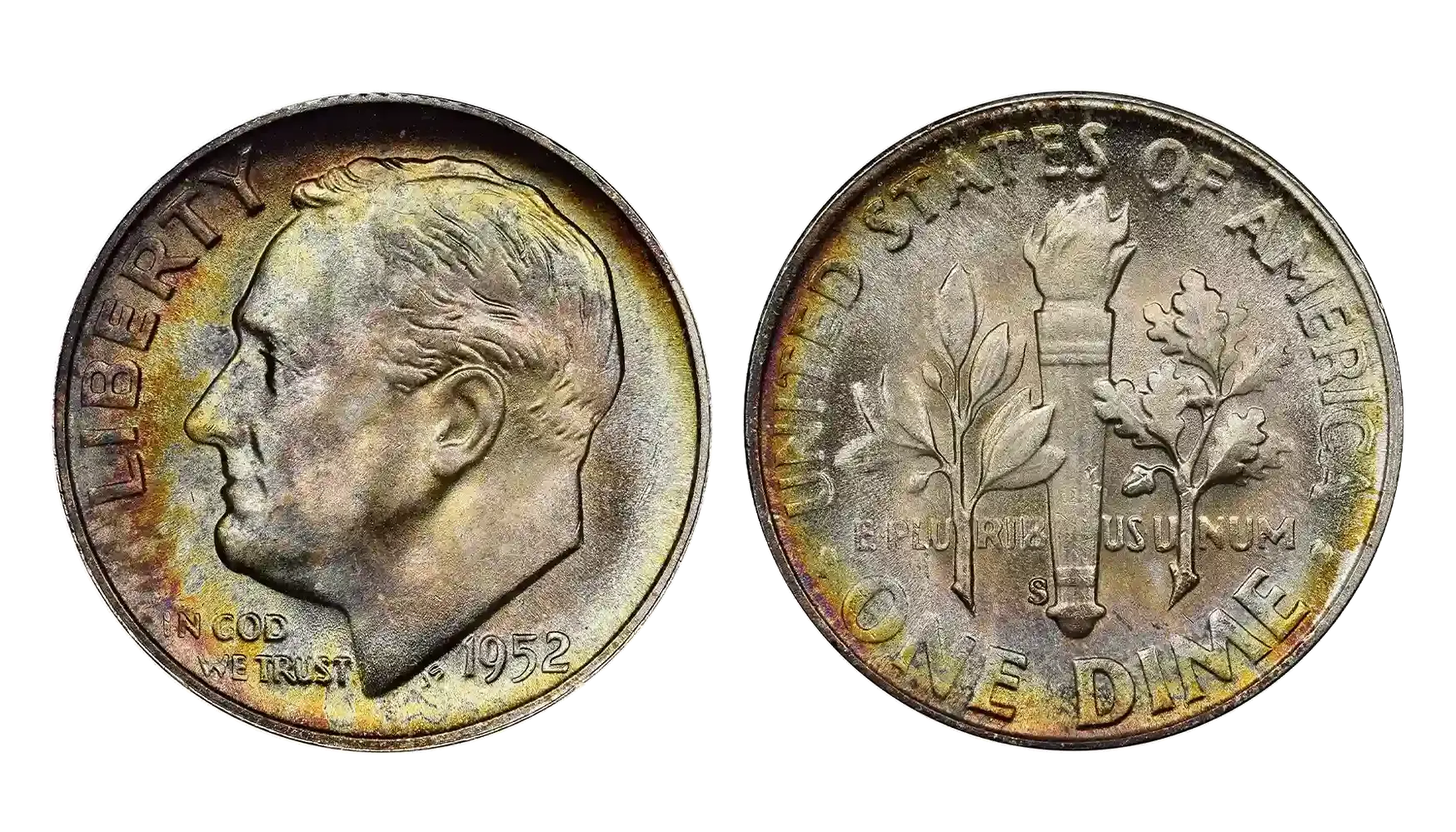
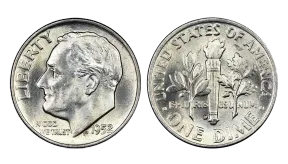
In 1946, a new chapter began with the introduction of the Roosevelt item by the United States Mint. The obverse carries the dignified image of President Franklin D. Roosevelt – a lasting homage to his leadership and dedication to public service.
Crafted by John R. Sinnock, the design places a torch between olive and oak branches on the reverse. Through the years, including 1952, the format held steady. Silver remained the metal of choice until 1964.
Note: Research on the 1952 Roosevelt dime value often compares mint output and condition across locations.
Major Characteristics
Compared to the 1919 Mercury dime, the Roosevelt one has similar features except for the period, diameter, and designer.
Period | Since 1946 |
Diameter | 17.9 mm |
Weight | 2.5 g |
Edge | Reeded |
Composition | Silver / Copper |
Designer | John R. Sinnock |
Is a 1952 Dime Silver
Analysis reveals that the coin contains 90 % silver and 10 % copper, following the established standard for dimes of its era. With approximately 0.0723 troy ounces of silver per piece, the metal’s value provides a baseline for pricing.
Market data shows that the 1952 silver dime value fluctuates according to bullion market conditions while consistently exceeding its face value.
Composition: Silver 90 % and Copper 10 %
Metal Per Oz: 0.0723 troy oz
1952 D, 1952 S, and No Mint Mark Dimes
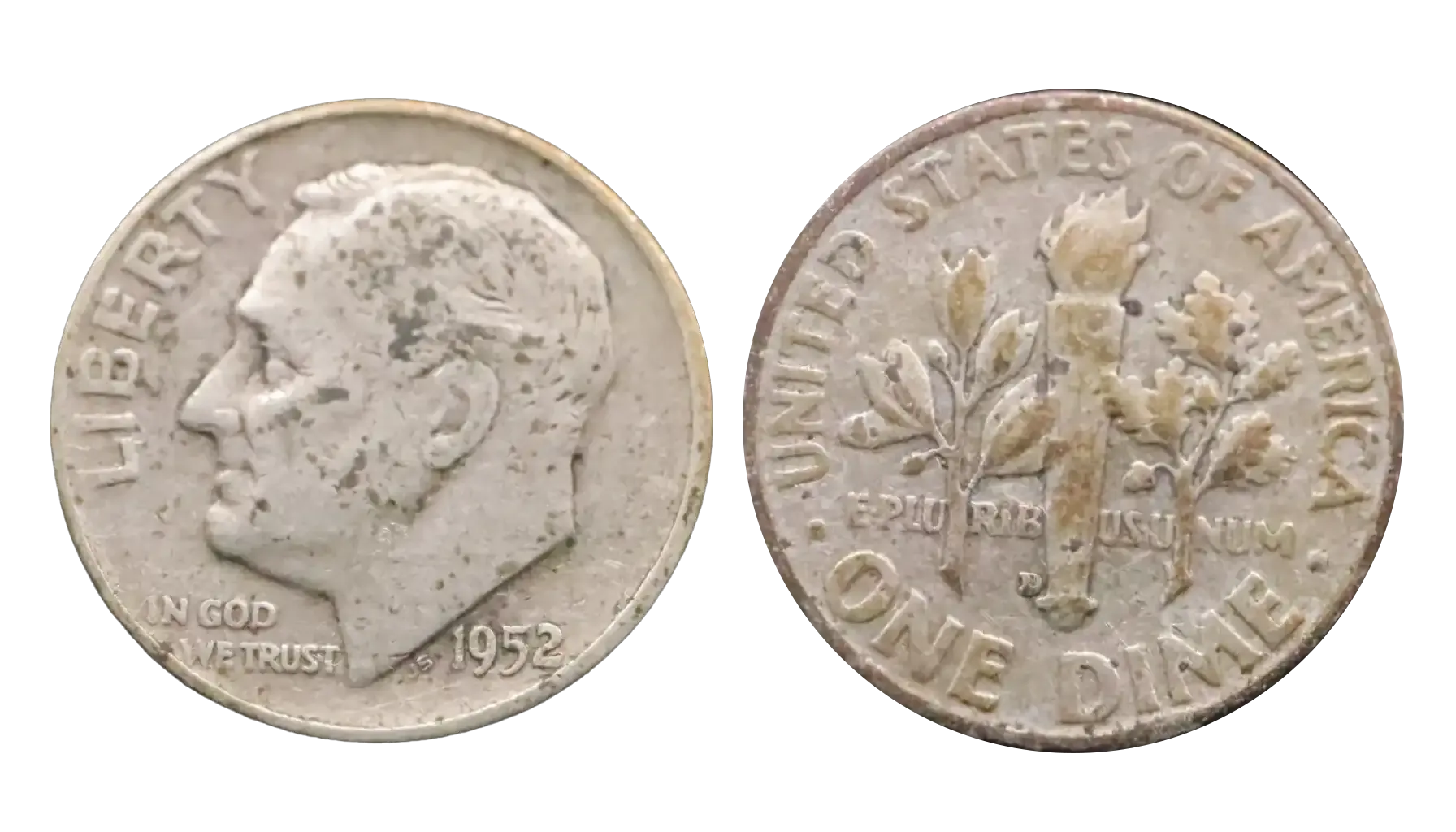
The year saw production at three distinct mints. Philadelphia’s 1952 dime value no mint mark, Denver’s proudly bear a “D,” while San Francisco’s carry an “S.” Among collectors, the 1952 dime no mint mark circulates widely.
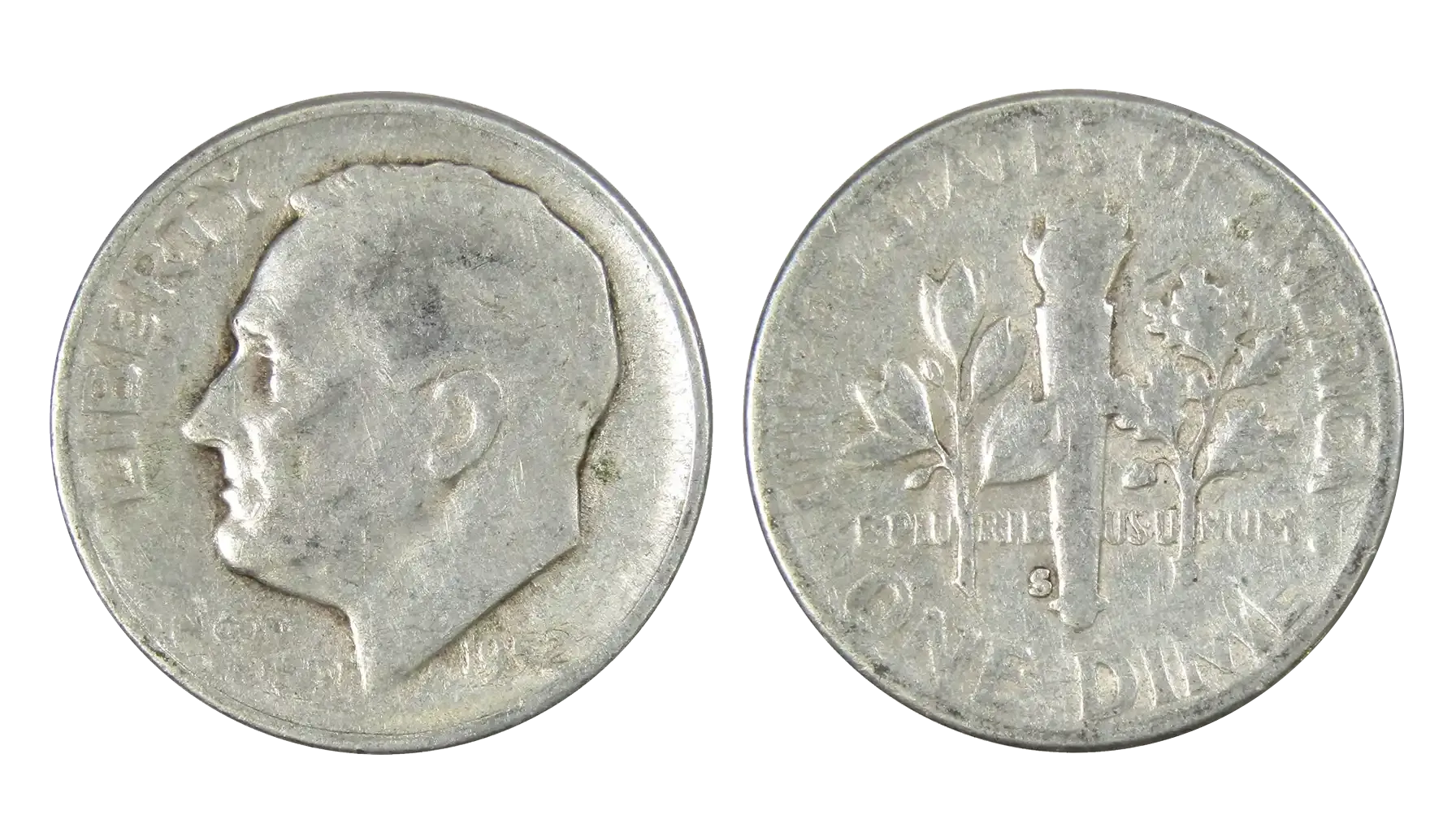
The 1952 D dime value tells a story of moderate output and resilient survival, shaping its value. Meanwhile, the 1952 S dime value often outshines its peers in equal grade. Turn the coin, and you’ll find the mint mark resting left of the torch’s base.
Attention: Before setting a price, always confirm the mint of origin.
Mint Marks Summary
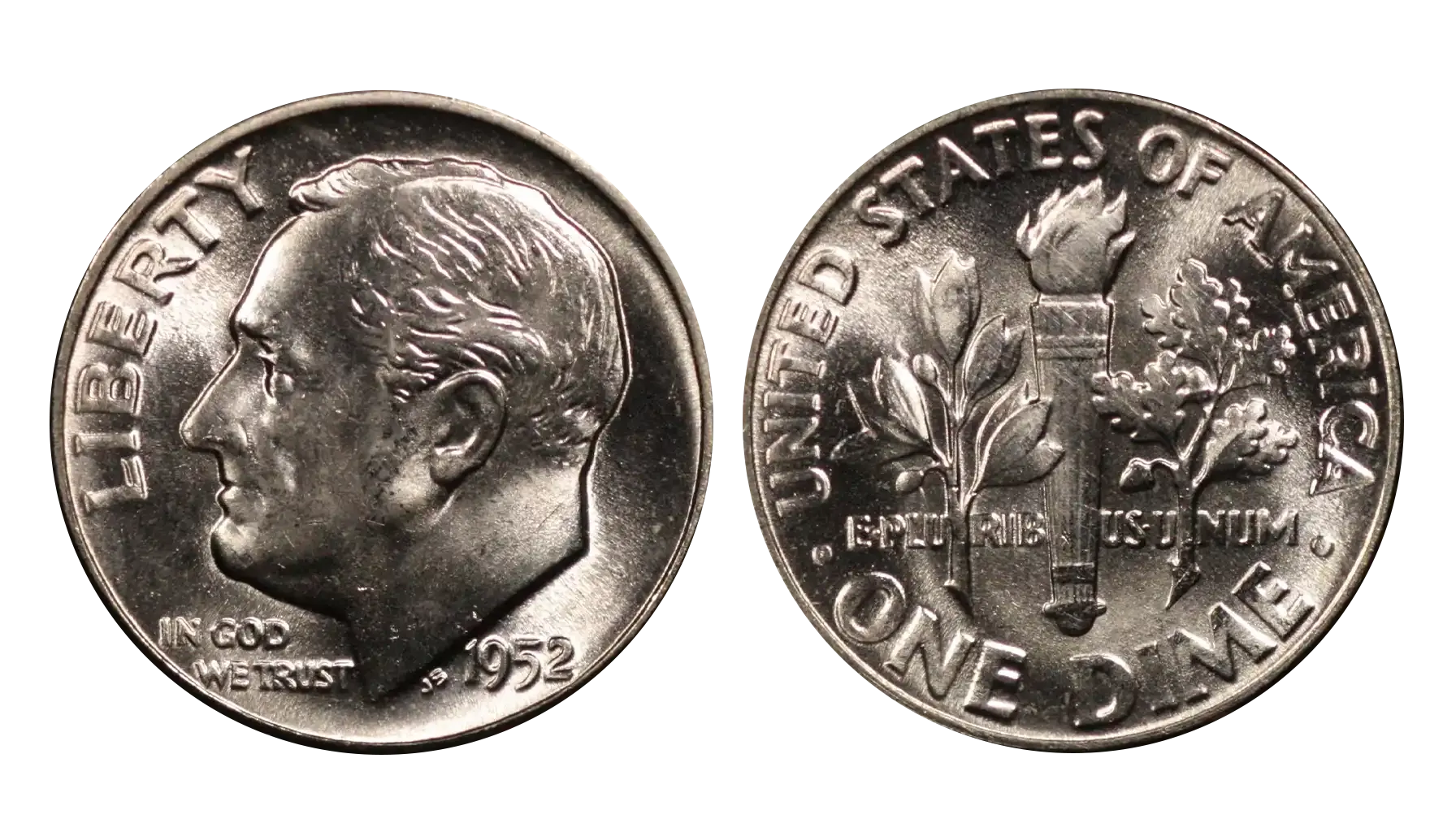
Items from Philadelphia (Mintage: 99,040,093)
Denver (Mintage: 122,100,000) – D
San Francisco (Mintage: 44,419,500) – S
Note: The San Francisco mintage is almost two times bigger than mintage of the 1952 half silver dollar.
1952 Dime Errors and Key Varieties
Necessary to know the 1952 dime error list. Within the world of this year, items have:
Items that landed off‑center during striking
The planchets clipped in their formation
Dies that doubled their impression
Toning increases the price by more than a hundred dollars
Toning is an oxidation process that happens depending on where you store your coin, combined with the designated grade.
Better condition = more money
Some bear a torch with muted detail, while others reveal bands that have split apart. These imperfections kindle discussions of collector enthusiasm. To verify their authenticity, experts turn to magnification and precise weight measurements.
The premium such errors command rises with their visibility and the coin’s overall preservation.
1952 Dime Value Today
How much is a 1952 dime worth in 2026?
Here’s what drives a price today: how good it looks (condition), that tiny mint mark, and the surface quality. If it’s circulated, you’re looking at the silver value of a 1952 dime plus maybe 10–20 % extra.
But uncirculated ones? Those get people bidding way up. And if the torch shows all its details sharp and clear? Boom – that’s a price booster. Get it graded, and buyers feel safer paying more.
“On the open market 1952 D Dimes in pristine, uncirculated condition sell for as much as $350.”
– NGC Coin Explorer
NGC
One last tip: A 1952 with no mint mark won’t bring as much as a Denver or San Francisco item if they’re all in the same condition.
2026 Market Prices
How much is a 1952 silver dime worth today? The table shows relevant 2026 (Q1) prices.
G–VF | XF | 60–62 | 62–65 | 66–70 | 68 |
$7 | $7 | $7.50–$12.50 | $12.50–$20 | $35–$50 | $350 |
Auction Records
$5,750 – 2011, Stack’s Bowers
$1,410 – 2016, Heritage Auctions
$1,687 – 2026, Heritage Auctions
Collector’s Tips
The Book Before the Item
Start to buy professional numismatics guidebooks. The Red Book will be important for your collector establishment. Moreover, explore all the information available on the Internet.
Professional Grading: The Sheldon Scale is an indispensable assistant in this issue.
Handling & Preservation
The PVC Danger: Never use soft, pliable plastic ones. They contain PVC, which releases an acidic green slime that permanently eats into the coin's surface. Use Mylar or hard plastic capsules.
Climate Control: Humidity is the enemy of copper and silver. Store coins in a cool, dry place (65–70°F, 40% humidity). Use silica gel packets in your safe to absorb moisture.
Even if wearing cotton or nitrile gloves, always hold a coin by its edges. The oils from a single fingerprint can cause spots or permanent tarnishing on high-grade silver.
Use the Coin ID Scanner online app to compare your items and silver Peace dollars and create collections.

 Facebook
  X (Twitter)
  Pinterest
  LinkedIn