Contents:
How much is a 1950 D nickel worth? And how to check value of old coins like these?
1950-D Jefferson Nickel Overview
It was struck at the Denver Mint in much smaller numbers than most Jefferson specimens of the period, which made it stand out as soon as those figures became public.
At the time, Jefferson nickels were still everyday coins. When collectors realized how few 1950-D pieces existed, many were pulled from circulation and saved almost immediately. Because of that, the coin has an unusual profile today. Truly worn examples are not easy to find, while uncirculated coins are relatively common for a key date.
Mint | Denver |
Mint mark | D (on reverse, right of Monticello) |
Designer | Felix Schlag |
Composition | 75% copper, 25% nickel |
Weight | 5.00 grams |
Diameter | 21.2 mm |
Thickness | ~1.95 mm |
Edge | Plain |
1950 D nickel mintage | ~2.63 million |
Special designation | Full Steps (FS) on well-struck examples |
Identifying the 1950-D Jefferson Nickel
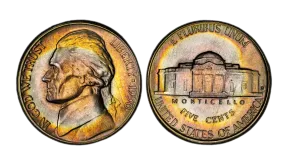
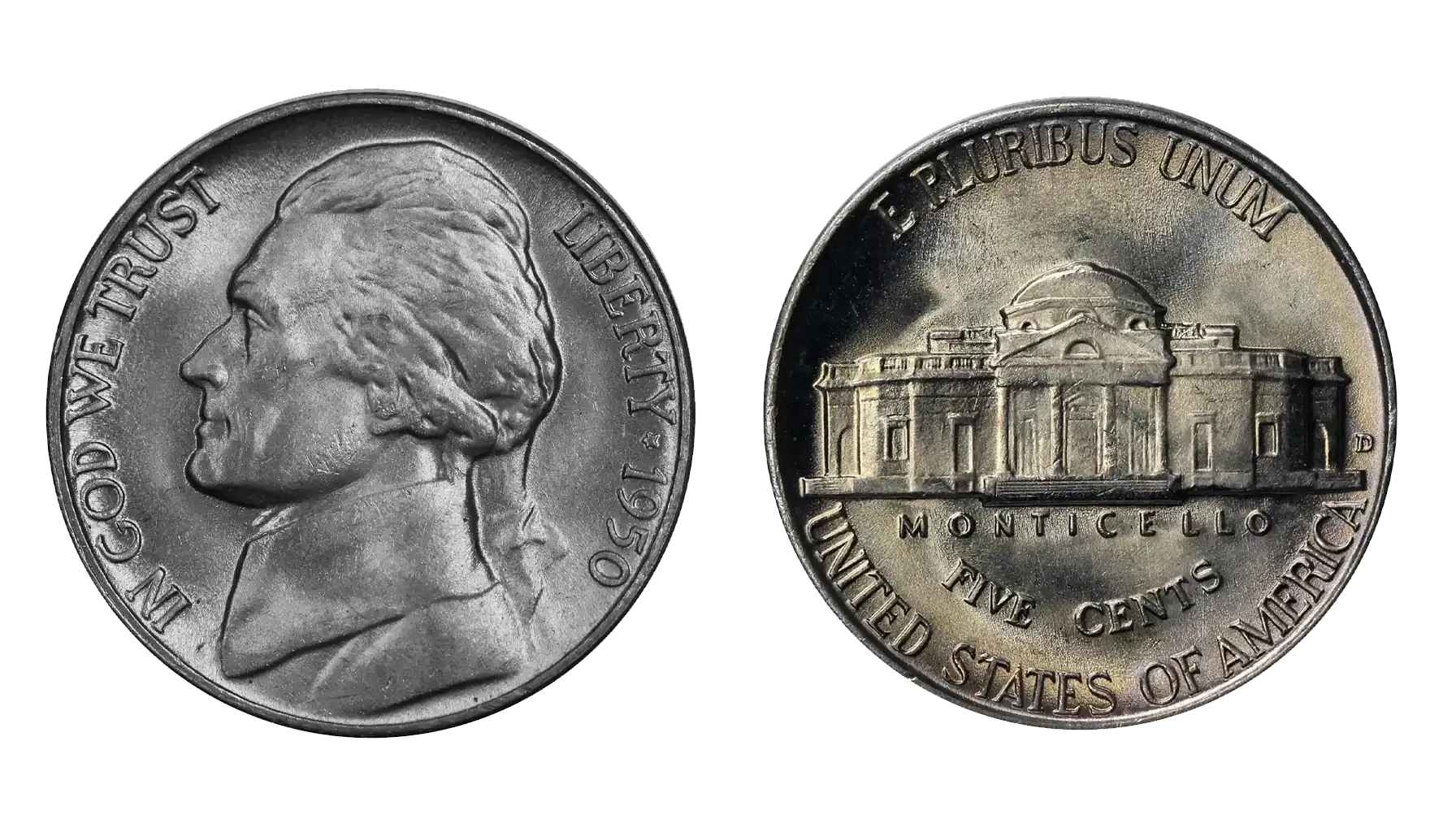
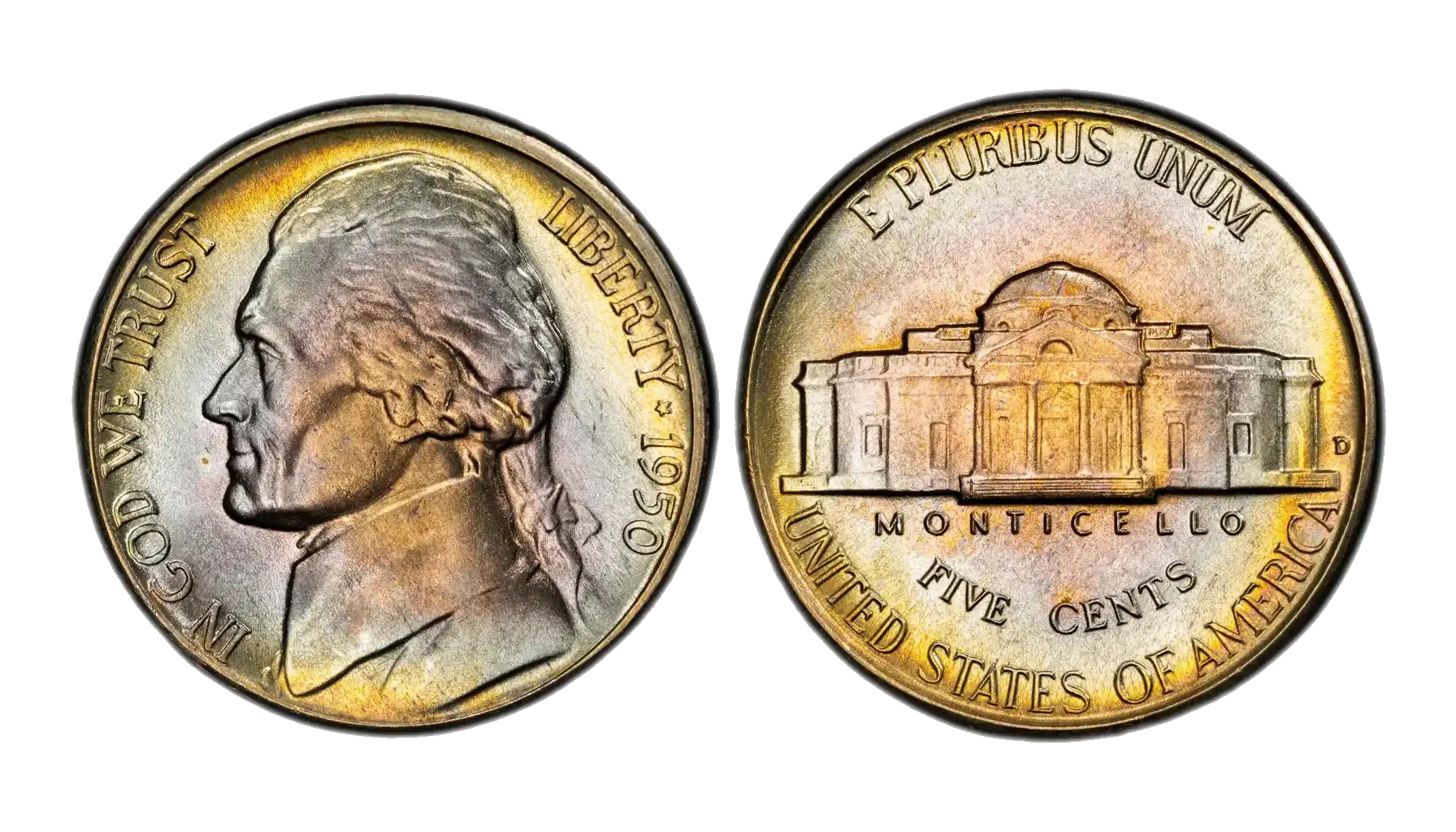
The obverse shows Thomas Jefferson facing left. On circulated coins, Jefferson’s cheek and jaw are usually the first areas to show wear. The date 1950 sits to the right of the portrait and should remain sharp on most examples, since many were saved early.
Turn to the reverse to confirm the key feature: the D mint mark. It appears to the right of Monticello, just above the rim. This single letter is what separates the key date from the far more common 1950 Philadelphia issue. Weak strikes can soften architectural lines, but the mint mark itself is usually clear unless heavily worn.
Collectors also look at the steps of Monticello. Coins with fully separated, uninterrupted steps are scarce and cost more. Even partial blending of the steps can affect the 1950-D Jefferson nickel value.
For quick verification, many numismatists use Coin ID Scanner. A clear photo allows the app to:
identify any coin
get a realistic value range based on market data
manage collections digitally.
However, the app does not identify strike designations like Full Steps. It is more effective for identification, assessment, and collection tracking.
Design Features, Metal Composition, and Mintage
Design
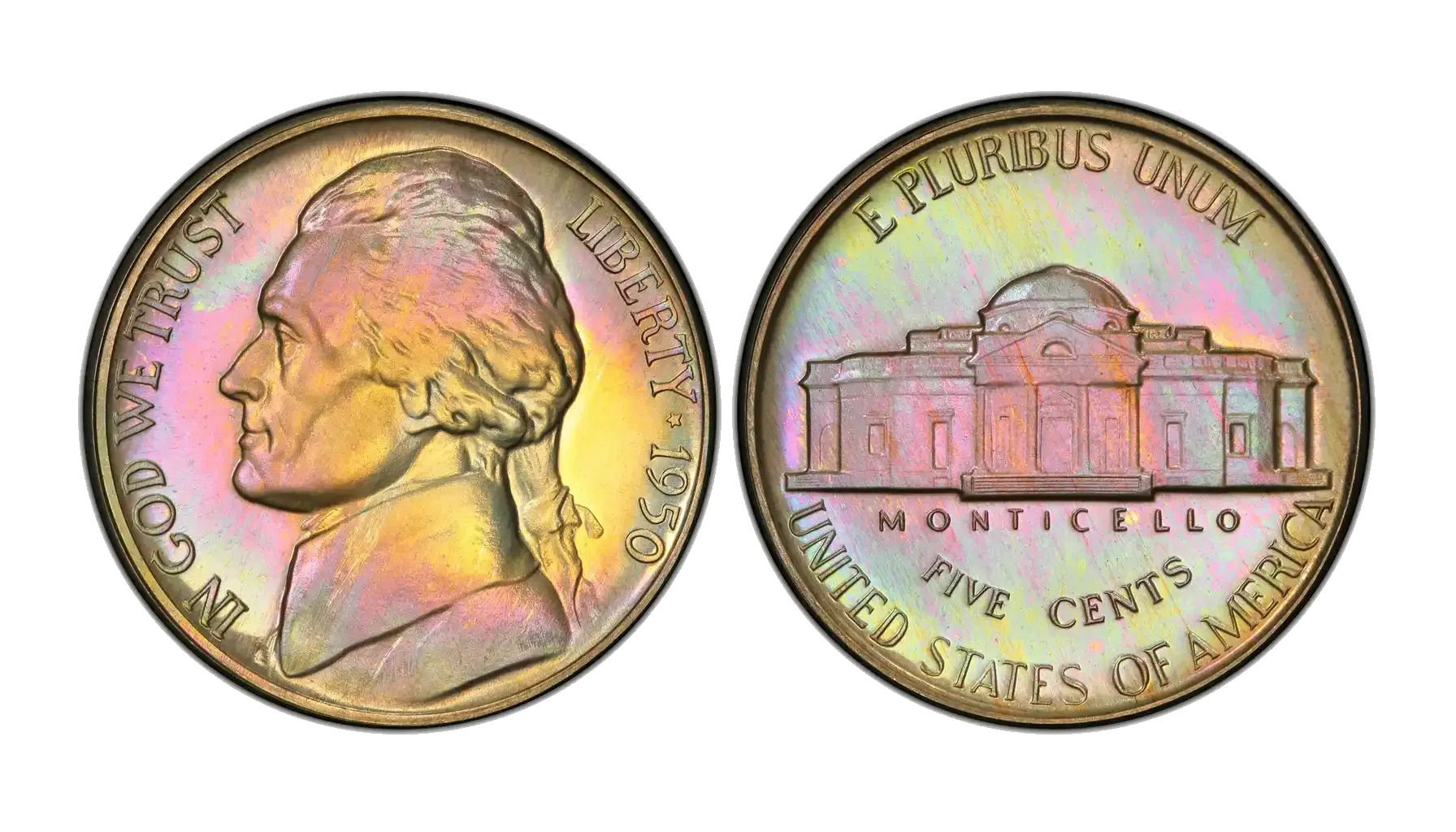
The 1950-D Jefferson Nickel uses the standard design created by Felix Schlag in 1938. The obverse shows Thomas Jefferson facing left, with relatively shallow relief and clean lettering.
The reverse features Monticello, Jefferson’s home in Virginia. The building’s outline is usually strong, but fine details vary.
Metal composition
The coin is made from the regular copper-nickel alloy used after World War II: 75% copper and 25% nickel. This metal is durable and holds its shape well in circulation, but it picks up contact marks easily.
There is no 1950 nickel silver content.
Mintage
The Denver Mint struck about 2.63 million 1950-D Jefferson nickels. Compared with other Jefferson pieces from the late 1940s and early 1950s, this number is very low. Although many coins were saved in uncirculated condition, the limited production secured the 1950-D’s reputation as the key date of the series.
1950-D Jefferson Nickel Value by Condition
Prices vary based on eye appeal, surface quality, and certification.
Condition / Grade | 1950-D Nickel Value (USD) |
Good (G-4) | $5 – $10 |
Very Good (VG-8) | $8 – $15 |
Fine (F-12) | $15 – $30 |
Very Fine (VF-20) | $30 – $50 |
Extremely Fine (XF-40) | $50 – $80 |
About Uncirculated (AU-50) | $80 – $130 |
Uncirculated MS60 | $140 – $200 |
Uncirculated MS63 | $220 – $350 |
Uncirculated MS65 | $450 – $700 |
MS65 Full Steps (FS) | $1,200 – $3,000+ |
MS66+ Full Steps (FS) | $5,000+ (scarce) |
Circulated coins are harder to find than Mint State examples due to early hoarding. Most premiums come from condition, not rarity alone.
Certified coins (PCGS, NGC) trade more consistently than raw pieces.
How Much Is a 1950 Nickel Worth?
A 1950 nickel no mint mark (Philadelphia) is common. In circulated condition it is usually worth only a small premium over face value, typically a few cents to about a dollar. Uncirculated examples bring more, often $5–$15, with higher prices for clean, well-struck coins.
The 1950 D Jefferson nickel value is very different. Because of its low mintage, even worn examples usually sell for $5–$10. Coins with moderate wear often reach $20–$50, while uncirculated pieces commonly trade in the $150–$400 range. Strongly struck coins with fully defined steps on Monticello can be worth four figures or more.
Condition, originality, and strike quality matter more for the 1950 nickel value than age. A worn Philadelphia coin has little collector value, while a well-preserved 1950-D can be one of the most valuable regular issues from the Jefferson series.
Key Factors Affecting the Value of the 1950-D Nickel
Condition (grade): Value rises quickly with less wear and stronger detail.
Mint mark clarity: A clear D mint mark is important for identification.
Strike quality: Weak strikes reduce value, especially on Monticello.
Full Steps detail: Fully separated steps cost more.
Surface originality: Natural, uncleaned surfaces are preferred.
Luster: Original mint luster increases desirability in higher grades.
Damage or cleaning: Scratches, corrosion, or polishing lowers the 1950 D nickel value today.
Certification: Third-party grading improves confidence and liquidity.
Tips for Collectors and Investors
The main coin collecting rule is to focus on condition and originality rather than just owning the date. Choose coins with clean surfaces and solid eye appeal, and avoid cleaned examples. For long-term 1950 Jefferson nickel value, well-struck pieces and certified coins are safer choices, especially if the steps on Monticello are clearly defined.
Investment Tips
Certified examples are easier to sell and price accurately, especially in higher grades. For example, if you check a 1950-D Jefferson nickel low mintage value being certified and not, you will see the difference. If possible, prioritize coins with clearly defined steps, as demand for well-struck pieces has remained consistent over time.

 Facebook
  X (Twitter)
  Pinterest
  LinkedIn