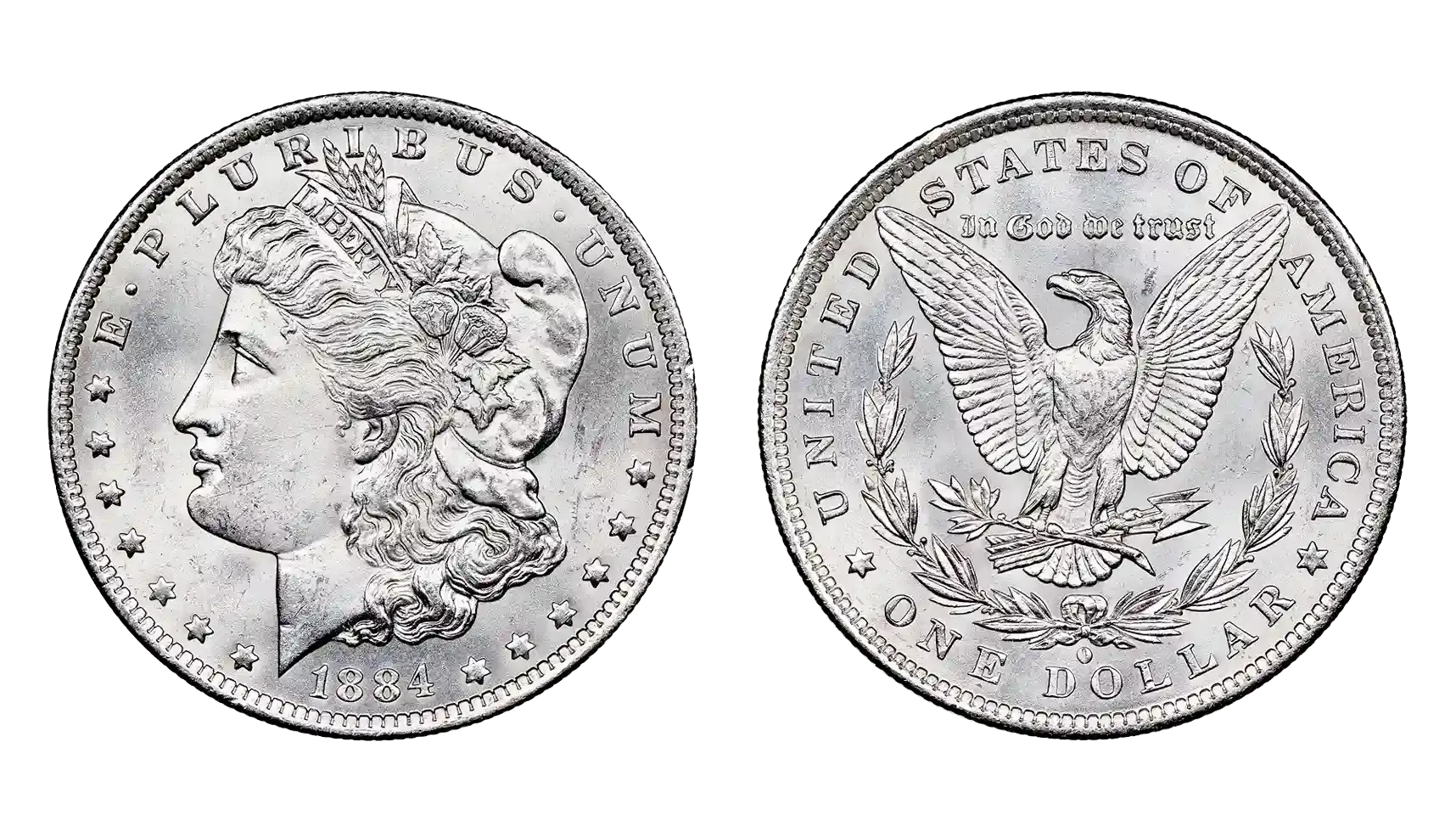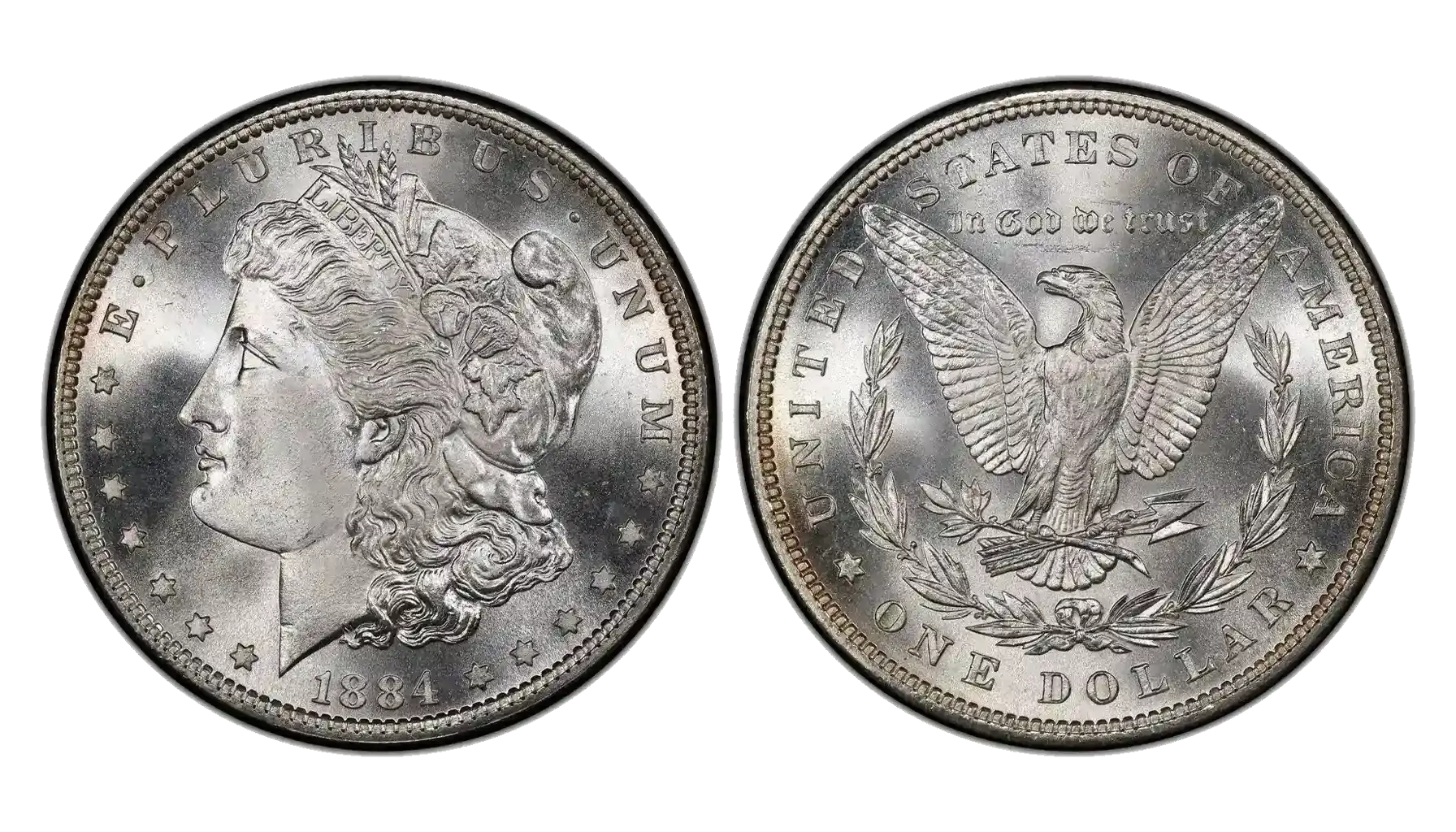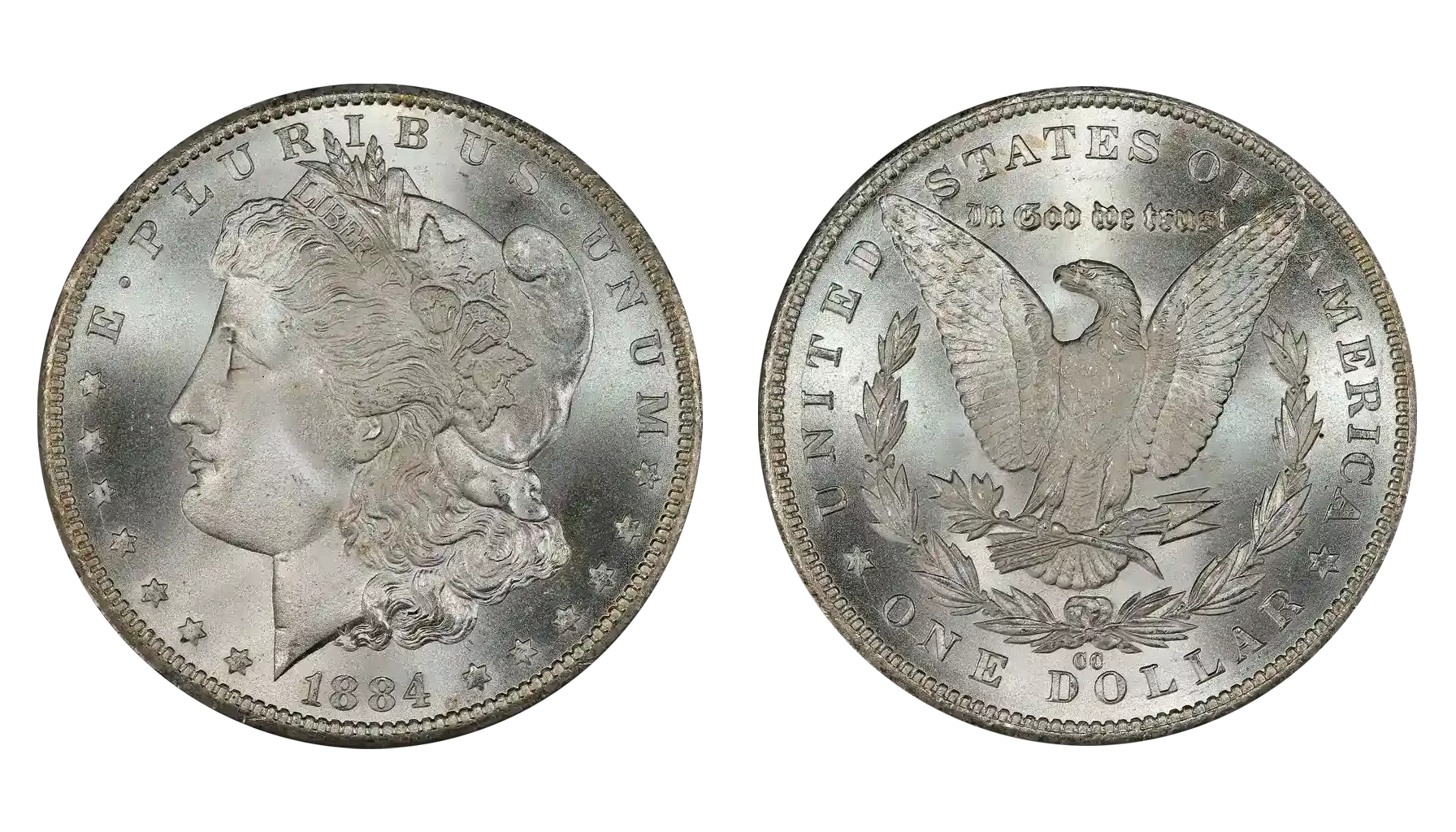
Contents:
- How Much Is a 1954 Nickel Worth Today?
- 1954 Nickel Value by Mint Marks
- 1954 Nickel Value Chart
- Is a 1954 Nickel Silver?
- Is a 1954 Nickel Worth Anything?
- Most Valuable 1954 Jefferson Nickel Examples
- 1954 Nickel Errors That Increase Value
- What Affects the Value of a 1954 Nickel?
- How to Identify a 1954 Nickel
- How to Tell If Your 1954 Nickel Is Valuable
- FAQ
The item from the long perspective series that began in 1938 and is still ongoing today. It reflects post-war coinage manufacturing and a stable alloy metal composition. While a 1954 Jefferson nickel value may appear common, its grade and mint mark can affect its value. The item is worth $0.05 to $100+ USD in the modern numismatic market.
How Much Is a 1954 Nickel Worth Today?
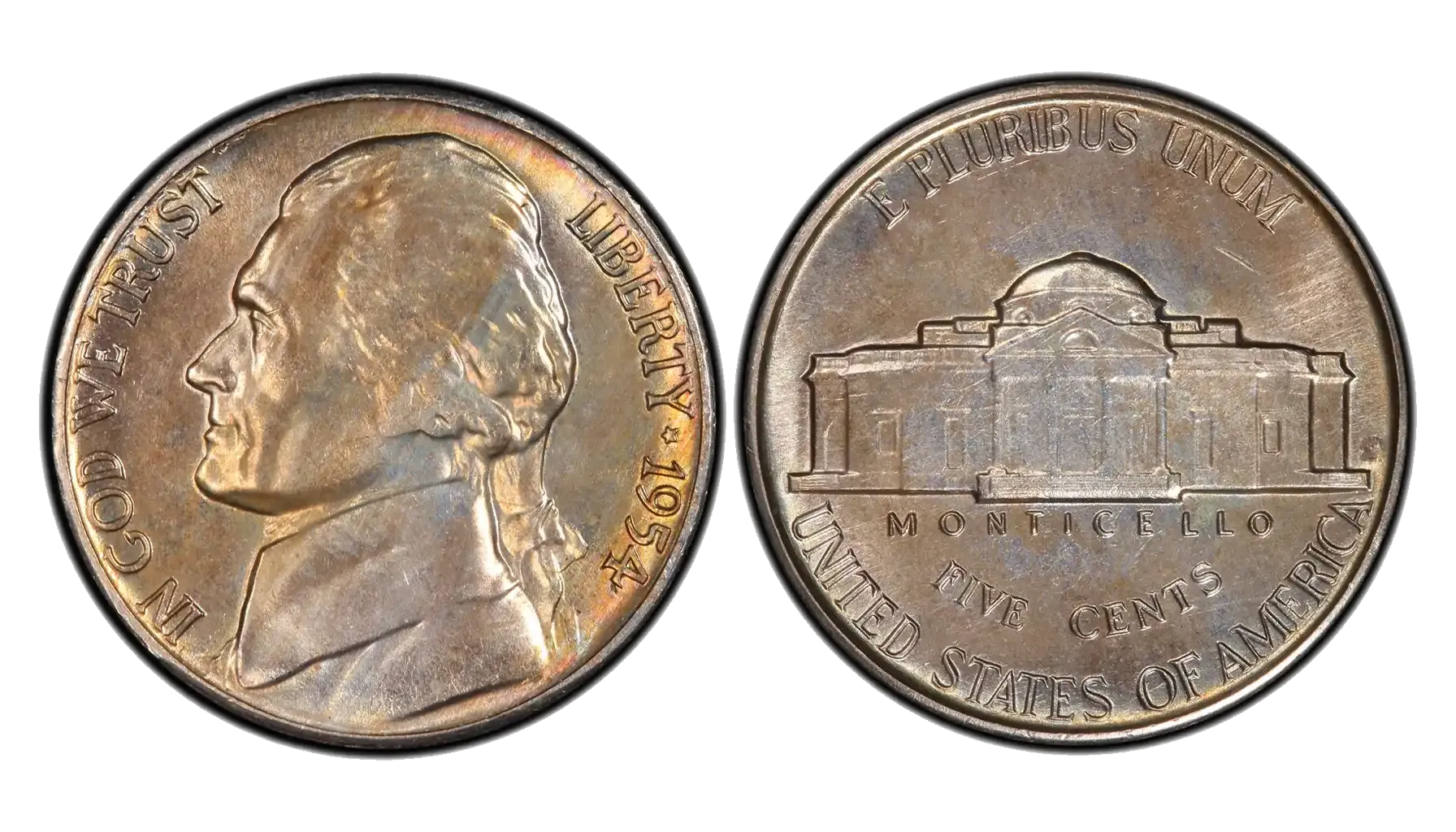
The current prices of Jefferson item coins depend on their condition. Coins that have been circulated trade close to their face value, while coins that are in uncirculated condition command higher premiums. Coins with certified grades above MS65 attract the attention of registry collectors.
The question of item worth has no simple answer, as the grade of the coin determines its value. Coins with strong luster and minimal contact marks can reach higher prices. Dealers use auction records and price guides to estimate the value of a piece when making real-world transactions.
The first price indicator is the Full Steps (FS). On the back (reverse) of the coin, look at the steps of Monticello. Most items were struck with mushy dies, leaving the steps flat. If you find an S with 5 or 6 fully separated, crisp horizontal lines on those steps, you are looking at a coin worth $35,000+. Because San Francisco strikes were notoriously weak that year, Full Steps examples are among the rarest in the entire Jefferson series.
1954 Nickel Value by Mint Marks
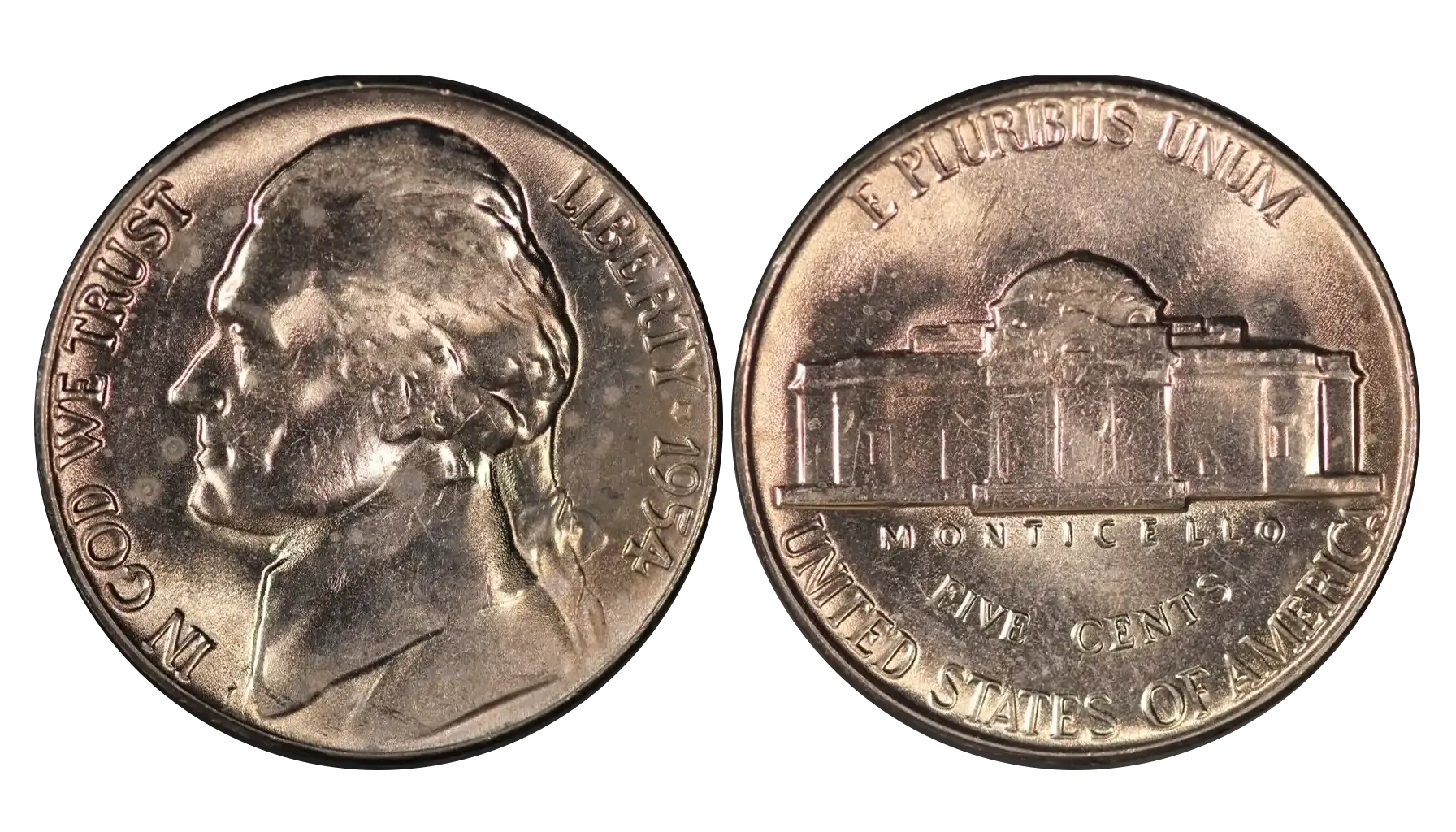
The location of the mark for 1954 is on the reverse side of the coin, just to the right of the image of Monticello. 1954 Nickel Value No Mint Mark: With a mintage of over 47 million, these are very common. They are easier to find with Full Steps than the San Francisco issue, but still command high premiums in MS-67.
1954 Nickel D: This was the high-production mint for the year, striking over 117 million pieces. Because so many were made, quality control was low, and Full Steps examples are quite scarce, leading to auction records near $10,000 for high-grade FS specimens.
San Francisco (S): This is the star of the 1954 series. The San Francisco mint was notorious for weak strikes this year. Finding an S with sharp, separated steps on the back is so rare that it is considered a Series Key. An MS67 Full Steps specimen is a five-figure trophy for any serious collector.
1954 Nickel Value Chart
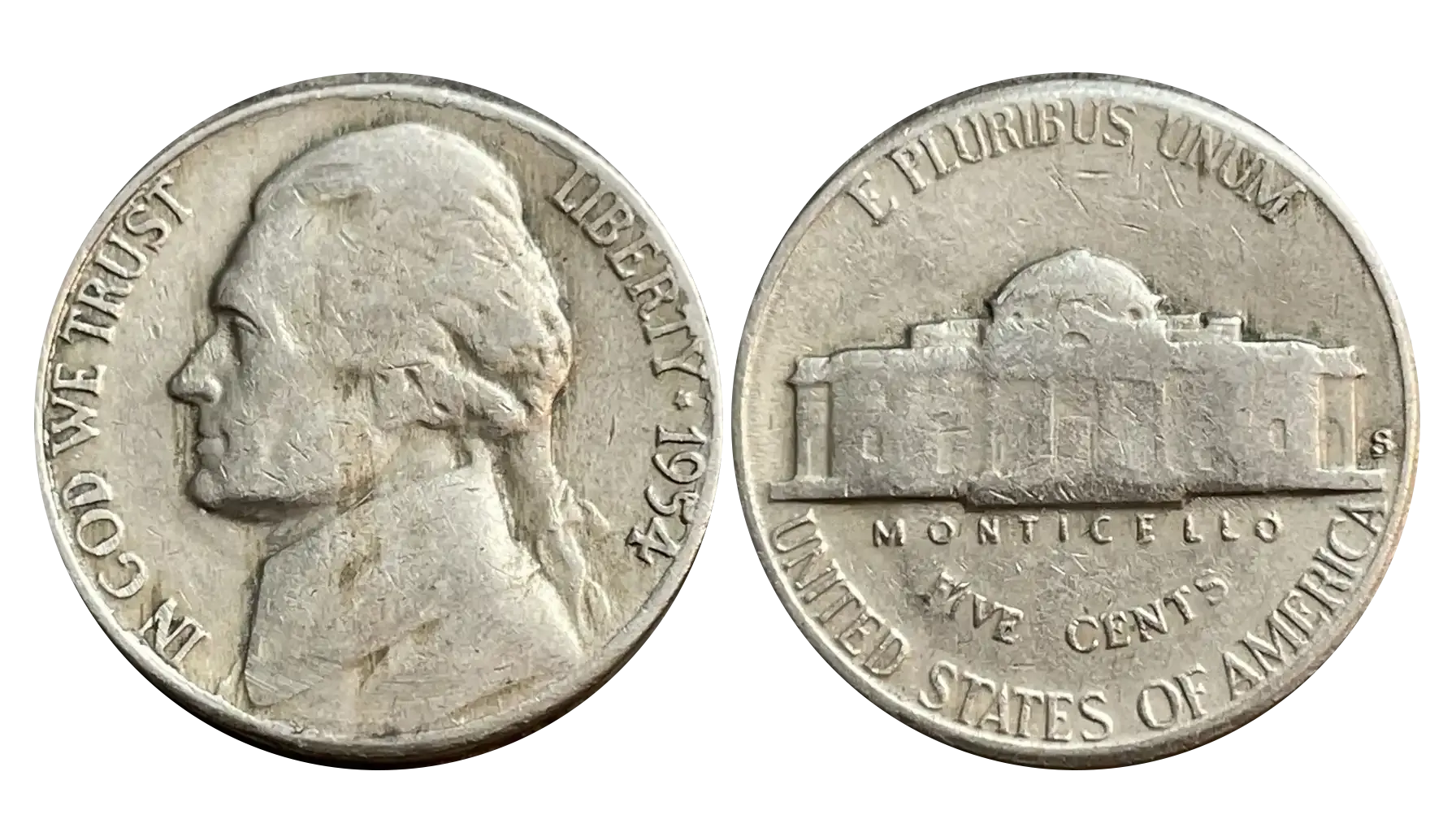
A value of 1954 nickel chart can help you compare prices across different grades and mint marks. The coin without a mint mark remains relatively stable in lower grades, but top examples show a significant increase.
Grade | Philadelphia | 1954 D Nickel Value | San Francisco |
MS-63 | $2–$4 | $2–$4 | $3–$7 |
MS-65 | $25–$40 | $30–$50 | $35–$60 |
MS-66 | $70–$110 | $150–$300 | $100–$250 |
MS-66 Full Steps | $600–$950 | $9,500–$12,000+ | $18,000–$25,000+ |
MS-67 Full Steps | $8,500+ | $15,000+ | $35,000+ |
The value of a piece explodes if it receives a Full Steps designation from a reputable grading service such as PCGS or NGC. To check for this designation, look at the base of the coin, specifically the back side.
You should see five or six clear, horizontal lines that represent the steps. If these steps are blurry or appear as one smooth ramp, which is common for pieces, the coin's value will be significantly lower.
Is a 1954 Nickel Silver?
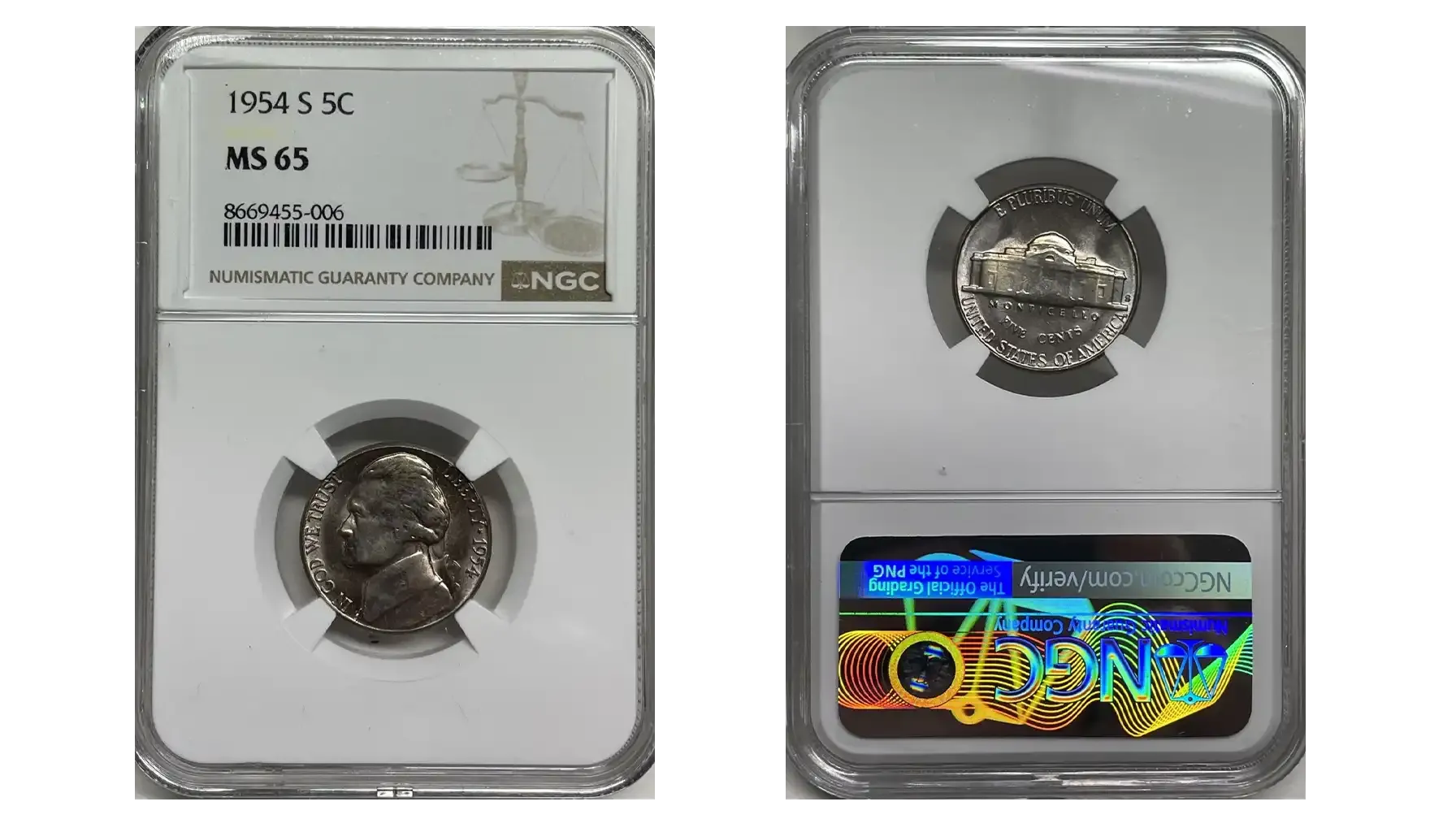
It would be confusing, a 1954 nickel no mint mark isn't made of silver. It's a mistake to think that old coins are all made of silver because the US Mint only used silver for nickels in World War II. Those coins were called War Nickels. They were 35 % silver. After the war, the Mint went back to its normal composition.
Here is the breakdown for the Jefferson coin:
75 % Copper
25 % Ni
0 % Silver
What is a 1954 nickel worth nowadays? If you are going through your collection of older coins and want to find the silver gems, look for these two unique features:
The Year: The coin date – 1942–1945
Note: Only the 1942 coin is silver.
The Large Mint Mark is because the silver War items have a very large mint mark above the dome of the building image on the back. If the mint mark is small and to the right of the image (for example, S), the coin is not silver.
Is a 1954 Nickel Worth Anything?
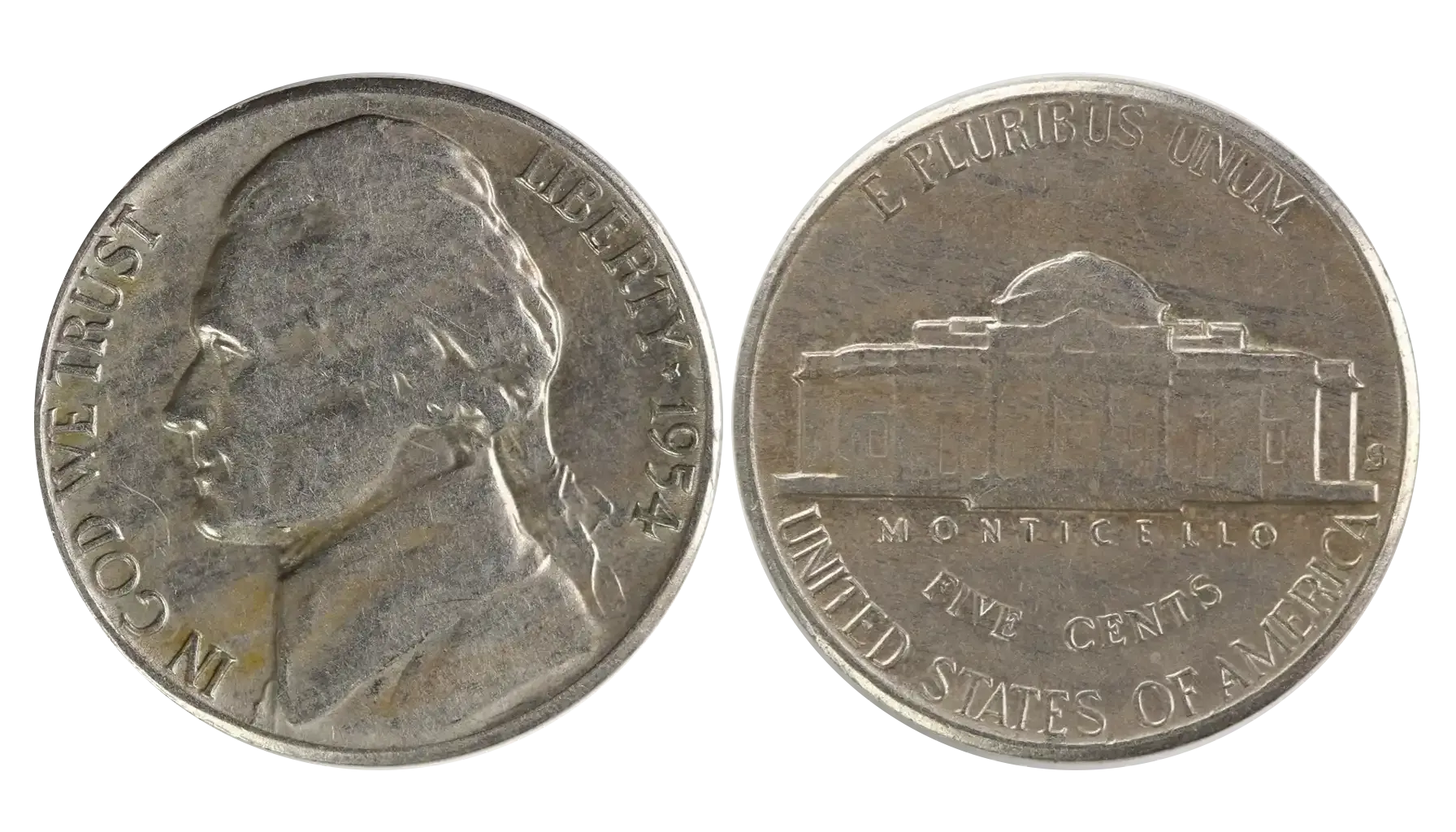
The coin has moderate value in its circulated form, but higher grades can change that. A piece, for example, will be worth more if it is in “new” condition. Coins with a guarantee with sharp details and a strong surface color, can attract higher investments from experts.
The 1954 S nickel value increases even when professionals complete their sets by grade. Even though it isn't silver, your piece could still be valuable to a professional person if it is in exceptional condition.
Face Item Value
Item with Full Steps (FS)
The S / D Error
Most circulated pieces are worth exactly 5 cents. If the steps on the back of the building are sharp and fully defined (not blurry or worn), the coin can be worth hundreds or even thousands of dollars. Some S items were struck with an S over a D mint mark; these rare varieties are highly sought after by collectors.
Most Valuable 1954 Jefferson Nickel Examples
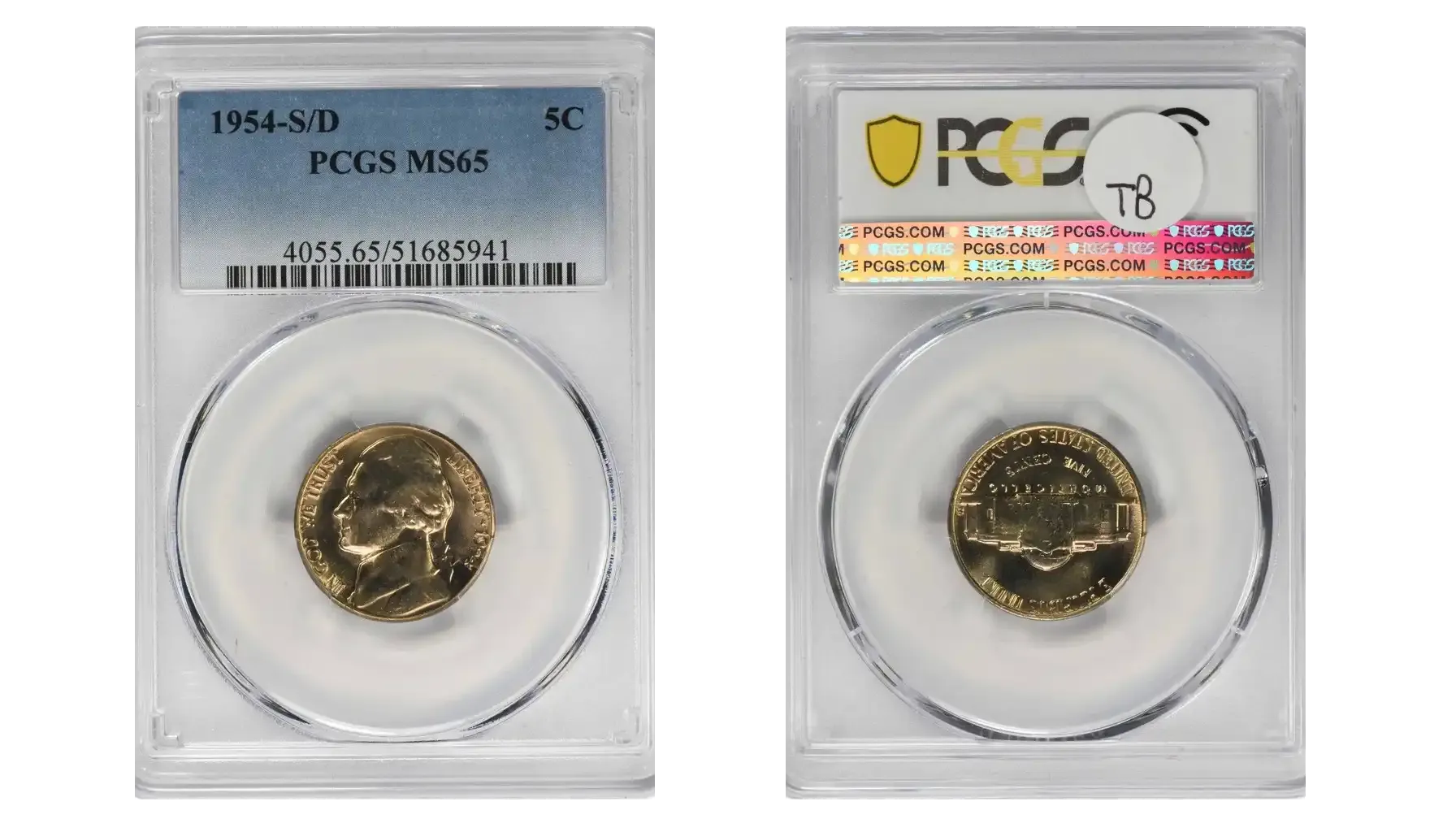
The San Francisco MS-67 Full Steps (FS) was notorious for weak strikes in 1954. Finding a coin with sharp, fully defined steps on Monticello is the ultimate challenge for piece numismatists. While a standard 1954-S in MS67 might sell for $650, the addition of the Full Steps designation pushes the price into five figures because so few were ever struck with that level of detail.
Variety | Grade | Value |
S Full Steps | MS-67 FS | $35,000+ |
D Full Steps | MS-67 FS | $15,000–$22,000 |
P Full Steps | MS-67 FS | $8,500–$15,000 |
S / D Error | MS-66 | $1,000–$3,500 |
While easier to find than the San Francisco MS-66 Full Struck (FS) version, a perfect Philadelphia coin is still a rare find. Current estimates for high mint 67 Philadelphia 1954 no mint mark nickel (FS) coin range from $8,500 to $15,000. As investors compete for the few coins that do not have any surface marks.
1954 Nickel Errors That Increase Value
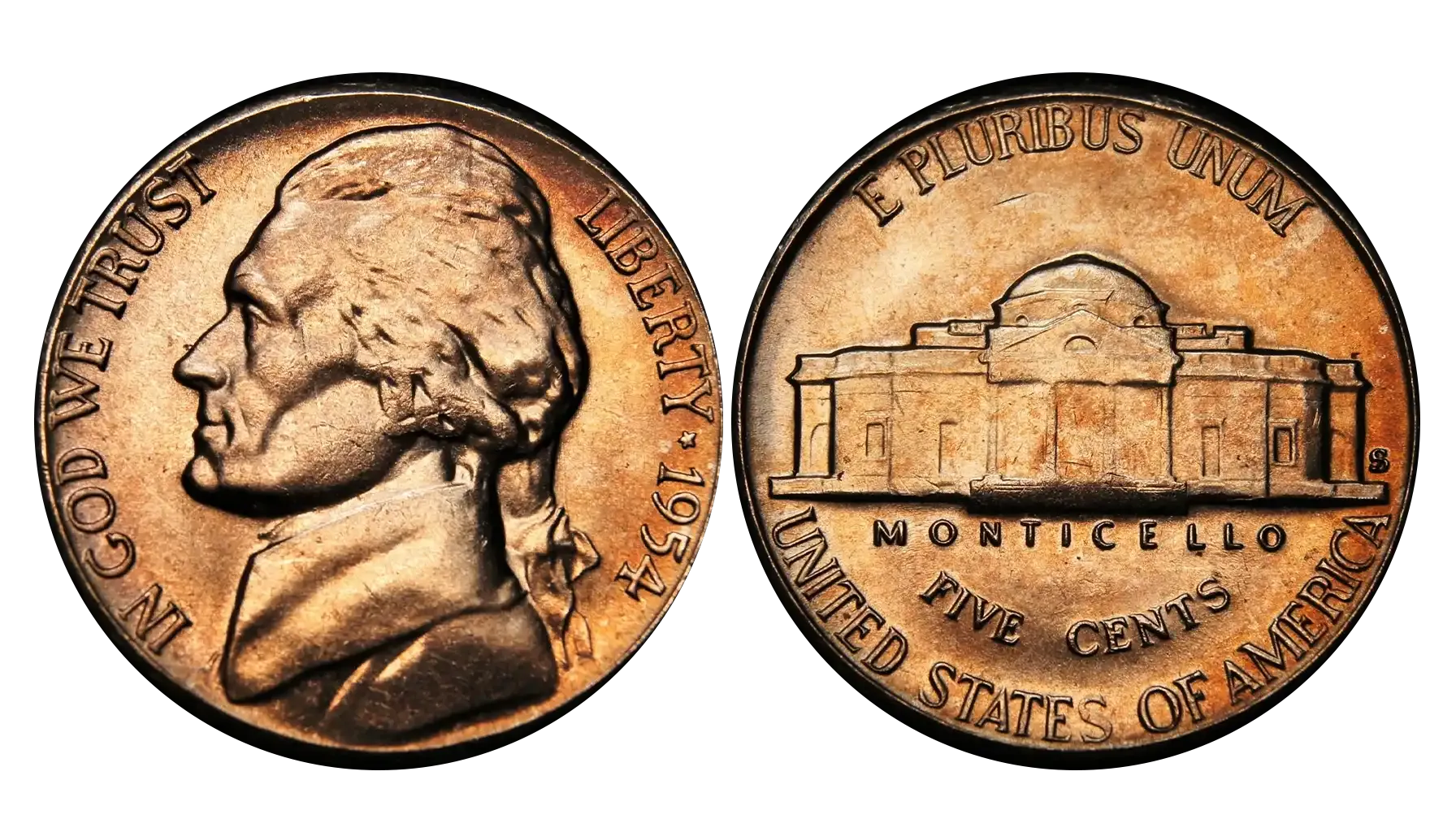
S Over D (OMM)
This is an Over-Mintmark (OMM) error where a San Francisco S was punched over a Denver D. It is the most famous variety for the year and is listed in the Cherrypickers' Guide as FS-501. Use a 10x loupe to look at the S mint mark. You should see the clear bottom curve or a vertical bar of a "D" protruding from underneath the S.
$30–$1,000+
Doubled Die Reverse (DDR) – FS-801
There are several doubled die reverses for 1954, but the S FS-801 is the most significant. Look for doubling on the words and motto. The doubling is most visible as a secondary shelf or shadow on the letters.
$75–$450
Repunched Mint Marks (RPM)
Both Denver and San Francisco items feature numerous RPMs where the mint mark was punched into the die multiple times. Look for a D punched slightly to the south or east of the primary mark. These are common but popular. Various "S" over "S" varieties exist. New level grade pieces with clear separation between the two "S" marks.
$15–$100
What Affects the Value of a 1954 Nickel?
The value of a piece ranges from a complex interplay of several factors:
The condition of the coin
The mint mark
The strike quality
The factors are all crucial elements that influence its worth. Moreover, the preservation of the coin's surface and luster starts an important desirability process.
The demand for a particular coin can fluctuate over time because of market forces and political instability. The competition among numismatists and the evolving trends in grading can drive prices for high-end coins upwards. Even minor differences in the grade of a coin can impact its classification and its value.
Because of budget cuts at the Mint in 1954, metal quality was often poor. Numismatists look for Lamination Cracks (where the surface of the coin appears to be peeling) or Woody Toning (streaks caused by an improper metal mix). While these are technically errors, they add a unique character that can increase the price by $10 to $50 for mid-range collectors.
How to Identify a 1954 Nickel
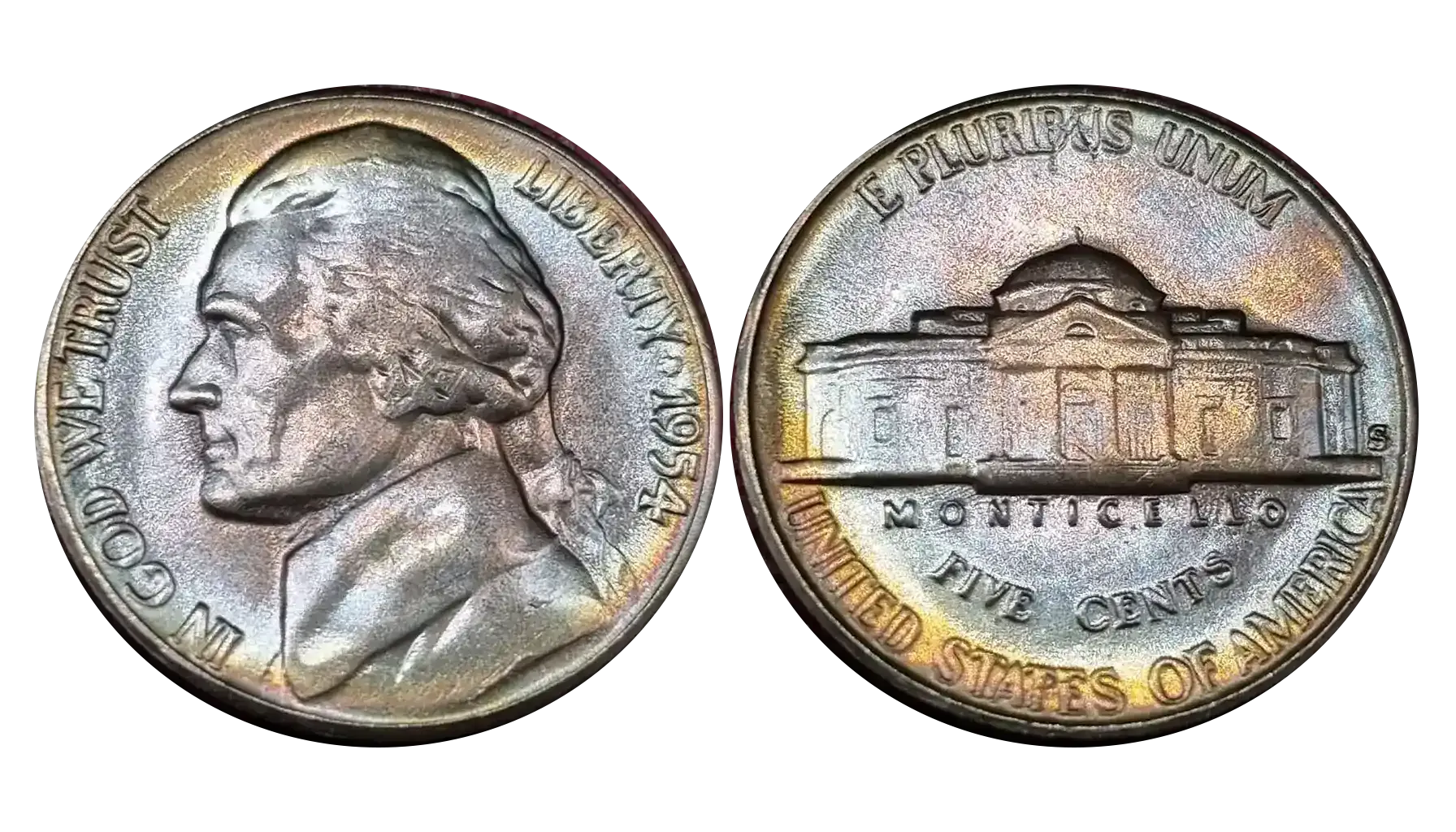
Identification begins with the date on the obverse and building on the reverse. The mint mark is visible to the right of Monticello. A piece with no mint mark originated from Philadelphia. Collectors inspect some features to confirm its authenticity and detect any alterations:
Edges
Weight
Surface texture of the coin
To verify the coin identity, first locate the mint mark on the reverse side, to the right of the building image. The mark may be a D for Denver, an S for San Francisco, or no mark for Philadelphia. Then, look for the obverse of the portrait of Thomas Jefferson with the motto "IN GOD WE TRUST" and the date below.
To assess the coin's condition, check for wear on Jefferson's hair and the steps of Monticello. Full, distinct steps indicate higher preservation and value. To confirm the coin's authenticity, verify its weight of 5 grams and diameter of 21.2 mm.
Composition | 75 % Cu, 25 % Ni |
Weight | 5.00 grams |
Diameter | 21.2 mm |
Edge | Plain |
Mint Marks | D and S |
The specifications for the Jefferson coin are consistent, which makes verification easier. Compare characteristics with the 1948 nickel value professional guide.
How to Tell If Your 1954 Nickel Is Valuable
Examine the:
Luster
Striking features
Marks of your coin
Specimens with sharp steps, such as those found on Monticello, often command high prices. Professional grading services provide a reliable evaluation.
"The 1954-S Jefferson Nickel might even be considered a key date for the Full Step variety. The value ranges from less than $1,000 to over $35,000 for the highest grades with the Full Step designation. This is a massive jump in price due to the rarity of this issue date with such detail."
– Bullion Shark
Numismatic Guide
Compare your coin with certified specimens and recent sales data. The item price increases when its condition approaches gem perfection. Proper storage is crucial, as damage can reduce the appeal and other $ characteristics.
After the basic identification, you should check the three rare error types:
S Over D (OMM) – a small D or its remnants peeking out from under the S mint mark ($20–$3,450)
Doubled Die Reverse – noticeable doubling on the words "FIVE CENTS" or "MONTICELLO" ($50–$150)
Lamination Peel. The surface of the coin looks like it’s peeling or has a deep crack ($20–$70)
FAQ
Is a 1954 nickel pure silver?
No, it is not true. The alloy contains copper and nickel with no 1954 nickel silver content.
What makes a 1954 nickel special?
Condition and strike quality create interest, not rarity alone. Pay attention to the Full Steps specification and unique defects.
Where is the mint mark on a 1954 Jefferson Nickel?
Look at the right of the reverse item. It appears near the Monticello image building.
How much is a 1954-S penny worth today?
This question refers to a different denomination. Value depends on that item’s condition and grade.
How much is a 1954 nickel worth?
The prices vary from face value up to over one hundred dollars for top grades. Our advice is to check online platforms' prices regularly.
How many 1954 nickels were made?
Production reached hundreds of millions across all mints, which explains the wide availability today. Philadelphia and Denver are the most popular mints.

 Facebook
  X (Twitter)
  Pinterest
  LinkedIn