Contents:
- How Much Is a 1920 Penny Worth Today?
- 1920 Wheat Penny Value by Mint Marks
- 1920 Wheat Penny Value Chart
- Is a 1920 Penny Rare or Valuable?
- Most Valuable 1920 Wheat Penny Ever Sold
- 1920 Wheat Penny Errors That Increase Value
- How to Identify a 1920 Lincoln Wheat Penny
- What Affects the Value of a 1920 Penny?
- How to Tell If Your 1920 Penny Is Worth More
- FAQ
The Lincoln 1920 penny value price is fairly stable in the numismatic market, with the exception of the highest-quality coins. Prices start at $0.50 per cent and can range up to $3,000 or more.
How Much Is a 1920 Penny Worth Today?
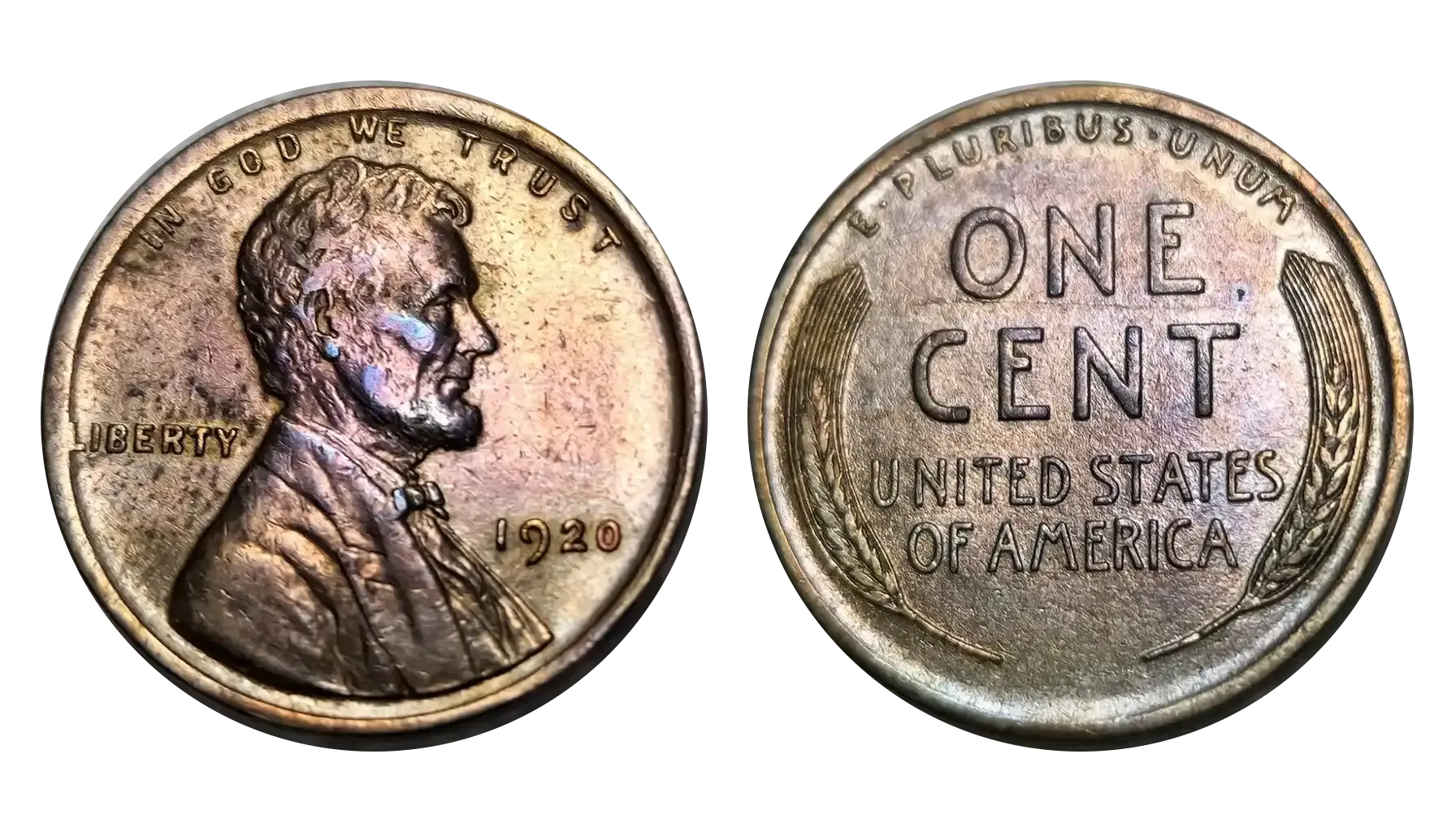
In numismatic markets, experts determine the contemporary valuation of a Lincoln cent by two key criteria: the coin’s physical condition and its place of origin (mint mark). For a 1920 penny no mint mark that has been used in everyday transactions for decades, wear becomes visible. These worn copper coins have a market value between $0,50 and $2,00. The reasons for this range include the following:
The composition
Uniquness
When a Lincoln cent remains in mint state – meaning it has never been in circulation – the valuation increases substantially. Collectors and dealers assign a much higher price to such specimens compared to those with visible wear.
The most valuable 1920 Wheat penny value today, according to actual market prices. The price is ultimately determined by the interplay of:
Rarity
Demand
The microscopic details
1920 Wheat Penny Value by Mint Marks
S Item Mintage – 46,220,000
The San Francisco coins from this period often suffer from mushy strikes. Because the dies were frequently overused, finding a 1920 S penny value with sharp Wheat Stalk definition and full original luster is exceptionally difficult. This scarcity drives the price of high-grade specimens – those designated Red (RD) – well beyond their circulated counterparts.
The 1920 D penny value is 49,282,000. Despite having about 3 million more coins minted than San Francisco, the D is notoriously difficult to find in Gem condition.
1920 Wheat Penny No Mint Mark item mintage 310,165,000
With over 310 million struck, Philadelphia is indeed the most accessible. However, because it was so common, very few people thought to save them in the year. While a standard circulated copy might only be worth a few cents, a Superb Gem (MS-67 Red) can still fetch thousands of dollars at auction because so few were preserved in a flawless state.
1920 Wheat Penny Value Chart
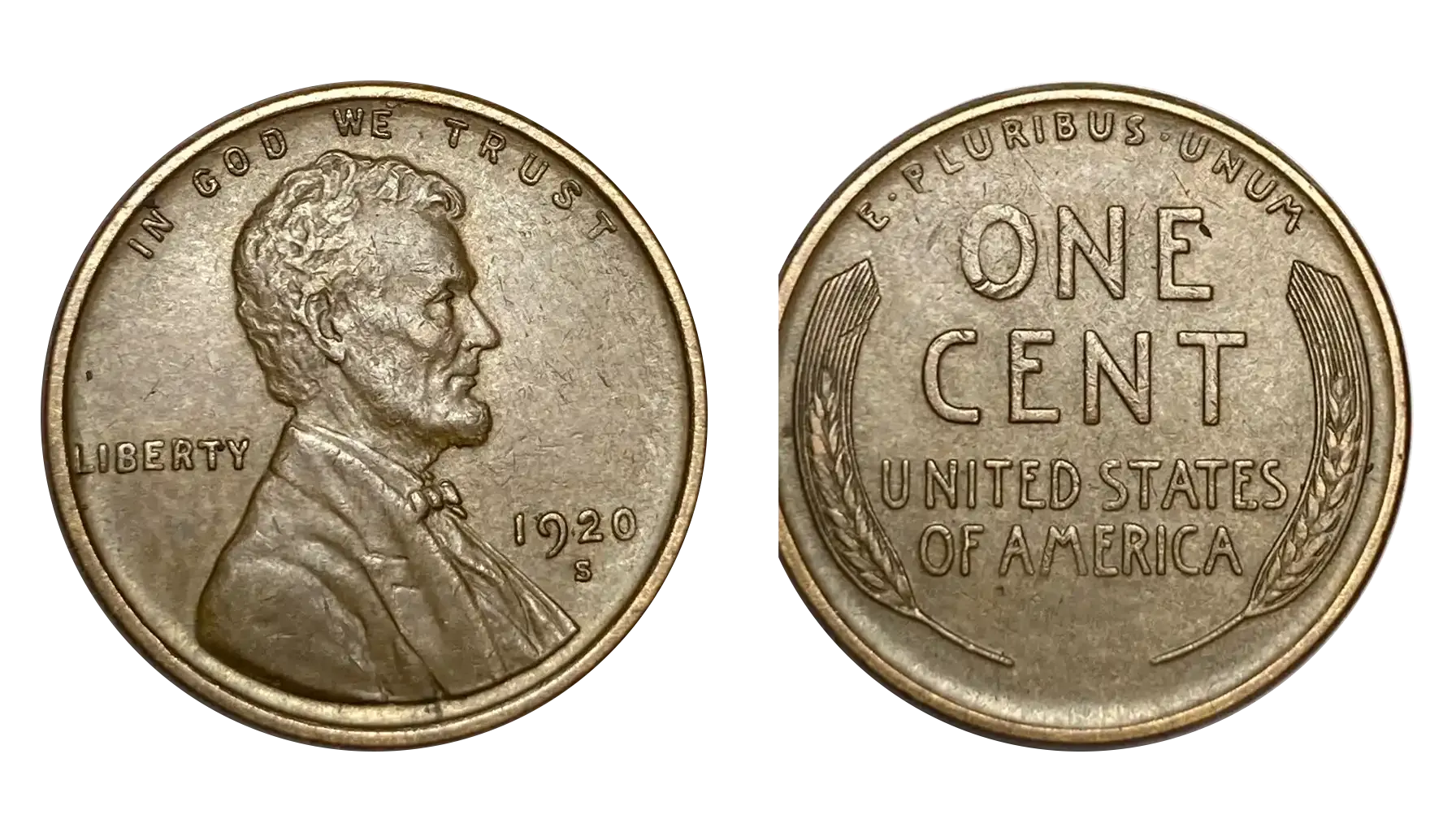
Numismatic grading standards for copper include a dual classification system. Second, the coin is assigned a color designation. This designation indicates the preservation of the original copper surface. Three official color categories are recognized in professional grading:
Brown (BN) — minimal original red color remains
Red‑Brown (RB) — partial retention of red copper tone
Red (RD) — full or nearly full retention of bright red color
This combination of numeric grade and color designation allows for a more accurate and consistent valuation of copper in the collector market.
Grade | P | D | 1920 S Wheat Penny Value |
Good–Fine | $0.20–$1.00 | $1.00–$5.00 | $0.75–$4.00 |
Extremely Fine | $2.00–$5.00 | $15.00–$25.00 | $12.00–$20.00 |
Uncirculated | $10.00–$15.00 | $45.00–$65.00 | $40.00–$60.00 |
Brown MS-63 | $25.00–$35.00 | $120.00–$160.00 | $140.00–$190.00 |
Red MS-65 | $150–$250 | $500–$850 | $1,200–$2,500+ |
Is a 1920 Penny Rare or Valuable?
For the 1920 Wheat penny value no mint mark series, the number of coins that survived 106 years without being scratched or corroded. Circulated Grades (G-4 to AU-58) compare to a 1920 Canadian penny; millions of pennies are common today in worn condition.
Gem Mint State (MS-65 and above) – in the year, the concept of coin collecting was far less mainstream than it is today. Very few people thought to pull a fresh roll of pennies from the bank and tuck them away in a climate-controlled environment.
However, market analysis reveals that condition is a critical factor in rarity. In lower circulated grades — where wear is visible — these pennies remain abundant and are not classified as rare. A different pattern emerges for specific mint varieties:
D Item
The San Francisco Item
It is much harder to find examples of the two varieties in uncirculated condition. Most known specimens show signs of having been in circulation. Only a limited number remain in a state where no wear is visible. Auction records and dealer inventories confirm that uncirculated examples of the mint varieties are scarce.
"In MS65 Red condition, the 1920 Lincoln cent is a major condition rarity. While millions were struck, very few escaped the heavy circulation of the era in pristine, original red color."
– Jaime Hernandez, expert
PCGS
Most Valuable 1920 Wheat Penny Ever Sold
What is a 1920 Wheat penny worth in US auctions? High auction prices for the 1920 penny value no mint mark, show how condition rarity affects value. To set a record at auction, a coin must have its original Red (RD) color preserved.
$48,000 | San Francisco | Ultra-rare sharp strike on an S mint coin |
$25,300 | Denver | Exceptional preservation of original copper color |
$16,800 | Philadelphia | A near-perfect MS-67+ grade |
This specific S coin possessed a level of strike sharpness and original fire-red luster that is almost never seen on S pennies. Most survivors from this mint are mushy or brown.
It is a luck to find an item from the Denver mint that still has its full red color without dark oxidation spots. Among all the known examples of this type of coin in the world, this particular specimen is one of the finest. Numismatic specialists consider it to be among the best examples that have been recorded so far.
1920 Wheat Penny Errors That Increase Value
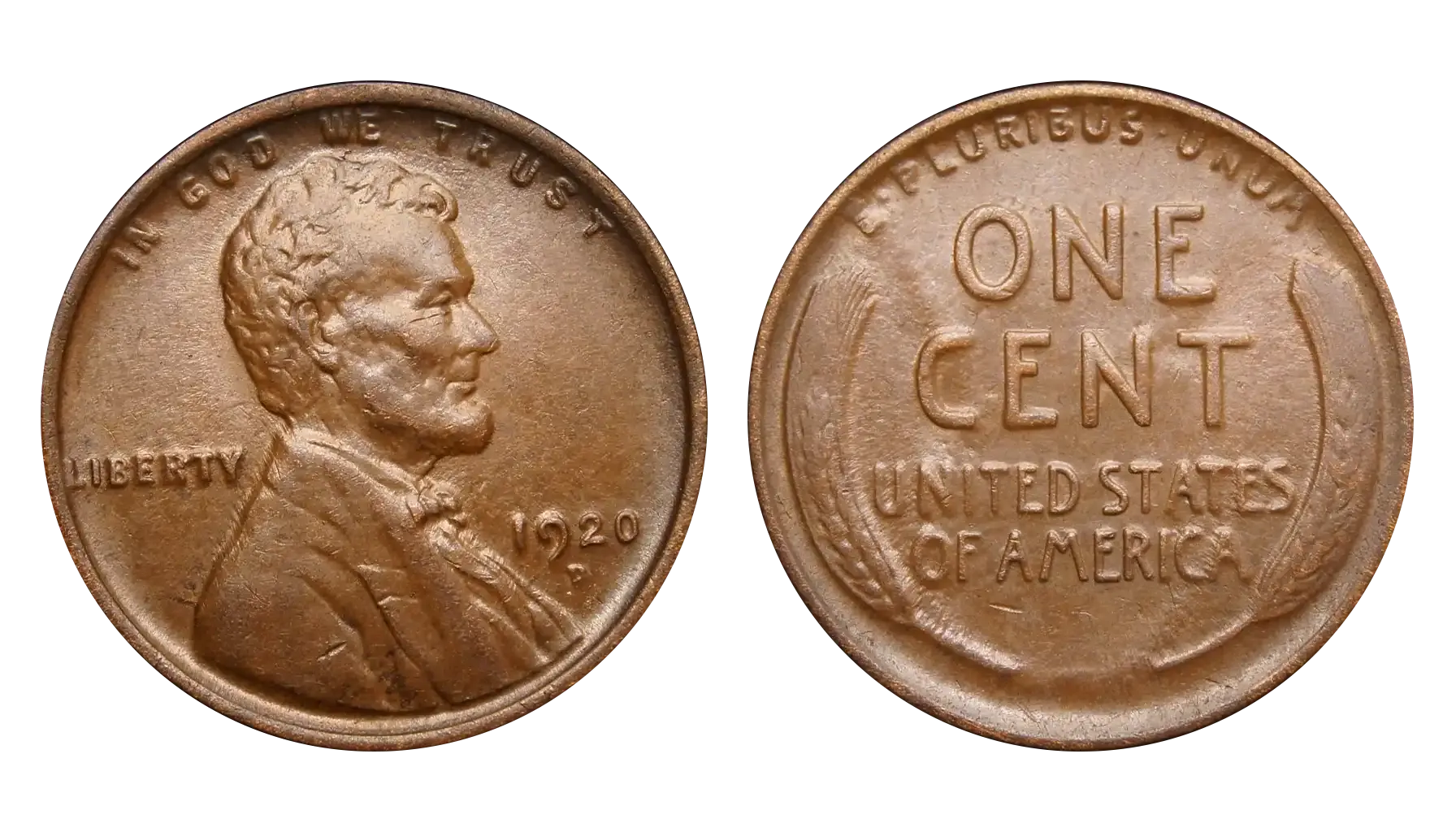
The Woody Issue Error
This is the most famous variety for the series. It occurs when the copper and other metals aren't blended perfectly and create a wood-grain texture or striations across the surface.
$5–$20 USD
Item Lamination Errors
Lamination occurs when a piece of the coin's surface cracks or peels away due to impurities in the metal. This was a common issue for the Denver Mint.
$5–$100 USD
Die Cracks and CUDs on the Items
As dies aged and broke under pressure, they left raised lines of metal on the coin. The "BIE" error sometimes results in a vertical die crack developing between the B and the E, looking like a capital "I." While common in the 1950s, a "BIE" is a scarcer find.
$100+ USD
Off-Center Strikes
These are dramatic and easy to spot - the coin's design is shifted, leaving a crescent-shaped blank area.
$10–$500 USD
How to Identify a 1920 Lincoln Wheat Penny
You should compare several features in the list below:
Rims
Mint Marks (No / D / S)
Clear and distinct date of the year
Abraham Lincoln's clear profile with details
The main motto behind the Lincoln
Item Specifications
Before purchasing, check the weight, diameter, edge, composition, and edge patterns. Pay attention to professional numismatic equipment and check the photos on the online platforms.
Coin shows serve as centralized marketplaces. They bring together multiple coin dealers in one location at the same time. The events give numismatists the opportunity to interact with many sellers and view a broad selection of coins without visiting separate shops.
Weight | 3.11 g |
Diameter | 19 mm |
Edge | Plain |
Composition | Bronze |
Designer | Victor D. Brenner |
Obverse | The portrait, year, mint, and motto |
Reverse | Mottos and nomination |
Attention: If you ever see a piece listed for over $100,000, those are usually misleading references to rare errors (similar to the 1943 copper one) or Proof coins from other years. For a standard business strike, these five-figure sales represent the absolute ceiling of the market.
What Affects the Value of a 1920 Penny?
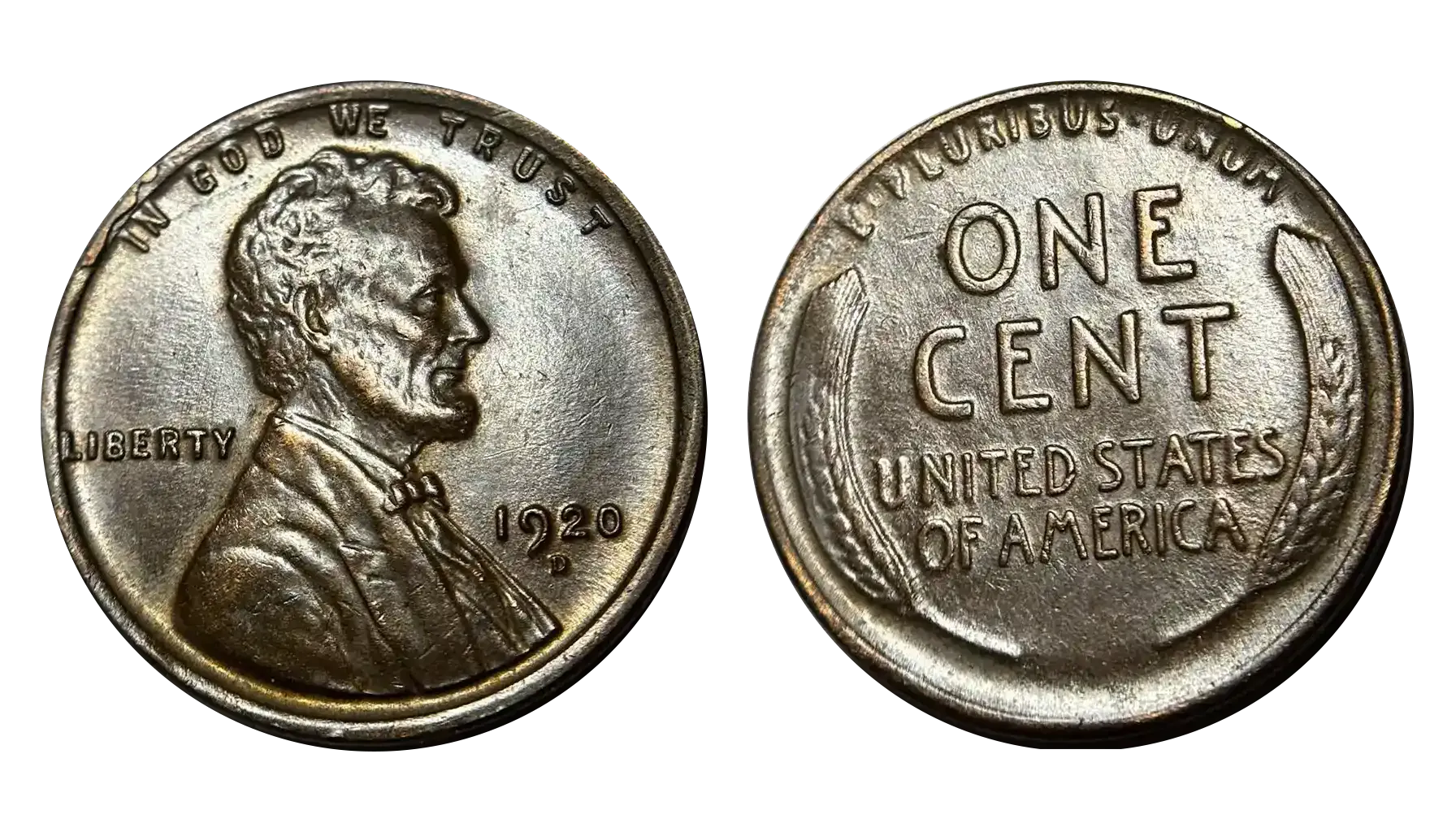
Several converging factors determine what is a 1920 penny worth in any given transaction. A coin’s grade assesses wear on Lincoln’s hair, cheekbone, and the separation of the wheat stalks.
Luster, the cartwheel effect of original mint brilliance in uncirculated specimens. A coin with its original red color commands a premium over those that have turned brown because of oxidation. Color mixes arise accordingly after these processes.
The 1920 D Wheat penny value consistently surpasses the Philadelphia issue because of lower item mintage and a tougher survival profile. Market demand fluctuates based on collector interest in the Lincoln series pieces, with the issue benefiting from its status as a mid-range date for numismatist experts.
Finally, two main factors can increase the value of a coin by 20 % to 50 %: its provenance and certification by a major grading service. Examples of such as services include PCGS and NGC online grading services.
How to Tell If Your 1920 Penny Is Worth More
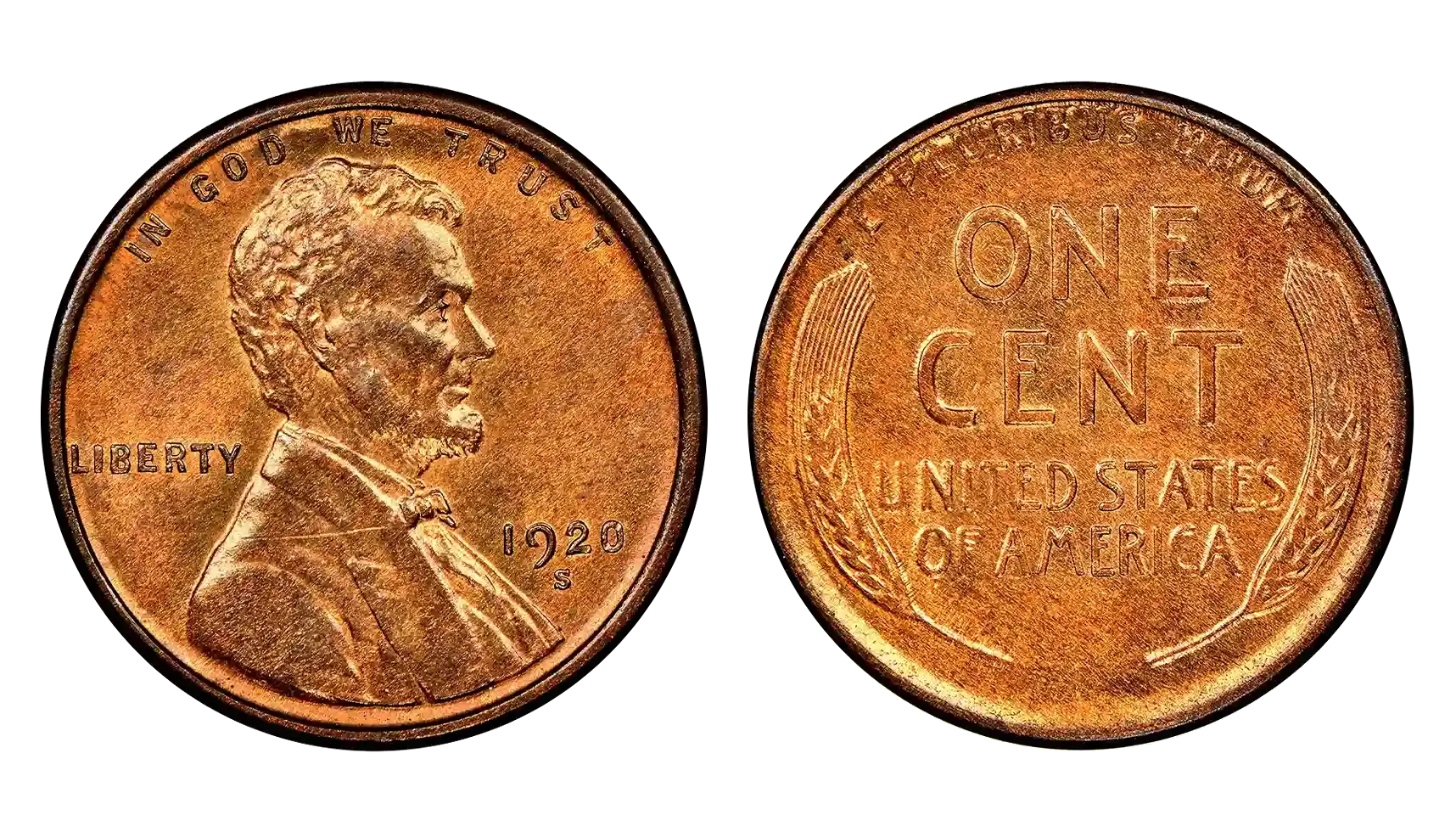
A value of 1920 Wheat penny S or Denver issue in good condition immediately holds a base value higher than a Philadelphia coin. Next, assess the coin’s color. A piece retaining significant Red (RD) luster is a candidate for professional grading.
Such coins often yield the highest figures. Do not miss the other important colors, such as Brown and Red-Brown mix, which affect the numismatic prices. Natural color changes in the coin indicate irreversible processes and a huge increase in costs.
Why are some quarters painted red? If the coin displays no visible wear and the design is sharp, it falls into the uncirculated category.
Use a magnifying glass to search for doubling in the date or mint mark, or for any unusual raised elements indicating a die break. Is a 1920 penny worth anything question shifts from a few dollars to a valuation that warrants professional appraisal and certification.
FAQ
What makes a 1920 penny rare?
The color always makes the coin rarer in the numismatic market. Check if your coin has a red, brown, or mixed color. In combination with the higher categories of coins, this is a nuclear mixture in terms of pricing policy.
Are coins from 1920 worth anything?
Yes, coins are absolutely worth more than their face value because they are made of 95 % Cu. Even a common, worn-out piece from that year sells for at least 20 to 50 cents, while rare mint marks or high-quality pieces can be worth great sums.
How much is a 1920 penny worth?
The value of an item usually ranges from about 20 cents for a Philadelphia coin to over $200 for an uncirculated San Francisco or Denver piece. If you happen to find one in pristine Red condition with no wear, the price can skyrocket into the thousands at a professional auction.
Should I clean my 1920 penny?
You should not clean your gem because you will damage the original surface. Professional numismatists prefer the natural patina that comes with age.
How much is 1920 one penny worth?
This question aligns with the general valuation. A single item’s worth is determined by its condition and mint mark.
Is a 1920 penny copper?
The item contains only 5 % not copper metals. Because of this metal, it is worth more than its one-cent face value in raw copper melt.
Where is the mint mark on a 1920 penny?
The mint mark on a piece is located on the head's side, tucked neatly right below the date. If you don't see a small D for Denver or an S for San Francisco in that spot, it means the coin was struck at the main Philadelphia Mint.
What is a 1920 penny made of?
An item is composed of copper/tin/zinc, a mixture known as French Bronze. The alloy durability was the standard for Lincoln cents until the metal composition was famously changed to zinc during World War II.
How many 1920 pennies were minted?
In the year, the United States Mint produced a massive total of 405,667,000 pennies across its three operating facilities. The vast majority, over 310 million, came from Philadelphia. The process makes that specific version the most common one found in collections today.

 Facebook
  X (Twitter)
  Pinterest
  LinkedIn