Contents:
Why do collectors search this American Barber series items? The beginning of the 20th century continue showes the world interesting pieces, that now turning into rare items. This guide provides root knowledge for professional enthusiasts and become the excellent start for beginners.
What is the 1909 dime value today? Start your history of the 1909 US dime with an app to identify coins and values.
The 1909 US Dime at a Glance
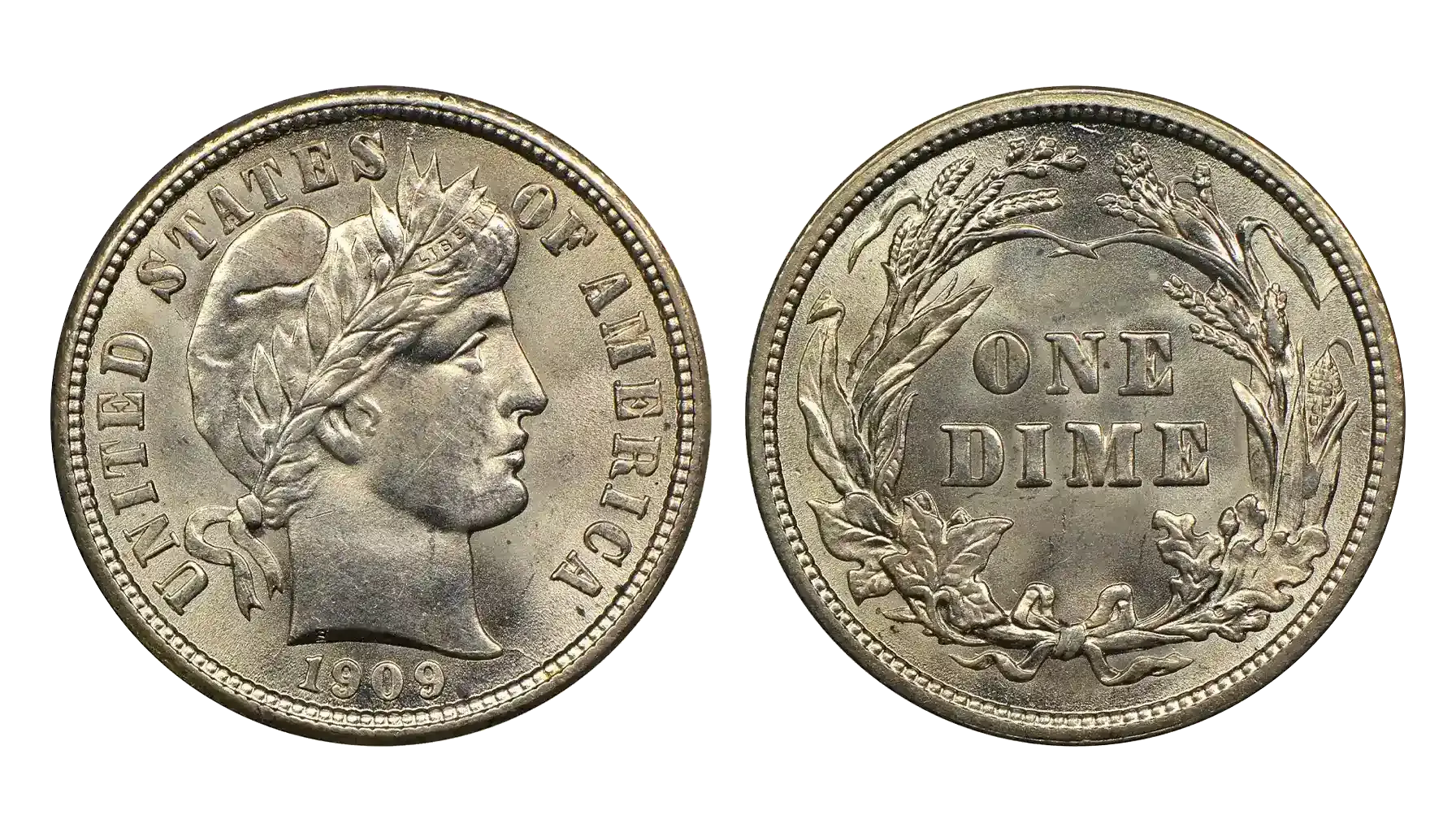
Throughout 1909, the nation continued to use the Barber design. Decades before, Charles E. Barber had given life to this concept. From traders to citizens, the item moved through countless hands, powering daily commerce.
In those days, silver items formed the backbone of everyday transactions. Time has left its mark – pristine examples remain elusive treasures.
The date creates confusion with later types, such as the Mercury dime. Research often separates this item from the 1909 Mercury dime value, which belongs to a different design introduced years later.
Principal Characteristics
The Barber series for that period has unique parameters such as weight, edge, and diameter. Compared to the 1962 quarter, the composition same, but the weight is bigger.
Period | 1892–1916 |
Diameter | 17.9 mm |
Weight | 2.5 g |
Edge | Reeded |
Composition | Silver |
Designer | Charles E. Barber |
Note: The same diameter and weight as the 1908 Barber item.
1909 Barber Dime and Silver Content
Composition: 90 % silver, 10 % copper (matches Barber series).
Silver weight: 0.0723 troy oz.
1909 silver dime: metal value equal price baseline
Demand drivers: condition, mint origin (not metal alone).
Be Aware: Collector Tricks
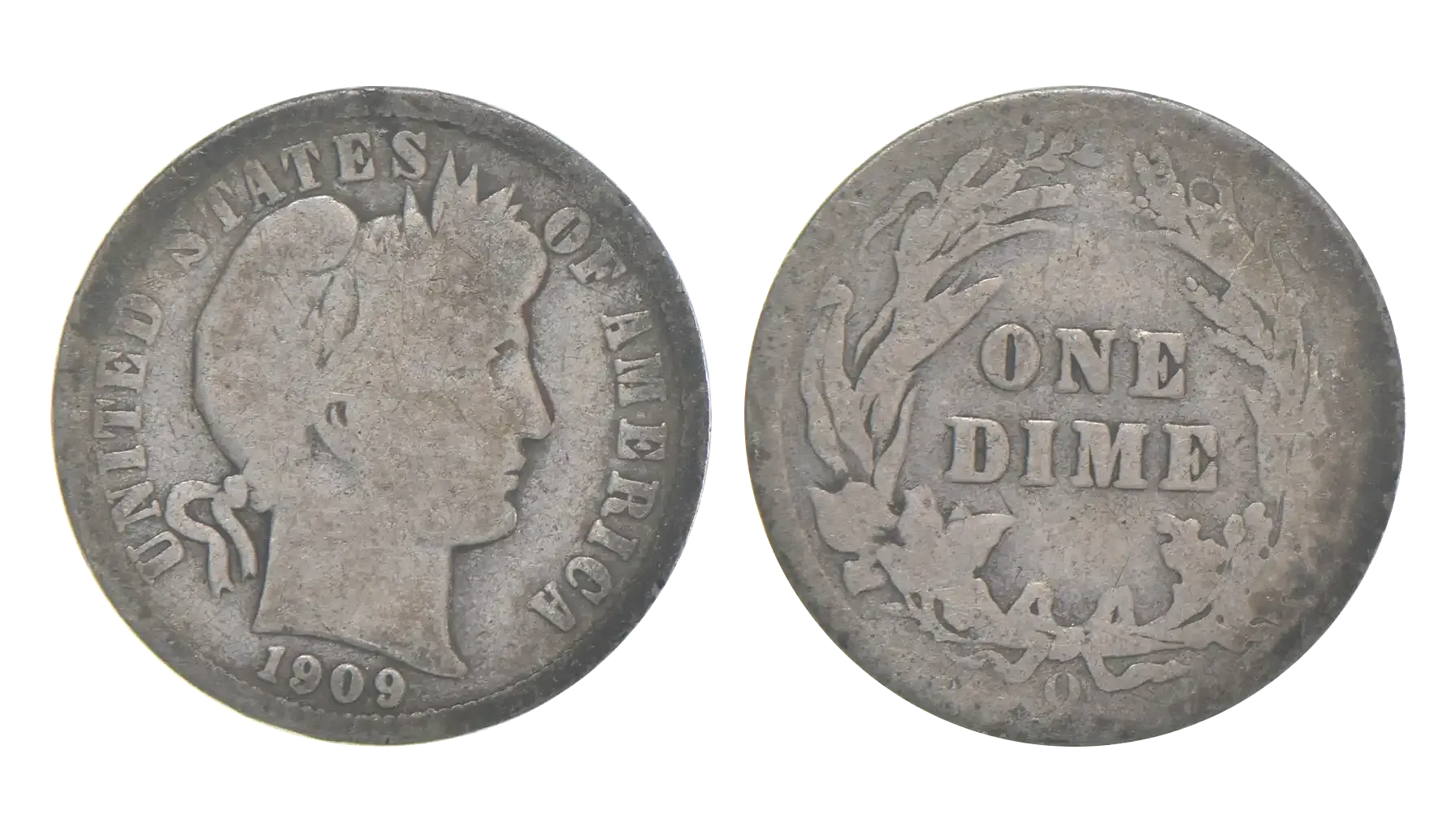
Sometimes confuse this coin with other issues. Some search for a 1909 dime with V on back, yet that reverse belongs to Liberty Head nickels rather than dimes. Because the Liberty image looks nearly identical on the front of both coins, many people mistake the nickel for an item.
Other confusion arises with the 1909 Canadian dime, which follows a separate national standard and design. The item is a significant piece of Commonwealth history, featuring King Edward VII. It is highly sought after because of its high silver content and its two distinct varieties of leaves.
1909 Barber Dime Value and Mint Marks
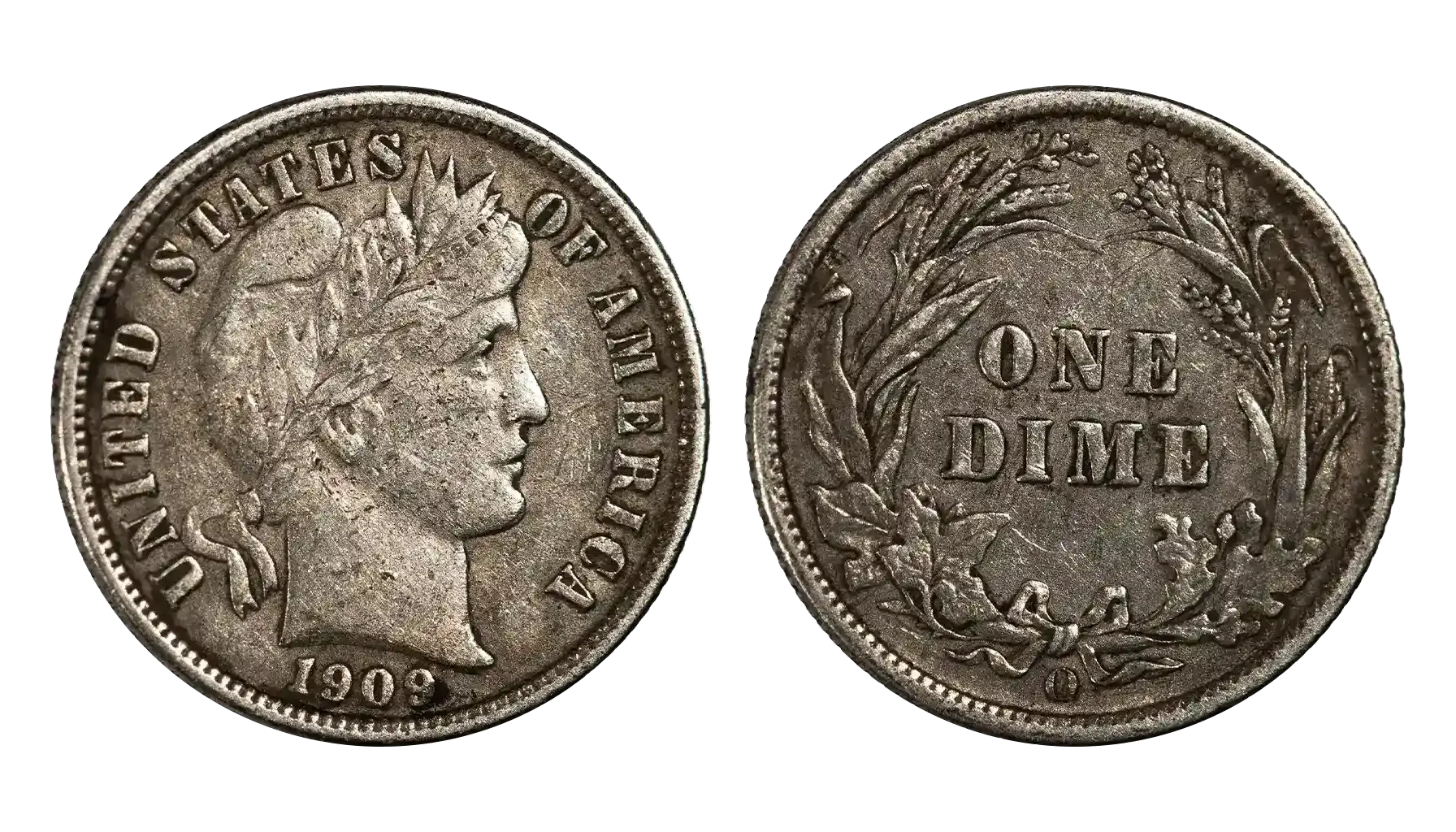
How much is a 1909 dime worth in recent days?
The year 1909 saw item production at three distinct mints. In Philadelphia, items emerged without any mint mark as their signature. New Orleans stamped theirs with a proud “O,” while San Francisco marked theirs with an “S.”
Among collectors, the 1909 O Barber dime has earned a reputation for moderate rarity. The 1909 S Barber dime counterpart proves even more elusive when seeking higher grades. A closer look reveals differences in strike quality – New Orleans coins often show less crisp detail at the center.
Mint | Mintage | Good | Fine | Extremely Fine | Uncirculated |
No Mint Mark | 10,240,000 | $4 | $6 | $25 | $75 |
D | 954,000 | $8 | $30 | $140 | $225 |
O | 2,287,000 | $5 | $13 | $70 | $150 |
S | 1,000,000 | $9 | $80 | $180 | $310 |
What about high mint prices? The list of these pieces can surprise you because early items are increasing in price. However, MS-66+ and later positions reach more than a thousand dollars.
MS-65+ – $600
MS-66 – $950
MS-66+ – $1,650
MS-67 – $3,750
MS-67+ – $8,000
Where Can I Buy Other Rare Pieces?
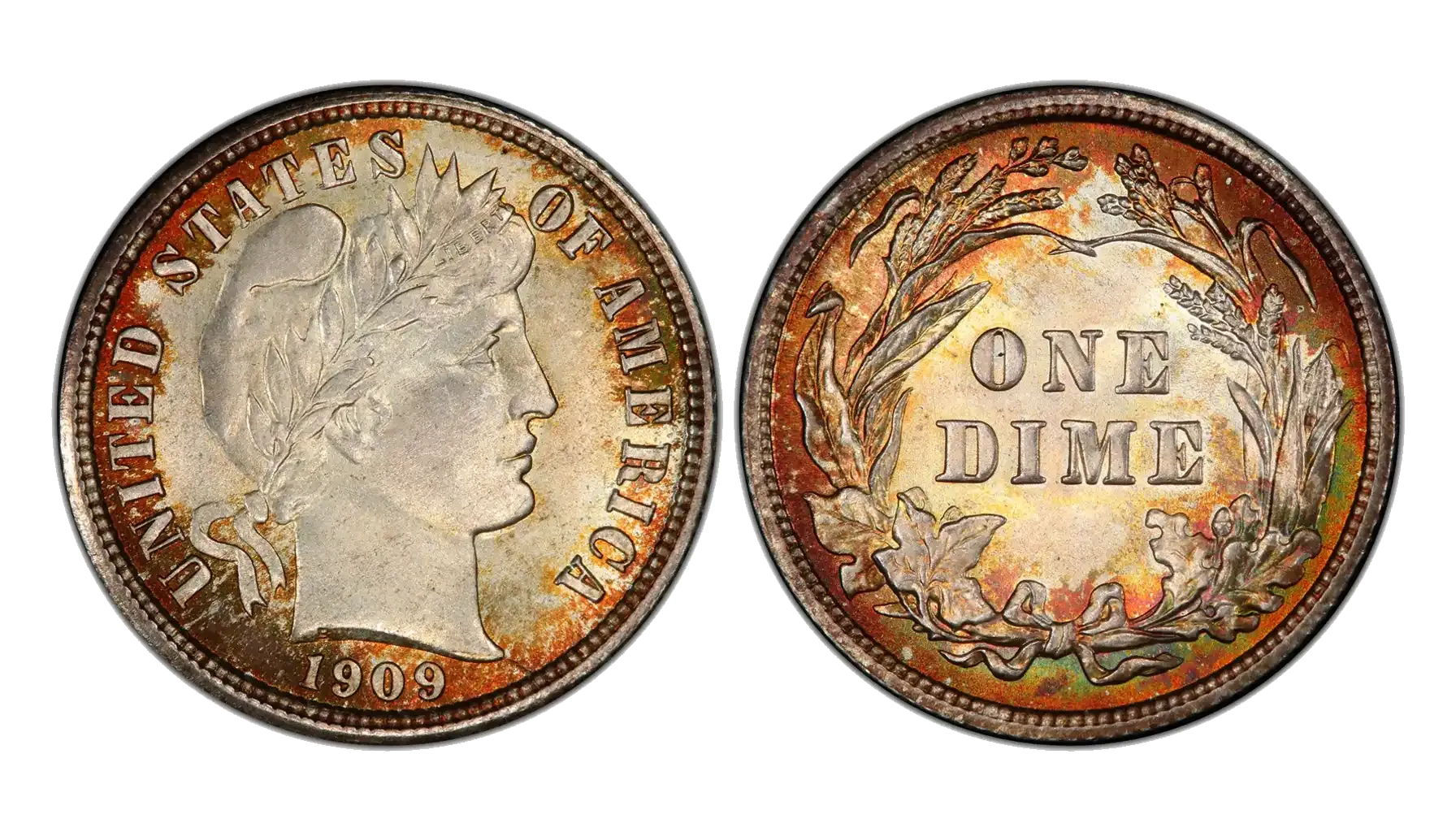
Every enthusiast's interest centers on more valuable items. It does not matter – price or numismatic worth. Nowadays, the solution is on the side of every collector – just look around online platforms and at special numismatic events.
Numismatic Events
Online Open Markets
APMEX & JM Bullion: As of early 2026, these are the top-rated retailers for those who want a mix of precious metal bullion and certified rare coins. They have massive inventories and offer buy-back programs if you ever decide to sell.
GreatCollections: A specialized auction site that focuses on certified (slabbed) coins. Their weekly auctions (ending every Sunday) are a primary source for PCGS and NGC-graded coins.
“According to the NGC Price Guide, as of January 2026, a Barber Dime from 1909 in circulated condition is worth between $2 and $85. However, on the open market 1909 Dimes in pristine, uncirculated condition sell for as much as $4000.”
– NGC Coin Explorer
NGC
eBay (Certified Listings): Still the largest volume marketplace. In 2026, the best practice is to buy coins already graded by PCGS, NGC, or CAC to ensure authenticity, especially for high-silver value coins like the 1891 Seated Liberty.
Another Option: High-Level Auction Houses
The best way to get rare items – find the high-level auction houses. Their “charm” consist on the individual approach:
Certification
Great Choice
Only Prove Items
Expert’s Opinion
Actual Prices
Tranceperency
Clear Scheme
Heritage Auctions (HA): The largest auctioneer in the U.S. They hold major sales frequently. In January 2026, they are hosting significant sessions for U.S. and World coins at the NYINC and FUN shows.
Stack’s Bowers: Known for high-end catalog auctions. They are a go-to for early American copper and silver rarities.
Legend Rare Coin Auctions: A boutique firm that specializes exclusively in the highest-quality gems (MS-65 and above).
Auction Records
Two forces shape auction records – a mix of rarity and condition. While the Philadelphia issues are plentiful, the Branch Mint strikes (D, S, and O) command thousands of dollars in high grades.
Below, we unveil the most remarkable auction achievements, complete with the years in which benchmarks were set.
Mint Mark | Grade | Price | Organisation |
None | MS-67+ | $10,781 | Heritage Auctions |
S | MS-66 | $24,150 | Heritage Auctions |
D | MS-66 | $14,950 | Heritage Auctions |
O | MS-67 | $16,875 | GreatCollections |

 Facebook
  X (Twitter)
  Pinterest
  LinkedIn