Contents:
Did you find a valuable quarter? A lot of details can both increase and decrease its value, and if you do not know all the subtleties of numismatics, then you will become a loot for scammers who will gladly buy back a rare coin from you for less.
Identifying coins and their values requires more attention than it seems.
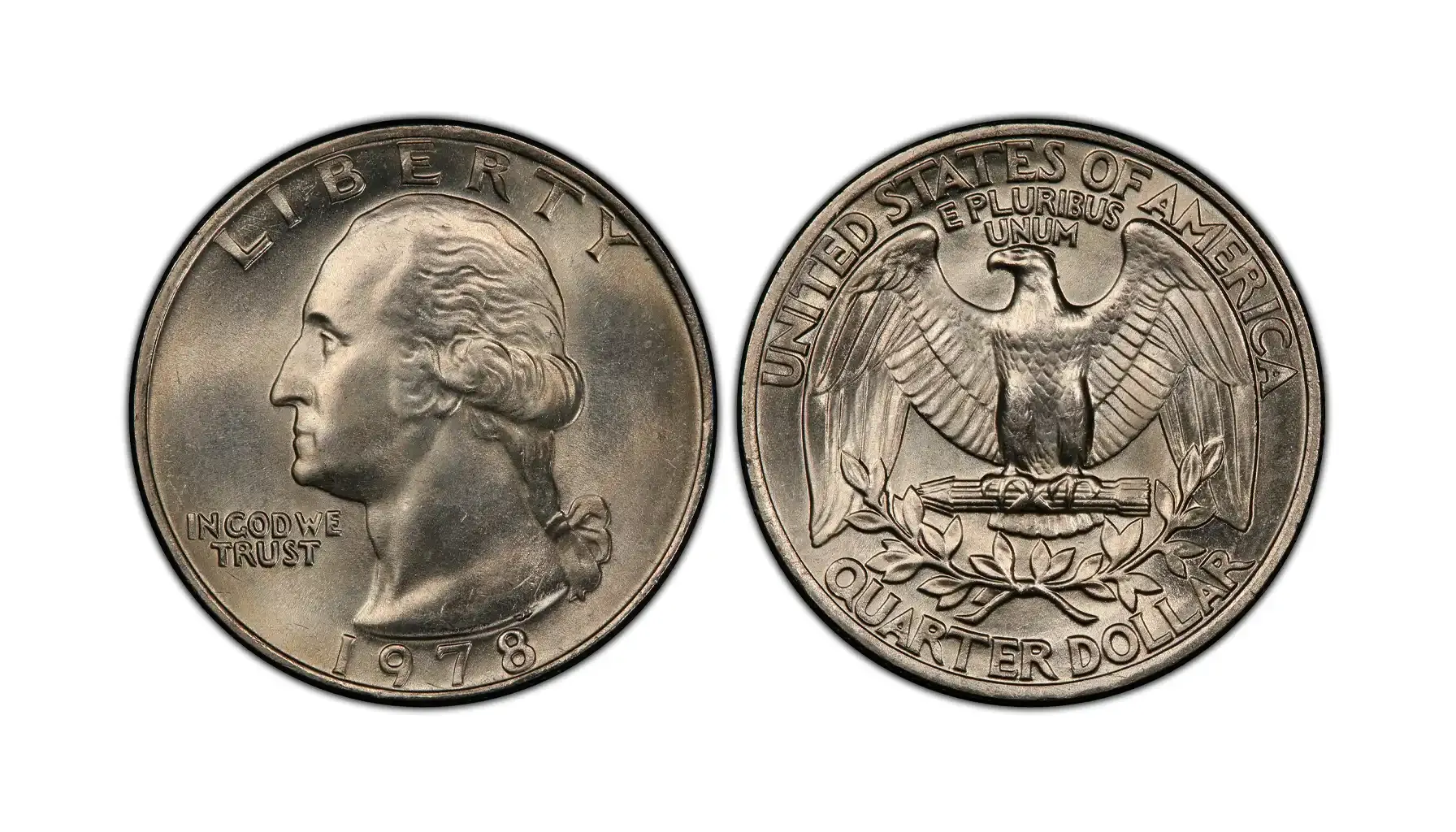
How Much Is A 1978 Quarter Worth?
Coin Type | Approximate Price |
1978 (P) No Mint Mark | $0.30 - $20 |
1978-D | $0.30 - $25 |
1978-S Proof (Clad) | $2 - $45 |
Double Die Obverse (DDO) | $10 - $50 |
Missing Clad Layer | $150 - $500 |
Off-Center Strike | $50 - $250 |
Lamination Error | $20 - $80 |
Filled Mint Mark | $50 - $200 |
The value of 1978 quarter can change based on market demand, and the specific characteristics of individual coins.
1978 Copper Quarter (No Mint Mark)
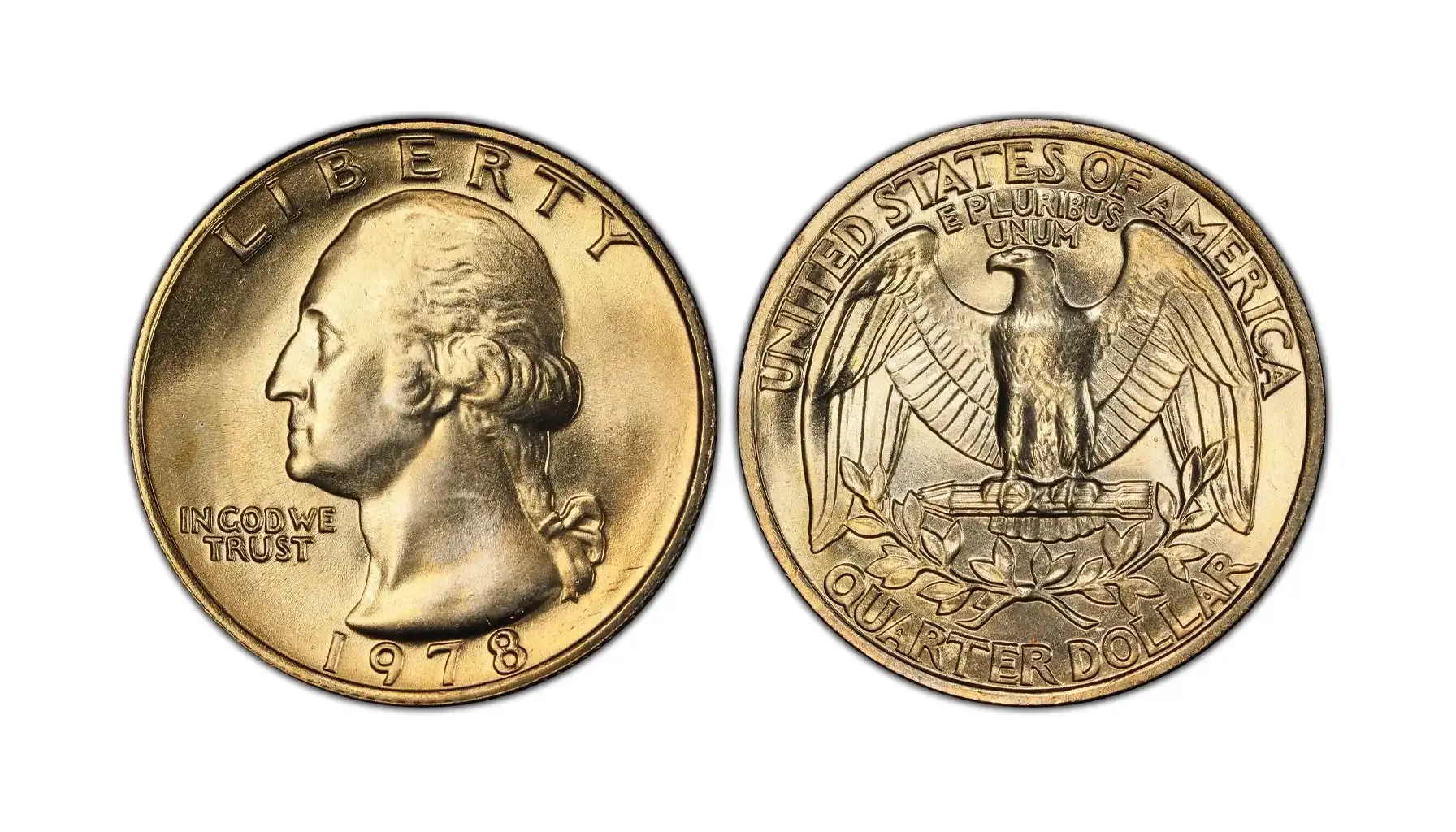
The coins minted in Philadelphia are recognizable because they lack a mint mark, making the 1978 quarter no mint mark variety very common. Its overall mintage was the highest of the three mints that year.
Auction Record Note: A 1978 quarter with no mint mark, graded PCGS MS67, sold for $2,875.00 at eBay online auction in Mart 2021.
The 1978 no mint mark quarter value largely depends on its preservation.
Mintage: 521,452,000
Content: 75% copper and 25% nickel.
Diameter: 24.3 mm
Weight: 5.67 grams
Grade | Price |
G-4 (Good) | $0.30 |
VF-20 (Very Fine) | $0.35 |
AU-50 (About Uncirculated) | $0.75 |
MS-63 (Uncirculated) | $2.50 |
MS-65 (Gem Uncirculated) | $6 |
MS-67+ | $250 |
The 1978 quarter value no mint mark can change based on market demand, grading, composition, and the specific characteristics of individual coins.
1978-D Quarter
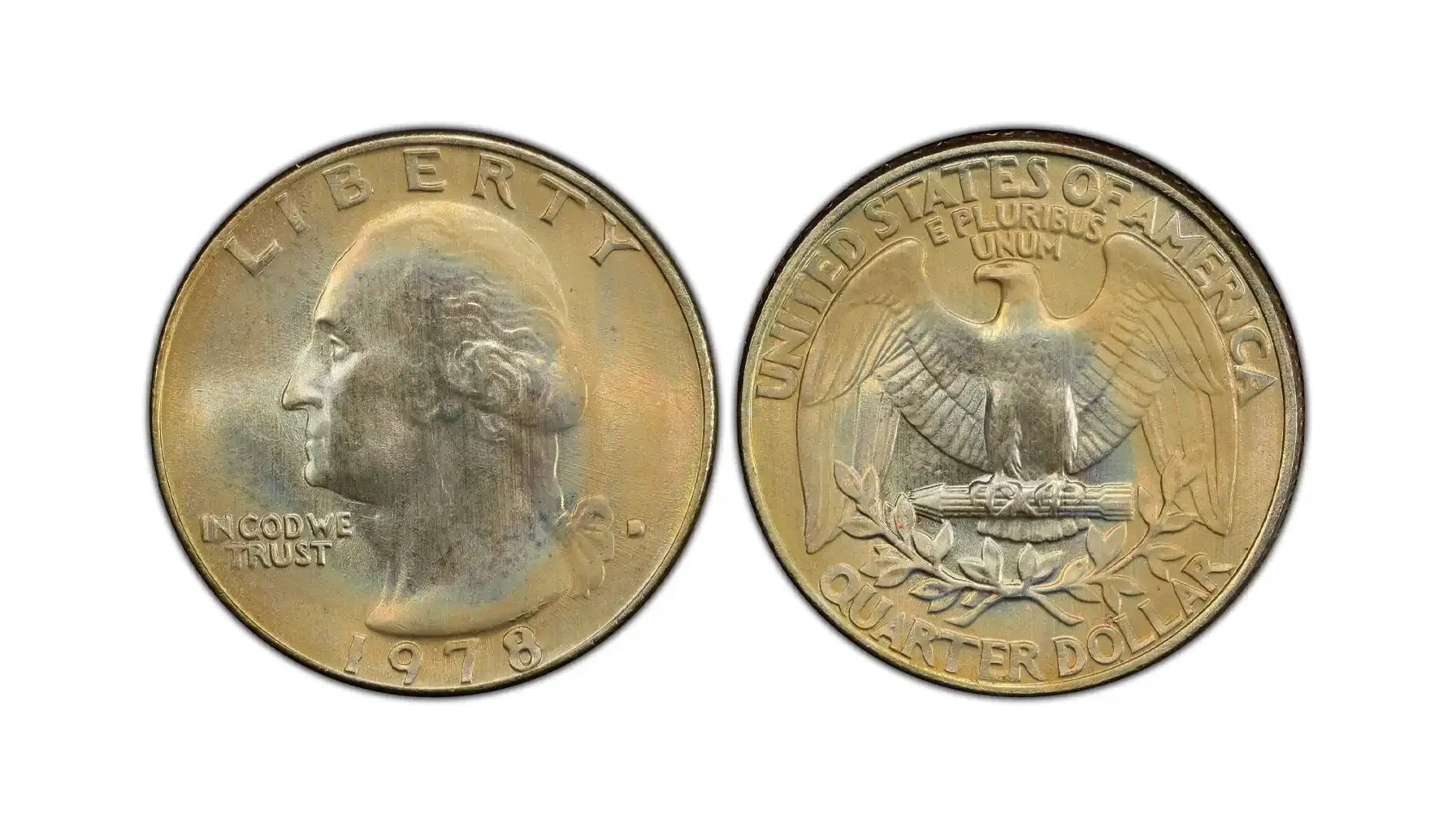
The 1978-D Washington quarter was minted in Denver and is identified by the "D" mint mark. These coins are also very common and can be found in circulation, but like the Philadelphia coins, high-grade examples can be valuable.
Auction Record Note: The auction record holder for a 1978-D quarter, graded PCGS MS68, sold for $2,233.00 at a Legend Rare Coin Auctions sale in May 2019.
The 1978 D quarter value is mainly determined by the coin's condition.
Mintage: 313,959,680
Content: 75% copper and 25% nickel
Diameter: 24.3 mm
Weight: 5.67 grams
Grade | Price |
G-4 (Good) | $0.30 |
VF-20 (Very Fine) | $0.35 |
AU-50 (About Uncirculated) | $0.75 |
MS-63 (Uncirculated) | $2.50 |
MS-65 (Gem Uncirculated) | $6 |
MS-67+ | $250 |
1978-S Proof Quarter
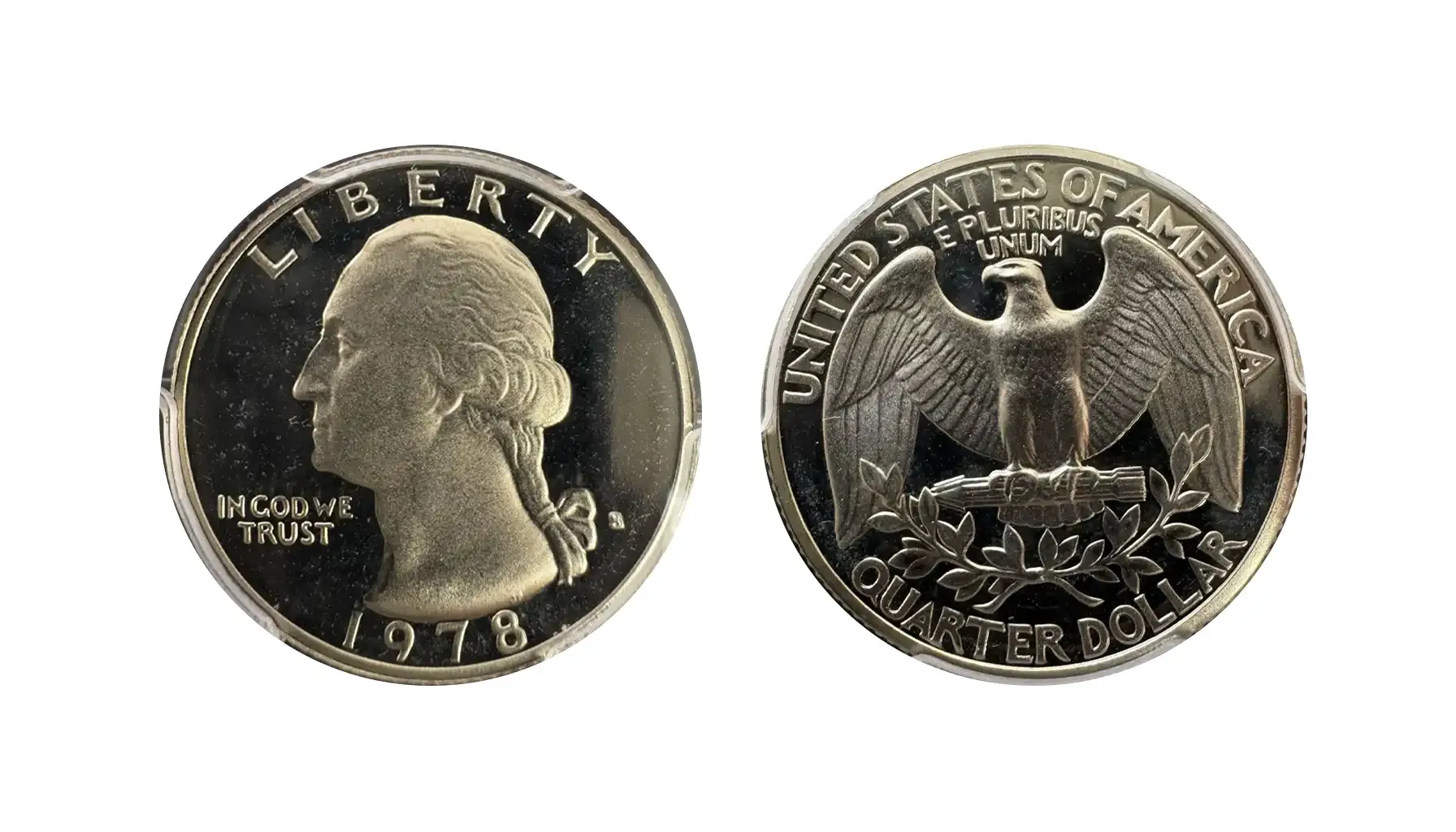
Struck at the San Francisco Mint, the 1978 S quarter value is notably higher because these coins were not made for general circulation. They were specially produced for collectors and were included in proof sets.
The S mint mark indicates its origin, and these coins are known for their mirror-like fields and frosted devices, a feature that distinguishes them from regular strikes.
Auction Record Note: An online auction at Heritage Auctions in May 2019 saw a 1978-S Proof quarter graded PR-70 DCAM (Deep Cameo) by PCGS sell for $1,100.00.
The 1978 S Proof quarter value is influenced by its grade, especially the designation of "cameo" or "deep cameo" which refers to the contrast between the frosted design and the reflective background.
Mintage: 3,127,781
Content: 75% copper and 25% nickel
Diameter: 24.3 mm
Weight: 5.67 grams
Grade | Price |
PR-65 (Gem Proof) | $4 |
PR-67 (Superb Gem Proof) | $7 |
PR-69 (Ultra Cameo) | $15 |
PR-70 (Perfect Proof) | $45 |
Errors And Varieties: Is A 1978 Quarter Worth Anything?
The world of numismatics becomes particularly exciting when you discover errors on coins, and the 1978 quarter errors are no exception.
These coins were produced with a variety of unusual manufacturing flaws that make them highly sought after by collectors.
The 1978 quarter error list with pictures would show many interesting defects, but here are some of the most common and valuable ones to look for.
Missing Clad Layer
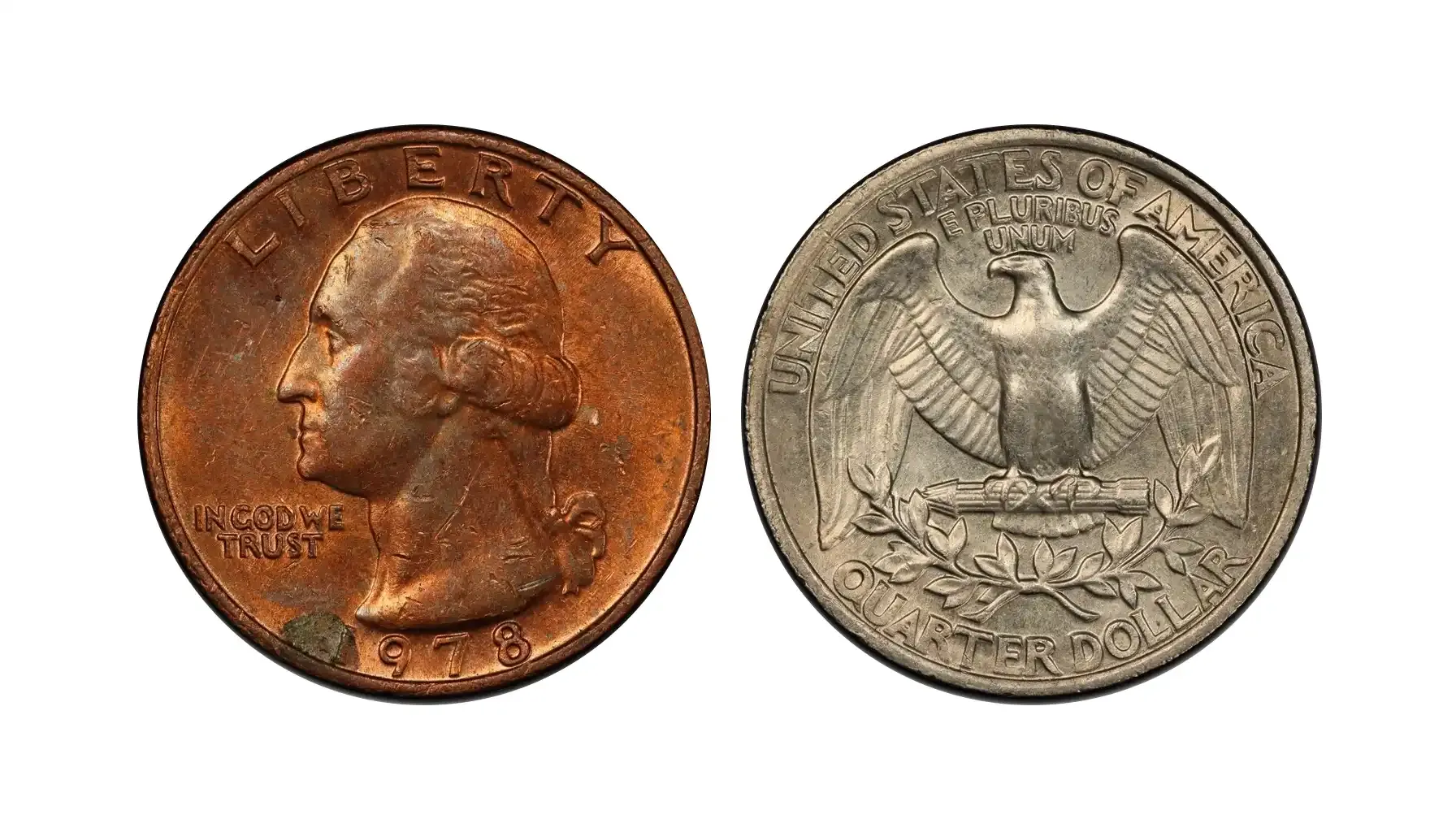
This error occurs when a coin's copper core is not fully covered by the copper-nickel layer on one or both sides.
Auction Record Note: A 1978-D Washington quarter with a missing clad layer on the obverse side, graded ANACS AU58, sold for $425 at a specialized online error coin auction in June 2020.
Name | Price |
Missing Clad Layer (AU) | $200 - $350 |
Missing Clad Layer (MS) | $400 - $600 |
The 1978 quarter value error can change based on market demand, grading, composition, and the specific characteristics of individual coins.
Double Die Obverse (DDO)
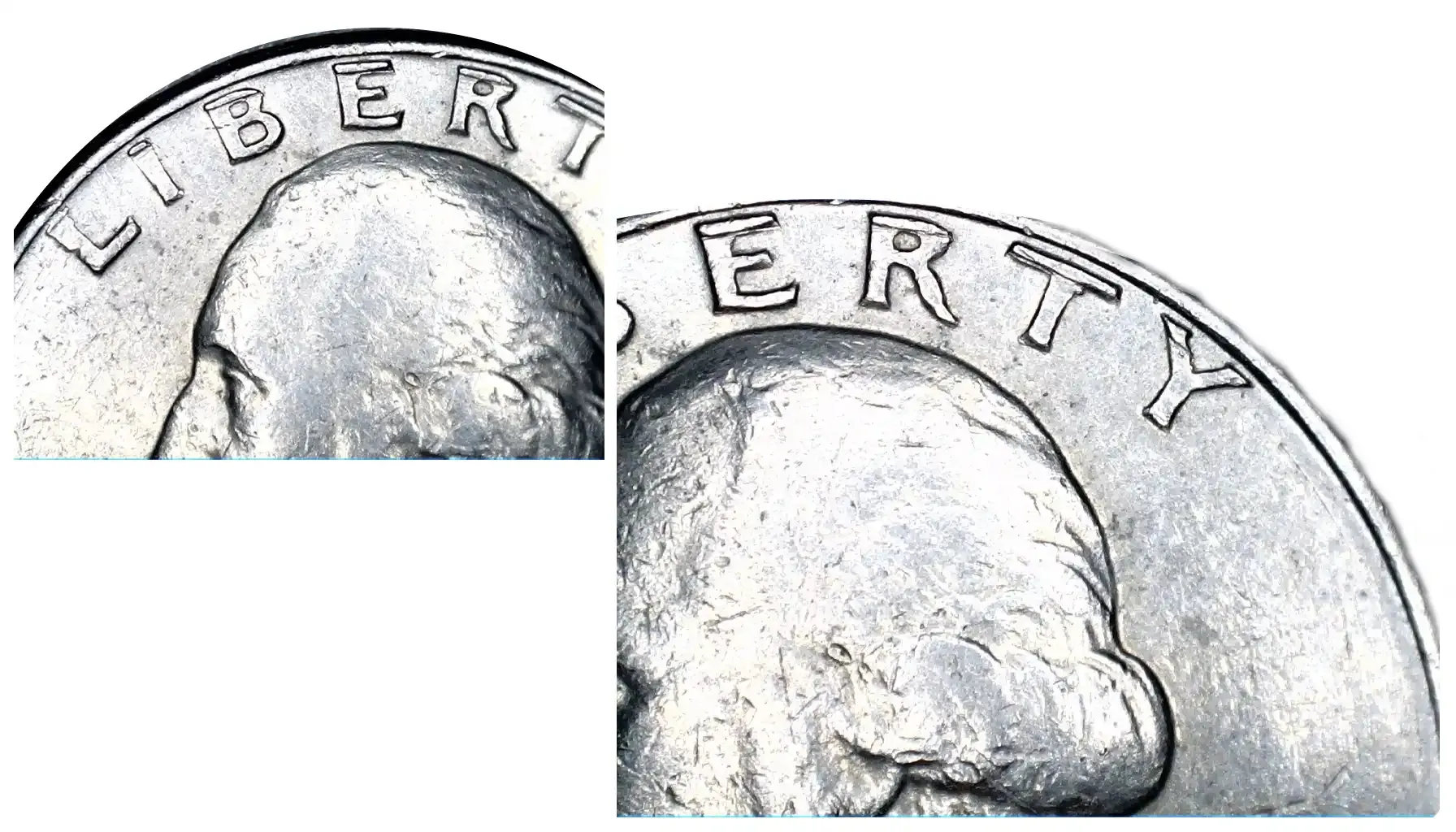
This error happens when the coin die strikes the planchet twice in slightly different positions, creating a noticeable doubling of the lettering or design elements.
Auction Record Note: A 1978 DDO quarter graded PCGS MS65 sold for $75 at a major numismatic auction in April 2021.
Name | Price |
1978 DDO (VF) | $15 - $25 |
1978 DDO (AU) | $30 - $40 |
1978 DDO (MS) | $50 - $100 |
Off-Center Strike
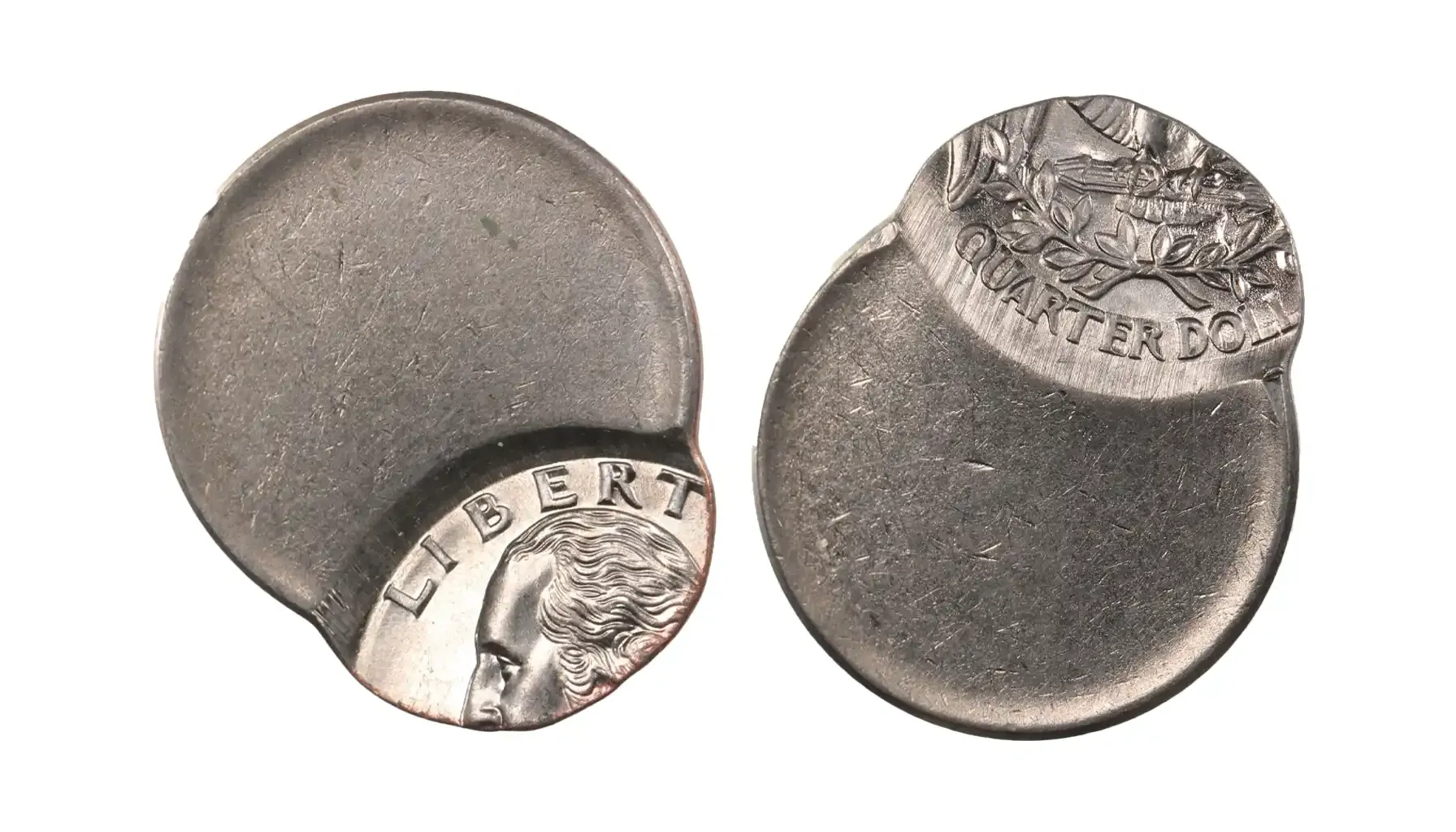
An off-center strike occurs when the planchet is not correctly centered in the press during minting, creating an uneven and often interesting appearance.
Auction Record Note: A 1978-D quarter with a 20% off-center strike, graded PCGS MS64, was sold for $180 at a collector's event in October 2022.
Name | Price |
1978 Off-Center (5-10%) | $40 - $70 |
1978 Off-Center (15-25%) | $100 - $250 |
1978 Off-Center (30%+) | $300+ |
Lamination Error
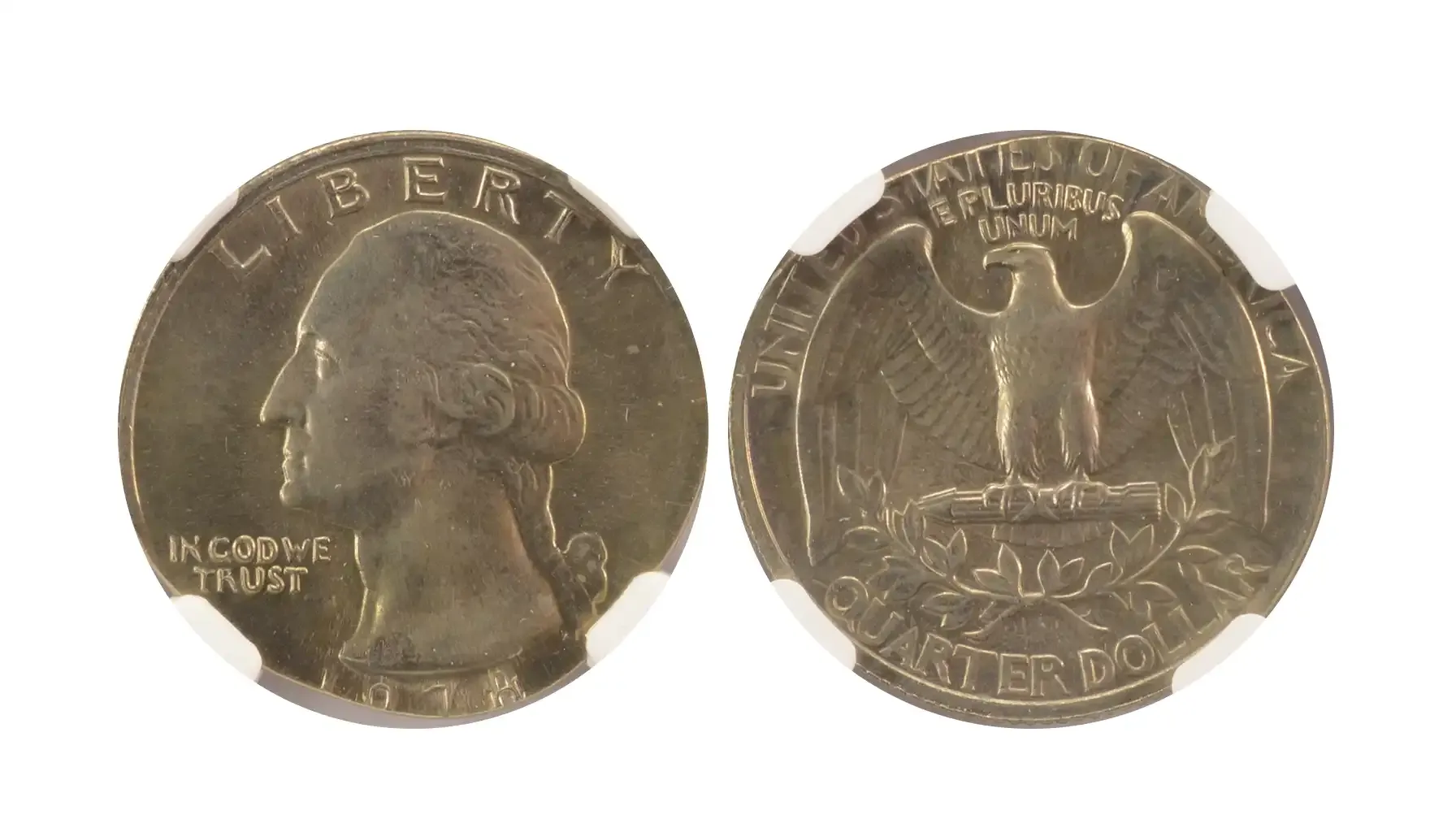
This is a defect where a piece of the coin's outer metal layer begins to peel away from the core, which can happen due to impurities in the metal.
The lamination can be a small flake or a larger, more dramatic peel.
Auction Record Note: A 1978 quarter with a significant lamination error on the obverse, graded NGC AU58, sold for $65 in an online dealer auction in March 2021.
Name | Price |
1978 Lamination Error (Small) | $20 - $40 |
1978 Lamination Error (Large) | $50 - $100 |
1978 Quarter Filled D
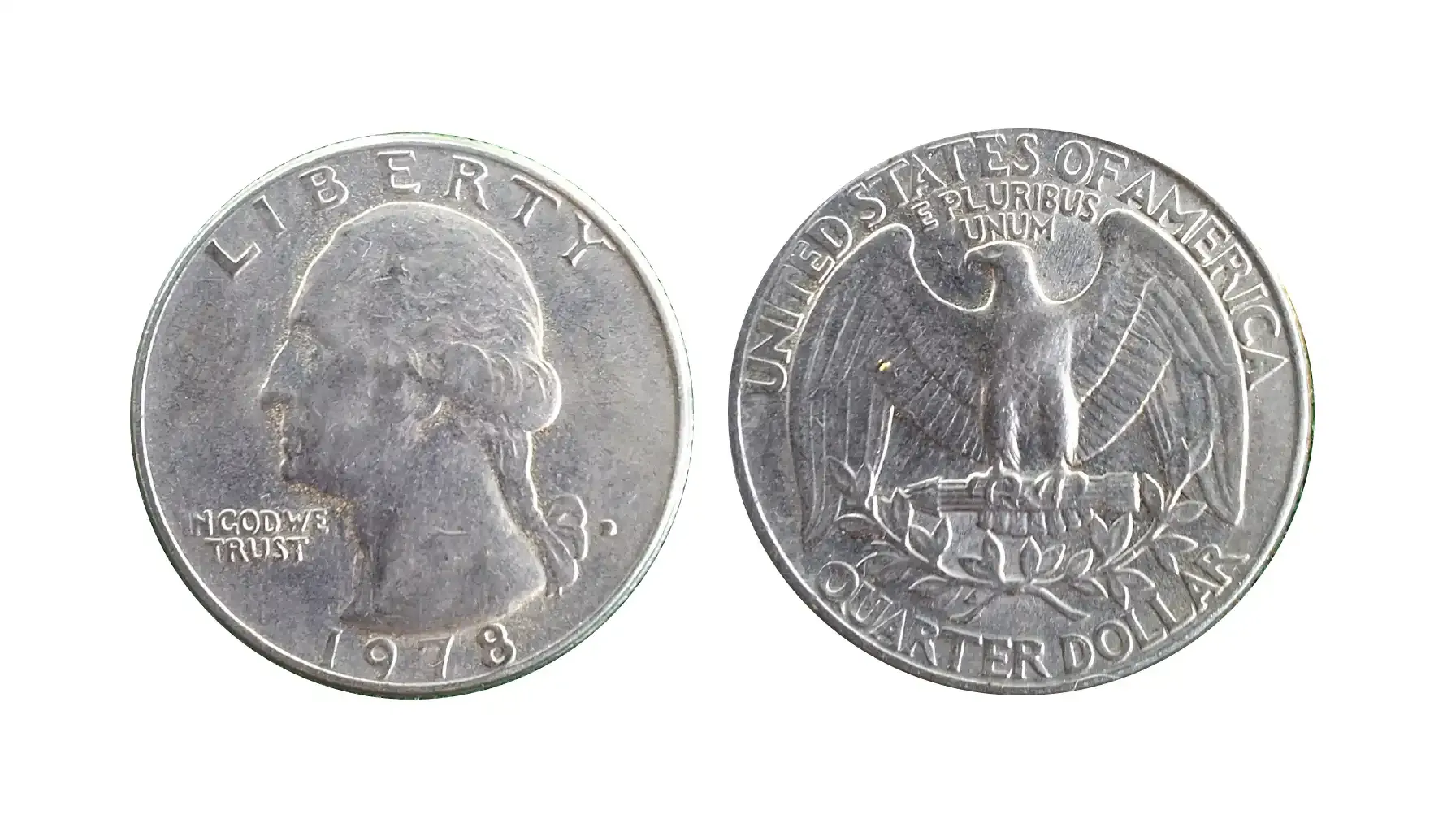
The letter 'D' of the mint mark is partially or fully filled in with metal, often due to grease or a foreign substance clogging the die.
It appears as a solid blob instead of a clear letter, and this is a key error on the 1978 D quarter error list.
Auction Record Note: A 1978-D quarter with a prominent filled 'D' mint mark, graded PCGS MS64, was sold for $85 at a coin show in November 2020.
Name | Price |
1978-D Filled D (VF) | $30 - $50 |
1978-D Filled D (MS-60) | $60 - $90 |
1978-D Filled D (MS-65) | $100 - $200 |
Preserving the Value
Avoid PVC plastics: Long-term exposure to PVC can damage coins. Look for coin holders made of Mylar, polyethylene, or other inert materials.
Use proper holders: Store individual coins in coin flips, slabs, or albums designed for numismatic use.
Keep them in a stable environment: Store your coins right - in a cool, dry place. High humidity and extreme temperature changes can accelerate toning or corrosion.
Handle with care: Always handle coins by the edges to avoid getting oils from your hands on the surface, which can cause damage over time.
Consider a safe or vault: For particularly valuable coins, a home safe, bank deposit box, or a numismatic vault service can provide added security and a controlled environment.
Where to Sell Valuable Coins
If you have discovered a valuable coin, whether it's a rare error or a high-grade example, you have several options for selling it. The best choice often depends on the coin's value and how you prefer to handle the sale.
Online Auctions: Websites like eBay and apps like Coin ID Scanner are popular for selling coins, especially those with moderate value.
Specialized Coin Dealer Websites: There are many online dealers who buy and sell coins. Examples include GreatCollections and HA.com.
Local Numismatic Shops: A local coin shop is a good place to get an in-person appraisal and a quick offer for your coin. While you may get less than the full market value, the process is fast and simple. You can find these by searching online for "coin shops near me."
Major Auction Houses: For coins that are extremely rare or have a very high value, a major auction house is often the best choice. Two of the most well-known are PCGS and Stack's Bowers Galleries.
So, if you are really motivated to collect an expensive collection with a serious historical background, then try to follow the rules and be very attentive to details.
This is especially true for storage, because the more carelessly you treat items, the less valuable they will be.
Frequently Asked Questions
What is a 1978 quarter worth?
Most circulated 1978 quarters are worth only their face value of 25 cents. However, an uncirculated coin, especially one with a high-grade certification, can be worth several dollars or more. Error coins are also much more valuable.
How much is a 1978 no mint mark quarter worth?
In circulated condition, it's worth its face value. But if it is in an uncirculated condition, its value can increase, with top-grade examples selling for up to $20-$25.
Is a 1978-D quarter valuable?
Similar to the Philadelphia-minted coins, the 1978 D Washington quarter is not especially rare in circulated condition. However, a perfect, uncirculated example of an MS-67 or higher can be quite valuable to collectors.
Are there any 1978 quarters made of silver?
No, there were no silver quarter 1978 coins made for circulation or as proofs. The last circulating silver quarters were produced in 1964. All 1978 quarters were made from the standard copper-nickel clad composition.

 Facebook
  X (Twitter)
  Pinterest
  LinkedIn