Contents:
You often see Washington's face at quarters, without even suspecting that tokens issued in one year are more expensive than in another, although it would seem that their face value in all cases is only 25 cents.
But no, for numismatists, each year has a different value, and in order to identify coins correctly and subsequently assemble an expensive collection, you need to pay attention to some nuances.
1962 Quarter Silver Content – Composition Matters
Like other quarters minted before 1965, the 1962 Washington quarter is primarily valued for its silver content.
The 1962 quarter coin weighs 6.25 grams.
It is 90% silver and 10% copper.
So, how much silver is in a 1962 quarter? This means the coin contains approximately 5.625 grams of pure silver.
Decoding the Mint Mark: Where Was Your Quarter Made?
The small letter on the reverse side of the coin below the eagle, indicates where it was minted. In 1962, quarters were produced at two different mints:
No mark: This coin was made in Philadelphia.
"D" mark: This coin was made in Denver.
The Design of the Washington Quarter
The Washington quarter's design was created by American sculptor John Flanagan in 1932 to commemorate the 200th anniversary of George Washington's birth.
While the Washington quarters is his most famous and widely circulated coin design, Flanagan was primarily known for his work as a sculptor.
One of his other notable creations is the bronze statue of the "Manhattan" on the Manhattan Bridge in New York City.
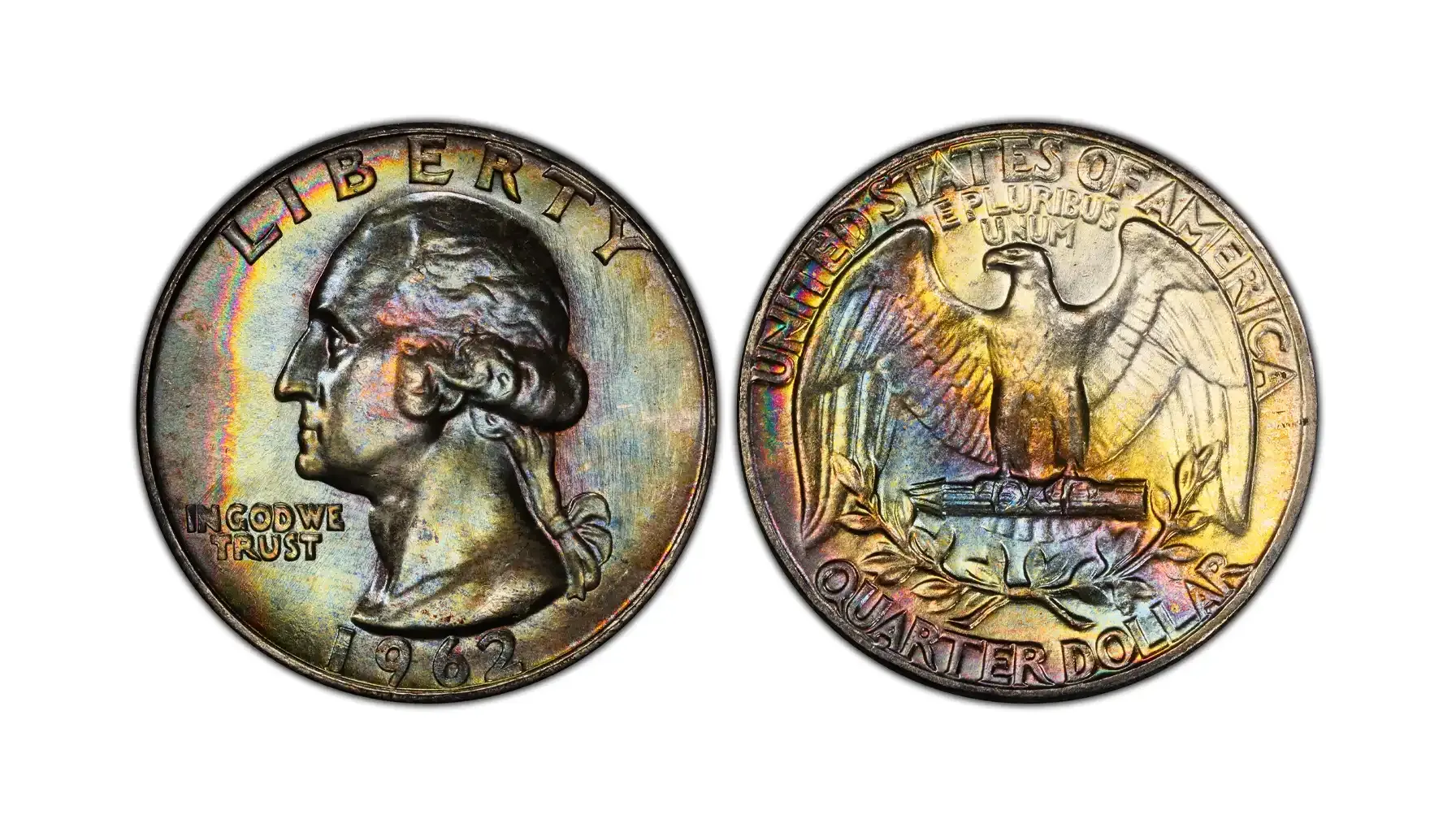
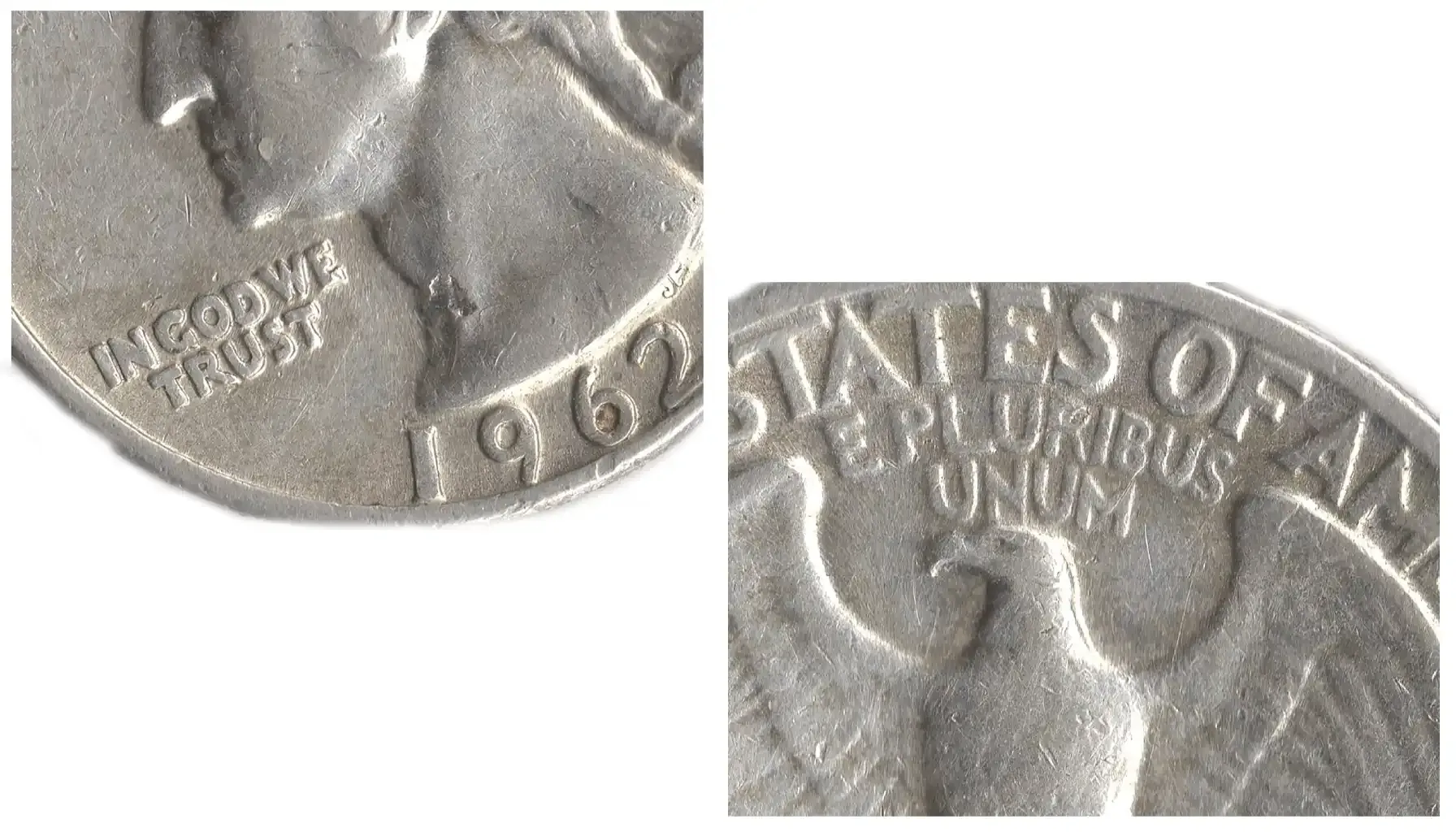
Obverse: The obverse (front) features a detailed bust of George Washington, facing left. The inscription "LIBERTY" is above Washington's head, and the date "1962" is below. The motto "IN GOD WE TRUST" is to the left of the bust.
Reverse: The reverse (back) side, also designed by Flanagan, displays a majestic eagle with its wings outstretched, perched on a bundle of arrows and surrounded by olive branches.
The inscriptions "UNITED STATES OF AMERICA" and "E PLURIBUS UNUM" are at the top, while "QUARTER DOLLAR" is at the bottom. The mint mark, if present, is located below the eagle.
How Much Is A 1962 Quarter Worth: What To Expect
Name | Approximate Price (USD) |
1962 (Philadelphia - No Mint Mark) | $7.25 - $7,500 |
1962-D (Denver) | $7.25 - $11,250 |
1962 Proof | $15 - $2,500 |
1962 Doubled Die Obverse (DDO) | $100 - $1,500+ |
1962 Repunched Mint Mark (RPM) | $20 - $200+ |
1962 Clipped Planchet | $50 - $300+ |
Lamination Error | $25 - $150+ |
Struck Through Grease | $15 - $75+ |
The value of 1962 quarter can change based on market demand, silver prices, and the specific characteristics of individual coins.
1962 Philadelphia Mint Quarter (No Mint Mark)
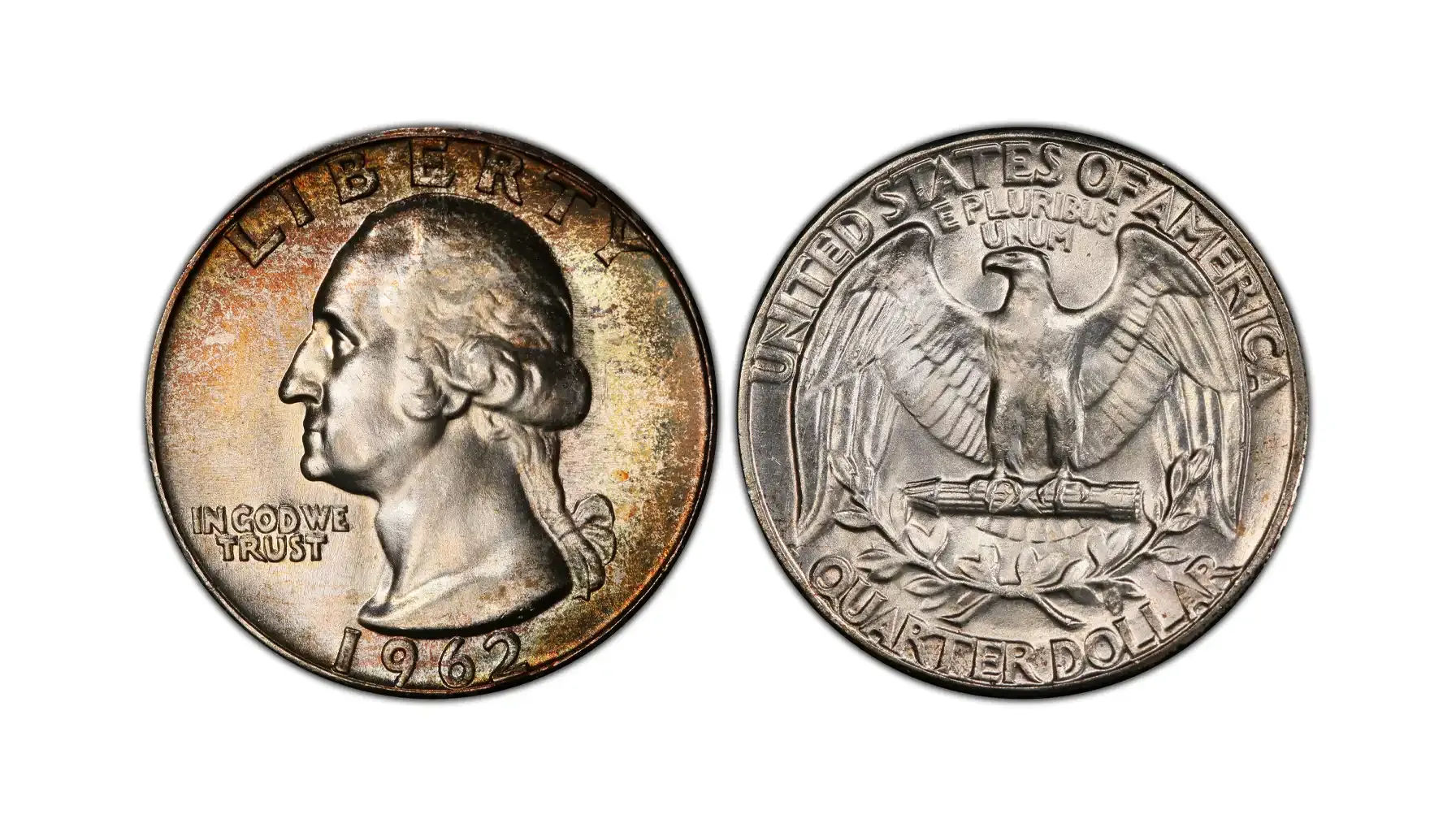
Mintage: 39,374,019
Composition: 90% Silver, 10% Copper
Diameter: 24.3 mm
Weight: 6.25 grams
Grade | Price (USD) |
Circulated (G-F) | $7.25 - $7.25 |
Extremely Fine (XF) | $7.25 |
Uncirculated (MS-60) | $10.00 |
Uncirculated (MS-65) | $30.00 - $40.00 |
Uncirculated (MS-67) | $4,875 - $11,250 |
How much is a 1962 silver quarter worth? The prices can change based on market demand, silver prices, and the specific characteristics of individual coins.
1962-D Denver Mint Quarter
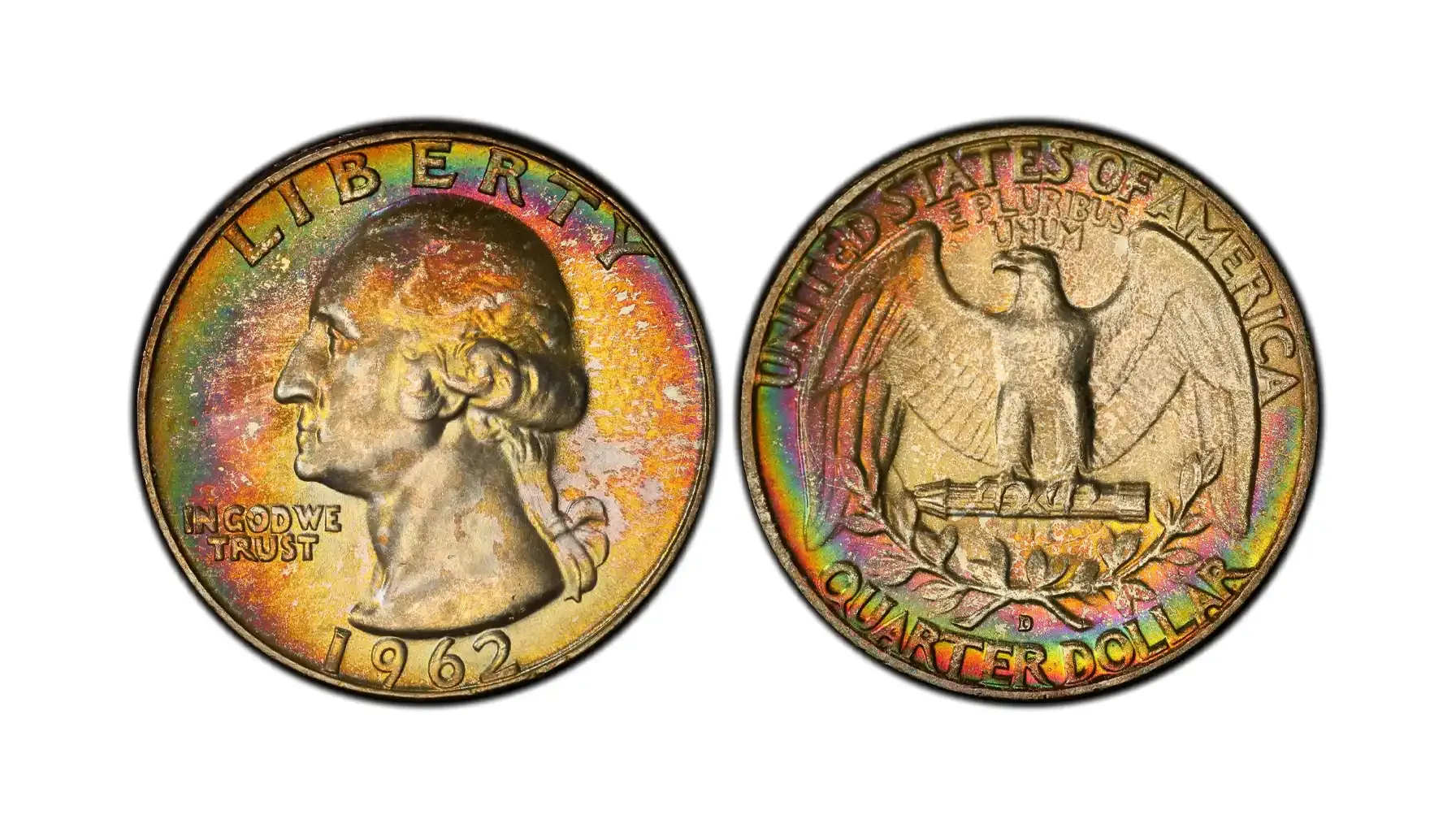
Mintage: 127,554,756
Composition: 90% Silver, 10% Copper
Diameter: 24.3 mm
Weight: 6.25 grams
Grade | Price (USD) |
Circulated (G-F) | $7.25 - $7.25 |
Extremely Fine (XF) | $7.25 |
Uncirculated (MS-60) | $10.00 |
Uncirculated (MS-65) | $30.00 - $40.00 |
Uncirculated (MS-67) | $4,875 - $11,250 |
The 1962-D Washington quarter prices can change based on market demand, silver prices, and the specific characteristics of individual coins.
1962 Proof Quarter
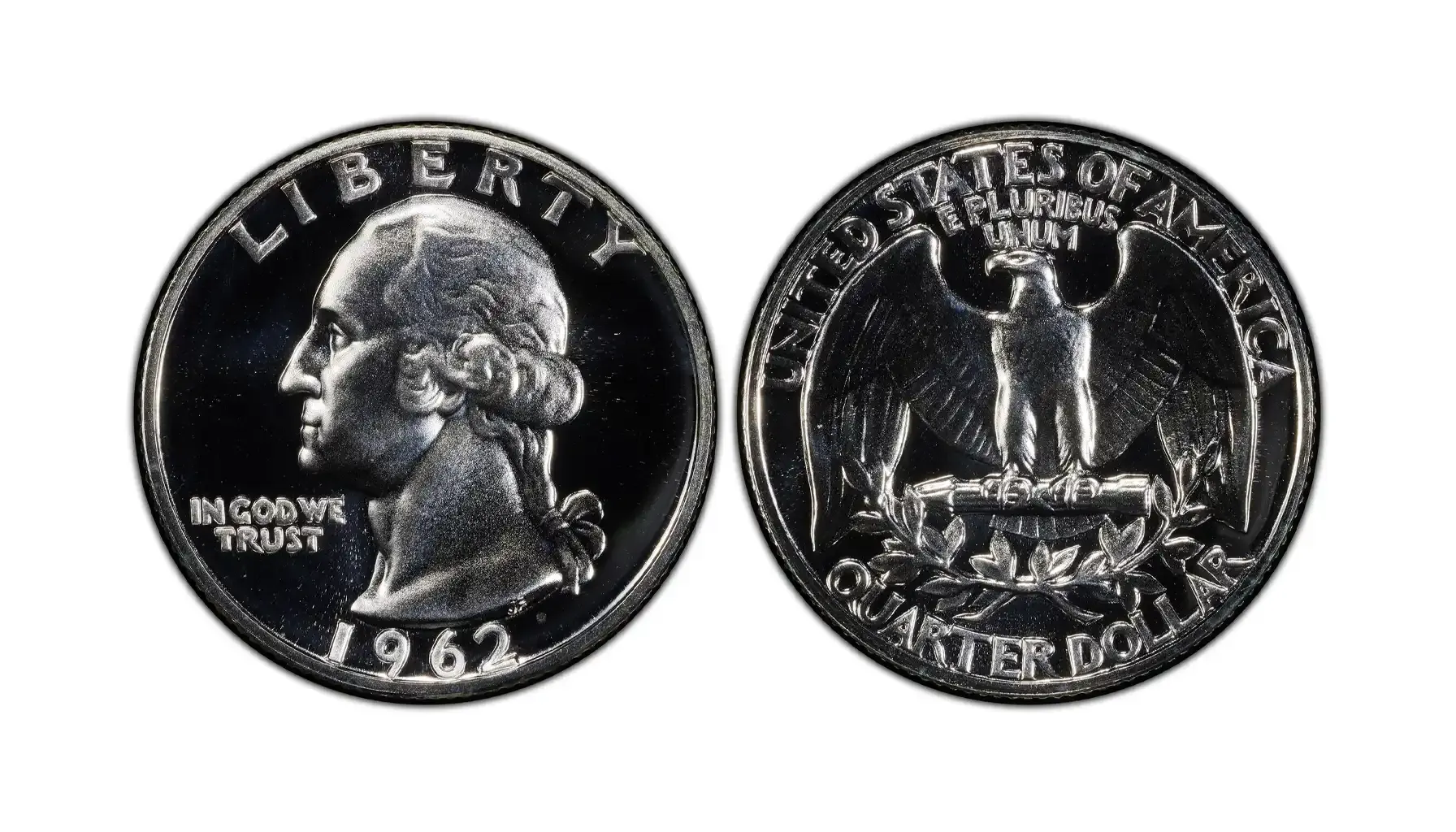
Proof coins are special strikes made for collectors, distinguished by their sharp detail, mirror-like fields, and frosted devices. The U.S. Mint in Philadelphia produced proof coins in 1962 and included them in annual proof sets.
Mintage: 3,218,019
Composition: 90% Silver, 10% Copper
Diameter: 24.3 mm
Weight: 6.25 grams
Grade | Price (USD) |
Proof-65 | $15 |
Proof-67 | $30 |
Proof-69 | $100 |
Proof-69 DCAM | $2,500 |
The 1962 proof quarter value can change based on market demand, silver prices, and the specific characteristics of individual coins.
What About S Mint Mark?
Based on historical minting records, the San Francisco Mint stopped producing quarters for general circulation after 1955. It resumed producing circulation quarters in 1968, but at that time, they were the new clad composition, not silver.
1962 Doubled Die Obverse (DDO) Quarter
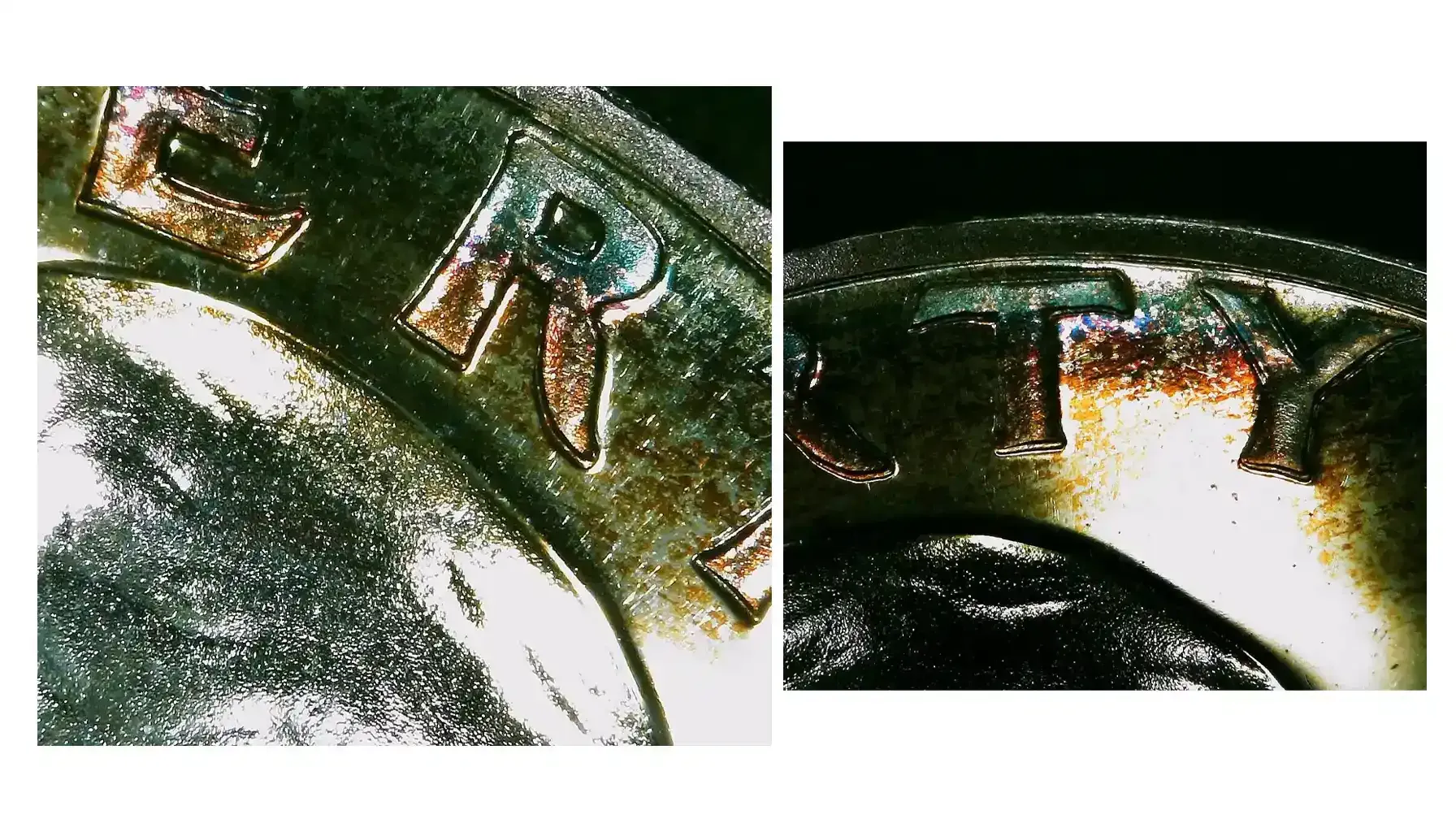
A Doubled Die Obverse 1962 quarter error occurs when the coin die strikes the planchet (blank coin) more than once with a slight shift in position.
This results in a doubled image on parts of the coin's design, most commonly the lettering or date. For the 1962 quarter, DDO varieties can be found and are highly sought after by collectors.
Description: Doubling is visible on elements like "LIBERTY" or "IN GOD WE TRUST" on the obverse.
Composition: 90% Silver, 10% Copper
Diameter: 24.3 mm
Weight: 6.25 grams
Grade | Price (USD) |
Circulated (G-F) | $100 - $200 |
Extremely Fine (XF) | $250 - $400 |
Uncirculated (MS-60) | $450 - $600 |
Uncirculated (MS-65) | $800 - $1,500 |
The 1962 silver quarter value can change based on market demand, silver prices, and the specific characteristics of individual coins.
1962 Repunched Mint Mark (RPM) Quarter
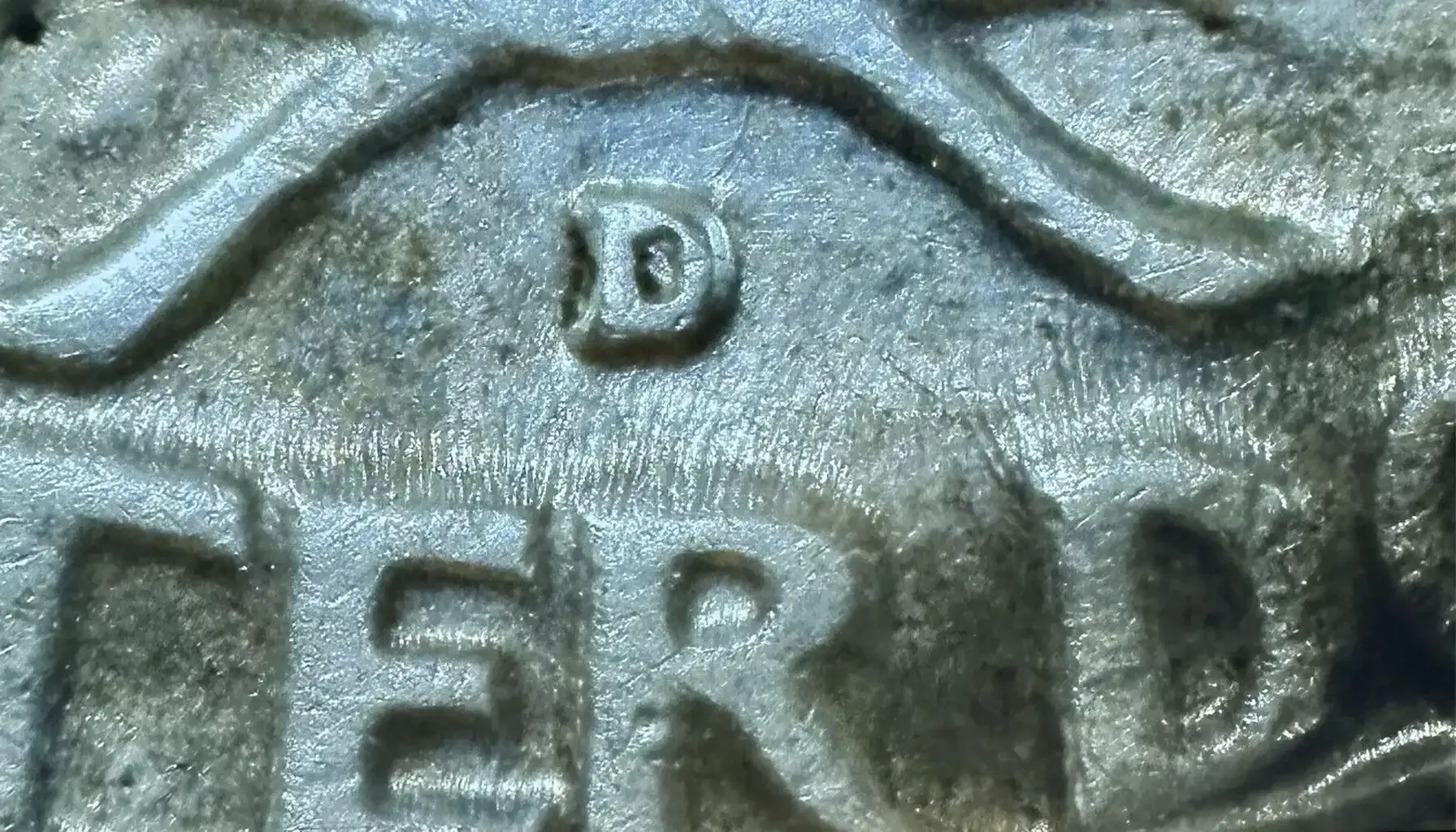
This error happens when the mint mark is punched more than once, with a slight shift in position between punches. This results in a doubled or misplaced mint mark.
Description: The mint mark ('D') appears doubled or in a slightly different position.
Composition: 90% Silver, 10% Copper
Diameter: 24.3 mm
Weight: 6.25 grams
Grade | Price (USD) |
Circulated (G-F) | $20 - $50 |
Extremely Fine (XF) | $60 - $100 |
Uncirculated (MS-60) | $120 - $200+ |
Is a 1962 quarter silver? Yes, kind of, and the prices can change based on market demand, silver prices, and the specific characteristics of individual coins.
1962 Clipped Planchet Quarter
A clipped planchet error occurs when a portion of the coin's blank is missing before it is struck by the dies. This results in a coin with a straight or curved edge that appears to have a "bite" taken out of it.
Description: A curved or straight piece of metal is missing from the edge of the coin.
Composition: 90% Silver, 10% Copper
Diameter: 24.3 mm
Weight: 6.25 grams
Grade | Price (USD) |
Circulated (G-F) | $50 - $100 |
Extremely Fine (XF) | $120 - $200 |
Uncirculated (MS-60) | $300+ |
The 1962 US quarter prices can change based on market demand, silver prices, and the specific characteristics of individual coins.
How to Sell Your Coin
When it comes time to sell your 1962 quarter, you have a few options, depending on the coin's potential value.
Professional Grading: For coins that you suspect are highly valuable, especially those with errors or in excellent condition, it's wise to have them professionally graded by a reputable service like NGC, PCGS or Coin ID Scanner.
Reputable Coin Dealers: Is a 1962 quarter worth anything and how to sell it? You can sell your coin to a local or online coin dealer. Dealers are knowledgeable and can offer a fair price based on current market trends. It's a good idea to get quotes from a few different dealers to ensure you're getting a competitive offer.
Online Auctions: Websites like eBay or specialized numismatic auction sites are a popular way to reach a wide audience of collectors.
Coin Shows: Attending a local coin show gives you the opportunity to show your coin or a set of them - a roll (each type of currency has its own rules) - to multiple dealers and collectors in person, which can lead to quick sales and good offers.
Proper Care and Storage for Your Coin
To protect its luster and prevent damage, you should:
Handle with Care: Always hold the coin by its edges, never by the obverse or reverse faces, to avoid transferring oils from your skin.
Avoid Cleaning: Do not clean the coin. Cleaning can remove the original patina and luster, drastically reducing its numismatic value.
Use Proper Storage: Store your coins in a cool, dry place using acid-free holders, such as cardboard flips or capsules. Avoid PVC-based materials, which can damage the coin over time.
To sum up, the main advice that can be given is to study the market in detail before purchasing a collector's item, especially not that well-known modern tokens. Since the same quarter, but with different finishes and with different nuances, can cost completely different prices.
Yes, it may take time and a lot, but you will get down to business with high quality and no fraudster will be able to deceive you.

 Facebook
  X (Twitter)
  Pinterest
  LinkedIn