Contents:
The 1853 US quarter attracts attention all over the world and is a massive part of the United States coinage system. For enthusiasts, this mid-nineteenth-century piece will be a perfect addition to the collection and will make it unique.
The Seated Liberty series contains 53 years item history, based on ideal composition and remarkable design. Collect all pieces with the best free coin identifier and value app.
1853 Seated Liberty Quarter Overview
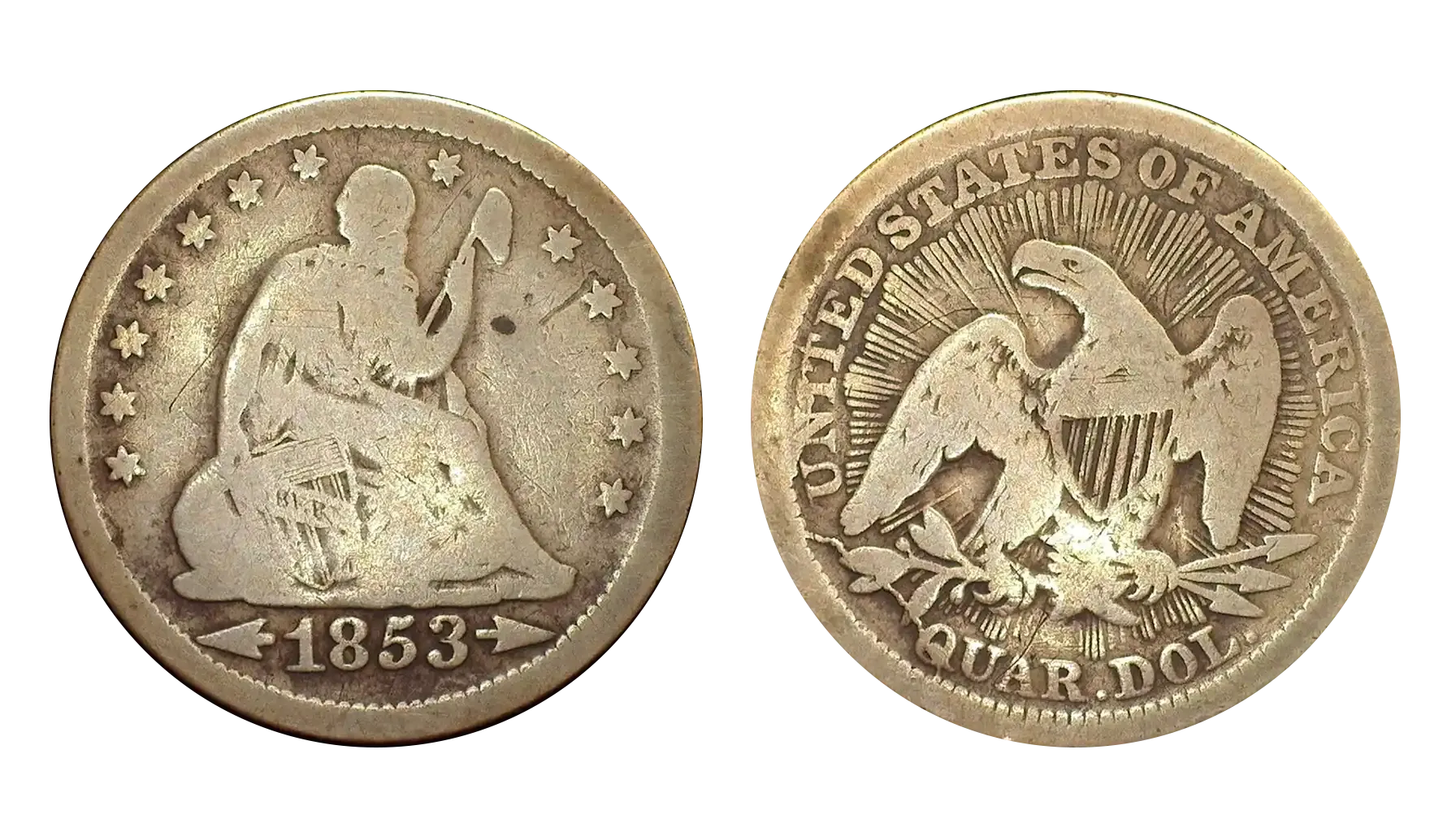
Since 1838, the item with great mintage has circulated in Philadelphia. The 1853 production has a few changes in silver weight reduction across fractional denominations.
The 1853 Liberty Seated quarter attracts public attention because of its rare design with clear details. Arrows, rays, figue of Liberty, and touchable inscriptions create a miracle in today's numismatic world.
“According to the NGC Price Guide, as of January 2026, a Seated Liberty Quarter from 1853 ARROWS in circulated condition is worth between $30 and $1000…1853 ARROWS & RAYS Quarters in pristine, uncirculated condition sell for as much as $87500.”
– Unnamed opinion piece “Seated Liberty Quarters”
NGC
Principal Characteristics
The major details are similar to this series; moreover, the additional information includes the mintage – 15,210,020, ASW – 0.18 oz, fineness – 0.9, and melt value – $17.05.
1853 Seated Quarter Period | 1838–1891 |
Designer | Christian Gobrecht |
Composition | Silver |
Edge | Reeded |
Weight | 6.22 g |
Diameter | 24.3 mm |
Identifying the 1853 Seated Liberty Quarter with Arrows and Rays
Numismatic experts confirm that collectors reliably identify this coin through its unique combination of elements. The obverse displays arrows positioned adjacent to the date, while the reverse features rays emanating from the eagle and situated between the surrounding lettering.
Notably, the shield retains its original pattern of horizontal and vertical lines without alteration. Analysis of contemporary issues reveals no other item sharing this precise configuration in the same year.
Remember: The designation 1853 arrows and rays quarter applies exclusively to this distinctive subtype.
Varieties and Rarity of the 1853 Quarter
Three varieties are liquid in the current market by 2026. Two of them on the table below are the rarest and most expensive, the 1853 Seated Liberty Quarter value for the numismatic community.
Variety | Price | Rarity |
Arrows and Rays | $165–$220 | Common |
No Arrows | $4,500–$6,000 | Uniqe |
Arrows and Rays (O) | $450–$650 | Uniqe |
Value by Grade: Pricing Insights
Analysis of the numismatic market reveals that the 1853 quarter value pricing dynamics are fundamentally tied to preservation quality. Three critical factors that influence silver value guide:
Appeal
Strike precision
Surface condition
Toning
Certification
Exert significant influence over demand. Notably, the 1853 item experiences a substantial valuation surge when graded in higher Mint State ranges. In transactions involving premium‑tier buyers, certified specimens consistently represent the majority of sales.
Regular strike issues by grades in USD:
1-4 | 4–20 | 20–45+ | 50–55+ | 60–65 |
$45–$60 | $60–$100 | $100–$350 | $450–$950 | $1,500–$11,500 |
Note: The high-mint positions can be equal to the 1853 half dime with Seated Liberty.
MS-65+ – $18,500
MS-66 – $30,000
MS-66+ – $50,000
MS-67 – $100,000
Factors Influencing Collector Value
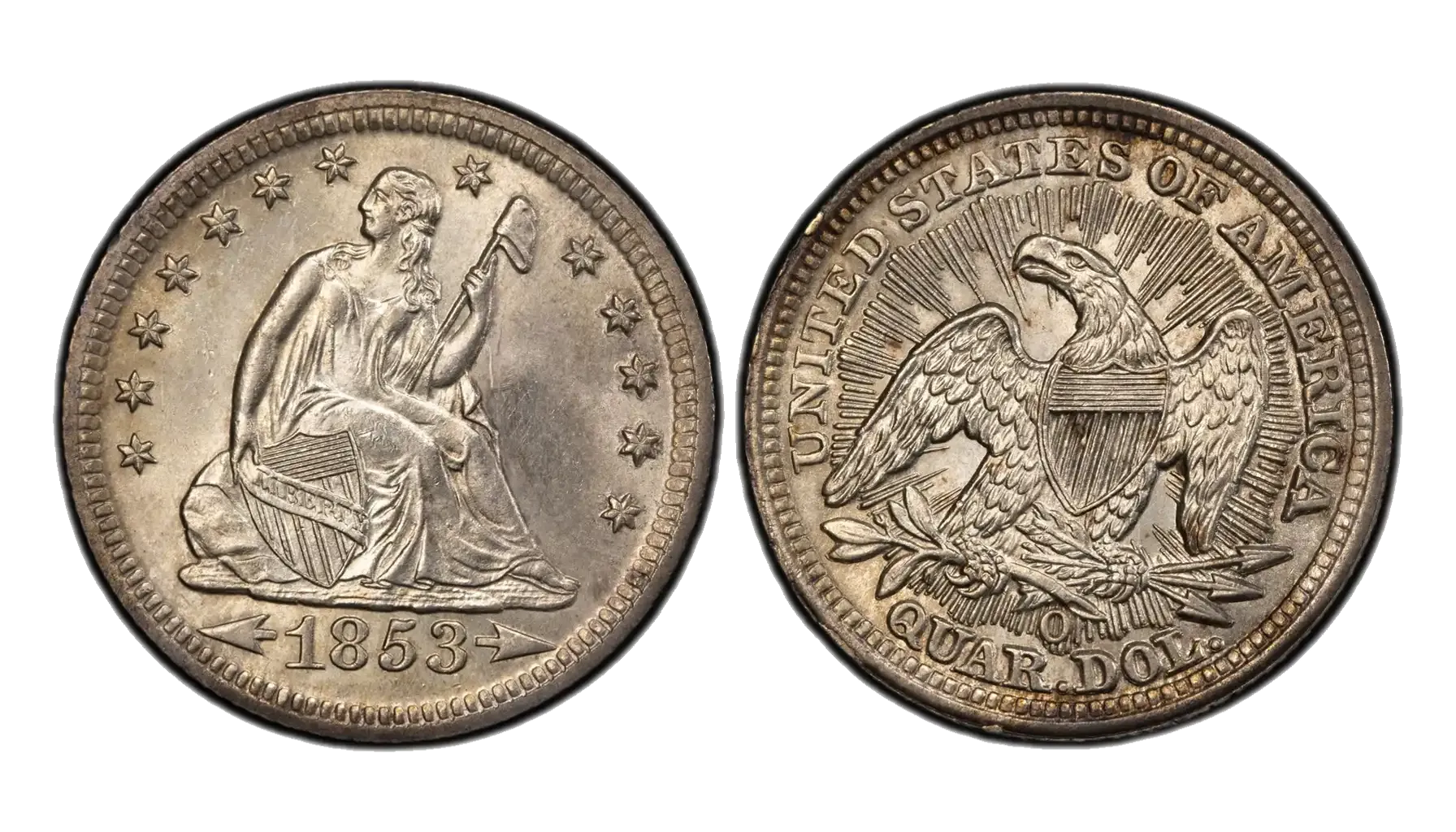
Market guides condition remains the foremost factor in valuation. The strike’s strength demonstrably affects the definition of eagle feather details and ray clarity.
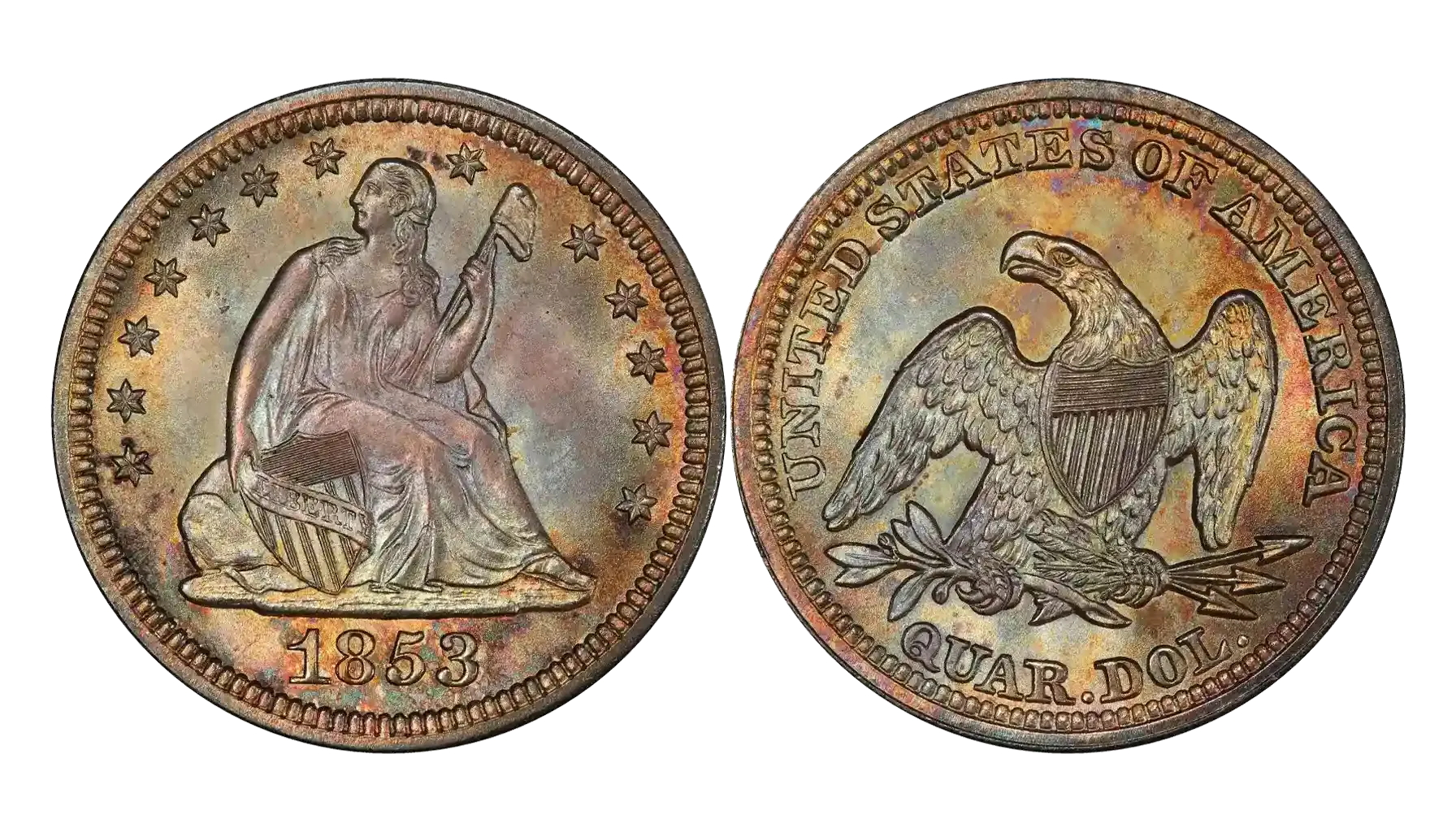
Notably, coins exhibiting natural toning often command higher premiums. Conversely, evidence of cleaning substantially reduces desirability and undermines buyer confidence.
Certification significantly enhances liquidity within the advanced collector segment (PCGS / NGC). Ultimately, the 1853 Seated Liberty item’s market value derives from this combination of attributes rather than age as a standalone factor.
Collector Tips and Buying Guidance
Never Clean Your Coins
Even a soft cloth or soap can create microscopic scratches known as hairlines. Cleaning can instantly strip away the luster, reducing a coin's value by 50 % to 90 %.
Note: In 2026, collectors highly prize original natural surface, sometimes dark or toning that only comes from decades of natural aging.
Summary
Clean coins = damage and value loss
Quality Over Quantity
It is better to own one $500 coin in a high grade than fifty $10 coins in average condition. High-quality gems (MS-65 and above) consistently outperform the rest of the market over time.
In 2026, use apps like Coin ID Scanner (best for error detection) or PCGS CoinFacts to verify current market prices and rarity before you spend.
If a rare 1913 Liberty Head nickel or an 1853 No Arrows item is being sold at a low price on a social media marketplace, it is almost certainly a counterfeit.
Summary
Quality = professional books and fact-checking before purchasing

 Facebook
  X (Twitter)
  Pinterest
  LinkedIn