Contents:
Capped Bust design was one of a peculiar nature: it was no longer a traditional depiction of Lady Liberty but a refined, almost portrait-like figure with a modern (=more up-to-date) flair, which was not deprived of elegance and classical dignity: this was broadcast through a few notable denominations, i.e., half dollars, quarters, dimes, and half dimes.
The 1835 Bust dime was a fine product of its era, though the appearance could only be partially called unique: the 1835 Capped Bust half dime shared the same design, too. But why was it so important? What do these numismatic creations look like, and what could the coin price guide reveal about their current worth?
The 1835 Dime and Capped Bust Design
The Capped Bust design was released in 1807, and it made its first appearance on the half dollars, though the extension to the dimes (1809), quarters (1815), and half dimes (1829) was also inevitable. The concept of this new program was developed by Mint Assistant Engraver John Reich and later refined by Chief Engraver William Kneass – versions varied as minting facilities advanced.
There exist two major iterations of the same dime: Type 1, featuring larger dentils and a broader planchet, and Type 2 with smaller dentils and a reduced diameter. The 1835 variety falls within the later subtype – more technologically distinctive and precisely struck.
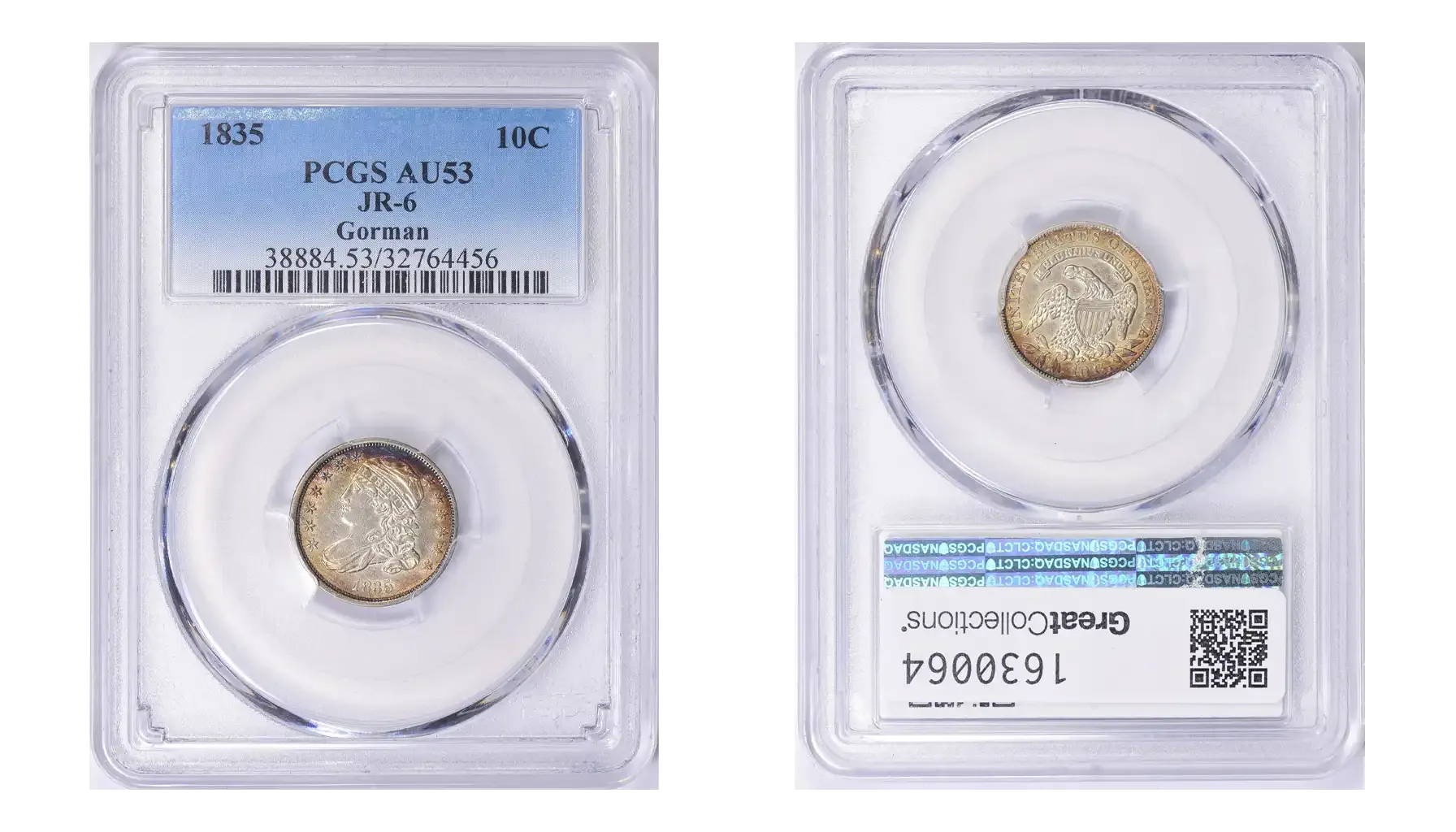
Design Features and Specifications
Obverse: Features the bust of Lady Liberty, with a Phrygian-style cap and the word "LIBERTY" on it, as well as thirteen stars (for thirteen original states) along the rim and the date "1835" at the bottom.
Reverse: Introduces a heraldic eagle with arrows in one talon and an olive branch in another, a shield on its chest, and the inscriptions "E PLURIBUS UNUM" placed on the banner above the eagle, "UNITED STATES OF AMERICA" along the upper rim, and the denomination "10 C" below.
The Main Features | |
Denomination | 10 Cents |
Composition | 89.2% silver, 10.8% copper |
Weight | 2.67 grams |
Diameter | 18.50 mm |
Thickness | 1.0 mm |
Edge | Reeded |
Design Type | Capped Bust, Type 2 (Small Dentils) |
1835 Capped Bust Dime vs Half Dime
The distinction between these two coins is obvious: the face value and their roles in the monetary system. However, the design makes it hard to differentiate. In fact, here are a few key characteristics to know:
The 10C coin was struck on a larger planchet and contained more silver (the 1835 dime value was higher intrinsically).
The 5C coin, in turn, was the smallest silver denomination produced by the United States Mint during that period, and the 1835 Capped Bust half dime value was, hence, lower, given the reduced silver content and weight.
Circulation patterns also differed, as 5Cs were to see heavier daily use (this is why the 1835 half dime value could be higher at times).
Types by Mint
1835 10C
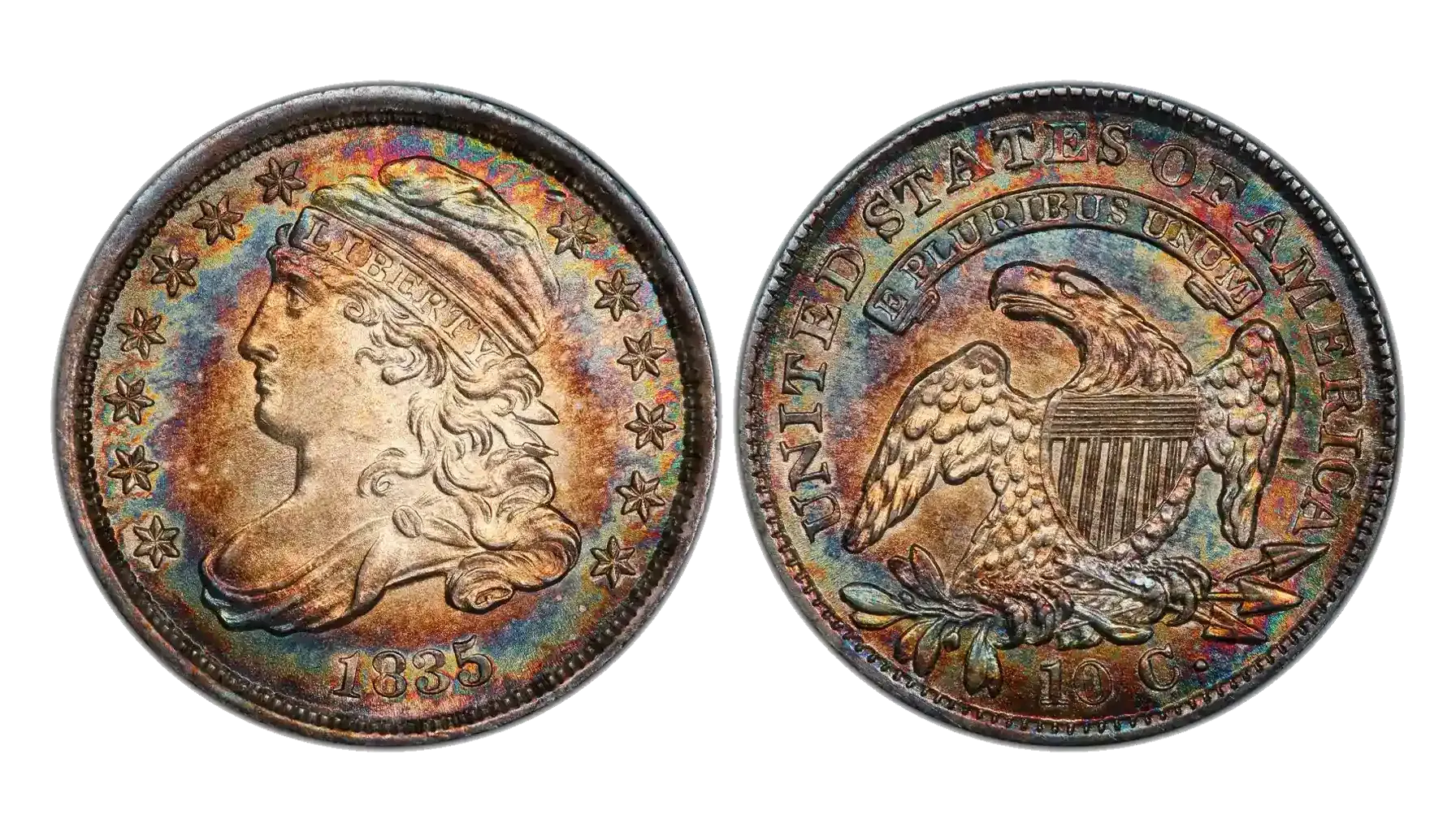
Produced by: Philadelphia Mint
Designations: MS, Prooflike
Mintage: 1,410,000
Auction Record: $46,200 for MS67
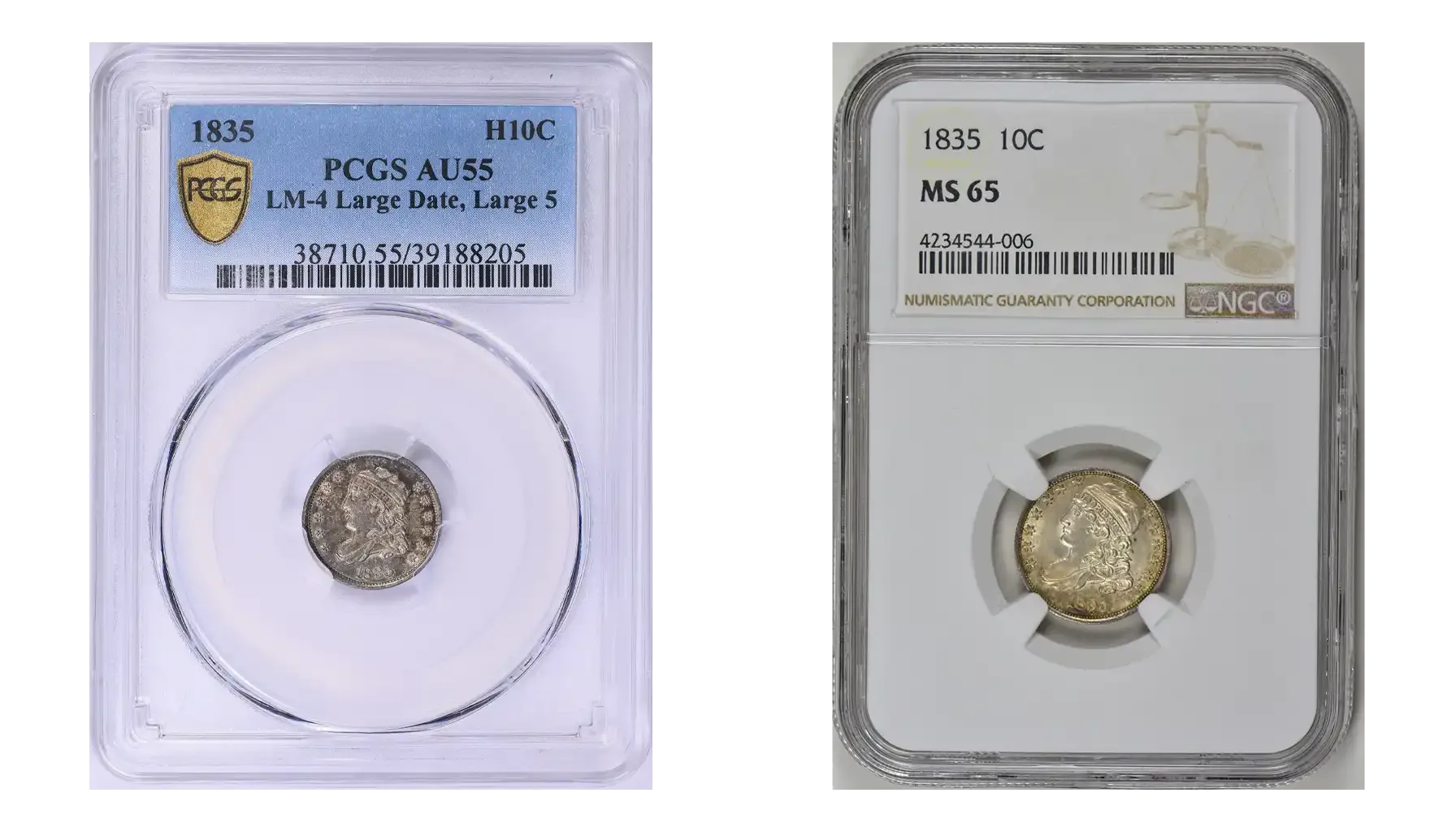
This was a regular-issue coin struck for general circulation in its second iteration (the small dentil subtype) with the highest mintage of all dimes released before 1838. Thanks to the age and possible levels of preservation, the price of such a coin can reach dozens of thousands of dollars, especially for high-grade survivors. These come with two possible designations, and "Prooflike" is usually worth more than MS.
“...The 1835 Dime is scarce in Mint State, but not rare, and the most frequently-seen grade is MS-64. Gems, on the other hand, are rare indeed, and the finest example certified by PCGS (as of October 2011) is a single MS-66.”
— Ron Guth, a licensed Certified Public Accountant and a numismatic consultant
PCGS CoinFacts
1835 10C Proof
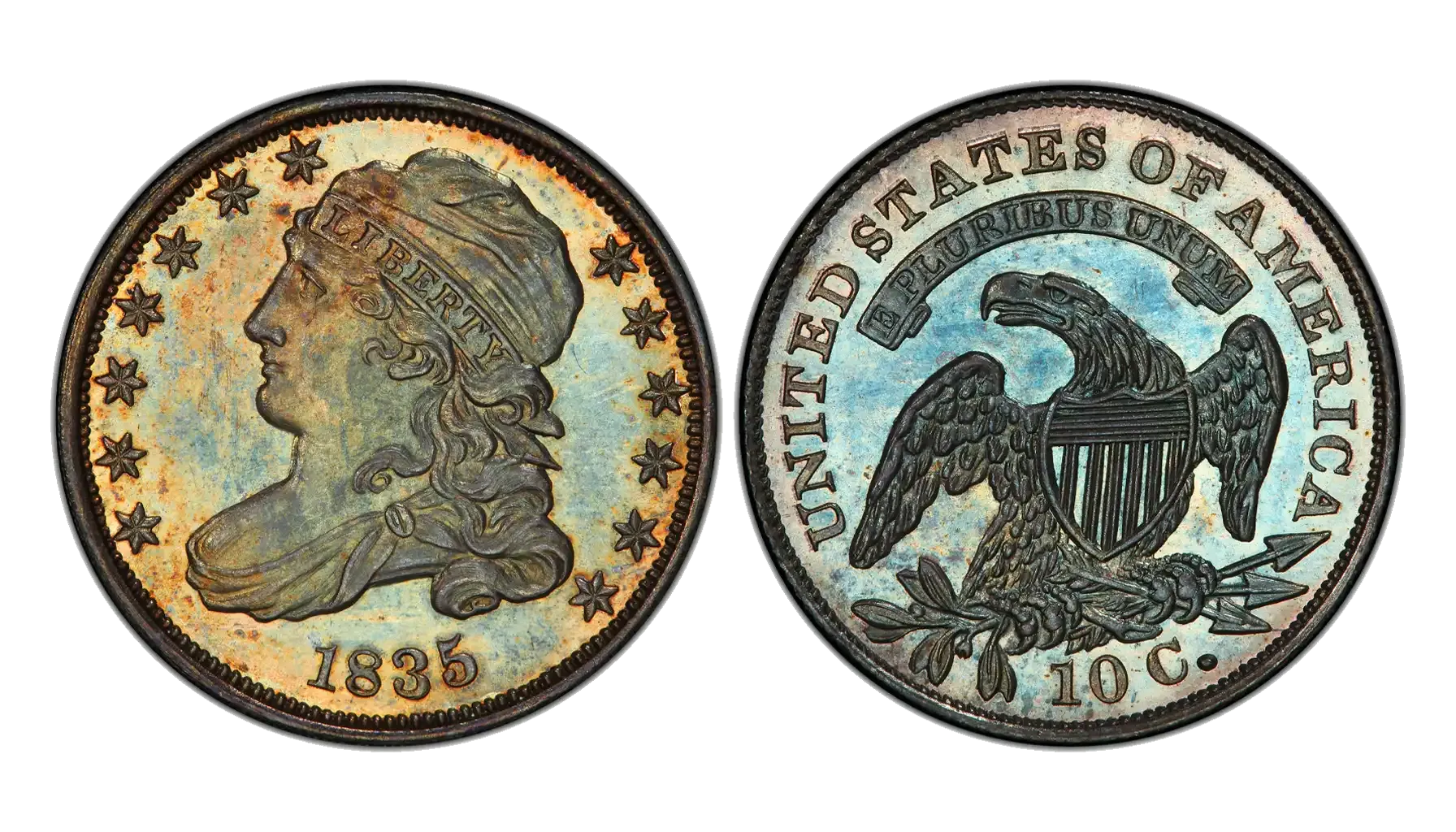
Produced by: Philadelphia Mint
Designations: PR, CAM
Mintage: 10
Auction Record: $143,750 for PR67
The 1835 Proof coin is an elite rarity, which was struck in extremely limited quantity for presentation and archival purposes. These were specially prepared with polished dies and planchets, and the result was a more refined numismatic creation, ready to be collected. Nonetheless, time has taken its toll, and observing a Mint State specimen might be almost impossible, let alone the mintage itself.
1835 Capped Bust Dime Value
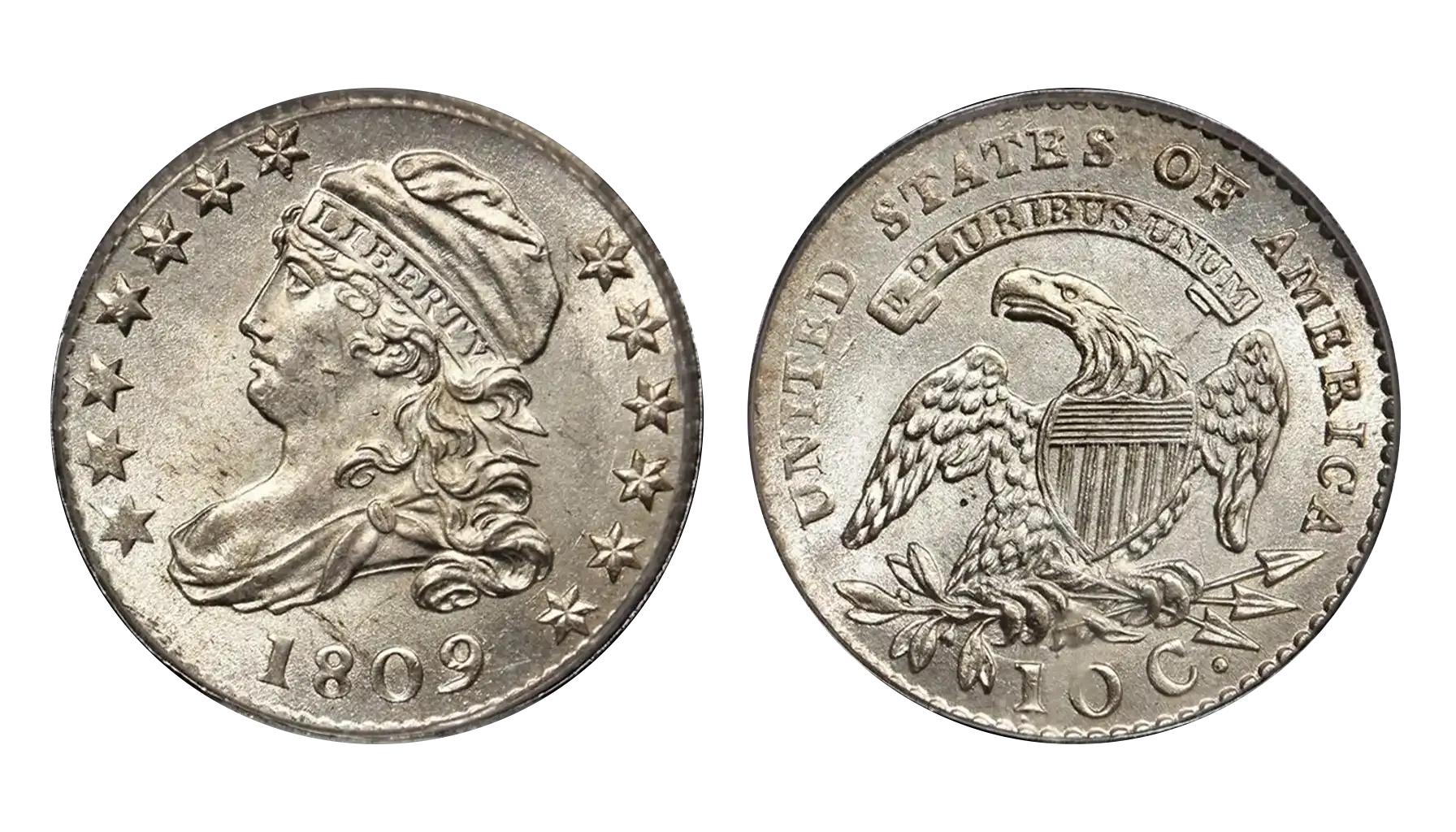
The price of any coin is determined by the market and certain factors that drive the economy at the moment. This usually comes down to collector demand, physical condition (and the grade) of a numismatic creation, as well as the historical context, and provenance, too. As for the early US silver coinage, grade is the most definitive factor so far.
Grade reflects how much of the original luster is left, how beautiful the coin is at the moment, and the extent to which design details remain sharp and undisturbed. Let us check the general value ranges by grade below.
How Much Is a 1835 Dime Worth?
All values are approximate, based on the PCGS Tool Price Guide estimates and auction records. For more relevant data, please refer to Coin ID Scanner to identify your variety and learn more about what could contribute to the price formation in your case.
Grade Category | 1835 10C | 1835 10C Proof |
Circulating Grades (G–AU) | $60 – $1,150 | – |
Mint State (MS-60 to MS-63) | $1,250 – $3,000 | – |
High Mint State (MS-64+) | $3,500 – $37,500+ | – |
Proof (PR-60 to PR-62) | – | $10,000 – $15,000 |
High Proof (PR-63+) | – | $25,000 – $150,000+ |
Coins that have been produced 2 centuries ago are no less interesting and peculiar than those minted today. Explore the past of the numismatic scene and obtain the issues you really adore – that is all that matters.

 Facebook
  X (Twitter)
  Pinterest
  LinkedIn