Contents:
- The Wampanoag Treaty 1621 Dollar: A Symbol of Early American Diplomacy
- Design and Symbolism of the Wampanoag Treaty Dollar
- Mint Manufacturing and Issuing Data
- Current Coin Value by Year and State of Preservation
- Rare Varieties and Mint Errors of the Wampanoag Dollar
- The Historical Context: The 1621 Treaty Between Wampanoag and Pilgrims
- FAQ
There is a special place for Native American dollars. Not every day can you find coins with a unique design and a precious purpose: to honour the past and the people that were a part of it and still influence our world.
The Wampanoag Treaty 1621 Dollar: A Symbol of Early American Diplomacy
Diplomacy and the goodwill of people. Those are the qualities this coin embodies.
The Wampanoag Treaty Dollar is a tribute to one of the earliest peace treaties. Between whom? Between the natives and the Europeans. Wampanoag chief Massasoit and the Pilgrims of Plymouth Colony signed the Wampanoag Treaty in 1621. The Treaty sanctioned their co-existence.
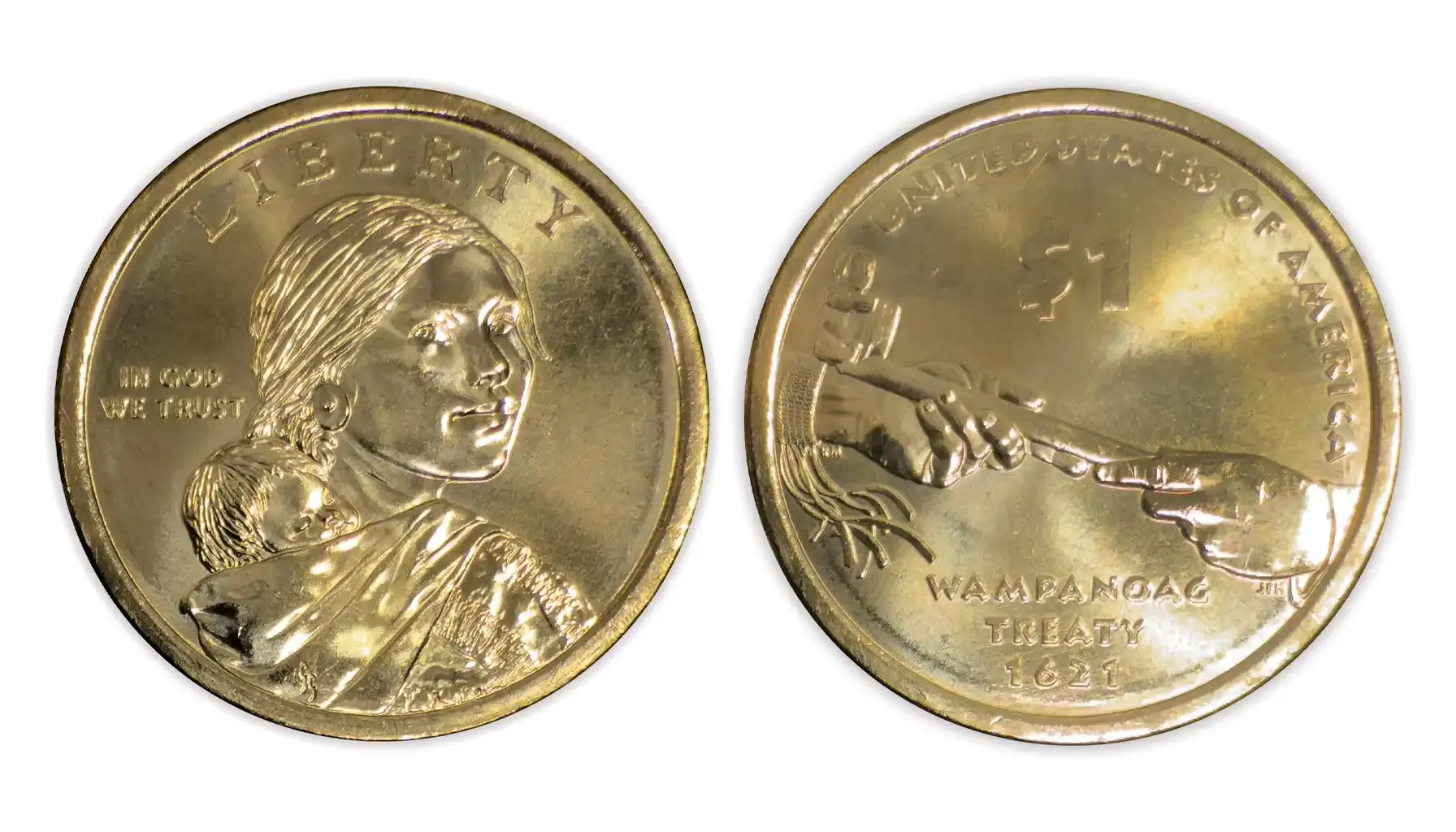
The coin set to commemorate this Treaty features the design you’ve just seen. This exact design is common for the whole series of Native American coins.
The U.S. Mint started the Native American $1 Coin Program in 2009. The Treaty dollar is a part of that program. The goal of the series was to honor the role that Native Americans played in the history and growth of the United States. Sequoyah dollar, Indian Citizenship, and Ely Parker coins are all a part of the program.
Design and Symbolism of the Wampanoag Treaty Dollar
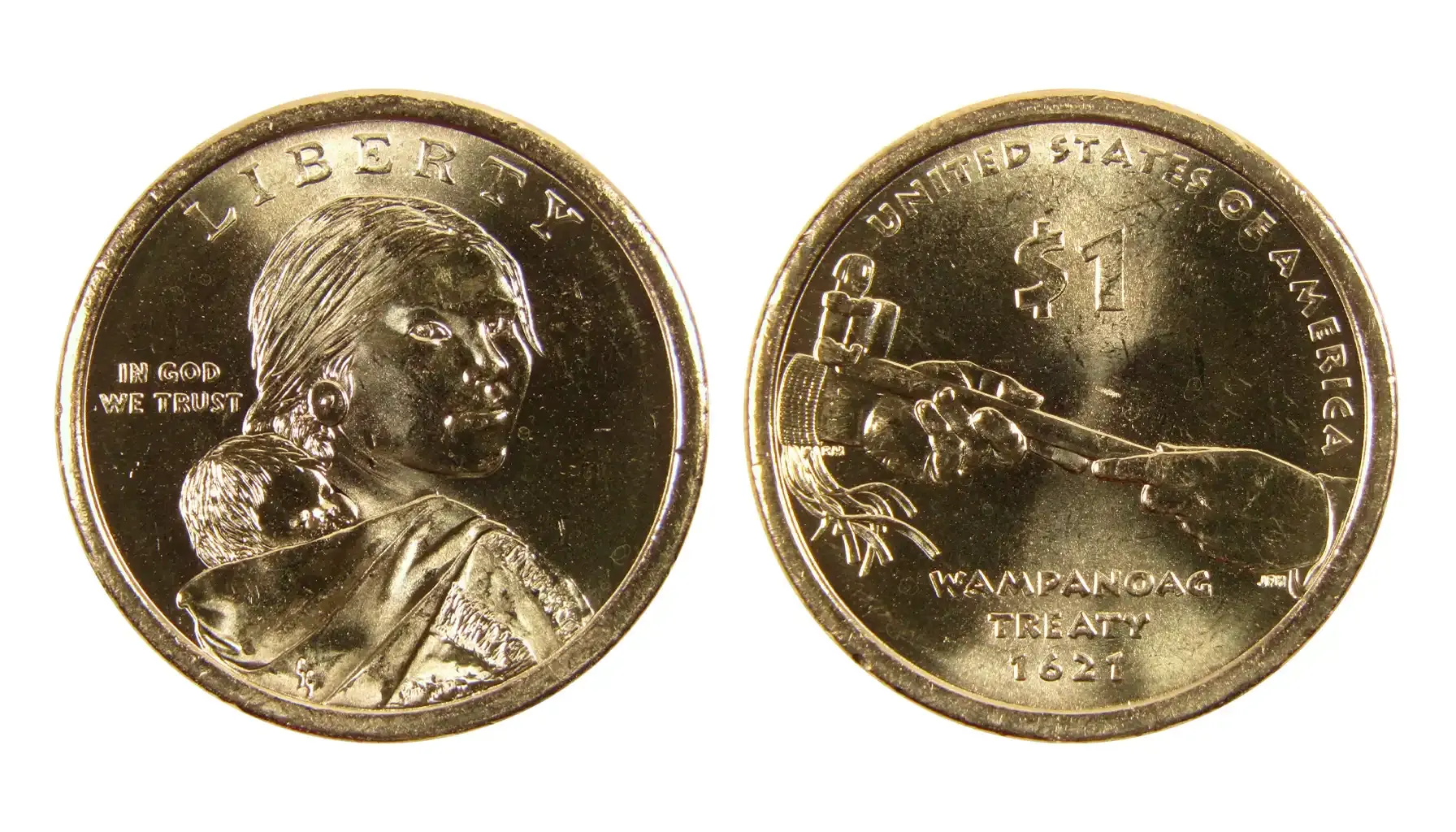
Obverse Design: Portrait of Sacagawea, the Shoshone woman who guided the Lewis and Clark Expedition. She is depicted carrying her infant son.
Reverse Design: Two hands extended in friendship. One is belonging to a Wampanoag tribesman, offering a peace pipe, and the other to an English settler, holding a tool.
Glenna Goodacre designed the front side, set to symbolize courage, exploration, and cultural bridge-building through this design. This reverse was designed by Richard Masters and sculpted by Norman E. Nemeth.
Mint Manufacturing and Issuing Data
Despite the name, this is not an actual 1621 coin. The dollar was issued in 2011 by the U.S. Mint. Coins were struck at three mint facilities:
Philadelphia (P): Primarily struck for circulation and uncirculated sets
Denver (D): Primarily made for circulation strikes and mint sets
San Francisco (S): Made proof issues for collectors
Mintage number for the three Mints:
Philadelphia: ~29 million.
Denver: ~48 million.
San Francisco Proof: ~1.1 million.
Native American $1 coins (including the 1621 coin, Jim Thorpe dollar, and others in the series) were released both in circulation and for collectors (as proof and uncirculated coins). The latter two were of higher quality. But also came with a higher price.
Current Coin Value by Year and State of Preservation
Wampanoag treaty 1621 dollar coin value depends mostly on the grading (condition):
Grading | Value |
Circulated | $1–$1.50 |
Uncirculated | Around $2–$4 |
Proof (S Mint) | $6–$12 |
Why does condition matter? Because with most coins, excellent condition is something rare, and the rarer the item is, the more expensive it is.
If you want to check real-time coin values, you could go to platforms like:
PCGS
NGC
Numista
Rare Varieties and Mint Errors of the Wampanoag Dollar
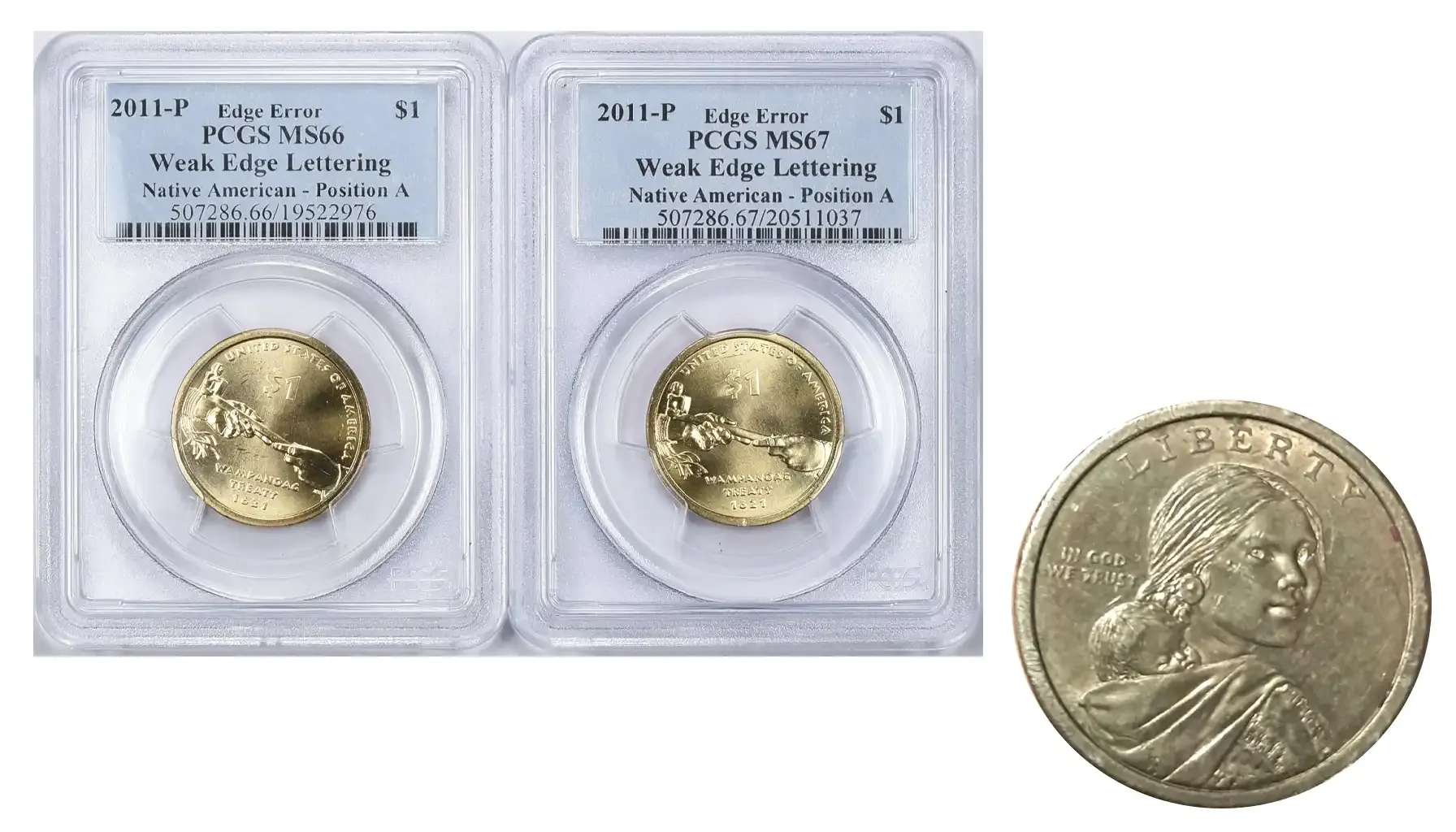
We know about a few minting error varieties for this dollar. All could be considered misprints:
Double Dies: Minor doubling visible on lettering or design elements
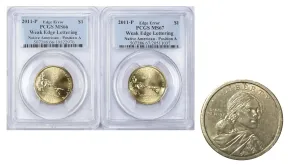
Edge Lettering Errors: Missing, doubled, or inverted inscriptions of E Pluribus Unum and In God We Trust.
Missing date: The coin has two dates: 1621 on the reverse and 2011 on the edge. Wampanoag treaty 1621 dollar coin no date, could be missing the “2011” on the edge.
Collectors are interested in aerator coins, sometimes ready to give $100+ for a flawed piece. The final price depends on the rarity and visibility of the mistake.
The Historical Context: The 1621 Treaty Between Wampanoag and Pilgrims
In 1621, Governor John Carver of Plymouth and Chief Massasoit of the Wampanoag Confederacy made history. They signed a peace treaty, the first peace treaty of this kind between Native Americans and English settlers. Both parties promised friendship and mutual protection.
For more than 50 years, the agreement has been held. An extraordinary duration considering the tensions that would come later. The legacy of this event, the legacy of cooperation and friendship between two nations, was not forgotten. It was forged into a coin.
Today, many years later. Wampanoag Treaty 1621 Dollar brings that story to modern audiences. Now, collectors can feel the impact of this event, intrinsically, through the metal.
FAQ
What is the value of the 1 Dollar Wampanoag Treaty 1621 coin today?
Most are worth $1 in circulation. Uncirculated coins sell for $2–$5, and proof versions for $6–$12. With errors, you could expect a $20+ price. As for the other members of the series, their values are similar. So if you want to know: how much is Sacagawea coin worth, then most also go for face value.
How can I tell if my Wampanoag dollar is rare or valuable?
You should check the piece for a few signs. If it has an “S” mint mark, has luster, and/or an error, your coin must be a valuable one.
Where was the 1621 Wampanoag Treaty dollar minted?
The coin was struck at three U.S. Mints: Philadelphia (P), Denver (D), and San Francisco (S).
What does the design on the reverse of the coin represent?
The reverse shows two hands exchanging goods. One hand belongs to a Native American, and one to a Pilgrim. Together, they represent friendship, peace, and the 1621 treaty between the Wampanoag and Plymouth settlers.
Are there any mint errors on the Wampanoag dollar?
A few errors exist. Missing edge lettering and dates, double dies. These errors can make the coin more valuable to collectors. No date Sacagawea dollar value would be $50+.
How can I get my Wampanoag Treaty dollar appraised or graded?
Take your collectible to a local coin shop or send it to PCGS or NGC for professional grading.
Is the Wampanoag dollar made of real gold or silver?
It depends. In circulation, this coin is manganese-brass with a copper core. Yet some collectors’ pieces were made in pure gold.
Where can collectors buy or sell the Wampanoag Treaty 1621 coin?
The dollars can be traded through coin dealers, shows, online marketplaces, and auction sites. Think of Heritage Auctions, eBay, and Etsy.

 Facebook
  X (Twitter)
  Pinterest
  LinkedIn