Contents:
The Native American 1 Dollar Coin Series is an official U.S. Mint program launched in 2009 to honor the contributions of Native Americans throughout American history.
It succeeded the Sacagawea Dollar series but retained her portrait while introducing new reverse designs every year.
Feature | Specification |
Composition | 88.5 % Copper, 6 % Zinc, 3.5 % Manganese, 2 % Nickel |
Weight | 8.1 g |
Diameter | 26.5 mm |
Thickness | 2.0 mm |
Edge | Lettered (incused inscriptions) |
Mints | Philadelphia (P), Denver (D), San Francisco (S) |
The Origin of the Native American Dollar Coin Series
“The coins recognise important contributions made by Native American tribes and individuals throughout the history of the United States.”
— Numismatic News Staff
“Collecting Native American Dollars” (Oct 11, 2024)
The 1 Dollar Coin Native American Series began with the Native American $1 Coin Act (Public Law 110-82), signed on September 20, 2007. Lawmakers wanted a piece that showed how Indigenous peoples shaped American history and culture — something the earlier Sacagawea Dollar (2000–2008) didn’t fully achieve.
That earlier series used the same image every year — Sacagawea carrying her son Jean Baptiste. The new law kept that familiar obverse design and introduced a changing reverse each year. There are themes like agriculture, diplomacy, science, military service, etc.
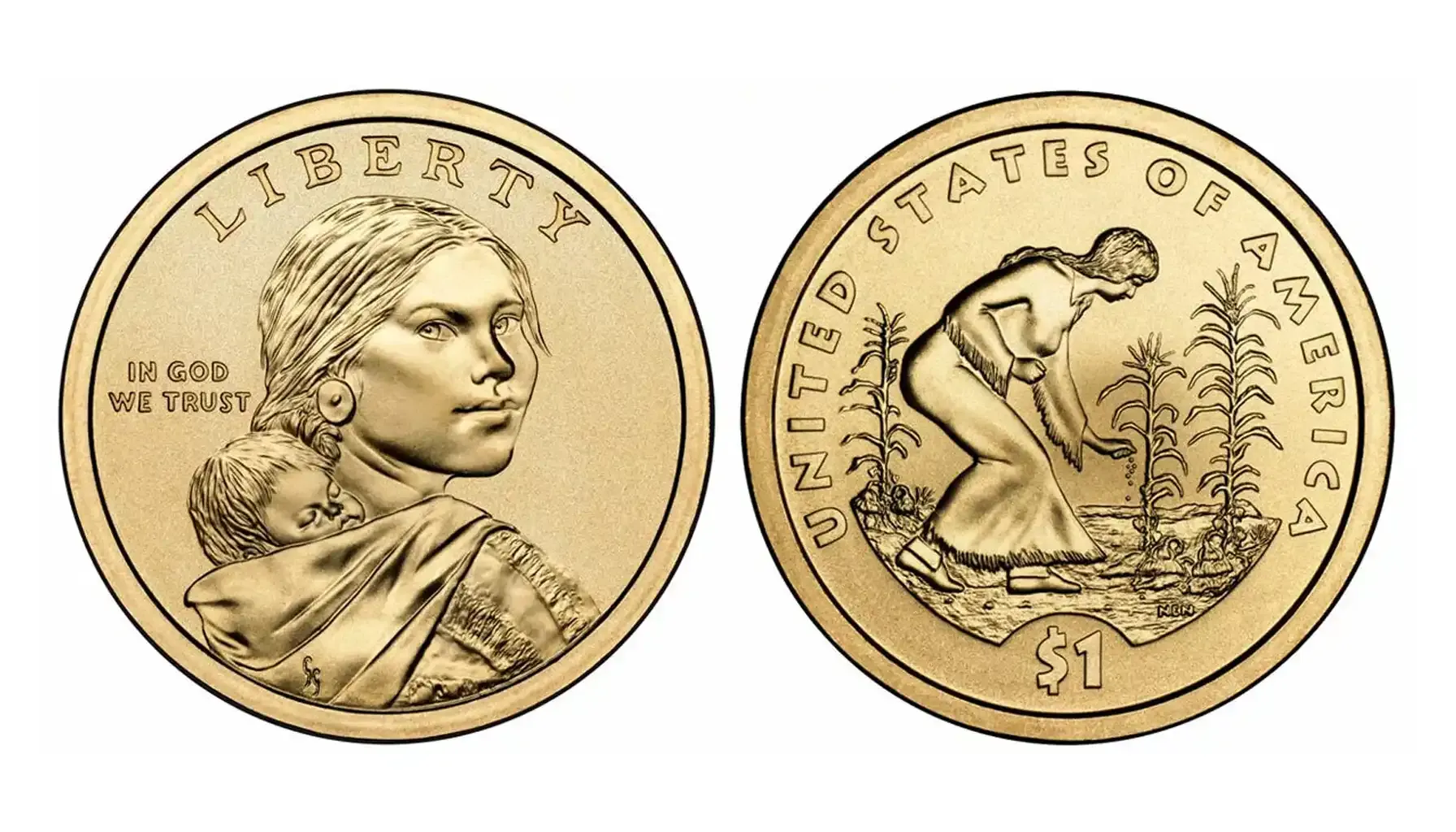
The first release came in 2009 and showed the “Three Sisters” crops — corn, beans, and squash. It represents early Native farming traditions.
The act also required that at least 20% of all dollar coins produced each year carry these designs. Even though these ones rarely appear in everyday use, they became collector favorites for their artwork, meaning, and yearly variety.
Design and Symbolism of the Native American $1 Coin
Each is still a Sacagawea Native American dollar coin that adds a new story each year on the back.
Obverse
Image: Sacagawea with her son Jean Baptiste.
Designer: Glenna Goodacre.
Inscriptions: LIBERTY and IN GOD WE TRUST.
Reverse
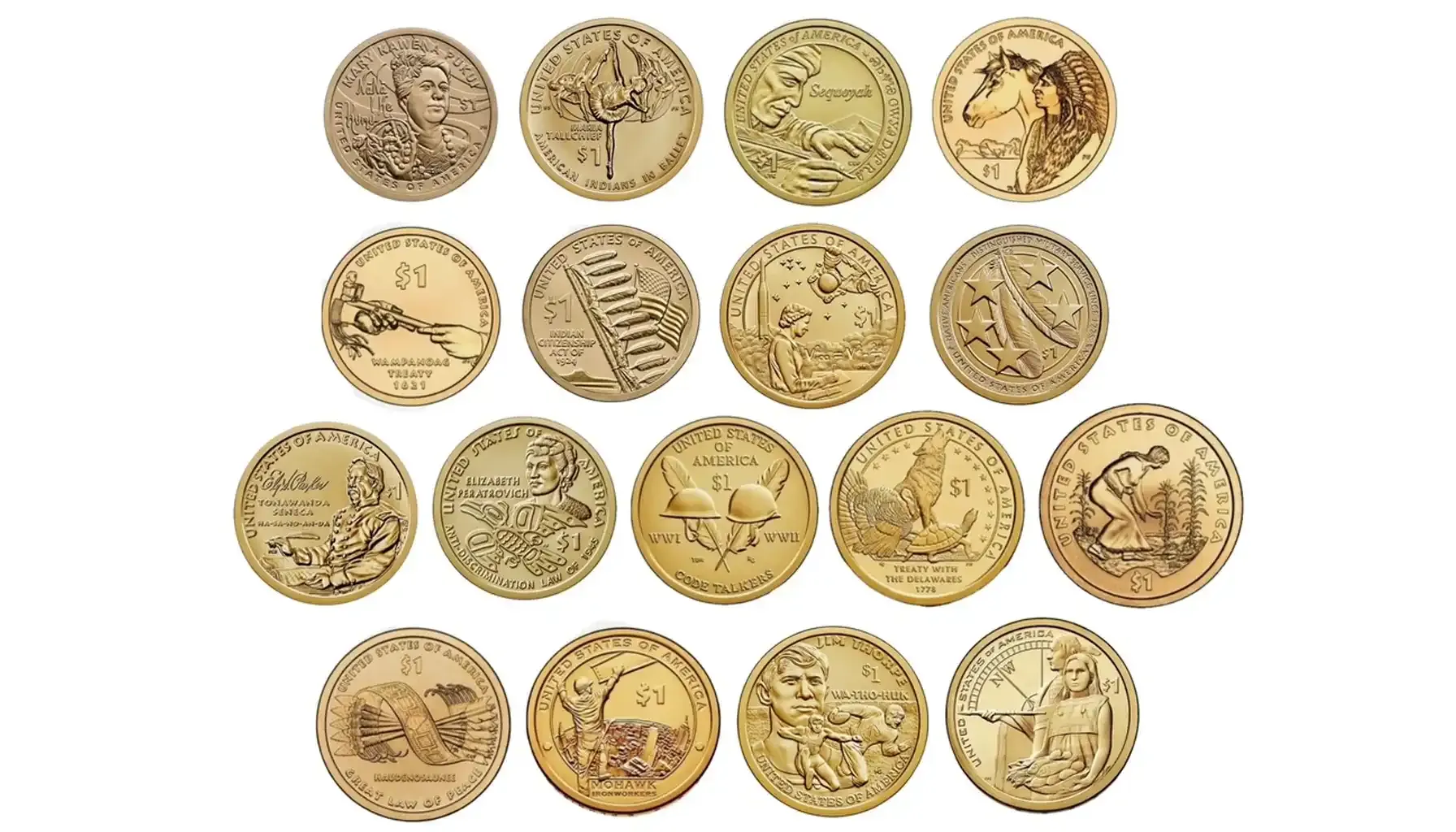
2009 – “Three Sisters” Agriculture with corn, beans and squash as symbols of growth and cooperation;
2010 – Great Law of Peace, the Hiawatha Belt and five arrows bound together;
2011 – Wampanoag Treaty 1621 with Hands of a Wampanoag leader and a Pilgrim governor sharing a peace pipe;
2014 – Lewis & Clark Hospitality with Native tribes guiding and feeding the expedition;
2017 – Sequoyah Native American Dollar Coin year shows an inventor of the Cherokee writing system, shown inscribing his name;
2018 – Jim Thorpe, Olympic athlete and football legend from the Sac and Fox Nation;
2020 – Elizabeth Peratrovich, Tlingit activist who fought racial discrimination in Alaska;
2022 – Ely S. Parker, Seneca engineer and Union Army officer who drafted the Appomattox surrender documents;
2025 – “Nānā I Ke Kumu” that is a Hawaiian phrase meaning “Look to the Source”.
Edge and Inscriptions
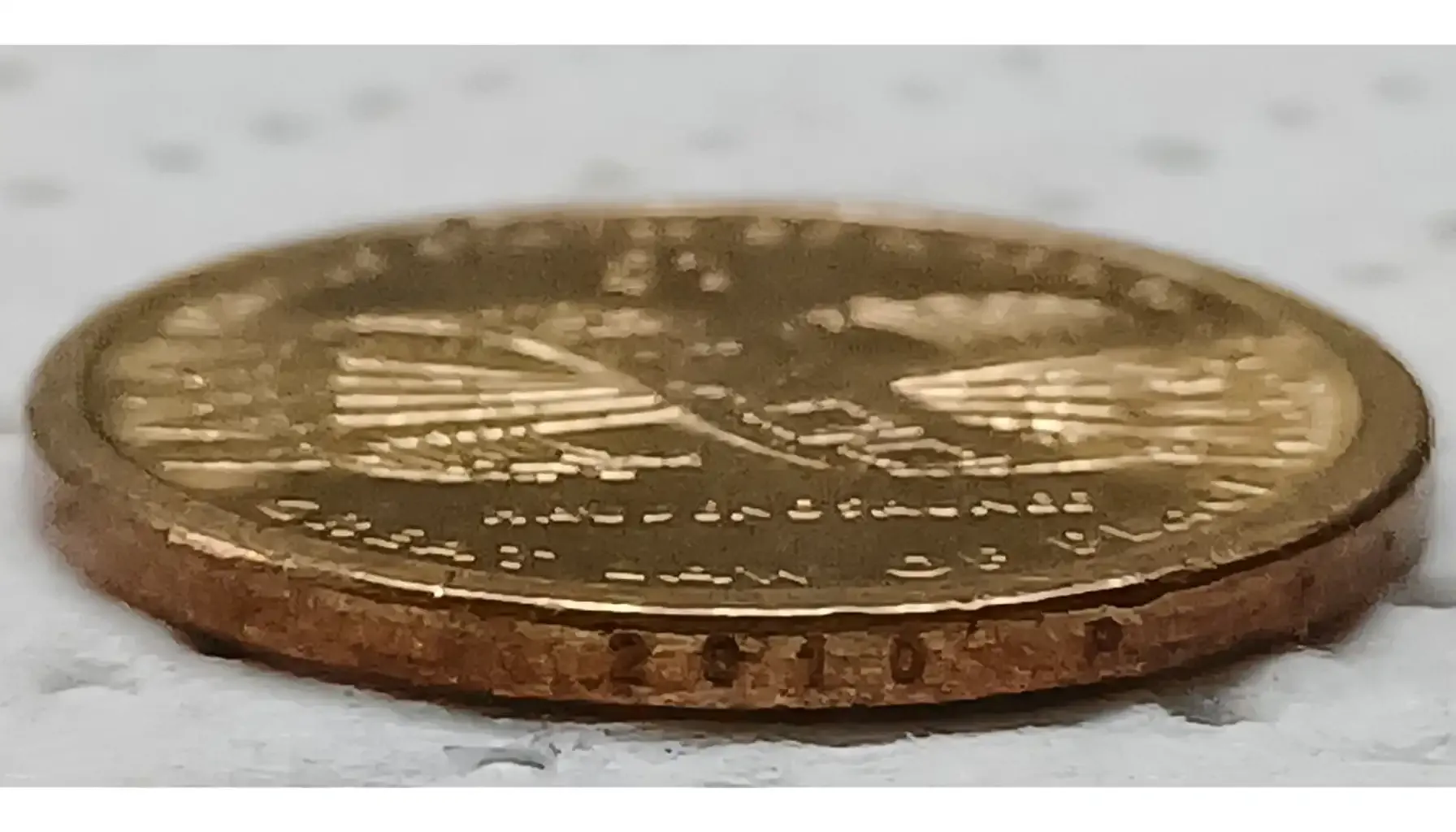
The edge includes the year, mint mark, and the phrases E PLURIBUS UNUM and IN GOD WE TRUST.
How to Identify and Read Dates on Native American Dollar Coins
You may think that it’s a Native American dollar coin no date version. Indeed it can be confusing for new collectors because their dates and mint marks aren’t on the front or back.
Instead, they are engraved along the edge, just like the Presidential $1 series.
Step 1: Locate the Edge Lettering
Hold the piece sideways under good light. Slowly rotate it to read the small letters and numbers engraved around the edge. You’ll find:
Year of issue (for example, 2018)
Mint mark (P, D, or S)
Inscriptions: E PLURIBUS UNUM and IN GOD WE TRUST
Issues struck for circulation usually have Philadelphia (P) or Denver (D) mint marks; San Francisco (S) marks appear on proof specimens.

Step 2: Use a Magnifier or Photo Tool
Because the lettering is incused (cut into the edge), it can be faint or uneven. A 10× loupe or a macro camera helps reveal the full inscription without damaging the surface.
Step 3: Identify the Design Year
The edge date corresponds to the reverse theme of that specific year — for example:
2011 — Wampanoag Treaty 1621
2017 — Sequoyah
2020 — Elizabeth Peratrovich
2025 — Nānā I Ke Kumu
The date can influence the Native American dollar coin value.
Step 4: Verify with Coin ID Scanner
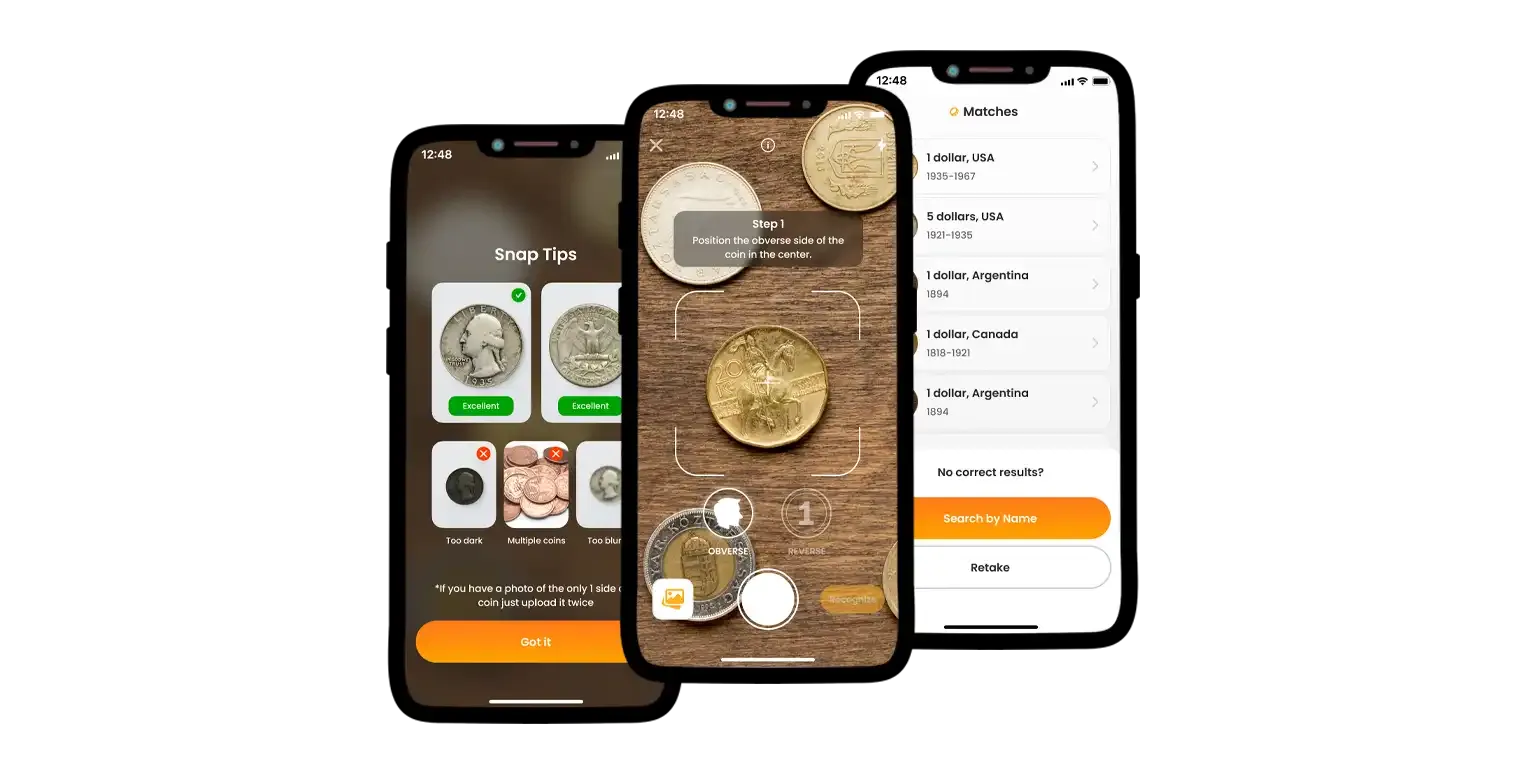
If you’re unsure, use the Coin ID Scanner app. Simply photograph the specimen you have, and the app automatically identifies it.
You may also organize your Native American one dollar coin collection digitally.
Native American Dollar Coin List with Pictures
Year | Theme | Estimated Value* |
2009 | “Three Sisters” agriculture | US $3 – 10 |
2010 | Great Law of Peace (Hiawatha Belt) | US $4 – 12 |
2011 | Wampanoag Treaty 1621 | US $5 – 15 |
2012 | Trade Routes of the 17th Century | US $4 – 10 |
2013 | Treaty with the Delawares 1778 | US $4 – 10 |
2014 | Native Hospitality (Lewis & Clark) | US $4 – 10 |
2015 | Mohawk Ironworkers | US $5 – 15 |
2016 | Code Talkers (WWI/WWII) | US $5 – 15 |
2017 | Sequoyah – Cherokee syllabary | US $6 – 20 |
2018 | Jim Thorpe – athlete & Olympian | US $6 – 20 |
2019 | American Indians in the Space Program | US $6 – 18 |
2020 | Elizabeth Peratrovich – civil rights | US $6 – 18 |
2021 | American Indians in U.S. Military Service | US $6 – 18 |
2022 | Ely S. Parker – Seneca diplomat | US $6 – 18 |
2023 | Maria Tallchief & Native Ballet Dancers | US $6 – 18 |
2024 | 100th Anniversary Indian Citizenship Act | US $6 – 18 |
2025 | Hawaiian Heritage – “Nānā I Ke Kumu” | US $6 – 18 |
*How much is a Native American dollar coin worth? These values are for standard circulation/uncirculated strikes in typical condition; premium finishes, very high grades or errors can trade at higher prices.
The Wampanoag Treaty 1621 Dollar
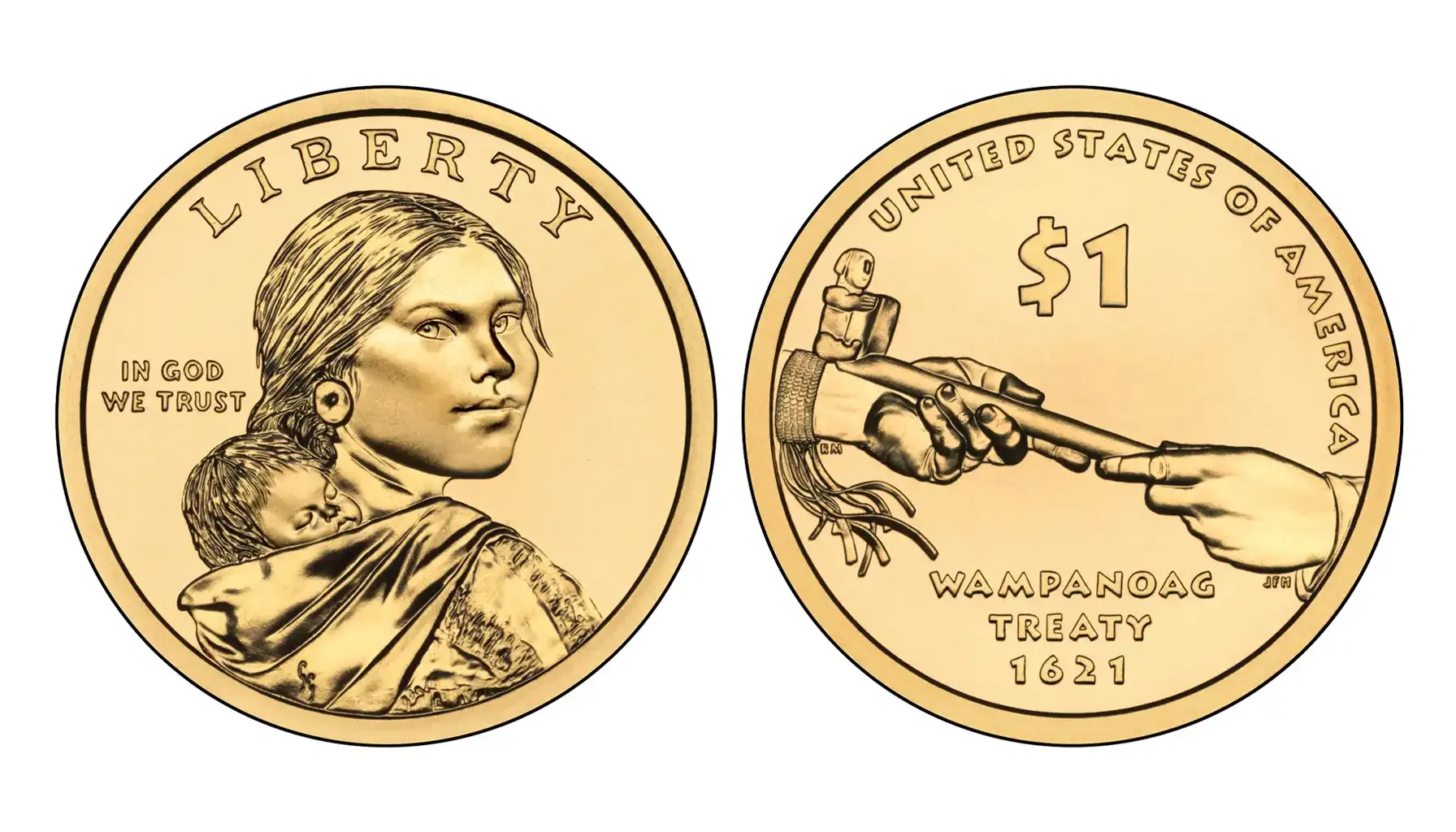
The 2011 1 dollar Native American coin marks the first peace agreement between the Wampanoag people and the Pilgrims.
On the reverse, two hands — one Native and one European — exchange a peace pipe over crossed weapons.
The design is a moment of mutual trust and shared purpose.
Jim Thorpe Dollar
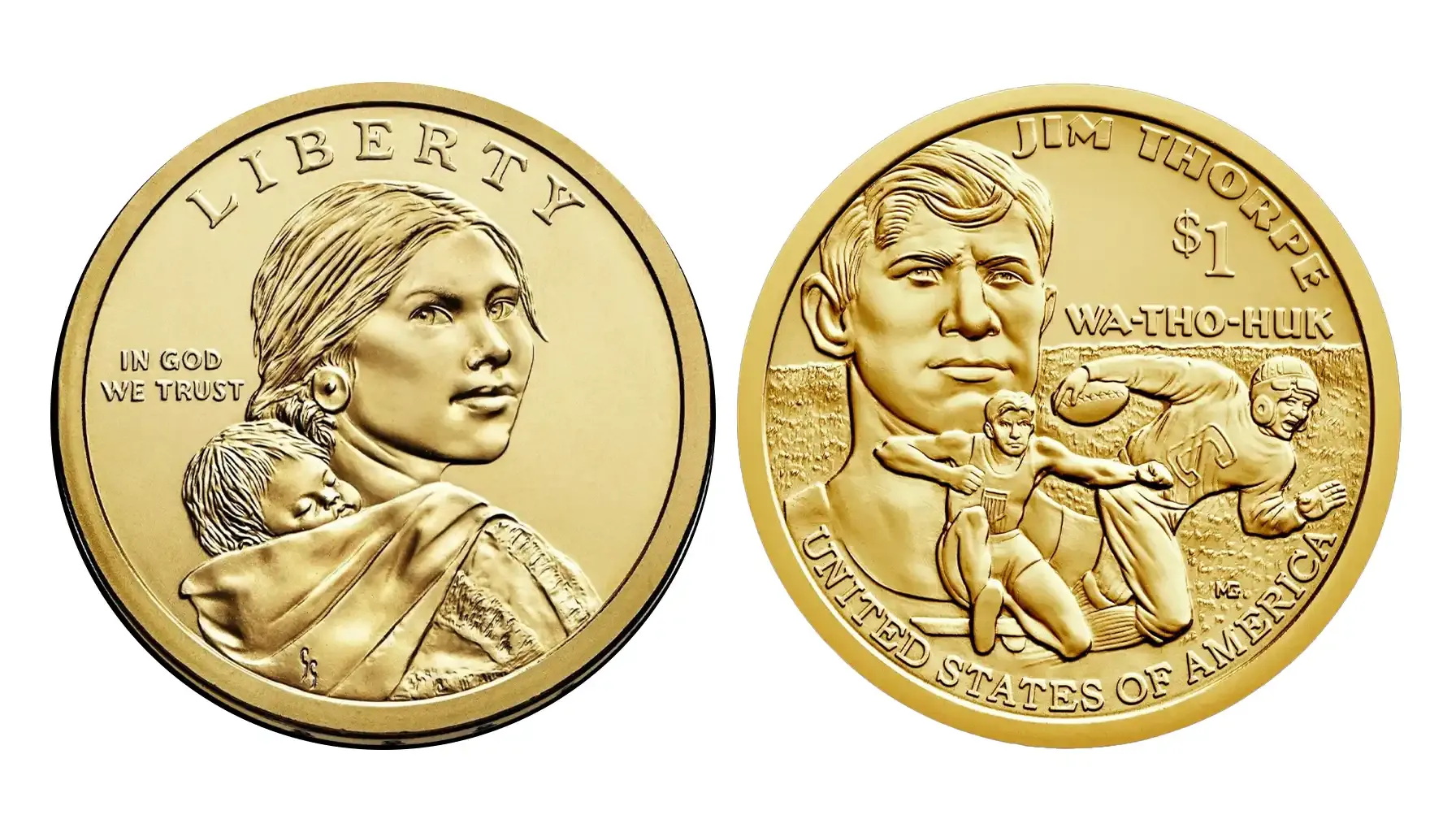
The 2018 one dollar coin Native American honors Jim Thorpe of the Sac and Fox Nation, one of the most accomplished athletes in American history.
The reverse features his portrait surrounded by references to his Olympic medals and football career. Collectors value this coin for its vivid engraving and connection to modern sports history.
Sequoyah Dollar
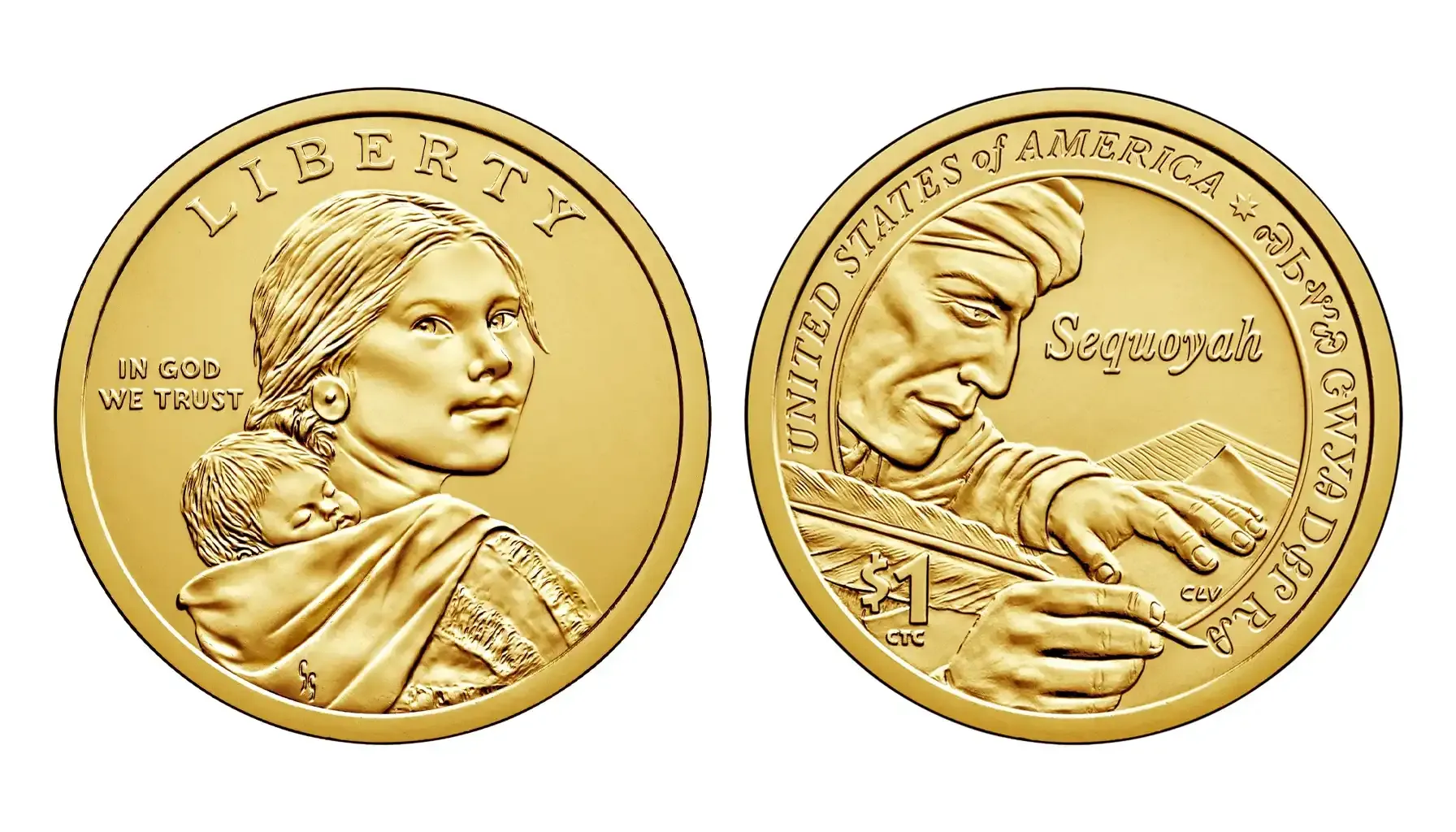
It was released in 2017. This coin celebrates Sequoyah. This Native American on dollar coin is the Cherokee scholar who created the written Cherokee language.
The reverse shows him inscribing “Sequoyah from Cherokee Nation” in his own syllabary. The image symbolizes knowledge, creativity and the preservation of Native identity.
Elizabeth Peratrovich Dollar
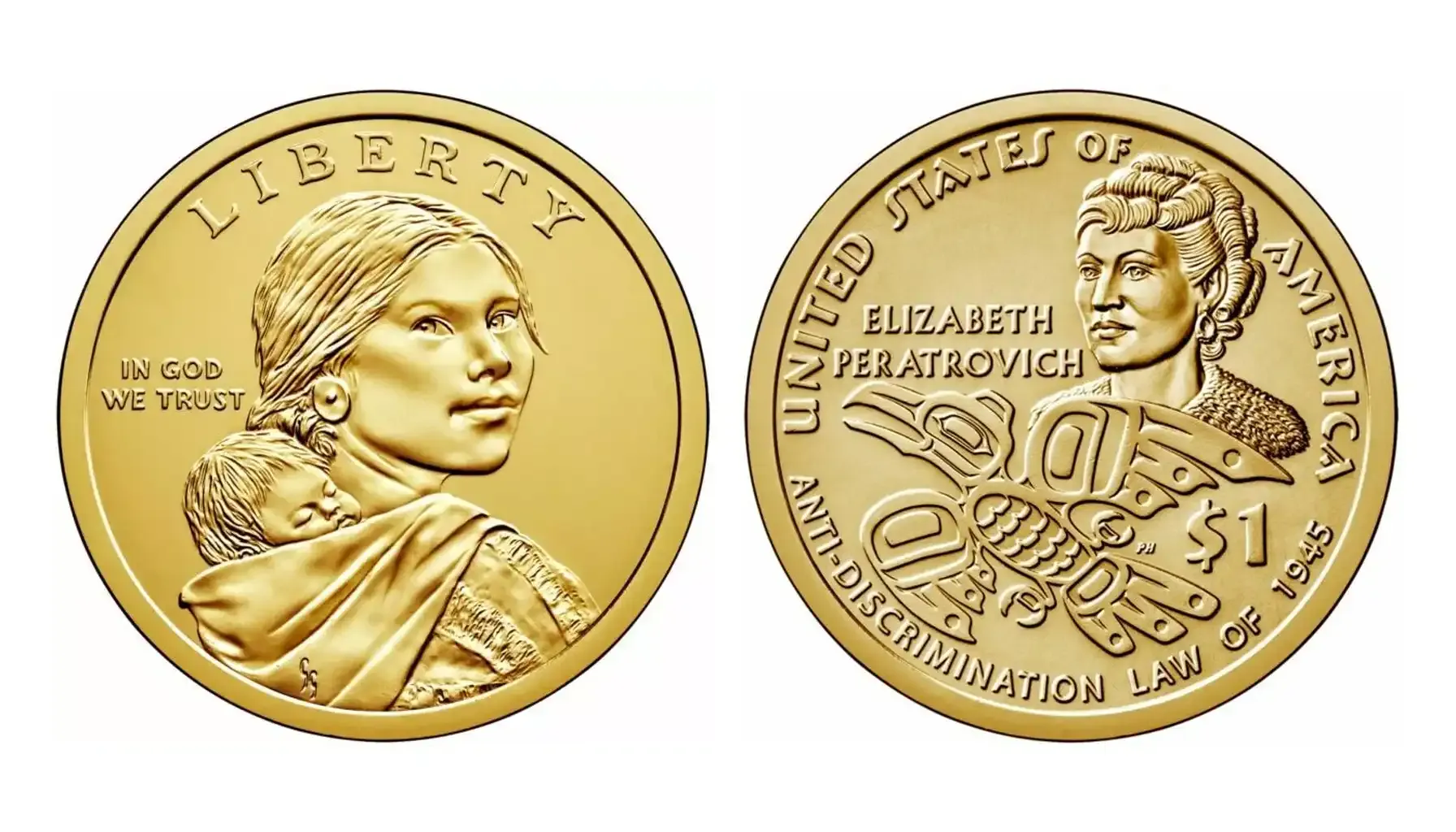
The 2020 issue honors Elizabeth Peratrovich of the Tlingit Nation. This Native American woman on dollar coin was a leader in the fight against racial discrimination in Alaska.
Her portrait appears beside a raven motif. Collectors see it as a modern tribute to justice and Native leadership.
Conclusion
The series combines strong cultural meaning with steady collector demand. Choose proof and uncirculated pieces from the San Francisco Mint for their fine detail and lower mintages.
Keep coins sealed or in original Mint packaging to protect the finish. Aim for a full set from 2009 onward — complete series often gain collector interest faster than individual coins.
Investment tips:
Track low-mintage releases;
Diversify by adding Presidential or Innovation $1 coins for balance;
Use Coin ID Scanner to manage your collection.
Well-preserved examples from this series stand out for both heritage and value — a mix for anyone collecting with purpose and planning for future appreciation.

 Facebook
  X (Twitter)
  Pinterest
  LinkedIn