Contents:
- How Much Is a 1957 Wheat Penny Worth Today?
- 1957 Wheat Penny Value Chart
- What Makes a 1957-D Penny Rare?
- Most Valuable 1957 Wheat Penny Errors
- 1957 Wheat Penny Error List
- Factors That Affect 1957 Penny Value
- How to Tell If Your 1957 Penny Is Valuable
- 1957 Wheat Penny vs 1957 Steel Penny
- Where to Sell or Appraise Your 1957 Penny
- FAQ
This specific coin type originated from two primary United States manufacturing facilities. The numismatic value of the 1957 Wheat Penny for these items ranges from face value to several thousand dollars.
Characteristic | Description |
Composition | 95% Copper, 5% Tin, and Zinc |
Weight | 3.11 grams |
Diameter | 19.05 mm |
Edge | Plain |
Obverse Designer | Victor David Brenner |
Reverse Designer | Victor David Brenner |
How Much Is a 1957 Wheat Penny Worth Today?
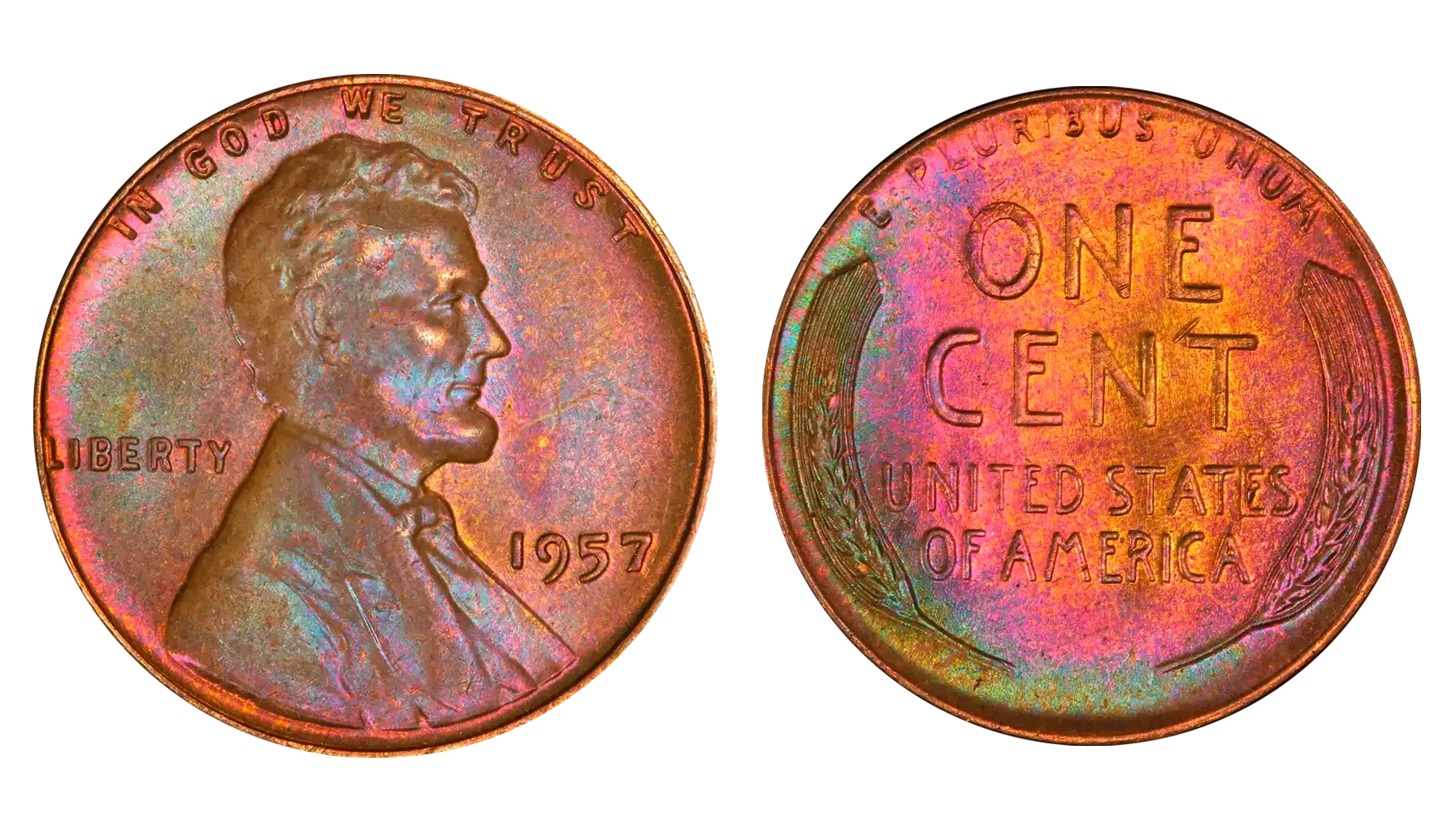
Market price for an average circulated 1957 Lincoln Wheat Penny in 2026 stands at approximately $0.03.
Value of 1957 Wheat Penny No Mint Mark in ideal condition follows the Sheldon scale ranging from 1 to 70 points.
Specimens with high preservation levels occur less frequently due to heavy commercial usage. Auction prices demonstrate an annual growth rate of 2% for mid-range grades.
“I’m a long-time collector for 50-plus years, and I still buy rolls and pick up change in parking lots to keep looking for gems. I bought two rolls of cents last hunt and found one wheat cent, 1957-D, and a 1998 Wide AM variety cent in AU condition.”
— Gene K, coin-collector
Numismatic News
Coins possessing original red surface color receive significantly higher valuations than brown counterparts. The price difference between brown and red colors in the same grade can reach 300%.
Most coins found in old piggy banks fall into the Good or Very Good categories. Such items interest only beginning collectors looking to fill slots in folders.
Professional investors focus on rare Lincoln Wheat Pennies grades starting from MS65 and above. Having a certificate from an independent expert organization guarantees asset liquidity.
1957 Wheat Penny Value Chart
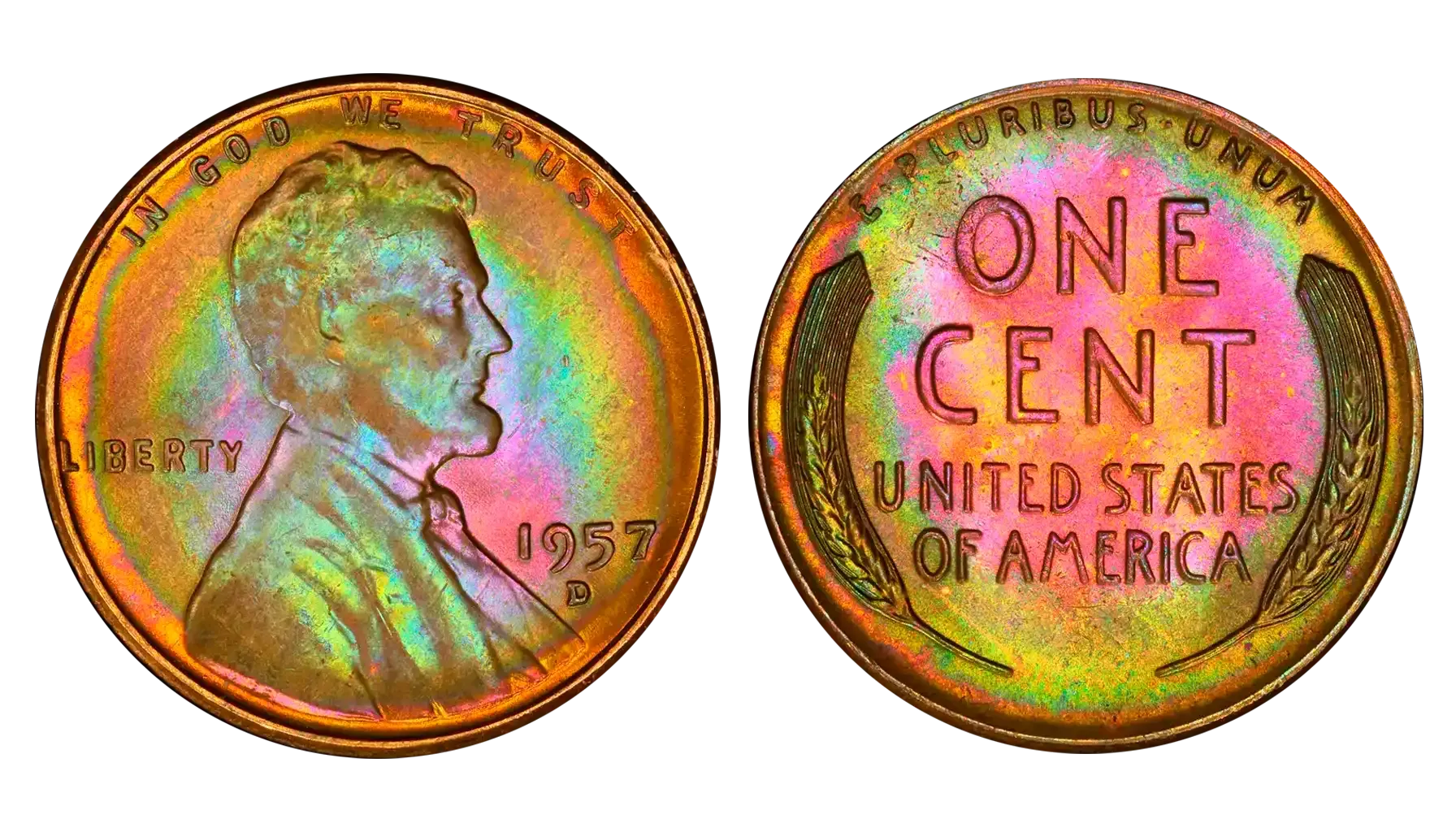
Price data remains updated based on auction results from the first quarter of 2026.
Grade | 1957 No Mint Mark (RD) | 1957-D (RD) | 1957 Proof (PR) |
MS63 | $1.50 | $1.25 | — |
MS64 | $5.00 | $4.00 | — |
MS65 | $15.00 | $12.00 | — |
MS66 | $45.00 | $35.00 | — |
MS67 | $450.00 | $180.00 | — |
PR67 | — | — | $40.00 |
PR69 | — | — | $650.00 |
Listed amounts correspond to coins maintaining full mint luster. Specimens marked as BN (Brown) or RB (Red-Brown) cost less.
What Makes a 1957-D Penny Rare?
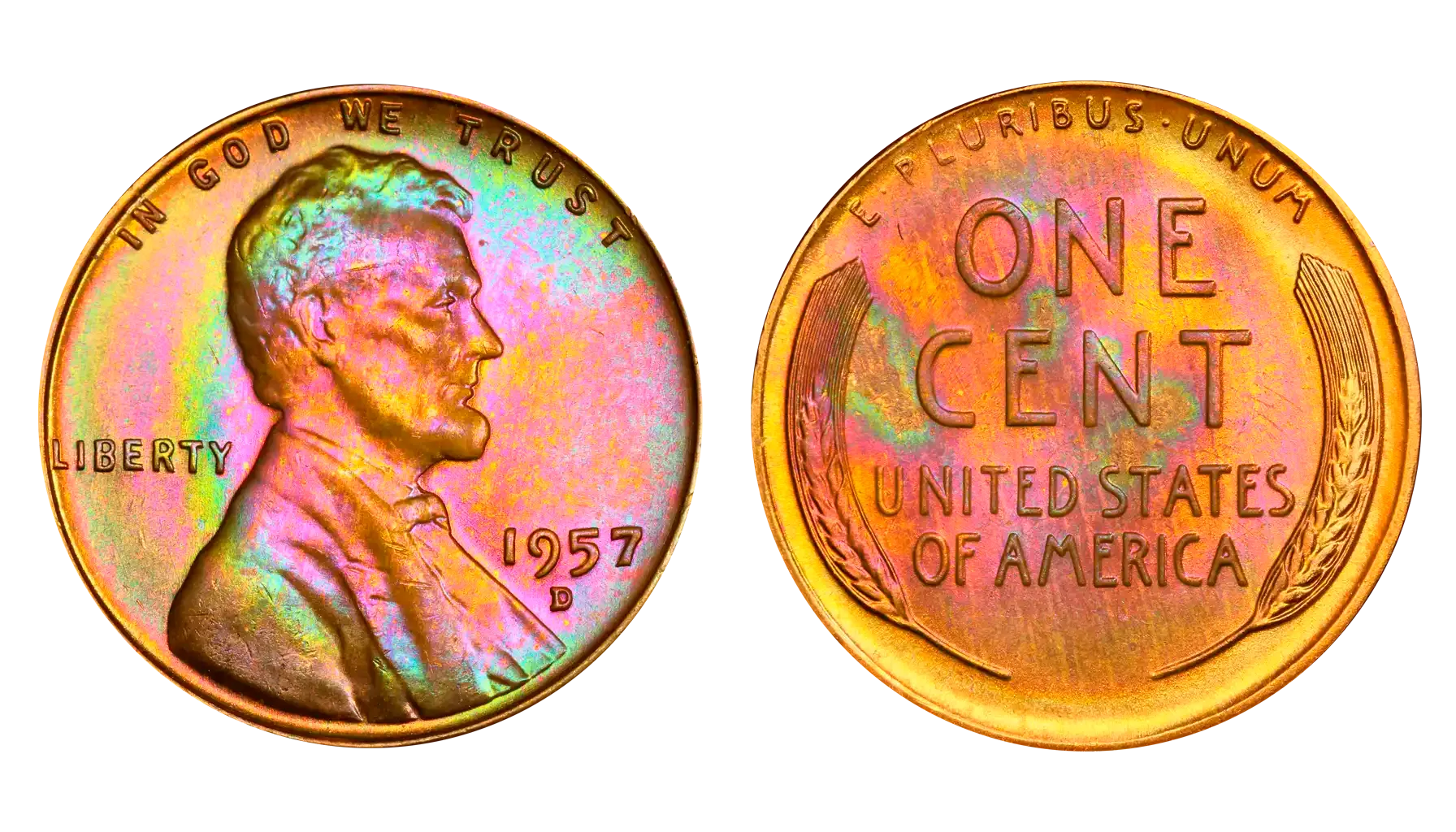
But what about the 1957-D Wheat Penny worth? Denver Mint produced over one billion units during the 1957 calendar year. High mintage figures make an ordinary coin extremely common in the market. Rarity applies exclusively to specimens in MS67+ or MS68 condition.
Finding a coin without microscopic striking defects in original bags remains nearly impossible.
Manufacturing processes involved finished items falling into large communal bins.
What makes a 1957 D penny rare? Coins striking each other created small contact marks on the surfaces.
Reasons for top-grade 1957 D Penny Value: → Copper oxidation occurring during long-term storage in non-airtight containers. → Wear on working dies caused by high-speed striking operations. → Lack of careful handling during the period of massive industrial output.
Record sales in 2026 fixed a 1957 Wheat Penny D in MS67+ grade at a price of $4,200.
How much is a 1957 D penny worth? Value for such rarities increases by 5–7% on an annual basis.
This trend links to the limited number of certified samples in population reports.
Most Valuable 1957 Wheat Penny Errors
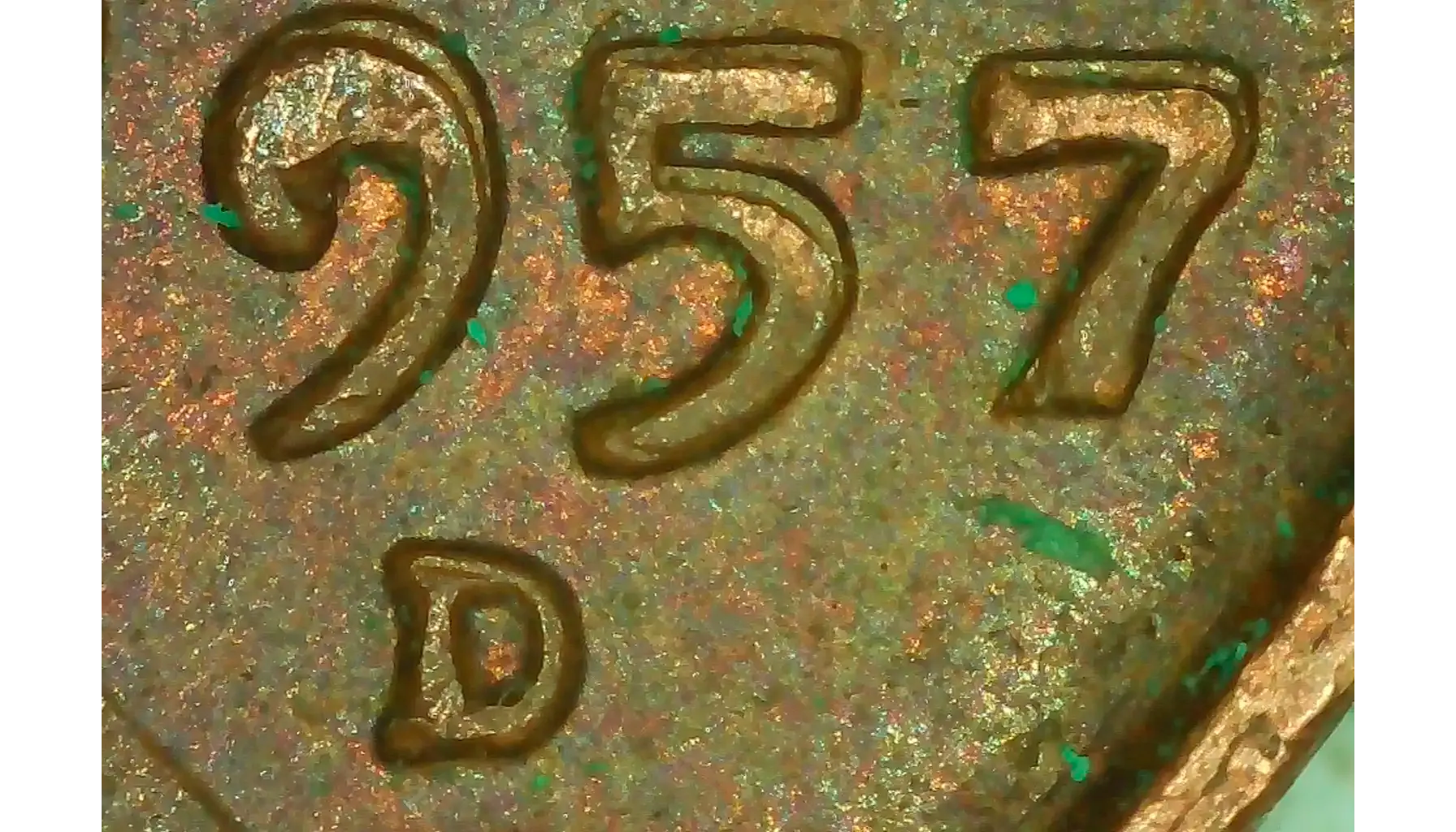
Striking errors represent the most profitable segment for treasure hunters. Die, or blank defects transform a cent denomination into a high-value lot.
Most famous error involves the BIE variety, emerging from a die crack.
Crack forms a vertical line resembling a letter I between the letters L and I in LIBERTY.
Valuation for this variety in 2026 fluctuates between $5 and $50. More serious defects receive much higher price tags.
Examples of record error prices: → Double strikes with significant image displacement — up to $1,500. → Striking on non-standard metal or a blank from a different denomination — over $3,000. → Deep die cracks running across the entire coin field — starting from $200.
Analysis indicates a 10% decrease in new error finds in circulation over the last decade.
1957 Wheat Penny Error List
Systematizing the most sought-after defects helps in rapid 1957 Penny No Mint Mark evaluation.
Re-punched Mint Mark (RPM): Repeated application of the letter D with a slight shift. Appears as a doubling of the mint mark outlines. The 1957 Penny Value D depends on the clarity of the displacement.
Die Cracks: Fractures on the die manifesting as raised lines on the coin. Cracks connecting important design elements are especially valued.
Clipped Planchet: Absence of a portion of the blank due to a metal strip feed 1957 D Wheat Penny Error. Coin shape features a smooth, curved cut-out.
Lamination Errors: Metal peeling caused by impurities in the copper alloy. Coin surface might show "flakes" or detached metal layers.
Off-Center Strike: Blow landing away from the center of the blank. Value rises when the date and mint mark remain visible.
- Die Clashes: Impact of dies against each other without a blank in between. Ghostly outlines of the opposite side appear on the coin field.
Factors That Affect 1957 Penny Value
What is a 1957 Wheat Penny worth? Copper coin pricing forms under the influence of several independent variables. Primary criterion remains the surface color, classified into three distinct categories.
Red color (RD) signifies preservation of at least 95% of original shine.
Red-Brown (RB) indicates partial darkening of the metal surface.
Brown (BN) characterizes coins that experienced long-term circulation.
Hierarchy of influence factors:
Copper color
Presence and type of striking error
Detail strike quality
Rarity of the specific grade and mint mark combination
Numismatists in 2026 pay special attention to "Eye Appeal".
Coins with even, rainbow toning can sell for more than clean specimens. Premium for beautiful toning ranges from 20% to 100% above the base price.
How to Tell If Your 1957 Penny Is Valuable
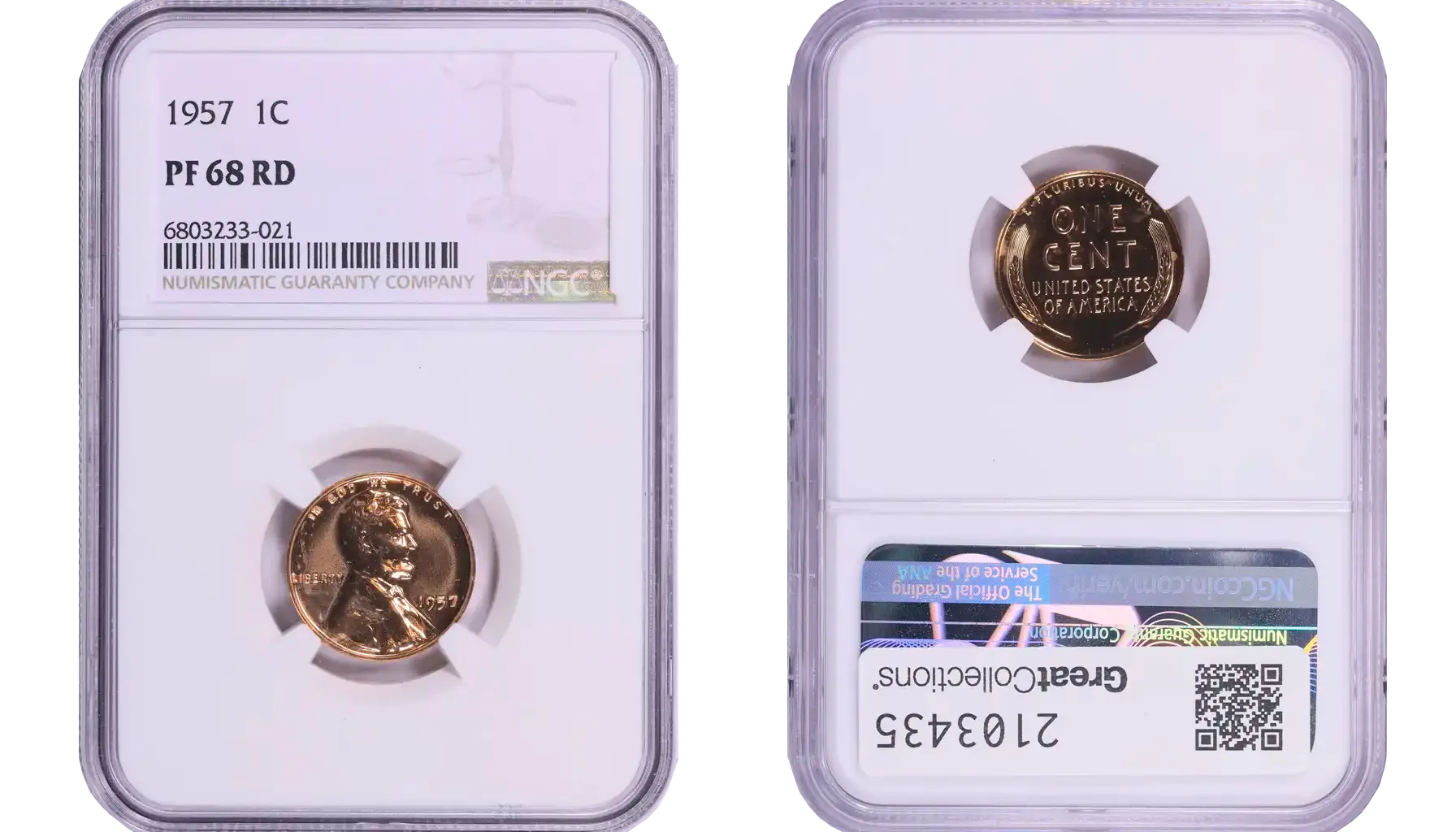
Is a 1957 penny worth anything? Initial inspection requires using a magnifying glass with at least 10x power. Checking begins with determining the strike type and production location. Finding the letter D points to a Denver release.
Absence of a mark indicates a Philadelphia strike.
Evaluation algorithm:
Step 1 → Color assessment. Bright copper surface serves as the first sign of potential of the most valuable 1957 D Wheat Penny value.
Step 2 → Defect search. Studying the LIBERTY inscription and date for doubling or extra lines.
Step 3 → Reverse analysis. Checking the clarity of lines on the wheat ears. Smooth grains suggest low market value.
Step 4 → Weighing. Weight of 3.11 grams confirms the authenticity of the copper alloy.
Step 5 → Light inspection. Rotating the coin reveals the "cartwheel" effect of shimmering luster.
Sending the coin for grading becomes advisable if it looks absolutely new.
1957 Wheat Penny vs 1957 Steel Penny
Only copper specimens saw mass production in 1957.
Steel pennies originated exclusively in 1943 as a temporary wartime measure. Existence of a 1957 steel penny remains officially unconfirmed.
Any silver-colored coin from this year usually results from a home experiment.
Methods for imitating a steel coin: → Electrolytic plating with mercury or zinc. → Application of a chrome or nickel layer. → Mechanical polishing until the top patina layer is removed.
Magnetic testing allows for immediate exposure of a fake. Genuine 1957 copper coin must not be attracted to a magnet.
Attraction to a magnet signifies an iron core under a copper layer.
Such items hold no numismatic value and are classified as souvenirs.
Where to Sell or Appraise Your 1957 Penny
Selling a valuable 1957 Penny D requires selecting the right platform for realization. Cheap specimens sell best through local collectors' clubs. Expensive certified lots belong on specialized auction sites.
Selling options in 2026:
Large online platforms like eBay for rapid sales.
Professional numismatic houses for coins exceeding $500.
Antique shops offering on-site appraisal services.
Themed forums and social media communities.
Obtaining opinions from several experts remains recommended before selling. Grading companies PCGS and NGC provide the most accurate state assessment.
Presence in these companies' registries increases buyer confidence.
Is a 1957 wheat penny worth anything? Grading service costs start from $20 per coin. Investing in certification makes sense only for expected lot prices above $100.
FAQ
What are the errors on a 1957 penny?
Main errors include BIE (extra vertical in the text), RPM (doubled mint mark), and Die Cracks. Cases of striking on blanks of different weights also occur.
What makes the 1957 D penny rare?
How much is a 1957 D wheat penny worth? Only exceptional MS67 Red condition or significant striking errors make it rare. Common Denver coins are found everywhere.
Are any 1957 pennies worth anything?
Yes, Proof quality coins and Uncirculated specimens cost between $15 and several hundred. Common worn coins are worth about 3 cents.
Are 1957 pennies copper?
These coins consist of an alloy containing 95% pure copper. This ensures their characteristic weight and durability.
What is the difference between a red and brown 1957 penny?
Difference lies in the degree of surface oxidation. Red coins kept their factory look, while brown ones darkened from oxygen contact.
Where is the mint mark on a 1957 wheat penny?
Mint mark sits on the front side directly under the date. Letter D means Denver, while no mark means Philadelphia.
How many 1957 pennies were minted?
Philadelphia struck about 282 million coins, while Denver produced over 1 billion in 1957. Additionally, over 1.2 million Proof sets were manufactured.
Does the mint mark affect the 1957 penny value?
Mint marks influence rarity in top grades. Philadelphia coins in ideal condition often cost more due to lower total mintage.

 Facebook
  X (Twitter)
  Pinterest
  LinkedIn