Contents:
There are countless currencies in the world. Some are well known, and some, like Rand, are more elusive. And yet, it’s a currency worth learning, and its banknotes are worth collecting.
Get ready for some South African Rand news and revelations. We will learn about the symbols, value, history, and more.
Identify rare coins with the power of apps. The apps can scan almost any kind of coin and identify it within seconds.
What Is the South African Rand (ZAR)?
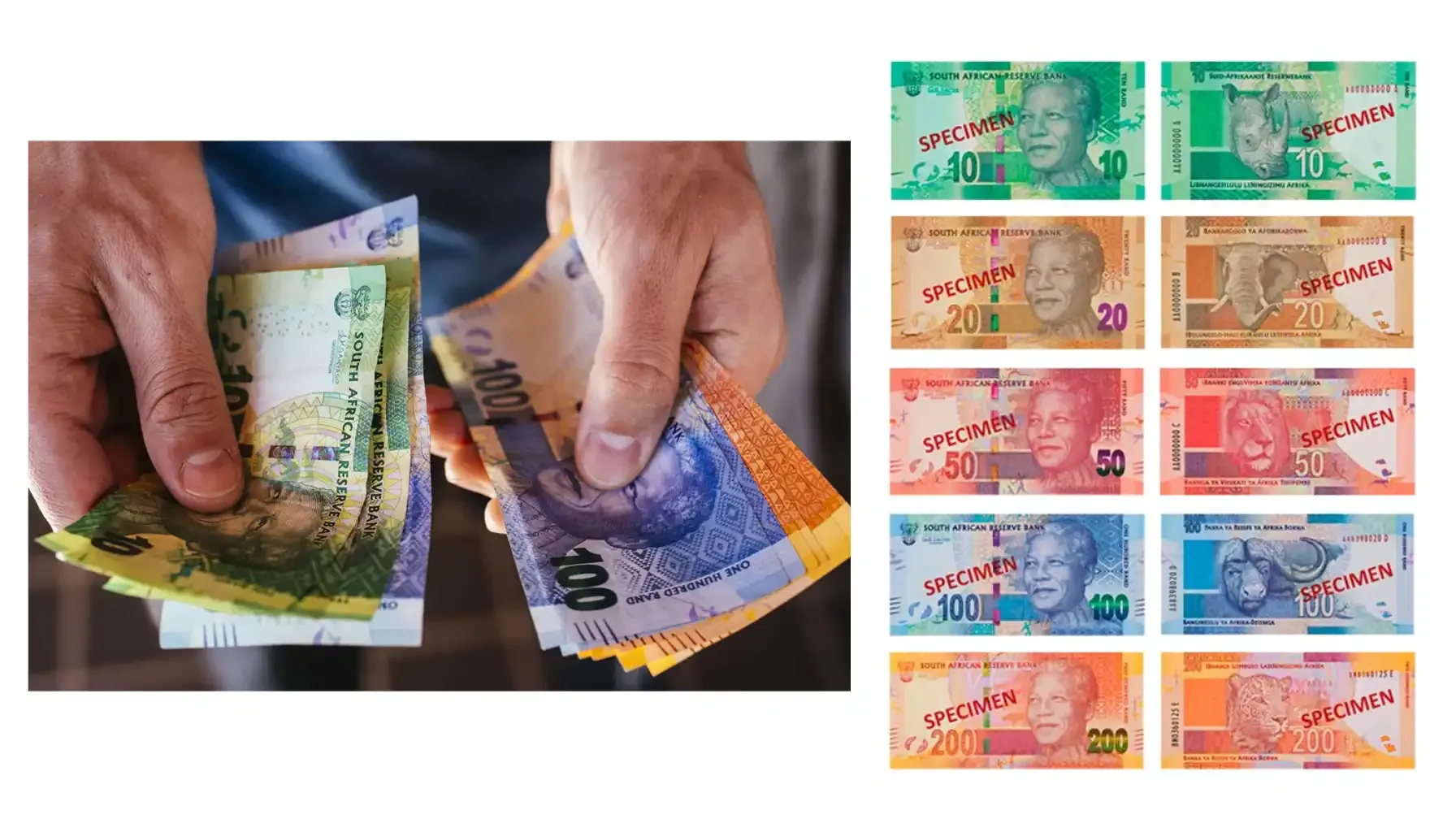
The South African Rand (or ZAR, as its national code) is the official currency of the Republic of South Africa.
The ZAR is legal tender throughout South Africa. It is also accepted in several neighboring nations that are part of the Common Monetary Area (CMA), including:
Lesotho
Namibia
Eswatini
How does this currency work? The Rand is subdivided into 100 cents. Back when South Africa was a British colony, the currency was instead sterling-based (the same happened with older Australian coins, like the 1920 penny).
Rand can be both in coin and banknote form. It is issued and regulated by the South African Reserve Bank (SARB), which oversees the currency’s stability, policy, and design to enhance security and prevent counterfeiting.
ZAR Overview | |
Country | South Africa |
Years of Minting | 2000 – Present (current design and composition) |
Type | Circulating coin |
Shape | Round (hexagon frame on the inside) |
Edge | Reeded (milled) |
Metal Content | Nickel-plated copper |
Diameter | 20 mm |
Weight | 5 g |
The design is also very important for national coins. Unlike most other coins in the world, the Rand has a hexagon. Not like 50 pence UK coins that are hexagon-shaped. Instead, the coin itself is round, but there is a hexagon inside the design, framing everything.
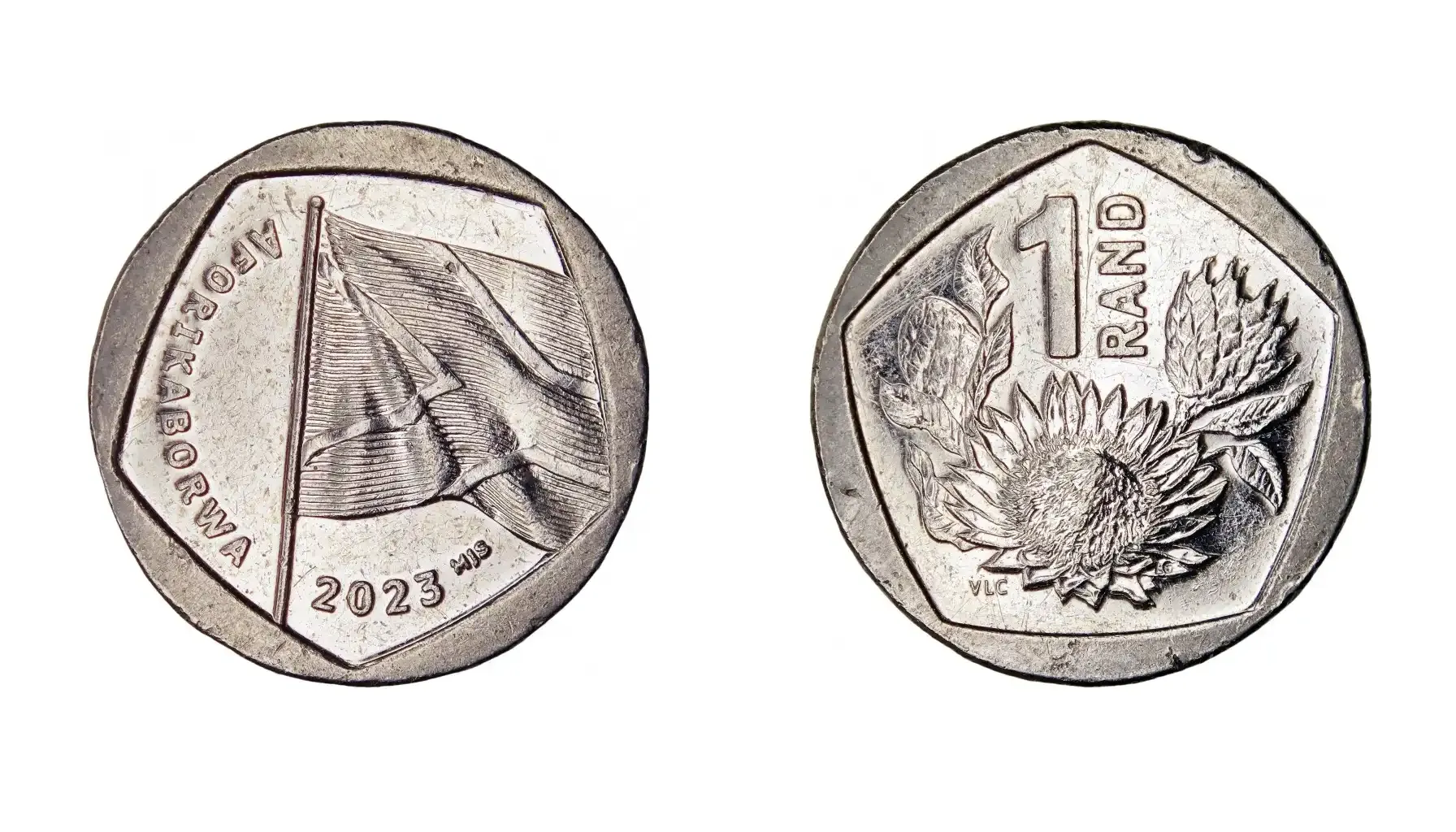
Obverse (front): The national flag of South Africa, proudly displayed in the centre. You will find the minting year on the right, and the country’s name written in one official language (“Aforika Borwa”) on the left.
Reverse (back): The king protea (Protea cynaroides) flower, the national flower of South Africa. The denomination: “1 RAND” surrounds the flower.
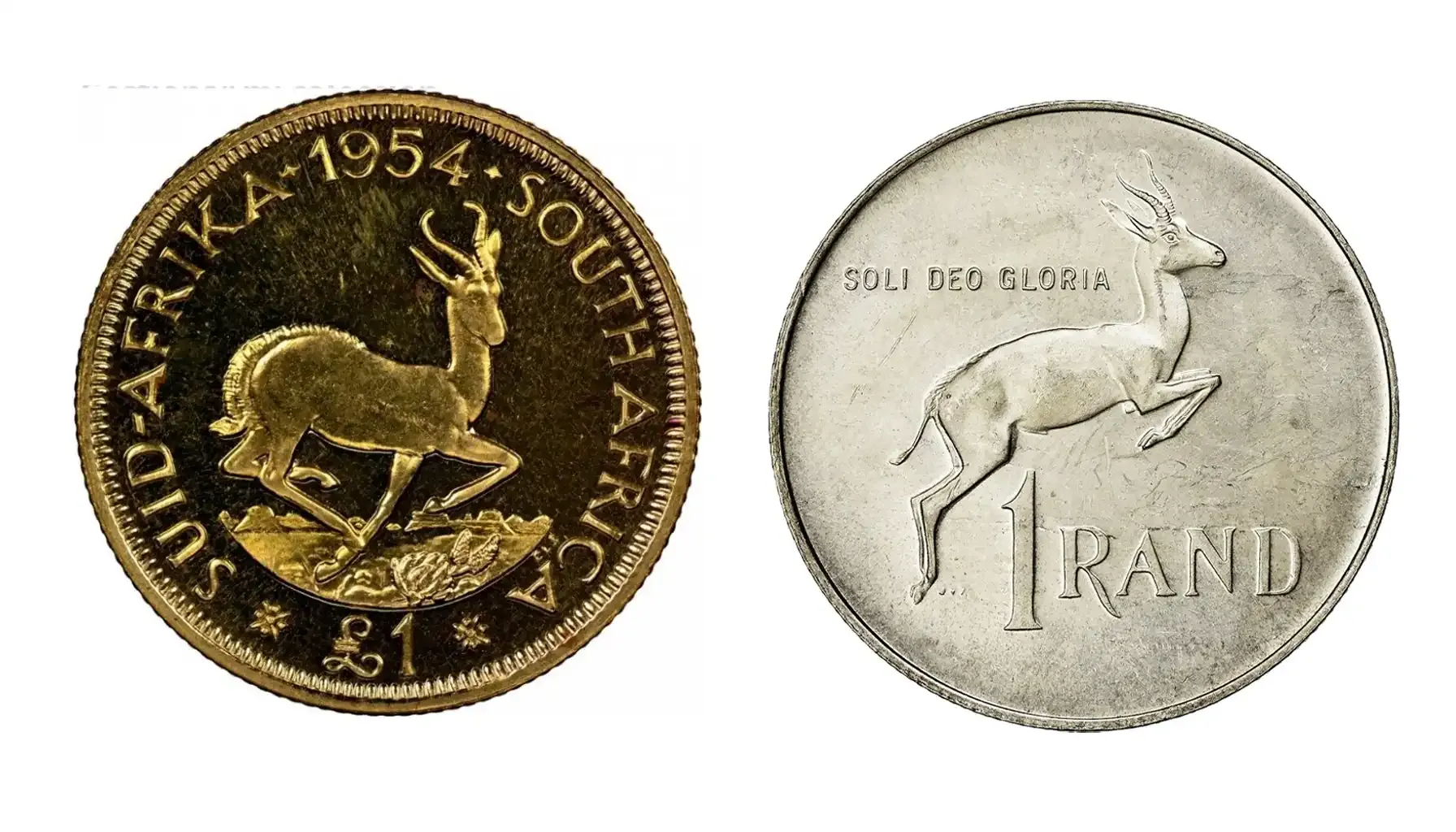
Interestingly, this design is relatively new. Before, Rands featured a springbok motif by Coert Steynberg, a renowned South African sculptor. Now, there’s a flower, but a 2 Rand south african coin still features a springbok.
South African Rand Symbol and Code
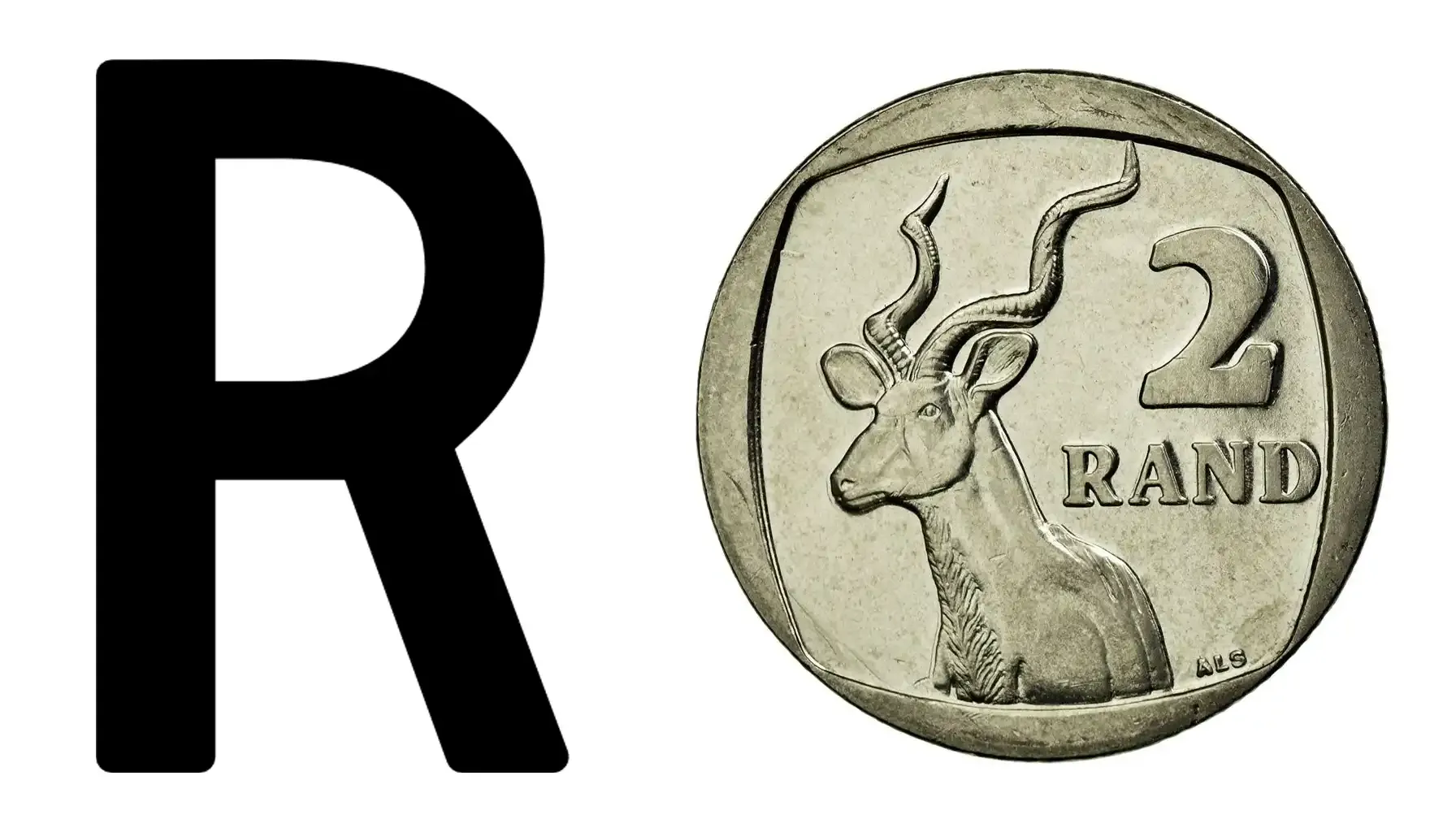
Unlike the dollar sign, which has a complicated history behind it, the Rand is concise.
The symbol for the South African Rand is R, derived from the word Rand, which itself originates from the Witwatersrand, a ridge near Johannesburg famous for its rich gold deposits. Witwatersrand, as a word, means “White water Ridge”.
The ISO currency code for the Rand is ZAR, where “ZAR” stands for Zuid-Afrikaanse Rand in Dutch. Why Dutch, all of a sudden? It's a tradition that carries over from the country’s early colonial linguistic roots.
You, logically, will find the symbol of this currency on its notes and coins. South African Rand denominations:
R10, R50, or R100 for banknotes.
R1, R2, and R5 for coins.
c is used for cents, such as 50c or 20c.
Value and Exchange Rate of the Rand
While ZAR by itself is not a gold coin or anything bullion, its exchange rate depends on precious metals. All because South Africa deals with metals on the global market. Market dynamics, economic performance, and political stability are also other value factors.
Gold and platinum are the most important exports, and the more lively the exchange, the pricier the rand.
As of recent years, one US Dollar typically exchanges for several Rand, but this rate can shift daily:
Currency | 1 Unit Equals (in ZAR) | Approximate Value |
US Dollar (USD) | ZAR 17.27 | 1 USD ≈ 17 ZAR + 27 Cents |
Euro (EUR) | ZAR 20.06 | 1 EUR ≈ 20 ZAR + 6 Cents |
British Pound (GBP) | ZAR 22.72 | 1 GBP ≈ 22 ZAR + 72 Cents |
"Rand volatility cannot be overlooked."
— Varushka Singh, Fixed Income and Currencies Strategist
Rand Merchant Bank Official Website
History of the Rand
The South African Rand currency is relatively new, unlike, for example, the rupee. When South Africa broke away from the British colony status, it decided to adopt a new currency system, which was the rand.
The new currency was introduced on 14 February 1961, replacing the South African pound. At that moment, it was more than a currency. It was a symbol of South Africa becoming a republic and symbolized the country’s move toward economic independence.
Initially, the Rand was strong, benefiting from the country’s gold-backed economy. However, from the 1970s onward, its value began to decline due to a combination of:
International sanctions (backfired because of how other countries reacted to the segregation in South Africa).
Political instability (which made investors reluctant)
Economic restructuring (moving away from gold gold-based system).
In the time following apartheid (segregated), the Rand was becoming more volatile, however remains one of the most traded emerging market currencies in the world. Rand is consistently one of the 20 most traded over all currencies in the world, usually ranked in position 15-20.
South Africa has also redesigned its banknotes and coins often in the years since, with the current redesign created in 2023.
Conclusion
The South African Rand (ZAR) became something more than just a unit of exchange. It is a symbol, South Africa’s economy incarnate. Regional and global trade relies on this currency.
Now you know more about ZAR’s symbol, denominations, and historical context. We have so many coins in the world, and so many deserve our appreciation. Perhaps you could learn more about foreign coinage with an app like Coins ID Scanner. This app has over 150,000 coins from all around the world and time.

 Facebook
  X (Twitter)
 : Value, Symbol, and Denominations Guide) Pinterest
Pinterest  LinkedIn