Contents:
Back in the 1860’s, America was tearing itself apart. One of the fighting sides, the Confederacy, started issuing its own bits. Nowadays, the Confederate States are no more, and these bits are no longer produced. However, they still attract collectors.
What is the Confederate gold coin's value? What denominations were minted and from which metals? Today, we will explore Confederate coinage and all it has to offer.
A hardworking collector needs a coin value checker app. Such an app can evaluate any coin in seconds. Apps save time, so collectors can focus on trading and collecting the most valuable bits.
What Are Confederate Coins
There was a period when the American people were fighting among themselves, known as the Civil War. Back then, we had two groups: the United States and the Confederate States of America (CSA). The Confederate government was formed by eleven Southern states that seceded from the United States.
The CSA existed and opposed the U.S. from 1861 to 1865, and coins issued during this period on the CSA territory are considered Confederate money coins. Confederate bits are different from Civil War coins, as they cover only the Confederate States, not all of America.
Historically, the Confederacy did attempt to create its own coinage, but widespread circulation of Confederate-issued coins never truly occurred. What prevented the CSA from consistently issuing its bits?
Unlike the United States, which had an established minting system, the Confederacy lacked the industrial infrastructure, raw materials, and political stability needed to produce and distribute large quantities of coins. As a result, Confederate coinage exists mostly in the form of experimental issues, patterns, and restrikes.
However, the bits that did see the light resonated an interesting piece of American history, welcomed by collectors and those interested in numismatics.
Confederate States of America Coins
The Confederacy had only three Mints to produce bits:
The Charlotte Mint in North Carolina
The Dahlonega Mint in Georgia
The New Orleans Mint in Louisiana.
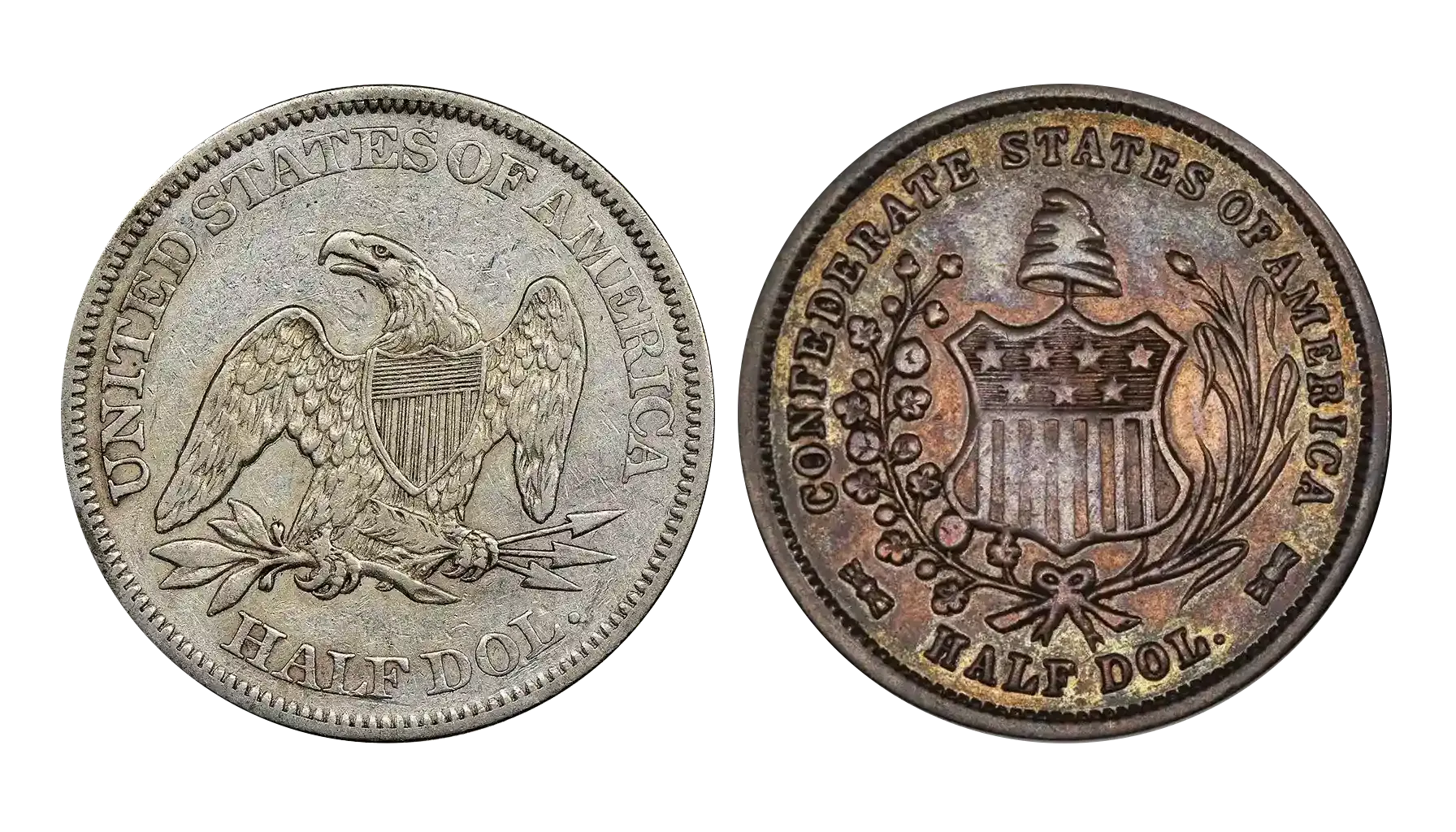
Confederate silver coins were the most popular group. The Mints primarily made half dollars, which were not much different from typical U.S. half dollars. The most famous example is the Confederate half dollar dated 1861. They were finished with a Confederate reverse design featuring a shield and agricultural imagery.
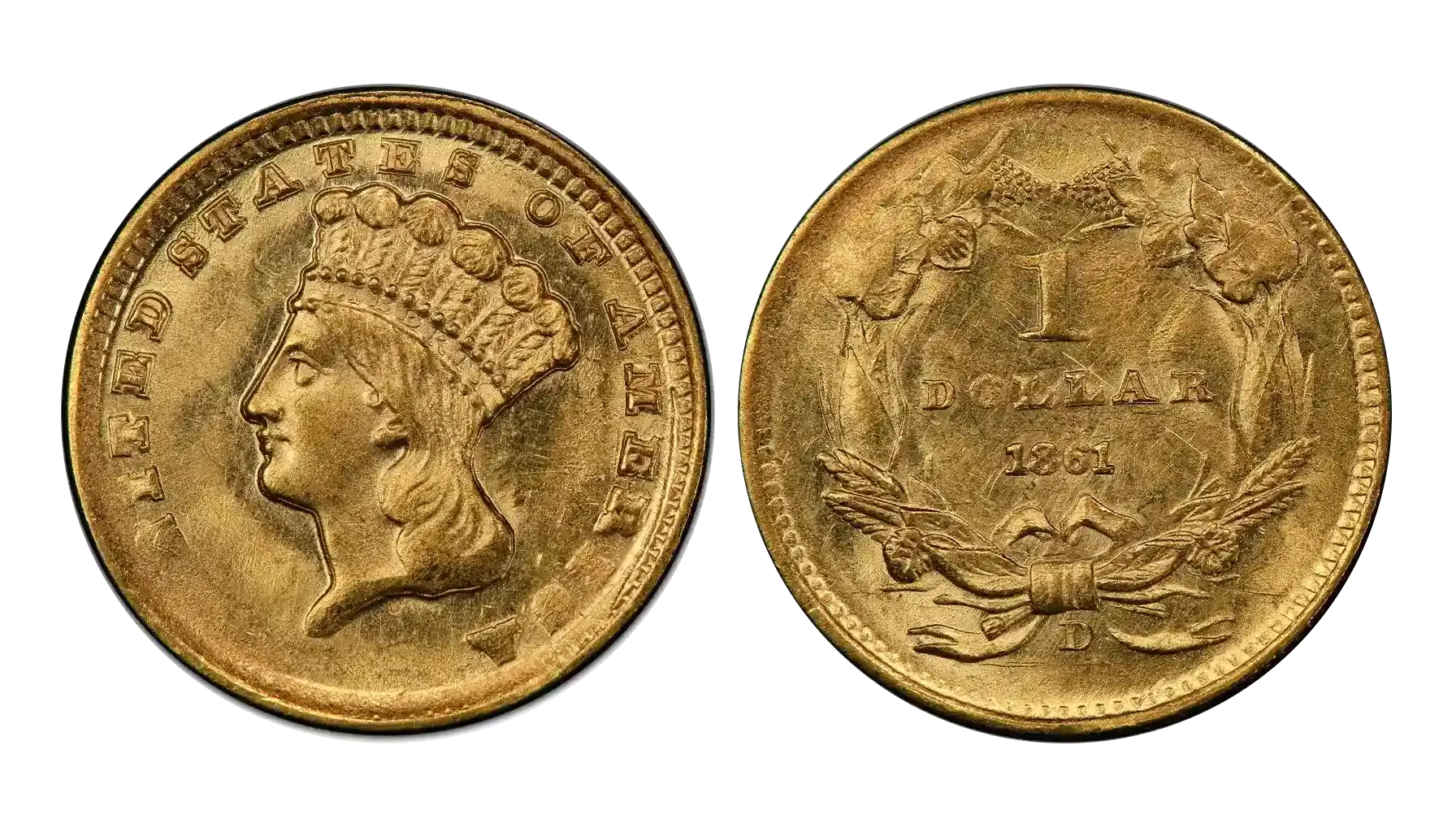
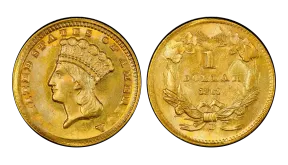
As for real Confederate gold coins, there were only a few. About 1,500 gold dollars were issued in the Confederate States. This Confederate Dollar is exceptionally rare and valuable, worth $30,000+. Most refer to it as a 1861-D dollar, as the only few examples were made only in Dahlonega (not the popular Denver Mint).
“While the 1856-D Gold Dollar is rarer in Mint State, and the two issues are generally equivalent in circulated rarity, the 1861-D remains the most coveted issue in the Gold Dollar series. It is typically the second most valuable coin, surpassed only by the practically unobtainable 1849-C Open Wreath variety...”
— Charles Morgan
PGC Website
The Confederacy also experimented with other coin designs, mainly with cents. Most cents were made of copper and featured an exclusive Confederate design.
Civil War Confederate Coins
Let’s make a round-up for all Confederate bits:
Denomination | Material | Average Values |
Dollar (1861) | Gold | $30,000 – 400,000+ |
Half Dollar (1861) | Silver (.900) | $500,000 – $1,000,000+ |
One Cent (1861) | Copper-nickel | $100,000 – $300,000+ |
Finally, we should also note that Confederate States bits were not always minted by the same states. Due to shortages and stresses, southerners relied heavily on alternatives to federal coinage. These alternatives included:
U.S. bits were already in circulation before the war.
Foreign coins, such as Spanish and Mexican silver.
Privately issued merchant tokens.
Bits that were altered or counterstamped by local businesses.
Real Confederate Coins vs Reproductions
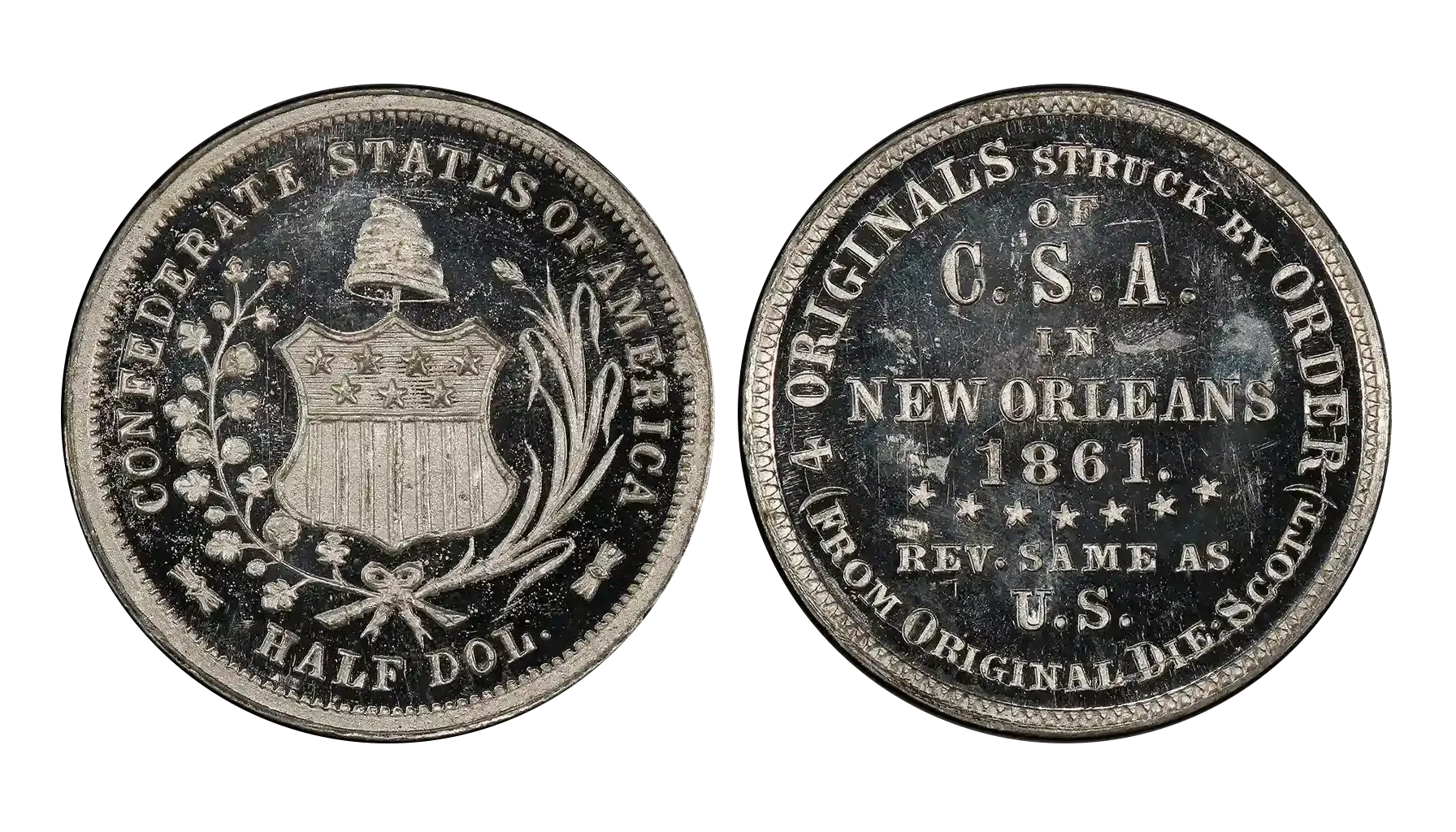
If you ever try to look for Confederate coins for sale, it’s unlikely you will find real bits from Confederate times. Their manager was extremely limited. However, there were many restrikes. A restrike is when a coin is made by a third party in years following the end of the official release.
Most restrikes only replicate the design, while materials and values vastly differ:
Feature | Real Confederate Coins | Reproductions & Replicas |
Date of Origin | Struck during the Civil War era (primarily 1861) | Produced after the Civil War, often decades or centuries later |
Issuing Authority | Confederate States of America | Private mints, souvenir manufacturers |
Purpose | To spread Confederate influence and allow trade | Collectible souvenirs, a |
Circulation | Extremely limited (most cases) | Never circulated |
Rarity | Extremely rare | Common and widely available |
Materials | Gold, silver, or copper | Modern metals or alloys (cupronickel) |
Authentication | Requires professional grading and certification | Authentication not required |
Market Value | Tens of thousands to hundreds of thousands of dollars | Typically, a few dollars to a few hundred dollars |
Collector Demand | Sought after by advanced collectors and museums | Mainly purchased by casual collectors or history enthusiasts |
Are you interested in replicas? Name a platform, and you will likely find these pieces: eBay, Etsy, American Numismatic Society. The authentic bits from the Civil War are harder to find, but auctions like Heritage Auctions are a good way to acquire such bits.
Conclusion
The times of the Confederacy are over. Perhaps it’s a good thing because America was reunited. Only a few artefacts were left from that time, and the few coins that survived the Civil War became real treasures and artefacts.
Coin ID Scanner can scan and evaluate coins from almost any era of American and world history. Civil War issues are also in its 150,000+ database. Coin ID Scanner can also provide many guides on collecting, trading, and grading. Overall, an excellent app for a collector.

 Facebook
  X (Twitter)
  Pinterest
  LinkedIn