Contents:
The 10 cent coin is one of the rarest Australian coins. Initiated in 1966, the new currency system represented the nation’s departure from imperial monetary conventions and encoded contemporary Australian cultural values.
Introduction
"Don't sleep on 10 cent coins. Some of the best to look for are the standard 2011 10 cent coins."
– Michael McCauley, a collector
Yahoo Finance
Composition | 75% Copper, 25% Nickel |
Shape | Circular |
Diameter | 23.60 millimeters |
Mass | 5.65 grams |
Edge | Milled |
Designer | Stuart Devlin |
Year | 1966 |
The Origin of the Australian 10 Cent Coin
The Australian 10 cent appeared with the introduction of decimal currency on 14 February 1966. The change replaced the old shilling with the piece at a straightforward exchange rate of one shilling to ten cents.
The Royal Australian Mint in Canberra produced the first issues. For addition, minting from the Royal Mint branches in London and the Royal Mint’s Perth facility during the early years of circulation.
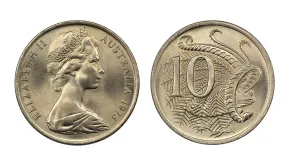
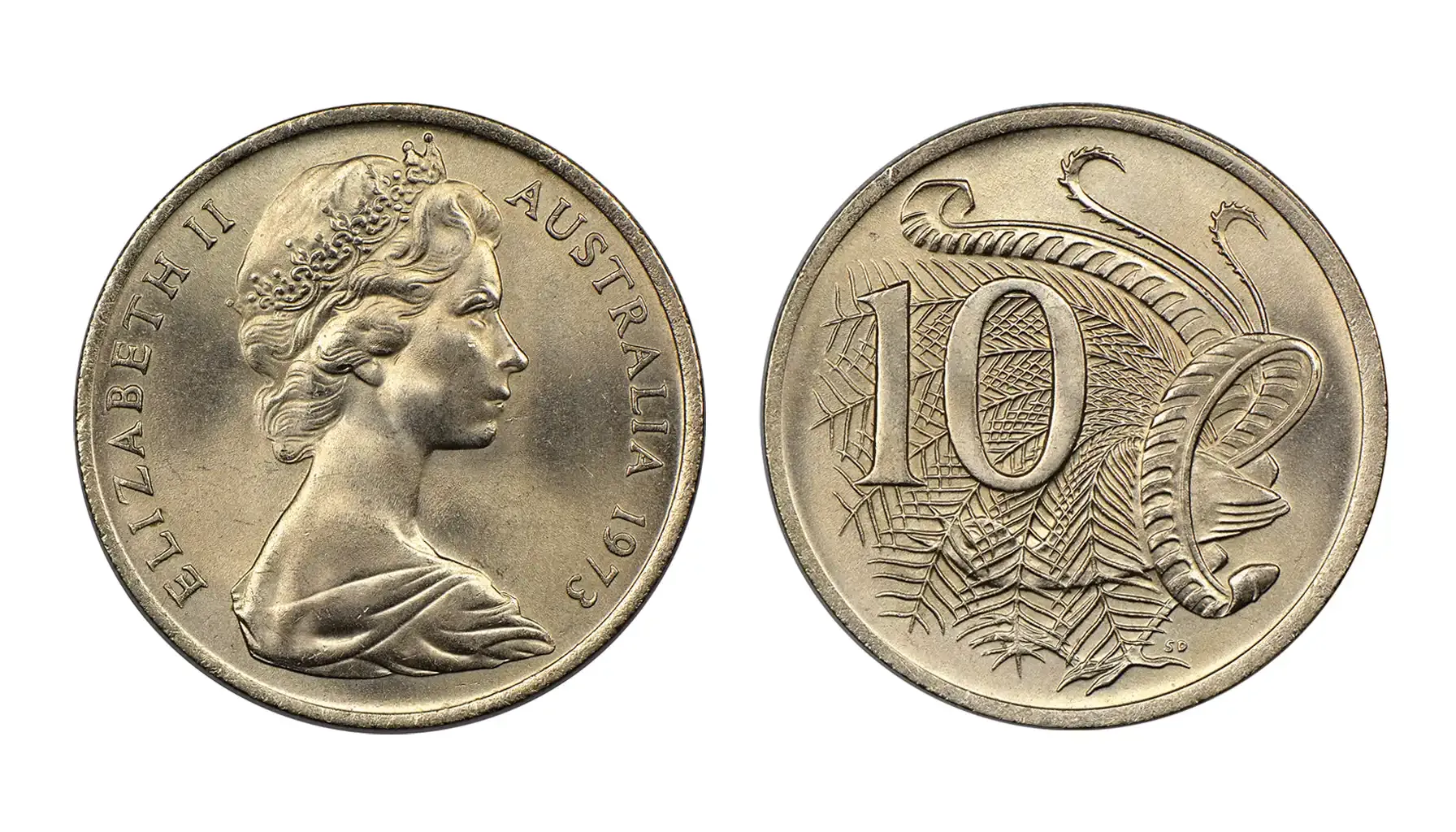
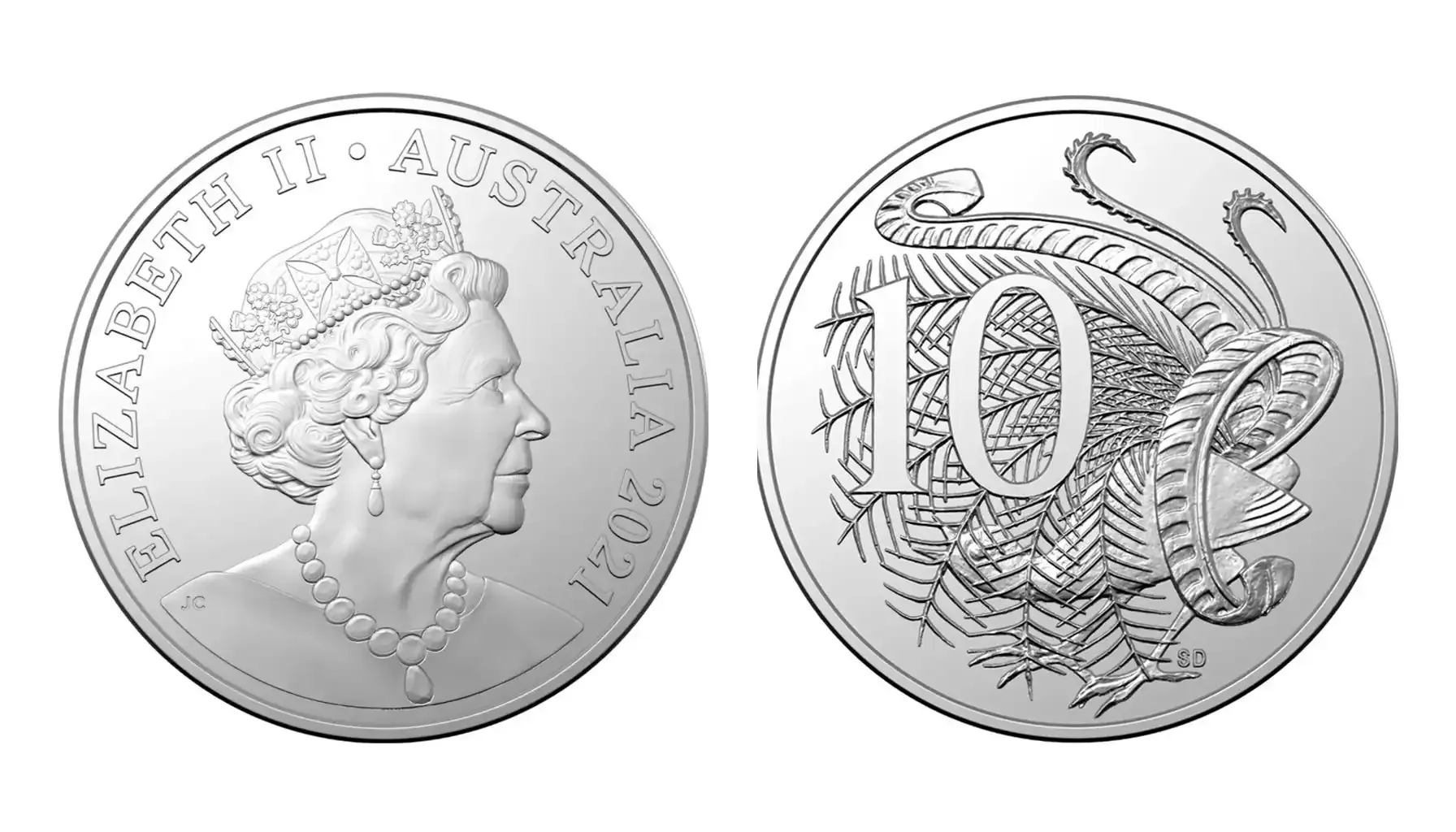
Each item features the portrait of Queen Elizabeth II on the obverse. Over the decades, several versions of the portrait have appeared as official designs evolved. The reverse design features one of the country’s most distinctive animals, chosen to represent Australia’s natural diversity and cultural character.
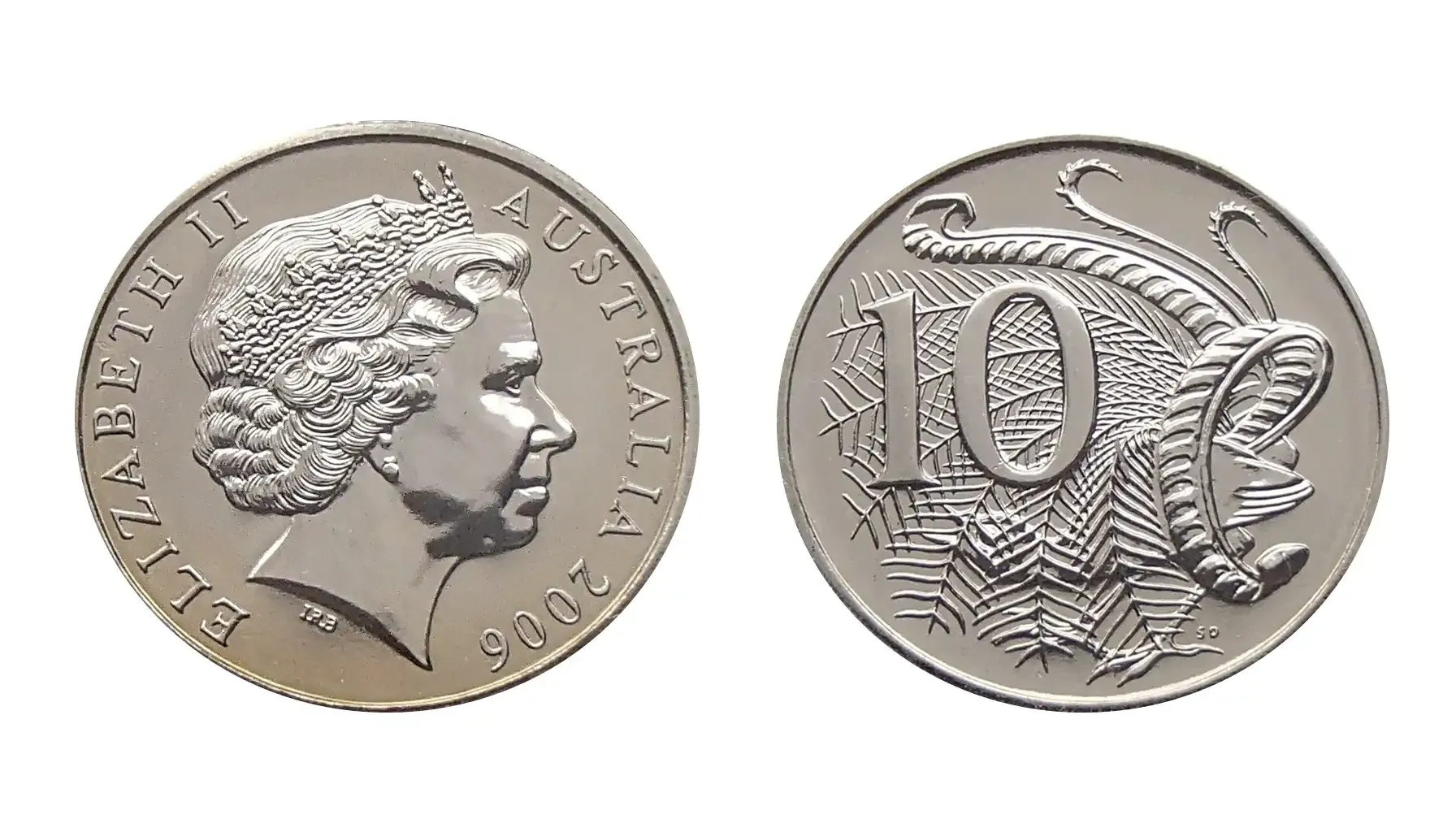
The specifications for the first coins were set to mirror the size and weight of the old shilling to help citizens adjust smoothly to decimalisation. This item mass is smaller than 20 cent (5.65 g / 11.30 g). The item’s durability and resistance to corrosion also reflect the practical needs of daily use in Australia’s varied climate.
The item’s face value remains ten cents, but collectors often note variations in mintage and condition that influence worth beyond nominal currency. The Australian Coin and Banknote Catalogue notes that early proof issues and error ones can command values between $5 and $200 USD, depending on grade and rarity.
Circulated: $0.10
Uncirculated: $1–$50
Proof (1966, Canberra Mint): $15–$200
Rare Errors: $200–$600+
What Animal Is on the 10 Cent Coin?
Stuart Devlin, the Queen’s official goldsmith, created the 10‑cent coin’s lyrebird design. His precise rendering of the bird’s tail feathers displays the mint’s skill. The native lyrebird underscores Australia’s unique fauna and affirms nature’s central role in the nation’s self‑image.
Beyond aesthetics, the lyrebird symbolises communication in Australia’s society. The metallic shine brighter than others, for example, 1 cent – metal with a brownish hue. This makes a small but powerful expression of Australian art and identity.
Collecting the 10 Cent Coin
Although it remains in circulation, certain years and varieties have gained strong appeal in the numismatic market. Limited mintages and proof sets are opportunities for collectors.
Collectors highly prize the 1966 Australian 10‑cent coin minted in London due to its exceptional strike quality and relatively low production numbers. Additionally, proof issues from the Canberra and Perth Mints are esteemed for their finely detailed relief and highly polished fields, making them standout editions in the series.
Numismatic experts recommend to exam it under bright light to identify errors:
double strike
misaligned dies
- missing edges
These small variations can increase value dramatically.

 Facebook
  X (Twitter)
  Pinterest
  LinkedIn