Contents:
The Australian monetary system is quite diverse, for it has completely adopted the structure and patterns of the Royal Mint, London. Most numismatists note that beneath the relatively simple design is the history of nations, the one that had dominated the territory long before it turned into the colony of the British Empire.
However, today it is an independent country living under the protectorate of the UK – the renowned Commonwealth is what now unites Australia with other former British colonies within the realm of traditions, values, and symbols.
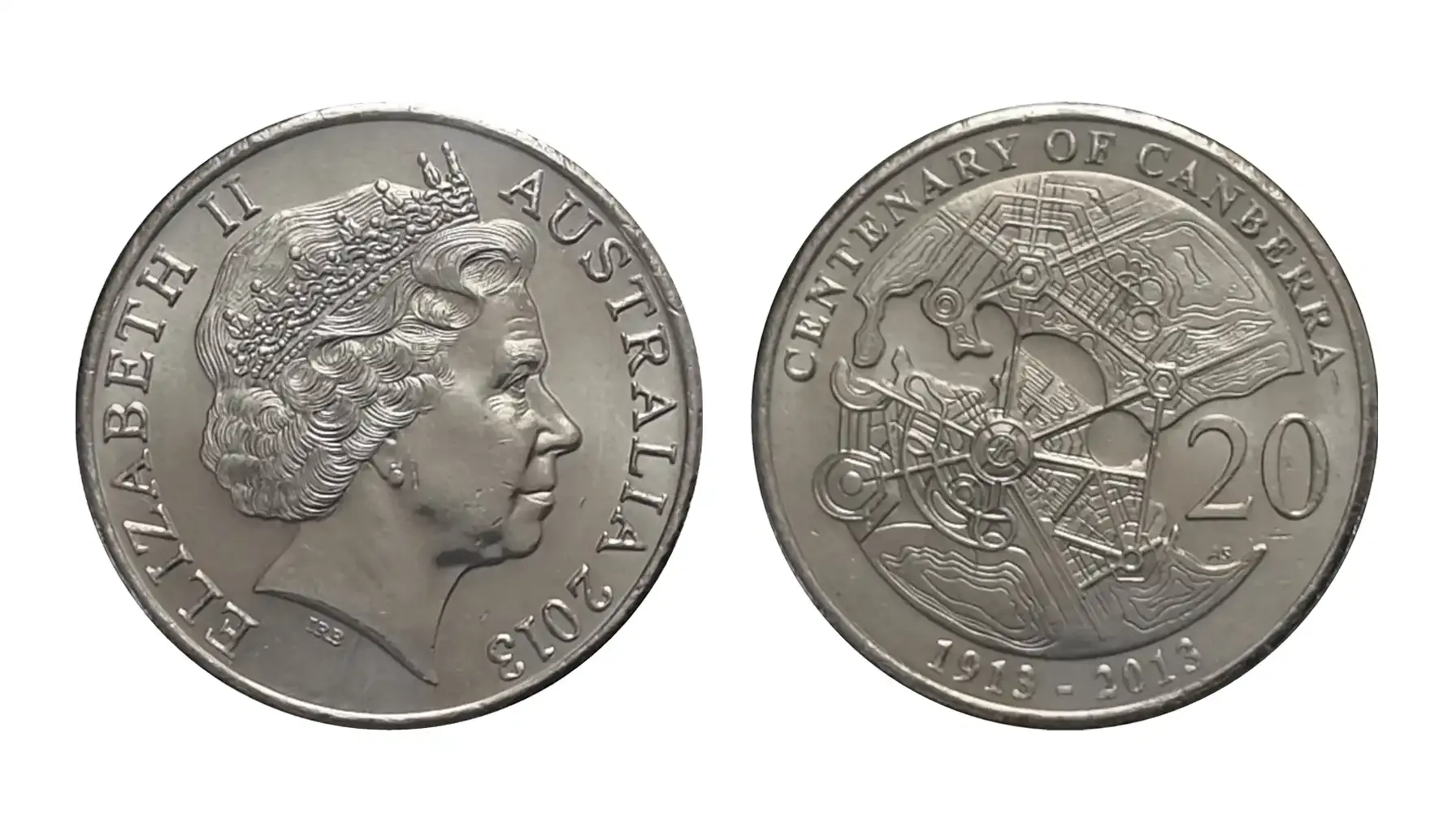
Each rare Australian coin is a piece of the local numismatic art, but designs change, and so do the meanings they carry. In this material, we are to explore the Australian 20 cent coin value and check what they look like in general.
The History of the 20 Cent Coins Australia
The Australian cent was once released in 1966, when the Australian coinage gradually turned to decimal currency, with the new standards to follow. This was the time of profound change, for different denominations, including the Australian 1 cent coin, 2C, 5C, 10C, and 20C itself, were all introduced to replace the old pound system that came from the territory of the UK.
Each new coin was meant to feature the portrait of the reigning monarch, as well as occasional commemorative issues to celebrate national symbols, achievements, and general events. As for the timeline, one should be aware of the following:
1966: Introduction of the AUS 20 cent coin during the process of decimalization; featured Queen Elizabeth II (rather consistently) and the platypus design.
1985 to 1998: There appeared updated royal portraits, with changes in design and engraving styles (e.g., Australian Kangaroo coin)
1995 to 2001: Limited commemorative releases to honor national contributions, symbols, and historical figures.
1999 to present: Continued minting with updated portraits and proof editions for collectors.
2023: The first issue featuring King Charles III as a new chapter in Australian coinage.
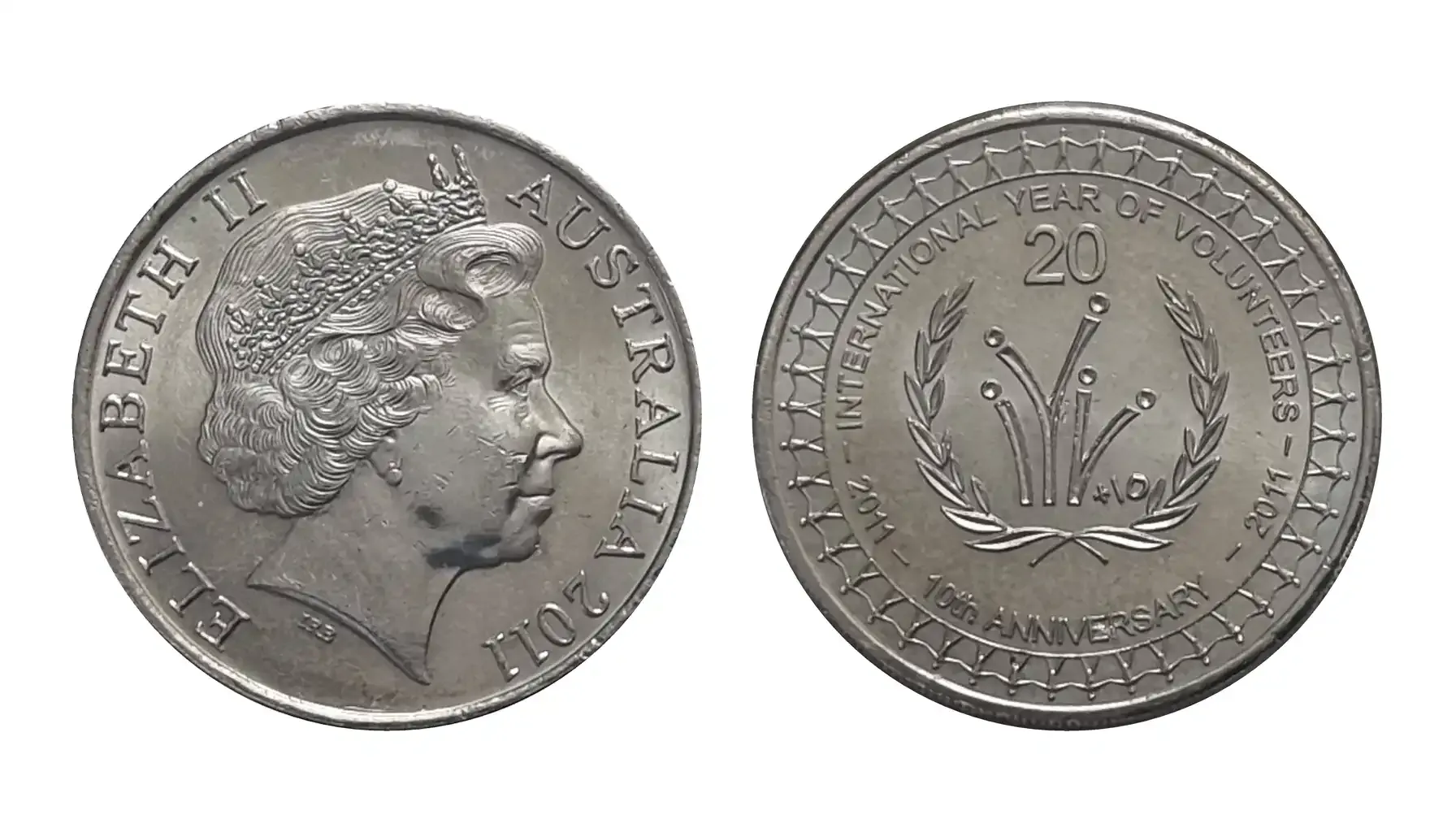
How Much Does a 20 Cent Coin Weigh?
The main specifications of this denomination tend to be the same (apart from the special editions of the design, in turn). That said, its weight is approximately 11.30 grams, give or take, which makes it one of the heaviest coins in the decimal series. As for the rest of the physical characteristics, they have remained consistent since 1966, even with special releases having been produced over the decades.
The Main Universal Features | |
Denomination | 20 cents |
Composition | 75% copper, 25% nickel (cupronickel) |
Weight | 11.30 grams |
Diameter | 28.65 millimeters |
Thickness | 2.50 millimeters |
Edge | Milled (reeded) |
Current Monarch | King Charles III (from 2023) |
Rare Value Australian 20 Cent Coins
2019 20C (JC)
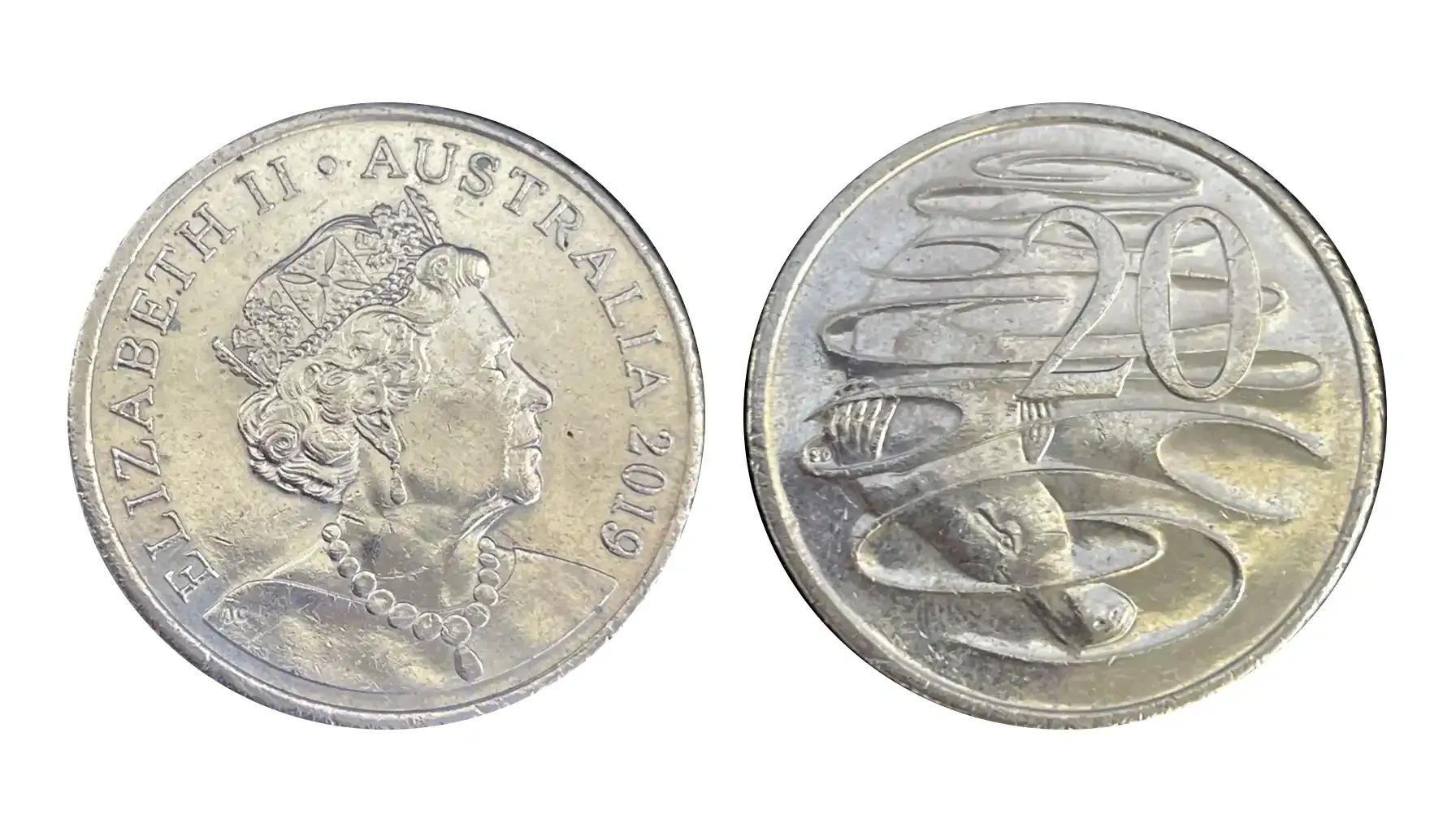
Produced by: Royal Australian Mint (RAM)
Mintage: 2.0 million
Market Average: $3
An impressive coin with a familiar reverse design of a platypus swimming through rippled water by Stuart Devlin. The obverse demonstrates Jody Clark’s effigy of Queen Elizabeth II in the Royal Diamond Diadem and a small abbreviation "JC" referring to the creator of this depiction.
2016 20C – 50th Anniversary of Decimal Currency
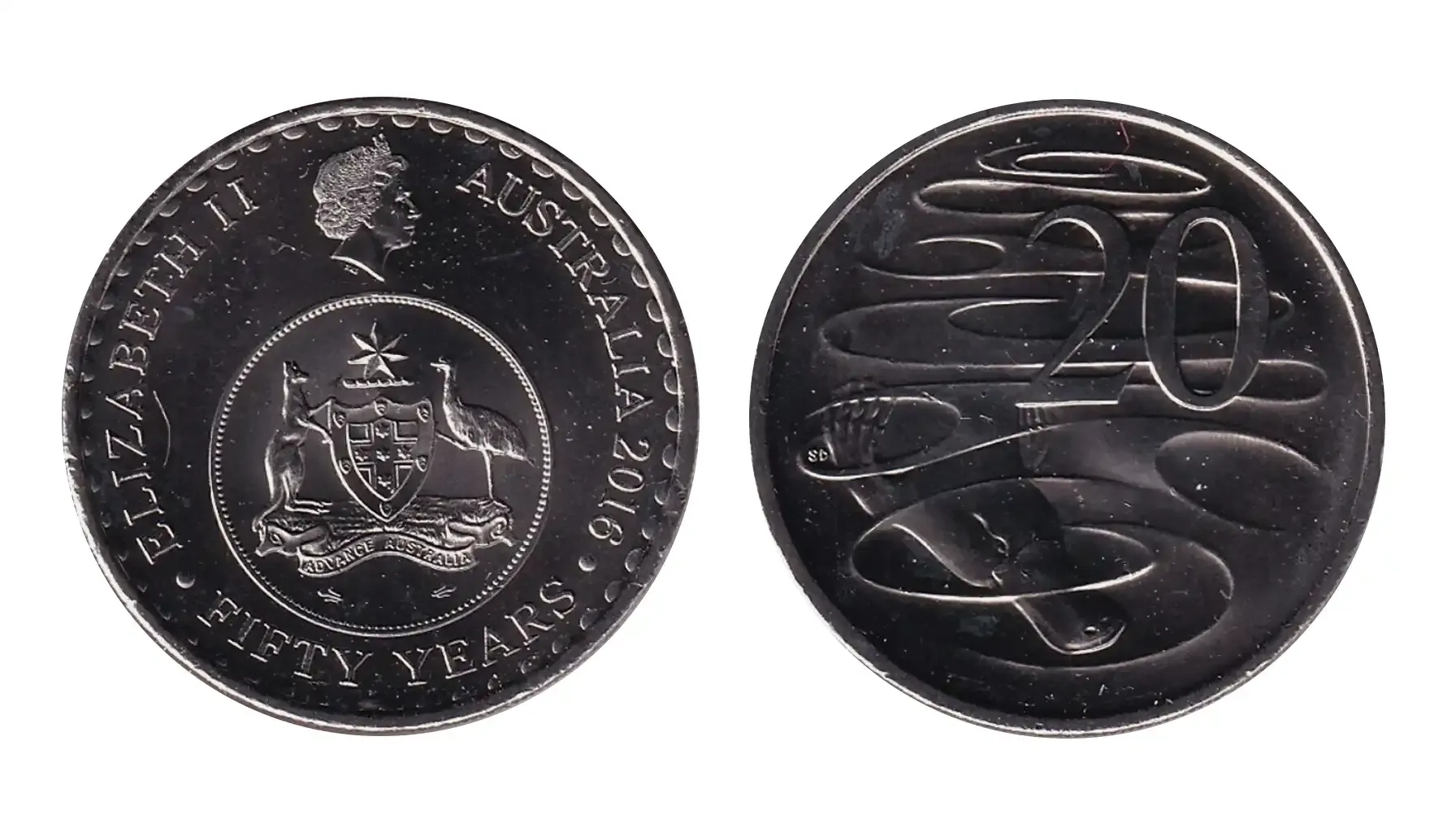
Produced by: Royal Australian Mint (RAM)
Mintage: 4.5 million
Market Average: $2.75
A creation issued to celebrate the 50th anniversary of Australia’s decimal currency. The reverse features the classic platypus reverse by Stuart Devlin, while the obverse showcases the commemorative portrait of Queen Elizabeth II by Ian Rank-Broadley and an Australian coat of arms.
1995 20C – United Nations 50th Anniversary
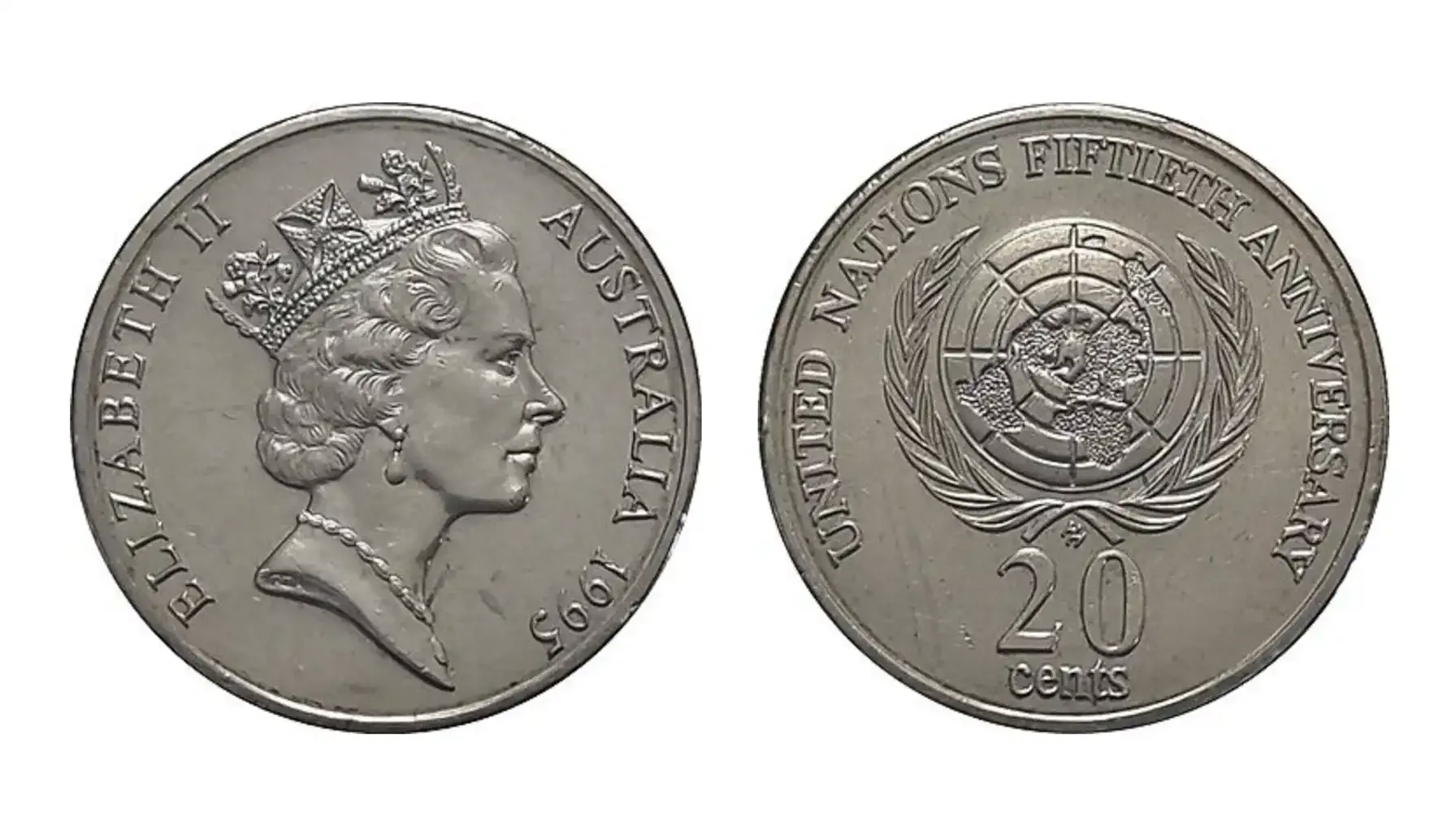
Produced by: Royal Australian Mint (RAM)
Mintage: 4.8 million
Market Average: $7
A commemorative issue that was meant to perpetuate the 50th anniversary of the United Nations. It features the UN emblem, surrounded by olive branches, on the reverse and Raphael Maklouf’s effigy of Queen Elizabeth II on the obverse.
1988 20C
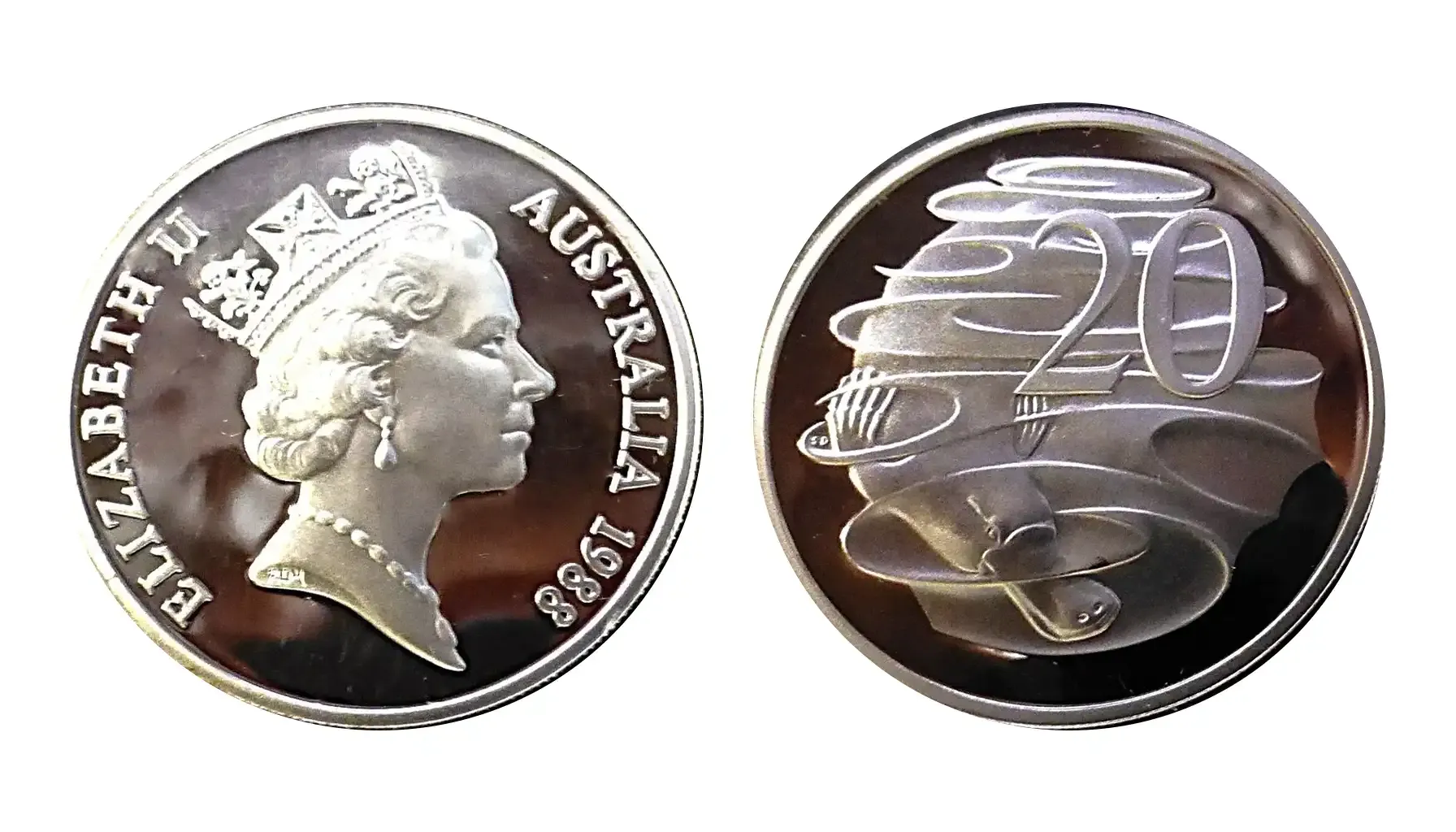
Produced by: Royal Australian Mint (RAM)
Mintage: 0.2 million
Market Average: $50
The omnipresent platypus motif on the reverse, with the obverse showing the portrait of Queen Elizabeth II with the George IV State Diadem. One of the scarcest coins within the same series, thanks to its low mintage during that year.
1966 – First Decimal Issue
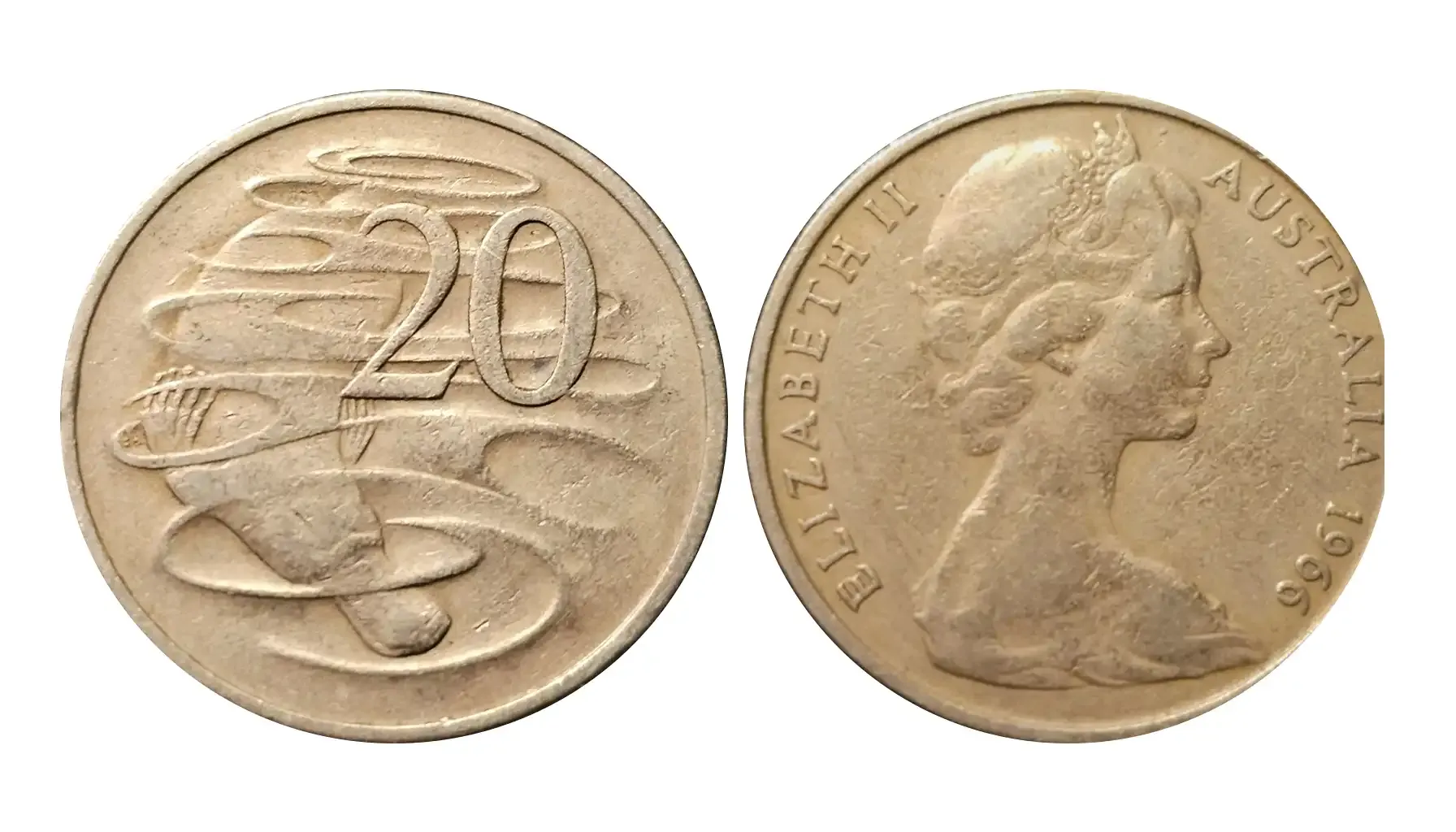
Produced by: Royal Mint, London (RML)
Mintage: 30.0 million
Market Average: $300
The one and only creation in the series, which was the first ever 20-cent coin released in Australia after their transition to decimal currency. The reverse features Stuart Devlin’s detailed depiction of a platypus, while the obverse bears the youthful portrait of Queen Elizabeth II by Arnold Machin.
Collecting and Preserving the 20 Cent Coin

For those who collect, it is vital to know how to preserve the original luster of the coins they own, for they store the value/spirit of the nations, not just the artistry of a given creator. So, when building a collection, focus on obtaining coins in the best condition possible (ideally, uncirculated or proof examples), as surface wear significantly affects their value.
Handle with care: Always hold coins by the edges to avoid leaving fingerprints or causing surface damage.
Use proper storage: Keep them in acid-free holders, special capsules, or albums to prevent scratches and oxidation.
Avoid harsh conditions: Store your collections in a cool, dry place away from sunlight, humidity, and temperature fluctuations.
Track your collection: Record details like year, mint, and condition to monitor your collection’s growth and value.
Leverage technologies: Use digital coin-management tools such as Coin ID Scanner to identify, study, and organize your coins on the spot.
“We do have a significant backlog of orders to now process. People seem very keen to read their piece of history...”
— Leigh Gordon, the CEO of the Royal Australian Mint
The Mandarin

 Facebook
  X (Twitter)
  Pinterest
  LinkedIn