Contents:
Interest in the America the Beautiful series coins has only grown over time. Some issues attract attention for their design, others for their history, and still others become popular due to unusual finds among circulated pieces.
History of the 2011 Glacier National Park Quarter
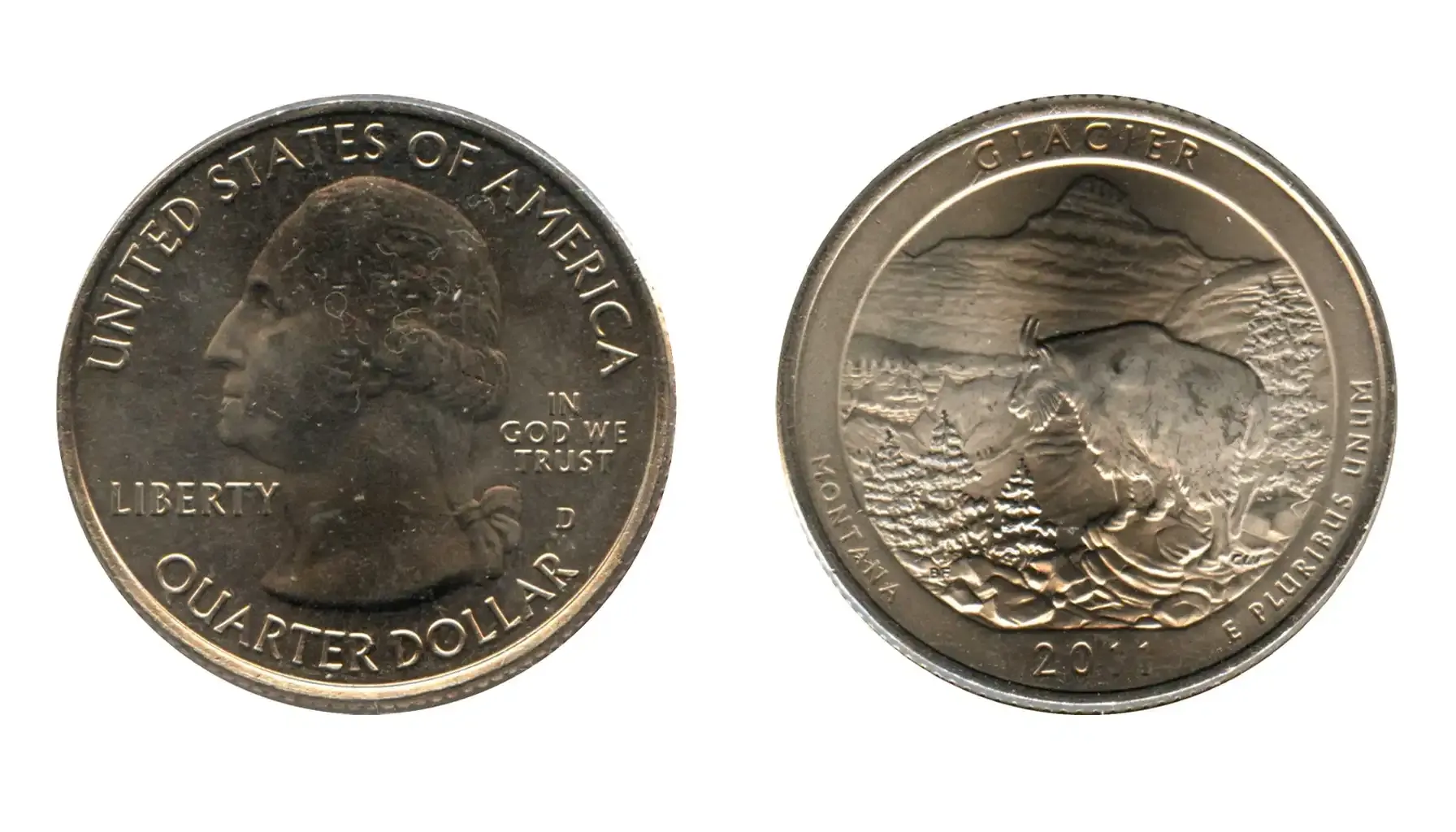
The Mint introduced a release inspired by the northern wilderness. The reverse shows a grizzly bear on a stretch of rocky ground, and the scene feels true to the region. The subject fits the place: sharp peaks, plenty of wildlife, and nature that still keeps its original look.
The coin was minted at multiple mints. Philadelphia and Denver issued circulating pieces, while San Francisco issued collector proof versions with enhanced finishes. The difference between the two is palpable: the luster, depth of relief, and overall surface appearance of the collector coins are noticeably different.
Series | America the Beautiful |
Year | 2011 |
Country | USA |
Denomination | 25 cents |
Metal | Copper-nickel |
Weight | 5.67 g |
Diameter | 24.26 mm |
Thickness | 1.75 mm |
Mints | P, D, S |
Types | Circulation and proof |
Collectors often compare coins from this program to see how the reverse design has evolved. When people look back at the early years of the series, the 2011 Olympic National Park quarter is often mentioned because its detailed wildlife scene stands out among the first releases.
2011 Glacier Quarter Value
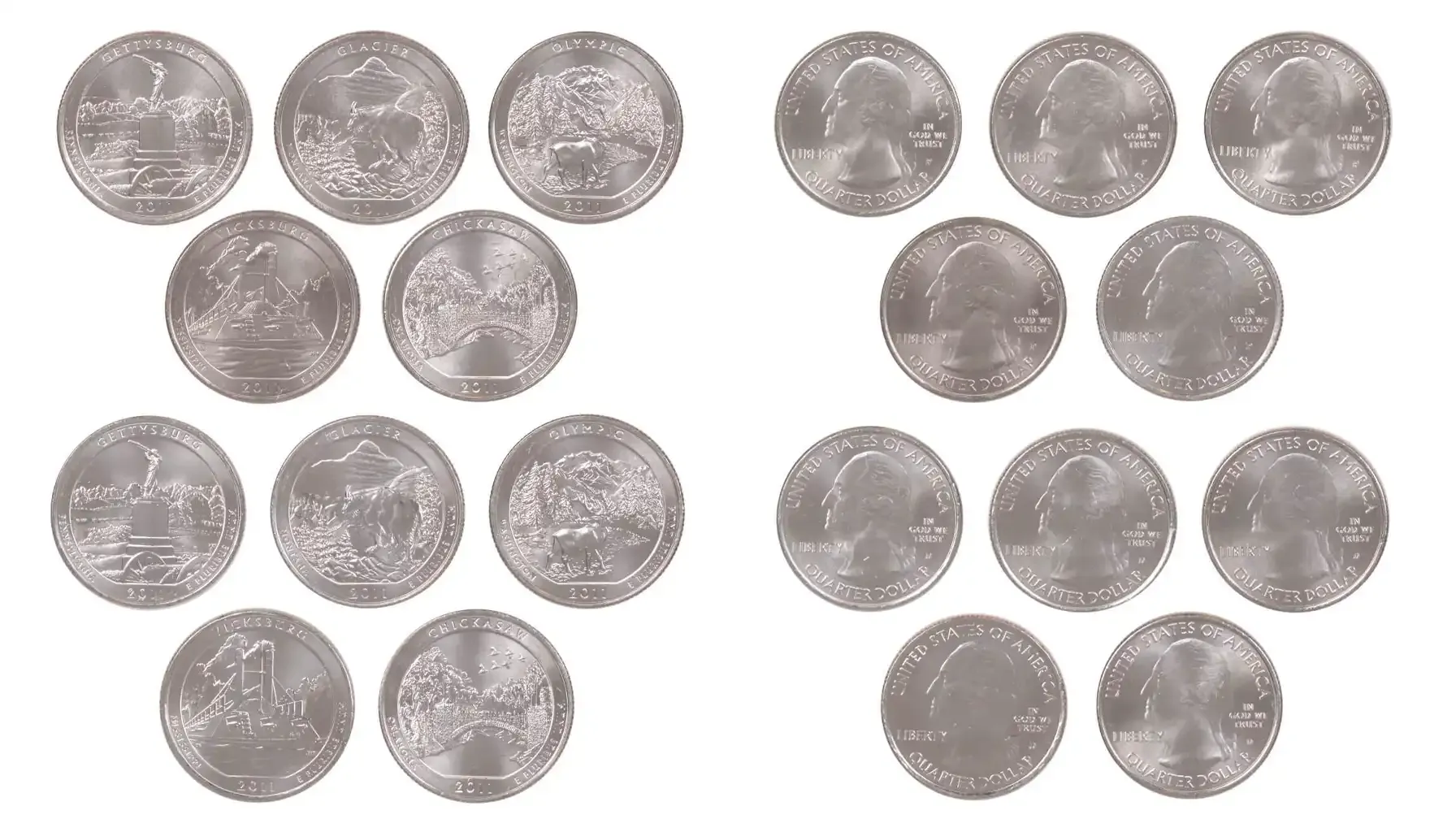
The value of such an issue depends primarily on the surface condition. Circulated coins rarely rise above the minimum grade, but well-preserved coins with sharp borders and relief details are available. Luster plays a significant role in valuation, especially for high-grade coins.
Those who build collections based on national parks tend to include Glacier National Park quarters in their collections, so demand remains steady, without any sharp declines. Coins in MS67 condition occasionally appear at auction, attracting attention due to their rarity.
Prices are typically as follows:
Condition | Philadelphia | Denver | San Francisco (proof) |
Circulated | 0.25–0.50 USD | 0.25–0.50 USD | 1–3 USD |
Almost uncirculated | 1–3 USD | 1–3 USD | 4–6 USD |
High grade | 15–40 USD | 15–40 USD | 25–55 USD |
Such an observation reflects the overall market sentiment well. This is exactly how the 2011 Glacier quarter value is typically presented, because prices for this issue stay within a predictable range, while high grades occasionally show noticeable spikes.
“The opportunity to buy a rare coin is often rarer than the coin itself.”
— Lester Merkin, American numismatist
CRO website
2011 Glacier Quarter Errors
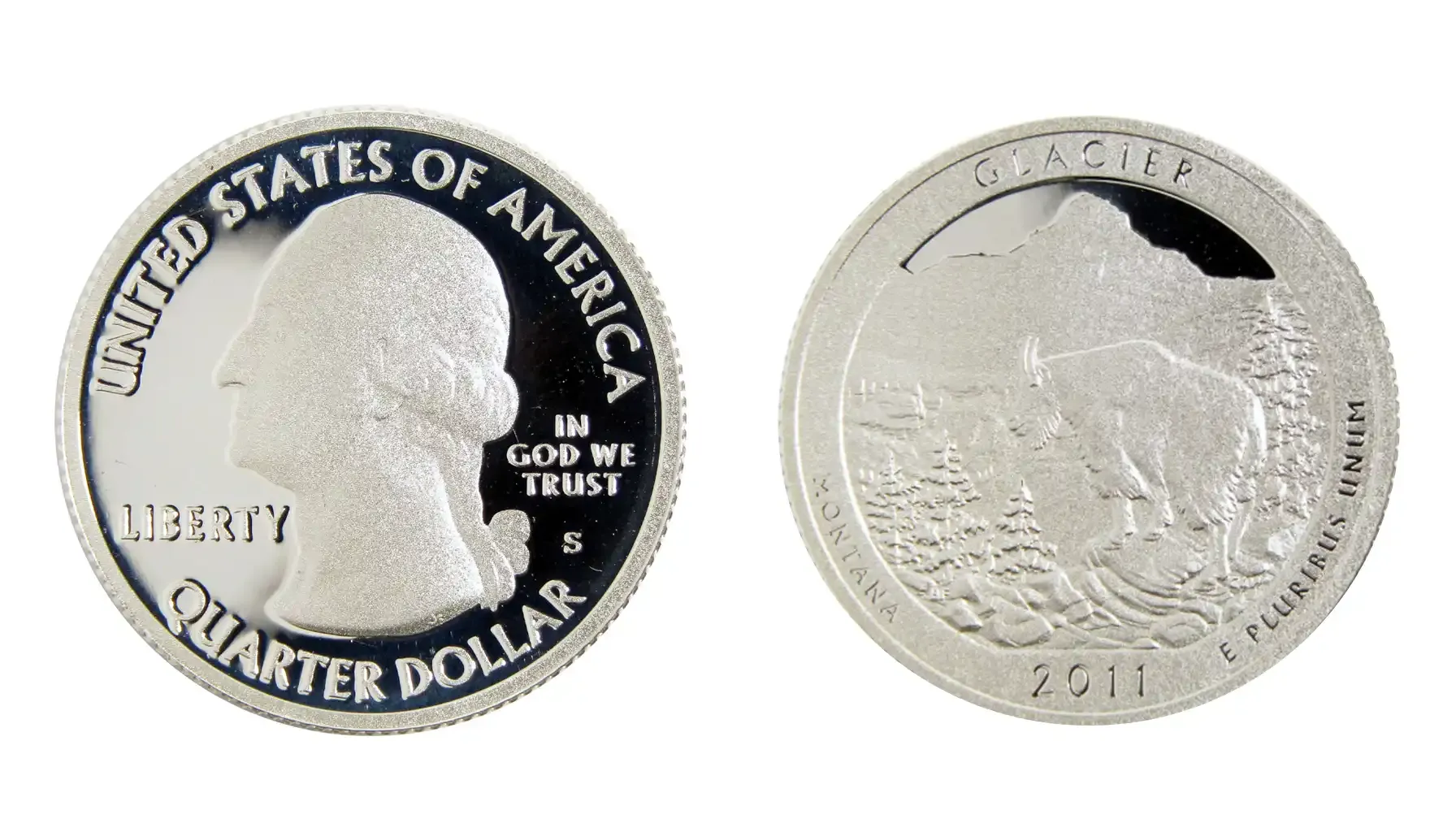
Some specimens exhibit production deviations. These are not numerous, but those that are known are of constant interest.
Recorded variations include:
a slight shift of the reverse;
a weak impact in some areas of the image, especially in fine lines;
differences in relief depth due to die features;
rough areas along the edge due to tool damage.
Such coins do not form a separate, larger category. It's easier to examine such deviations under good lighting. This makes it easier to notice lines that don’t match what you normally see on a standard piece.
There’s another early coin worth bringing up here — the 2011 Vicksburg quarter. It drew a lot of attention to the series and became familiar to collectors because of its striking reverse design.
To assess the coin's condition and estimated market value, it's convenient to use the Coin ID Scanner app. It compares data from current sales and helps identify the coin's variety.
Conclusion
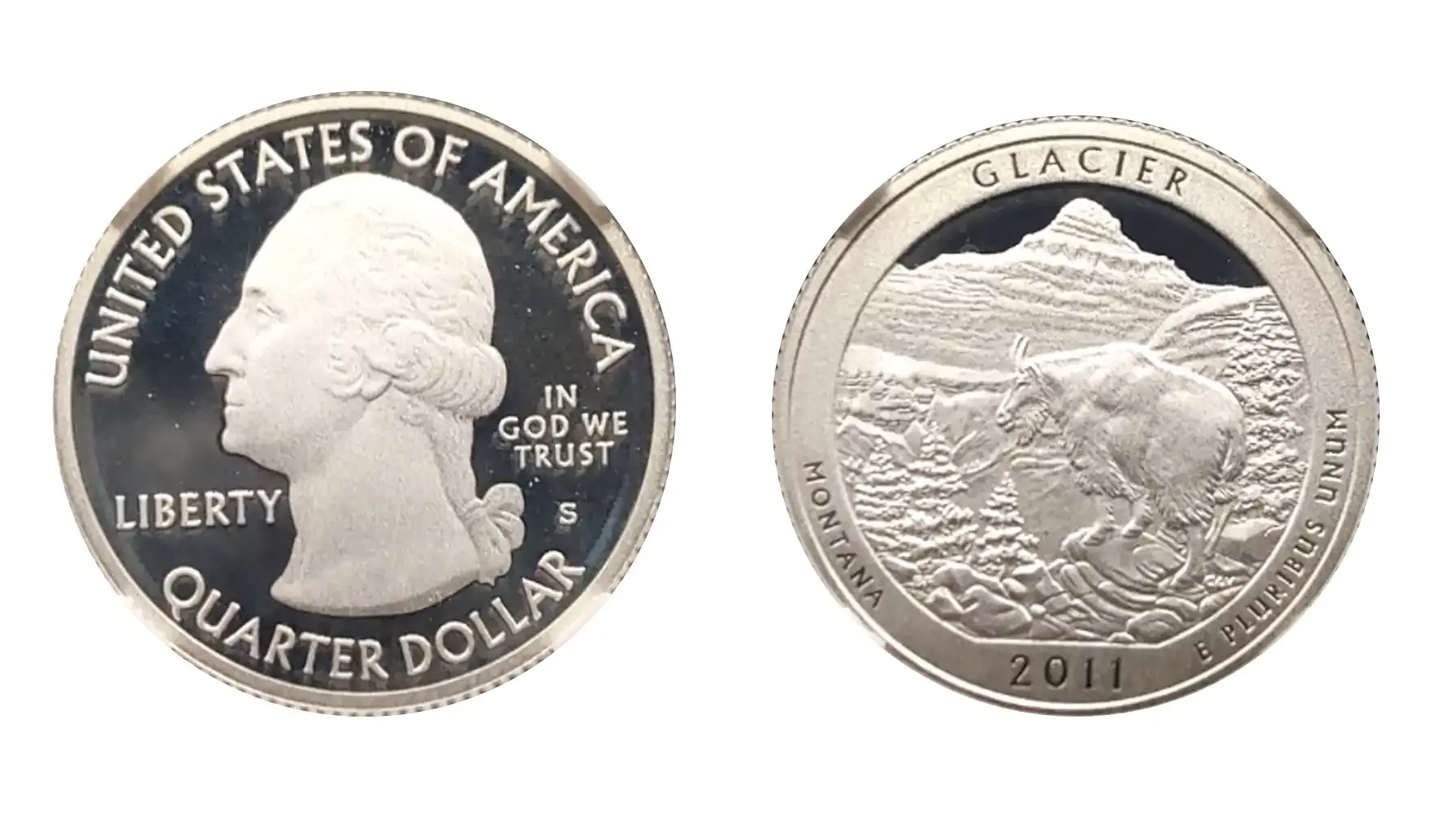
The Glacier coin has become a notable element. It combines distinctive design, moderate rarity, and interesting finds among individual specimens. For those studying early Parks, this issue is one of the first to be considered.

 Facebook
  X (Twitter)
  Pinterest
  LinkedIn