Contents:
The Olympic coin is distinguished by its calm design and recognizable landscape of the American Northwest. Collectors have long included it in thematic collections, especially those interested in the America the Beautiful series and nature themes. This issue is often compared to other coins in the program, but the Olympic coin has character and its own market.
Overview — The 2011 Olympic Quarter
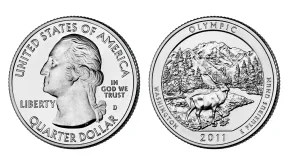
This release highlights the landscape of Washington State. On the reverse, a Roosevelt elk stands in the waters of the Hoh River, and Mount Olympus rises in the background. The combination of animal and landscape makes the design expressive.
Collectors often study the coins in the series dynamically, comparing them by theme—for example, those familiar with the 2011 Vicksburg quarter often turn to the Olympic issue as a more "natural" issue without architectural elements.
The physical parameters are familiar:
diameter approximately 24.3 mm,
weight approximately 5.67 g,
composition copper-nickel,
reeded edge.
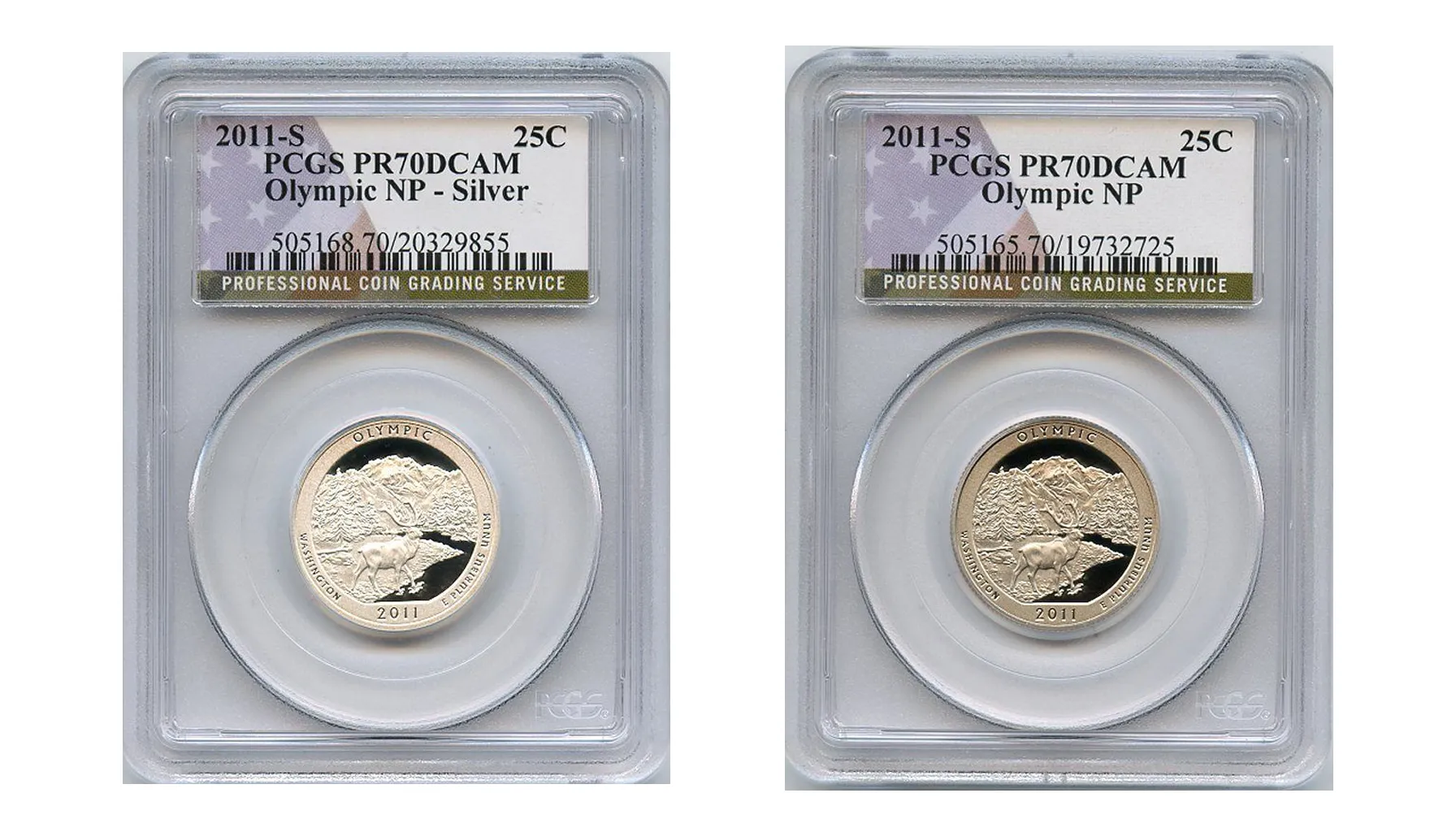
Basic versions were minted in Philadelphia and Denver, and proof versions, including silver versions, were minted in San Francisco.
2011 Olympic Quarter Design
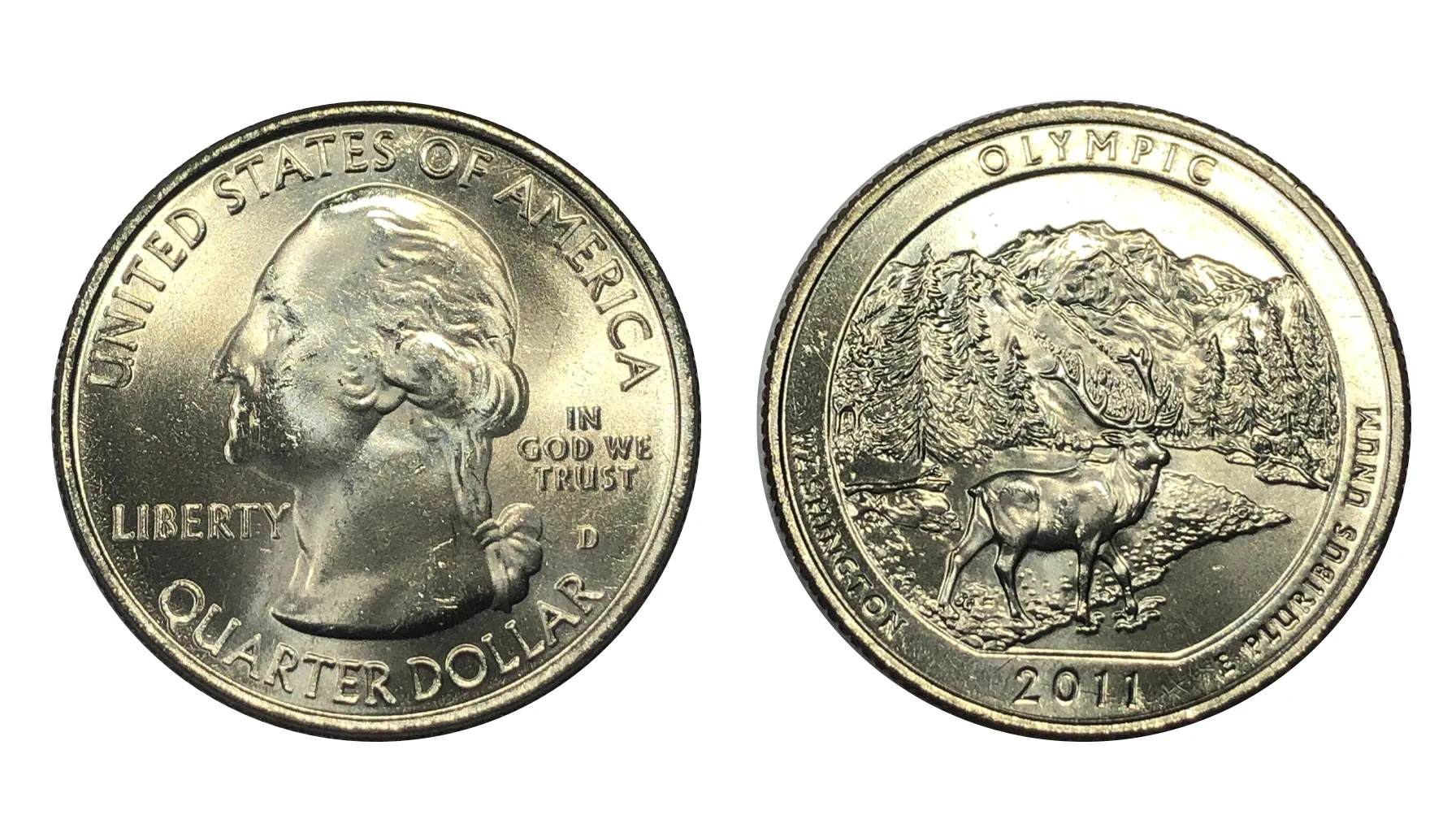
The reverse tells the story of the place with simple details. A cold river cutting through pines, a broad mountain rising behind them, and an elk that fits naturally into the scene. It stands close to the viewer yet leaves room for the landscape, keeping the layout steady and balanced overall.
The obverse is traditional. It features a portrait of George Washington, the name of the country, the denomination, and the year of issue. Proof versions feature mirrored fields and deeper in the relief, enhancing the landscape's detail.
Many appreciate this issue for its realism. Water lines, wood grain, and the soft transitions in the mountain silhouette—all of this is visible even on circulated coins, albeit with reduced clarity.
2011 Olympic Quarter Mintage
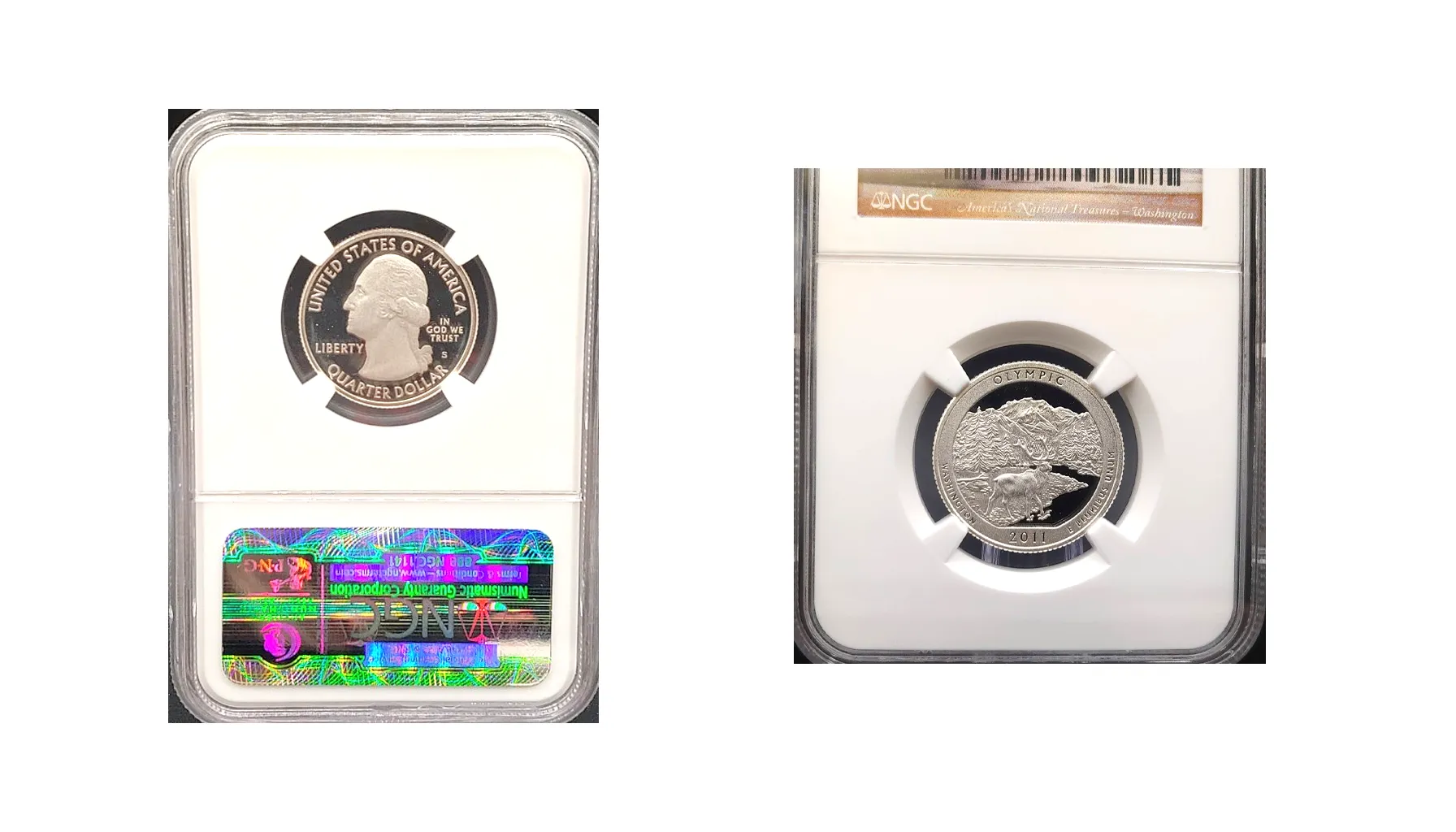
Mintage volume is an important indicator affecting a coin's availability on the market. For the Olympic, mintages are roughly as follows:
Mint | Mintage |
Philadelphia (P) | 30,400,000 |
Denver (D) | 30,600,000 |
San Francisco (S) Proof | 1,267,361 |
San Francisco (S) Silver Proof | about 700,000 |
The numbers may look large, but mintage alone doesn’t decide how desirable a coin becomes. Condition matters just as much. Circulated pieces turn up all the time, yet finding one with only light wear is getting tougher.
Collectors sometimes compare designs directly—for example, placing the Olympic quarter beside the 2011 Chickasaw issue to show how different the featured locations are that year.
To more easily determine a coin's condition or compare it to recent sales, try the Coin ID Scanner app. It helps quickly match your coin with actual market data.
2011 Olympic Quarter Value Chart
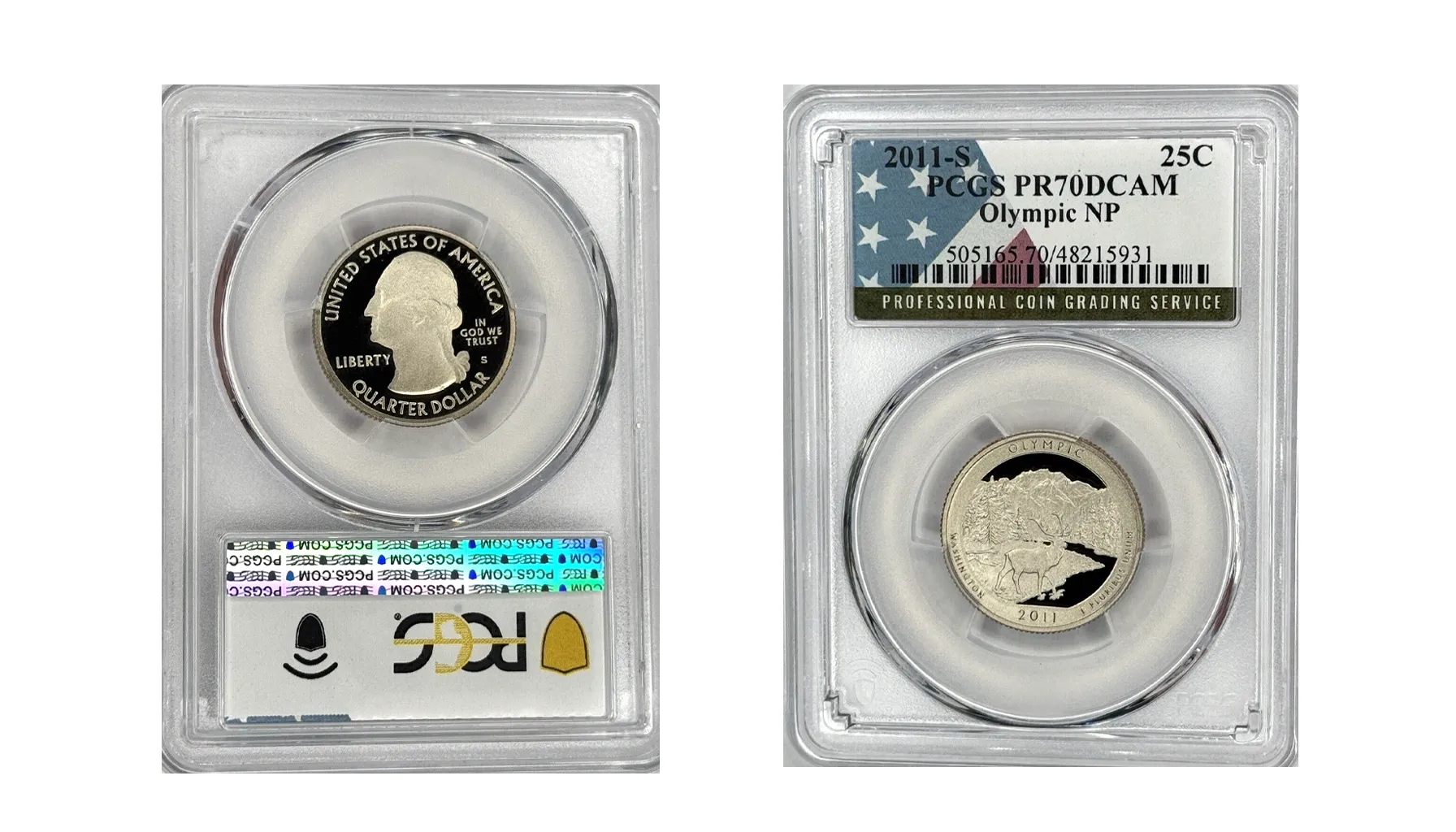
When assessing the value, it’s important to consider several factors:
type of issue,
wear,
definition of the relief,
presence of a certificate.
Occasionally, specimens classified as 2011 Olympic quarter errors are found in circulation, where:
a slight displacement,
a weak impact,
or localized deformation is noticeable.
Such cases are rare, but due to their limited nature, they are valued higher than ordinary circulation.
If your Olympic National Park quarter is preserved without noticeable signs of wear, demand for it will be significantly higher than average. This is especially noticeable among collectors who assemble clean sets and are interested in the early years of the program.
Some focus on overall condition and view the coin as part of the park theme rather than as a standalone item. This explains the interest in clean specimens and the increased attention paid to proof versions.
Type | Condition | Average Price |
Philadelphia / Denver | Circulated | $0.30–$0.40 |
Philadelphia / Denver | UNC | $1–$3 |
Proof (S) | Standard proof | $4–$8 |
Silver Proof (S) | 90% silver | $18–$25 |
High grade (MS65–MS67) | Certified | $10–$40 |
Auction statistics provide a good guide: one of the certified specimens in grade MS67 was sold for more than $120.
“You have to make good choices in what you pick.”
— Warren Zivi, American rare-coin dealer
Bankrate website
If you come across a coin with a bright shine and no micro-snags, take a high-quality photo—buyers often look for such coins, so this can help you achieve a price higher than the initial estimate.
Conclusion
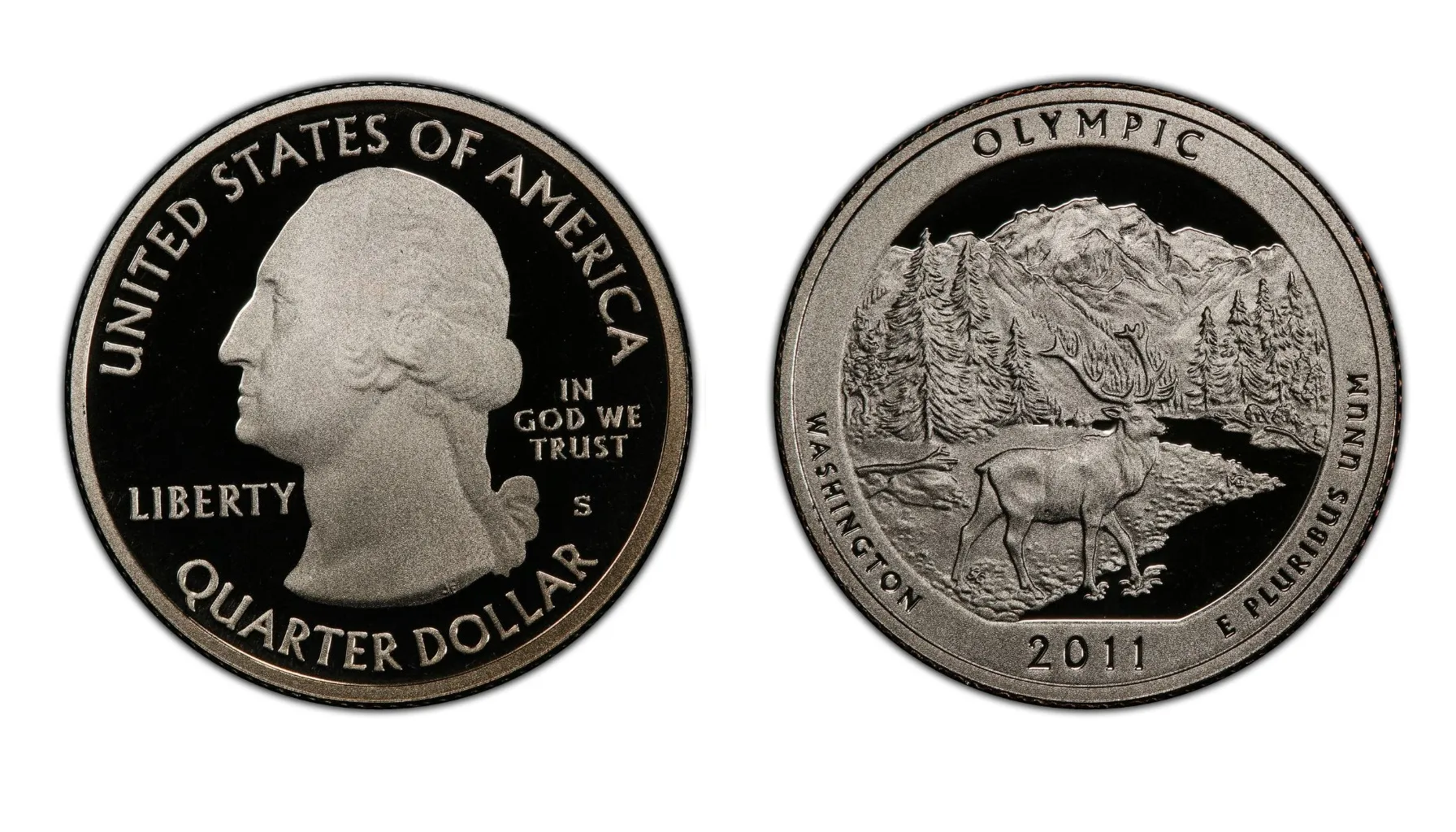
Interest in this coin comes from several places—the design catches the eye, the mintages stay reasonable, and the different versions give collectors room to choose. If your piece is still clean, especially a proof or a silver strike, it naturally stands out and feels more important in a set.
The series invites people to build themed groups. The Olympic 2011 quarter fits right in with other American quarters, each showing its own story about parks, landscapes, and cultural landmarks across the U.S.

 Facebook
  X (Twitter)
  Pinterest
  LinkedIn