Contents:
The 2011 Gettysburg Quarter is the first release of the 2011 America the Beautiful series and the sixth coin overall in the program.
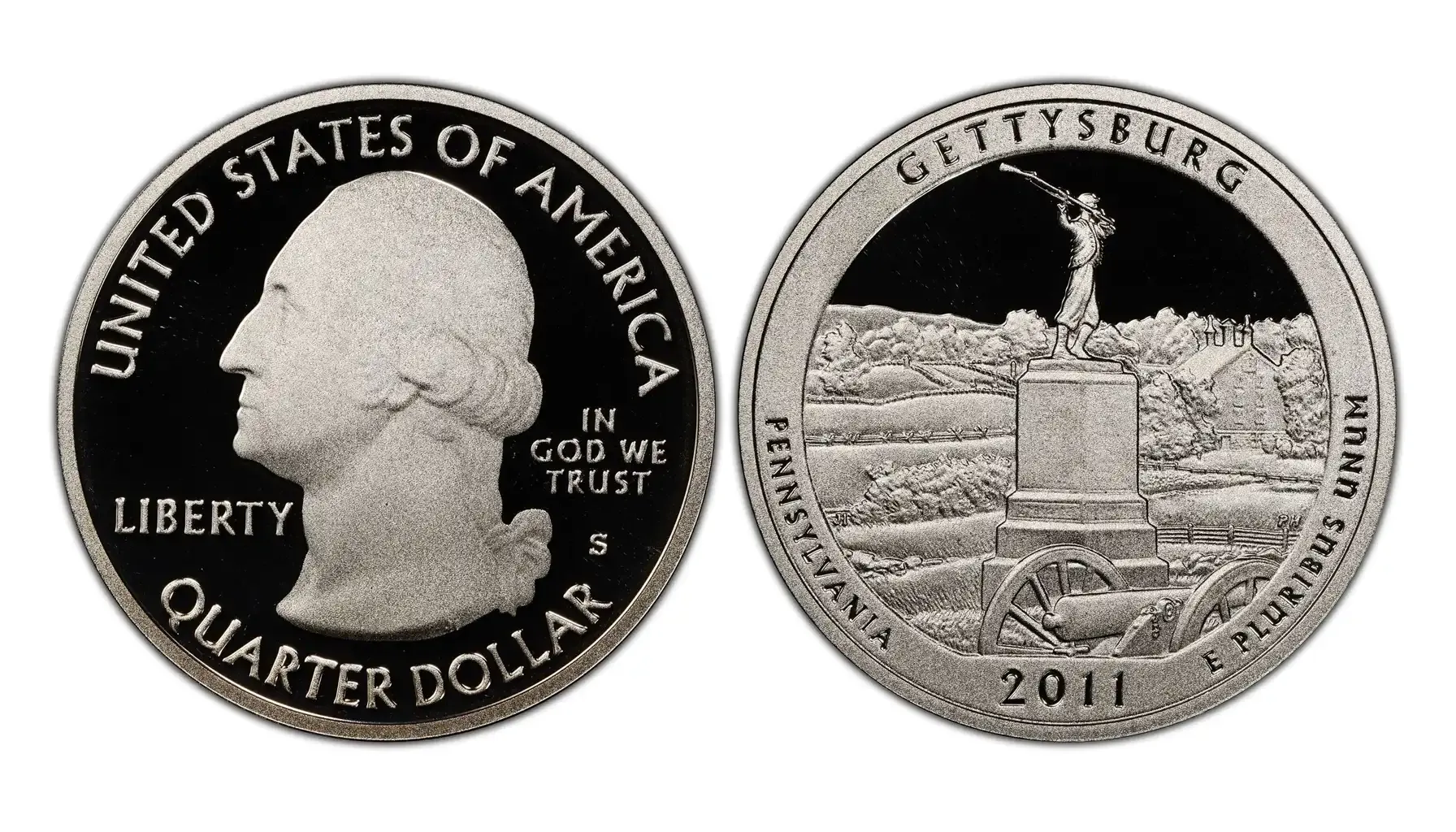
On its reverse, you can see Gettysburg National Military Park in Pennsylvania. It’s the site of the 1863 Civil War battle.
Overview — The 2011 Gettysburg Quarter
This national park preserves the ground where Union and Confederate forces fought from July 1–3, 1863. The battle halted the Confederate advance into the North and became a major shift in the Civil War. A few months later, Abraham Lincoln returned to dedicate the cemetery and delivered the Gettysburg Address on this site.
In the years that followed, veterans and local groups worked to record troop positions, install monuments, and protect the landscape so the battlefield would not disappear under later development.
“This is hallowed ground for Americans. The coin’s design captures a moment of stillness on a field whose history was anything but quiet.”
— Mark L. Ainsworth, numismatic historian
Civil War Token Journal, Issue No. 2011-2
The 2011 Gettysburg Quarter was struck at three U.S. Mint facilities. All mint marks appear on the obverse, to the right of Washington’s portrait.
P — Philadelphia Mint. Used on circulation coins released into everyday change.
D — Denver Mint. Also used on circulation strikes, produced for general distribution.
S — San Francisco Mint. Appears only on collector versions, including the clad proof and the 90% silver proof.
2011 Gettysburg Quarter Specifications
Year of Issue | 2011 |
Series Position | 6th coin in the ATB series (followed by the 2011 2011 Glacier Quarter and later the 2011 Olympic National Park Quarter) |
Obverse Designer | John Flanagan (modified by William Cousins) |
Reverse Designer | Joel Iskowitz (engraved by Phebe Hemphill) |
Composition (Circulation) | 91.67% copper, 8.33% nickel |
Composition (Silver Proof) | 90% silver, 10% copper |
Weight (Clad) | 5.67 g |
Weight (Silver Proof) | 6.25 g |
Diameter | 24.26 mm |
Thickness | 1.75 mm |
Edge | Reeded |
Mintage — P | ~35.4 million |
Mintage — D | ~30.4 million |
Mintage — S Clad Proof | ~1.6 million |
Mintage — S Silver Proof | ~700,000 |
2011 Gettysburg Quarter Value Chart
Type | Grade | Value |
2011-P (Philadelphia) | Circulated (G–VF) | $0.25–$0.40 |
MS60 | $0.60–$1.00 | |
MS63 | $1.00–$3.00 | |
MS65 | $8.00–$18.00 | |
2011-D (Denver) | Circulated (G–VF) | $0.25–$0.40 |
MS60 | $0.60–$1.00 | |
MS63 | $1.00–$3.00 | |
MS65 | $7.00–$16.00 | |
2011-S Clad Proof | PR65–PR69 | $2.00–$5.00 |
2011-S Silver Proof (90% silver) | PR65–PR69 | $7.00–$15.00 |
2011 Satin Finish (Mint Set) | Uncirculated | $2.00–$7.00 |
Disclaimer: The prices in the table are average.
MS66–MS67 specimens can be more expensive. The total sum depends on strike quality and eye appeal.
In turn, silver proof prices shift slightly with the silver spot price. Cameo and deep-cameo proof coins sit at the high end of the ranges.
Circulation strikes remain common; premiums appear mainly at MS65 and higher.
2011 Gettysburg Quarter Errors and Varieties
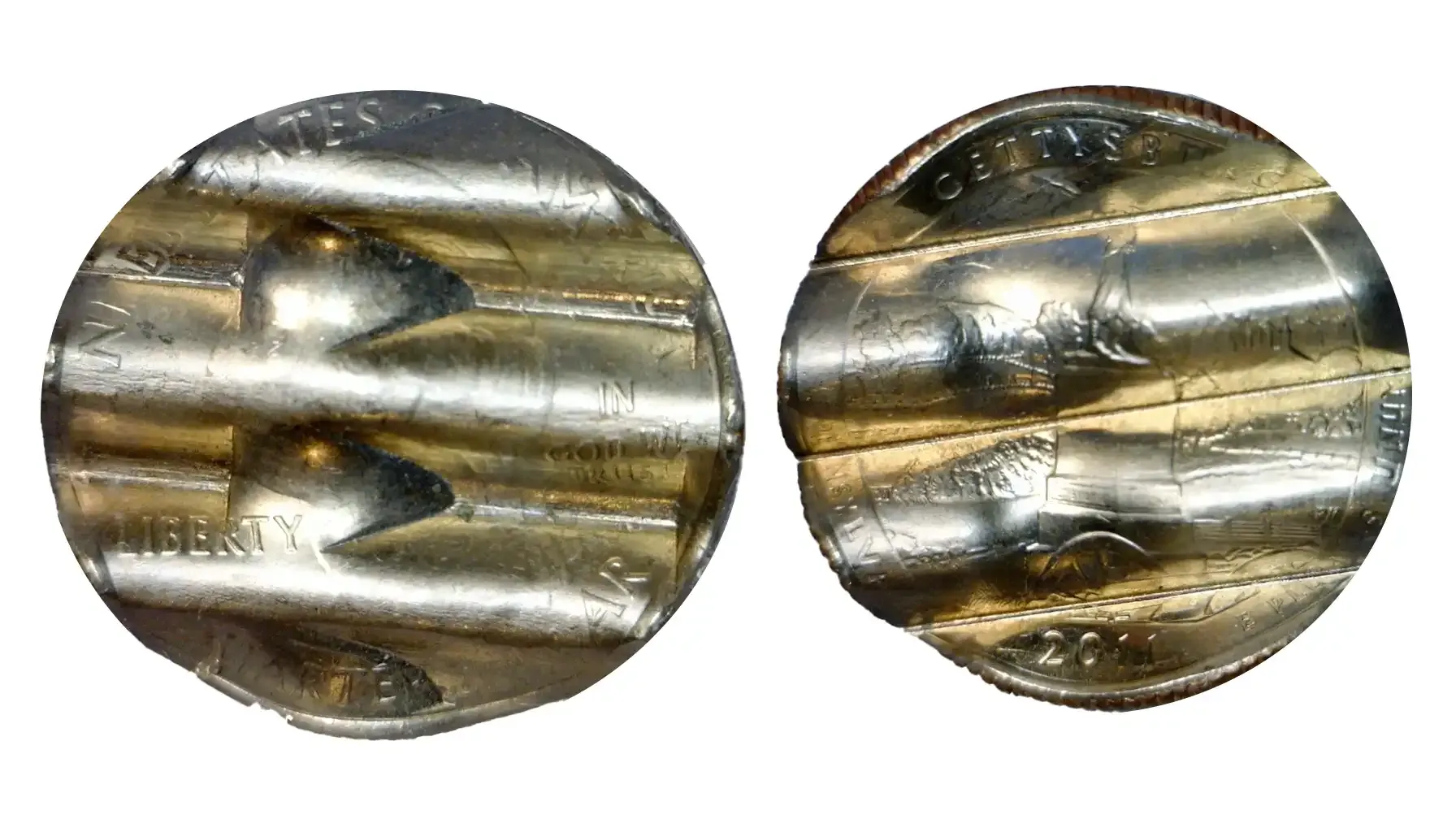
The coin shows several types of production mistakes that collectors watch for. Most are ordinary minting flaws, but a few are bold enough to set a coin apart from normal circulation pieces.
Off-Center Strikes
These appear when the blank isn’t centered during the strike. Light shifts are easy to find, but wide off-centers with the date intact are much harder and draw more attention.
Broadstrikes
This 2011 Gettysburg Quarter error happens when the collar doesn’t hold the planchet. The design still shows clearly, but the rim spreads out and looks softer than usual.
Struck-Through Debris
Any material trapped between the die and the planchet—such as grease or metal chips—will leave a shallow patch or missing detail. These marks often appear on the fields around the monument.
Die Cracks and Small Breaks
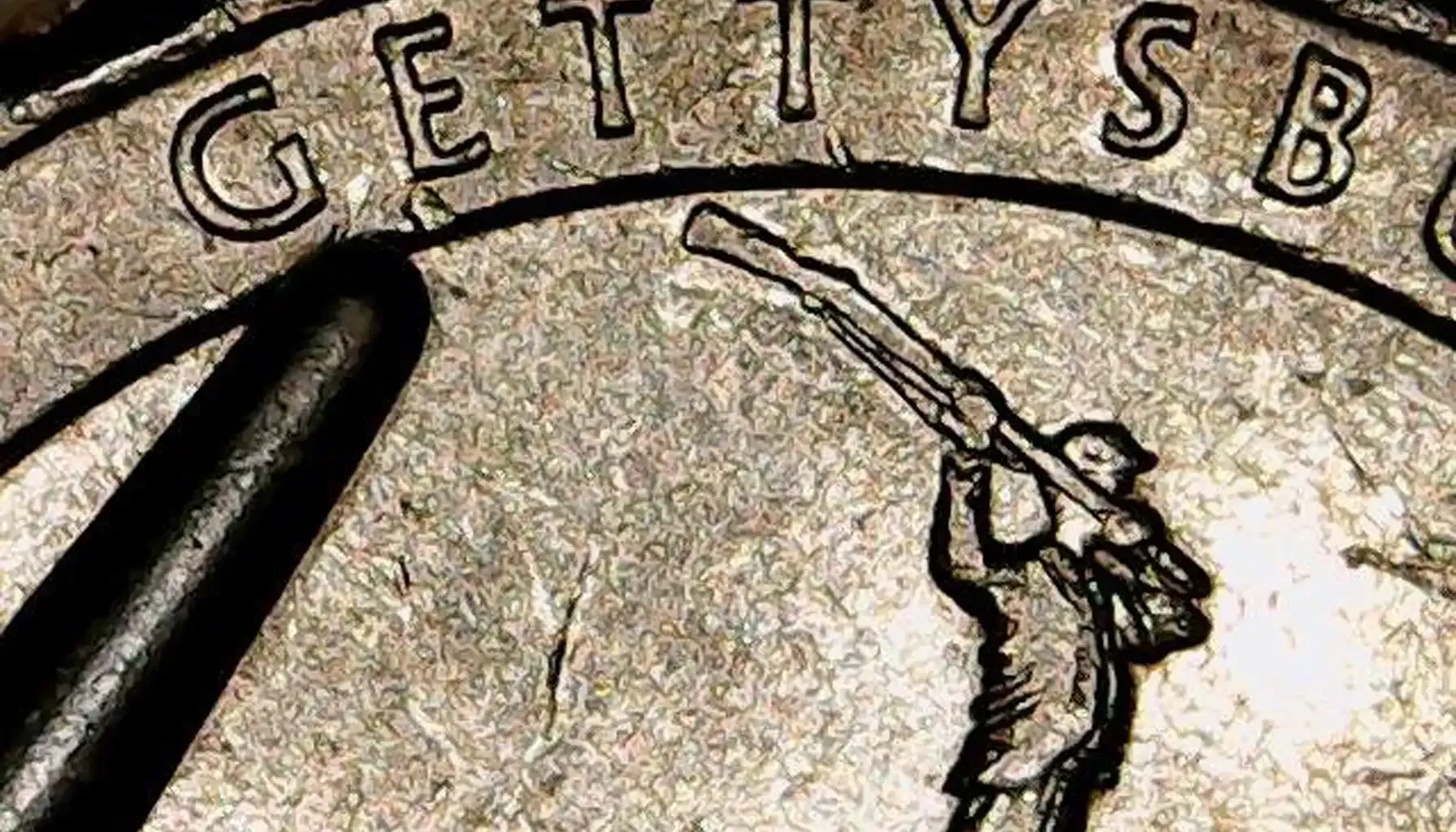
Worn dies can leave raised lines or bumps. On this coin, cracks often run along the rim or appear around the monument base.
Missing Clad Layer
If the outer nickel layer doesn’t bond correctly, part of the copper core shows through. These coins look noticeably different from regular quarters.
Light Machine Doubling
Thick or shelf-like lettering can appear from loose equipment rather than a true doubled die. These are collected as minor varieties.
How Errors Influence Prices
Error coins from this issue can sell for more than face value, but the premium depends on how noticeable and unusual the mistake is. Some errors barely change the price, while others can bring strong collector interest.
1. Visibility of the Error
The clearer the mistake, the higher the premium.
Large off-center strikes
Wide clips
Full missing clad layers
2. Condition
A dramatic error in Mint State condition is worth more than the same error after heavy circulation. Clean surfaces help the mistake show clearly, which raises demand.
3. Type and Scarcity
Some errors are far less common than others:
Broadstrikes, off-centers, full clips, double strikes, missing-layer pieces → higher prices
Minor die cracks or small struck-through spots → small premiums only
4. Completeness
For off-center strikes, having the date and mint mark visible is important. Coins missing these details usually sell lower, even if the error is wide.
Conclusion
Coin ID Scanner helps you sort your Gettysburg 2011 quarter pieces more efficiently. A quick photo identifies the coin and provides average market values, which is useful when you’re going through rolls or mixed batches.
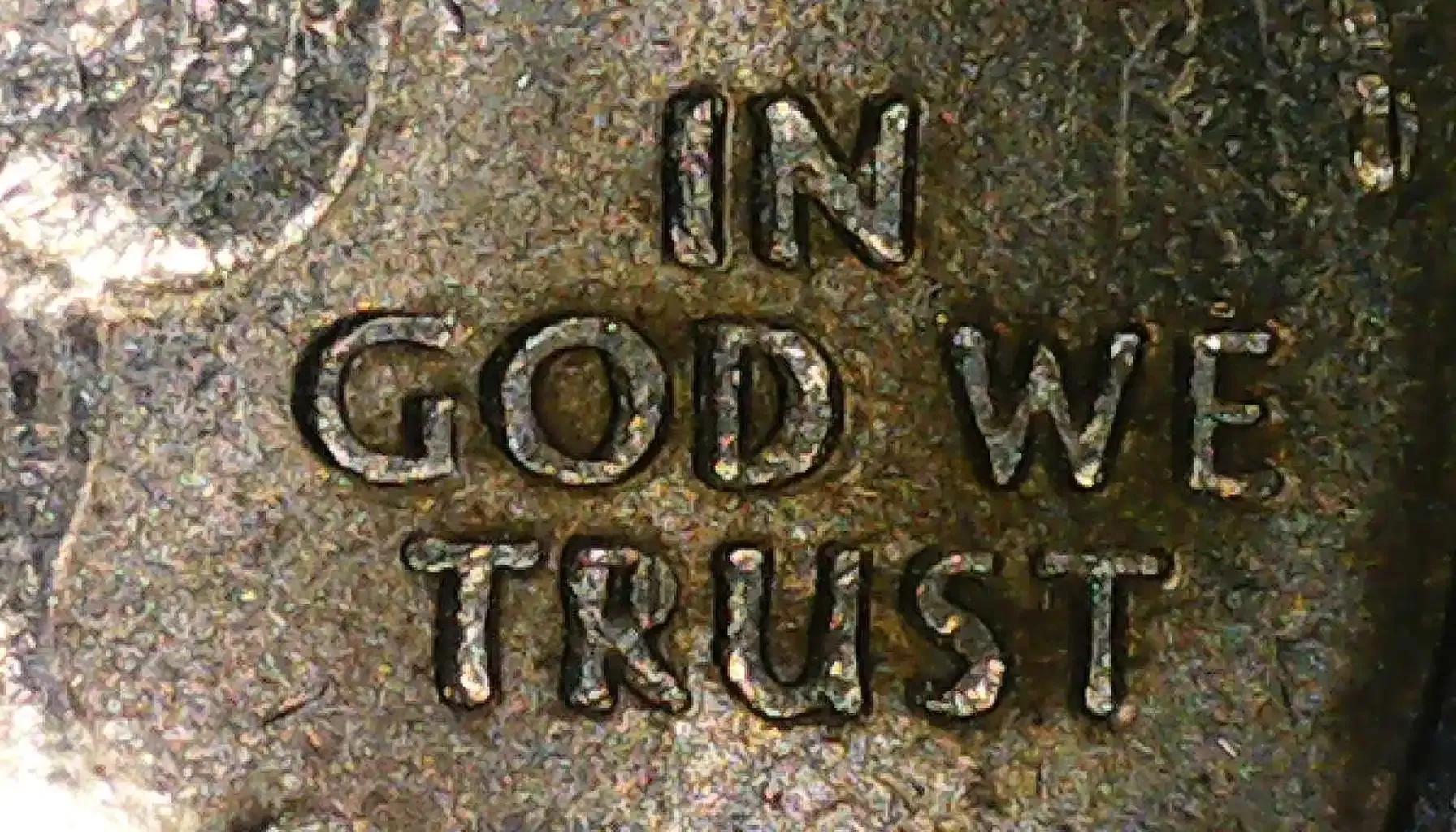
The reference images show how a normal coin should look, so unusual rims, missing detail, or odd color are easier to spot.
Try now and make sure!

 Facebook
  X (Twitter)
  Pinterest
  LinkedIn