Contents:
2010 is a relatively modern year, and most coins from that year are common. You could get them as change even five years after the release. How much is a 2010 penny worth? Let's have a better look.
This article will tell you everything you need to know about the 2010 penny, from values and design to errors and additions.
Have you ever tried an AI Coin Identifier? Now, with the power of technology, you can identify all kinds of coins.
About 2010 Penny
It is the Lincoln cent issued by the U.S. Mint in 2010. The Lincoln series is perhaps the most famous penny line in the US (and maybe in the world!)
The series lasted many years, from Wheat Penny to the 2010 shield reverse penny design you see today. In fact, it is the first year this design was introduced.
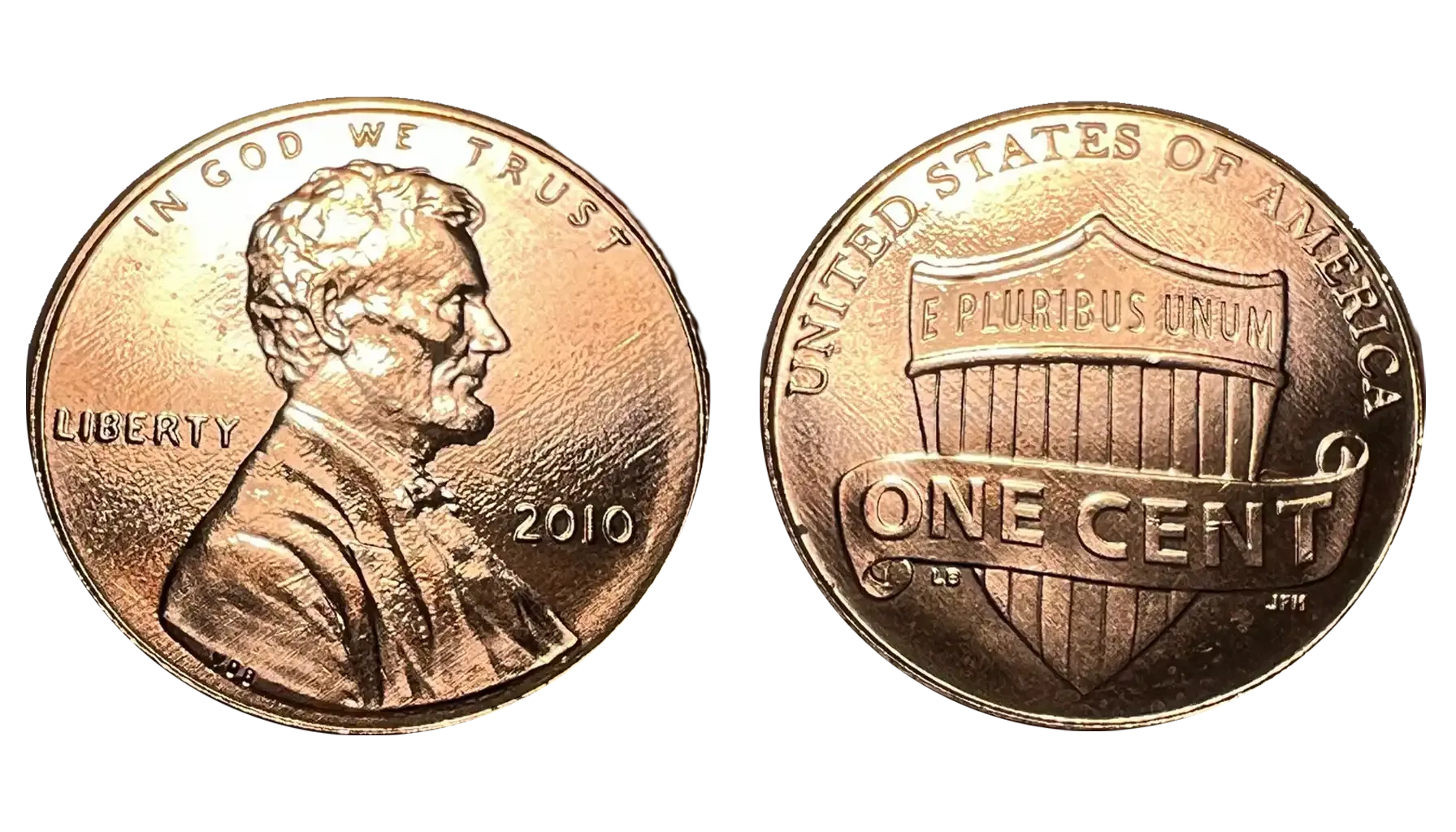
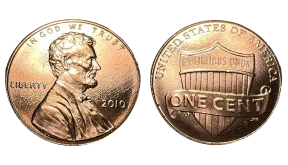
Obverse (front): Features Abraham Lincoln’s portrait, which has been on the penny since 1909. It was designed more than a century ago by Victor David Brenner. You should find inscriptions like IN GOD WE TRUST at the top, LIBERTY on the left, and the date on the right.
Reverse (back): A Union shield in the centre. The shield has 13 vertical stripes joined under a single horizontal bar with a banner reading E PLURIBUS UNUM. At the top, you’ll see an inscription UNITED STATES OF AMERICA. The new reverse was designed by artist Lyndall Bass and sculpted by Joseph Menna.
Penny 2010 Overview | |
Country | United States of America |
Years of Minting | 2010–present (first year of the Union Shield reverse) |
Type: | Circulating |
Shape: | Round |
Composition and metal content | 97.5% zinc, 2.5% copper (copper-plated zinc) |
Diameter | 19.05 mm |
Weight | 2.5 gram |
Fun fact: The 2010 shield penny is not the only piece featuring a shield. In fact, this design is quite prevalent among the US coinage. Even old pieces like the 1890 Indian Head penny feature a small Union shield on the obverse.
Mint Mark Varieties
2010 pennies were struck in:
Philadelphia (no mint mark)
Denver (D)
San Francisco (S proof coins)
Each variety had a different mintage, approximate values, and a slightly different spot on the obverse. Look to the right, and you might find a blank spot, a D, or an S marks.
2010 Penny No Mint Mark Value
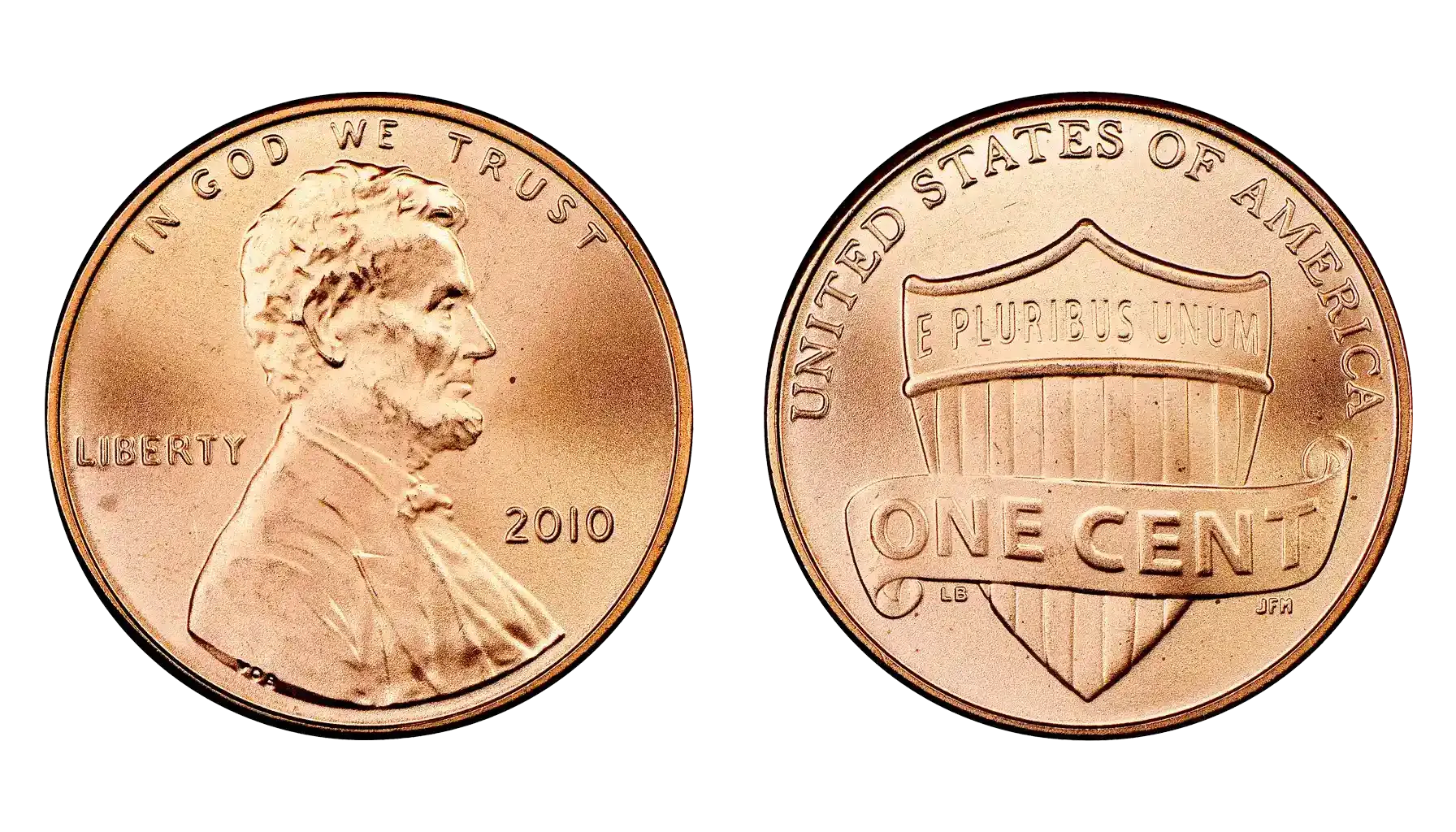
Mintage: ~1,963,630,000.
Approx. Value: mostly face value (0.01$). In mint state $10+.
The Philadelphia Mint had the second biggest mintage of all facilities in 2010. For a long time, no coins had mint marks if they came from Philadelphia. Only after 1980 did some dimes, nickels, and dollars start getting the marks. Pennies still live by the transition and have no mint marks.
2010 D Penny Value
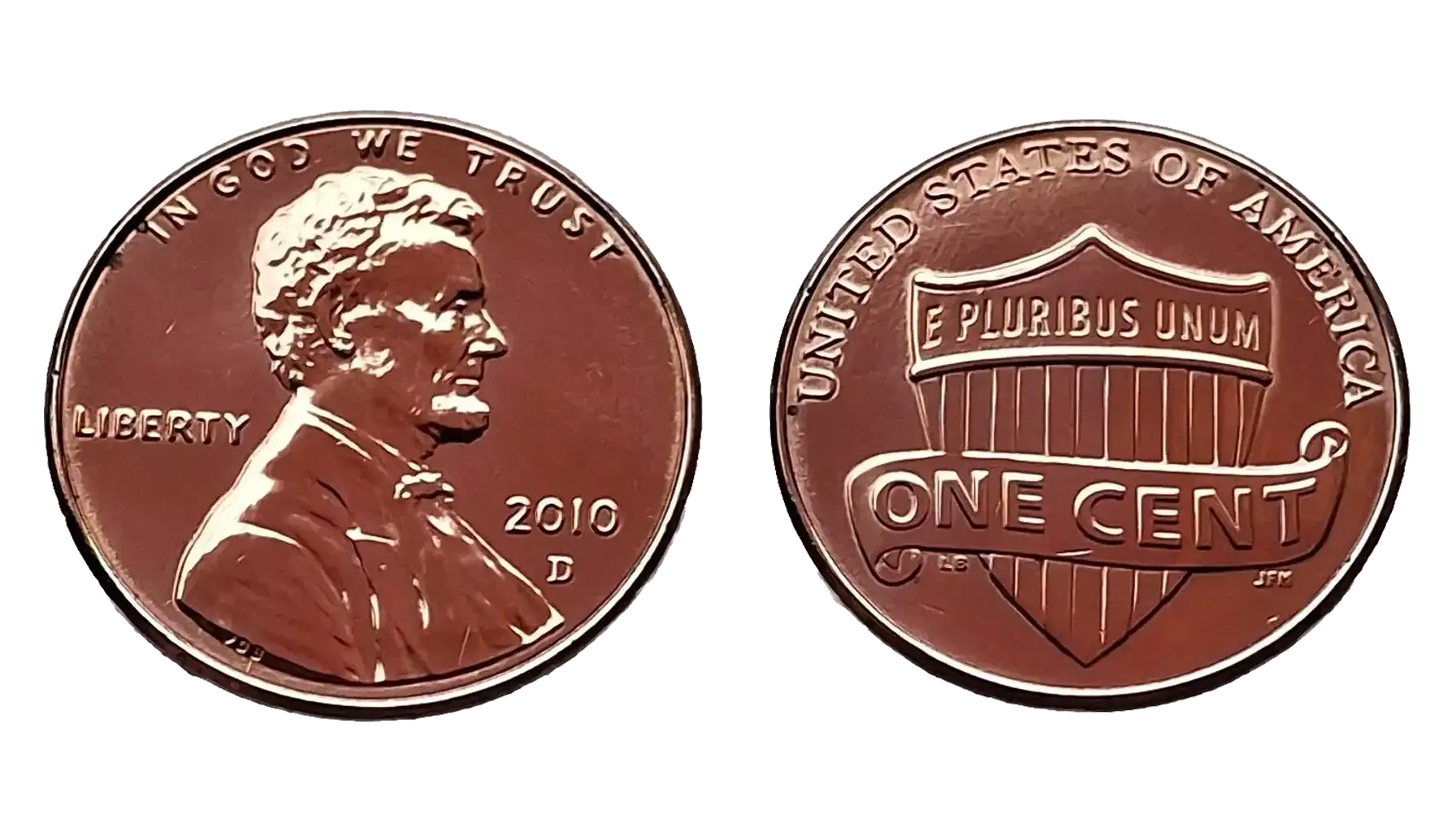
Mintage: ~2,047,200,000.
Approx. Value: mostly face value (0.01$). In mint state $10+.
Denver barely comes on top for the Nuggets. Therefore, Denver and Philadelphia coins have similar values.
2010 S Penny Value
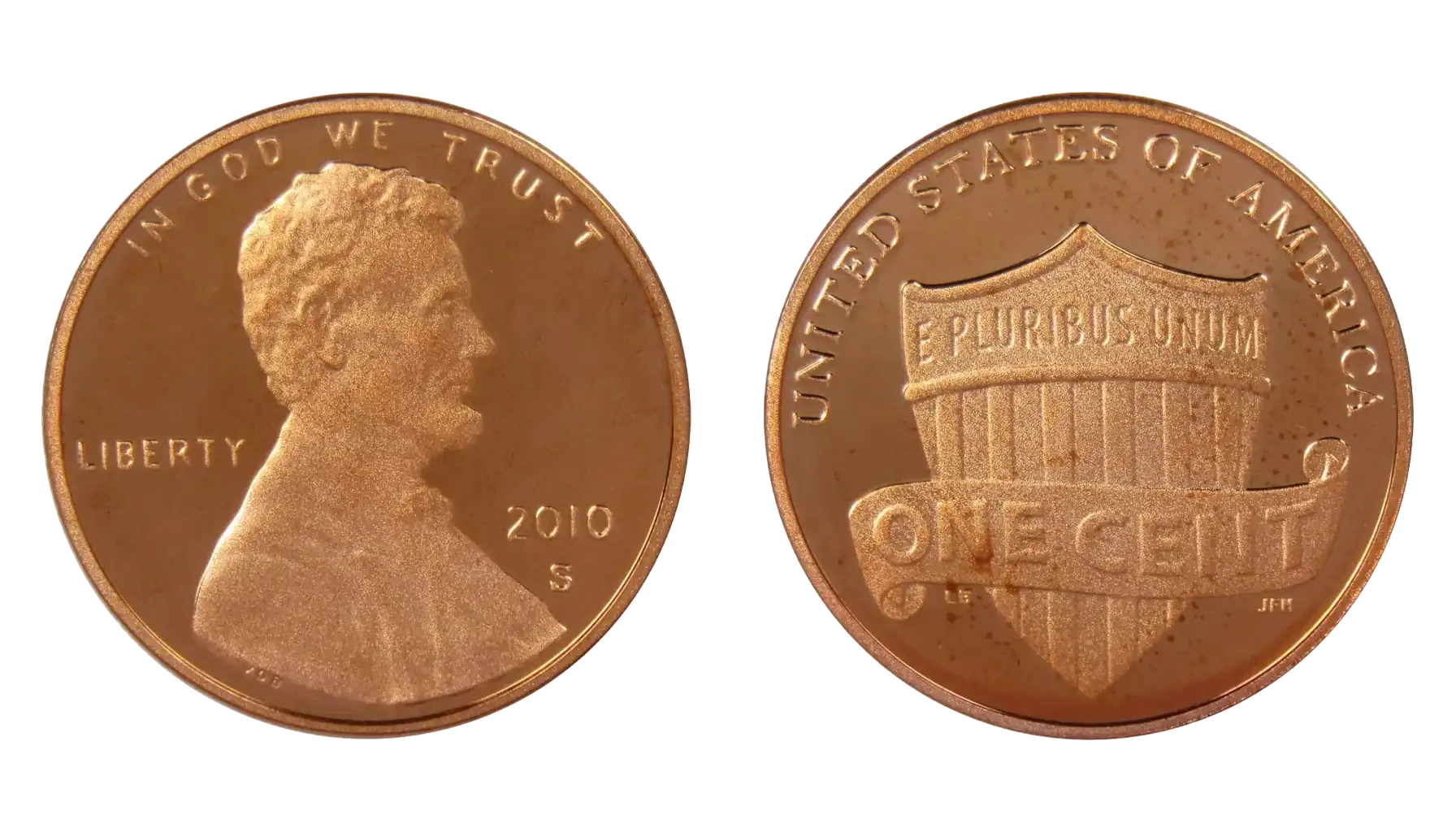
Mintage: ~1,689,216 .
Approx. Value: ~$2+.
San Francisco has always made the fewest coins across all facilities. All are considered proof, i.e., made with care. S pennies are uncirculated editions, and it’s unlikely you’d find one accidentally as change.
2010 Penny Error List
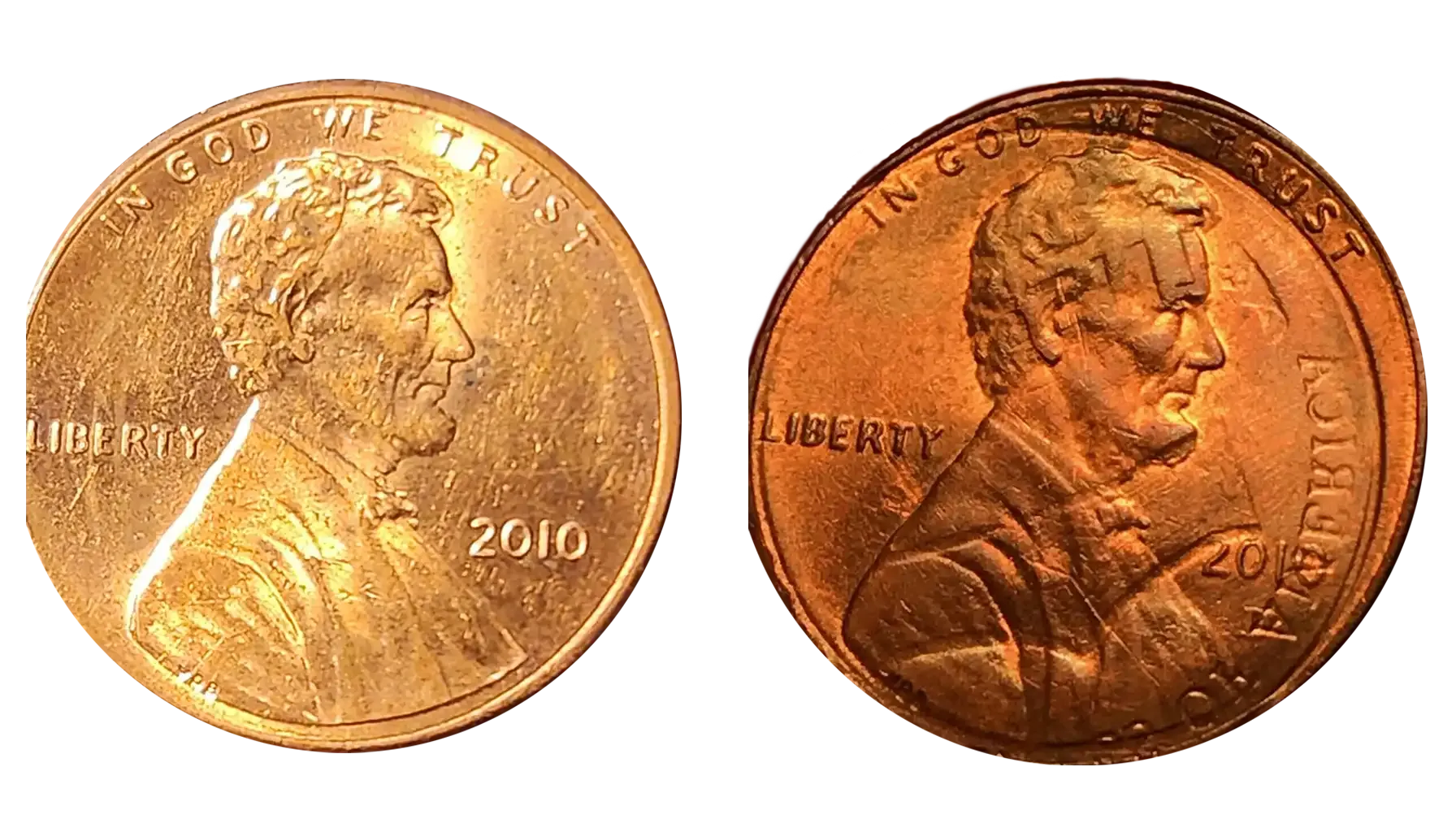
Modern coinage is quirky when it comes to errors. Some modern bits are diverse with mishaps, like 2022 penny errors, and others barely have any mishaps of note.
Gladly, the 2010 coins have a few errors. Most of them are general, but could raise a value over tenfold of the face value.
1. Doubled Die Errors (DDO/DDR):
Some 2010 pennies show doubling in the lettering (such as LIBERTY, IN GOD WE TRUST, or E PLURIBUS UNUM on the reverse shield).
These can be minor or dramatic, and the value depends on how strong the doubling is.
2. Off-Center Strikes:
Coins struck outside proper alignment are often missing a part of the design.
Value increases with the percentage off-center (if the date is still visible, it’s worth more).
3. Die Cracks & Cuds:
Appear as raised lines or blobs of extra metal caused by cracks in the die.
Small cracks are usually minor, but large cuds (filled-in areas of the design) can be collectible, especially if they appear on the face area.
4. Struck-Through Errors:
Foreign material (like grease, cloth, or wire) was between the die and planchet during striking, and left a mark.
It can cause missing details or unusual impressions.
This error is more prevalent on the older coins.
About Grading
Before we reach values, we need to keep in mind one big contributor: grading.
Grading measures a coin’s condition (how much wear or damage it has). U.S. coins are usually graded on the Sheldon scale, which goes from 1 to 70. There, 1 is considered Poor (barely identifiable), and 70 = Perfect (flawless coin under magnification).
There are two main reading classes: circulated (below 60) and uncirculated (above 60).
Circulated Grades. Most bits in this category are face worth:
Good (G4): Heavy wear, details smooth, but major design still visible.
Very Fine (VF20): Moderate wear. Lincoln’s hair and coat show some detail.
Extremely Fine (XF40): Light wear; most details visible but slightly flattened.
Uncirculated (Mint State) Grades:
MS60–MS62 (Uncirculated): No wear, but lots of contact marks and dull luster.
MS63 (Choice Uncirculated): Slight marks, good luster, eye-appealing.
MS65 (Gem Uncirculated): Strong strike, bright luster, only a few small marks.
MS67 (Superb Gem): Nearly perfect, very sharp strike, great eye appeal.
2010 Penny Value
Time to see what we came for: a whole chart dedicated to the value of this coin.
Mint Mark & Type | Circulated | Uncirculated (MS63) | Choice Uncirculated (MS65) | Gem Uncirculated (MS67) | Proof / Special Strike |
2010 (P) Philadelphia | $0.01 | $0.10 | $10 | $10–$20 | – |
2010-D (Denver) | $0.01 | $0.10 | $10 | $10–$20 | – |
2010-S (Proof) | – | – | – | – | $2–5+ |
All in all, the 2010 no mint mark penny and D coin have subpar varieties, which is common for most modern pieces. Perhaps, with time, as fewer and fewer pieces survive in high quality, they will be worth much more. Until then, we wait.
Scan More Coins
Do you have other bits in your collection? If you don’t want to spend your time browsing each piece and looking for matches, you can simply use the app below. It’s one of the top 5 free Coin Identifier apps of 2025.
Coin ID Scanner
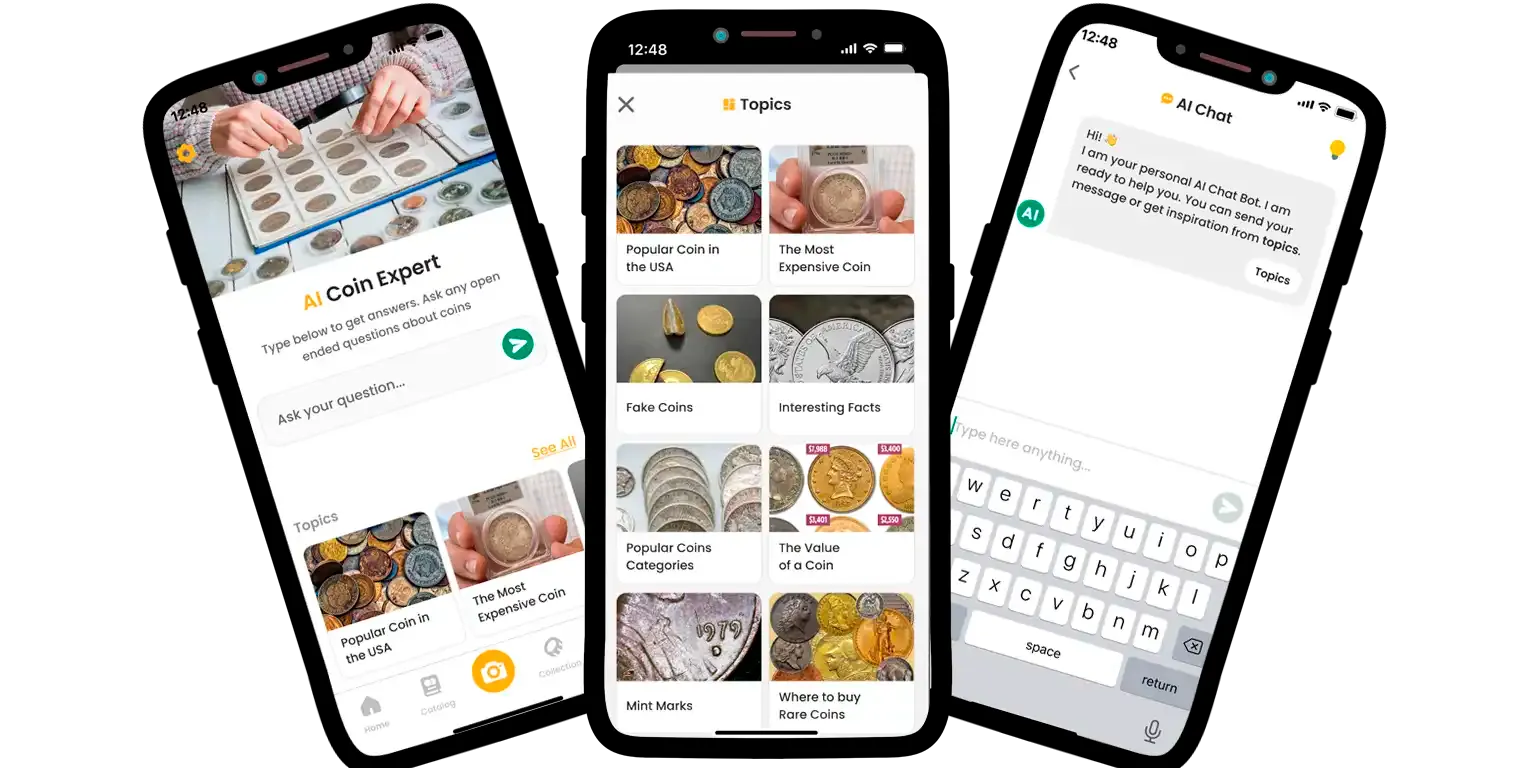
Coin Identifier (Coin ID Scanner) is a mobile app available for iPhone and Android that uses AI and image recognition to identify coins.
You take or upload a photo of a coin, and the app tries to match it to its database (150,000+ coins). Then the app provides basic details like the country, denomination, minting years, and metal composition.
Other features include:
Collection management: You can save and organize your coins once they are scanned.
Educational content: The app has grading guides, news, and historical profiles on many topics.
Large searchable coin catalog: You can browse all kinds of coinage, more than just the 2010 Lincoln penny. The app has bits from Ancient Greece, today’s UK, Japan, and much more.
Coin ID scanner is a free app, so try it out today.

 Facebook
  X (Twitter)
  Pinterest
  LinkedIn