Contents:
2005 is not so far away from us, yet. This coin is modern, and you could still find one as change. It makes you wonder if these cents from 2005 are viable among collectors.
How much is a 2005 penny worth? Today, we will go over the values, mint issues, errors, and more. You will learn what varieties go over the face values, and which ones are better left for change.
Nowadays, you can identify the coins in a flash with the right mobile apps.
About 2005 Pennies
Lincoln pennies have always been about anniversaries. The first in the series, the 1909 penny, was issued to celebrate the 100th anniversary of Lincoln. The newer design we will observe today appeared to commemorate the 150th anniversary of Lincoln.
Peculiarly, different sides have different styles and artists. The obverse is a portrait made by Victor David Brenner, and the reverse is in a more realistic, sculpted style and features a building. The reverse was designed by Frank Gasparro.
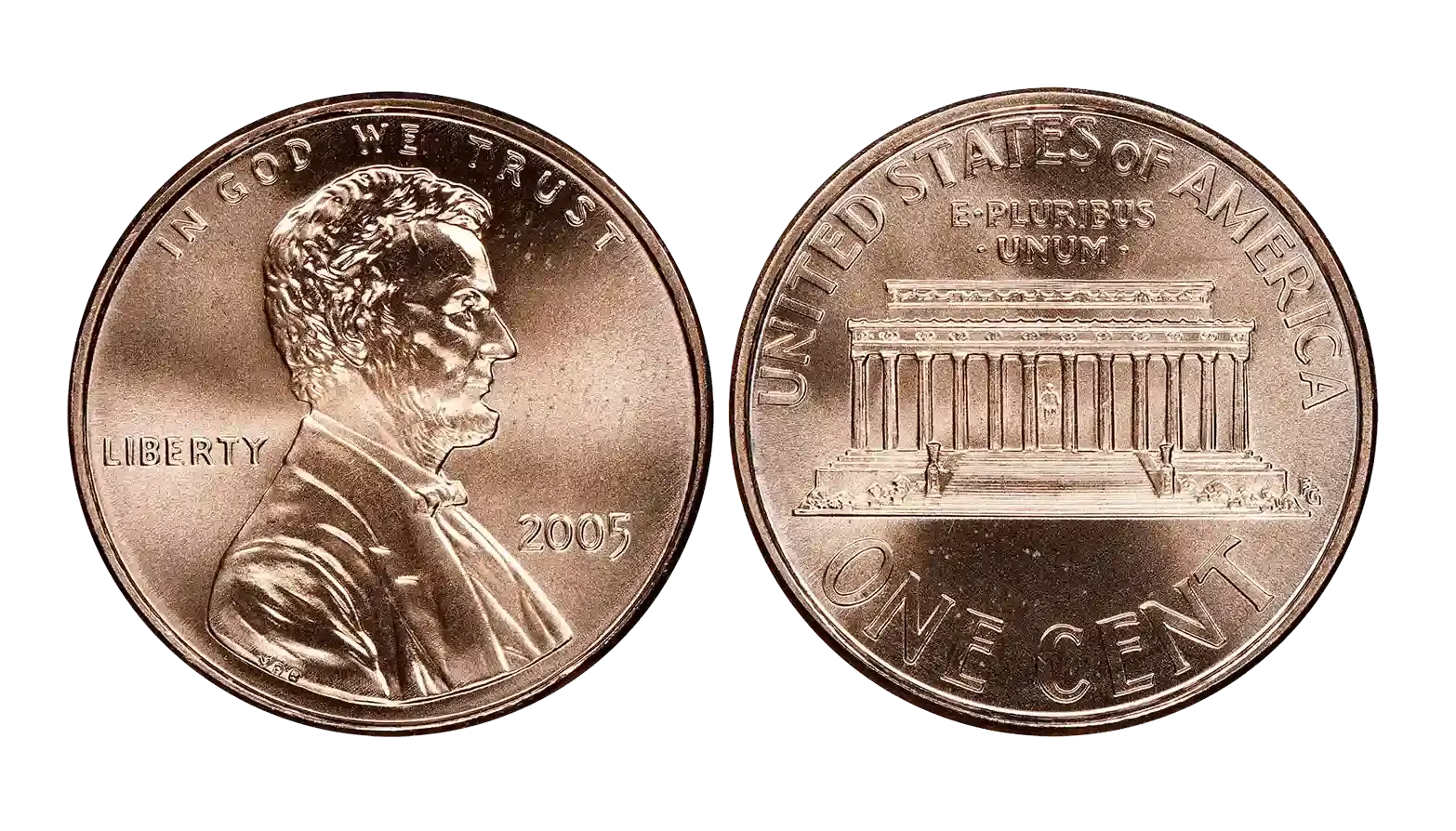
Obverse (front): Features a right-facing bust of Abraham Lincoln. You will find the inscriptions IN GOD WE TRUST across the top, LIBERTY on the left. The date (2005) is on the right. Mint mark (D, S, or none for Philadelphia) lies under the date.
Reverse (back): Features the Lincoln Memorial in Washington, D.C. If you look closely with magnification, you can see a tiny engraving of the statue of Lincoln inside the memorial. There are inscriptions UNITED STATES OF AMERICA across the top, E PLURIBUS UNUM above the Memorial, and ONE CENT along the bottom.
Penny 2005 Overview | |
Country | United States of America |
Years of Minting | 1909–present (first year of the Union Shield reverse) |
Type: | Circulating |
Shape: | Round |
Composition and metal content | Core: 97.5% zinc Plating: 2.5% copper |
Diameter | 19.05 mm |
Weight | 2.5 gram |
Fun fact: The Lincoln Memorial is the only major US penny design featuring the same person two times on different sides. The UK, by the way, had a different record. Their £5 Coin featured 3 people on the Charles and Diana £5 design, featuring the wedding duo and the Queen.
Mint Mark Varieties
In 2005, pennies were struck at three mints:
Philadelphia Mint (no mint mark): ~3.9 billion bits.
Denver Mint (D mint mark): ~3.8 billion bits.
San Francisco Mint (S mint mark, proof coins only): ~3.3 million bits.
The vast majority in circulation are from Philadelphia or Denver. San Francisco pennies are mostly proof (shiny, cameo). Let’s have a look at each variety and see how they differ.
2005 Penny No Mint Mark Value
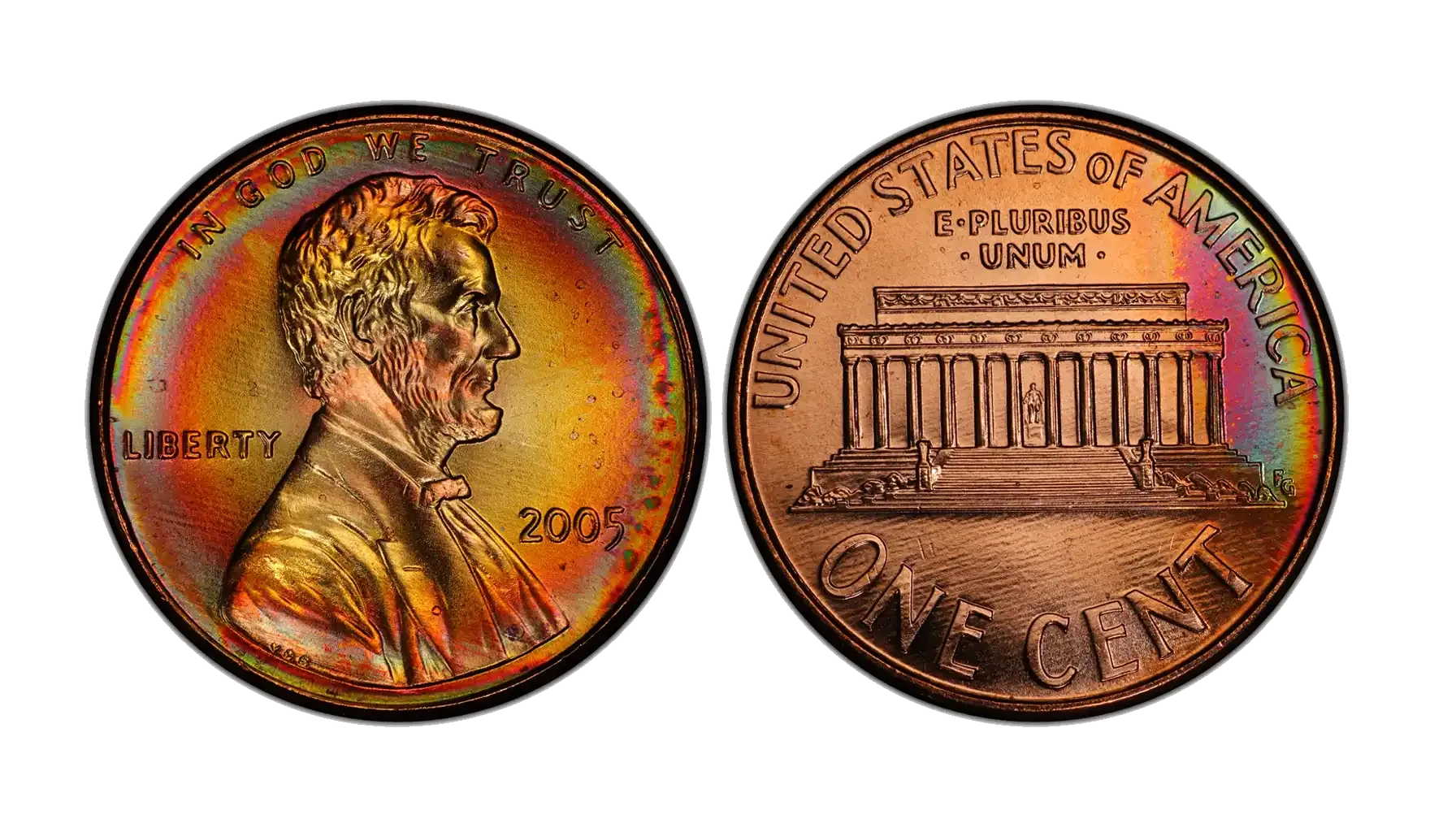
How to identify: Go to the obverse side. On the right, under the date, there will be a blank space.
Approx. Value: Circulated bits go for face value (0.01$). In mint state $7+.
Philadelphia made the most coins in 2025. While most other Philadelphia-originated denominations have a “P” on their design, like quarters and dimes, pennies still live by the old traditions, when Philadelphia coins were not marked in any way.
2005 D Penny Value
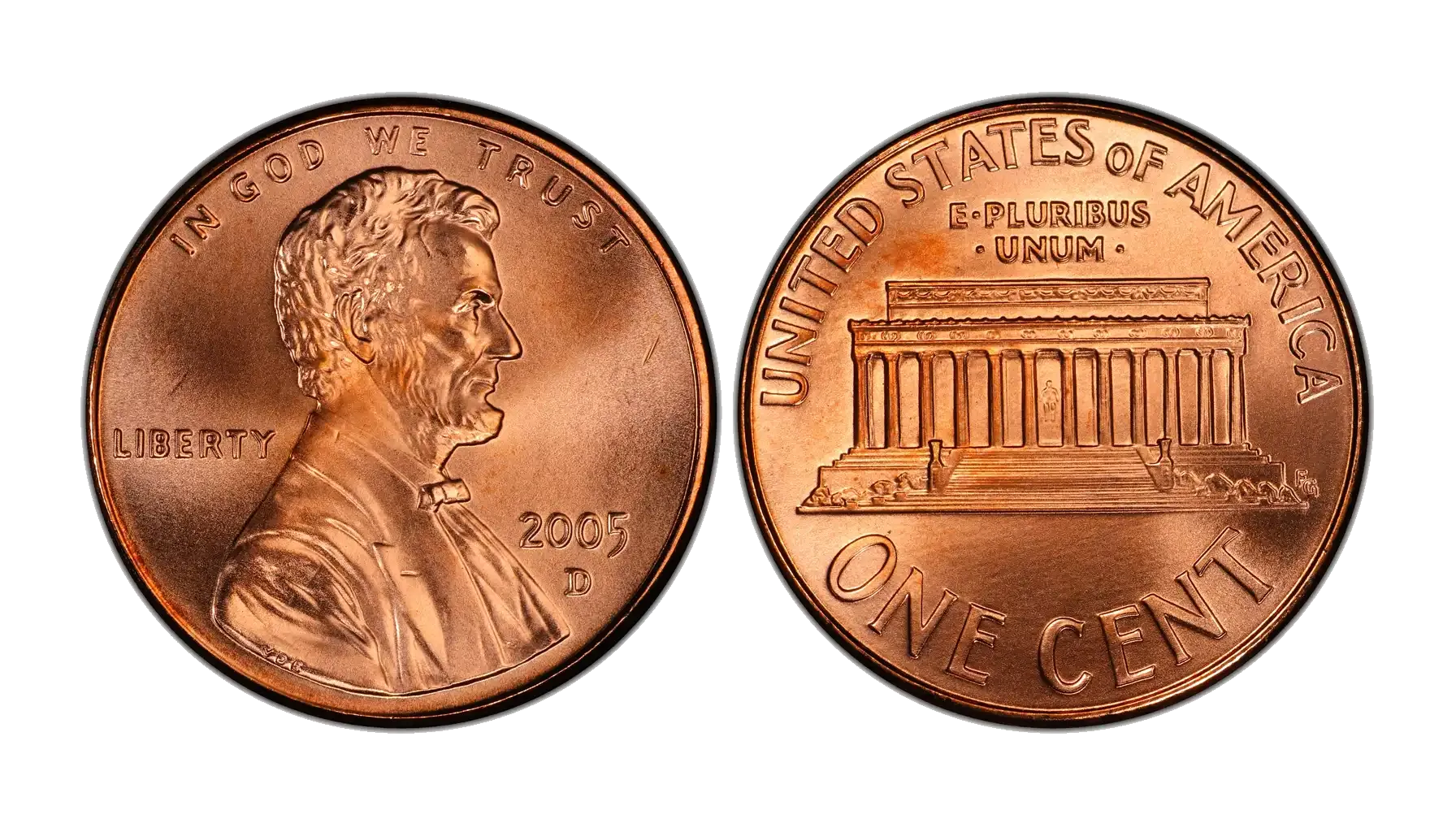
How to identify: Go to the obverse side. On the right, under the date, there will be a letter D.
Approx. Value: Circulated bits go for face value (0.01$). In mint state $7+.
Denver made fewer coins than Philadelphia, but the difference is so small that the prices are the same.
2005 S Penny Value
How to identify: Go to the obverse side. On the right, under the date, there will be a letter S.
Approx. Value: ~$1.50+ (only as proof).
Proof coins come from San Francisco. They never circulated and instead were safely kept as gifts you could buy.
2005 Penny Error List
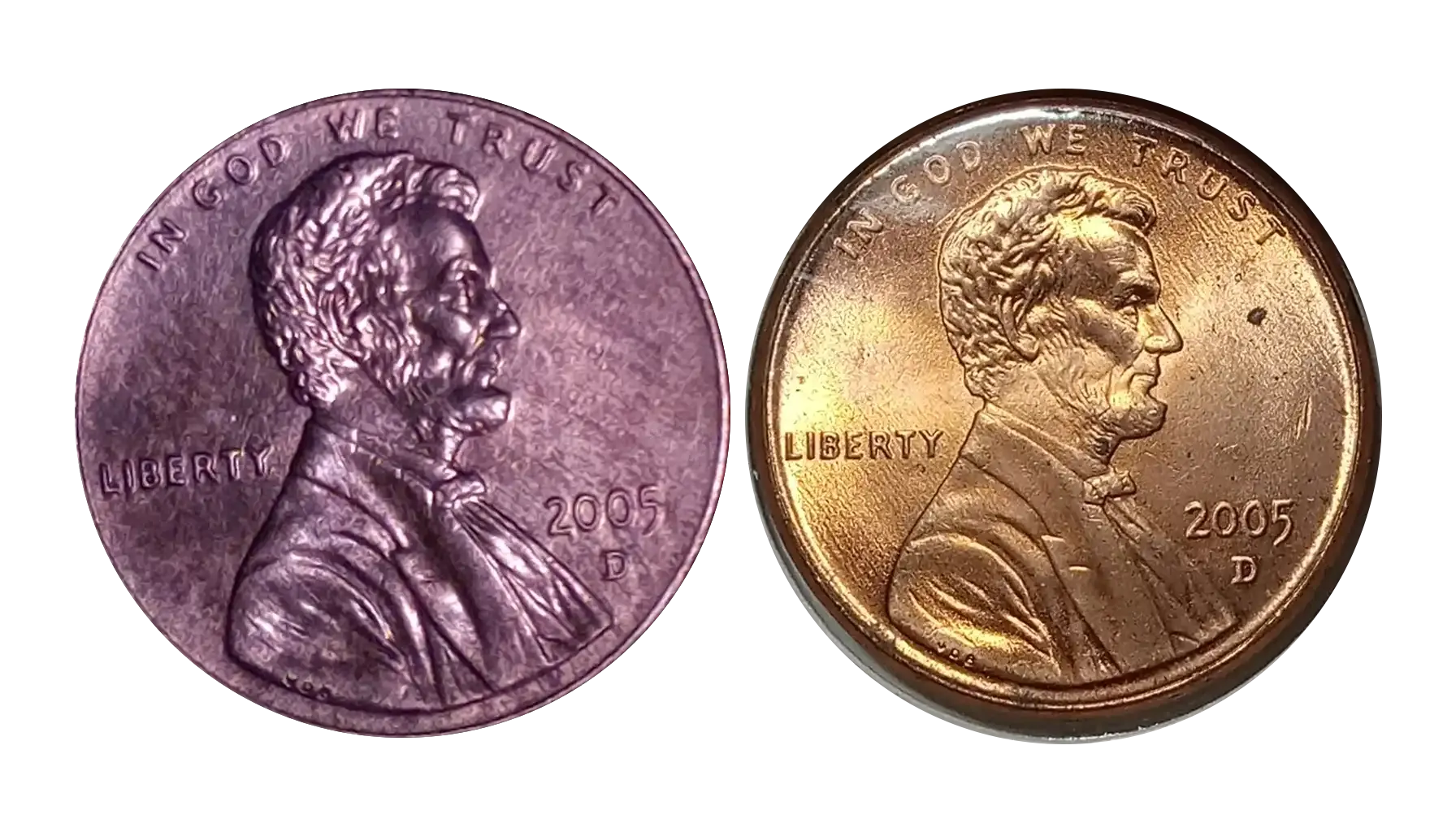
A few mistakes greatly boost the value of a coin, and here are the most notable ones:
1. Off-Center Strikes
The coin was not perfectly aligned with the die when struck, so part of the design is missing.
Minor off-center pennies may sell for a few dollars; extreme examples can fetch $20 or more.
2. Die Cracks and Cuds
Cracks are raised lines that appear on the coin where the die has cracked.
Cuds are chunks of metal that appear as a blob along the edge, caused by a piece of the die breaking off.
Both are usually worth $1–$20, depending on size and location. Dramatic cues can be more valuable.
3. Doubled Die
A misalignment of the die causes letters or numbers to appear doubled.
May appear on most pennies, but no major, widely recognized doubled die varieties were discovered for 2005 pennies. Minor doubling may occur, but it’s usually subtle and not worth much.
Yet, if the true double die penny is found, the value may reach even a thousand dollars.
4. Clipped Planchets
Part of the coin is missing due to a miscut planchet. The clipped part may be a straight clip or a curved one.
Small clips may be worth a few dollars, but unusual shapes can fetch $50+.
5. Broadstrikes / Off-Strike Varieties
The coin was struck without the normal retaining collar, causing it to be slightly larger and the design to spread.
Minor broadstrikes are worth $2–$10, but the flattest pieces are worth more.
2005 Penny Value
Like many other post-90’s coins, the 2005 penny is not worth much. It barely goes over the face value of $0.01.
Grade | Philadelphia (No Mint Mark) | Denver (D) | San Francisco (S) |
Circulated | $0.01 (face value) | $0.01 (face value) | – |
Uncirculated (MS60–MS63) | $0.10–$0.30 | $0.10–$0.30 | – |
High Grade (MS64–MS66) | $1.00–$3.00 | $1.00–$3.00 | – |
Top Grade (MS67–MS68) | $10–$50+ | $10–$50+ | – |
Proof (S) | – | – | $1.50–$6.00 |
Both the Denver and Philadelphia pieces have similar low values. The only difference comes in high grades. Only a few circulated coins survive in mint state, and are even rarer than proof coins, and therefore worth more.
With time, perhaps, this piece will rise in value, just as it often happens with coins.
While you are waiting, we’d like to recommend one of the best free coin identifier apps you need to try.
Coin ID Scanner
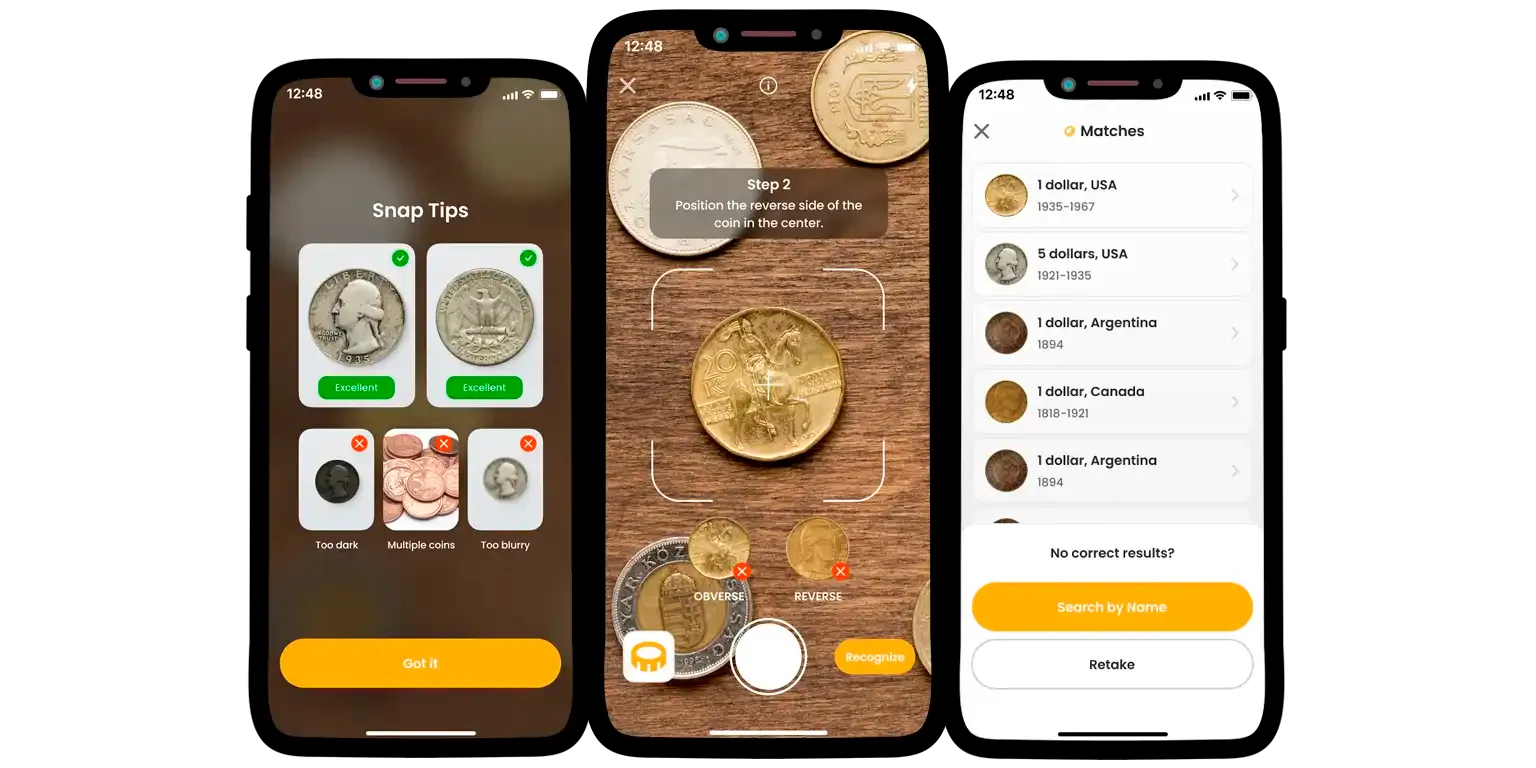
Coin ID Scanner is a lifesaver for collectors. This app is designed to help users identify coins, assess their value, and manage their collections.
Let’s have a quick go over the main functions:
AI-Powered Coin Identification: Capture or upload a photo of a coin, and the app uses advanced image recognition to identify it within seconds.
Extensive Coin Database: Access information on over 150,000 coins from various countries and eras, including details about their origin, denomination, minting year, and composition.
Value Appraisal: Receive estimated market values for your coins based on their condition and rarity.
Collection Management: Organize your coin collection by saving images and details in the "My Collection" section of the app.
Numismatic News: Stay informed with daily updates on coin collecting, mint marks, and rare coins.
Coin ID Scanner is free, available for Android and iOS.
FAQ
What Is the 2005 D Penny Error List?
Denver-made pieces have similar errors to the Philadelphia coins: Off-center strikes (part of the design missing), Broadstrikes (coin spread out without a collar), clipped planchets (missing portion of the bit), die cracks/cuds (raised lines or blobs from broken dies), and Double die errors (doubling on dates and letters).
Are 2004 Pennies a Good Investment?
2004 was struck in the billions, and too common to be deemed worthy. Most are worth 1 cent in circulation, though uncirculated or proof pieces can bring $1–$5. Only major error coins or top-graded MS67+ bits have notable premium value.
Where Can I Get 2005 Pennies Today?
202 cents are still commonly found in pocket change. You can also request rolls of pennies from banks and search through them. Coin dealers & shops also would gladly sell uncirculated rolls, proof sets, or certified 2005 pennies.

 Facebook
  X (Twitter)
  Pinterest
  LinkedIn