Contents:
The Jefferson item has been present in the numismatic community for 45 years and has featured in the rarest collections. Since 1938, United States coinage has maintained a stable design and unaltered composition.
What is the best price checker app?
1983 Jefferson Nickel Overview
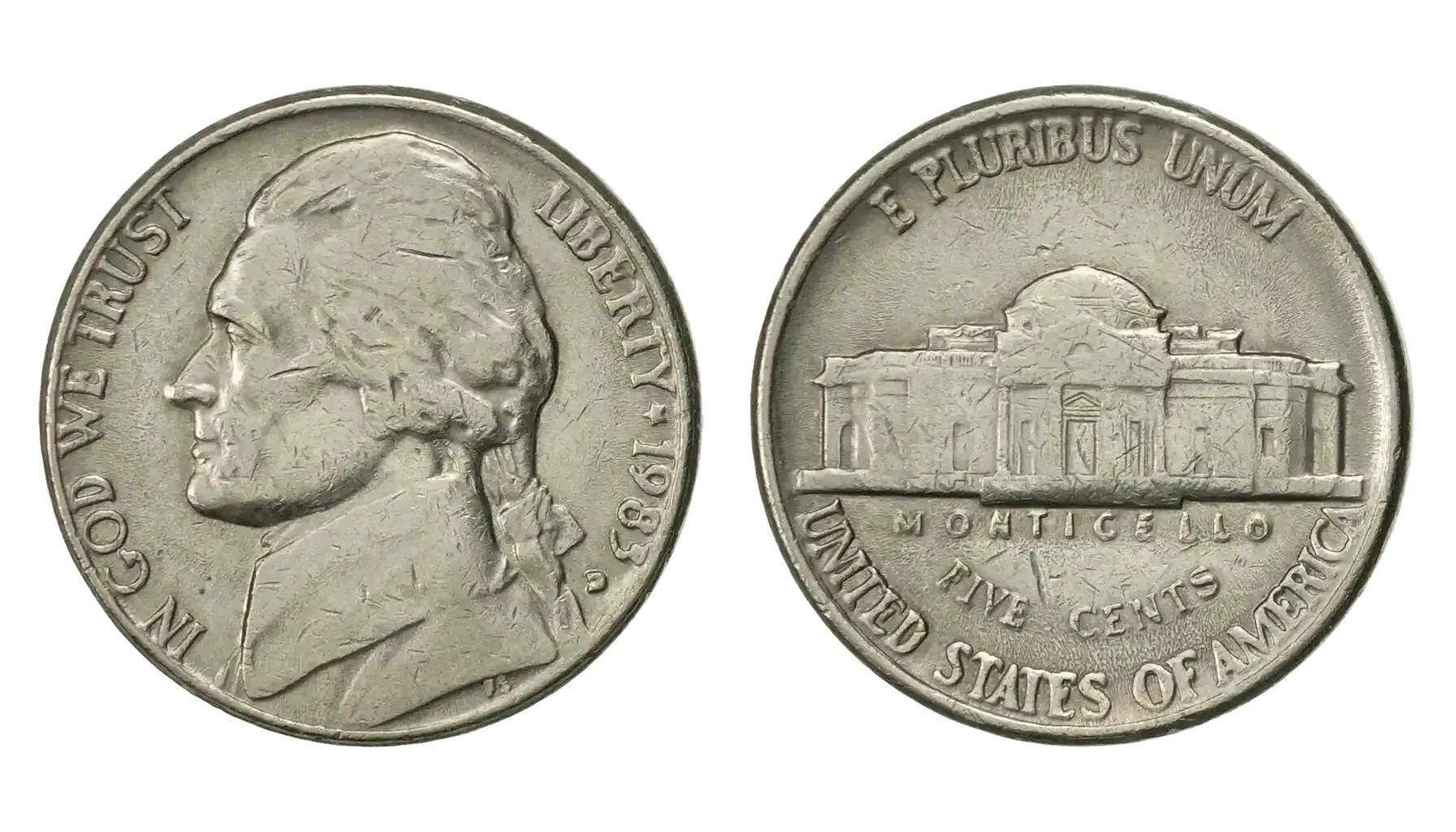
The Jefferson series maintained its appearance without visual modifications this year. The front side of the item displayed the portrait of Thomas Jefferson that had been used for many years.
The back side of the item showed Monticello, and the lettering and spacing remained the same as in previous years.
Both major minting facilities participated in the production process, and this led to very high total numbers of items produced. The 1983 nickel values that show signs of wear generally have a low market value.
Period | Since 1938 |
Composition | Copper / Nickel |
Edge | Plain |
Diameter | 21.2 mm |
Weight | 5 g |
Designer | Felix Schlag |
Identifying the 1983 Jefferson Nickel
Research confirms that the identification of this coin type depends on two principal design characteristics. The date is located adjacent to the obverse rim, while a mint mark is present on the reverse.
The portrait of Thomas Jefferson faces in a leftward direction, with important U.S. inscriptions in the space behind the figure. The reverse presents Monticello in a centered position, with inscriptions positioned both above and below the architectural representation.
Coins that preserve full detail in the hairlines of the Jefferson portrait and in the steps of the Monticello depiction receive higher grade assignments. Any variation in the appearance of the lettering or abnormality in the shape of design features may indicate a production error.
Mint Marks and Varieties: P and D
Two standard mint marks distinguish items of this issue. Coins produced in Philadelphia bear a P, while those from the Denver Mint display a D.
Why do specialists often prefer the 1983 nickel P variety? The answer lies in its tendency to exhibit sharper strikes, which allows for greater detail clarity.
Have you observed that Denver‑minted items appear more often in circulated condition? This pattern is well-documented among collectors.
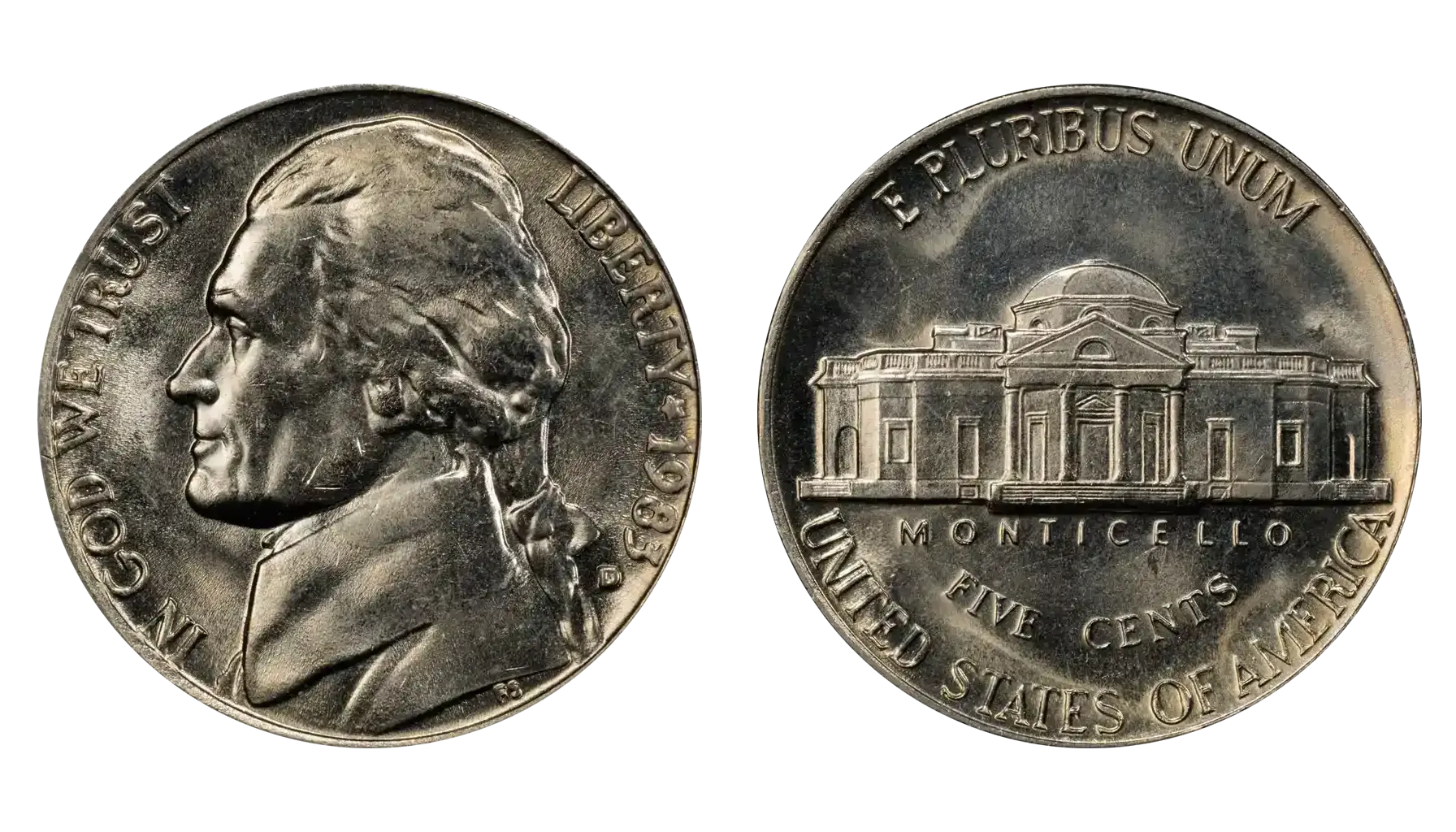
What makes a Denver item more valuable? Premiums rise significantly when the surfaces remain free of marks, and all design elements are fully visible.
Curiously, why do market guides frequently assign a slightly higher 1983 D nickel value in top grades? The explanation rests on the differences in strike consistency between the two mint facilities.
Location | Mint Mark | Mintage |
Denver | D | 536,726,276 |
Philadelphia | P | 561,615,000 |
San Francisco | S | 3,279,126 |
Note: Important to notice that the mintage is almost twice as much as last year's Jefferson coin.
Design Features and Metal Composition of the 1983 Nickel
“The 1983-S Proof Jefferson Nickel usually comes in very nice quality. Examples up to PR69 deep Cameo could be purchased very inexpensively. In perfect PR70 Deep Cameo they are much scarcer but there affordable enough that most serious collectors can buy an example.”
– Jaime Hernandez
PCGS
The mix of two metals in this item is copper and nickel. When people talk about the 1983 copper nickel coin, they mean this regular mixture of metals. There is no silver in this year's item.
1983 Jefferson Nickel Value by Condition and Mint
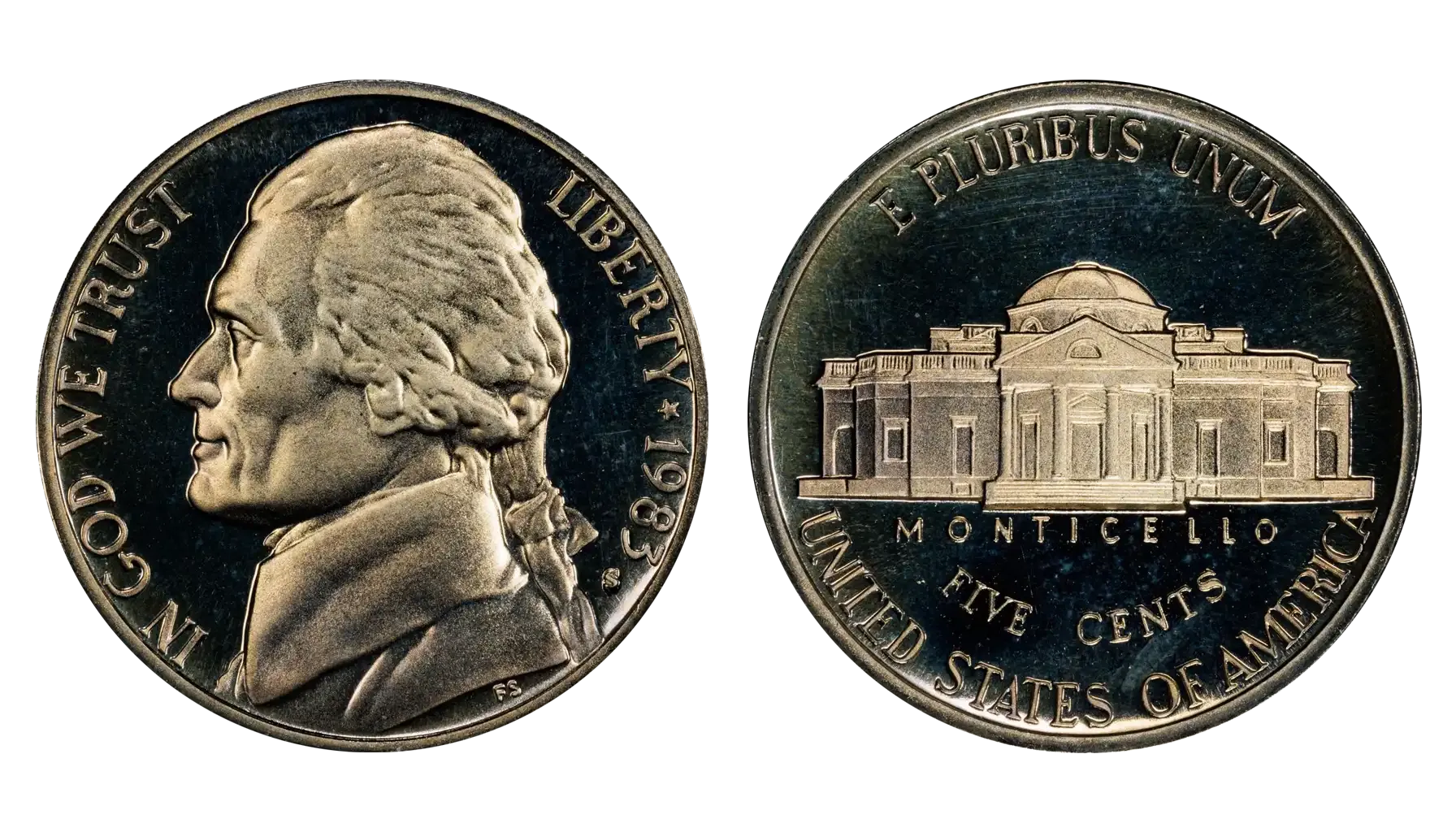
Several factors drive the price range: condition, circulation, and mint marks. The modern price guides often separate the 1983 P nickel value and Denver equivalents for clarity.
Mint | 65 | 65+ | 66 | 66+ | 67 |
P | $12 | $16 | $40 | $90 | $1,000 |
D | $225 | $275 | $1,100 | $1,450 | $7,500 |
Note: Compared to issues launched this year, the 1983 nickel D and P price is higher than John Flanagan quarters and Roosevelt dimes, except for the auction S specimens.
Common Errors and Collector Tips for 1983 Nickels
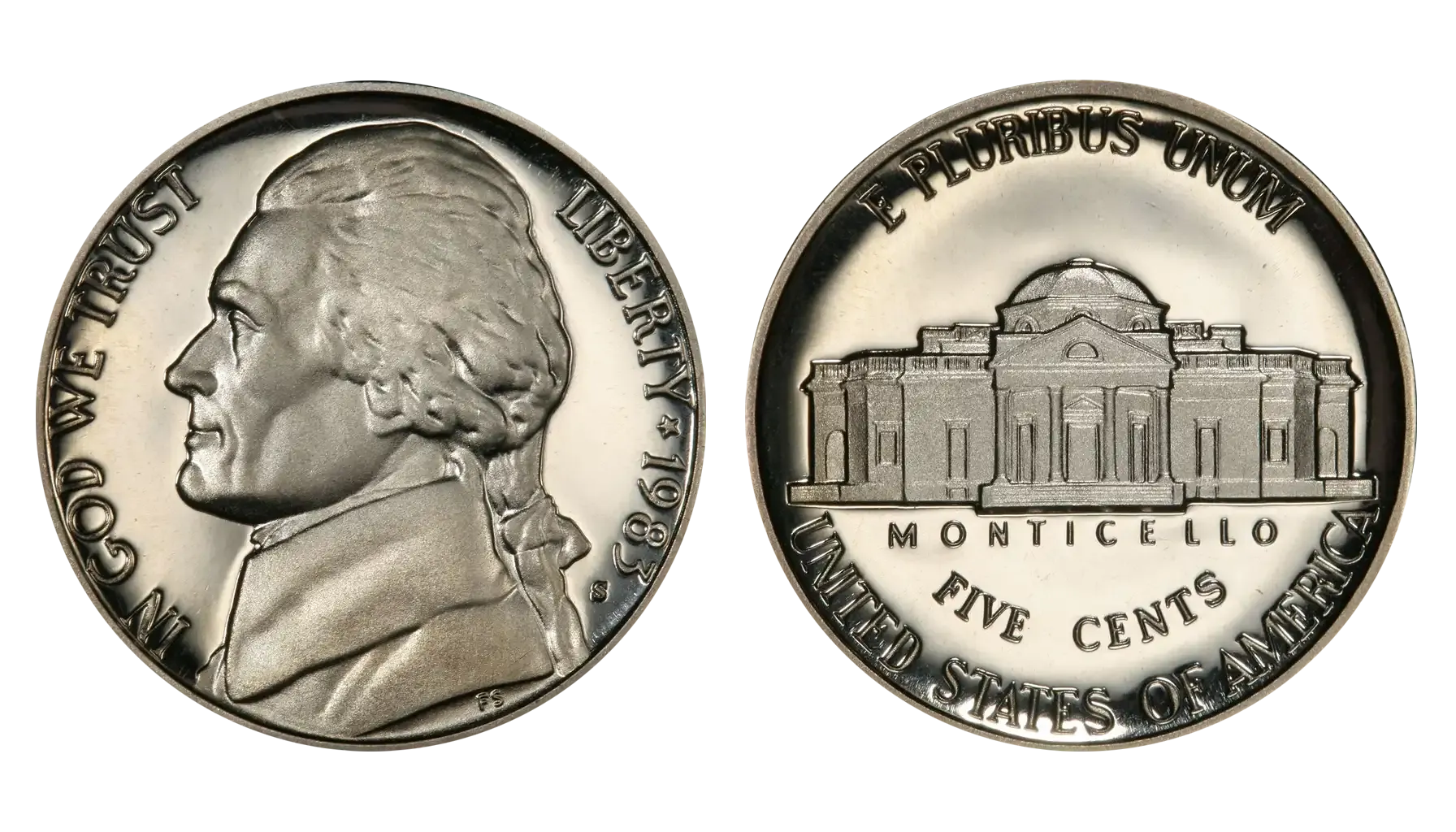
The 1983 nickel errors varieties add depth to this issue. The 1983 nickel error list includes off-center strikes, clipped planchets, die cracks, and weak impressions. Denver examples receive special attention through the 1983 D nickel error list with pictures, which documents known die anomalies.
Error specimens from the Philadelphia Mint remain a subject of significant interest. Numismatists regularly study these items to document variations and assess their rarity within the series. References to the 1983 P nickel error list with pictures help confirm authenticity and market relevance.
Auction Records
P MS-65 – $2,760 (2003)
D MS-66 – $2,185 (2004)
S PR-70 – $1,840 (2007)

 Facebook
  X (Twitter)
  Pinterest
  LinkedIn