Contents:
Sometimes, coins are underappreciated as soon as they are released – these could be weak strikes, low demand, or a design that pales in comparison to earlier issues. The half dollar 1940 has always been seen as the black sheep of the family: overlooked by collectors and often dismissed as ordinary.
Yet, beneath this instant reputation of the least attractive representative of the series, one can notice peculiar and even appealing details that may potentially identify this coin as unique. So, what do these numismatic creations look like? How much is a 1940 half dollar worth? And where to seek guidance when the answers grow blurred?
A Brief Overview of the Half Dollar Series
The 50-cent coin has a rich history, which started with the release of the 1794 Flowing Hair half dollar, one of the first national coins in the United States. Throughout its long-lasting journey, this unit of currency evolved through a series of iconic designs, each being a true reflection of its time and the cultural values shared then. Distinctive features, peculiar, unique details, and stories trapped in metal – these are the main programs that may be explored in person to this day.
Design | Years | Key Identifiers |
Flowing Hair | 1794-1795 | Liberty with long, flowing hair; early American style |
Draped Bust | 1796-1807 | Liberty with a draped neckline, an elegant classical design |
Capped Bust | 1807-1839 | Liberty wearing a cap, bold lettering, smaller stars |
Seated Liberty | 1839-1891 | Liberty seated on a rock with a shield and staff |
Barber | 1892-1915 | Simple, classic Liberty head with a laurel wreath |
Walking Liberty | 1916-1947 | Liberty striding toward sunrise, draped in the flag |
Franklin | 1948-1963 | Benjamin Franklin profile, Liberty Bell reverse |
Kennedy | 1964-present | President Kennedy portrait, heraldic eagle reverse |
Background on the Walking Liberty 50C Coins
Today's hero of the article is a unique creation of the golden era of American coinage, i.e., the Walking Liberty 50C by Adolph A. Weinman, a renowned sculptor and engraver, with the first instance within the series being released in 1916. As such, it was the Mint's initiative to replace the Barber half dollar, renew the design, and make coinage more artistically loaded than before.
For collectors, it is a notable program, for it managed to span the World War I and II eras without interruptions and global design changes. Over its three-decade run, the Walking Liberty half dollar has become a legendary numismatic creation of magnificence, national spirit, and beauty in the moments of metal.
Related article: 1917 Walking Liberty Half Dollar Value, Varieties and Price Guide
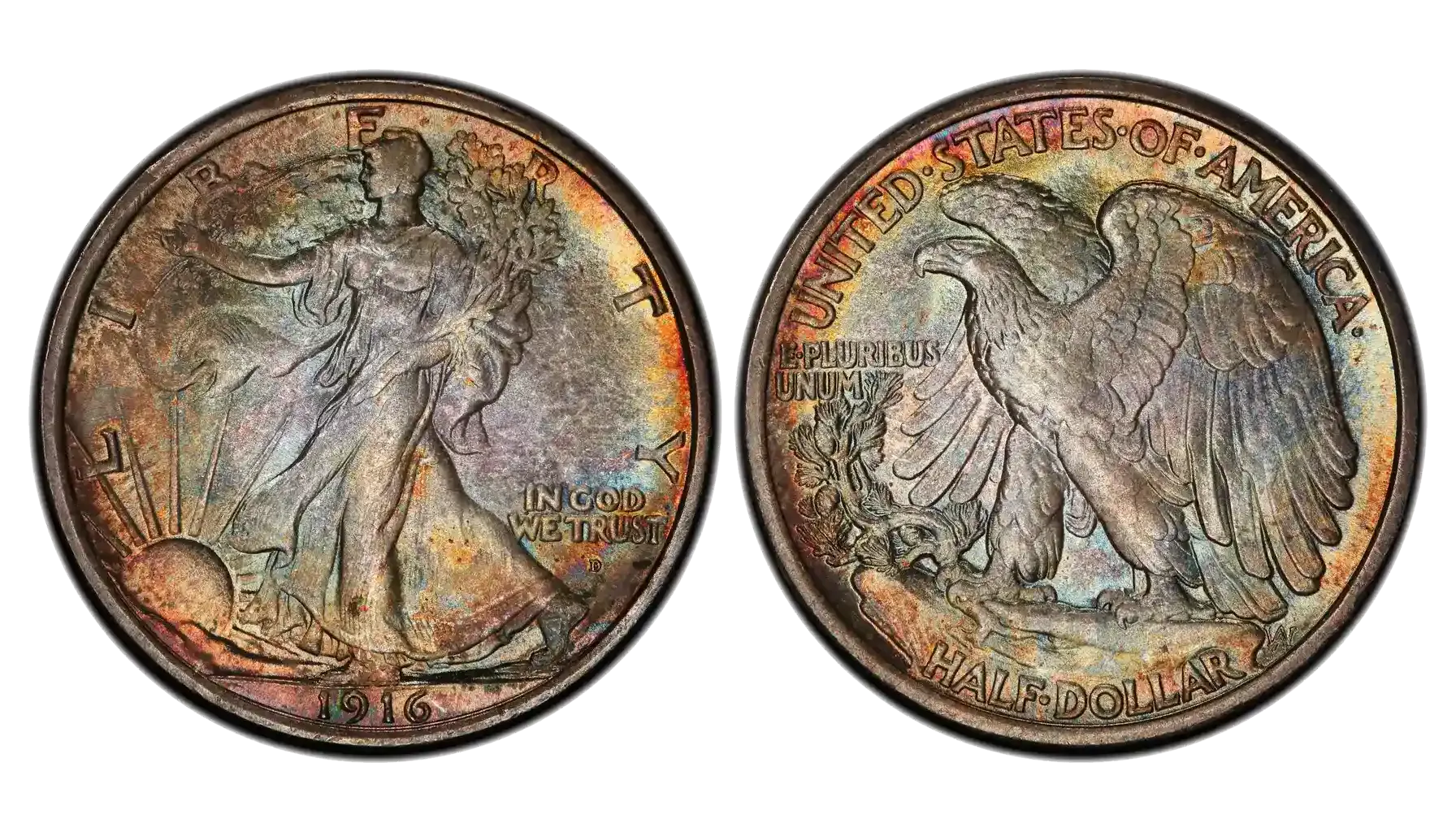
Design Features of the 1940 Liberty Half Dollar
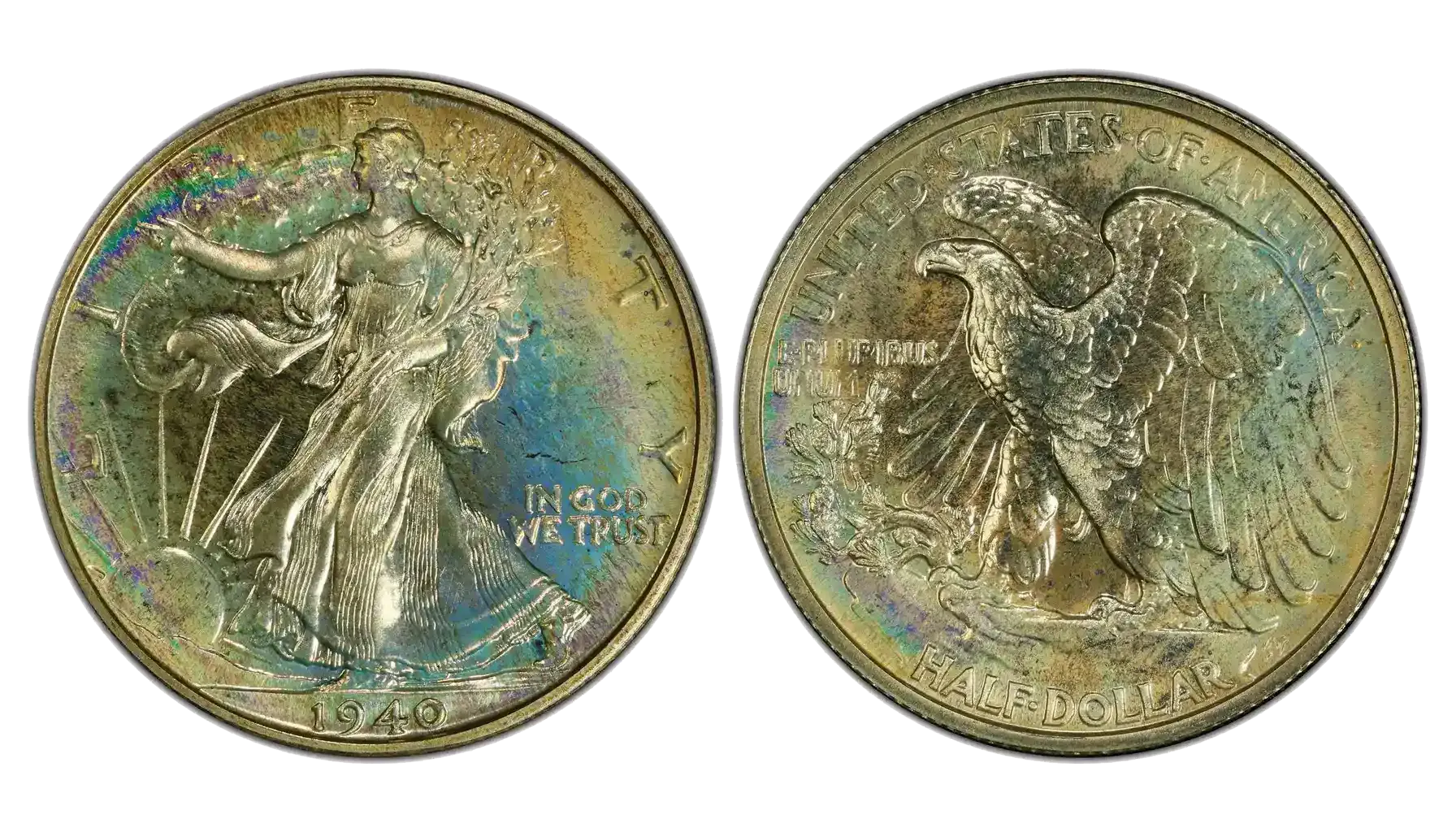
Obverse: The obverse, i.e., the front side, features Liberty going toward the rising sun, draped in the American flag, with her right hand pointing forward and her left hand holding branches of laurel and oak. As for the lettering, the inscriptions include “LIBERTY” along the upper rim, the national motto “IN GOD WE TRUST” to the right, and the date, “1940” located at the lower edge.
Reverse: The reverse, i.e., the back, demonstrates a majestic bald eagle sitting on a branch, along with the inscriptions “UNITED STATES OF AMERICA” close to the top edge, “HALF DOLLAR” along the bottom rim, the phrase “E PLURIBUS UNUM” right below the beak of the eagle, and a mint mark beneath (the Philadelphia issues generally lack a mint mark, which means that only the San Francisco-produced pieces may bear one).
The Main Characteristics | |
Composition | 90% silver, 10% copper |
Silver Content | 0.36169 troy oz (about 11.25 g of pure silver) |
Minting Period | 1916-1947 (1940 issue) |
Weight | 12.50 grams |
Diameter | 30.6 mm |
Thickness | 2.15 mm |
Edge | Reeded |
Designer | Adolph A. Weinman |
How Much Silver Does It Contain?
Irrespective of the strike type, any 1940 50C may boast a precious composition of 90% silver and 10% copper, which gives it an actual silver weight of 0.36169 troy ounce. So as to get the melt value (i.e., the price based solely on the current silver rates), one should simply multiply the silver weight by the current market price of silver:
0.36169 × $38.89 =$14,07
That means that the silver inside one 1940 half dollar is worth around $13 to $14, as of August 2025. If silver rises, so does the melt value. This is why precious-metal coins, which boast a high 1940 walking liberty half dollar silver content, are always desirable, apart from the emotions and cultural worth they convey.
See also: Silver Price Predictions 2030: How High Could It Go?
1940 Silver Half Dollar Strike Types by Mint
1940 50C (Regular Strike)
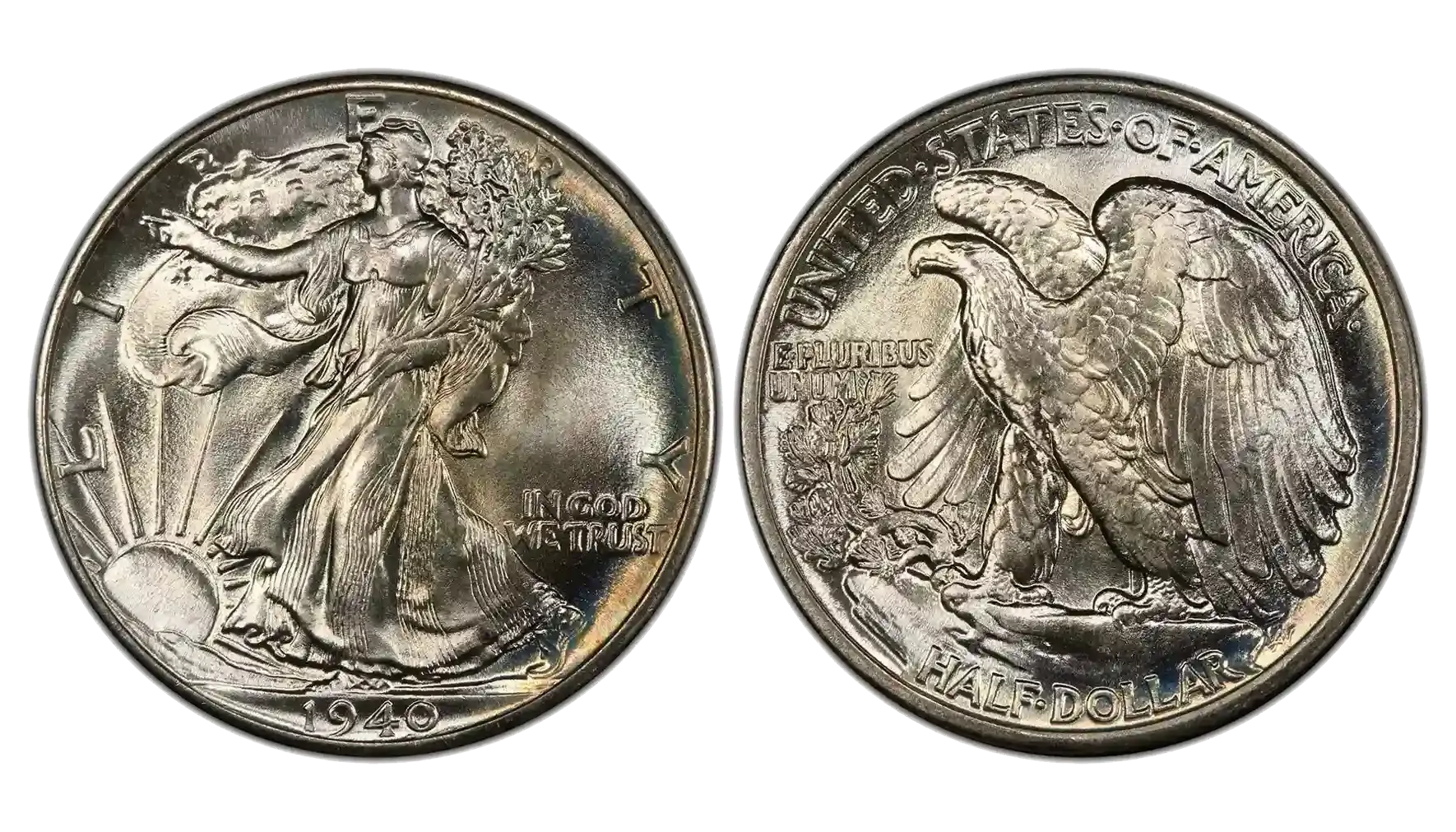
Produced by: Philadelphia Mint
Mintage: 9,156,000
Auction Record: $29,375 for MS68+
Among the Philadelphia Mint half dollar issues of the 1940s, the 1940 variety is technically the rarest, although it is still easy to find in high grades. Notwithstanding the fact that these are truly old numismatic creations, the 1940 samples can be obtained with the well-preserved sharpness, bright white luster, or soft golden iridescence.
1940-S 50C (Regular Strike)
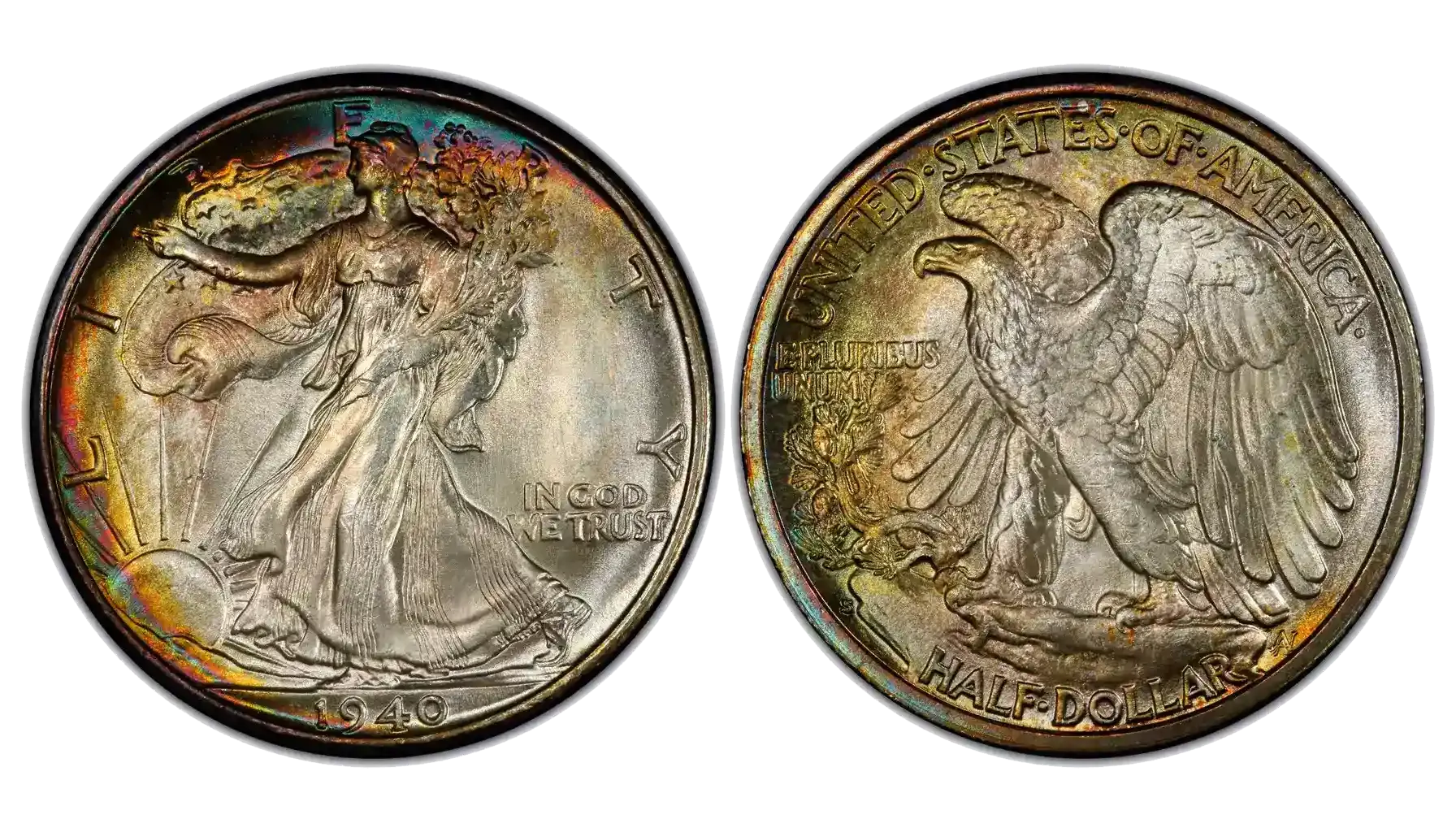
Produced by: San Francisco Mint
Mintage: 4,550,000
Auction Record: $35,250 for MS67
Since only two major minting facilities were responsible for the production of this unit of currency that year, the next issue to mention should be the 1940 S variety. According to David Hall, it has long been recognized for its poor striking quality (probably the worst one in the line). On most pieces, Liberty’s left hand is faint or completely missing in detail, which is why well-struck coins remain quite scarce.
1940 50C (Proof)
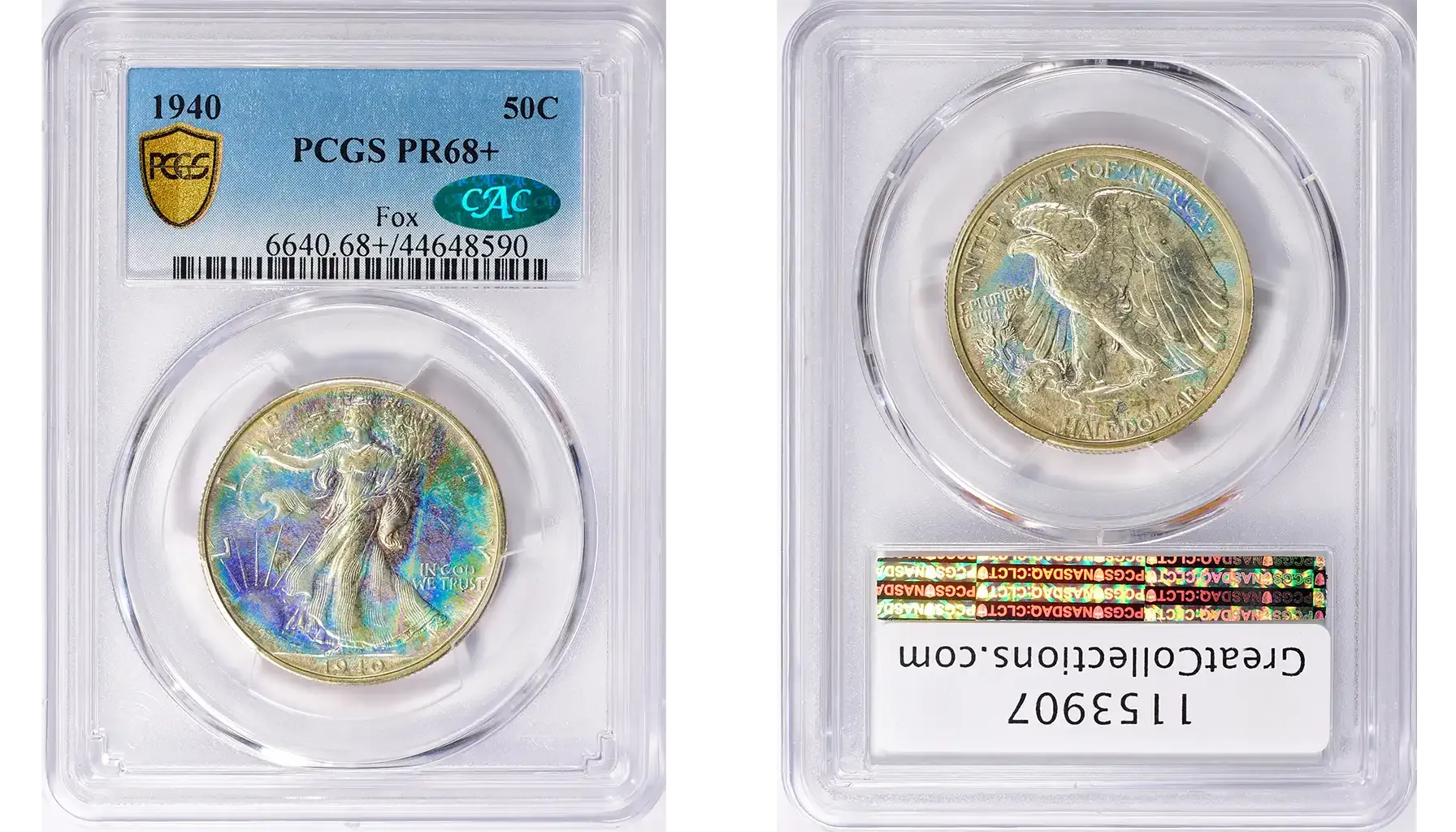
Produced by: Philadelphia Mint
Mintage: 11,279
Auction Record: $24,675 for PR68+
Just like the majority of coins, this may boast a proof edition, which is far scarcer than those of the following two years. While many display deep mirrored surfaces and strong eye appeal, no true Cameo or Deep Cameo proofs are known for this date.
A Quick Look at The 1940 Half Dollar Errors
Doubled Die Variety (Obverse or Reverse)
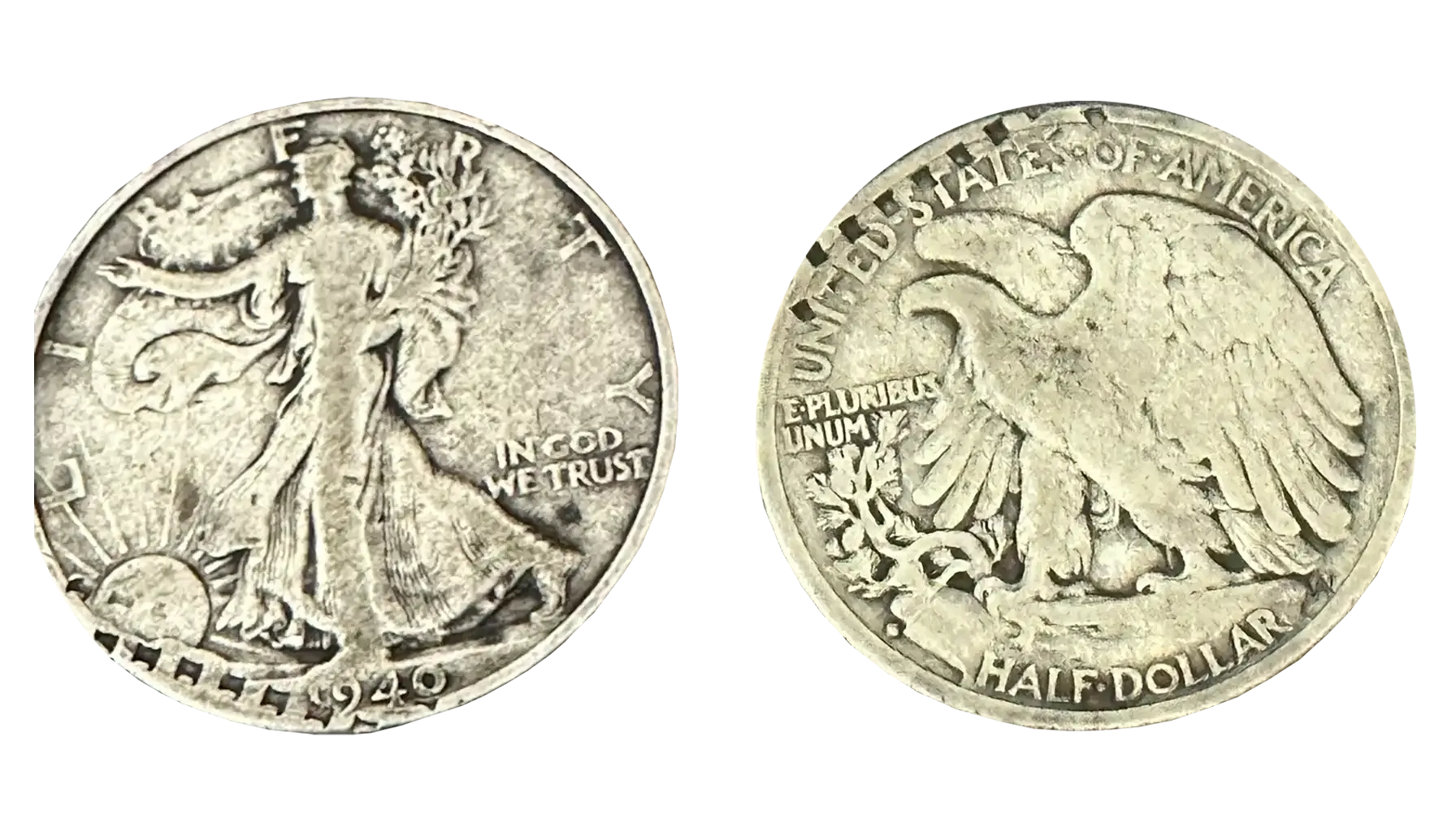
Estimated Value: $550
Doubling is probably the most widespread and beloved error on the market, due to its origins and peculiar details manifested. As such, some 1940 samples do show doubled lettering or design details caused by misalignment during the die creation process. These are easily recognizable and rarely require additional inspection.
Die Crack Error
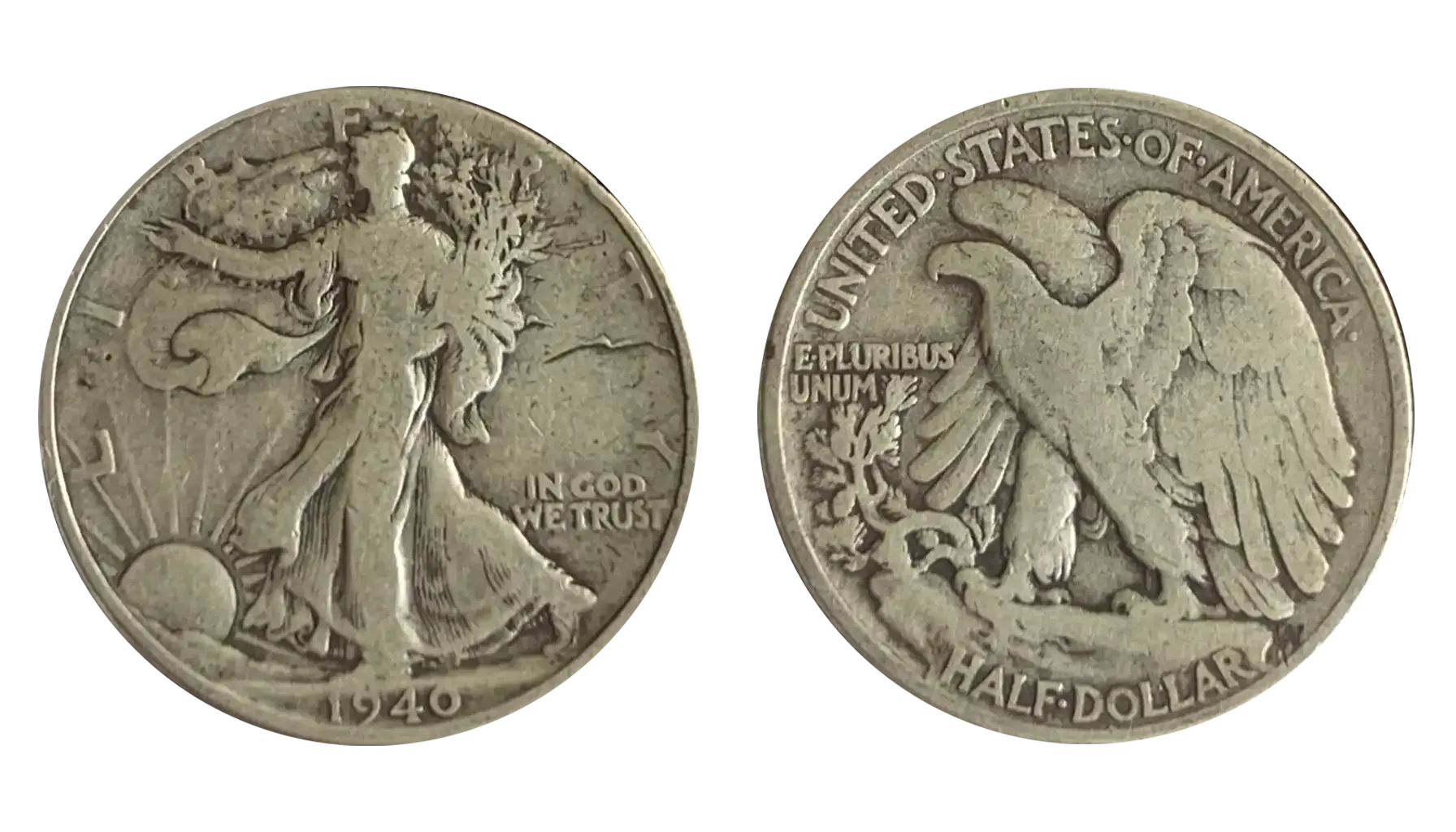
Estimated Value: $50
Die cracks as a numismatic phenomenon are not quite rare: they may appear as raised lines on the surface, formed when aging dies develop fractures. Although they may be too small to be seen with the naked eye, larger or more visible cracks are decently appreciated and can be considered a fine numismatic investment with the potential to grow.
Lamination Flaw
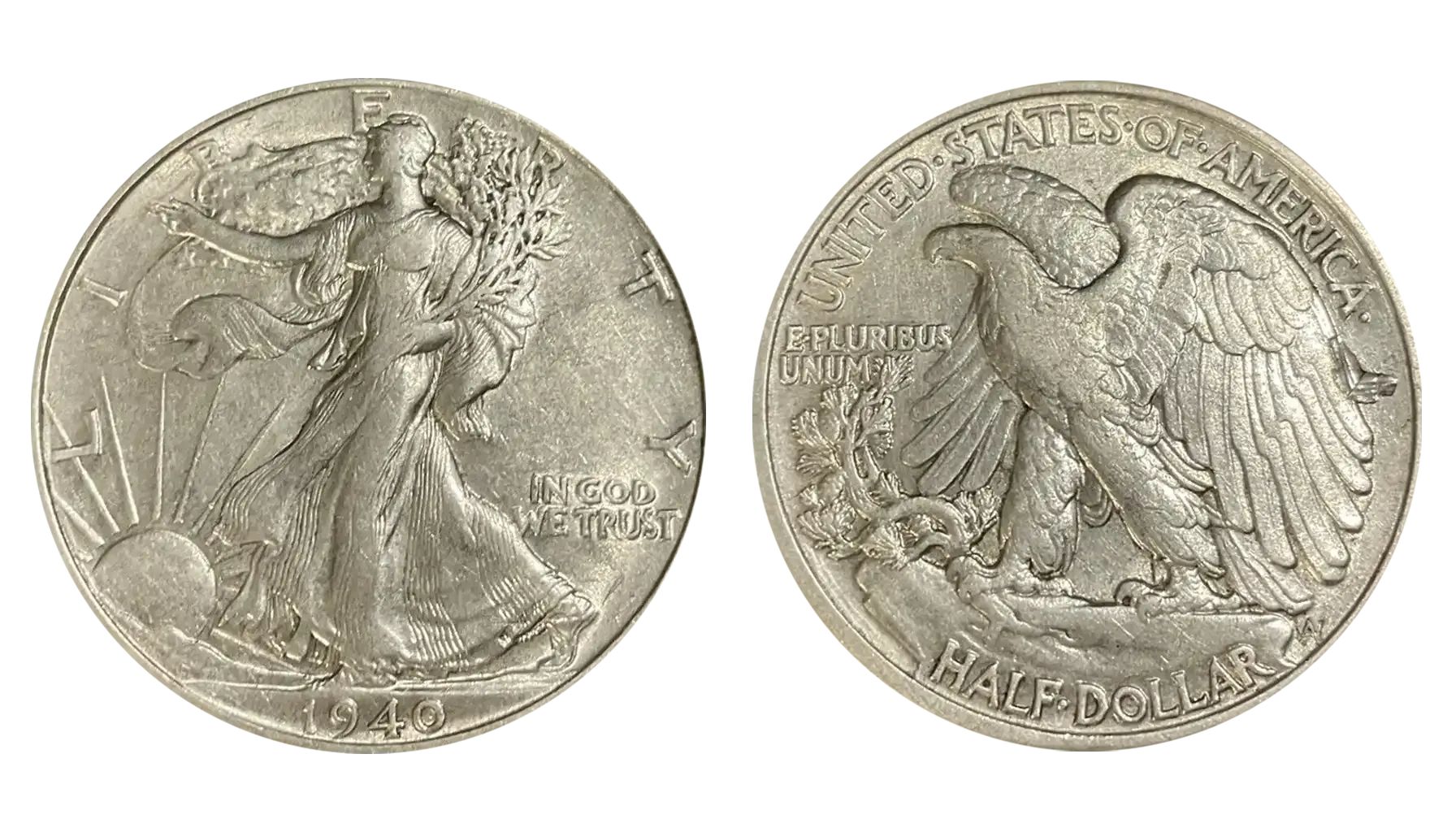
Estimated Value: $45
Apart from the mainstreamed errors like off-center strikes and DDO/Rs, one should never neglect lamination errors, however plain and simple they may seem. They generally occur when impurities or defects in the metal cause parts of the coin’s surface to peel, split, or flake. Nevertheless, it is vital to understand the differences between the minting errors proper and wear, for the latter cannot boost the 1940 Walking Liberty half dollar value but decrease it in turn.
1940 Half Dollar Value Today
These days, the 1940 silver half dollar value is a subject of speculation, for, depending on the specific case and economic circumstances, it may be defined by grade (wear and surface preservation), strike quality (especially for the San Francisco issue), luster/toning, and overall scarcity at higher grades.
According to reputable coin grading services like NGC or PCGS, 1940(P) is broadly available through gem, 1940-S is notably tougher, well-struck in mint state, and 1940 Proofs are collected as type with strong demand in PR65-PR67.
Note: Values are typical retail ranges as of August 2025 and may vary with silver prices, certification, and eye appeal. Use them as a guide, not an offer.
Grade (Sheldon) | 1940 50C | 1940-S 50C | 1940 50C |
Good (G-4) | $15–$20 | $15–$22 | – |
Fine (F-12) | $18–$28 | $22–$35 | – |
Very Fine (VF-20) | $25–$40 | $35–$55 | – |
Extremely Fine (XF-40) | $40–$65 | $80–$120 | – |
About Uncirculated (AU-50) | $60–$110 | $150–$240 | – |
Mint State (MS-60) | $80–$140 | $230–$350 | – |
Mint State (MS-63) | $140–$230 | $450–$750 | – |
Mint State (MS-65) | $350–$700 | $1,400–$2,800 | – |
Mint State (MS-67) | $2,500–$6,500 | $9,000–$18,000 | – |
Proof (PR-60) | – | – | $250–$350 |
Proof (PR-63) | – | – | $350–$500 |
Proof (PR-65) | – | – | $600–$900 |
Proof (PR-66) | – | – | $900–$1,400 |
Proof (PR-67) | – | – | $2,500–$4,000 |
If you find it difficult to identify your coin or simply understand its background, it may be helpful to use supporting tools like Coin ID Scanner, which is free to use and available worldwide. Make your numismatic journey more insightful with a database of more than 187,000 pieces for instant references and collection management under one digital roof.

 Facebook
  X (Twitter)
  Pinterest
  LinkedIn