Contents:
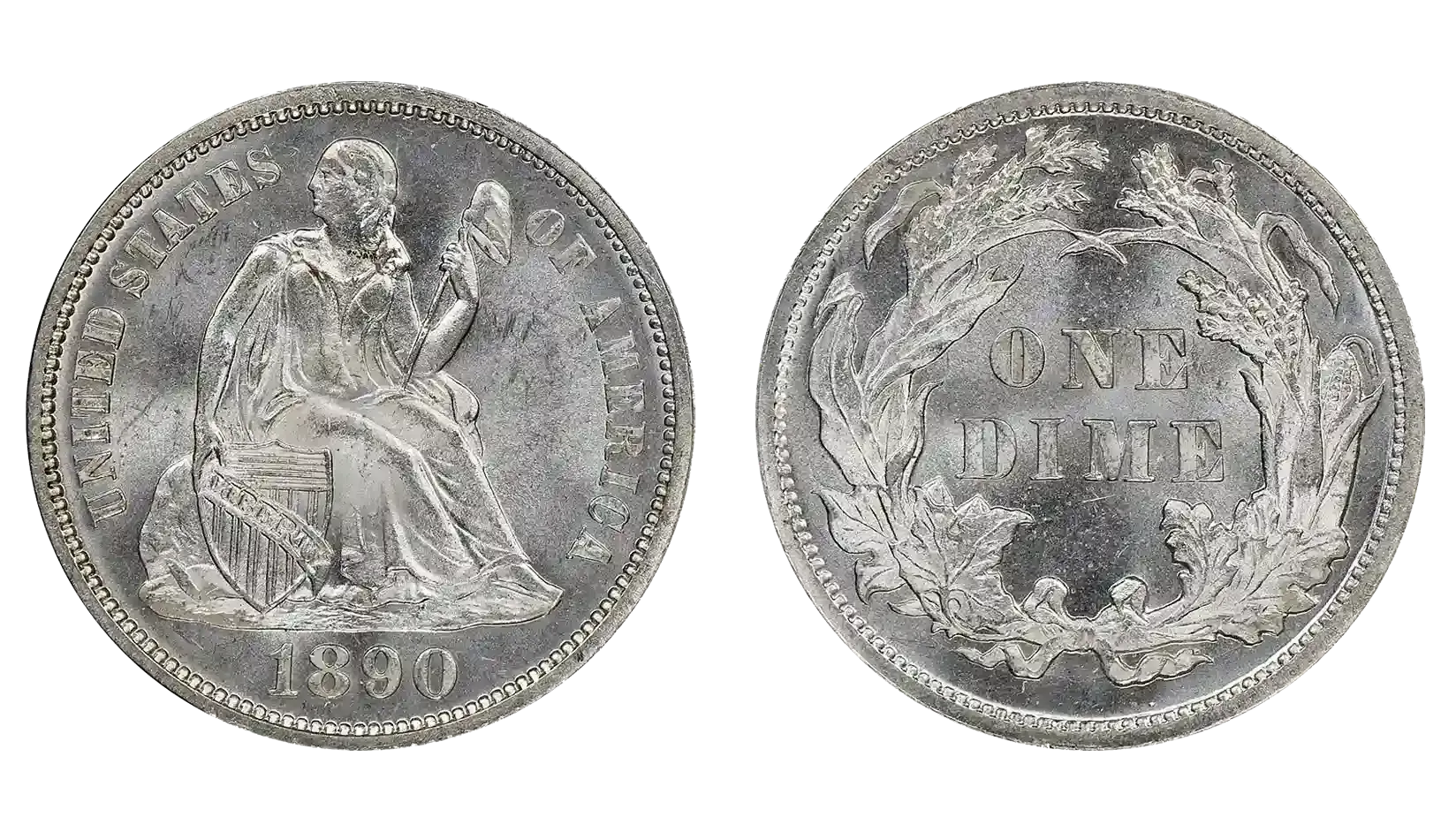
Collecting coins from the 19th century remains one of the most interesting areas of numismatics. The 1890 dime belongs to the Seated Liberty series and stands out in particular. This issue was part of the final decade of mintage for a design that accompanied Americans for more than half a century.
To appreciate its full potential, collectors need to examine the nuances of different mints, consider the coin’s grade, and identify the rare variations that distinguish specific specimens. Knowing how to identify coins correctly helps collectors better understand these details.
History of the 1890 Seated Liberty Dime
The Seated Liberty series was introduced in 1837 and remained in use until 1891. The design was created by engraver Christian Gobrecht. His concept was to depict an allegorical image of Liberty seated on a rock with a shield and staff. This classic style symbolized the country's confidence in its own values and its desire to grow.
The 1890 issue was replaced by the Barber dime in 1892. Therefore, the demand for the 1890 Seated Liberty dime is especially strong among those who collect complete series.
Physical Characteristics of the Coin
Type | Seated Liberty Dime |
Year | 1890 |
Composition | 90% silver, 10% copper |
Weight | 2.50 g |
Diameter | 17.9 mm |
Thickness | ~1.35 mm |
Edge | Reeded |
Silver Content | 0.07234 troy oz |
Mintage (Philadelphia) | 9,910,000 |
Mintage (New Orleans) | 7,340,000 |
Mintage (San Francisco) | 1,560,000 |
Mintage and Mint Marks
Philadelphia (No Mint Mark)
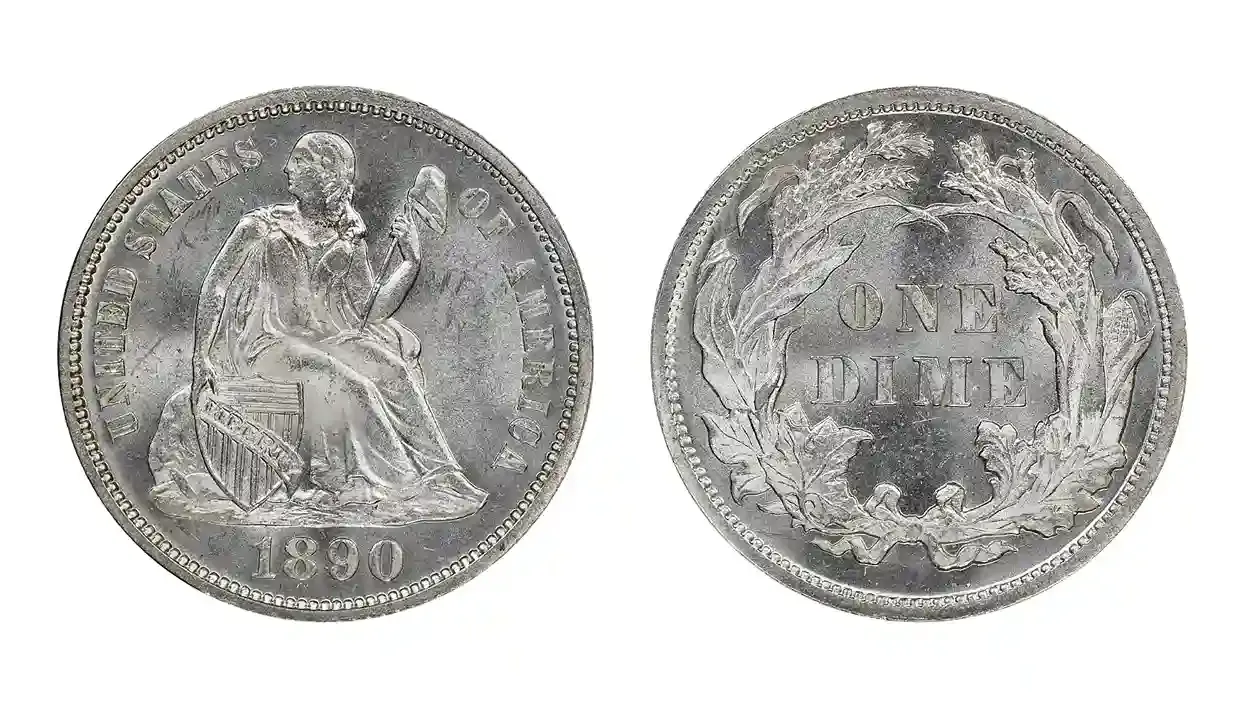
The most widespread issue - more than 9.9 million coins. Coins without a mint mark are the most common. In low grades, they are affordable to many collectors, but in MS-65 their price is significantly higher.
New Orleans (O)
The mintage was about 11 million coins. At the same time, the quality of minting at the New Orleans mint was traditionally inferior to others. Therefore, coins with clear details are rare, which makes them more desirable.
San Francisco (S)
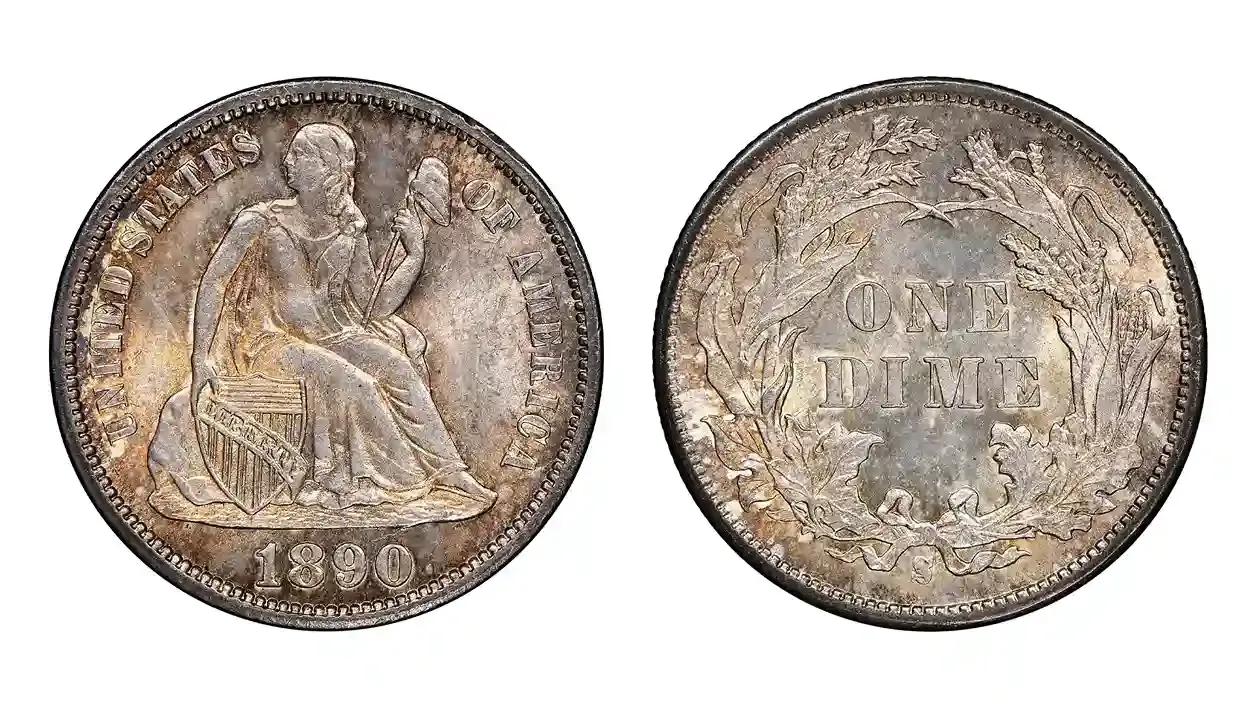
Mintage is just over 1.2 million. Coins with the S mint mark are the rarest, so the 1890 Seated Liberty dime value with the S designation is always higher. Even coins in average condition can command significantly higher prices than their counterparts without the mark.
Market Value in 2025
Due to this composition, the 1890 silver dime has an intrinsic value that depends on the price of silver. Even heavily worn examples retain minimal value.
If silver is priced at $25 per ounce, each coin contains about $2.25 of pure metal. This gives a minimum price of ~$4.8.
Auction and Retail Prices
Philadelphia | New Orleans | San Francisco | |
G-4 | $15 | $18 | $40 |
F-12 | $25 | $30 | $65 |
XF-40 | $55 | $70 | $150 |
MS-60 | $150 | $180 | $350+ |
MS-65 | $600+ | $800+ | $2,000+ |
The values listed are accurate at the time of publication and may change over time.
Errors and Varieties
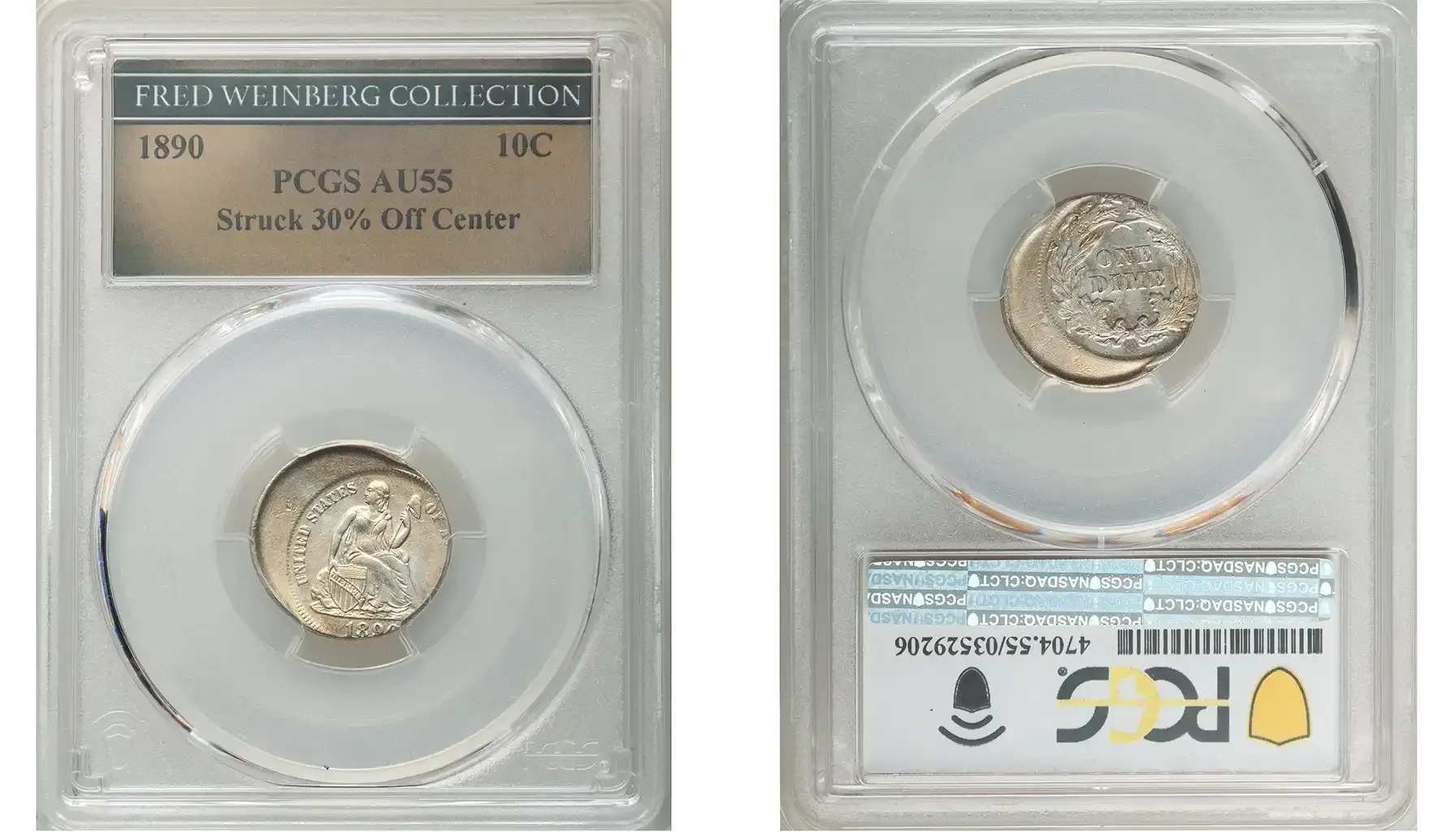
Minting errors always increase the value. For the 1890 Seated Liberty dime, there are several varieties:
Doubled Die Obverse — doubling of the elements of the word LIBERTY. Price: $400–$1,200.
Off-Center Strike — design struck off-center. The price depends on the degree of the off-center shift, on average $300–$800.
Repunched Mint Mark (RPM) — an overpunched O or S. Price: $150–$600.
Wrong Planchet Error — the coin was minted on a blank from a different denomination. Such variants cost from $2,500+.
Comparison with Other Dime Series
Seated Liberty vs. Barber
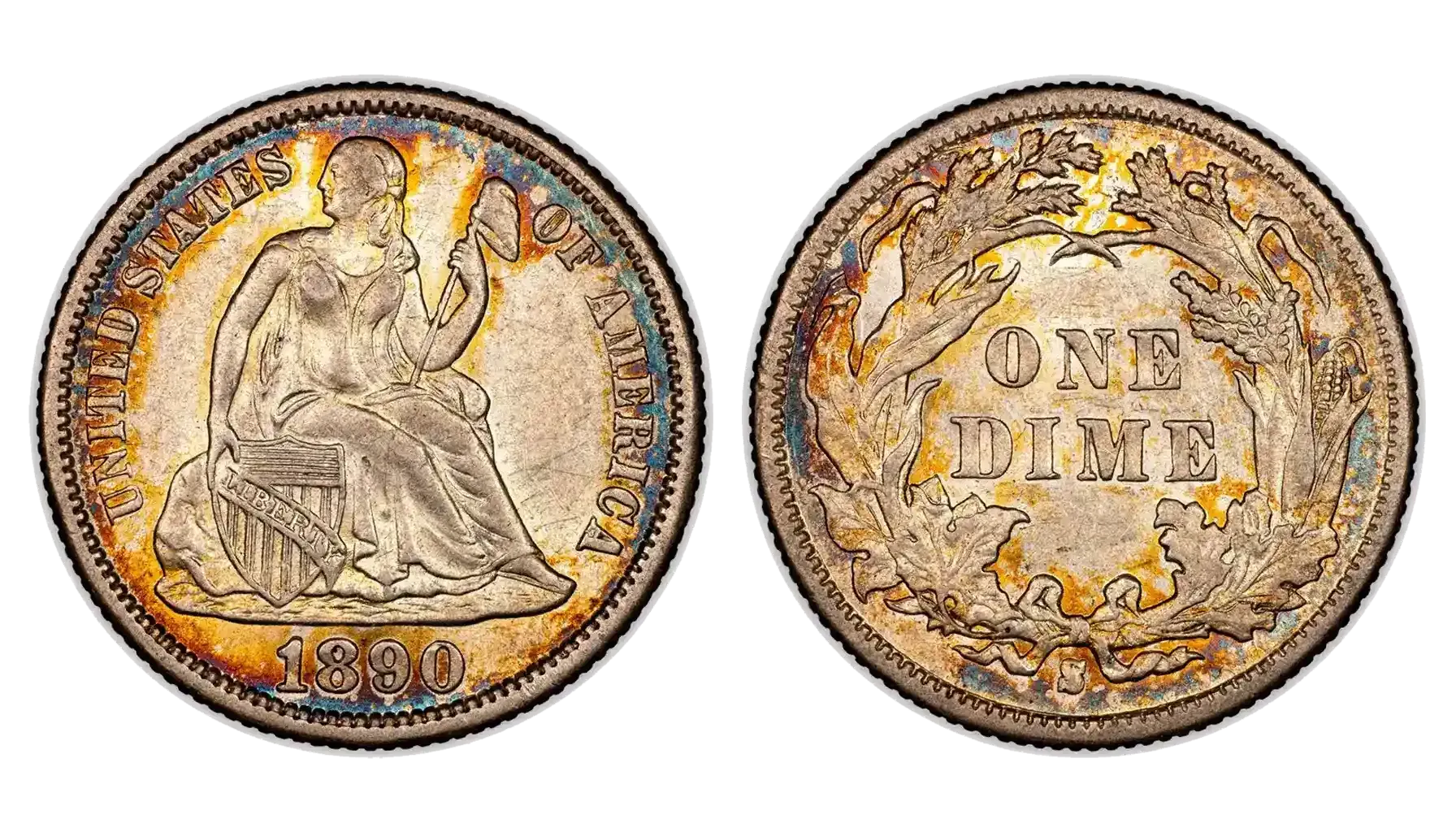
The Barber series replaced the Seated Liberty in 1892. For example, the 1899 Barber Dime already had a more modern design, but the Seated Liberty remains more sought after among collectors due to its historical role.
Seated Liberty vs. Early Dimes
Compared with the earliest issues of the 1830s, the coins of the late 19th century are easier to find in good condition. However, they still retain prestige and high value.
Auction Records and Investment Potential
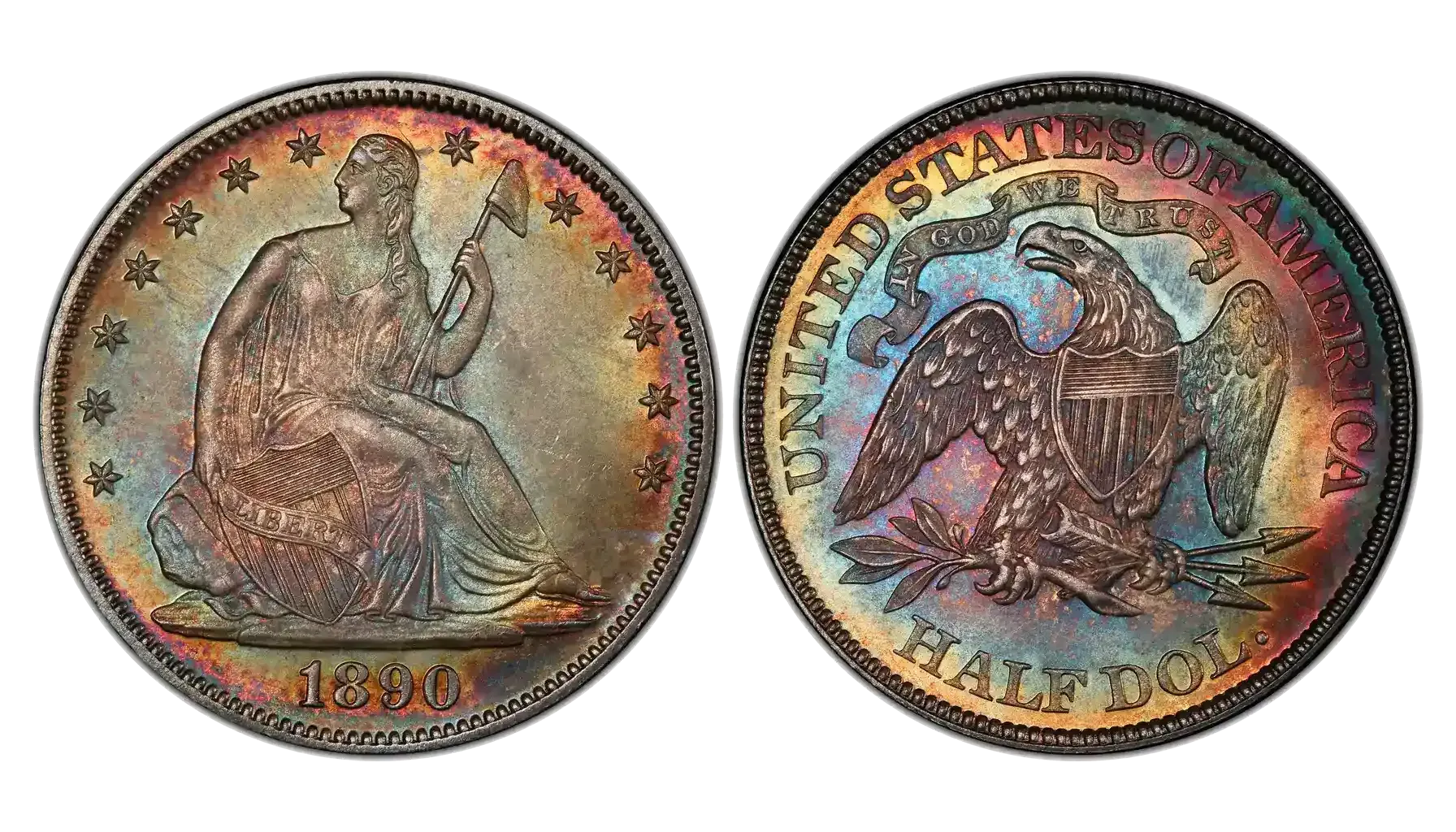
1890-S MS-66 — $12,000.
1890 Proof PR-67 — $18,500.
1890-O MS-65 — $4,000.
Factors driving growth include at least three main points. Firstly, the silver market directly influences the minimum value. Secondly, the limited San Francisco issue makes the coins scarce. Thirdly, the demand for late Seated Liberty issues is steadily growing.
Broader Numismatic Context
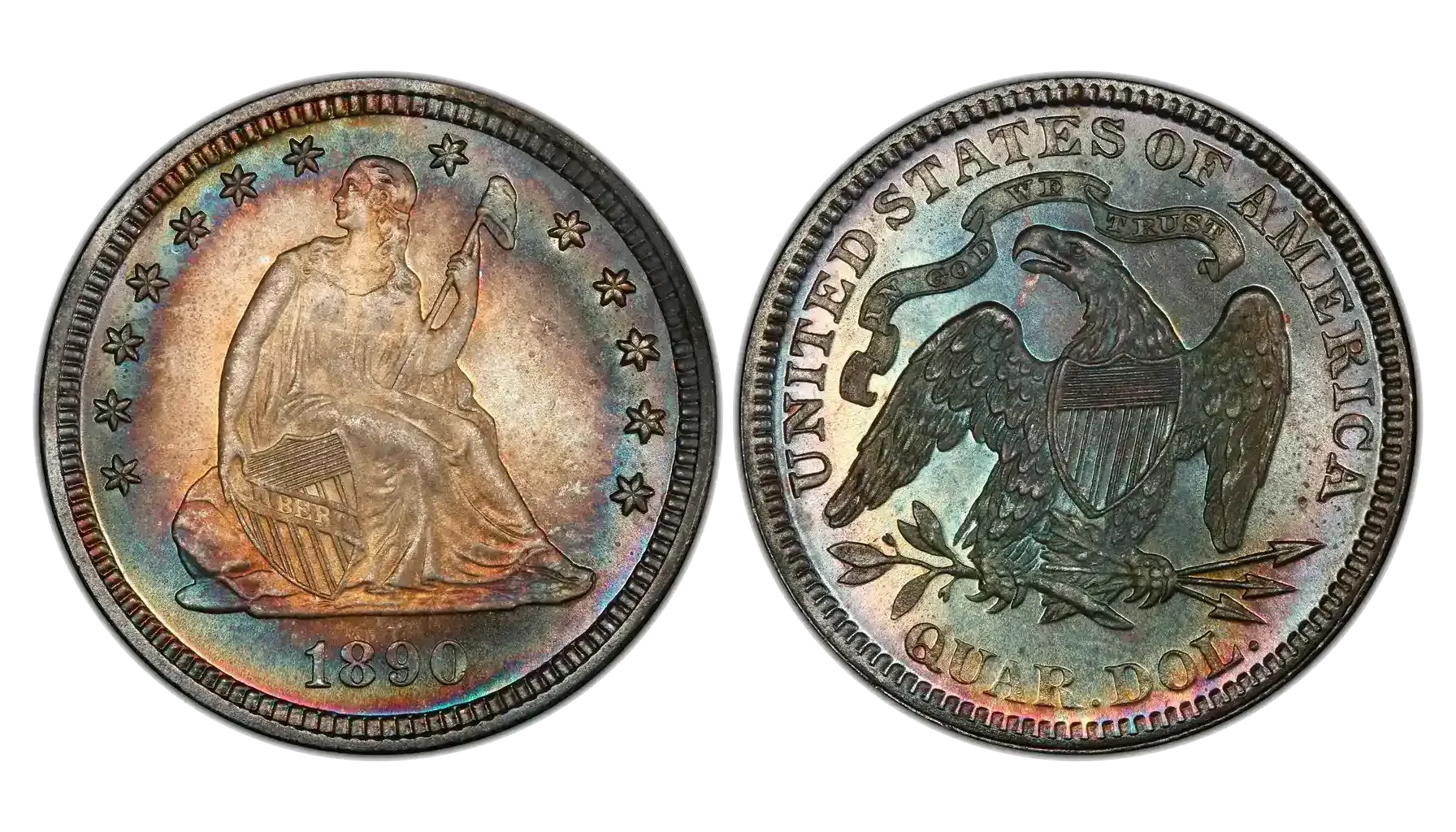
The 1890s were a time of transition in U.S. numismatics. Seated Liberty was fading into the past, giving way to new styles. Such issues reflect the spirit of the era: from agricultural symbolism to the industrial future.
Why the 1890 Dime Still Matters
The 1890 dime value today is determined not only by its silver content but also by the series value. The coin became a link between the early classics and the modernized design of the 20th century.

 Facebook
  X (Twitter)
  Pinterest
  LinkedIn