Contents:
- Quick Facts About the 1978 Kennedy Half Dollar
- Historical Context of the 1978 Issue
- How Much Is a 1978 Half Dollar Worth?
- Composition and Physical Features
- Investment Potential and Collector Demand
- Rare Varieties and Error Coins
- How to Verify and Identify Your 1978 Half Dollar
- FAQs About the 1978 Kennedy Half Dollar
The year 1978 continued the mintage of praised JFK series. A date like this could be important to add to your modern coinage collection. However, counterfeits and low-quality examples are common on the market. Find out how to identify rare coins, detect the true 1978 half dollar value, and preserve it in pristine condition for years.
Quick Facts About the 1978 Kennedy Half Dollar
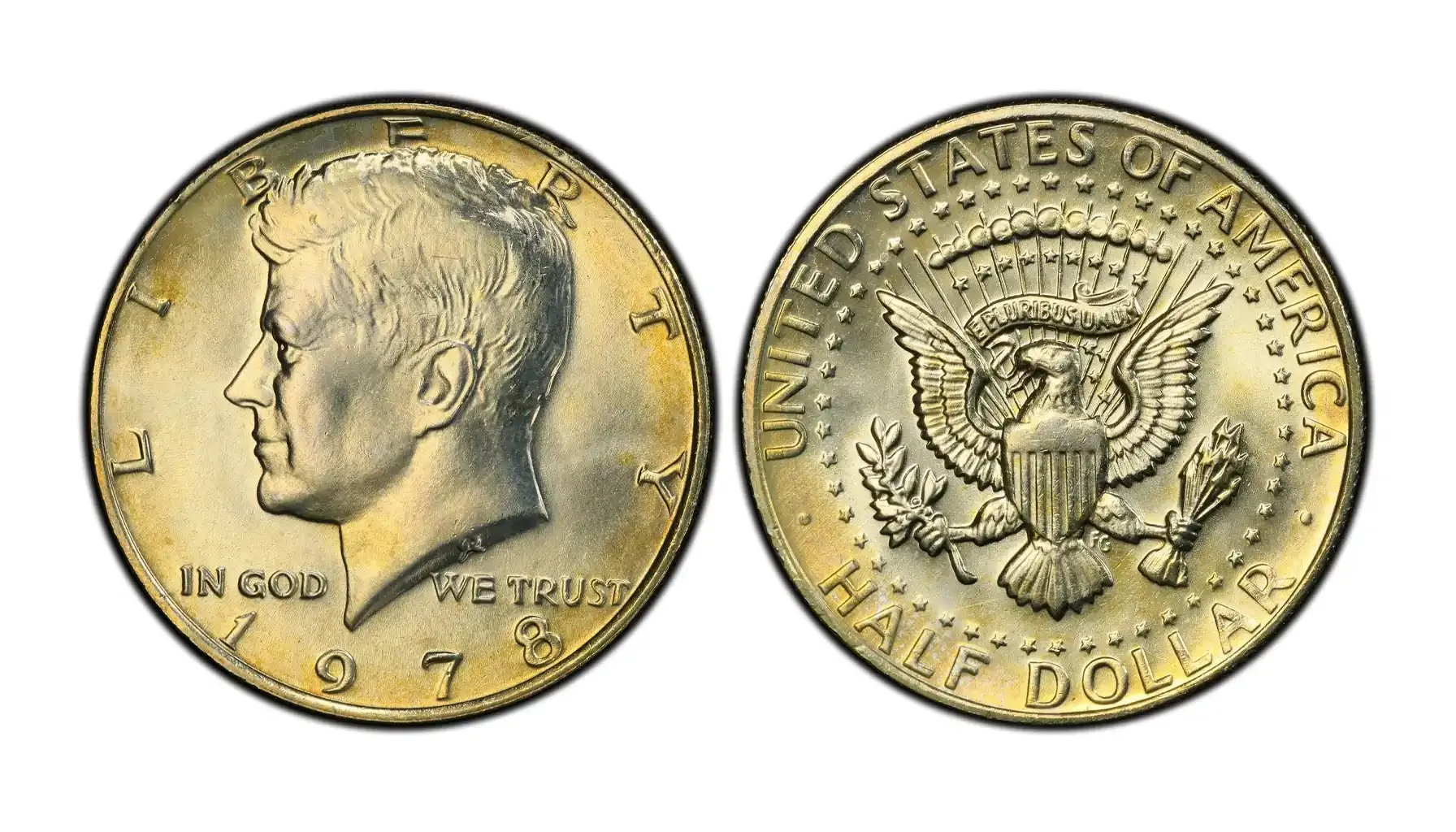
The 1978 Kennedy Half Dollar is a part of America's most recognizable coin series. It doesn’t contain silver as the first years did, but collectors are stably interested in them during the last decades. Let’s find out what to look for in this coin when you first observe it.
Key Technical Specifications
Diameter: 30.61 mm
Weight: 11.34 grams
Composition: 91.67% copper, 8.33% nickel (copper-nickel clad)
Mint marks: P (none), D, S
Design and Symbolism
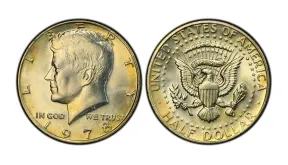
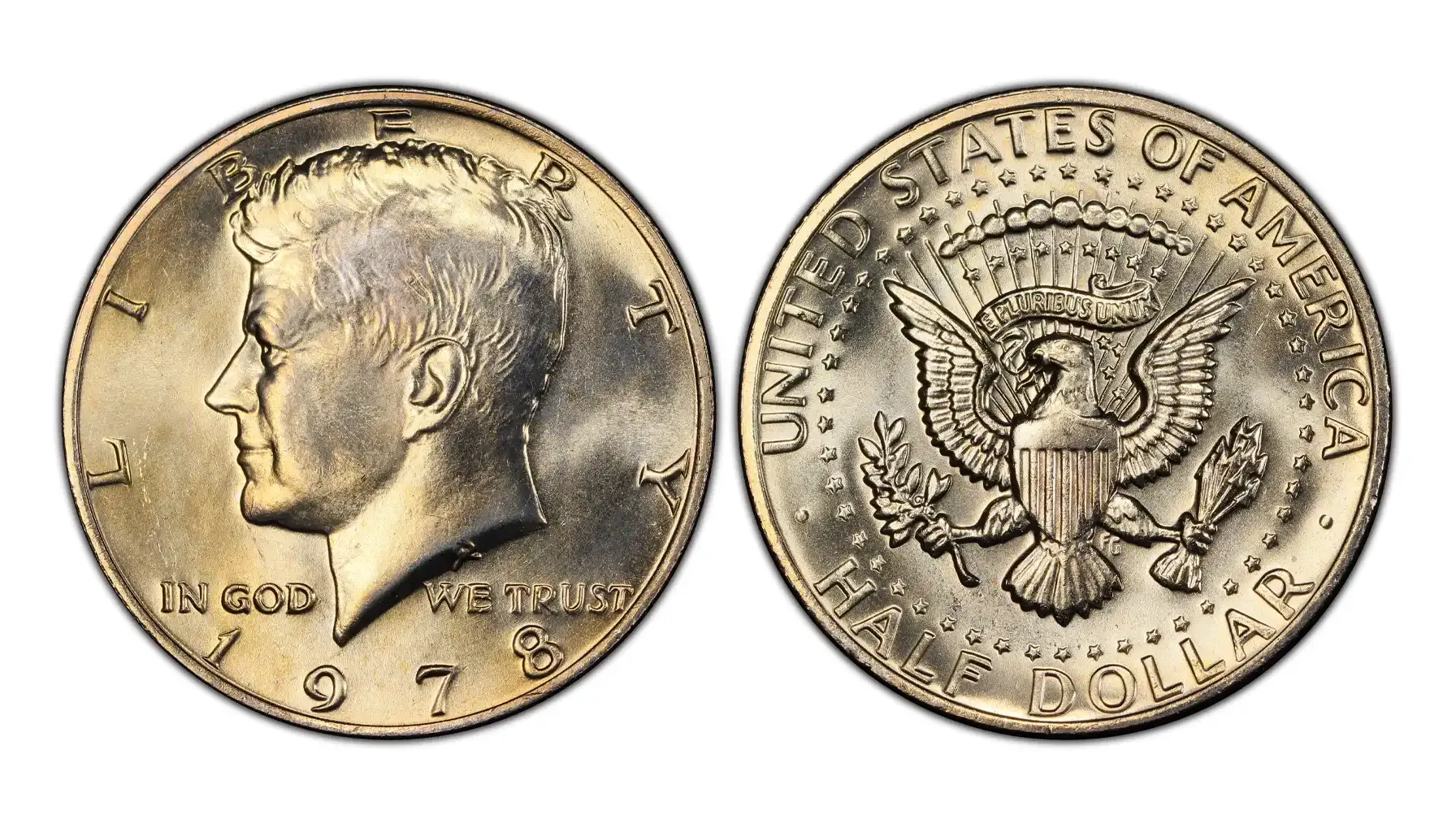
The obverse by Gilroy Roberts, features the profile of President John F. Kennedy. The reverse by Frank Gasparro displays the classic Presidential Seal surrounded by 50 stars, regular for 50 cents designs.
Quick Fact: The coin’s edge is reeded with 150 reeds. It is a traditional design feature carried over from earlier half dollar issues.
Mints and Mint Marks (P, D, S)
The 1978 Kennedy Half Dollar was produced at three typical U.S. Mint facilities:
Philadelphia (no mint mark): The largest production run for general circulation.
Denver (“D” mint mark): Slightly smaller mintage.
San Francisco (“S” mint mark): Primarily proof issues made for collectors.
Historical Context of the 1978 Issue
“In 1978 the U.S. Mint began to significantly decrease the mintages to circulating Kennedy Half Dollars. For the 1978-P Kennedy Half Dollar, the Mint struck a little over 14 million examples. The previous year it struck over 40 million. And most years prior to that the Mint struck some dates in the hundreds of millions.”
— Jaime Hernández, a professional numismatist
From a PCGS official overview of the 1978 50C issue
The Legacy of the Kennedy Half Dollar (1964–1978)
The Kennedy Half Dollar was one of the first key monuments made to the president after his assasination. The public embraced it instantly, and the coin became extremely popular during the whole series.
Originally struck in 90% silver, the series transitioned to 40% silver (1965–1970) and to a copper-nickel clad composition by 1971. Despite being intended for circulation, most Kennedy Half Dollars by the late 1970s were hoarded or saved. It resulted in many surviving examples in uncirculated condition today.
Transition from Silver to Copper-Nickel
Economic pressures of the late 1960s made silver coinage unsustainable for circulation. By 1978, the half dollar contained no silver at all, but retained Kennedy’s portrait and the familiar patriotic motif.
While bullion investors lost interest after the metal change, numismatists continued collecting the series for historical 1978 Kennedy half dollar value and elegant design. The 1978 issue is the fully modern version of this iconic series.
1978 Production Numbers and Circulation Facts
Production in 1978 was modest compared to earlier decades. In total, around 31.2 million business-strike coins and 3.1 million proofs were produced across all facilities:
Mint | Mintage | Type | Notes |
Philadelphia (P) | 14,350,000 | Circulation | Common, no mint mark |
Denver (D) | 13,765,799 | Circulation | Slightly scarcer than Philadelphia |
San Francisco (S) | 3,127,781 | Proof | Mirror finish, collector only |
By this point, the half dollar’s use in commerce had declined sharply, banks ordered fewer rolls each year. Most 1978 coins entered collector hands directly from Mint sets or storage rather than daily use. The limited circulation also preserved strong strikes and well-defined surfaces.
How Much Is a 1978 Half Dollar Worth?
Without silver content, its numismatic value is tied to condition, mintmark, and collector demand. Most circulated examples trade close to the face 1978 D half dollar value, but uncirculated and proof specimens attract significantly higher premiums.
“Most 1978-P Kennedy Half Dollars are common in MS65 condition or lower. In Ms66 condition you really have to search hard through Mint Sets or rolls to find them. In MS67 condition or higher they are very difficult to find.”
— Jaime Hernandez, a professional numismatist
From a PCGS official overview of the 1978 50C issue
Circulated vs. Uncirculated Value
Most circulated examples, easily found in change or coin rolls, are worth between $0.50 and $2. Clean, lightly worn examples can reach $5–$10, mostly due to collector interest in completing year sets.
Uncirculated coins hold greater value. These typically sell from $20 in lower Mint State grades (MS60–MS62) up to $200 or more in high-end MS67+ condition.
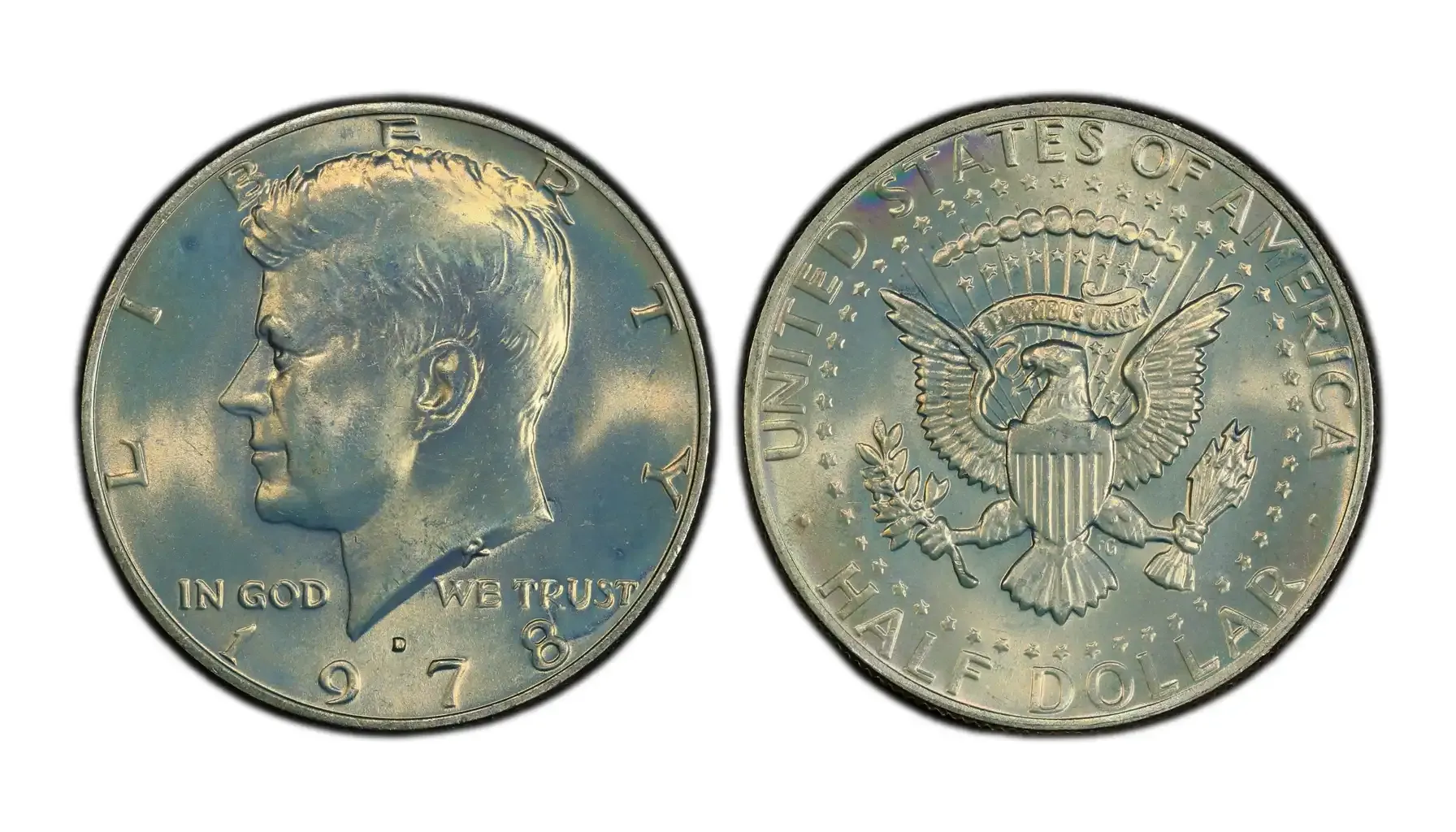
1978-D Half Dollar Value
The 1978-D Kennedy Half Dollar had a total production of about 13.7 million pieces. It’s not particularly rare, but collectors prize high-grade certified examples.
Circulated examples: Around $1–$2.
Uncirculated (MS65): $50–$100.
Top-graded (MS67+): Often sell for $200–$400, occasionally higher at auction.
Keep an eye on them for building a full Kennedy series set!
1978-S Proof Half Dollar Value
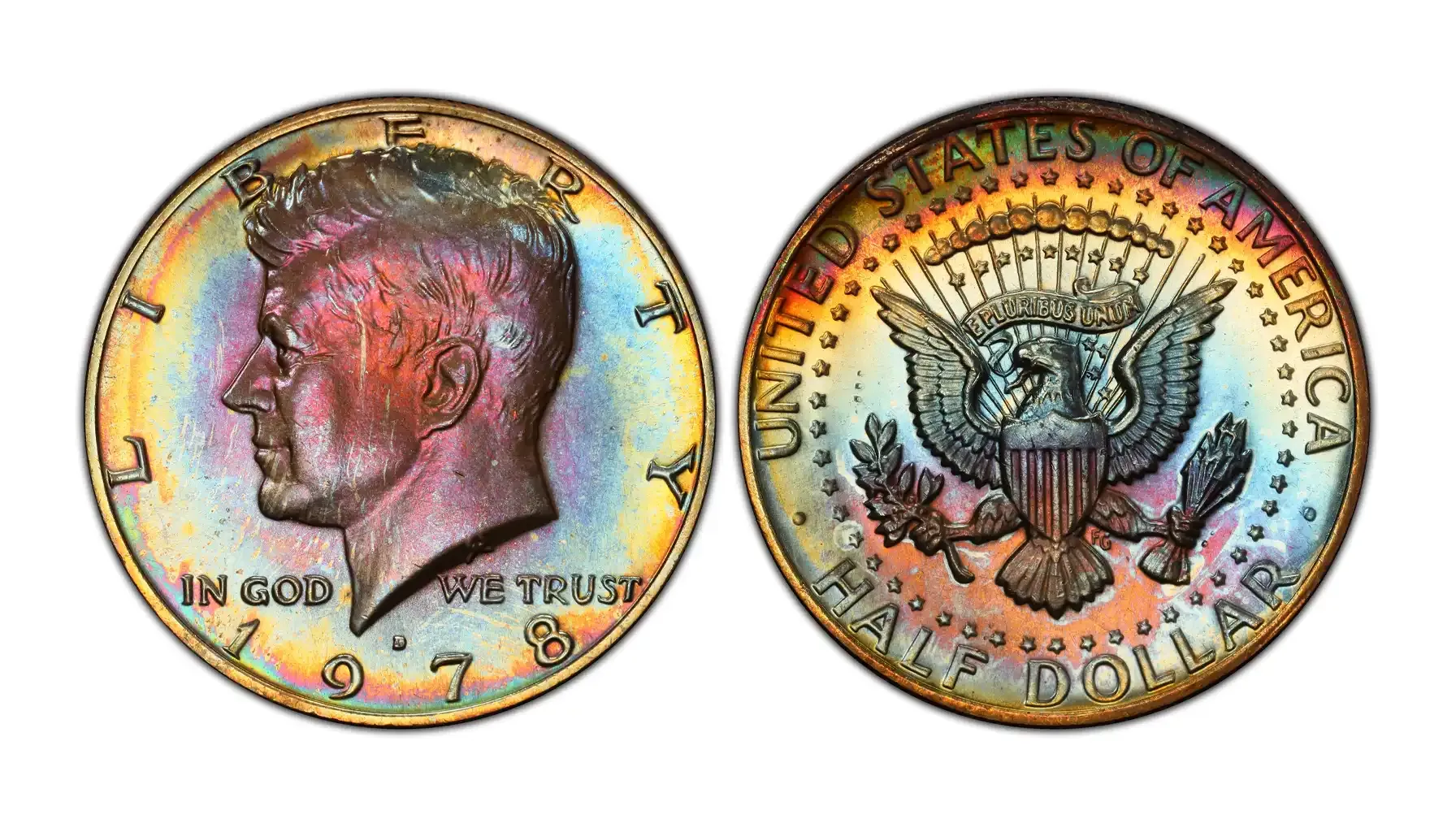
The San Francisco Mint struck over 3.1 million proof coins specifically for collectors. Each features a mirror-like finish with frosted design elements. High-grade proof coins are visually striking even for non-professionals and hold strong appeal for numismatists.
Proof PR67–PR68: Typically range between $50–$100.
Deep Cameo PR69–PR70: Can exceed $200–$300, particularly when certified by PCGS or NGC.
Value by Condition (MS Grades)
Grade | Approximate Value Range |
MS60 – MS62 | $20 – $50 |
MS63 – MS64 | $50 – $100 |
MS65 – MS66 | $100 – $200 |
MS67+ | $200+ |
How to Use a Coin Value Checker Tool
If you get your hands on a JFK coin and want to know its value instantly, Coin ID Scanner is your first helper. Just take a clear photo of both sides and receive all the data on the issue, including up-to-date auction reports.
Composition and Physical Features
Weight, Diameter, and Metal Content
All 1978 Kennedy Half Dollars share a post-silver standard composition:
Weight: 11.34 grams
Diameter: 30.61 mm
Metal Content: 91.67% copper, 8.33% nickel
Edge: Reeded
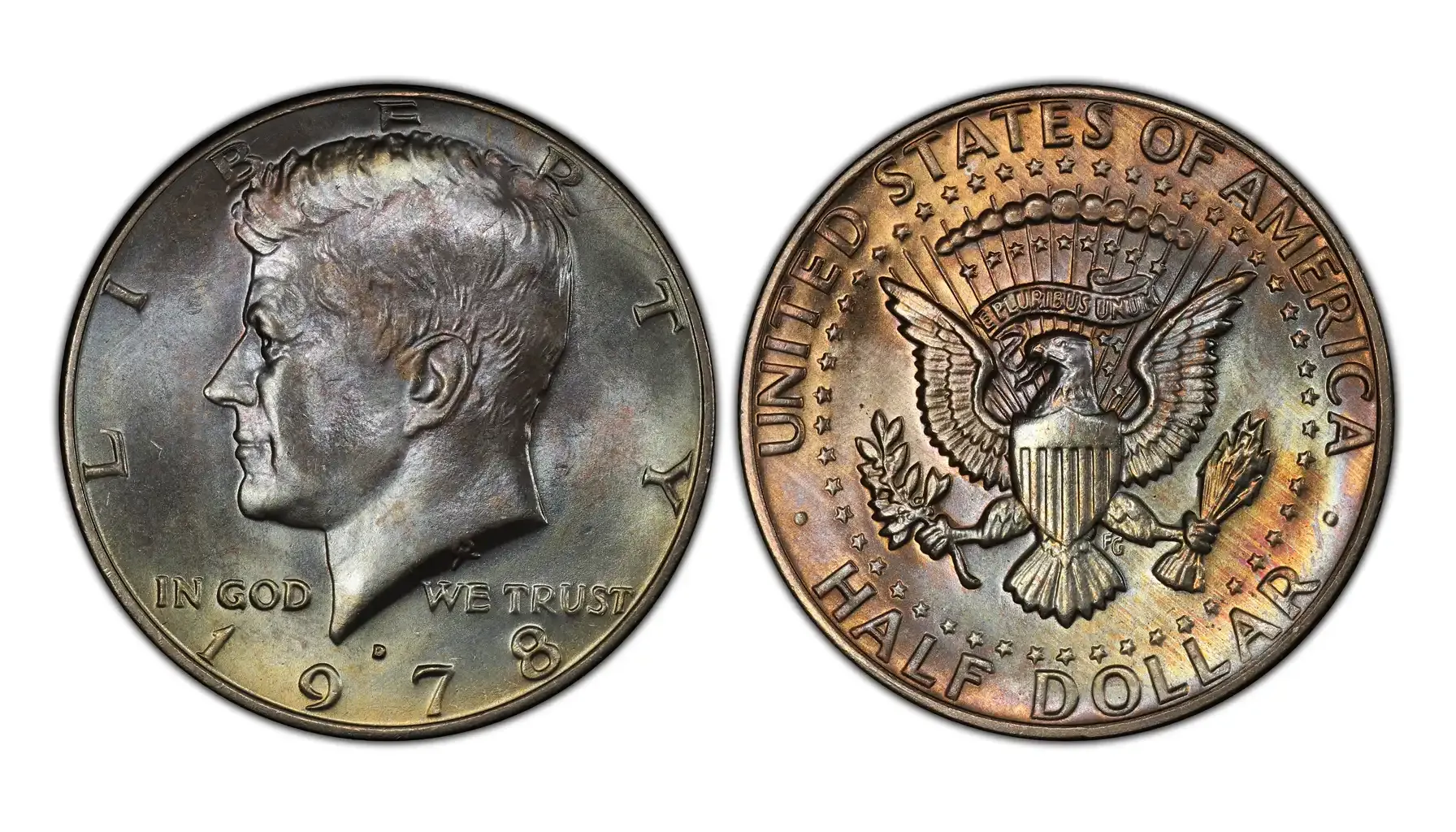
The coin’s copper-nickel surface displays a light gray tone with hints of golden luster in uncirculated condition.
Visual Characteristics to Identify Authentic Coins
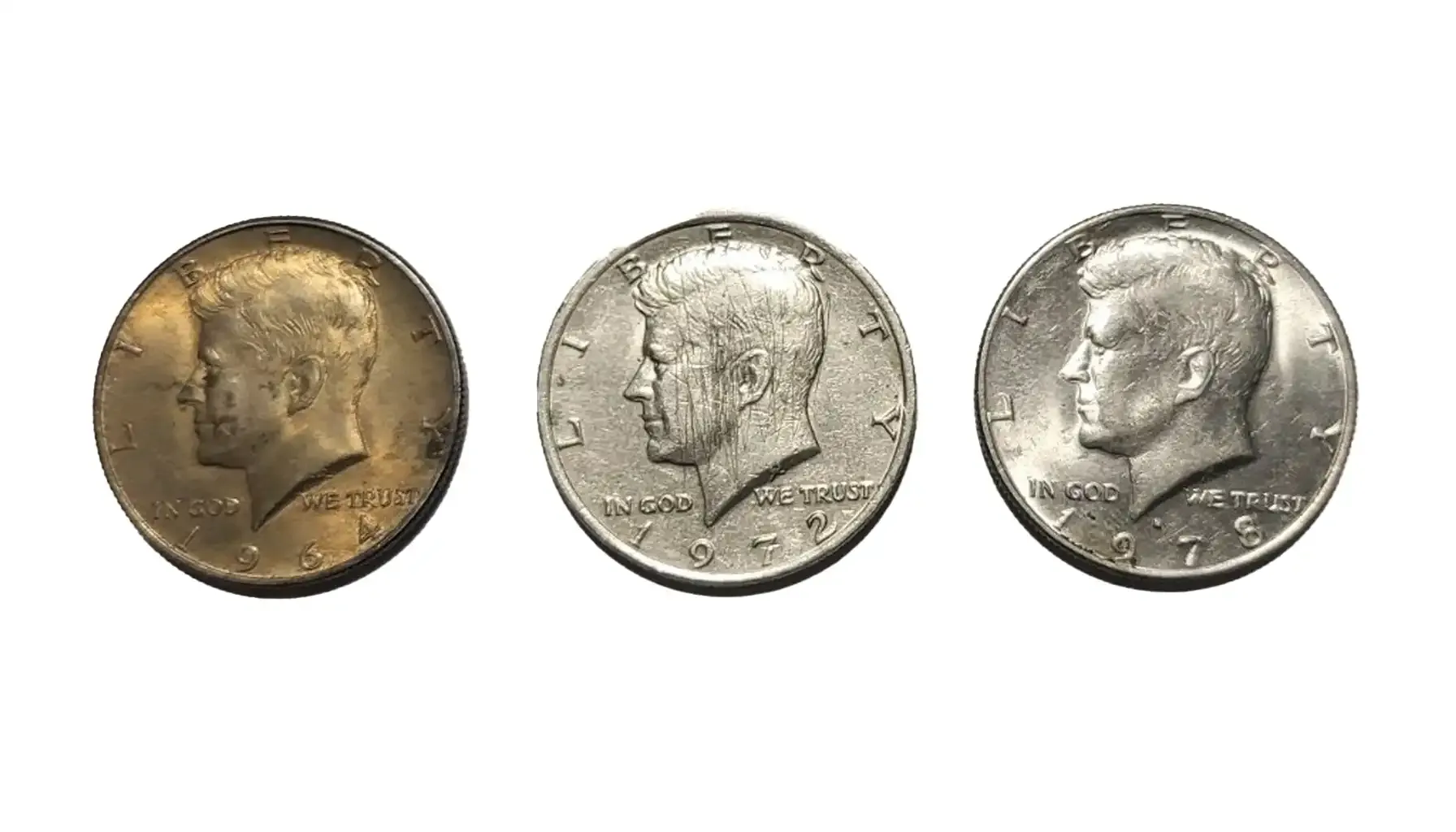
Authentic 1978 halves will exhibit a well-defined Kennedy portrait with sharp lettering and clearly defined reeding on the edge. The mint mark is located below the tail of the eagle on the reverse. Counterfeits are not common but some replated and altered coins exist. Genuine pieces will always show a copper-colored edge layer visible between the nickel cladding
How to Spot Wear and Damage
Inspect carefully Kennedy's cheekbone, his hairline, and the feathers of the eagle to see smoothing, as these locations are most susceptible to wear. Watch carefully with the magnifying glass for surface scratches, discoloration, or cleaning marks. Even slight signs reduce grade and collector appeal. Coins with full luster and sharp detail are graded uncirculated and sell at a notable premium.
Investment Potential and Collector Demand
The 1978 50 cent piece value of the metal is modest, but it can be an investment as well. It's part of a popular series with certain well-known premium-priced varieties.
Why the 1978 Kennedy Half Dollar Appeals to Collectors
Therefore, this issue is appreciated among many collectors for its historical meaning rather than rarity. Comparatively small mintage relative to the 1970s average and availability of good-preservation examples make it quite realistic to be included in both beginners' and middle-range collections.
High-grade and certified proof specimens are always in demand, especially if they have cameo contrast or exceptional luster. If you look through auction records, you will for sure notice surprising sales results.
Price Trends Over Time
Collectors prize the 1978 half dollar no mint mark more because of its historical nature than its rarity. It makes lower-grade examples from the 1970s great for beginners, because prices stay modest even today.
Serious numismatists are in search of high-grade, certified proof specimens, and their prices have stayed relatively high in the last decades. In the auction sales, you will probably see something like a few hundreds of dollars per coin.
Factors That Influence Long-Term Value
Several elements drive future price potential:
Condition: Higher grades (MS66 and above) are expensive and are likely to gain value over time.
Certification: Coins with certification from PCGS or NGC always have stronger resale appeal.
Rarity of errors: Off-center strikes and double-die obverses raise premiums significantly.
Market cycles: A collector's interest in completing Kennedy sets often increases mid-series years for 1978.
How to Store and Preserve Your Coins
You must create suitable conditions for your coins to keep their condition and, therefore, price high through the years. Follow these standards:
Keep coins in low-humidity, temperature-controlled areas without rapid changes.
Store each piece in an individual airtight holder, 2×2 flip, or a coin capsule.
Storing proofs is the best in original Mint packaging or in PCGS holders.
Never touch them with bare hands — use cotton gloves. This is how you protect original patina and luster from grease.
Pro Collector Tip: Regularly inspect the condition to prevent corrosion and discoloration. This is how you maintain resale quality for decades and even increase the price.
Rare Varieties and Error Coins
While regular pieces are quite affordable, there are unusual varieties with huge price differences. Grad cotton gloves and a magnifier to inspect your collection! You might own something truly rare.
Known 1978 Kennedy Half Dollar Errors
Various minting errors occurred in the production of the 1978 Kennedy Half Dollar and were noticed only decades after the release. It makes high-grade error varieties especially rare. Let’s take a look at the main ones, so you can recognize them without hesitation.
Double Die Obverse and Off-Center Strikes
A double-die obverse has clearly visible doubling in lettering or ornamental details. This happens when a die stamped its design into a coin twice, slightly out of alignment.
The off-center strikes, on the other hand, are the most visible result of misaligned planchets at minting. It looks like a coin with a missing part of the design. Usually, it is barely visible with the naked eye, but in certain cases the off-centering becomes severe and even more valuable.
Market Value of Error Coins
The market for 1978 Kennedy Half Dollar errors is strong, particularly for visually dramatic examples. Depending on rarity, eye appeal, and overall condition, these coins can bring two to ten times the standard market value. Severe off-center strikes and clearly defined double-dies often achieve the highest premiums.
Authentication Tips and Red Flags
Authenticating error coins requires careful observation. Always verify mint marks and compare against official minting details. Check out thizs list if you feel suspicious about your coin:
For valuable or unusual 1978 half dollar error, submit your coin to PCGS, NGC, or another professional grading service for reliable verification and long-term value.
How to Verify and Identify Your 1978 Half Dollar
Using the Coin Identifier App
Coin ID Scanner app simplifies and speeds up coin verification. Scan both sides of your 1978 half dollar to instantly identify denomination, mint mark, and type. It also provides a rough valuation based on market averages—perfect for beginners and collectors seeking fast, reliable information.
Steps to Check Coin Value Online
To confirm your coin’s market price:
Enter the year, 1978, mint mark, and estimated condition into a reliable database such as NGC, PCGS, or Coin ID Scanner.
Review recent auction results as well as current retail prices for comparison.
Use certified grading references to align your coin’s condition with official value ranges.
Where to Sell or Appraise Your Coin
When ready to appraise or sell, deal only with reputable coin dealers, certified grading companies, or established auction houses. Knowledge can also be sought from local numismatic clubs and professional appraisers prior to sale. Certified coins generally sell for more because of increased buyer confidence in their authenticity and grading.
FAQs About the 1978 Kennedy Half Dollar
Is the 1978 Half Dollar made of silver?
No, it's composed of 91.67% copper and 8.33% nickel. There is no silver in the composition.
What is the 1978 Half Dollar worth today?
Circulated coins trade near face value, while uncirculated and proof examples can bring $20–$300 depending upon grade and certification.
How can I identify a rare 1978 Kennedy Half Dollar?
Watch patiently for perfect surfaces — it might be the sign of a MS67+ grade. With a magnifying glass, you may notice double-dies or other high-value mistakes. And if you see an unusually bright, shining surface, it is likely to be a proof strike.
Where was the 1978 Half Dollar minted?
It was minted on 3 key U.S. Mints: Philadelphia (no mint mark), Denver —"D", San Francisco proofs — "S".
How many 1978 Half Dollars were produced?
About 14.3 million in Philadelphia, 13.7 million in Denver, and 3.1 million proofs from San Francisco.
Are proof coins from 1978 valuable?
Yes. Proof coins with deep cameo contrast or PR70 certification can often sell for $200–$300.
What are the most common errors in 1978 Half Dollars?
Minor double-die obverses, die cracks and slight off-center strikes.
How do I protect my coin collection for future value?
Hold your 50 cents only in cotton gloves, never with bare hands. Avoid high levels of humidity and exposition to direct sunlight. If you want to go even more professional, get yourself some archival holders, never clean your coins to preserve patina, and get the most interesting examples graded.

 Facebook
  X (Twitter)
  Pinterest
  LinkedIn