Contents:
.Coins from the mid-20th century remain one of the most popular areas among US collectors. The 1954 Roosevelt dime is a reminder that even small coins we once spent without thought can grow into treasures. Collectors now look closely at its condition, silver content, and the rare minting errors that add to its charm. All this directly affects the 1954 dime value.
For those who are just beginning to get acquainted with this area, it’s useful not only to understand the price, but also to be able to identify coins.
1954 Roosevelt Dime and Its Context
Design and Symbolism
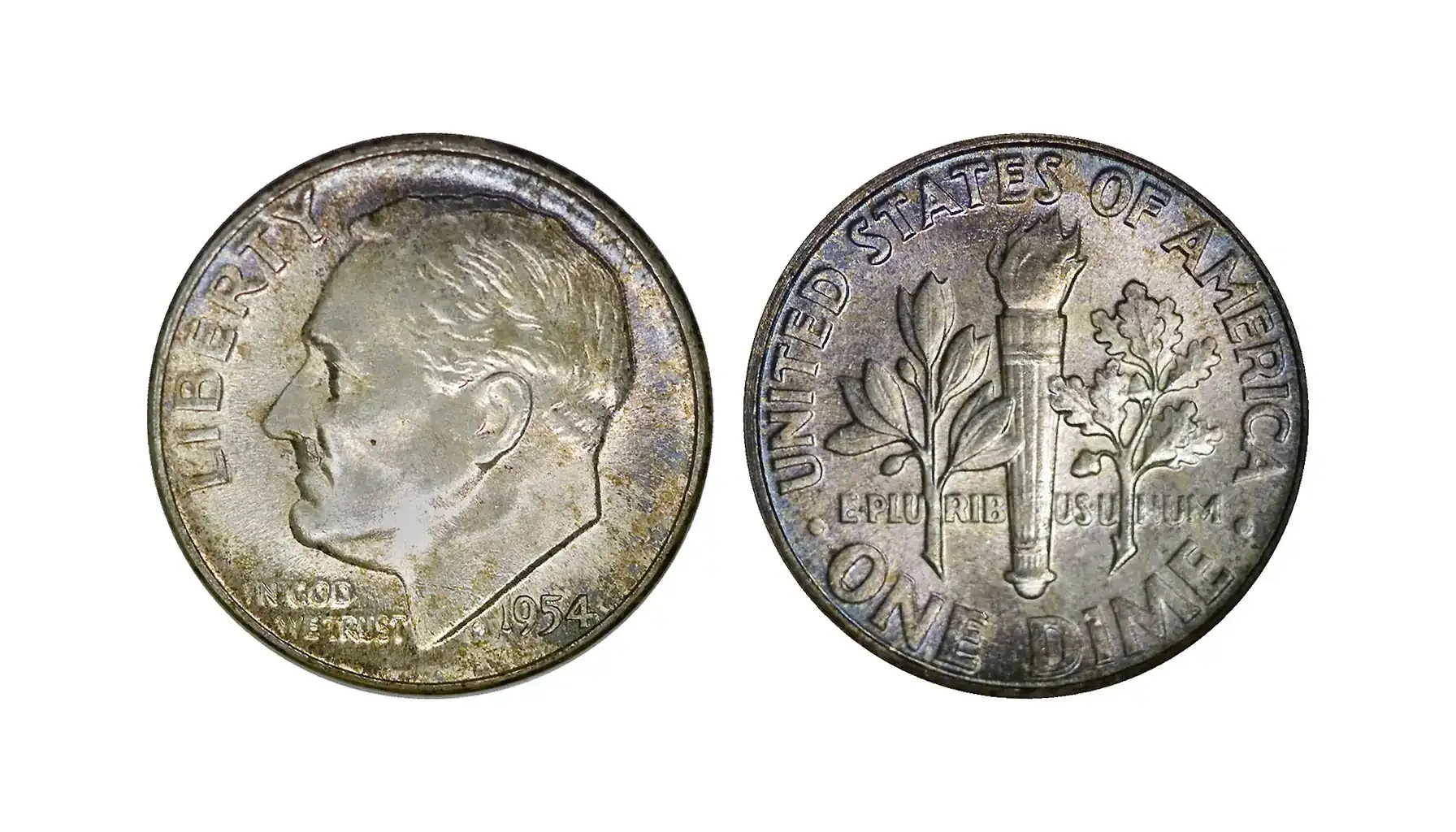
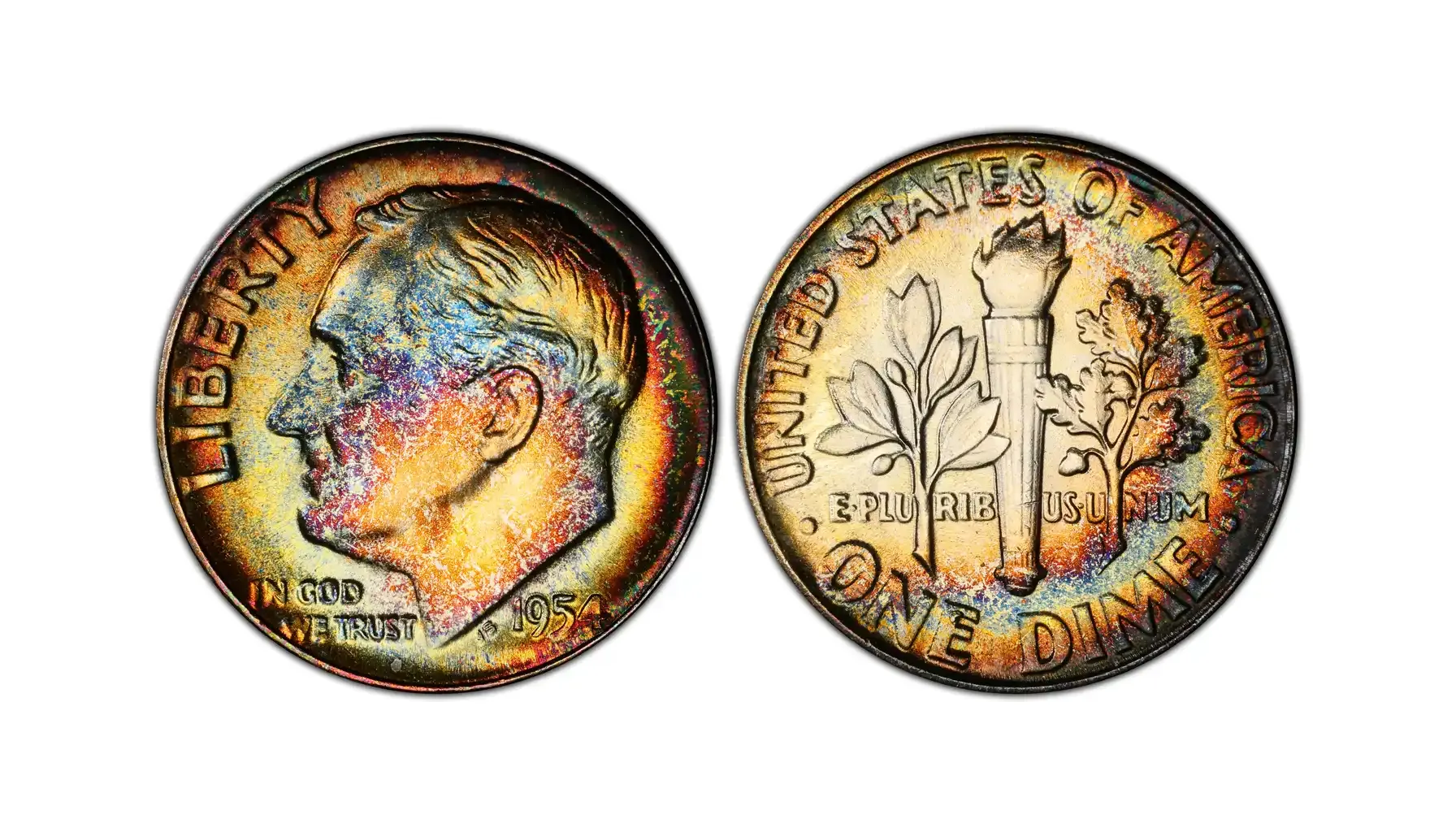
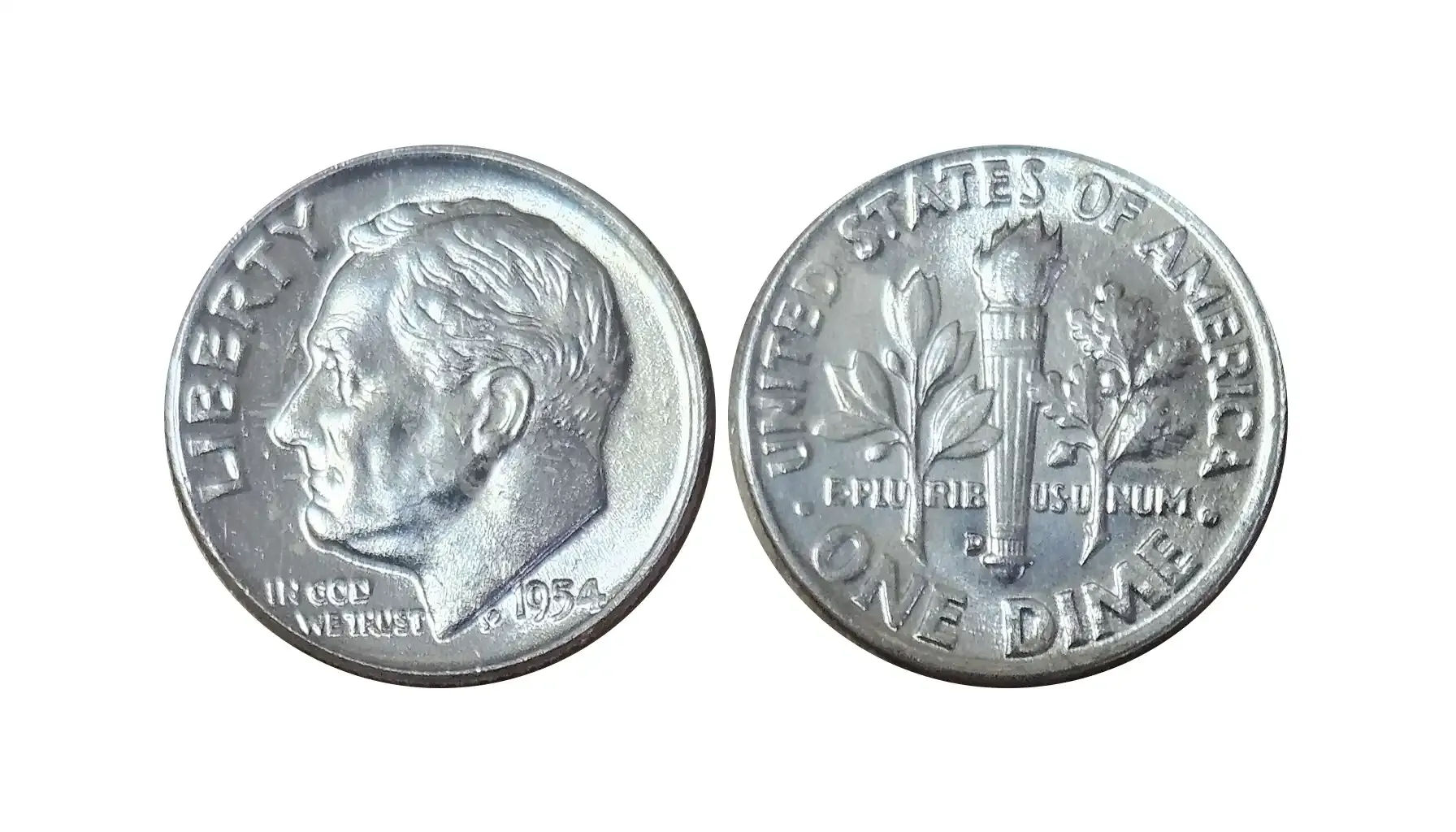
In 1946, shortly after Franklin Roosevelt's death, his portrait first appeared on the dime. By 1954, this design had become familiar to Americans. On the front side is a strict profile of Roosevelt, the inscriptions LIBERTY and IN GOD WE TRUST, as well as the year of issue. On the back side is a torch of freedom surrounded by oak and olive branches, symbolizing strength and peace. This design reflected the spirit of the post-war era and expressed the country’s democratic values.
The design was created by the Mint’s Chief Engraver, John R. Sinnock. His initials JS on the back initially caused confusion, as some mistakenly took them for a Soviet sign. Now this design is perceived not as a subject of doubt, but as a close and recognizable symbol that has accompanied American coinage for decades and commands respect from collectors of different generations.
Role of Silver in Circulation
Another important detail is the composition. The 1954 silver dime was struck from an alloy of 90% silver and 10% copper, which was the standard of the time. Silver ensured durability and at the same time retained investment appeal. Only a decade later, in 1965, dime coins began to be issued without precious metal.
Therefore, the 1954 dime silver content makes the issue especially attractive for those who are focused not only on collecting, but also on metal.
During the years of issue, the price of silver was relatively stable, so people did not consider small coins as a source of profit. However, today even a basic calculation shows that intrinsic value remains a strong factor in its assessment, and tips for spotting fake coins will help you verify authenticity.
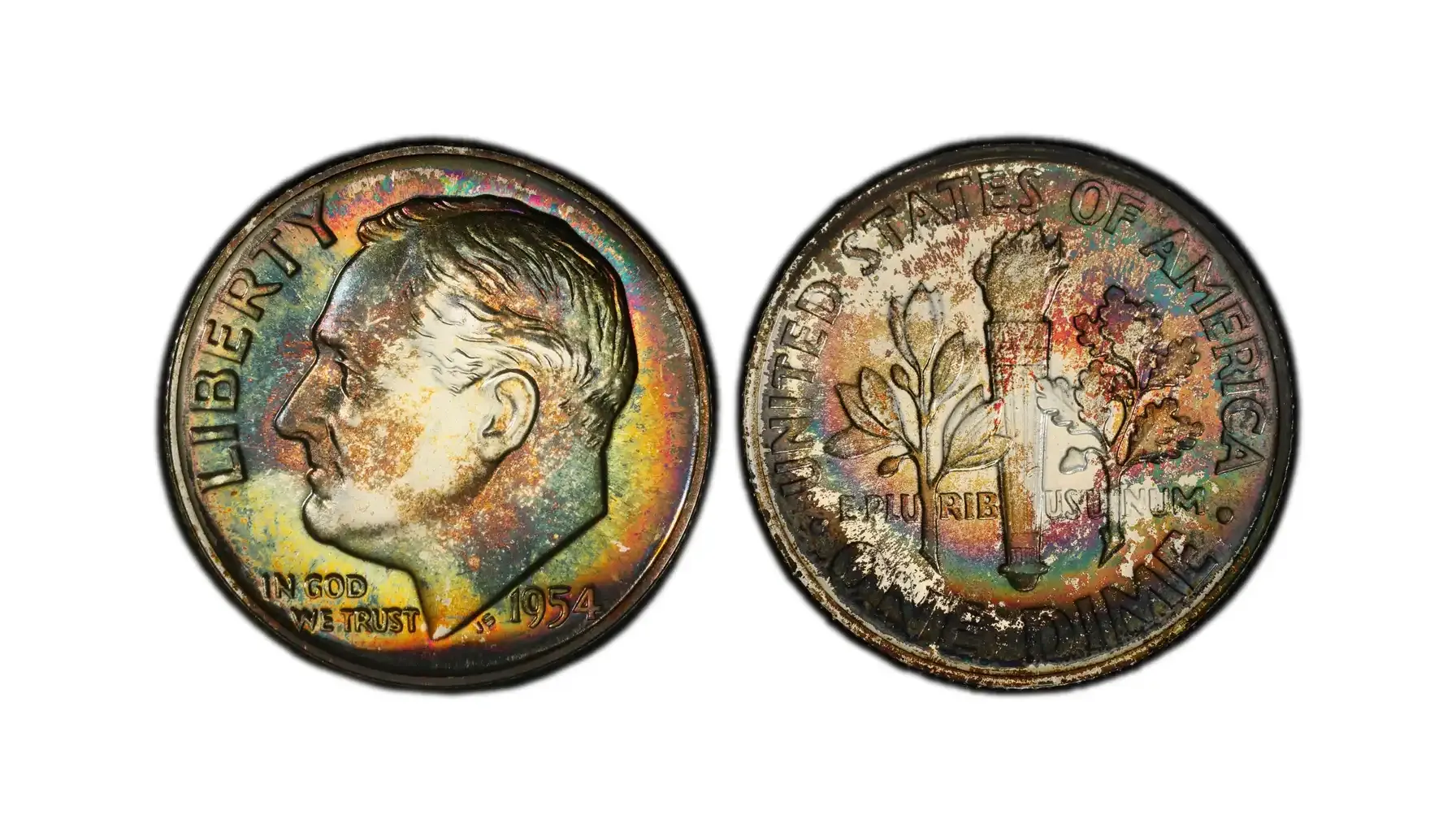
1954 Dime Value and Collectibility
Factors That Influence the 1954 Dime Value
The price is determined by a combination of three factors: condition, availability of rare varieties and market demand. Even in circulated grades, the 1954 dime is rarely worth less than the melt value of silver. But in the highest degrees of condition, the coin moves into the collectible category, where the significance of the condition increases several times.
It’s important to consider other aspects here: the popularity of the Roosevelt series, lower demand for later issues and the general state of the silver market.
How Grading Affects the 1954 Dime Coin Value
The Sheldon scale grading system helps to accurately determine 1954 dime coin value. The difference between a coin in VF condition and an MS65 example can be several tens of dollars. Examples with a high luster, minimal contact marks, and full torch lines are especially valuable.
For example, an XF piece may be worth only $5-7, while an MS67 coin can easily reach hundreds of dollars. Therefore, proper grading is key.
Mint Marks and Their Significance
Philadelphia Issue: 1954 Dime No Mint Mark
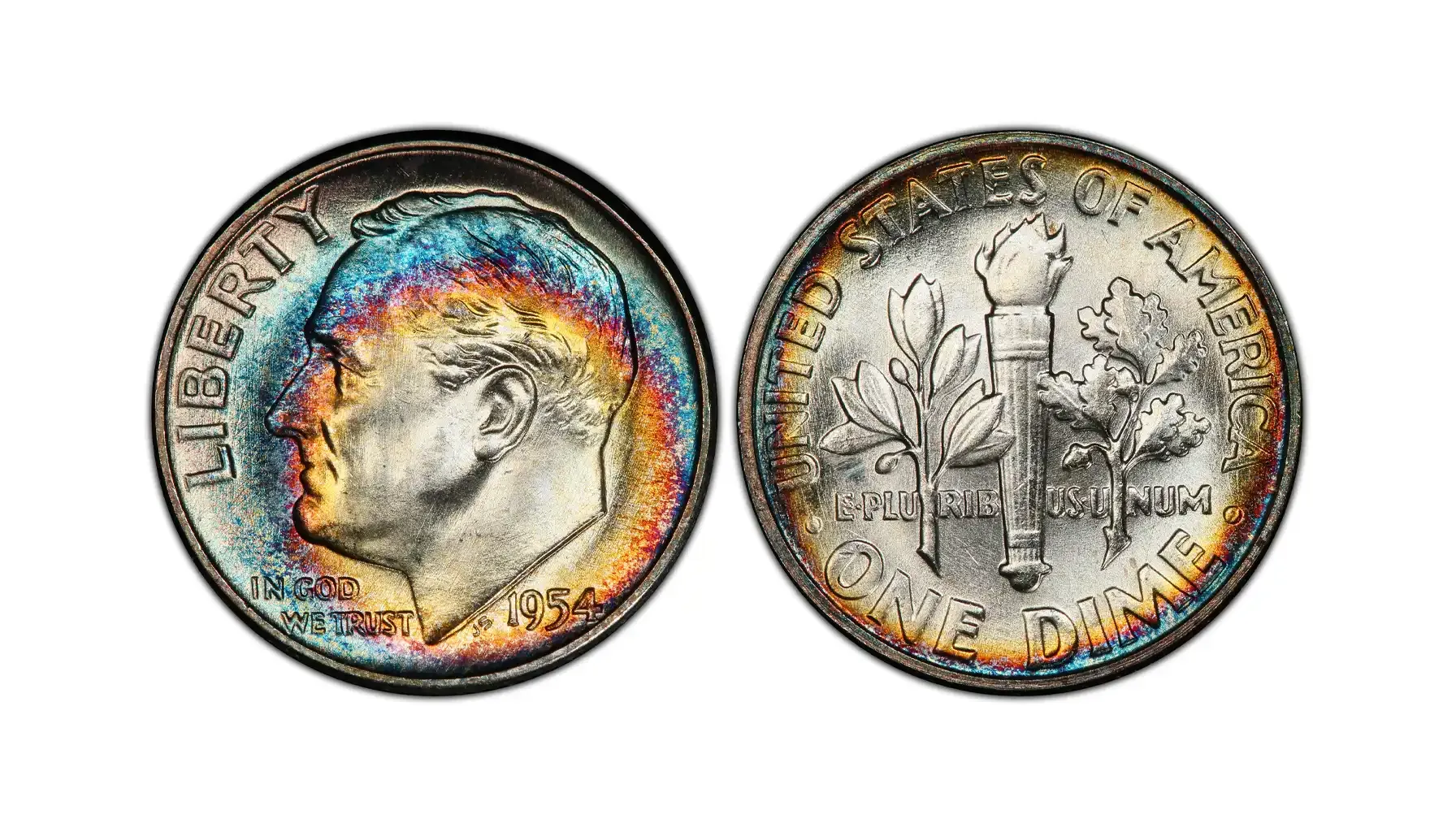
Coins without a mint mark are from the Philadelphia issue. Their mintage was significant, so the 1954 dime no mint mark is the most common. However, in high gradation (MS67 and above) they become rare and interesting for collectors. In the auction records, you can see prices in the hundreds of dollars if the coin has full detail.
Denver Issue: 1954 D Dime
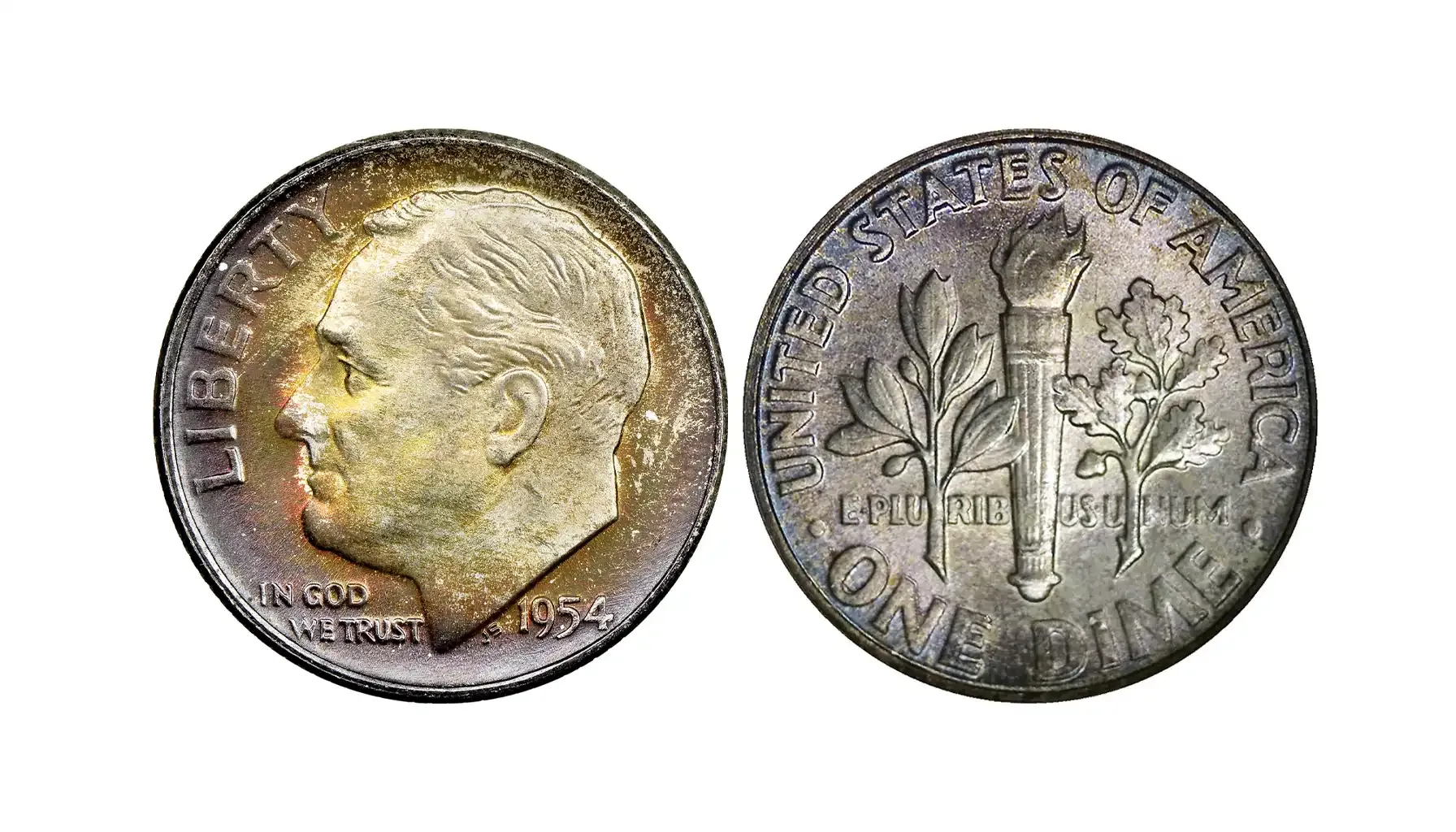
The 1954 d dime was minted in Denver, with tens of millions of copies issued. The quality of the strike was more uniform than in San Francisco. Collectors care not only about the total mintage, but also about the condition. In standard conditions, the value is close to the melt price, but the 1954 d dime value in MS66 and above can reach $150–$300.
San Francisco Issue: 1954 S Dime
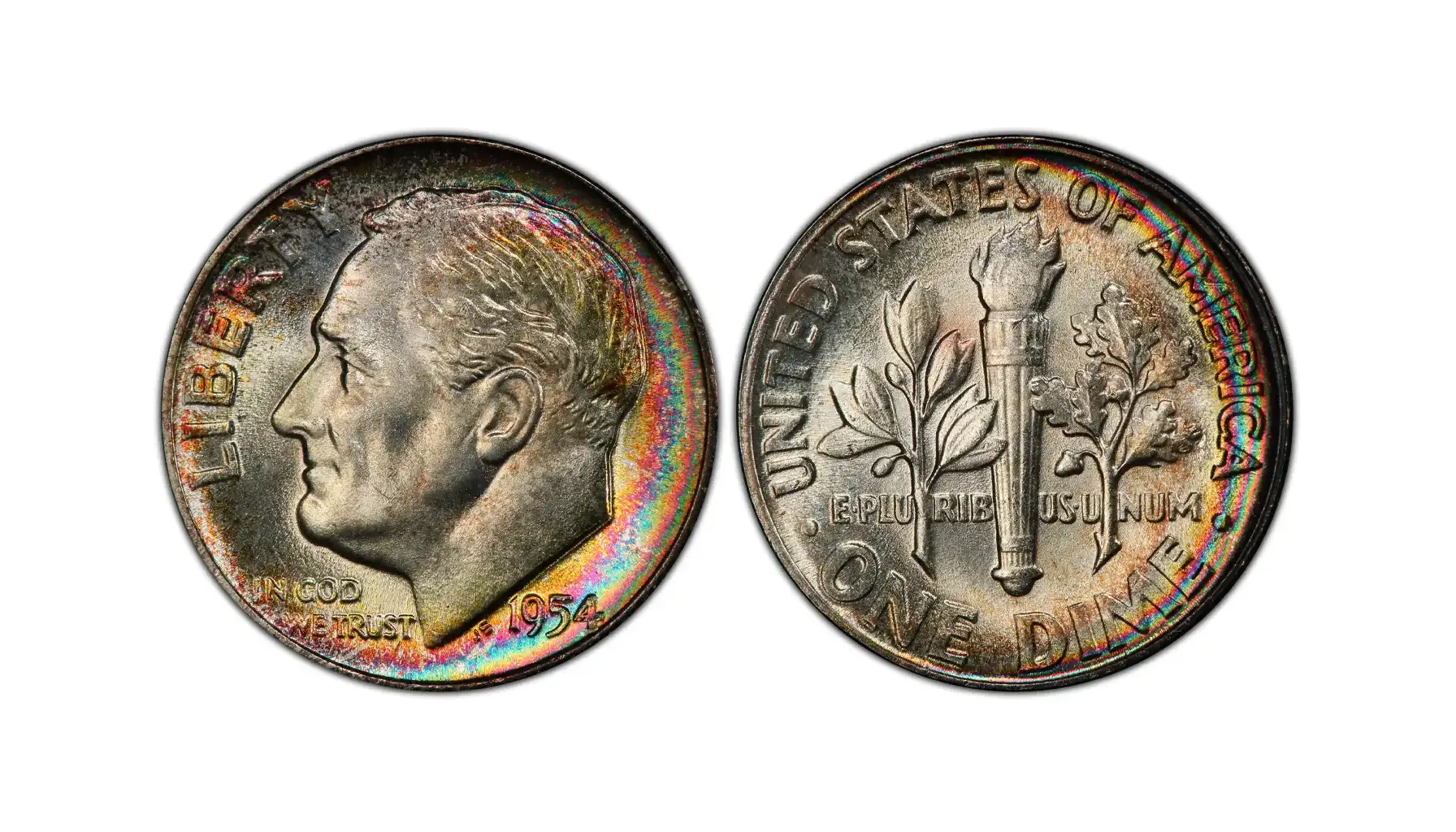
The 1954 s dime is notable for its smaller mintage compared to Philadelphia and Denver. For examples in excellent condition, the market consistently shows high prices. 1954 s dime values in MS67 at auction reach $1,000, and rare examples with pristine surfaces exceed these figures.
Silver Composition and Melt Value
1954 Dime Silver and Intrinsic Worth
Each piece contains about 2.25 grams of pure silver. At a metal price of $25 per ounce, the 1954 silver dime value is about $1.80. Of course, this is only the lower threshold of value: real market prices are higher due to the historical and collectible component factors.
How Much Is a 1954 Silver Dime Worth?
In practice, the question of “how much is a 1954 silver dime worth?” depends on its condition and rarity. Even specimens with traces of circulation are usually sold for more than melt value, and well-preserved versions in collector sets are worth many times more.
Error Varieties and Their Appeal
Popular 1954 Dime Error Types
Minting errors attract collectors no less than ideal specimens. Among the most famous are:
Doubled Die — doubling of elements on the obverse or reverse.
Off-Center Strike — misalignment of the image.
Clipped Planchet — a blank defect, due to which the coin has a cut-off section.
Any 1954 dime error makes an ordinary coin unique, and its price can increase dozens of times. For example, the 1962 quarter value clearly shows how defects such as off-center strikes or doubled dies can increase the price several times.
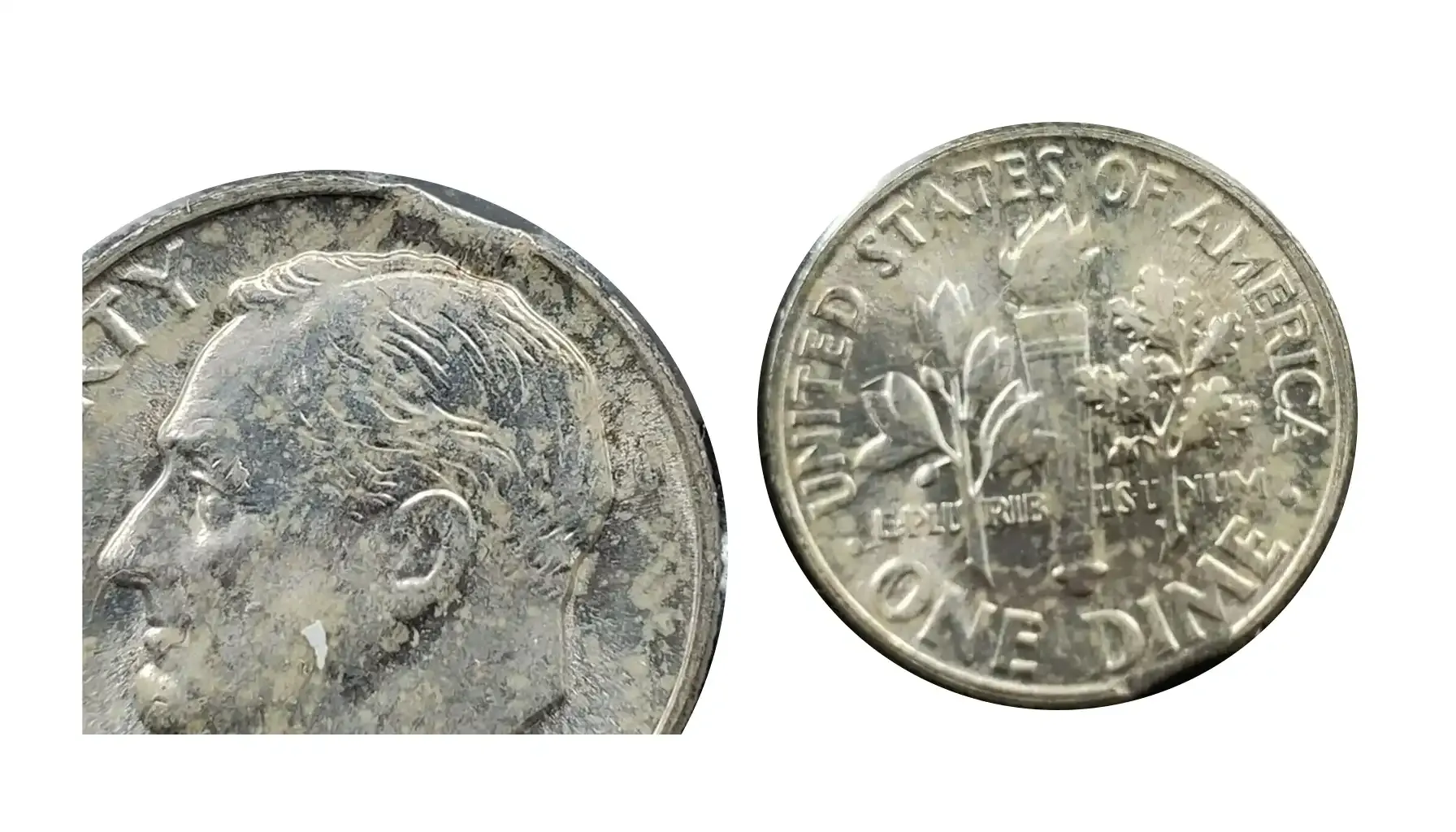
Denver Errors: 1954 D Dime Error
Of particular note is the 1954 d dime error, where displacements or doublings are most common. Such specimens are of interest to a niche group of collectors who are willing to pay a premium for a rare defect. Sometimes even a slight displacement of the stamp increases the price by 5-10 times.
Market Value and Auction Records
1954 Dime Value Today
As of 2025, the market shows that 1954 dime value today depends on a combination of factors: metal, rarity and condition.
Grade | Philadelphia | Denver | San Francisco |
G-4 | $2 | $2 | $2 |
F-12 | $3 | $3 | $3 |
XF-40 | $5 | $5 | $6 |
MS-60 | $10 | $12 | $15 |
MS-65 | $85 | $125 | $200 |
MS-67 | $450 | $600 | $1,000+ |
Please note that the prices mentioned are accurate at the time of writing but may change over time.
Auction Records and Rarity
At auction, there are impressive results. In 2023, a 1954 dime value no mint mark in MS68 sold for $4,560. Coins from Denver in MS67 reached $1,200, and a rare San Francisco example with Full Bands - $2,600. Such amounts confirm the question of “what is a 1954 dime worth?” has no single answer and depends on the specific case.
Collector Tips
Is a 1954 Dime Worth Anything?
The answer is clear - yes. Even in a very worn condition, the 1954 us dime is valuable due to its silver, and in collectible condition it can be a real treasure. Interestingly, demand is not only driven by investors – for many, this coin becomes part of family collections that are passed down through generations, meaning its value goes beyond catalogue estimates and becomes a personal story.
Tips for Preservation
To keep the coin from losing value, it is important to follow basic storage and care rules:
store coins in capsules or special holders that protect against dust and mechanical damage;
avoid direct contact with fingers - even a small amount of oil and acid from the skin will leave stains over time;
maintain a stable level of humidity and temperature, excluding storage in damp basements or in the sun;
track auction results and market prices to understand the dynamics and adjust the collecting strategy;
use soft cotton gloves when moving or inspecting the coin;
store dimes separately from other coins to avoid friction and scratches;
use special albums or folders with a protective coating that allow you to examine the coin without removing it from the cell.
These simple rules help preserve 1954 dime value and even its investment potential.
1954 Roosevelt Dime Value in Comparison
Comparisons with other issues help to see the overall dynamics of the market and how collector interest is shaped. For example, attention to earlier series, such as the 1908 Indian Head penny value, shows that older issues remain in demand even after a century. They provide a benchmark for understanding what factors make a coin significant: rarity, historical context, and condition.
When considering minting errors, it’s useful to recall parallels with other coins. These cases help collectors evaluate not only the base value, but also the potential of coins with unusual features.
In a broader sense, 1954 remains part of an entire era when silver coins were still in circulation. Therefore, the 1954 Roosevelt dime is of interest not only to collectors looking for rare pieces, but also to investors who view high grades as a long-term asset that can compete with other market segments.
Conclusion
Today, the 1954 Roosevelt dime value is determined by several factors at once: silver content, condition, rare minting errors, and current demand. The answer to the question of how much is a 1954 dime worth is not the same for everyone: for some it’s $2 for a worn specimen, while for others it’s thousands of dollars for a rare MS68 issue.
Analyzing the market, it is clear that the 1954 dime silver value remains relevant even with fluctuating metal prices. Those who study the market more deeply should follow rare finds at auctions and compare them with other issues, for example, with the 1996 quarter value. This approach helps to better navigate and understand where the real value is hidden.

 Facebook
  X (Twitter)
  Pinterest
  LinkedIn