Contents:
Among the finest achievements in American coinage, collectors especially praise the Walking Liberty half dollar series – one of a peculiar artistry, national spirit, and eternal value. Its roots can be found in the golden age of US coin design, in 1916, when the US Mint opted for a more inspiring imagery for a new generation of collectors and everyday users of cash.
Although each coin of the program reveals unique nuances of the same design, our attention here turns to the 1937 issue in particular. Designs usually get modified, but the numismatic success always comes years later. Let us explore this phenomenon and delve deeper into the 1937 Liberty half dollar value, the main types of this release, and features that may identify this coin as rare.
Historical Overview of the 1937 Half Dollar Coin
While the Walking Liberty half dollar boasts one of the most beautiful designs in US coinage, its history is full of its ups and downs. The debut of the program was set in 1916, as soon as the US Mint decided that they replace an older, more outdated coin appearance with the designs that could reflect the artistic merit of the nation. However, it was also prescribed by law (the Coinage Act of 1890, Section 3510) to update the units of currency after 25 years in use.
Finally, the era of Barber coinage, when dimes, quarters, and half dollars all bore Charles E. Barber’s uniform design, came to an end. The next engraver, commissioned to modify the dime and half dollar appearance, was Adolph A. Weinman, who managed to capture the spirit of the nation and understand the public's craving for miniature works of art.
Having been launched in 1916, the series received controversial reviews. A report from January 1917 by Mint Adjuster Chaffin noted that all three mints struggled at first to keep up with demand for the new half dollars (so intense was the interest back then, in 1916-1920). Nevertheless, not everyone welcomed the change. Several prominent numismatic publications criticized the release due to practical concerns, i.e., intricate details made the coins prone to weak strikes.
Design Features of the 1937 Liberty Half Dollar
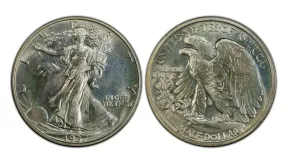
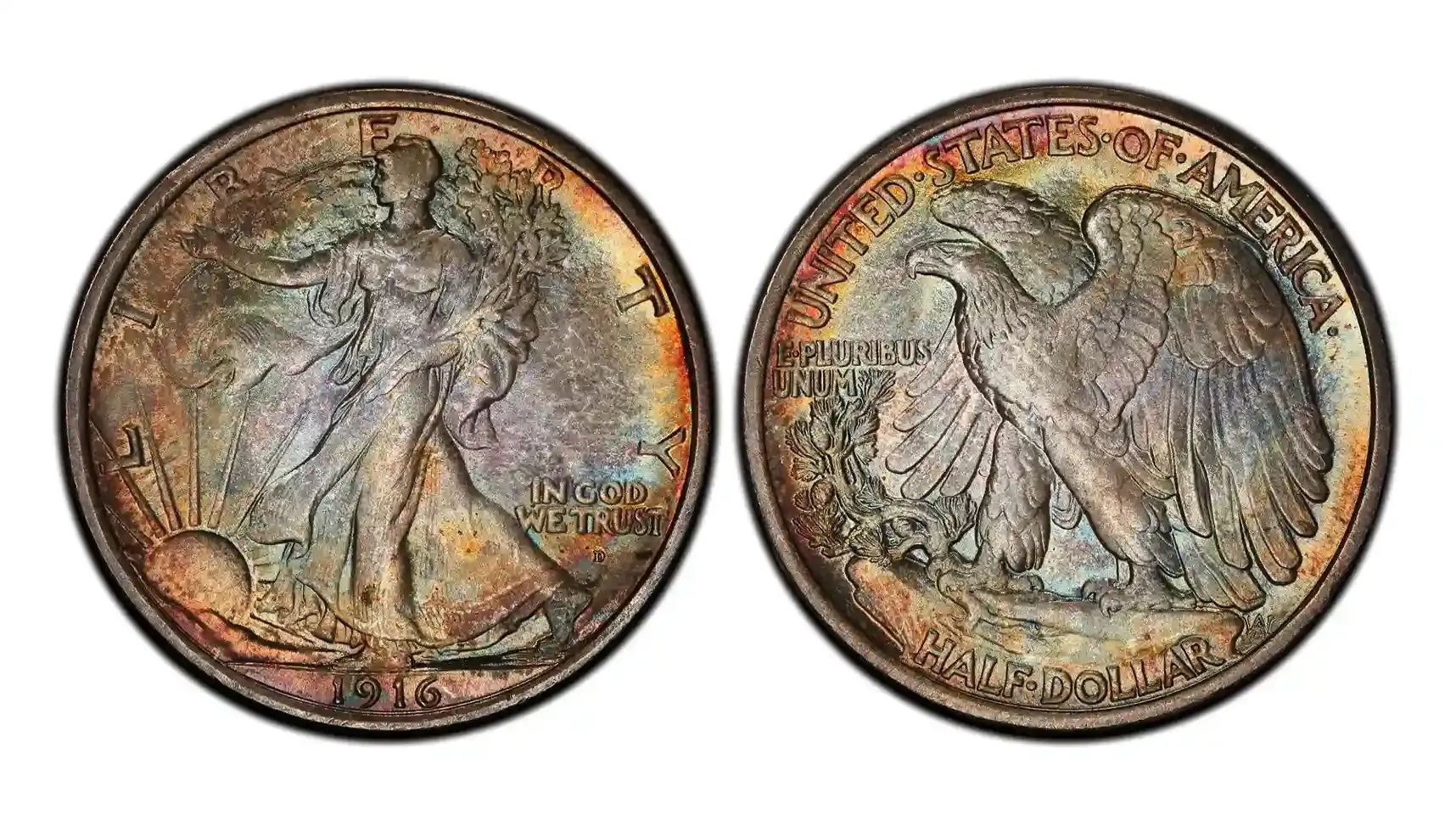
Obverse (Front): The obverse side features the magnificent figure of Lady Liberty, created by sculptor Adolph A. Weinman, going toward the rising sun with her right arm pointing forward, as well as laurel and oak in her left arm. As for the inscriptions, these include “LIBERTY” along the top edge, the national motto “IN GOD WE TRUST” to the right, and the date “1937” at the bottom.
Reverse (Back): It depicts a bald eagle on a branch, along with the inscriptions “UNITED STATES OF AMERICA” along the upper rim, the motto “E PLURIBUS UNUM” to the left of the eagle, the denomination “HALF DOLLAR”, and a mint mark below the pine branch (i.e., near the 7/8 o’clock position).
The Main Characteristics of the 1937 Silver Half Dollar | |
Designer | Adolph A. Weinman |
Minting Period | 1916–1947 (Walking Liberty series) |
Composition | 90% silver, 10% copper |
Weight | 12.50 grams |
Diameter | 30.6 mm |
Thickness | 2.15 mm (approx.) |
Edge | Reeded |
Silver Content | 0.3617 troy ounces |
Mint Marks & Types by Facility
1937 50C (Regular Strike)
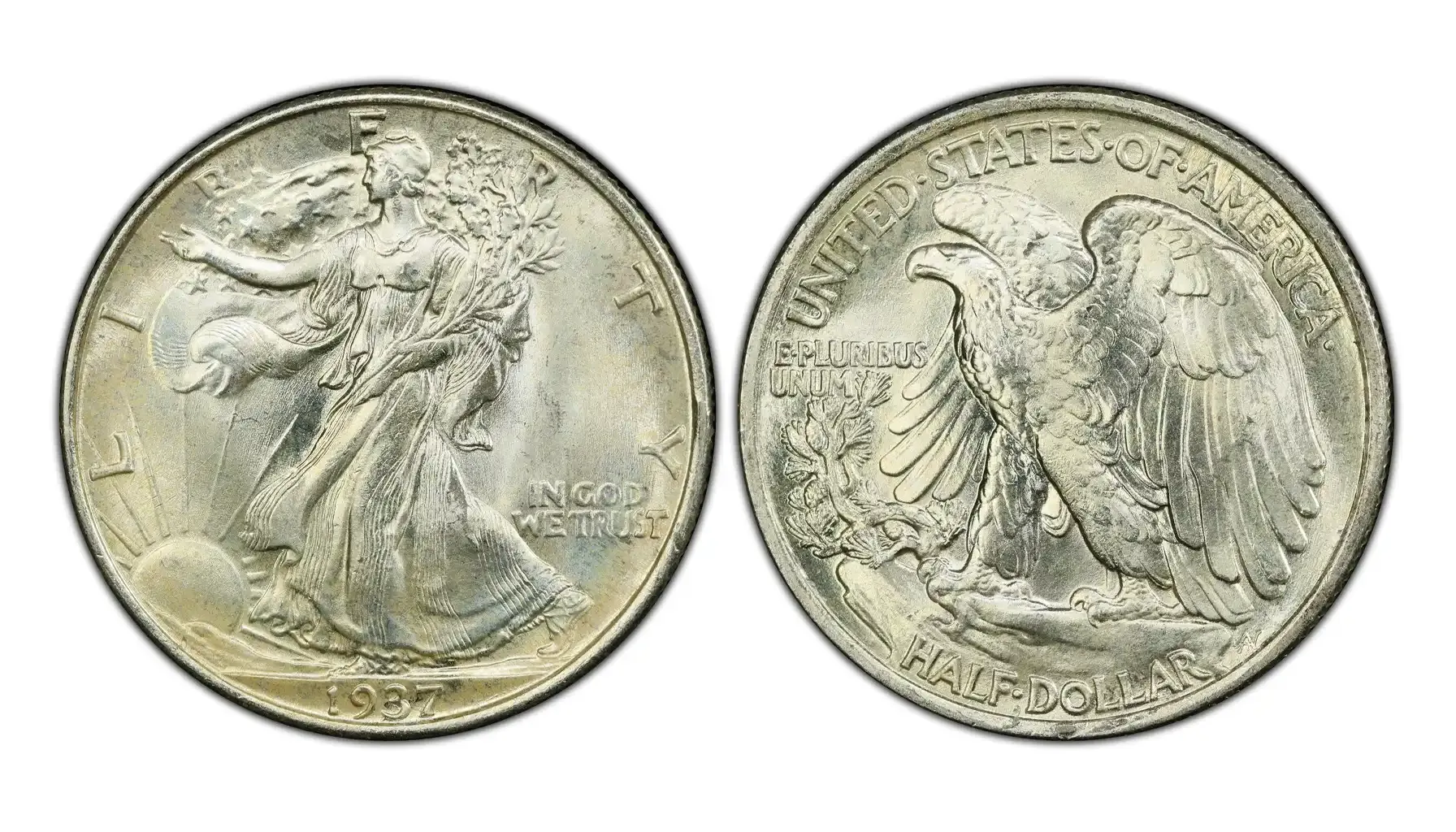
Produced by: Philadelphia Mint
Mintage: 9,522,200
Auction Record: $46,575 for MS68
Just like with other production facilities, the Philadelphia Mint issued the most common of the 1937 Walking Liberty varieties, which bore no mint mark at all. As per David Hall, these are considered relatively common in Mint State and Gem condition, though they may still be much rarer than the 1936 and 1939.
1937-D 50C (Regular Strike)
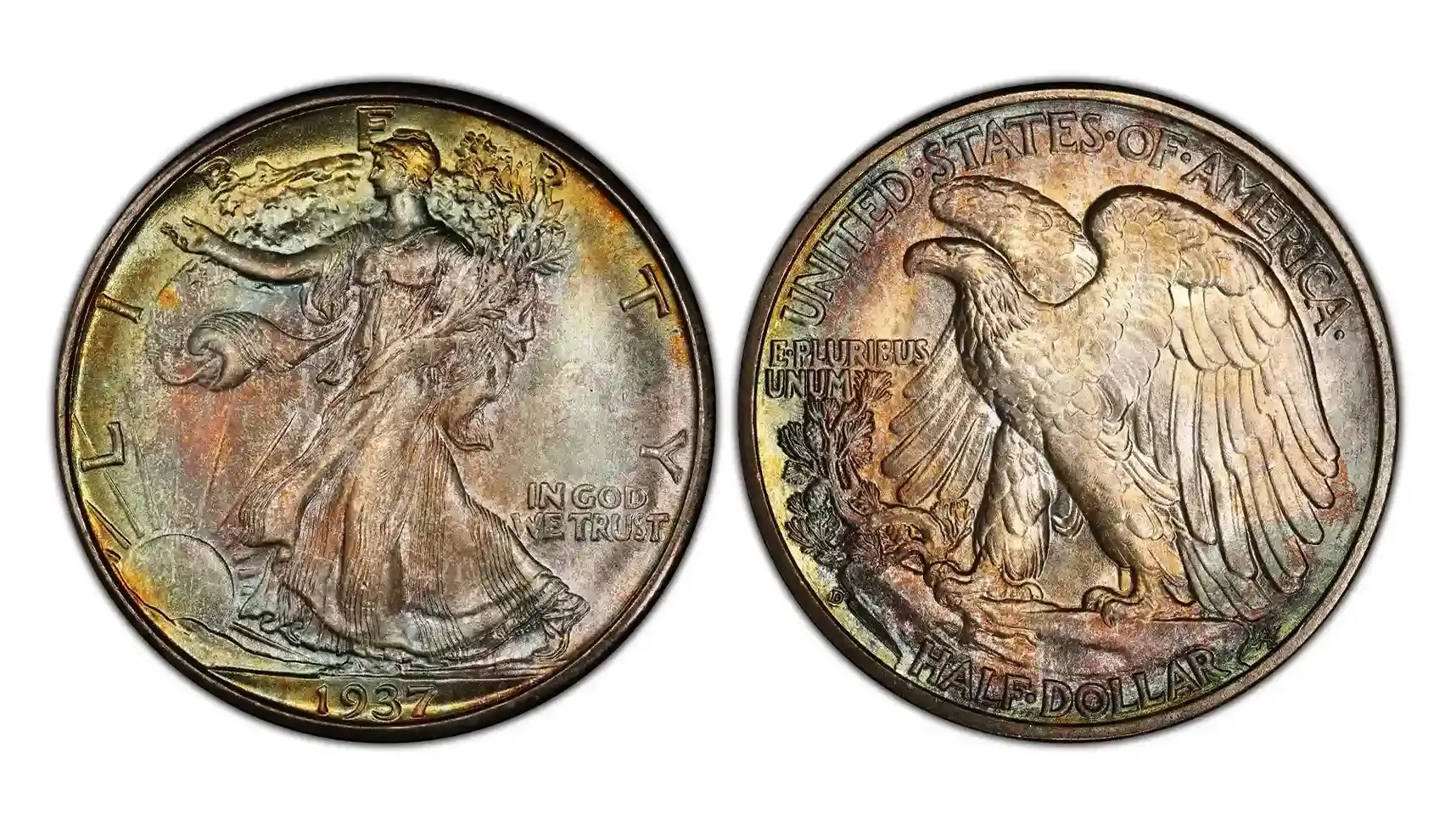
Produced by: Denver Mint
Mintage: 1,676,000
Auction Record: $23,000 for MS68
Among other Denver-produced coins of the decade, this issue may fall into the category of the moderately scarce pieces of high quality. Some numismatists state that one may potentially find an uncirculated sample in the original half dollar rolls, which is to be worth dozens of thousands of dollars.
1937 50C (Proof)
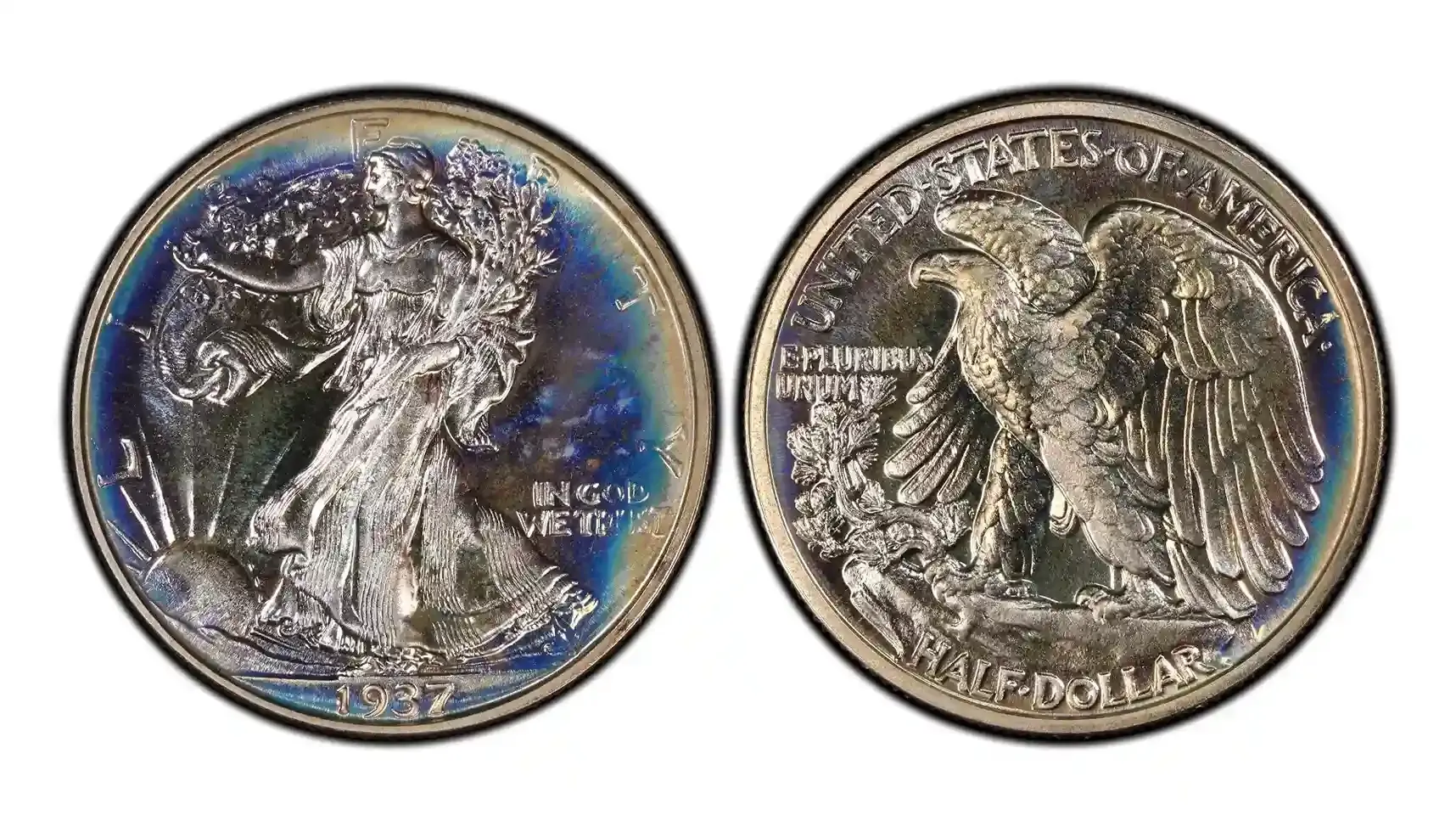
Produced by: Philadelphia Mint
Mintage: 5,728
Auction Record: $60,000 for PR68
There is a proof version which was struck in very limited quantities, exclusively for collectors and those eager to invest in silver coins. These usually feature deeply mirrored surfaces and exceptionally crafted accents, with samples in pristine condition being the most valuable of the series.
1937-S 50C (Regular Strike)
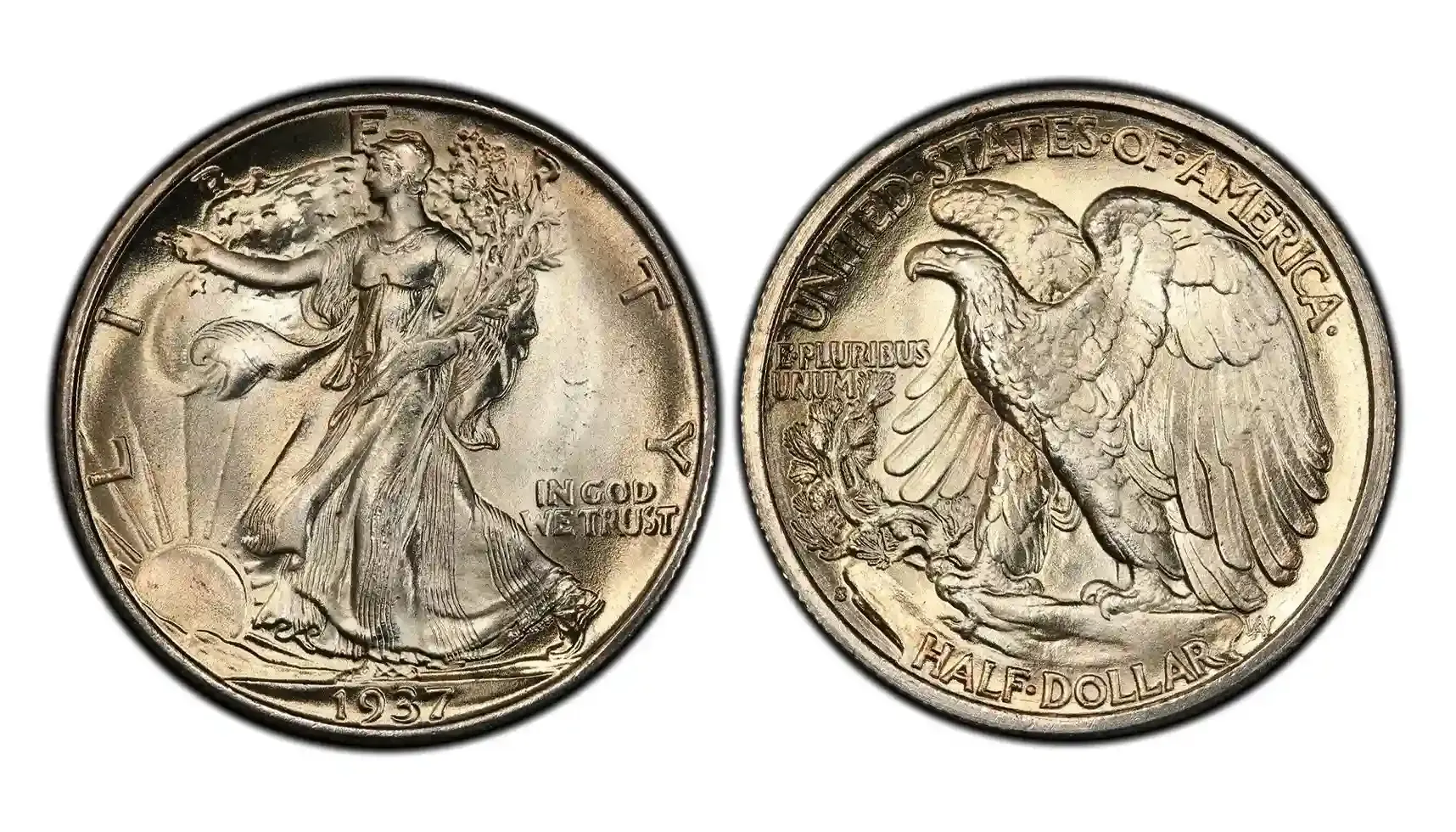
Produced by: San Francisco Mint
Mintage: 2,090,000
Auction Record: $24,000 for MS67+
As a rule, the San Francisco mint should be responsible for the production of the proof editions. That year, though, the order of things was different, and San Francisco issued only a regular edition of the coin.
“The 1937-S is a scarce coin in mint state and Gem condition, but it is available. As far as S-Mints go, it is the second most common S-Mint of the 1930s after the 1939-S. The strike is usually sharp for an S-Mint, and luster is often frosty white and outstanding.”
— David Hall, renowned numismatist, PCGS authorized dealer
PCGS CoinFacts
The Notable Errors of the Half Dollar 1937
It is always amusing to find a unique numismatic creation that does not look like any other. This, though, is usually possible when a coin leaves the mint with a striking error, a planchet flaw, or some other production anomaly that makes it exclusive, one of a kind. Due to the fact that errors are rarely repeated (or, at least, cannot bear the same irregularities), the 1937 silver half dollar value may grow significantly, even when in lower grades than other, higher-quality pieces.
In general, minting errors include:
Planchet Errors, i.e., flaws in the blank metal disk before striking.
Die Errors, i.e., imperfections or damage in the coin dies, which almost always lead to doubling or misaligned details.
Striking Errors, i.e., anomalies that tend to appear during the striking process, e.g., off-center strikes, multiple strikes, or weak impressions.
Clipping Errors, i.e., samples with the missing parts due to miscut planchets.
Overstrikes or Mules, i.e., coins struck with incorrect dies or mismatched designs.
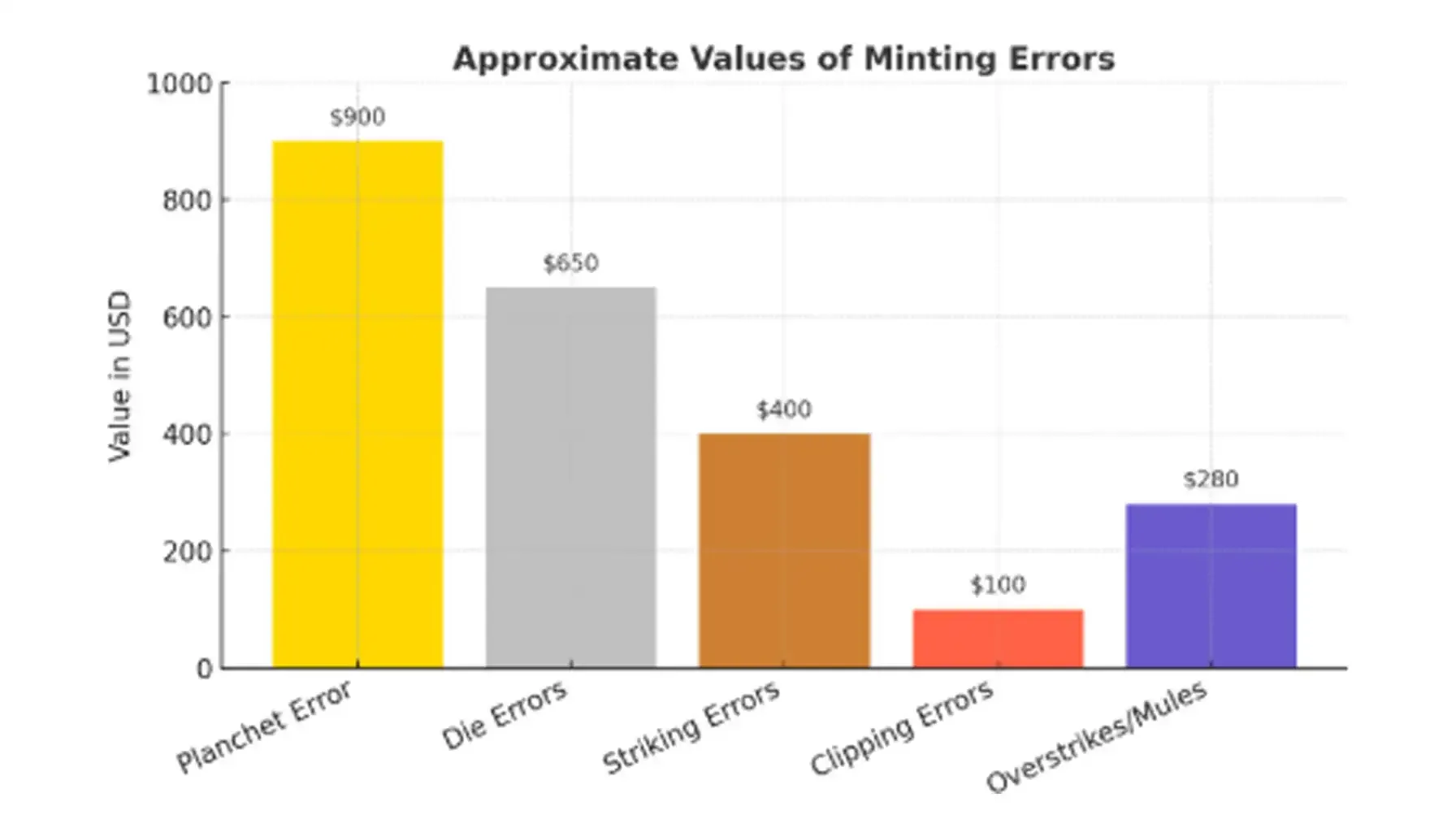
Note: Errors should not be confused with normal wear or damage, for only coins that were altered during the minting process are considered genuinely erroneous.
1937 Walking Liberty Half Dollar Value by Type and Condition
Should one stumble upon such a coin, the first obvious question that may arise is: how much is a 1937 half dollar worth? This generally depends on numerous factors, for this variable is composed of current demand, silver melt value, mint mark, and the condition of the coin (as well as the attributed grade by reputable grading services like NGC or PCGS).
Nevertheless, even widely circulated examples can be worth thousands, just like the exceptional pieces may fetch less.
1937 Half Dollar Value Today
Type | G-F | EF-AU | MS60-MS63 | MS64-MS65+ |
1937 P | $10-$20 | $25-$45 | $50-$200 | $210-$500+ |
1937 D | $12-$25 | $30-$55 | $75-$250 | $260-$600+ |
1937 S | $15-$30 | $35-$65 | $90-$275 | $280-$650+ |
1937 PR | $500-$900 | $1,000-$5,000 | $5,500-$15,000 | $16,000+ |
How to Make Sure That Your Coin Is Lit?
For those who still struggle to determine the 1937 half dollar coin value, it is vital to know where to seek assistance and how to evaluate the numismatic potential properly. On this journey, the level of proficiency is vital, but the key is in having the right tools nearby. Tedious forum searches are a thing of the past – one app for quick but comprehensive numismatic explorations is the way.
Coin ID Scanner is an innovative application for those who once fell in love with coins. It comprises a few essential features that help one identify, potentially evaluate, and manage collections. The tool offers the following benefits.

Instant Coin Identification: Explore the numismatic profiles of the coins, which generally include country of origin, years of minting, denomination, composition, diameter, weight, edge type, and current market price.
Smart Collection Management: Manage your digital collection inside the app to track the items you own and the ones you might be missing.
Massive Database: Access information on over 187,000 coins worldwide via manual search or smart filters.
AI Coin Helper: Leverage the potential of an AI-powered specialist to get the most out of your collecting experience.
Silver in coins is not the most valuable aspect – emotions are. Embrace the appealing Walking Liberty issues and let your collection thrive!

 Facebook
  X (Twitter)
  Pinterest
  LinkedIn