Contents:
Charles E. Barber was quite a productive engraver: his works could be seen on numerous numismatic creations, including the renowned Liberty Head nickel or Barber quarters, but his true fame is frequently associated with unheralded dimes. By 1910, the series had been gradually coming to an end, and its price was only soaring.
The 1910 dime is definitely a fine specimen to explore, but its worth can be hard to decipher. So, where to check coin value in this case? Which varieties of this issue to pay attention to, and what do they look like when in Mint State?
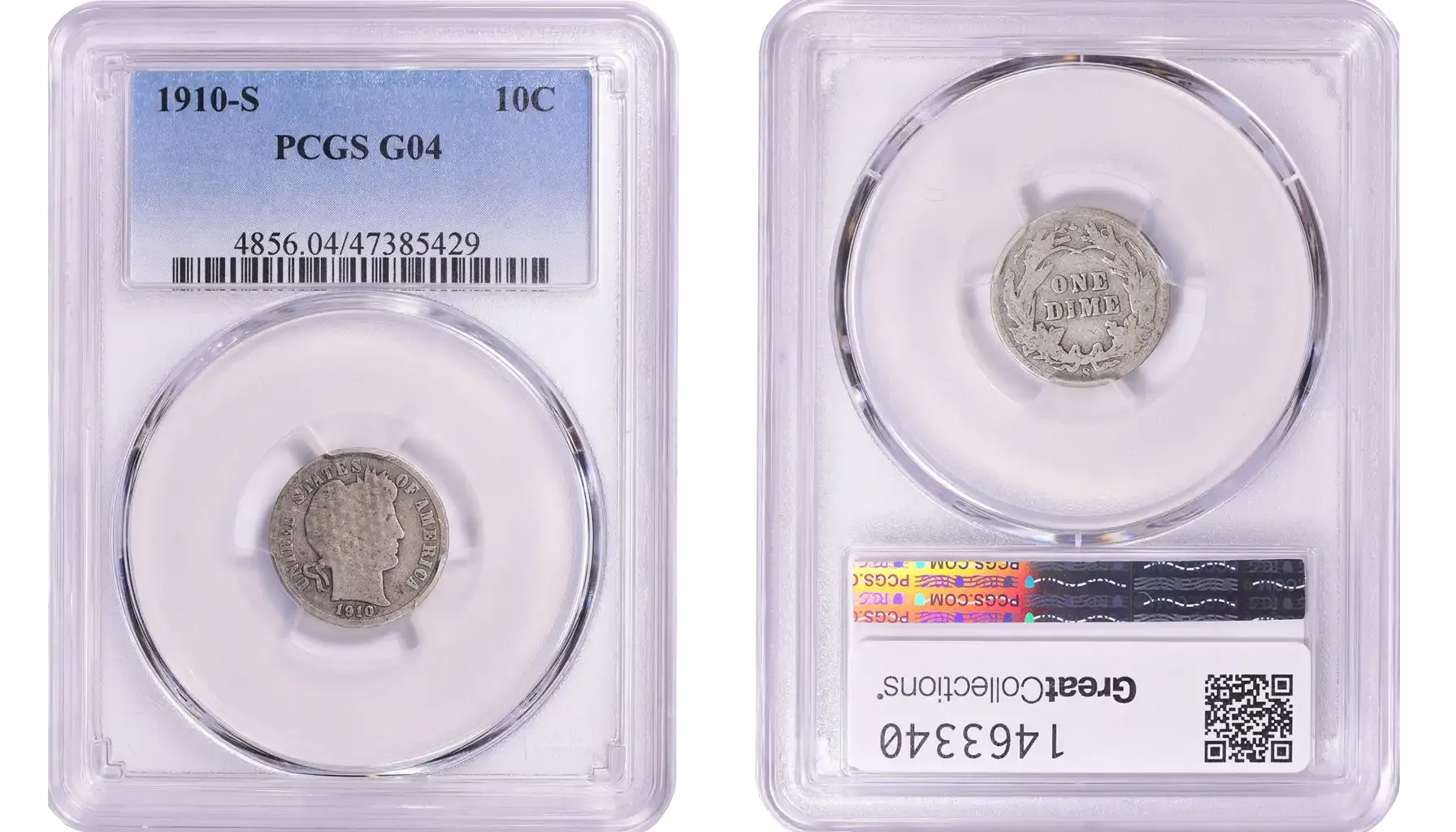
Design and Specifications of the 1910 Silver Dime
Obverse: Depicts the profile of Liberty with a laurel wreath and olive leaves, as well as the inscription “UNITED STATES OF AMERICA” along the upper rim and the date “1910” beneath.
Reverse: Introduces the wreath of wheat, oak, and corn branches, along with the denomination “ONE DIME” inscribed in the center and the mint mark at the 6 o’clock position.
The Main Features of the 1910 Silver Dime | |
Designer | Charles E. Barber, the Chief Engraver of the US Mint |
Composition | 90% silver, 10% copper |
Weight | 2.50 grams |
Diameter | 17.9 mm |
Thickness | 1.35 mm (approx.) |
Edge | Reeded |
Mintmarks | None for Philadelphia “D” for Denver “S” for San Francisco |
Types by Mint Marks and Production
1910 10C
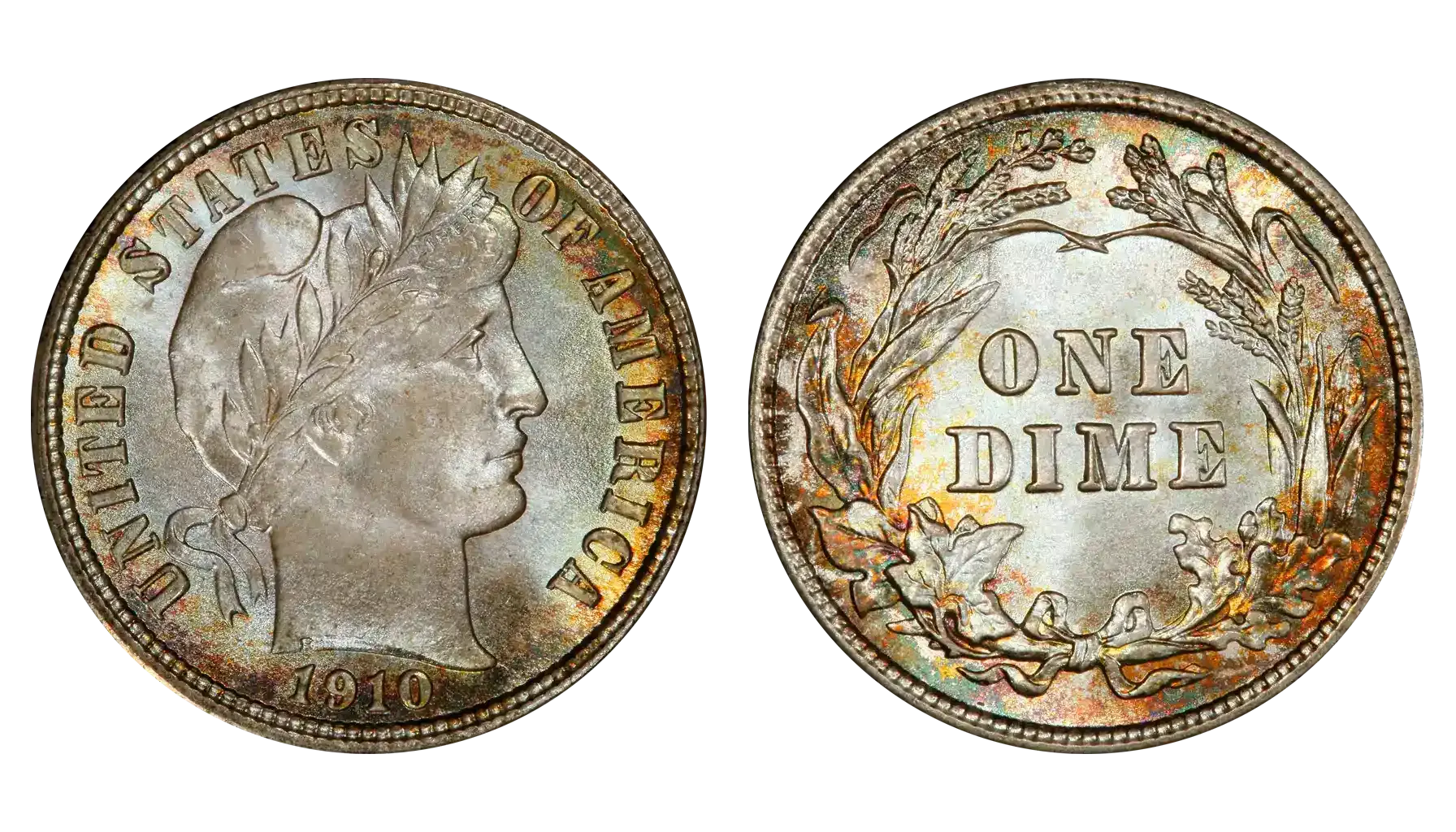
Produced by: Philadelphia Mint
Mintage: 11,520,000
Auction Record: $23,500 for MS68+
The 1910 variety issued by the Philadelphia Mint is the most common among other releases of the year. Although most Mint State pieces can be attributed to the mid-grade range, the date is famous for the extraordinary MS68+ specimen once held in the Simpson Collection (one of only two Barber dimes of the entire series certified at that high level by PCGS, according to Ron Guth).
1910-D 10C
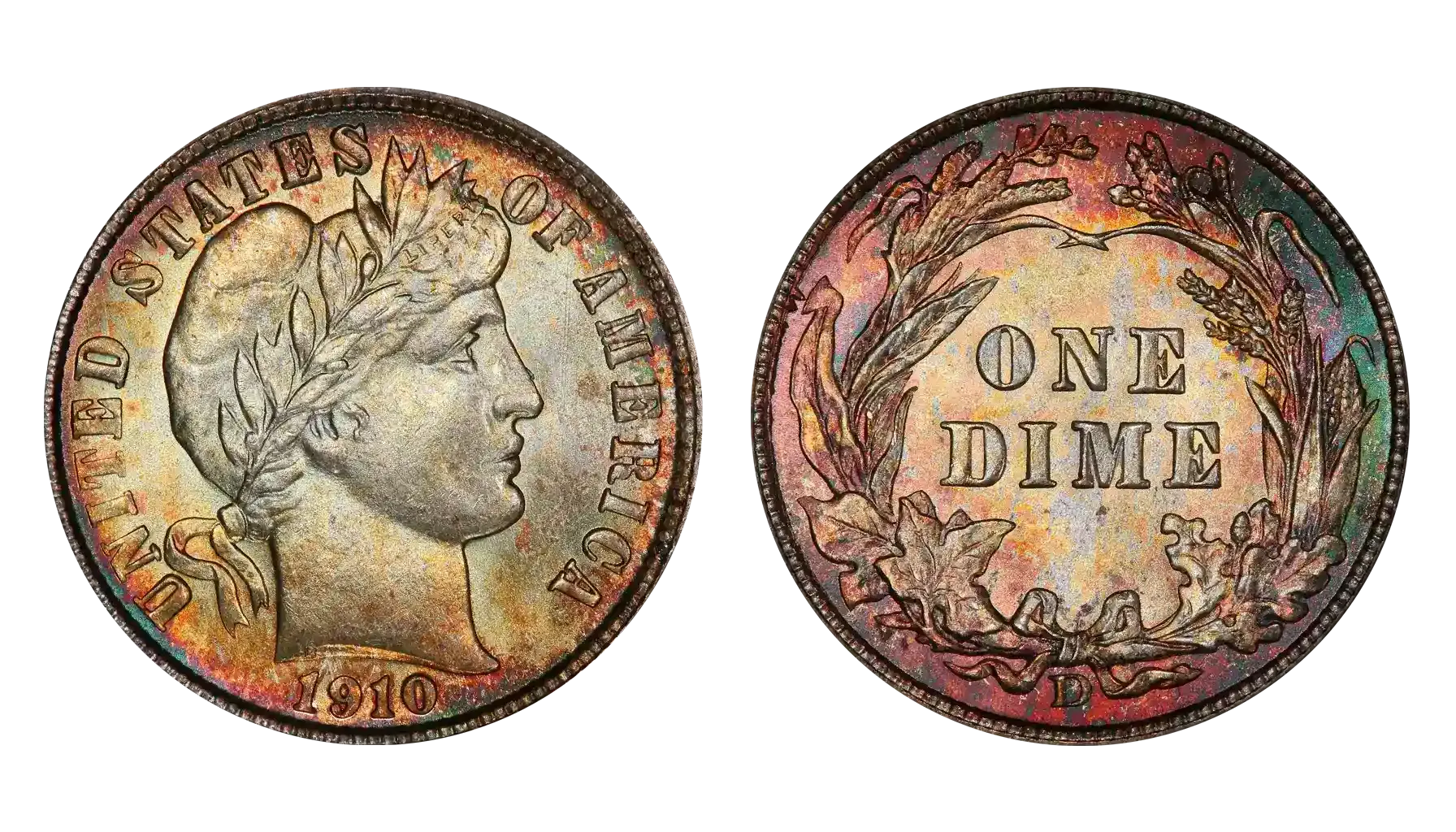
Produced by: Denver Mint
Mintage: 3,490,000
Auction Record: $16,100 for MS67
As usual, the Denver variety, i.e., the 1910 D dime, is easy to locate, but when it comes to Mint States specimens, their values go up. Even though its mintage is almost similar to that of the 1910-S, the Denver issue is the scariest, given its “survival rate”, with only a few MS67 examples representing the top of the condition ladder.
1910-S 10C
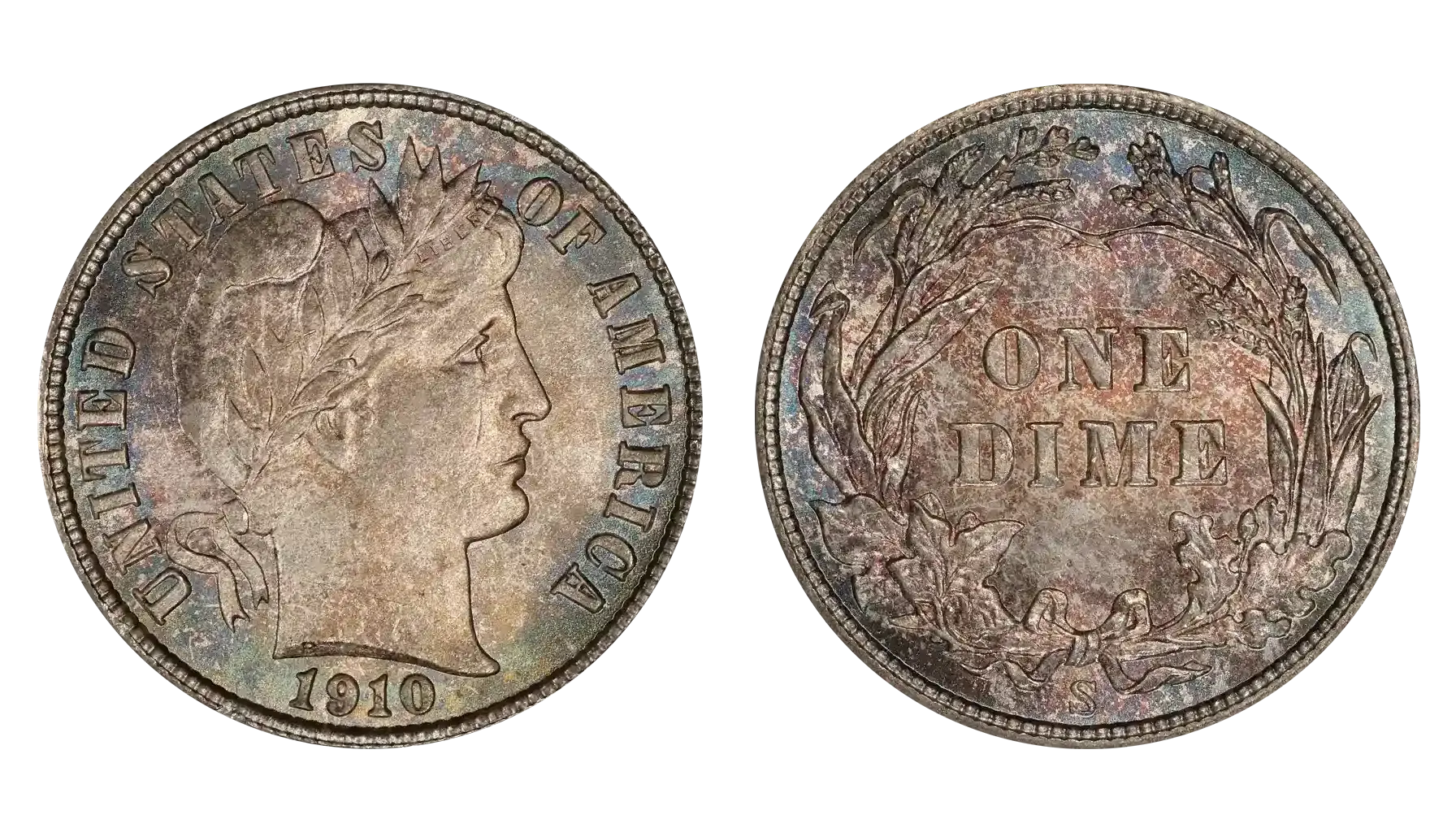
Produced by: San Francisco Mint
Mintage: 1,240,000
Auction Record: $21,150 for MS67 CAC
This variety is often viewed as the rarest, but, as we have stated before, the amount of surviving pieces is not at its lowest. Anyway, well-preserved instances exhibit an appealing range of luster, and the finest examples cluster around the MS67 level.
1910 10C (Proof)
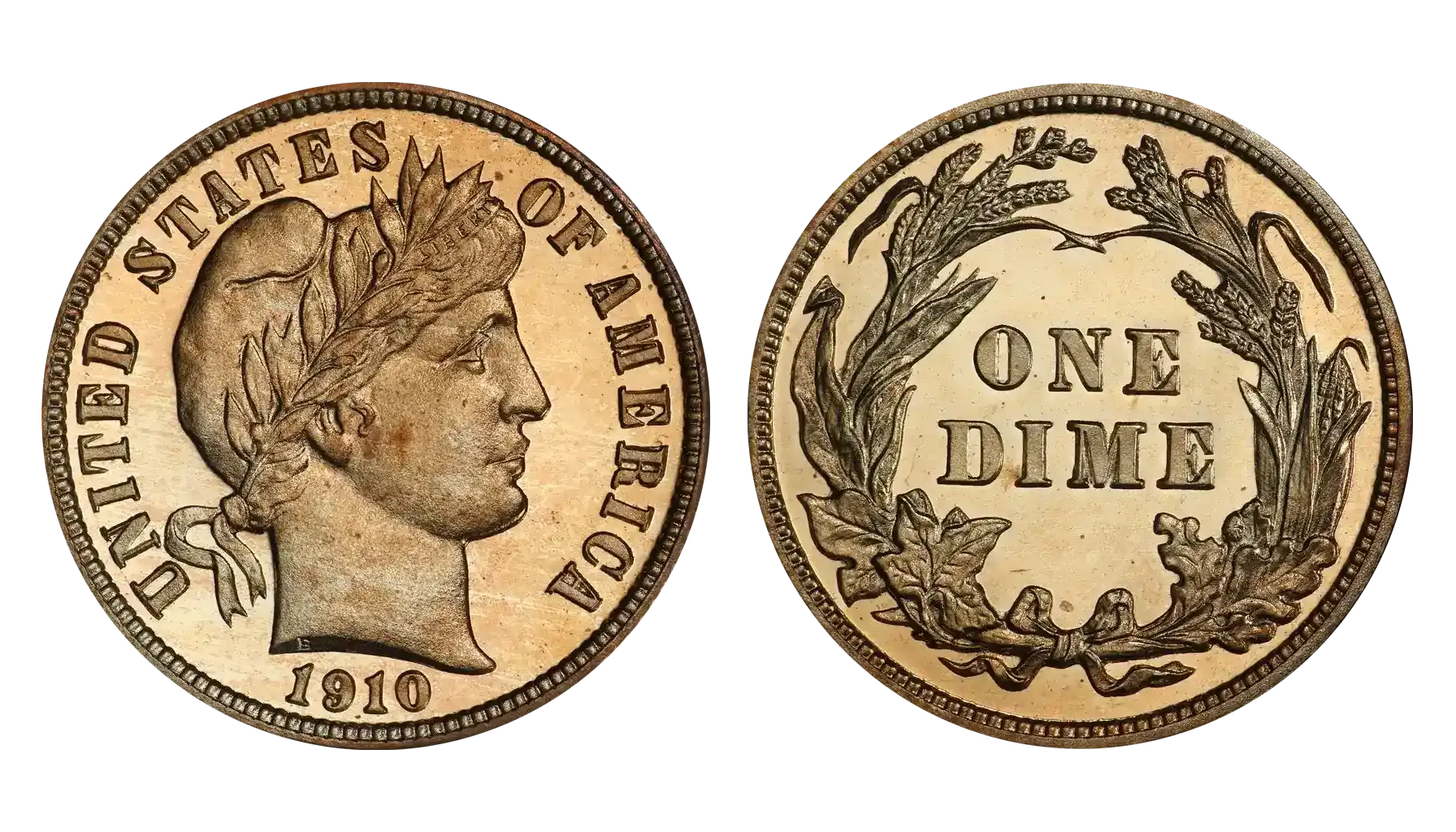
Produced by: Philadelphia Mint
Mintage: 551
Auction Record: $33,600 for PR69
The proof version of the coin is a small-mintage classic that displays the finest mirrored surfaces characteristic of early-20th-century Philadelphia proof coinage. It is by far the most valuable piece in the 1910 iteration, which is obvious and quite natural to occur.
“The 1910 Dime is usually well-struck and well-made, reflecting the superior quality of Philadelphia Mint products.”
— Ron Guth, a licensed Certified Public Accountant, the creator of PCGS CoinFacts, a numismatic expert
PCGS CoinFacts
Actual Silver Weight and Intrinsic Value
Before we turn to the market worth of these coins and what collectors are ready to pay, it is vital to understand the intrinsic value first.
1. First, so as to define the intrinsic value of the dime, it is vital to calculate its actual silver weight. If not deviated, the 1910 dime weighs 2.50 grams and is composed of 90% silver. This means that:
Total Weight × Silver Purity = ASW (in grams)
2.50 g × 0.90 = 2.25 g of silver
2. So as to convert it to troy ounces, we should divide the silver weight by 31.1035, i.e., the number of grams in one troy ounce.
ASW (in troy oz) = ASW (g) / 31.1035
ASW = 2.25 / 31.1035 ≈ 0.0723 troy oz
3. Finally, when the silver weight is known, we can find the intrinsic worth of the coin. To make it relevant, please consult the latest data regarding silver rates (via JM Bullion or APMEX).
ASW × Current Silver Price = Intrinsic Value
0.0723 × 58.50 (as of December 2025) ≈ $4.23
1910 Dime Value Chart
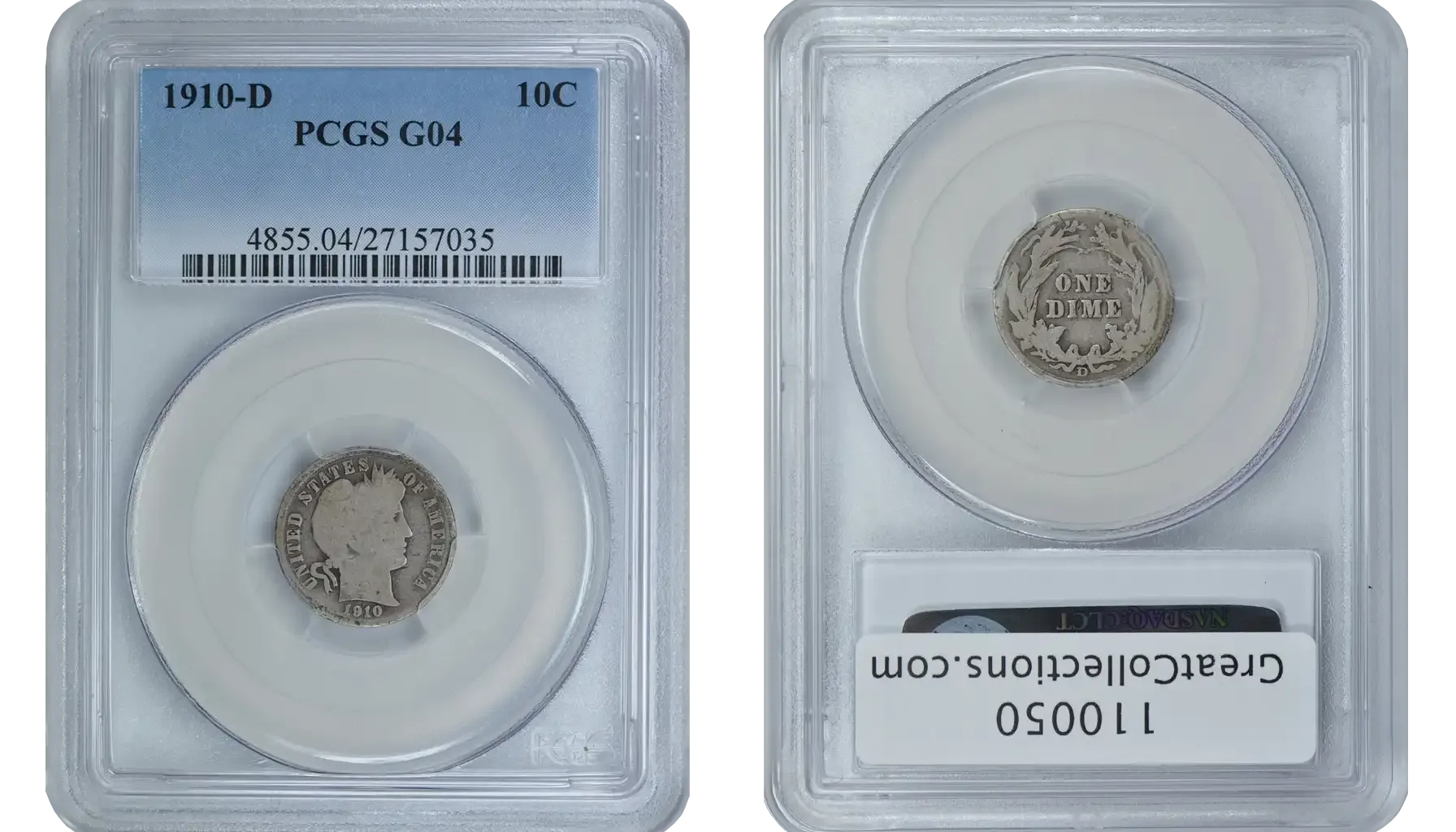
The grade of a 1910 Barber dime is a definitive factor that contributes to the formation of its price. Those instances that have been severely circulated may not be worth a lot, while uncirculated pieces tend to cost several hundred dollars or more. Consequently, when the value curve rises, the condition improves, and vice versa. So, how much is a 1910 dime worth?
Grade | 1910 (P) | 1910-D | 1910-S | 1910 Proof |
Good (G4) | $12–$15 | $12–$15 | $14–$35 | – |
Fine (F12) | $18–$21 | $20–$25 | $70–$80 | – |
Very Fine (VF20) | $26–$42 | $30–$60 | $100–$135 | – |
Extra Fine (EF40) | $50–$65 | $80–$100 | $150–$185 | – |
About Uncirculated (AU50) | $80–$235 | $125–$380 | $200–$625 | – |
Mint State (MS63) | $240–$275 | $475–$550 | $700–$825 | – |
Gem Mint State (MS65) | $450–$625 | $2,175–$2,750 | $2,250–$2,600 | – |
Proof (PR66) | – | – | – | $9,000+ |
The listed values are accurate as of the publication date and are subject to change over time. For more relevant data, please rely on tools like Coin ID Scanner to identify numismatic creations and learn more about their backgrounds. The value can be hidden here.
Errors and Varieties That Boost the 1910 Dime Value Today
Any deviation is exclusive, for there is a low chance of occurrence of the same error on the design. This fact promotes the idea that owning erroneous coins means owning wealth, but the type of the 1910 dime error and the severity also matter.
Doubled Die Obverse (DDO)
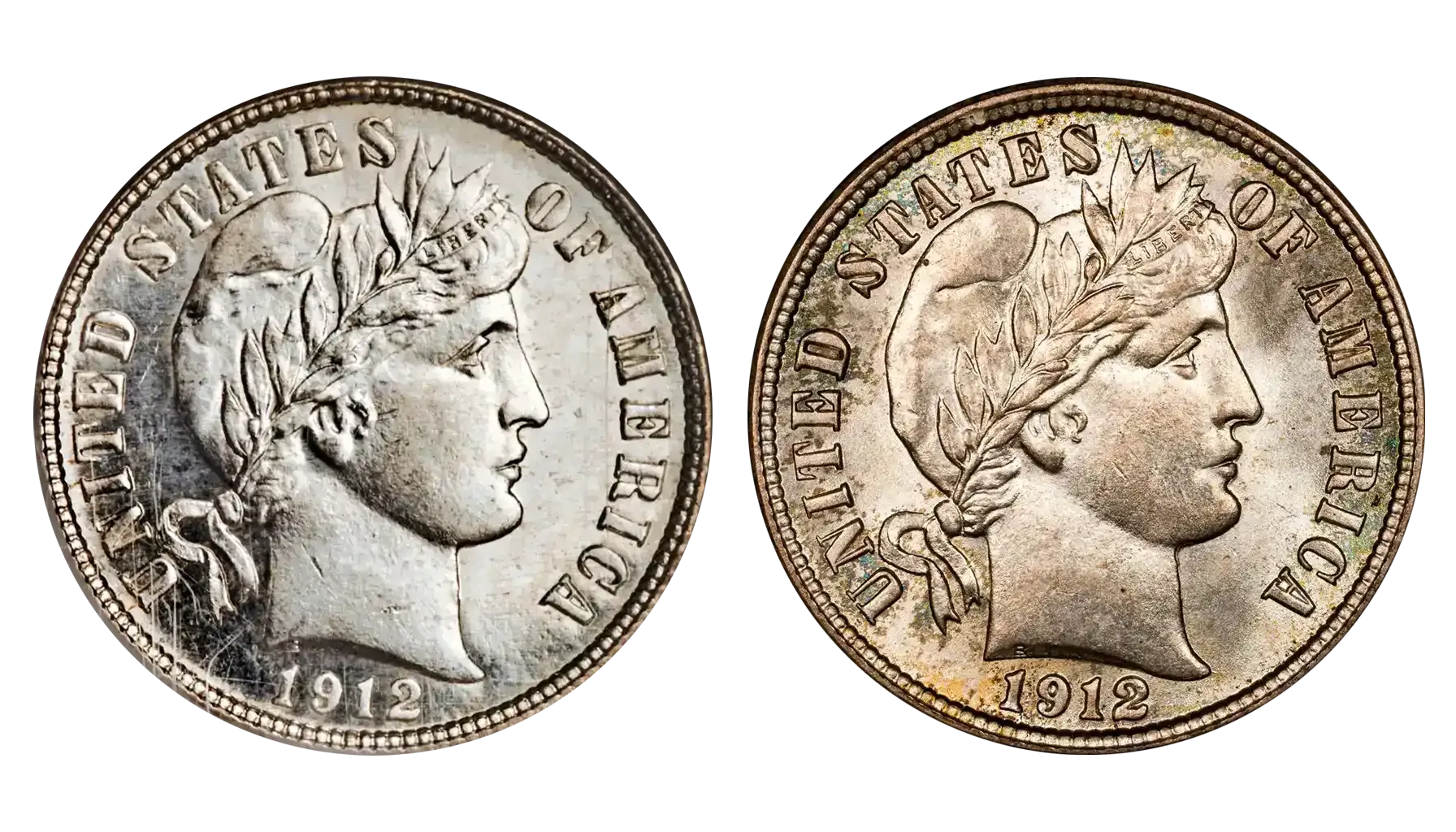
Estimated Value: $150 – $1,000 (can exceed $2,000 in top MS condition)
The double die obverse, as well as reverse, belongs to the group of the most popular imperfections, caused by misalignment of the die during hubbing. The degree of this doubling can be different: sometimes, it is barely noticeable; sometimes, it is extreme. Anyway, high-grade samples efficiently draw the attention of collectors, no matter what condition they may be in.
Off-Center Strike
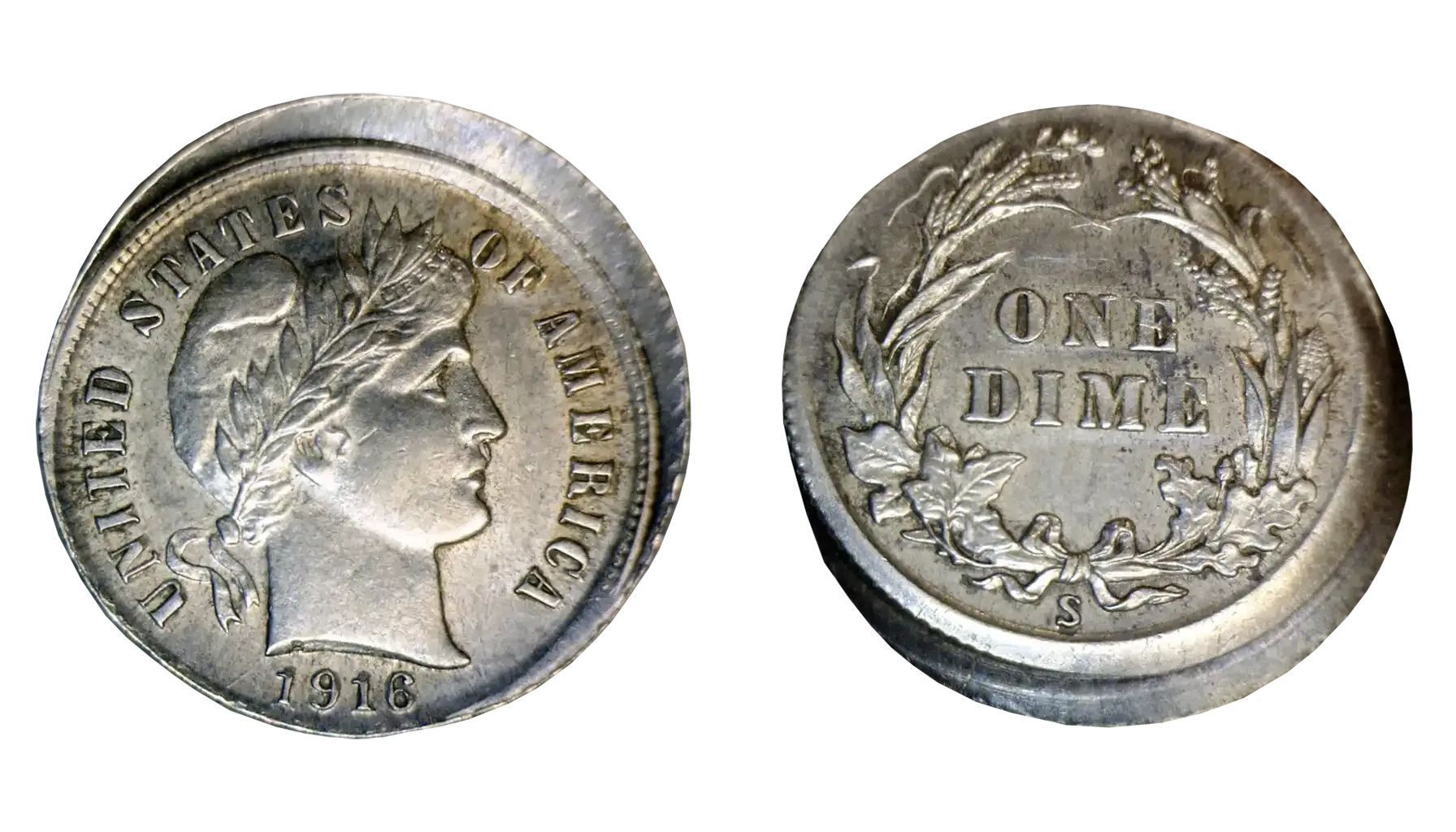
Estimated Value: $50 – $500+ (depending on the offset and legibility)
When the design seems to be misplaced, it usually refers to an off-center strike. As a rule, this happens when the coin has not been properly aligned within the press during striking, and the result is the image displaced from the center. For example, a coin with a 40% offset, yet with a legible date and a part of the legend, can sell for several hundred dollars, which guarantees the highest 1910 silver dime value possible.
Repunched Mint Mark (RPM)
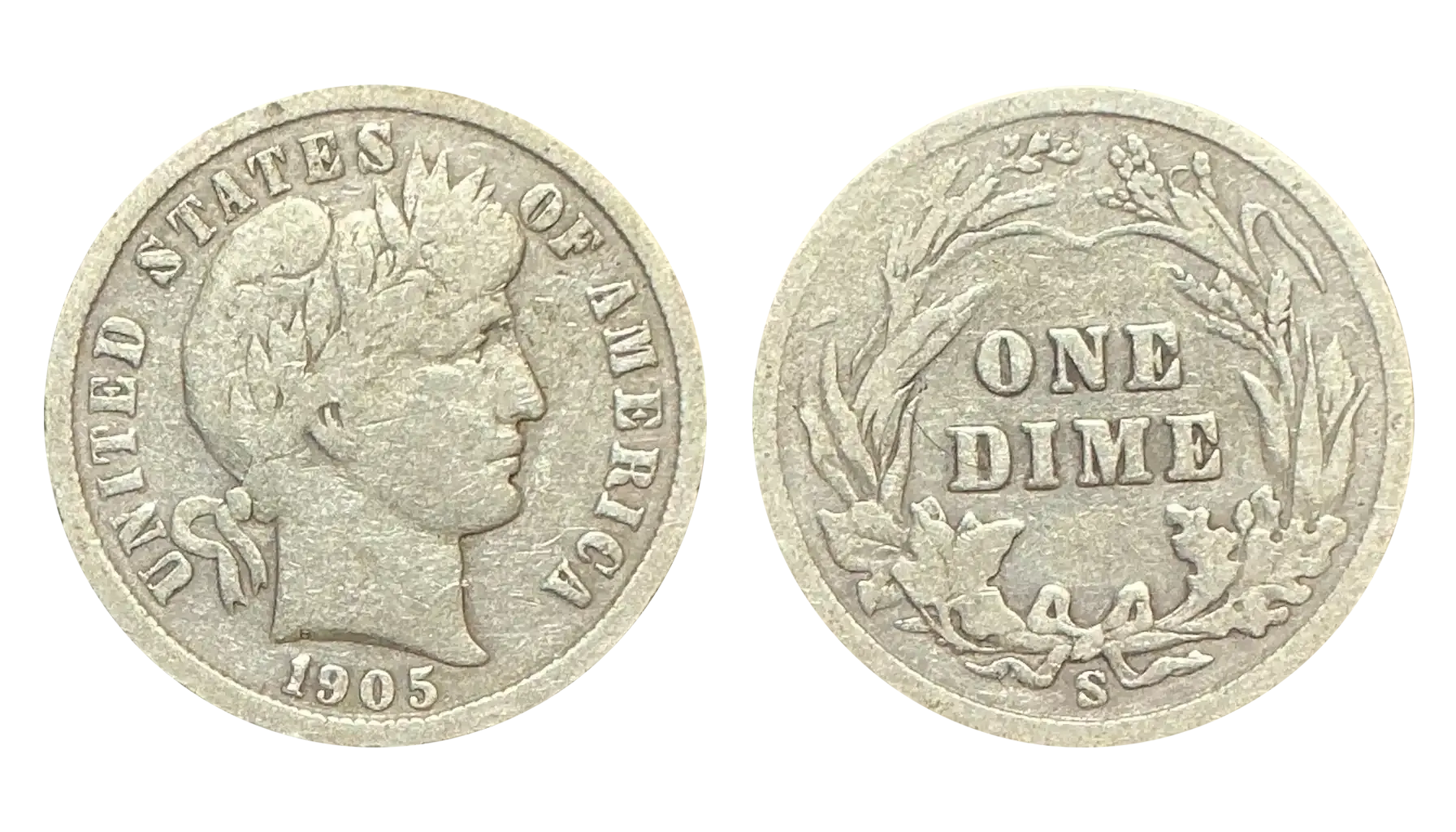
Estimated Value: $60 – $400
A repunched mint mark variety is the type of deviation that occurs when the die has been misaligned from the original impression. The result is the “doubled” image of the mint mark, and crisp, well-defined RPMs are especially collectible, as they are easier to spot and demonstrate the quirks of the minting process.
The dime should not be forgotten – it is valuable as much as other denominations cannot be.

 Facebook
  X (Twitter)
  Pinterest
  LinkedIn