Contents:
- 3 Steps to Quick 1911 Penny Valuation
- 1911 Wheat Penny Value Chart
- What Is a 1911 Wheat Penny?
- Identify Your 1911 Penny: Mint Marks & Varieties
- How to Grade Your 1911 Penny
- Color Designations
- Rare 1911 Penny Errors
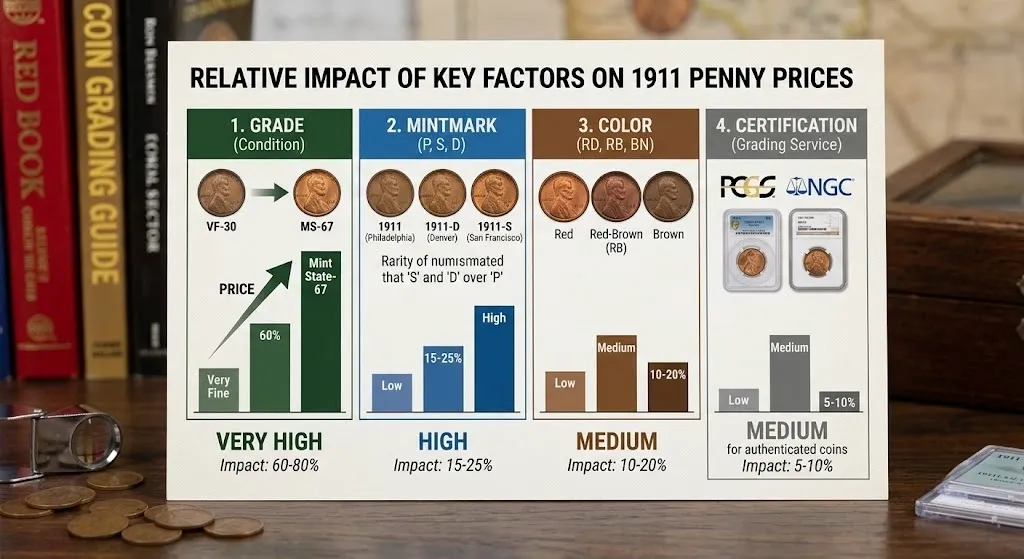
- Price Drivers and Market Signals
- How and Where to Sell Your 1911 Penny
- Certify Before You Sell
- FAQ
A 1911 Lincoln Wheat cent in circulated condition typically ranges from a few dollars to around $20, depending on mint mark and wear. The 1911-S (San Francisco) is the key date—even low-grade examples are worth $30-$50. High-grade uncirculated coins, especially in Red (RD), can reach thousands of dollars. Certified MS66-MS67 examples have sold for $20,000-$66,000 at major auctions. The rare 1911 Matte Proof, with only about 400 certified across all grades, commands mid-four-figure to five-figure prices in PR64-PR67.
"The 1911 cent sits at the intersection of classic early twentieth-century U.S. coinage and a modern market that increasingly relies on third-party certification and large auction platforms. Understanding mintmark, grade, and color is the foundation for any meaningful valuation—these three factors jointly determine whether a 1911 penny is common item or a serious collectible." — Laura Bennett, Senior Numismatic Analyst, Coin ID Scanner
Last updated: July 2026 — Prices verified against current auction sales and dealer reports.
3 Steps to Quick 1911 Penny Valuation
Step 1 — Find the Mint Mark
Look under the date:
- No mint mark = Philadelphia
- D = Denver
- S = San Francisco
The presence of an S or D can increase the value 10× or more compared to a Philadelphia no mint mark issue. For example, a 1911 Philadelphia cent in Good condition is worth about $0.50—$1.00, but a San Francisco issue in the same grade is worth $30—$50.
Step 2 — Match Condition
There are two varieties: circulated and uncirculated. Look for wear on Lincoln's hair and wheat stalks. Even a small improvement from Good to Fine can double the value. For Denver issues, moving from Good $6—$12 to Extremely Fine $50—$85 represents a 7× increase.
Step 3 — Check for Errors and Color
Check for errors and color (BN, RB, RD; errors like RPMs or doubled dies add premiums). Color designation is critical in uncirculated grades: an MS65 Red (RD) 1911-D can be worth 50-100 times more than the same coin in Brown (BN). Repunched mintmarks (RPM) and other errors can add $100-$1,000+ to the base value.
1911 Wheat Penny Value Chart
According to PCGS Q4 2025-Q1 2026, the table below shows average price ranges for 1911 Lincoln Wheat cents by mint and grade. Prices are for Brown pieces in circulated and uncirculated states. Red-Brown and Red items in mint state often 2-10× the BN price at MS-65 and above.
| Mint | Good-4 | Fine-12 | Extremely Fine-40 | Uncirculated MS-63 |
|---|---|---|---|---|
| 1911 Philadelphia | $0.50-$1.00 | $2.00-$5.00 | $8.00-$15.00 | $50-$75 |
| 1911 D (Denver) | $6.00-$12.00 | $20.00-$35.00 | $50.00-$85.00 | $140-$200 |
| 1911 S (San Francisco) | $30.00-$50.00 | $75.00-$120.00 | $150.00-$250.00 | $325-$500 |
MS-65 RD and higher grades can reach $5,000—$66,000 for 1911 D and 1911 S. Matte Proof cents PR64-PR67 range from $2,000 to $15,000+.
Comparison Table by Color for MS-65
| Mint | MS65 BN | MS65 RB | MS65 RD |
|---|---|---|---|
| Philadelphia | $140-$200 | $400-$600 | $1,000-$2,000 |
| Denver | $300-$500 | $800-$1,200 | $1,500-$3,000 |
| San Francisco | $1,000-$1,500 | $3,000-$5,000 | $5,000-$10,000+ |
Ranges are updated quarterly based on PCGS/NGC data and a 12-month rolling sample of major auction results. Actual realized prices may vary with strike quality and certification pedigree.
"At the MS68 Red level for 1911 Philadelphia, the spread between Red and Brown can reach 220-to-1—the same numerical grade, but one coin is worth $110,000 and the other barely $500."— PCGS Price Guide, January 2026
What Is a 1911 Wheat Penny?
The 1911 Wheat Penny is a United States Lincoln cent struck in bronze at three U.S. mints. Designed by Victor David Brenner and introduced in 1909, the Lincoln cent was the first regular-issue U.S. coin to feature a real person—President Abraham Lincoln.
| Field | Specification |
|---|---|
| Composition | 95% copper, 5% tin and zinc (bronze) |
| Weight | 3.11 grams |
| Diameter | 19.00 mm |
| Designer | Victor David Brenner |
| Edge | Plain |
| Mintage (1911) | Philadelphia: ~101,177,787 Denver: ~12,672,000 San Francisco: ~4,026,000 |
| Matte Proof Mintage | ~1,725-2,411 (sources vary) ~400 certified by PCGS across all grades |
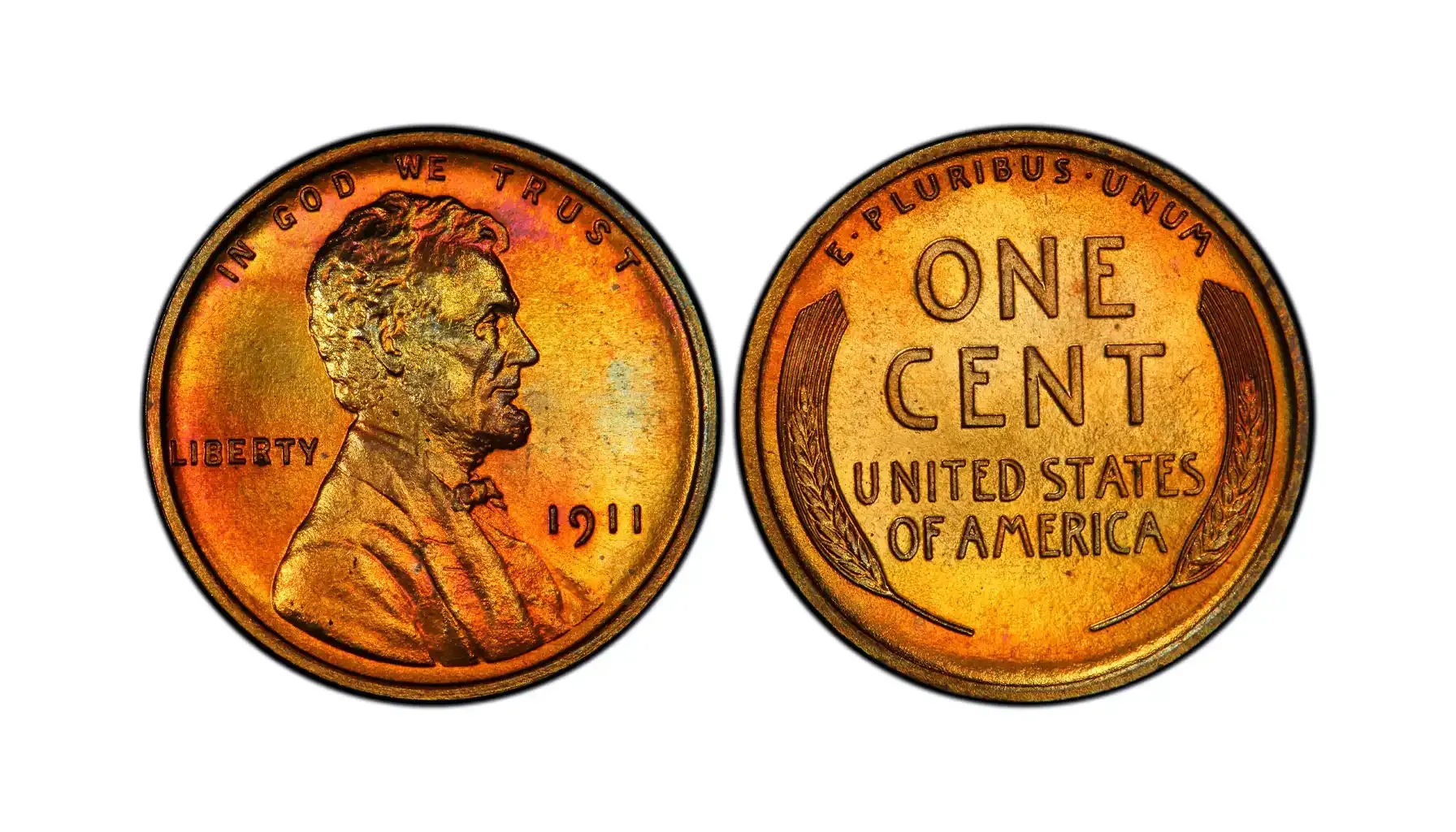
The obverse shows Lincoln's profile facing right, with IN GOD WE TRUST motto above, LIBERTY to the left, and the date to the right. The reverse displays two stylized wheat ears flanking ONE CENT and UNITED STATES OF AMERICA, with E PLURIBUS UNUM above.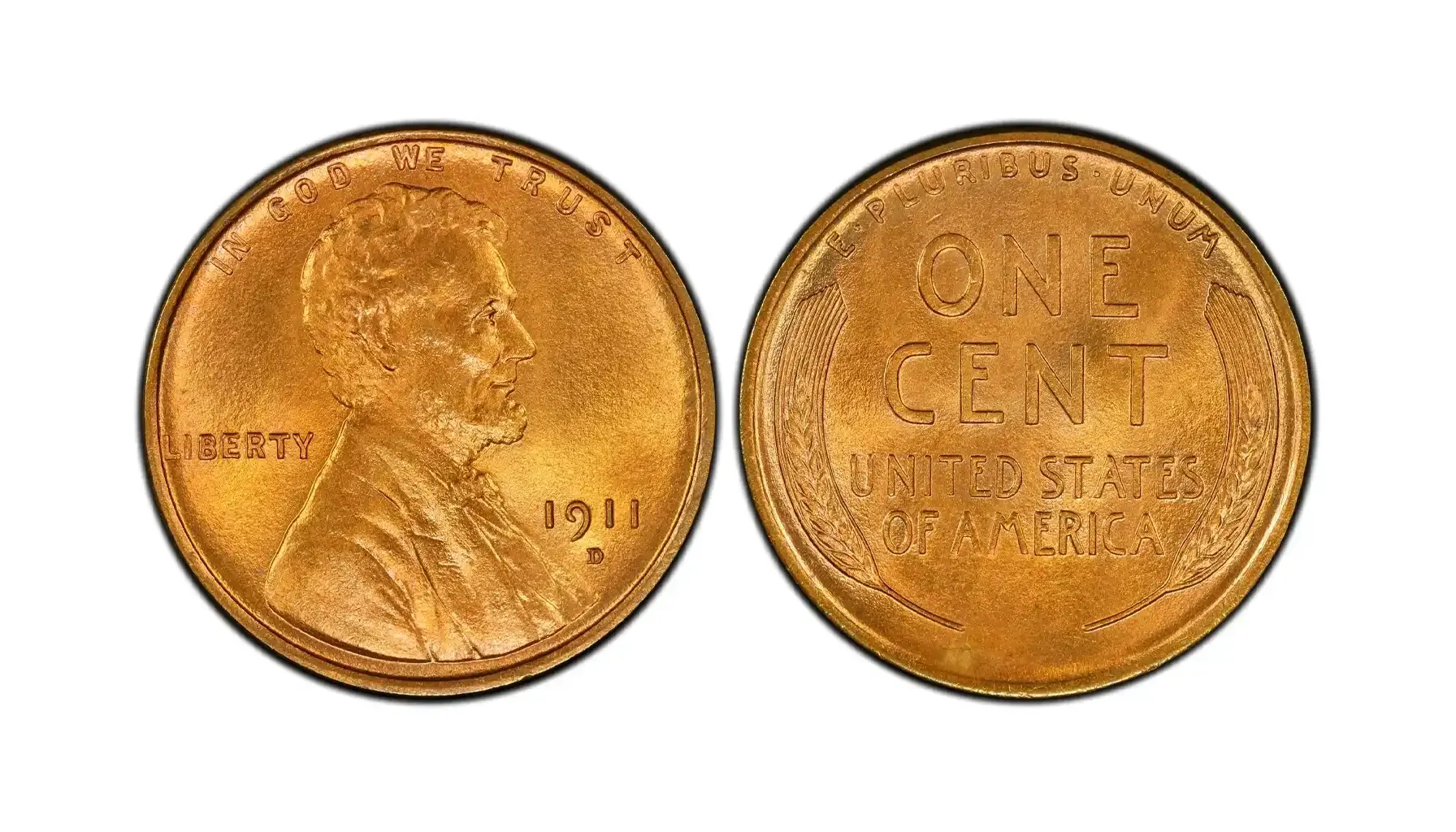
Identify Your 1911 Penny: Mint Marks & Varieties
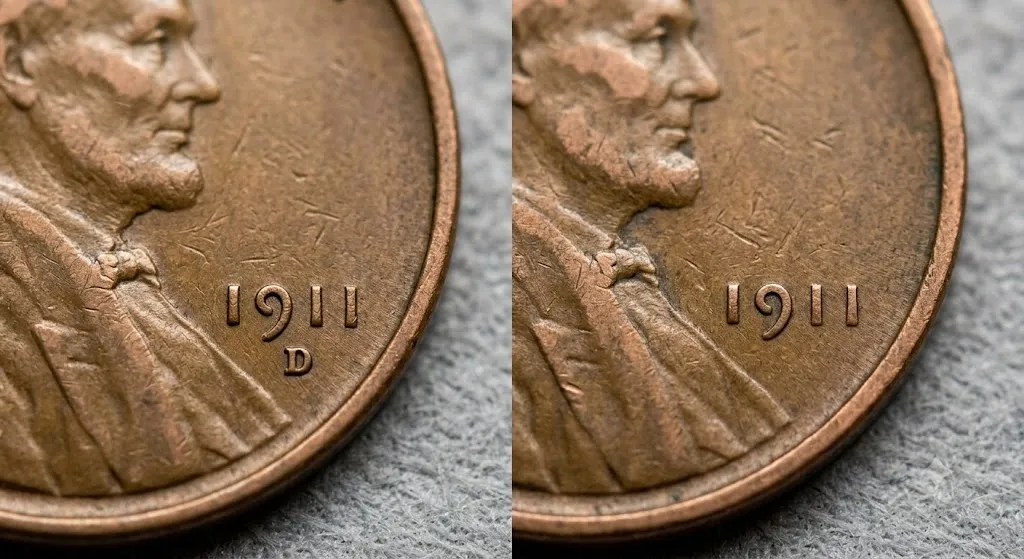
Mint mark location — directly below the date on the obverse. A blank space means Philadelphia (no mint mark); D indicates Denver; S indicates San Francisco. Distinguishing these marks is the first step in valuation, as mintmark alone can shift value by 10× or more.
Value of the 1911 Penny (No Mint Mark)
A 1911 cent without a mint mark was struck at the Philadelphia Mint. With an original mintage 101,177,787, this is the most common variety of the year. Circulated grades Good to Fine value $0.50 to $5.00.
For Philadelphia cents in higher grades Extremely Fine to About Uncirculated, prices rise to $8—$20 as detail and eye appeal improve. Uncirculated MS-60-MS-64 examples in Brown range from $50 to $100. At MS-65 and above in Red-Brown or Red, prices can reach several hundred to over $1,000.
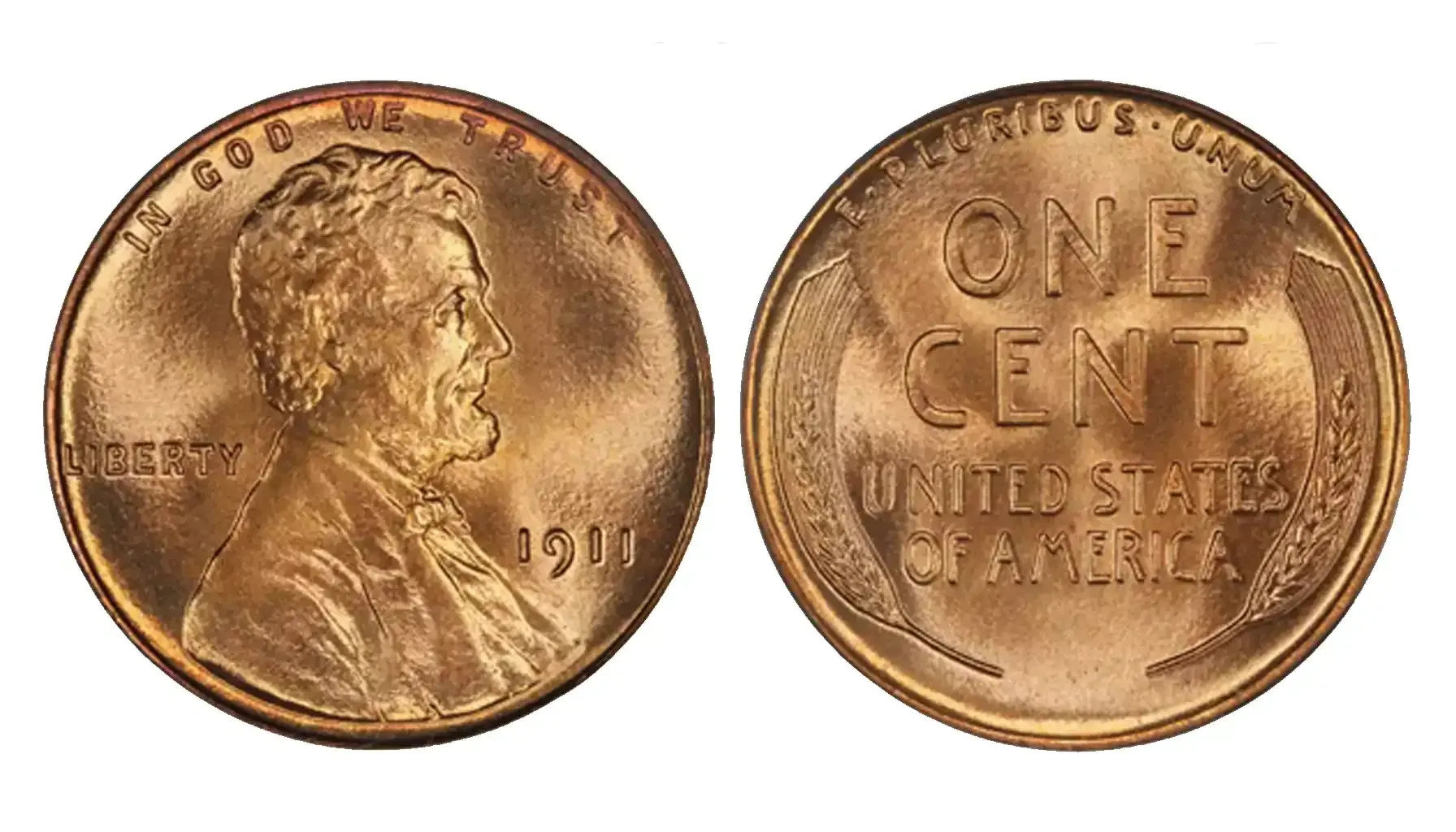
If you scan a 1911 with Coin ID Scanner and see no mint mark, it's Philadelphia. Value depends on condition and color.
Value of the 1911-D Penny
The 1911-D cent was struck at the Denver Mint, indicated by a small D below the date. With a mintage around 12,672,000, it's scarcer than the Philadelphia issue but more common than the San Francisco. This was Denver's very first year striking Lincoln cents—the initial Denver examples rolled off the press on May 20, 1911 with dies shipped from Philadelphia.
| Mint State | Value |
|---|---|
| Circulated | $6—$35 |
| Extremely Fine | $50—$85 |
| Uncirculated MS-63 Brown | $140—$200 |
| MS-65 Red | $1,000—$2,000 |
According to PCGS, this issue is "extremely difficult to locate in grades above MS-65 RD" because Denver was using worn dies and producing weak strikes. The all-time auction record for any 1911 cent is a Denver MS-67 Red issue that sold for $66,000 at Heritage Auctions on August 28, 2022.
Value of the 1911-S Penny
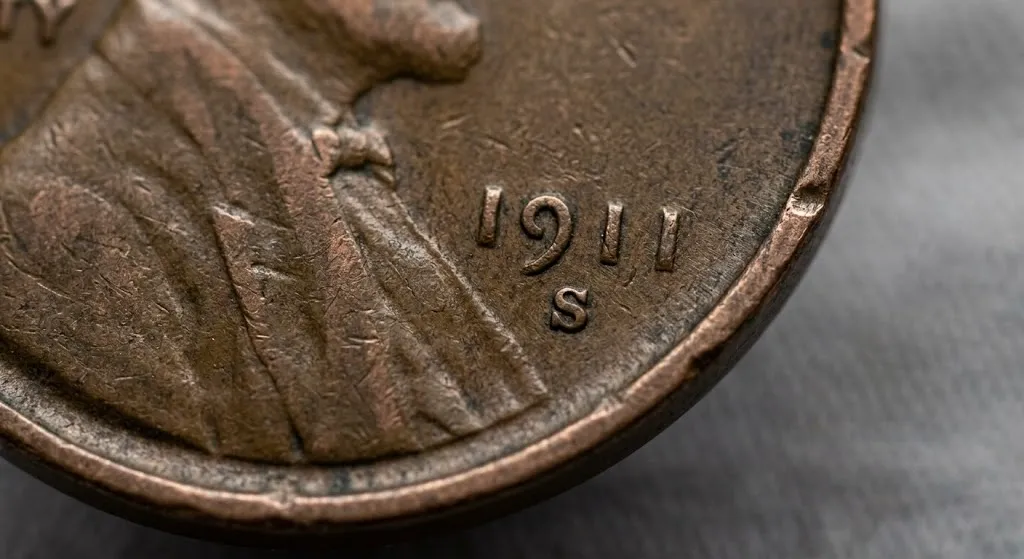
Struck at the San Francisco Mint, look for the mintmark S under the date. The mintage is 4,026,000 pieces, much lower than Philadelphia or Denver. This gives it the sixth-lowest mintage in the entire 49-year Wheat Penny series. PCGS explicitly categorizes S cents from 1909-1915 as good dates.
| Grade | Value |
|---|---|
| Good to Fine | $30—$120 |
| Very Fine to Extremely Fine | $75—$250 |
| About Uncirculated to MS-63 | $150—$500 |
| MS-65+ | $1,000—$5,000 |
According to Heritage Auctions records, a San Francisco MS-66 is $27,600 in May 2007. San Francisco turned out better-struck cents than Denver.
1911 Matte Proof Penny
"Without professional certification, it's nearly impossible to distinguish a real Matte Proof from a well-preserved business strike or a clever fake." — PCGS Grading Room (2026)
Matte Proof 1911 cents are rare specialty issues struck at the Philadelphia Mint for collectors. Mintage is 1,725 pieces, though some sources cite figures up to 2,411. PCGS has certified only about 400 examples across all grades—fewer than 100 in PR-66, and only a handful in PR-67.
| Grade | Value |
|---|---|
| PR64-PR65 Brown | $2,000—$5,000 |
| PR65 Red-Brown | $7,000 |
| PR-67 RD | $6,600 |
| PR-66+ | $5,760 |
Diagnostic features:
- Squared rims — proof rims are sharper and more squared than business strikes.
- Granular/sandblasted texture: — the surfaces have a uniform, satiny finish rather than the reflective mirrors of modern proofs.
- Sharper details: — strike is stronger, with crisp hair strands, lettering, and wheat kernels.
- Uniform color: — proofs often retain more even toning; uncleaned examples show consistent brown or red-brown patina.
How to Grade Your 1911 Penny
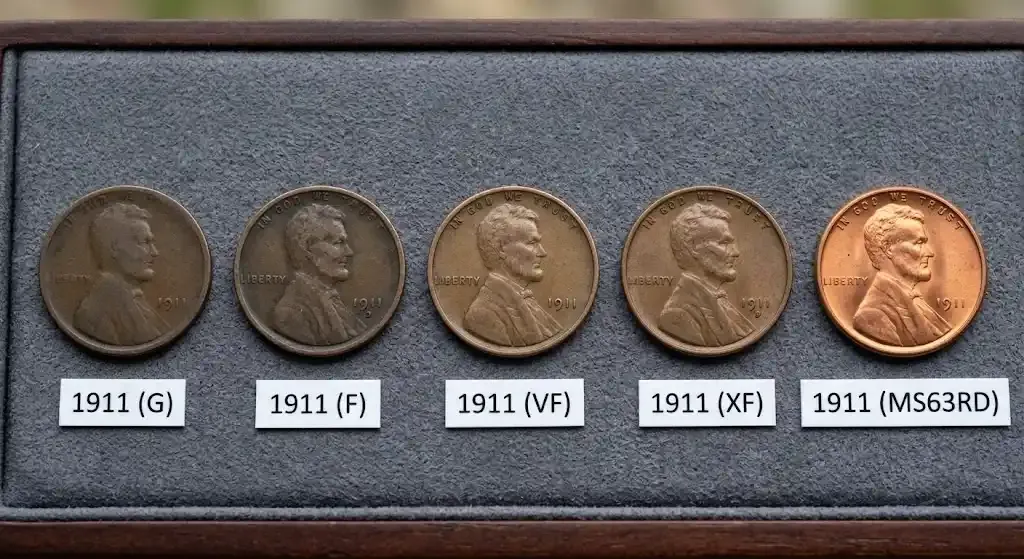
For the cents, the difference between Fine and Extremely Fine can mean $10 vs $80; between MS-64 and MS-65. Below is a simplified guide to major grades.
Good (G-4)
Lincoln's portrait is heavily worn. Hair and beard details merge into flat areas. The rim may blend into the fields in spots. On the reverse, wheat lines are mostly flat, though the overall design remains recognizable. Date and lettering are clear.
Fine (F-12)
More facial detail visible: Lincoln's hair shows some separation, cheek and jaw lines are discernible. LIBERTY and date remain clear. On the reverse, some wheat detail returns—lines are more distinct, and you can see partial kernels.
Very Fine (VF-20)
Moderate, even wear on high points. Lincoln's hair shows more strands, eye and ear details are clearer. Lettering is strong. On the reverse, most wheat kernels are partially visible.
Extremely Fine (XF-40)
Light wear only on the highest points, Lincoln's hair above:
- The ear
- Cheek
- Jaw
Most hair strands are distinct. Fields show minimal friction. On the reverse, wheat lines are crisp, and most kernels are well defined.
Uncirculated (MS-60 to MS-70)
No wear from circulation. Only bag marks, contact marks, or planchet imperfections allowable. Original luster intact. At this level, grading accuracy and BN/RB/RD color strongly influence value.
Research on automated grading systems, for example, most valuable Franklin Half Dollars, Saint-Gaudens Double Eagles, shows that image-based AI can achieve 95%+ accuracy within ±1 grade for well-studied coin types.
Color Designations
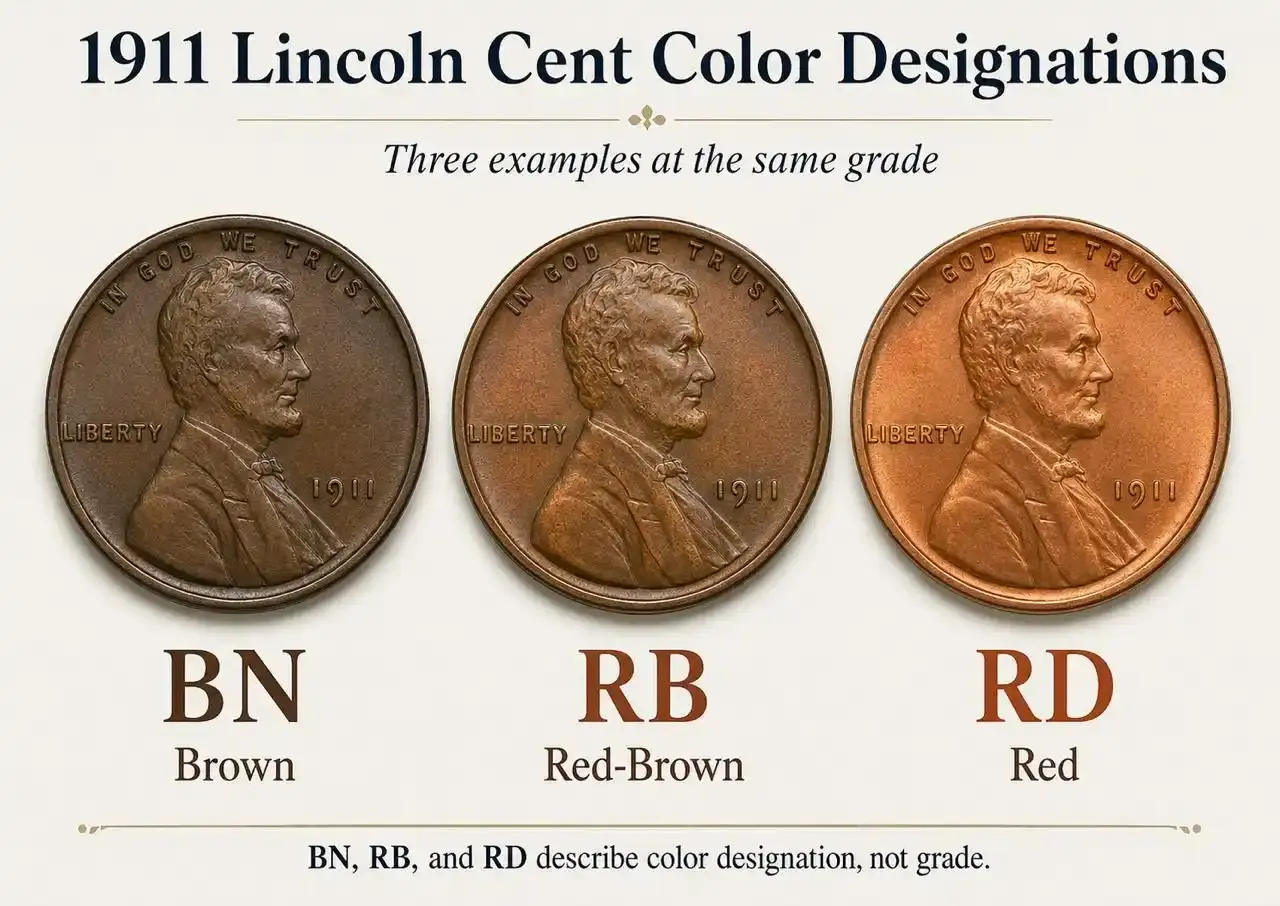
Brown (BN):
Up to 5% original mint red remaining. Most surfaces are brown because of oxidation. This is the baseline color designation and the most common for circulated and lower-grade uncirculated coins.
Red-Brown (RB):
5% to 95% original red on surfaces. Shows partial retention of original mint color in protected areas. Eye appeal is better than Brown, and prices reflect this 20-50% higher than BN at the same numerical grade in mid-MS levels.
Red (RD):
At least 95% original red remaining. Coins appear bright, with minimal brown toning. For example, a 1911-S MS-65 Brown might be worth $1,000, while MS-65 Red could exceed $5,000.
Rare 1911 Penny Errors
Error coins struck with incorrect dies or planchet defects, can achieve outsized values if they involve popular series like the Lincoln cent.
Repunched Mintmarks
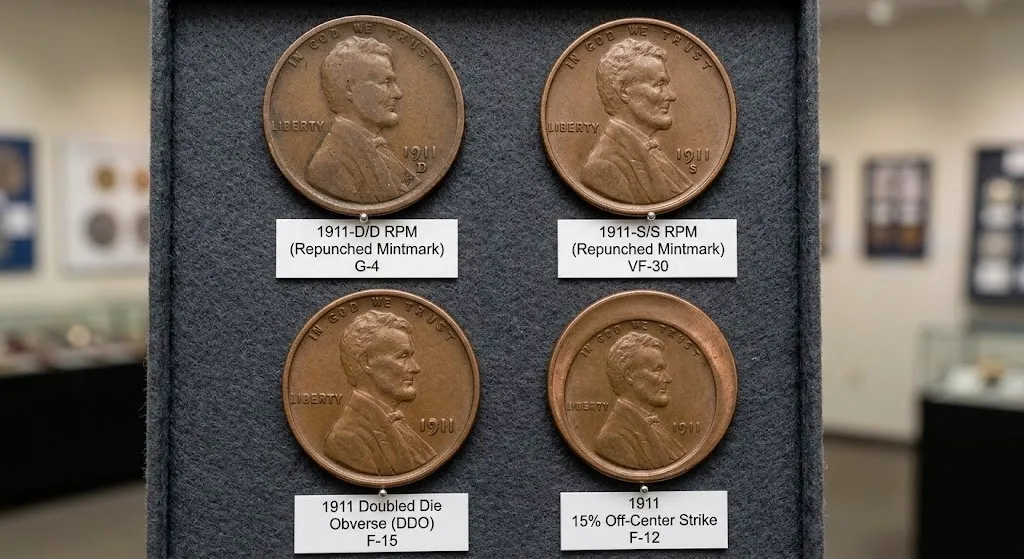
1911-D/D: at least four distinct repunched mintmark varieties exist from Denver's first year of Lincoln cent production, cataloged as FS-501 through FS-504. Back then, mint workers punched each mint mark by hand into every working die. That manual process wasn't replaced by automated hub-punching until 1990.
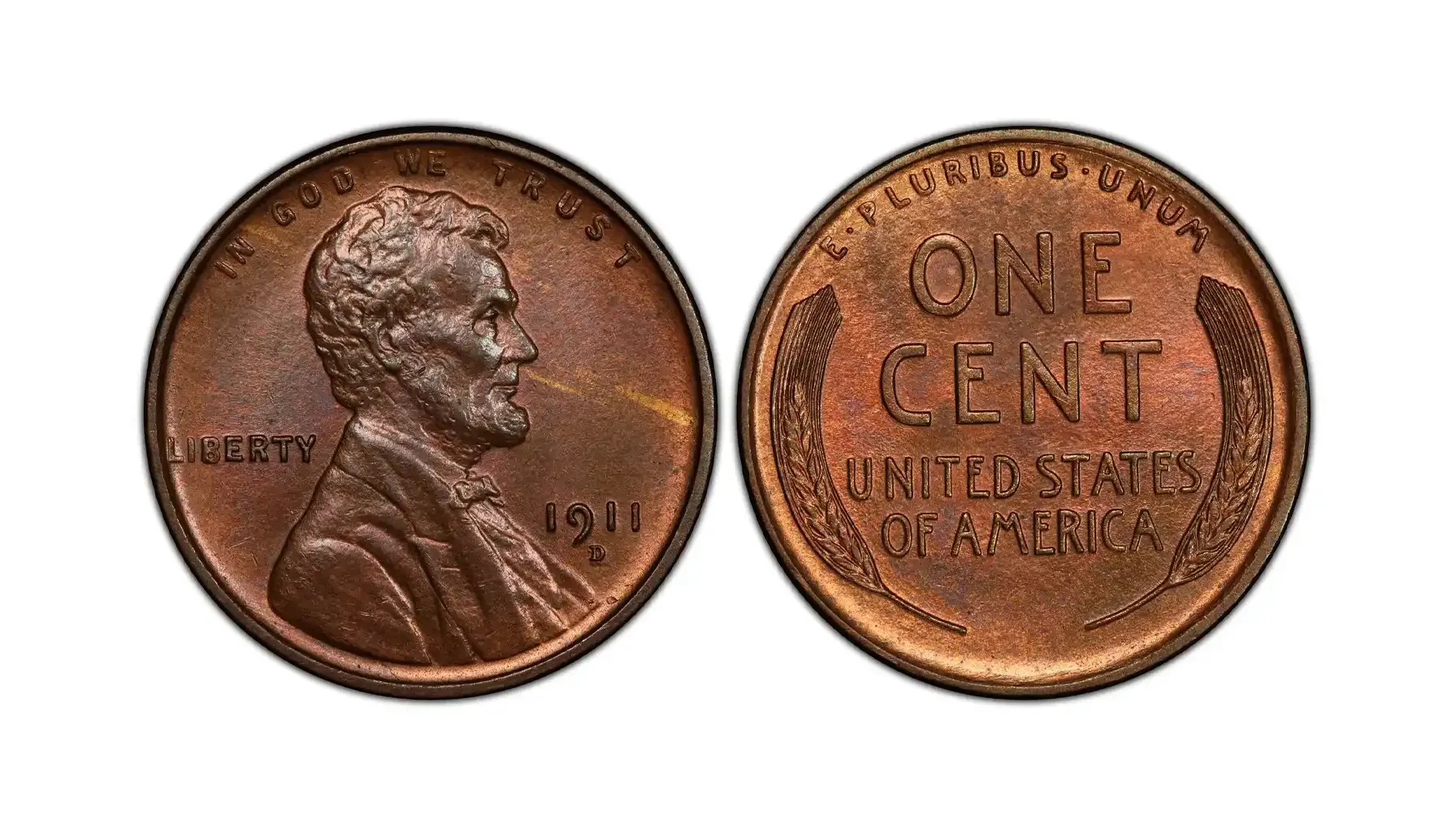
1911-S/S RPM FS-501: only 13 examples certified. A San Francisco Mint worker punched the S off-target, then repositioned and struck it again, leaving overlapping impressions visible at 10×.
Auction results confirm the demand MS-64 pieces (7 known) have realized $800—$875, while MS-65 examples (only 2 certified) have commanded $960—$1,320.
Doubled Dies (DDO/DDR)
Doubling on obverse DDO or reverse DDR lettering or design elements. No major, widely recognized doubled die variety for 1911 exists at the level of the 1955 DDO, but minor doubling can occur. Authentication via PCGS or NGC VarietyPlus is recommended.
Off-Center Strikes
Coin struck off-center, with part of the design missing and blank planchet visible. Value depends on percentage off-center:
- 5-10% adds modest bonus
- 20-30% can be and desirable
A San Francisco off-center by 25% in XF might sell for $200-$500.
Other Wheat Penny Errors
| Error | Price |
|---|---|
| Broadstrikes | $50-$200 |
| Clipped Planchets | $15-$150 |
| Die Cracks and Cuds | $10-$50 |
| Lamination Errors | $20-$100 |
| Die Clashes | $2-$50+ |
Always authenticate significant errors to maximize value and confidence. Services like PCGS VarietyPlus and NGC VarietyPlus catalog known varieties and provide certification.
Price Drivers and Market Signals
Mintage and Survival Rate:
Even with moderate mintage, coins that saw heavy circulation or were not saved by collectors are scarce in uncirculated condition. For proofs, original mintage around 1,725—2,411 and certified population of ~400 illustrate extreme scarcity.
Population Reports:
Third-party grading services publish population data showing how many coins have been certified at each grade. For example, PCGS notes fewer than 100 Matte Proofs in PR-66 and only a handful in PR-67.
Color:
As discussed, color is a major price driver in mint-state grades. Color makes a bigger value difference than almost anything else—a Philadelphia MS-68 RD is worth 220 times more than the same coin designated BN.
Certification:
Third-party certification, such as PCGS, NGC reduces information asymmetry and increases buyer confidence. Certification also protects against counterfeits and ensures accurate grading. Grading fees start around $20—$40 per coin.
Auction Trends and Market Cycles:
Auction records, such as the 2022 $66,000 MS-67 D and the 2007 $27,600 MS-66 S, set benchmarks, though prices fluctuate with economic conditions and collector fashion.
Seasonal Factors:
Major coin shows and auctions often see higher prices because of concentrated bidder interest. Timing a sale to coincide with these events can improve results for top issues.
The information provided is for general reference only and does not constitute financial or investment advice. Coin values fluctuate with market conditions and collector demand.
How and Where to Sell Your 1911 Penny
Selling on Online Marketplaces
Best for common Philadelphia cents, low-to-mid-grade D, and some S in circulated grades.
Pros:
- Wide audience, millions of active buyers.
- Transparent bidding process.
- Good for coins worth $50—$500 where auction fees are reasonable.
Cons:
- Seller reputation matters enormously
- Shipping risks and return disputes
- Raw coins may attract skepticism
Best practices:
- Use high-resolution photos
- Describe grade and color
- If certified, include cert number and grading service
- Consider starting bid or reserve to protect against low-ball outcomes
Selling to a Local Coin Dealer
Best for common-date cents, quick sales, or owners who prefer in-person transactions.
Pros:
- Immediate payment, no shipping hassles
- Dealers can provide on-the-spot grading opinions
- Good for coins in the $10—$200 range where online selling effort isn't justified
Cons:
- Dealers buy at wholesale
- Local shops may not have demand for high-end coins
Best practices:
- Get quotes from multiple dealers
- Verify dealer reputation online
- Understand their commission/buyback policies in writing
- Ask if they specialize in Lincoln cents or important dates
Selling via Major Auction House
Best for high-grade S MS-65+, Matte Proofs PR-64+, rare errors, or certified RD coins.
Pros:
- Auction records become public, setting benchmarks for future sales
- Access to deep-pocketed collectors and investors
- Professional photography
- Catalog descriptions
- Marketing
Cons:
- Seller's commission and buyer's premium
- Consignment process takes time
- Minimum value thresholds
When to consign:
- Coin is certified by PCGS or NGC
- Estimated value exceeds $1,000
- Coin is rare enough to attract competitive bidding
Certify Before You Sell
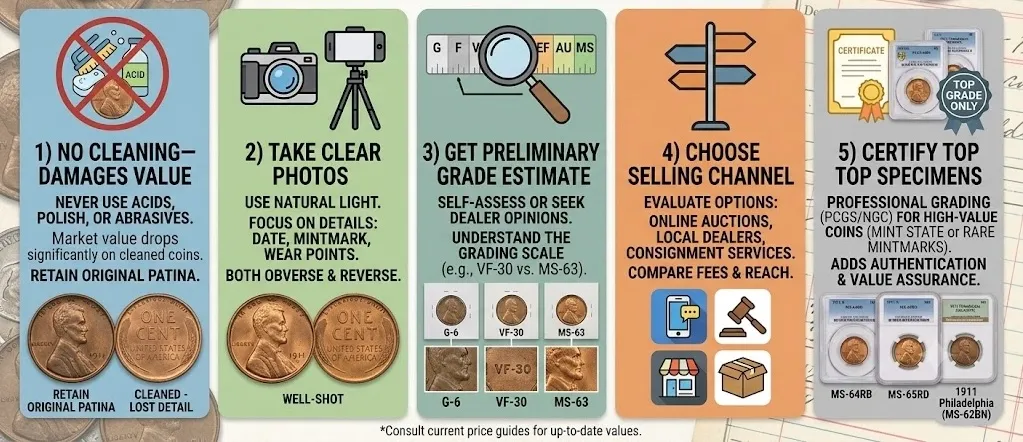
For any 1911 cent that appears to be uncirculated or error-prone, professional certification is strongly recommended. Certification confirms authenticity and provides an objective grade, reducing buyer uncertainty. It also protects the item in a tamper-evident holder with a unique serial number verifiable online.
"Never clean a coin. Even mild cleaning removes original surfaces and is immediately detectable during grading. If your coin has dirt or residue, leave it alone—professional grading services will assess it as-is." — PCGS Grading Room
Cost & Benefit
PCGS and NGC grading fees start around $20—$40 per coin. For a coin worth $500+, certification costs are negligible relative to the value gain. For common Philadelphia cents in circulated grades, certification may not be cost-effective unless the coin has unusual toning or a potential error.
FAQ
What is the rarest 1911 penny?
The San Francisco MS-66 and Matte Proof in PR66-PR67 are the most rarest issues. PCGS has certified only about 400 matte proof 1911 cents across all grades, with fewer than 100 in PR66 and a handful in PR67.
How do I get my 1911 penny graded?
Submit your coin to a professional grading service such as PCGS or NGC, for example, at coin shows.
What's the highest price ever paid for a 1911 cent?
The highest price is $66,000 for a D MS-67 Red at a Heritage Auctions.
Should I clean my 1911 penny before selling?
No, you shouldn't, because cleaning a coin almost always reduces its value. Numismatic consensus and regulatory guidance align: coins should be left in original condition.
What is the 1911 Wheat Penny color designation and why does it matter?
The color makes a bigger value difference than almost anything else—a Philadelphia MS-68 Red is worth 220 times more than the same coin designated Brown.
What penny is the most expensive in the Wheat Penny series overall?
A unique 1943 D bronze cent sold privately in September 2010 for a staggering $1.7 million to a private collector through Legend Numismatics.

 Facebook
  X (Twitter)
  Pinterest
  LinkedIn