Contents:
Morgan dollars are one of the oldest US coins. Even after a century, people continue to collect them for various reasons. Some do it to experience the past, while others are looking forward to adding a powerful asset to their collection.
How much is a 1888 silver dollar worth? Does it have mint marks? We will answer those questions. We will also provide a grading guide, as a bonus.
Check old coins value with apps. It saves you a lot of time. Trading coinage has never been easier.
Overview of the 1888 Morgan Silver Dollar
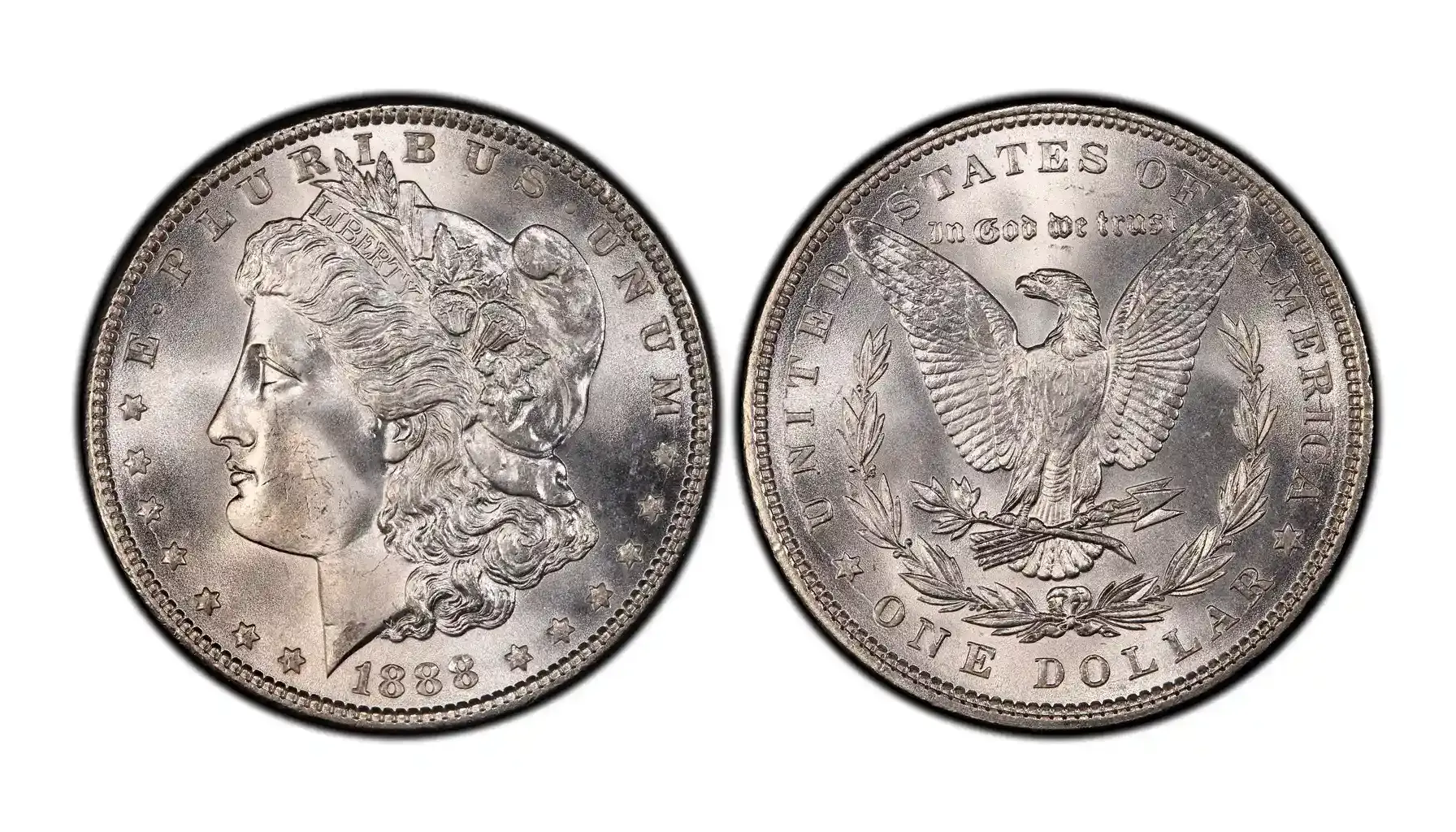
The 1888 dollar is part of one of America’s most iconic coin series, the Morgan Dollars. It all started with the Bland-Allison Act of 1878, which required the Treasury to purchase large quantities of silver for coinage. Silver is exactly the metal from which this and the following Morgan dollars (like the 1889 dollar) were made.
In 1888, many dollars were made:
Philadelphia Mint: 19,183,000 bits.
New Orleans Mint: 12,150,000 bits.
San Francisco Mint: 657,000 bits.
Most of them were heavily circulated, with the exception of San Francisco coins.
The 1888 dollar coin is not the rarest date in the series, but compared to most other bits, a valuable one. Not just as a collectible that could be sold, but also as a piece of history. Though there is one exception, the “S” variety.
"The 1888-S is one of the scarcer Morgan dollars of its era."
— Q. David Bowers
Wolfeboro, NH: Bowers and Merena Galleries, Inc., 1993
Mint Marks and Their Locations
Morgan dollars have various mint marks, little letters that signify the place of minting. There were many. For example, the 1888 CC Morgan silver dollars from Carson City. But we will focus on the three most prominent mint marks.
These marks all share the same location. On the reverse side, under the ribbon tying up the wreath.
Philadelphia (No Mint Mark)
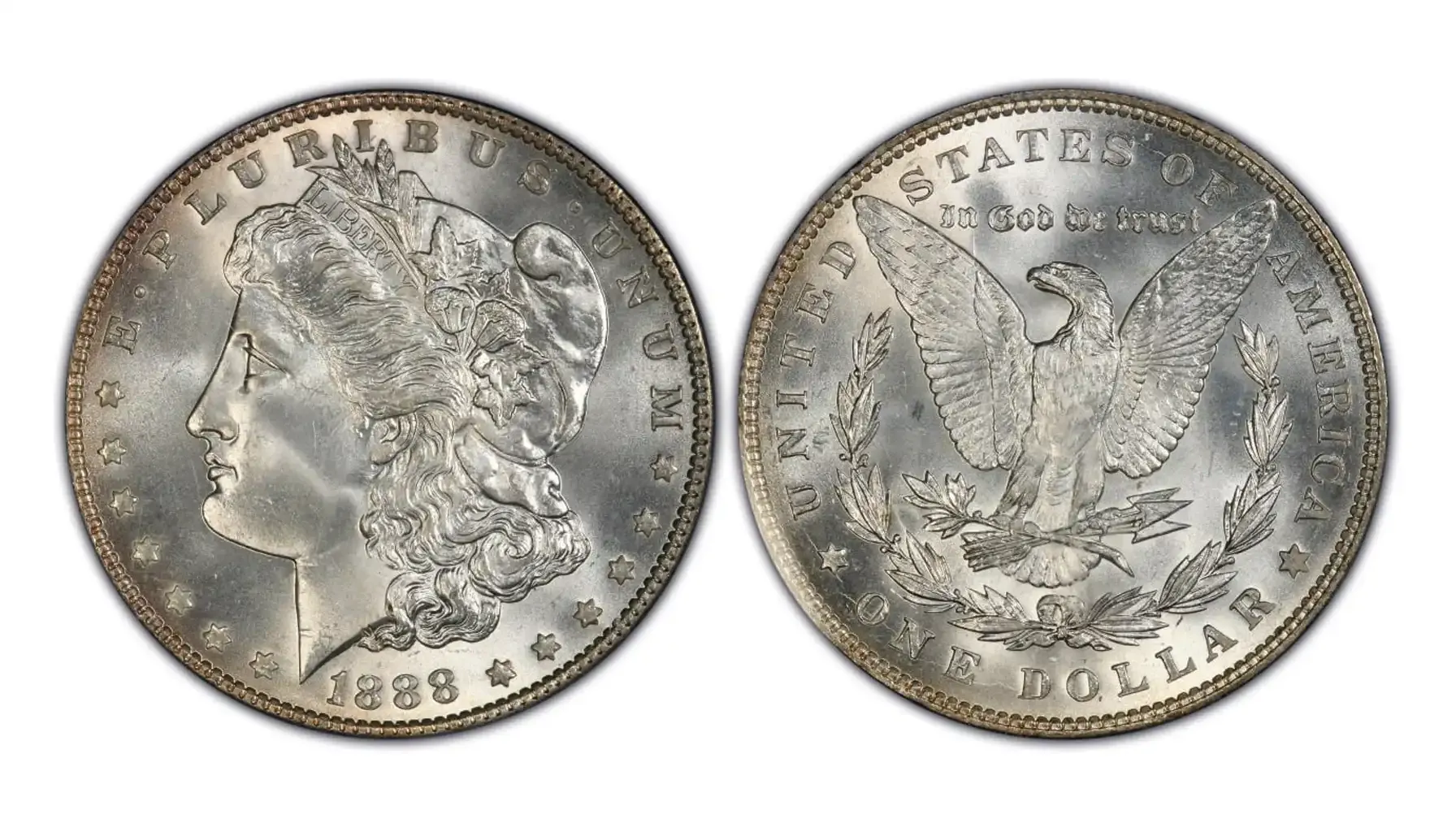
The Philadelphia Mint produced the majority of the 1888 Morgan Dollar.
Philadelphia pieces bear no mint mark. Most were circulated or melted.
New Orleans Mint (O Mint Mark)
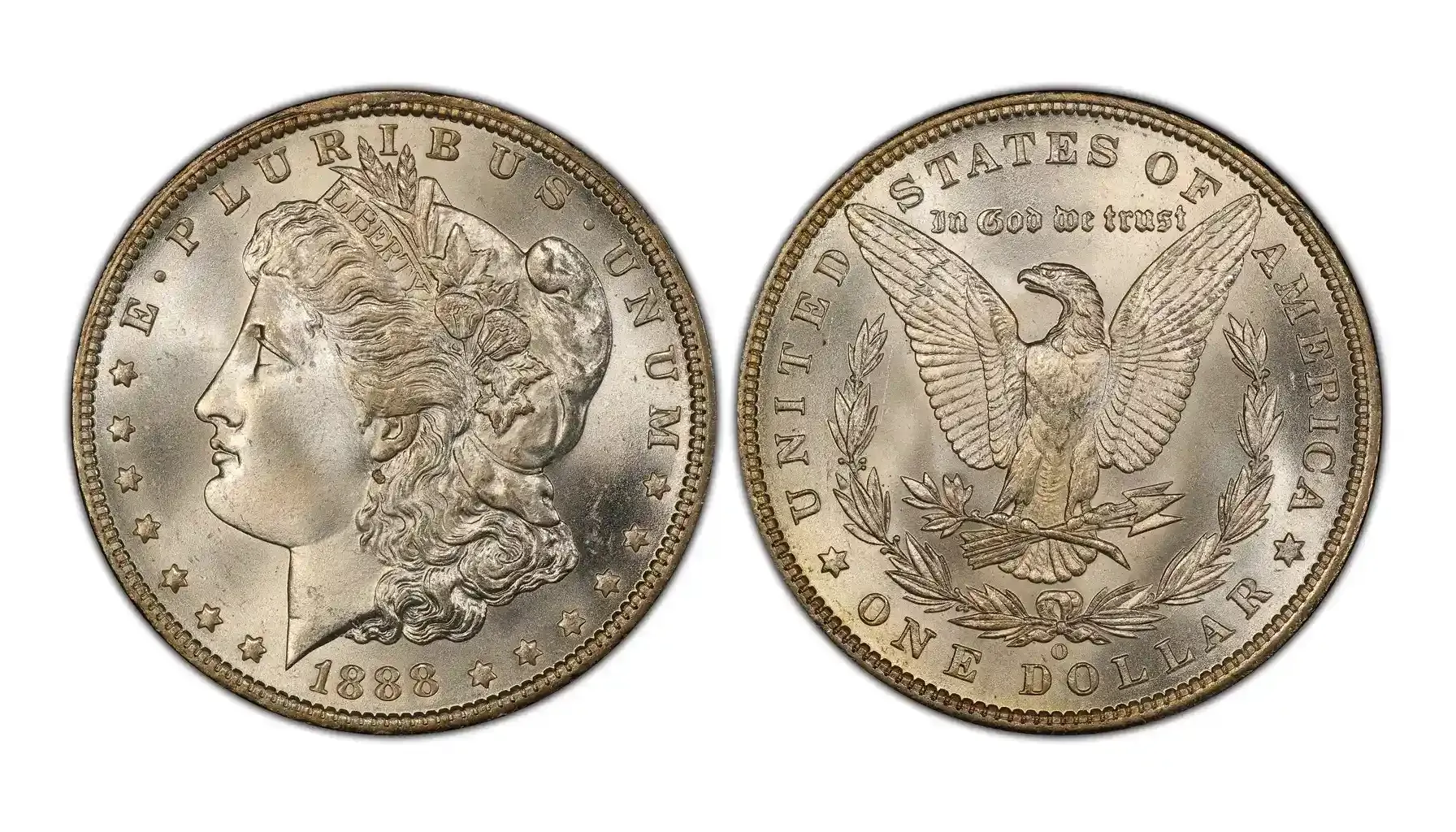
These bits were struck at the New Orleans Mint. They have a little “O” letter under the ribbon.
Overall, they are similar to Philadelphia pieces, but some mention how these are softer, with weaker strikes. They, too, were made for circulation.
San Francisco Mint (S Mint Mark)
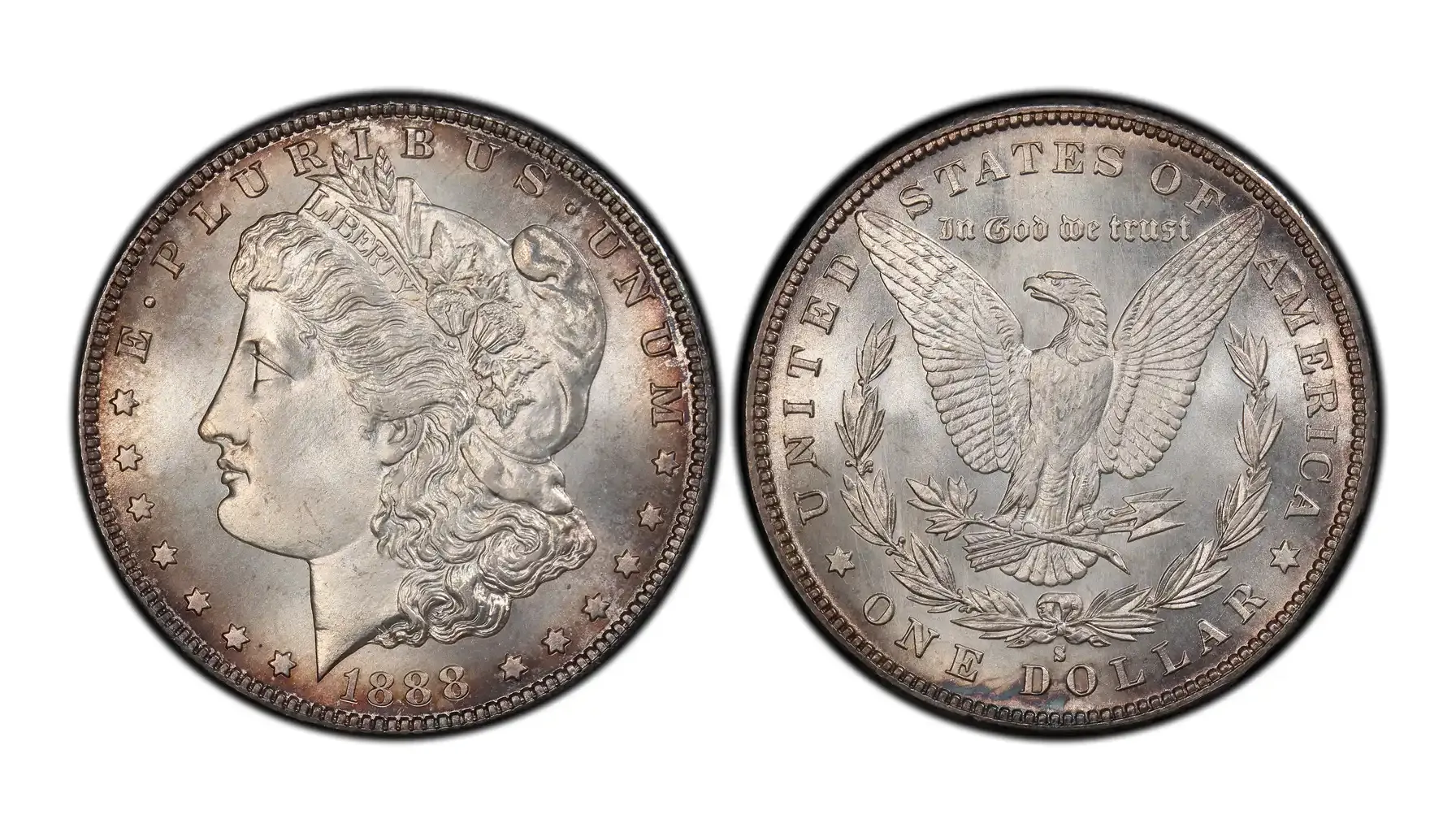
The 1888 S Morgan silver dollar is the standout of the set. They have a little “S” letter under the ribbon.
San Franco made only 657,000 coins, and even fewer survived. On top of rarity, we should also add the eye appeal of these coins, as most were struck with greater detail.
Rarity and Key Varieties
The San Francisco issue is the rarest of the bunch. Few were saved at the time, and many were later melted. Some of the rarest Morgan dollars we know were with “S” marks.
We do know a few other notable varieties from New Orleans, emerged from errors:
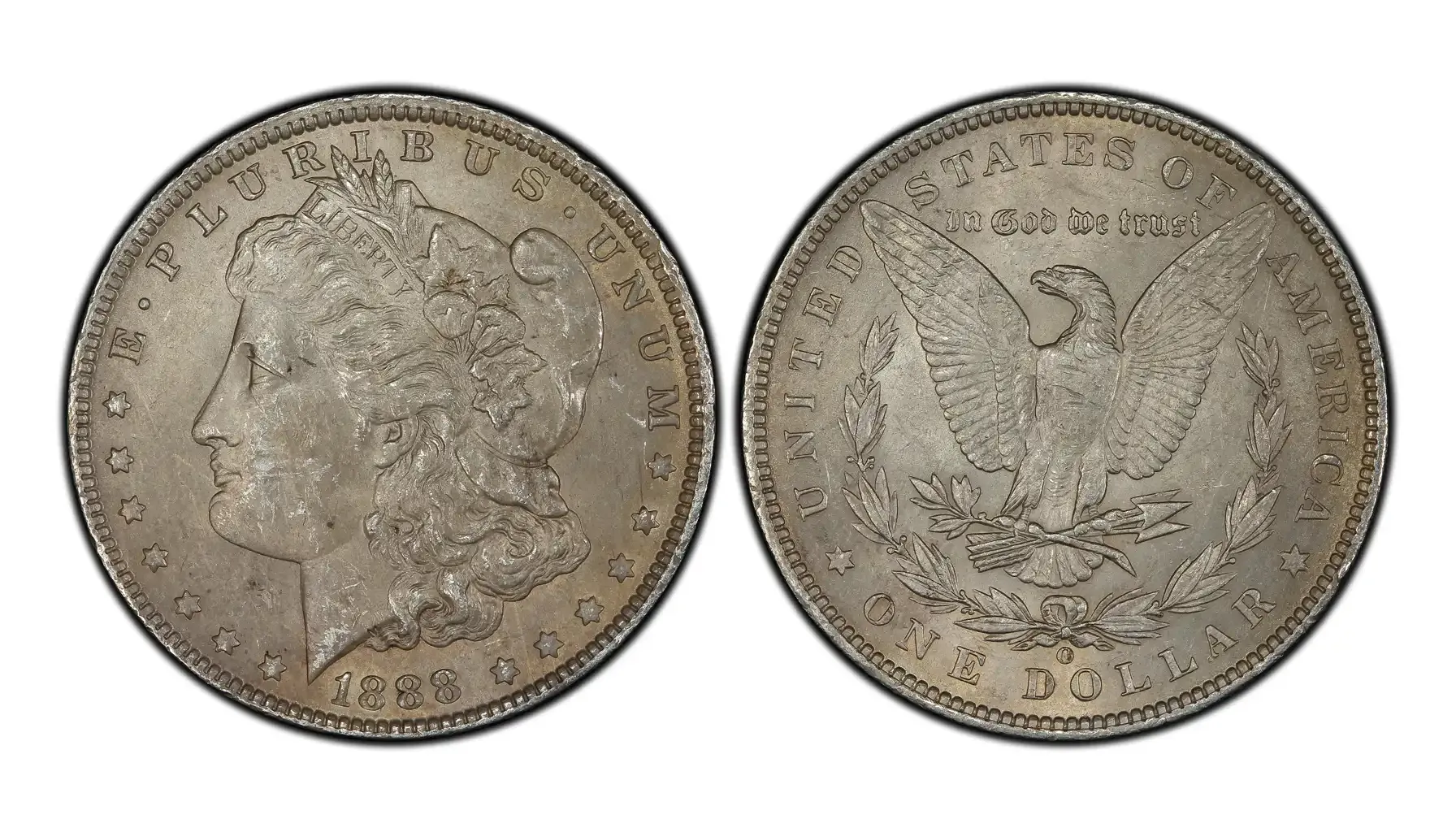
1888-O “Hot Lips”: A doubled die error. It shows dramatic doubling on Liberty’s lips, nose, and chin. This created an illusion of giving the appearance of a second mouth. A few examples were sold for over $5,000+.
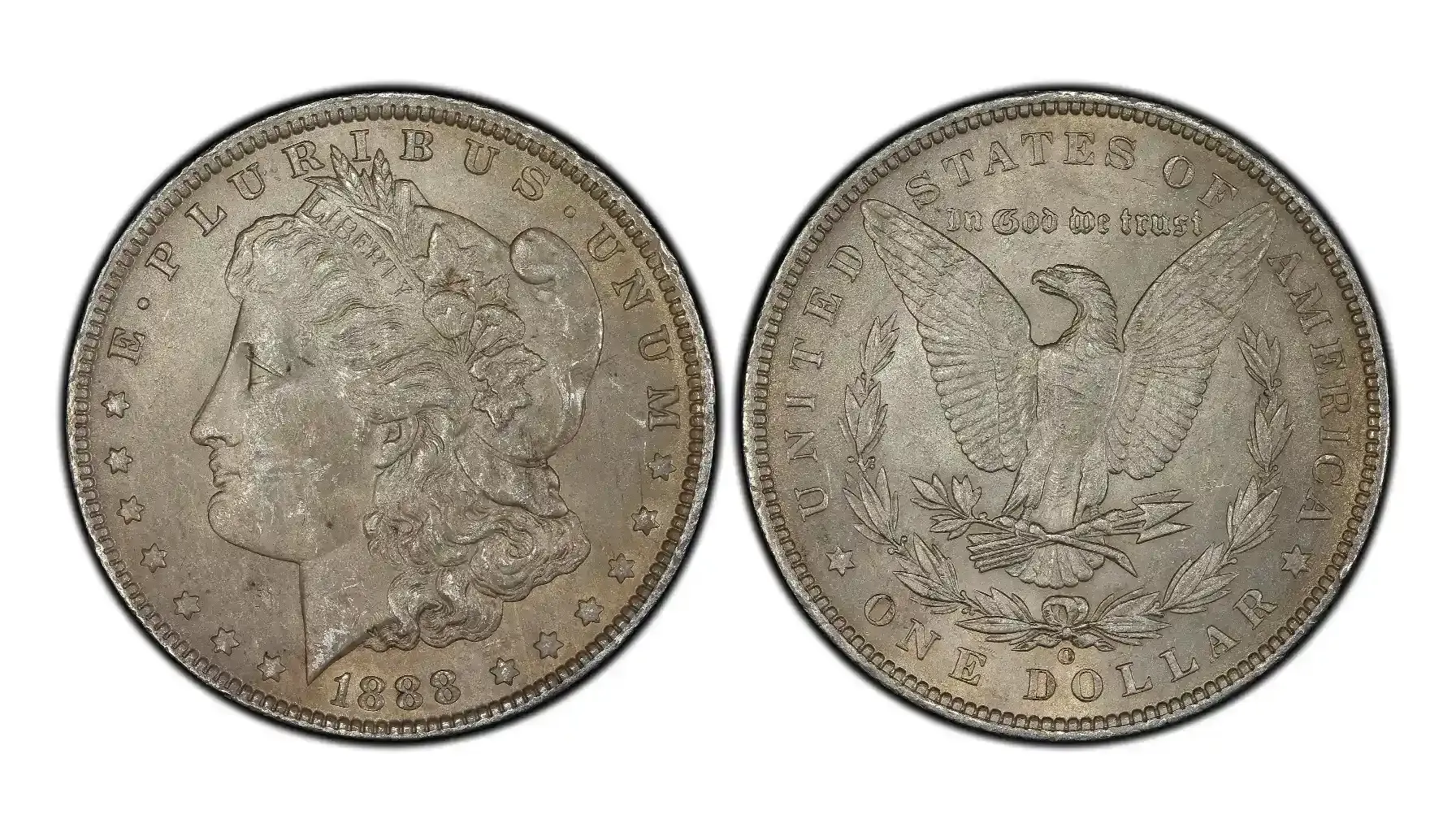
1888-O “Scarface”: A die break across Liberty’s cheek gave her a scarred appearance, hence the nickname. Certain examples, too, were sold for over $5,000+.
One event really cut the number of Morgan dollars and made them hard to get. The Pittman Act of 1918 which authorized the melting of over 270 million silver dollars to support Britain during World War I. Only a few bullion pieces have survived since then.
Grading and Condition Assessment
Coins are graded on the Sheldon Scale from 1 (Poor) to 70 (Perfect Mint State). Morgan dollar grading operates on the same rules as any other coin. The better preserved the design, the better.
Grade Range | Grade Description | Details / Characteristics |
VG | Very Good | Major design elements are visible but show significant wear. Legends and dates remain readable. |
F–VF | Fine to Very Fine | Moderate wear. All major features and legends are clear. Some finer details begin to fade. |
EF–AU | Extremely Fine to About Uncirculated | Light wear on the highest points. Strong overall detail with traces of mint luster visible. |
MS60–MS67 | Mint State | No wear at all. No contact marks at all, and the luster is seen on most angles, not just the highest points. |
1888 silver dollar value largely depends on this grading. The higher the grade, the better. If you combine high grading with things like errors or small mintage numbers, you get a piece worth multiple thousands of dollars.
Tips for Accurate Grading
Use a 5x or 10x magnifier to inspect more intricate details like Liberty’s hair and the eagle’s feathers.
You need consistent lighting (from a lamp) to inspect the luster.
Compare your coin to certified examples from PCGS or NGC’s online databases.
If it gets too hard, simply submit your coin to a professional grading service for authentication and certification.
Market Value and Pricing Trends
As of recent market data, 1888 dollars could be worth:
Variety | Value (Circulated) | Value (Uncirculated / Mint State) |
1888 (Philadelphia, no mint mark) | $35 – $50 | MS60: $70+ MS63: $120+ MS65: $250+ |
1888-O (New Orleans) | $40 – $60 | MS60: $100+ MS63: $180+ MS65: $450+ |
1888-S (San Francisco) | $150 – $400 | MS60: $2,000+ MS63: $4,000+ MS65: $10,000+ |
The value of these dollars steadily increased over the past decades. Silver content and old age make it a valuable asset. Some auctions provide us with even higher values. In the future, perhaps, this piece will become even more valuable.
Factors Influencing Value:
Rarity and Mintage: Lower mintages generally mean higher value.
Condition: Higher graded pieces are rare.
Variety Appeal: Error and proof varieties are rare and attract attention.
Market Sentiment: Silver is in favour nowadays, as a precious metal.
Certification: Coins graded by PCGS or NGC typically show higher resale numbers.
If you want to know more about coins and their values, perhaps you should try Coin ID Scanner. The app has tons of blogs about values and their factors.
Frequently Asked Questions (FAQ)
What Makes the 1890 Morgan Silver Dollar Rare?
Certain mint marks and grading make this coin rare. S-dollars are the rarest as they go, and Mint State (MS65 or higher) is also hard to come by.
How Do I Determine the Mint Mark?
To find the mint mark on a Morgan dollar, you should look on the reverse (back) side of the coin, just below the wreath. You may find a blank spot (Philadelphia Mint) or a letter. CC, for Carson City Mint, O for New Orleans Mint, and S for San Francisco Mint
How Does Condition Affect Value?
Condition, or grade, is the most critical value factor. Circulated coins have only errors and silver content to raise their value. Uncirculated coins (MS60–MS67) can be worth many times more.
What Are Typical Market Prices for 1890 Morgan Dollars?
1890 (Philadelphia) pieces usually go for $35 – $50 in circulated form, and $70 – $250 uncirculated. New Orleans is overall similar, but could be higher on certain grades. 1890-S bits are the most valuable, going for $45 – $90 in circulation, and $150 – $600+ in their uncirculated form.
Are There Any Known Errors or Scarfaces?
Yes, the Scarface Morgan dollar is not the only error this piece can have. Some known 1890 varieties include repunched mint marks (RPDs), doubled dies, and minor die cracks.
Is the 1890 Morgan Dollar a Good Investment Today?
Generally, yes. This coin came from a popular line of dollars, very much desired by collectors. Plus, it is silver, a popular metal nowadays.

 Facebook
  X (Twitter)
  Pinterest
  LinkedIn