Contents:
Why the 1804 Dollar Is So Famous
The 1804 silver dollar has earned the nickname “King of American Numismatics.” Despite the date, none were actually struck that year. All of the examples we know were produced later, during the 1830s, when the United States government commissioned a small number to be given as diplomatic gifts.
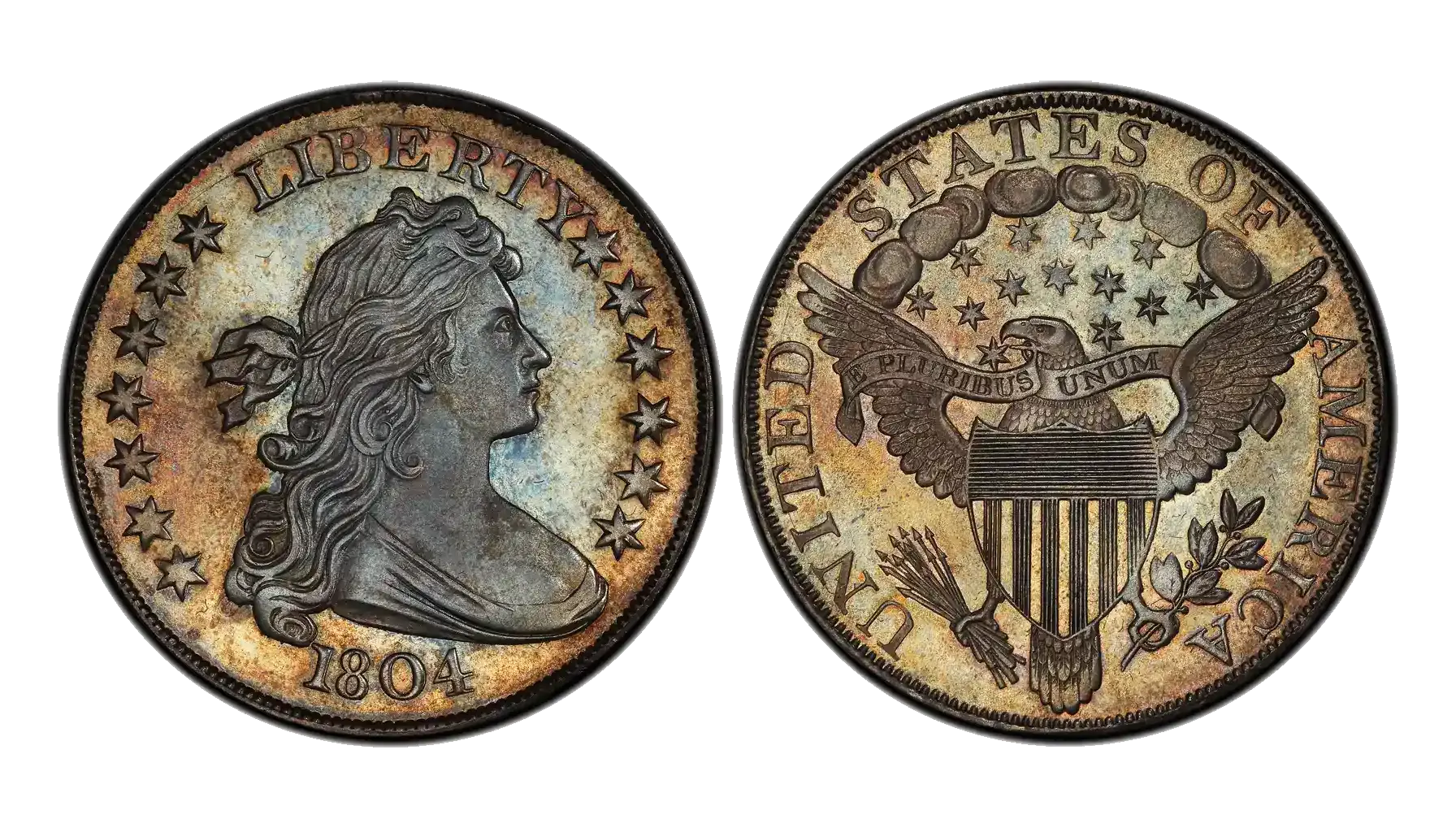
The coin from 1804 connects the past with the artistry of coin making. It was made by hand, at a time when American coinage was still finding its identity. Only sixteen 1804 coins are confirmed to exist. Each has a story — the King of Siam specimen, the Dexter example, and others that quietly moved through private vaults and royal collections. The rare combination of limited edition, political aim, and meticulous design gave the work the feel of a true icon of early America.
One example sold for more than $4 million back in 1999, cementing its legendary status among rare coins.
The Diplomatic Sets Story (Edmund Roberts and Diplomatic Gifts)
The story began in 1834, when diplomat Edmund Roberts was commissioned to present coin sets to the monarchs of Siam and Oman. Each set contained gold, silver, and copper specimens, including an 1804 draped bust silver dollar, minted with the backdated year "1804."
The coins were presented as a symbol of the prestige and economic strength of the United States. Two similar sets were subsequently intended for Japan and Vietnam, but were never delivered due to Roberts's death. These diplomatic pieces were later designated Class I.
Interest in early classic US coins has been strong for decades, as evidenced by the demand for types such as mercury dimes.
Why None Were Struck in 1804 — Timeline of Production and Later Restrikes
The mint stopped making silver dollars in March 1804. Coins with the date “1804” didn’t show up until about thirty years later, when the old Draped Bust dies—first used in 1795—were brought back into service.
In the 1850s, mint staff secretly created additional pieces, which gave rise to Class II and Class III—late restrikes with differences in edge and texture.
“In coins, everybody’s heard of the 1804 dollar, it’s what I call the ultimate trophy coin.”
— Q. David Bowers
Business Insider website
Classes Explained: Class I, II, III
Class I — “Original” Diplomatic Proof Pieces (What to Look For)
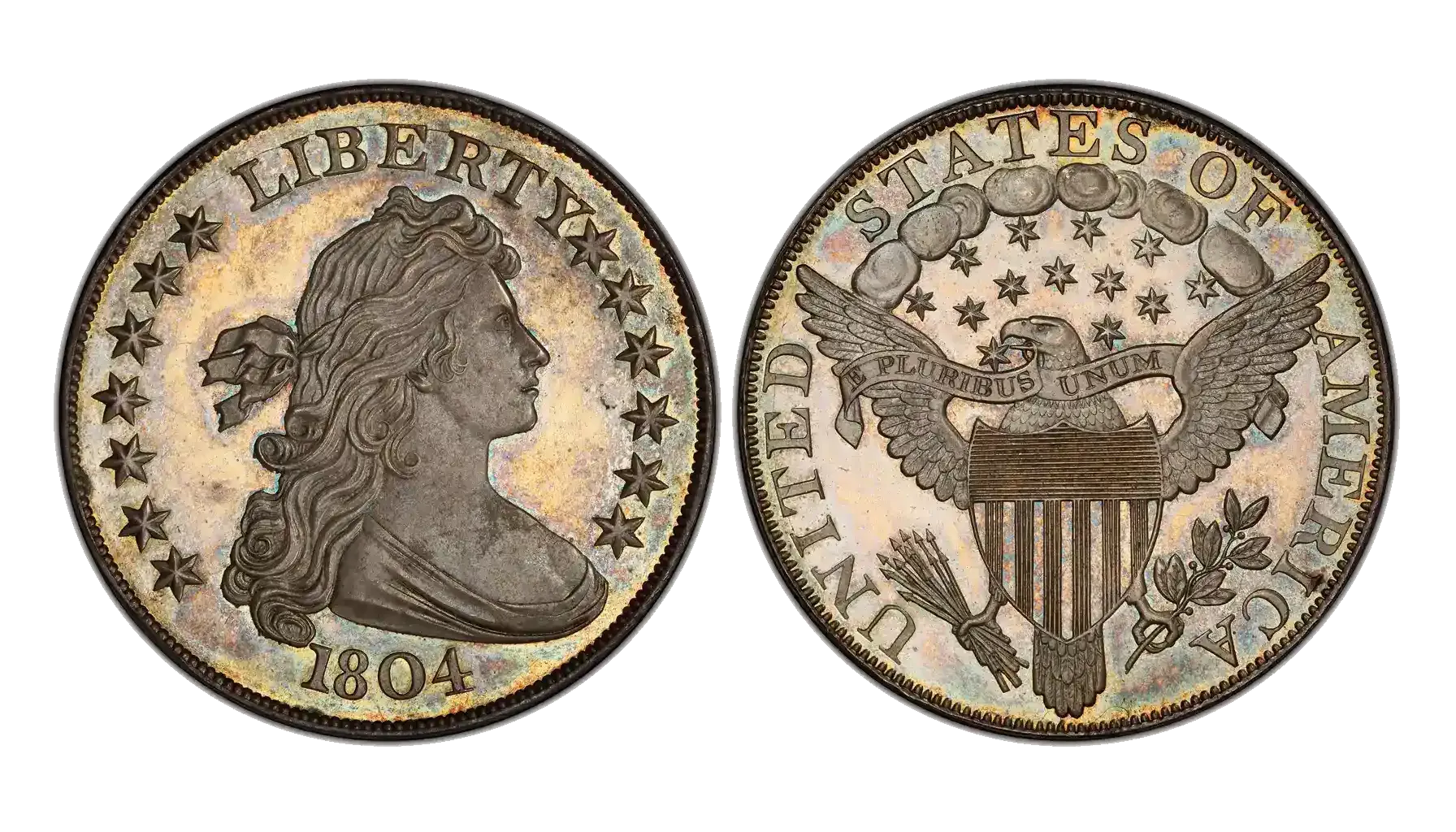
Eight coins minted for diplomatic gifts are considered originals. Distinguishing features include a mirror surface and a rim inscribed "Hundred Cents One Dollar or Unit." These are considered real 1804 dollars.
Class II — Later Surreptitious Issues (Edge Differences)
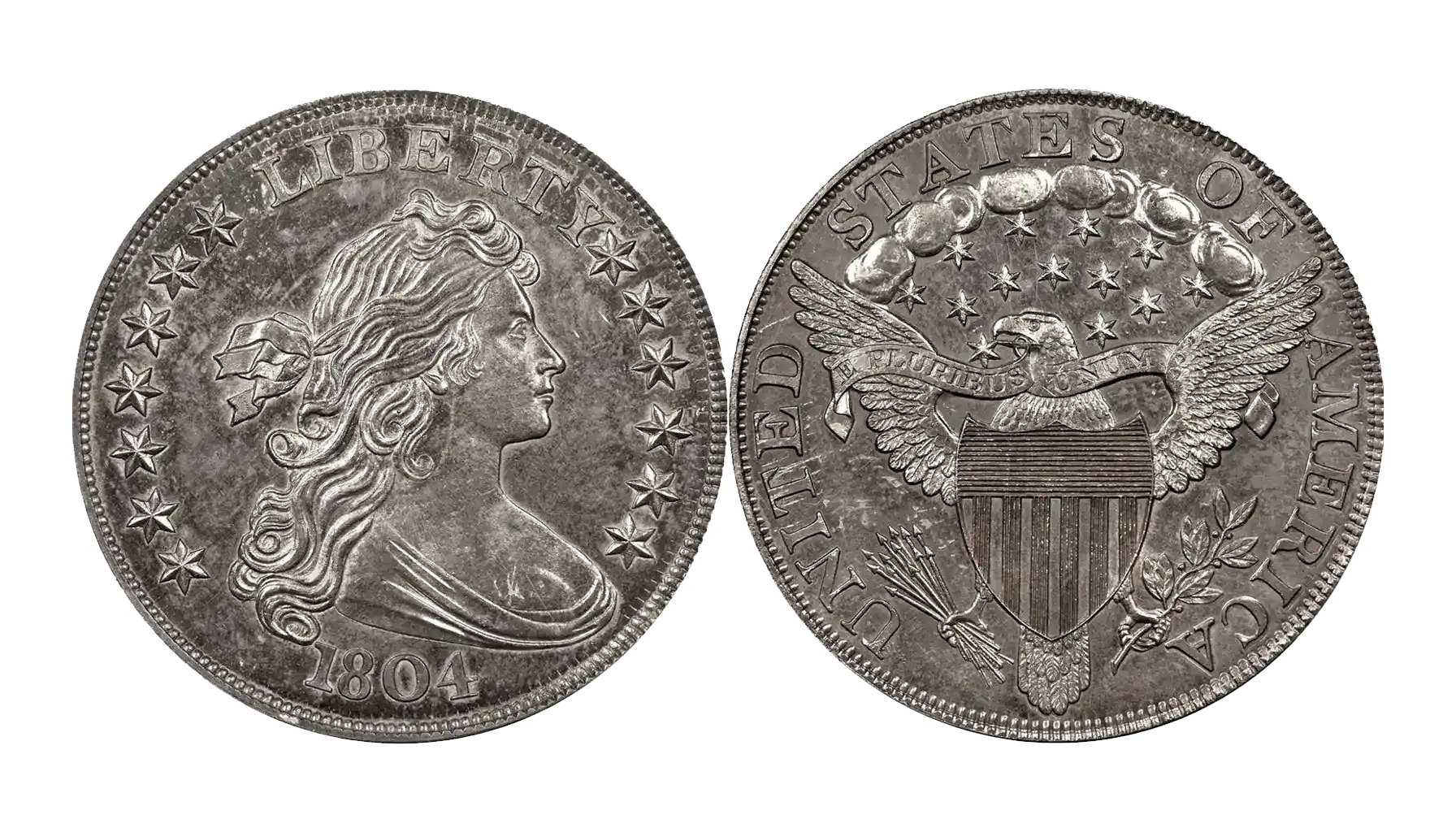
The so-called "secret" restrikes of 1858. They were minted on older equipment and had no edge inscription. One known example was struck over a Swiss thaler. A single example is known. It is held in the collection of the US National Museum.
Class III — Mint-Produced Pieces with Correct Edge Lettering (Collector Specimens)
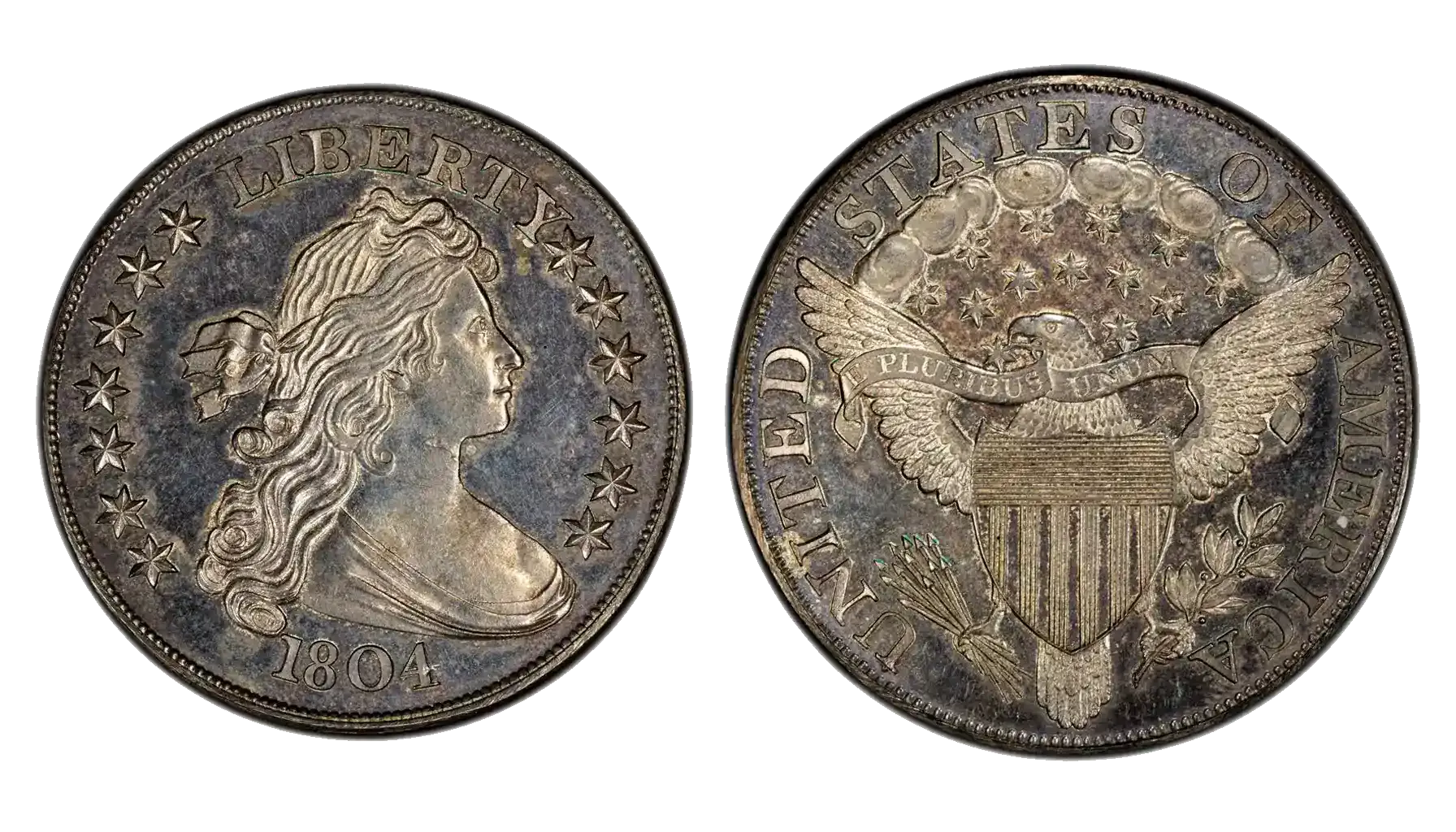
The third series was minted shortly after Class II, but with the correct edge inscription. These coins are easily distinguished by their slightly concave shape due to the repeated inscription. Seven examples are known to exist today.
Class | Weight (g) | Edge | Features |
Class I | 26.58–26.98 | “Hundred Cents One Dollar or Unit” | Diplomatic gifts, mirror-like luster |
Class II | 25.45 | Plain edge | Secret restrikes, struck over other coins |
Class III | 26.10–26.97 | “Hundred Cents One Dollar or Unit” | Later restrikes, slightly concave shape |
How to Visually Identify an 1804 Dollar (Photo-Driven Guide)
Obverse and Reverse Hallmarks to Check (Design Cues)
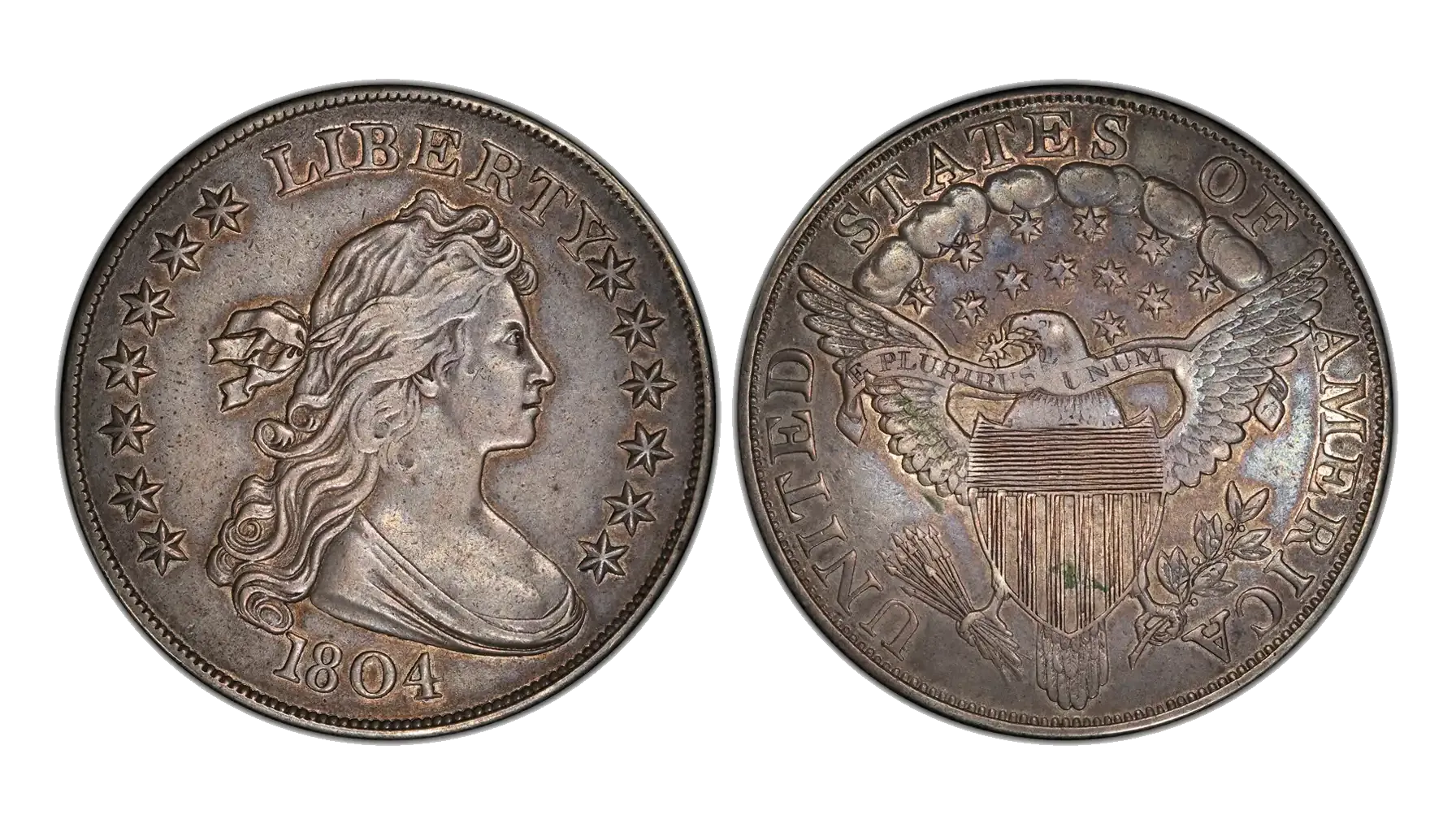
On the front, the 1804 Draped Bust dollar shows Liberty’s portrait with “LIBERTY” and the year 1804. Flip it over, and you’ll see an eagle with a shield, 13 stars above, and a ribbon reading “E Pluribus Unum.” That’s the full look of the coin as it was struck.
Edge Lettering and Weight/Diameter Checks — Simple Measurements Beginners Can Perform
The authentic piece is made of an alloy of 90% silver and 10% copper, weighs approximately 26.5–27.0 grams, and has a diameter of approximately 39–40 mm. Any deviation indicates a copy. Originals have a uniform edge inscription around the circumference. This is an important feature for those appraising the 1804 Liberty Dollar.
Common Counterfeit Signs (Casting, Wrong Edge, Incorrect Weight)
Counterfeits have been around since the 19th century. Key features include:
irregular metal structure,
casting defects,
an unnaturally thick edge.
Most often, counterfeits are made of low-grade silver, which is noticeable by its dull color. Some versions are called—fake 1804 silver dollar value—as even replicas today sell for hundreds of dollars.
Realistic Value Guide: Typical Ranges & Auction Highlights
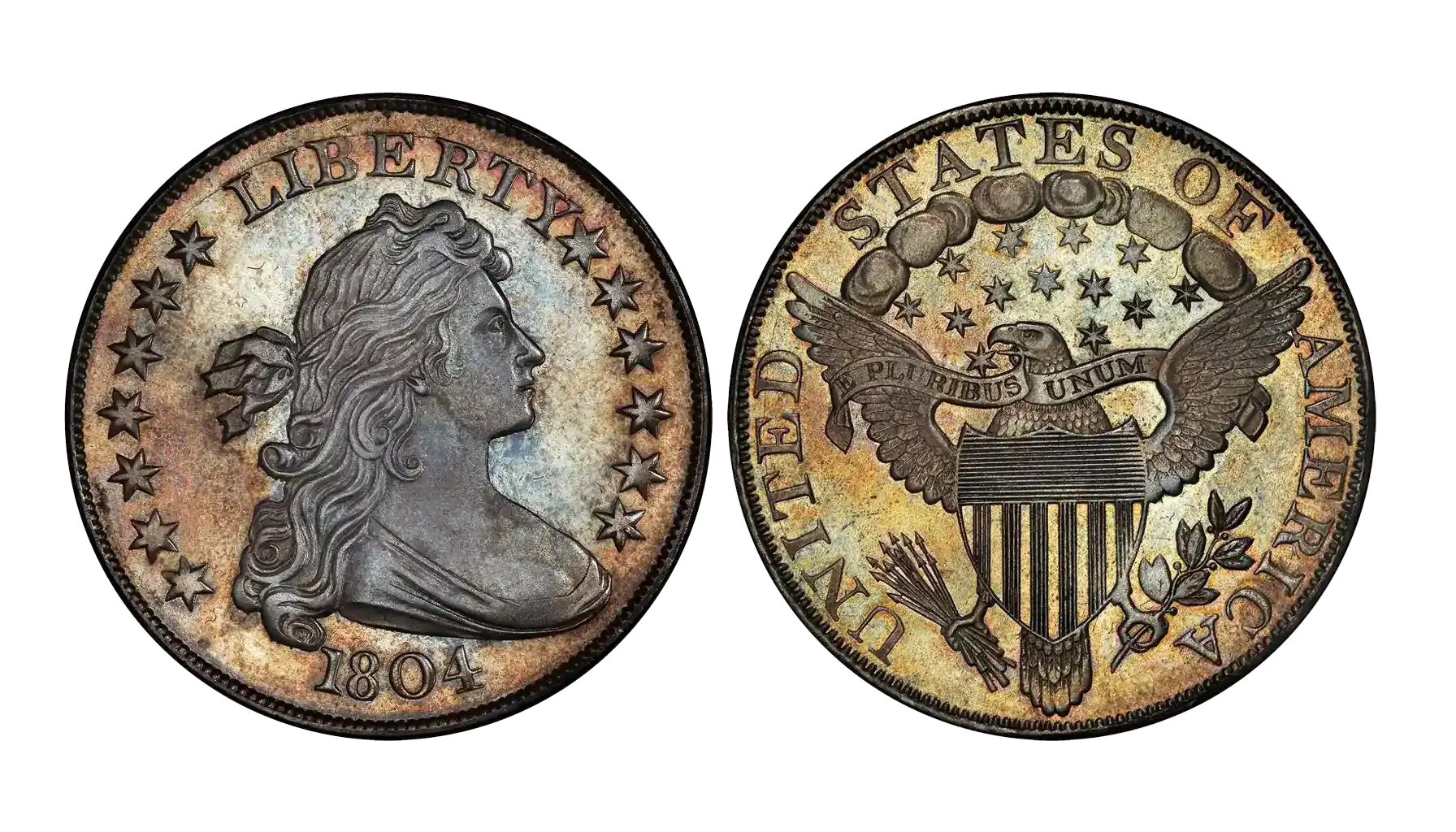
Price Bands by Class and Grade — Conservative Median Range vs Auction Record.
Average table based on data from Heritage and Stack's Bowers. Understanding how the 1804 Liberty Silver Dollar value is formed helps collectors correctly evaluate pieces and avoid overvalued copies.
Class / Condition | Average Price (USD) | Comment |
Class I Proof 65–68 | $3,500,000–$4,500,000 | Original diplomatic specimens |
Class II Proof | $2,000,000–$2,300,000 | The only known specimen |
Class III Proof 63–65 | $1,500,000–$2,000,000 | Later restrikes |
Replicas and Copies | $200–$1,000 | Depends on accuracy and metal |
Note: Prices are accurate at the time of writing.
Notable Record Sales and What They Teach Beginners (Market Ceiling ≠ Typical Sale).
1999: A Class I specimen sold for $4.14 million, a record at the time.
2008: Heritage Auctions sold a specimen for $3.73 million.
2025: A Class III example from the James A. Stack Sr. Collection is expected to sell for over $2 million.
“Many gold and silver experts will recommend you buy numismatic coins — rare and old coins. If you are not a rare-coin expert, I'd encourage you to stay away from them.”
— Robert Kiyosaki, an American investor
Brainyquote website
How Grading and Provenance Affect Realized Price
Coins with PCGS and NGC certificates are valued significantly higher. Verified provenance can add up to 40% to the price.
Authentication & When to Get Professional Help
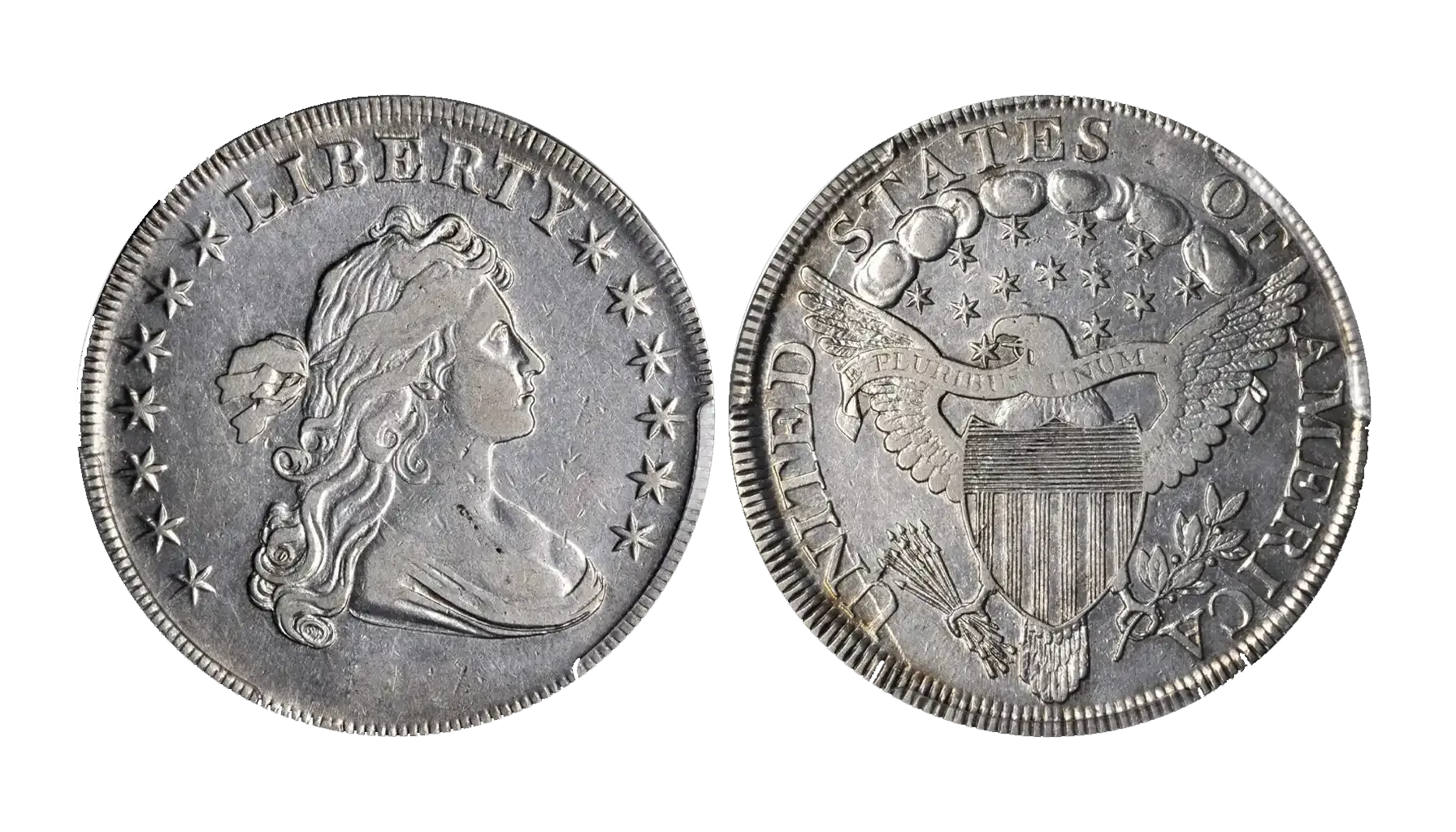
Quick Home Checks (Scale, Caliper, Loupe).
Use a precise scale — a real coin should weigh about 26.7 grams.
Check the size; originals measure close to 39–40 millimeters.
Tap it lightly with another coin — a genuine one gives a clean, ringing tone.
When to Consult a Professional — Grading, Third-Party Certification (PCGS/NGC).
If everything seems right but you still have doubts, it’s smart to check with PCGS or NGC. They’ll confirm authenticity and rate the coin’s condition. This is especially important for those who want to accurately determine the 1804 dollar coin value before selling.
Trusted Routes for Appraisal and Avoiding Scams
Only deal with dealers who are accredited by major auction houses. Avoid buying secondhand or from dubious online platforms. An original 1804 silver dollar real is always accompanied by provenance documents and photographs from auction archives.
At big auctions, a coin’s past often matters as much as its condition. The 1899 V Nickel is a good example — every owner is known, and that record alone pushes its price higher.
Curious about your own coins? Open the Coin ID Scanner app, snap a photo, and it’ll show what coin you have, check if it’s real, and give a rough market range. Simple enough for anyone to use.
FAQ
What is an 1804 silver dollar and why is it famous?
It was struck in the 1830s as a diplomatic gift. Only 16 are known, which makes it one of the rarest U.S. coins.
How many 1804 dollars are known to exist?
Sixteen genuine coins are confirmed — 8 Class I, 1 Class II, and 7 Class III.
What is the difference between Class I, II, and III 1804 dollars?
Class I are the original presentation pieces, Class II lack the edge lettering, and Class III are later restrikes with it.
Were any 1804 dollars actually struck in 1804?
No. All were produced later, between 1834 and 1858.
How much is a typical 1804 dollar worth (not record sales)?
Between $1.5 million and $4 million, depending on grade and condition.
How can I tell if my 1804 dollar is authentic?
Check the weight, diameter, and rim inscription. When unsure, use PCGS certification.
Should a beginner send an 1804 dollar to PCGS or NGC for grading?
Yes. Certification adds trust and value to the Liberty 1804 original coin.
What documentation increases an 1804 dollar's value?
Auction records, original certificates, and ownership history.

 Facebook
  X (Twitter)
  Pinterest
  LinkedIn