Contents:
How to put coins in a roll? What kind of paper is used for this? What is this anyway? Why? So many thoughts come to mind when you see these unusual rolls. Even the coin Identifier app won't help to understand this topic. But all of that isn't important, because now we will tell you all about it in detail.
Why Coin Rolling Is Required by Banks
Efficiency
To simplify and speed up simple work processes, coins are packaged into rolls to make them easier and faster to count and process.
Just imagine if you scatter a huge pile of specimens and think: how to wrap coins for the bank? It would be much harder to count them than one package with a certain number of coins. Essentially, this saves bank employees' time and increases their work productivity.
Accuracy
When you count a whole handful of coins yourself, you might make a mistake. This is a simple human factor. So, these rolls contain a specific number of specimens, and thus it's harder to make a mistake when counting.
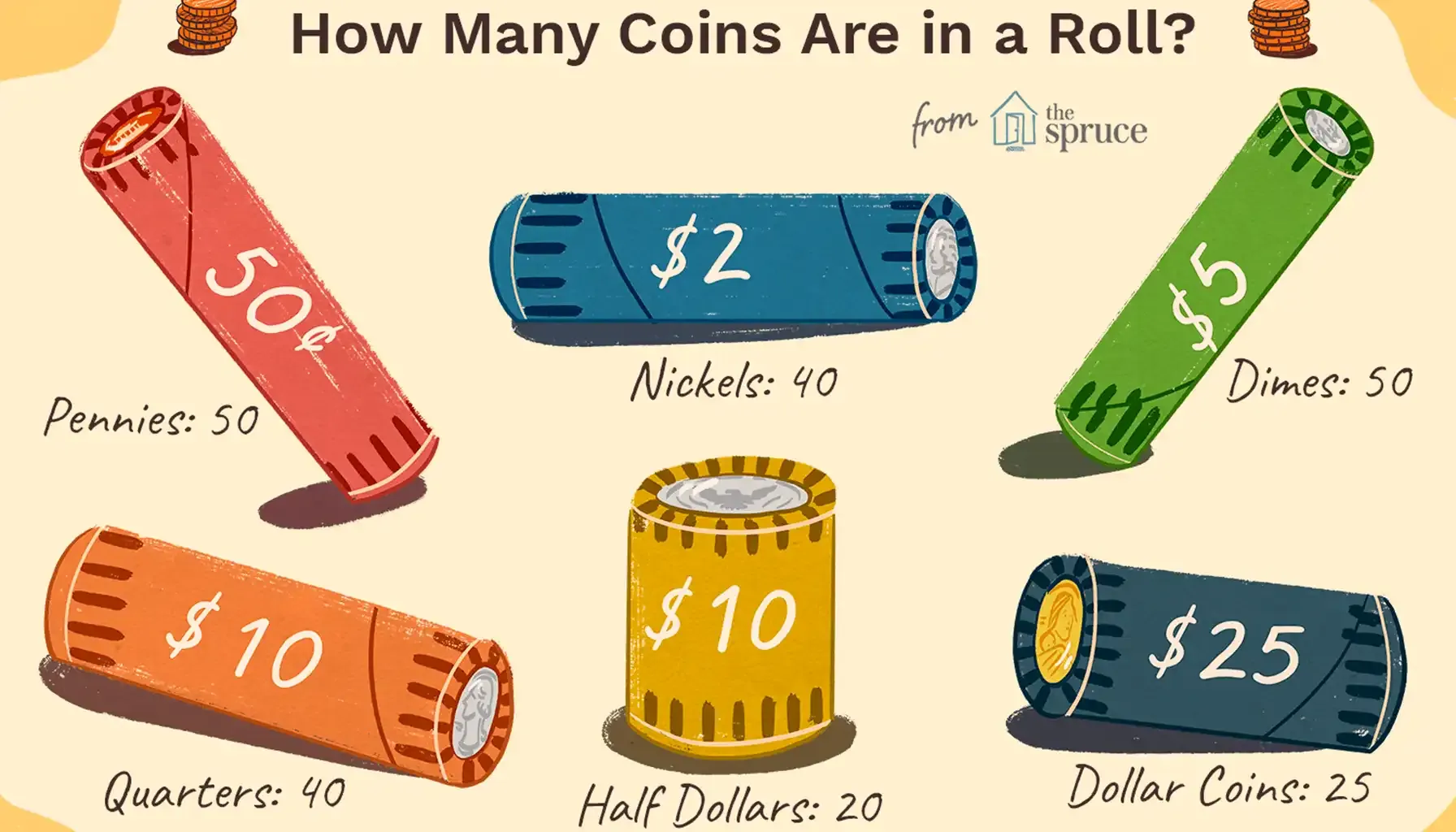
Overall, if you are interested in one specific specimen, you can study this topic in more detail. For example, if you are only interested in a penny, then look for information specifically on how many pennies are in one roll.
Convenience
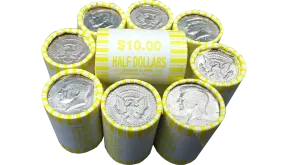
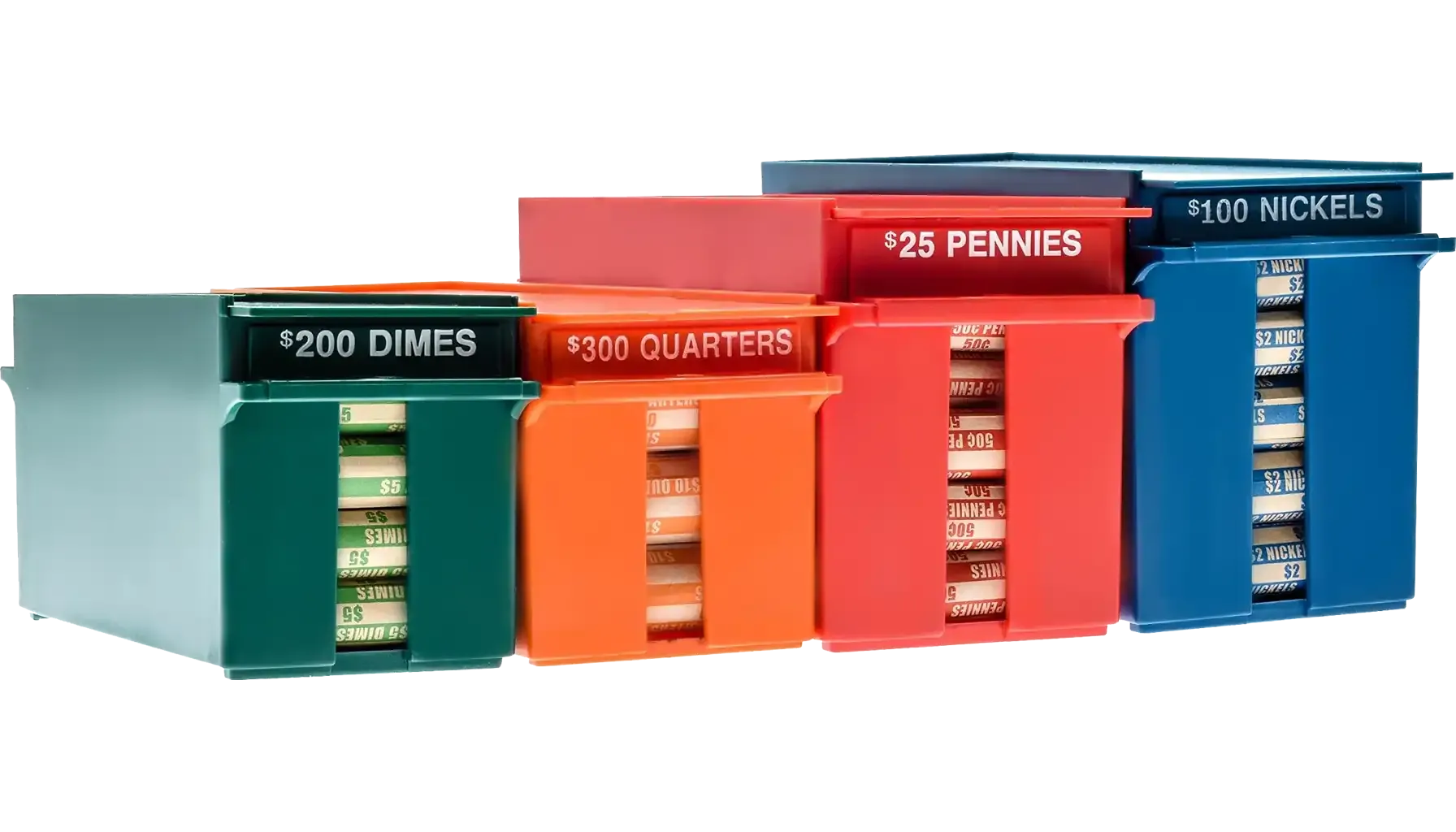
Coins are much more convenient to store and transport in rolls. Think about it, what could be more convenient for storing a large number of coins than their neat stacks? Such rolls can be very conveniently folded into a box.
How to Roll Coins with Wrappers
So, how to roll coins in paper in easy words? First of all, they are sorted by denomination. This is the most important rule, because each denomination can have its own differences in size, thickness, diameter, and so on. Each roll must contain specimens of only one type. This is a strict rule that must always be observed.
Accurate Counting
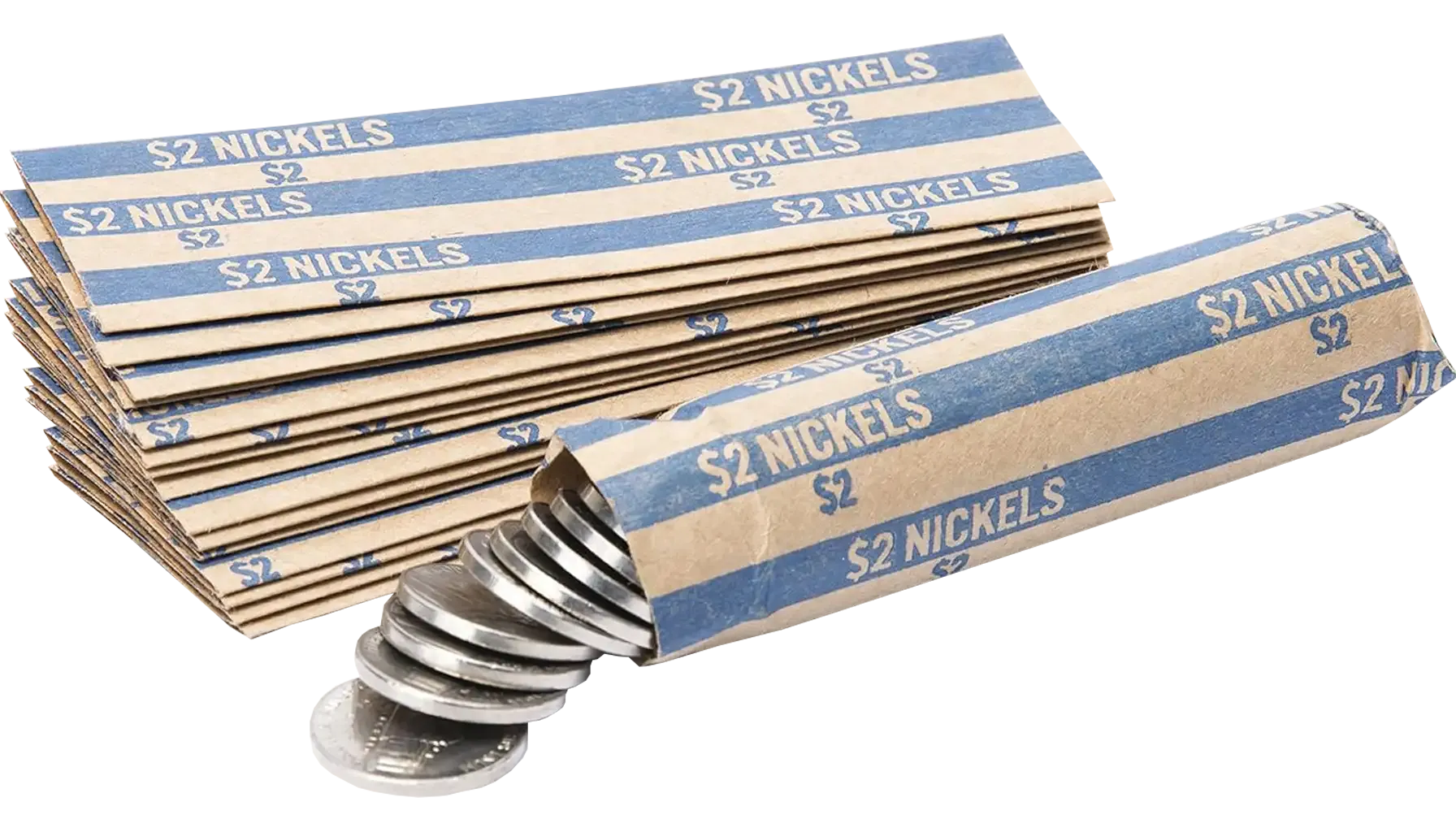
Each roll must contain a specific number of specimens for a given denomination. All of this is standardized and indicated on the wrapper. There is a whole scheme of specific designations.
Cleaning
This is a very important point, as many neglect it, using the most terrible dishwashing detergents and scrubbing these coins with hard brushes. And as a result, they then become of terrible quality and are worth mere cents.
Therefore, be sure to first learn how to clean old coins safely. This is important if you don't want to ruin valuable specimens.
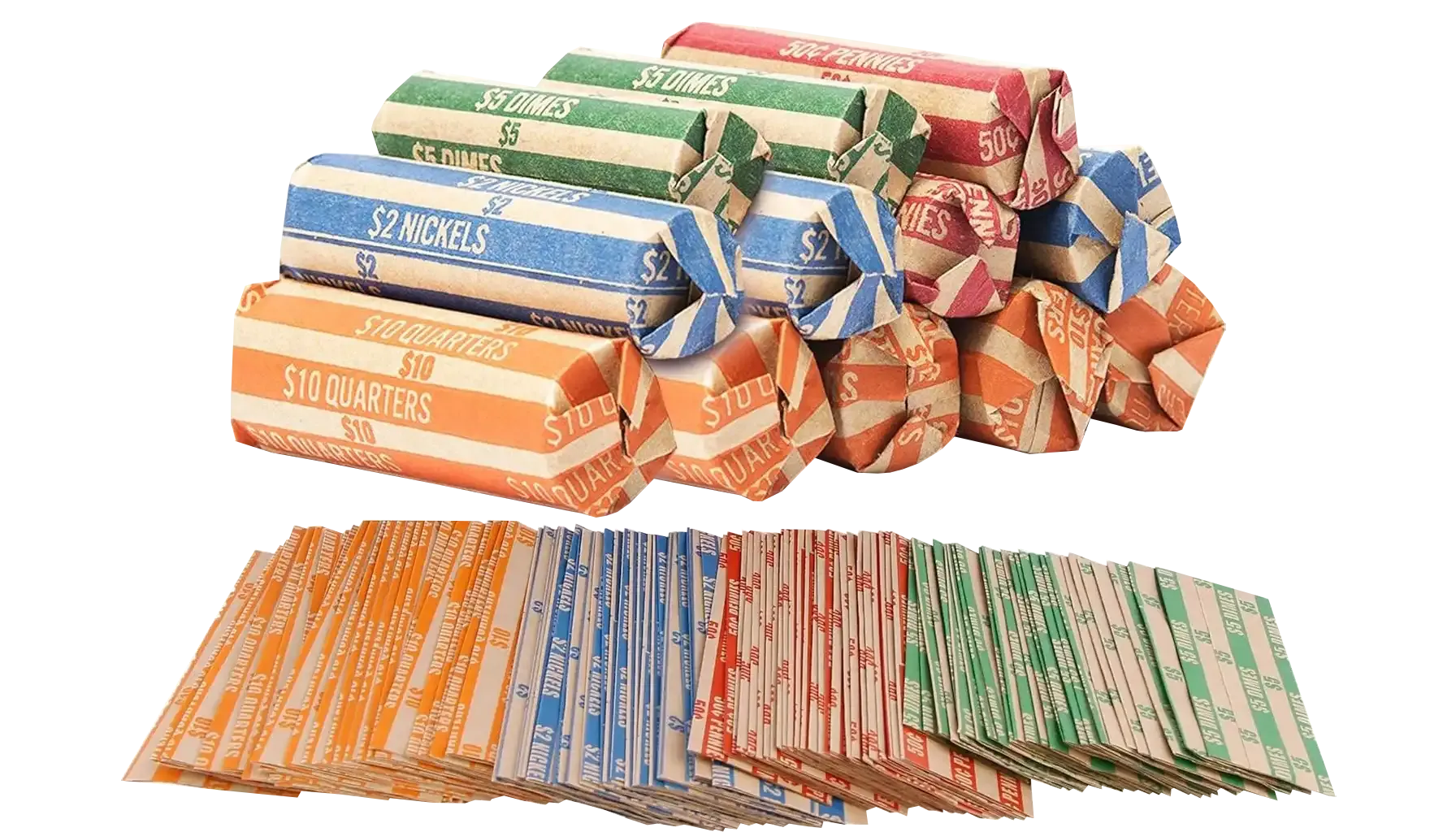
So, after you have prepared and sorted your coins, you can proceed to packaging them. Naturally, a logical question arises: How to roll up coins? Actually, it's not that difficult.
You will need:
Ready-made paper wrappers. They can be bought in stationery stores, banks, or post offices.
Specimens of the desired denominations have been sorted and counted.
Step-by-step Instructions for How to Wrap Coins in Coin Wrappers
Step 1 | Choose the right wrapper |
Step 2 | Slightly unroll one end |
Step 3 | Insert the coins |
Step 4 | Pack tightly |
Step 5 | Seal the ends |
Step 6 | Check for security |
First of all, you should choose the correct wrapper for a specific specimen; if you are using a branded one, rather than just any paper.
You absolutely need to select the right one, because they have different diameters and widths, and are also designed for a specific number of specimens.
Usually, the type of specimen and the quantity are already indicated on the wrapper, which should make packaging easier for you.
Primarily, these wrappers are flattened and fit quite snugly together. You need to take one such wrapper and unfurl it. You need to make it into a proper, nice cylinder.
Next, carefully insert the assorted and counted specimens into the wrapper, but make sure you do not touch them with your hands. It is best to do this wearing special gloves; otherwise, the skin oil from your specimens will be very difficult to remove later.
After you have finished packaging all the coins, gently tap the wrapper on a hard surface so that all the specimens fit tightly against each other and do not rattle. This will ensure their safety during transportation or simple storage.
Next, carefully fold the protruding edges of the wrapper inwards on both ends. It is also important here to press them tightly against the coins, but again, attention, do this while wearing gloves.
How to Roll Coins with Flat Wrappers
If you have flat paper wrappers, then you need to act a bit differently here. Carefully lay out the sorted specimens in a stack exactly in the center of the wrapper. Here, be sure to make sure the stack is neat and even.
Next, take one long edge of the wrapper and wrap it tightly around the stack. Then take the other edge and wrap it over the first one, completely covering the coins. In this way, the edges will overlap and become secure.
How to Wrap Coins in Paper
If you do not have the necessary wrappers but still want to do this, you can use plain paper. However, it is important to note that, as a rule, banks do not accept coins wrapped in plain or any non-standard wrapping.
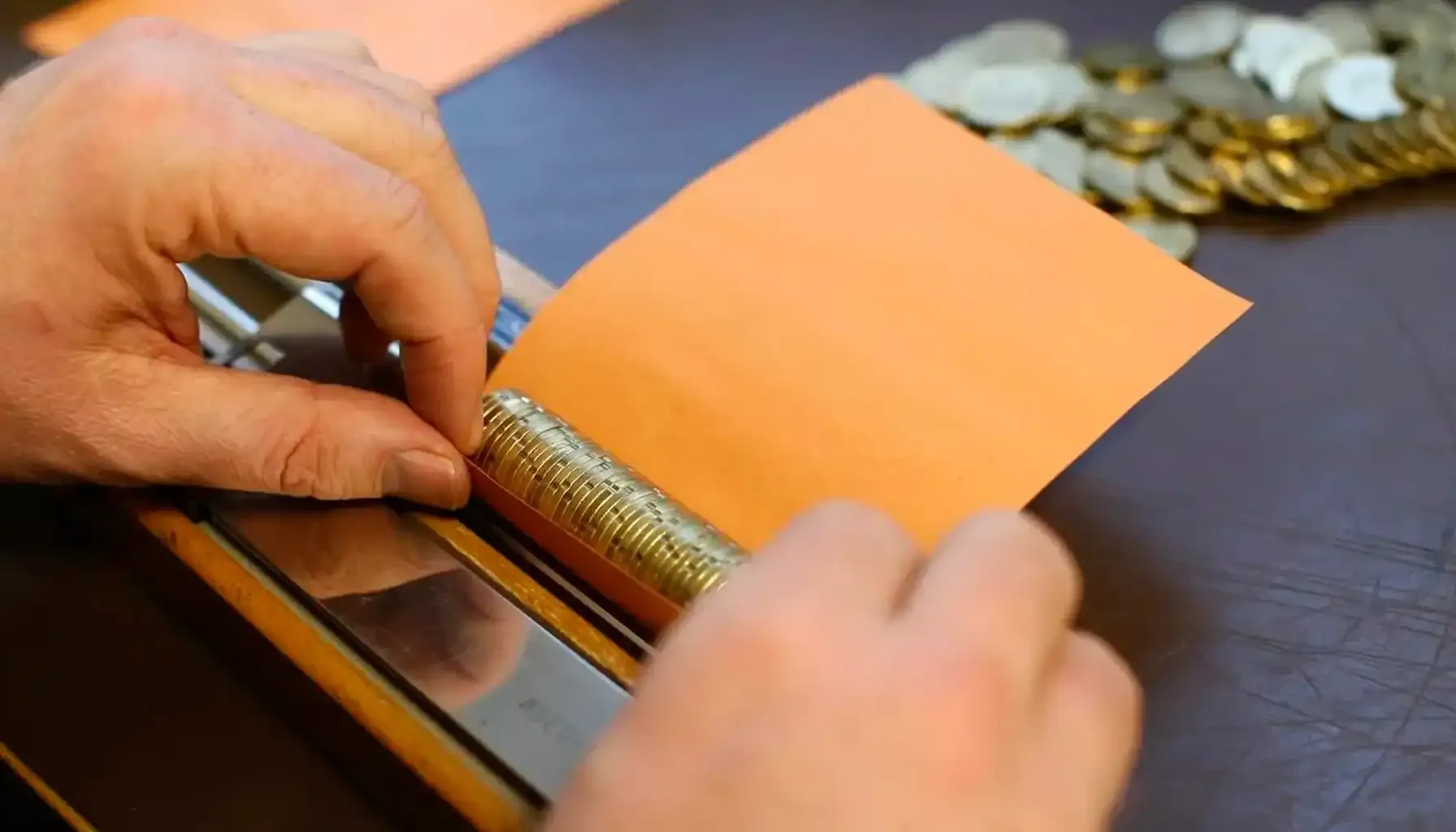
The reason, again, is that everything must be standardized, and if you bring them in plain paper or something similar, they will still have to re-wrap them themselves later.
Therefore, if you are doing this specifically for a bank, it is better not to do so. They will not accept them. But for personal use, plain paper will also work.
To do this, repeat the same steps you followed with the flat wrappers, but choose the right paper. It should be thick enough. Kraft, gift wrapping, or simply thick office paper will work. Cut to the required size and do the same thing.
Common Mistakes when Rolling Coins
Mixing Denominations
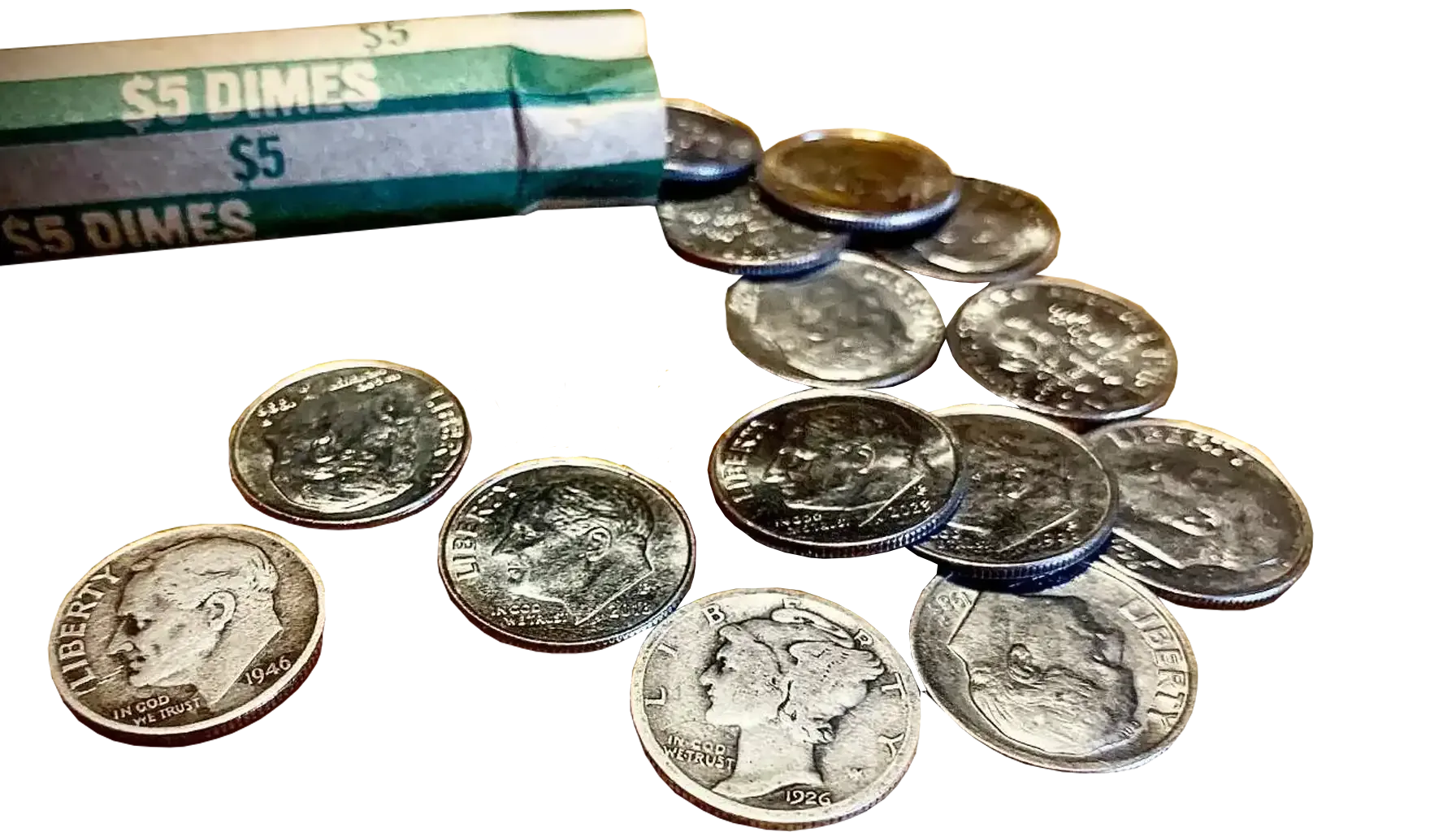
This is the most common mistake. If you want to roll dimes, don't mix pennies in there. Besides being unaesthetic and inconvenient, the bank will not accept such rolls. Incorrect number of coins.
Each denomination has a specific number in a roll. If it doesn't match, the packaging might be incorrect, and this will not only affect the incorrectness of your packaging, but it can also be dangerous during transportation and so on.
For example, if, due to a small number of specimens in the roll, the packaging is not tight enough, the coins will rattle inside.
Unreliably Sealed Ends
If you overlook this point or perhaps seal the ends too loosely, the coins can easily fall out during transportation. Therefore, it is important to work on this point. Using the wrong wrappers.
If you take a wrapper for a specific denomination and try to stuff another one in there, it can lead to consequences, including for the preservation of your specimens. Therefore, it is important to consider this when packaging.

 Facebook
  X (Twitter)
  Pinterest
  LinkedIn