Contents:
- What Is the 1981 Penny Value Today?
- 1981 Lincoln Penny: Key Facts and Varieties
- 1981 Penny Value Chart
- Why Some 1981 Pennies Are More Valuable Than Others
- 1981 Penny Error List With Values
- Is There a 1981 Silver Penny?
- Most Valuable 1981 Penny Sales
- How to Identify a Valuable 1981 Penny
- Is a 1981 Penny Worth Anything Today?
- Where to Sell or Appraise Your 1981 Penny
- FAQ: 1981 Penny Worth
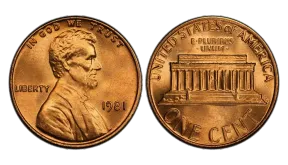
A 1981 U.S. Lincoln Memorial cent has Abraham Lincoln on the obverse, the Lincoln Memorial on the reverse, and it was still the 95% copper, 5% zinc version weighing 3.11 grams. Philadelphia struck 7,491,750,000, Denver struck 5,373,235,677, and San Francisco made proof cents, including Type 1 and Type 2 proof mint-mark varieties.
How much is a 1981 penny worth? For the average value, a normal circulated 1981 penny is usually just 1 cent. In the current collector market, a raw/ungraded 1981 Philadelphia cent averages about $2.39, a 1981-D about $1.79, a 1981-S Type 1 proof about $4.34, and a 1981-S Type 2 proof about $19.97.
What Is the 1981 Penny Value Today?
Philadelphia Mint (No Mint Mark)
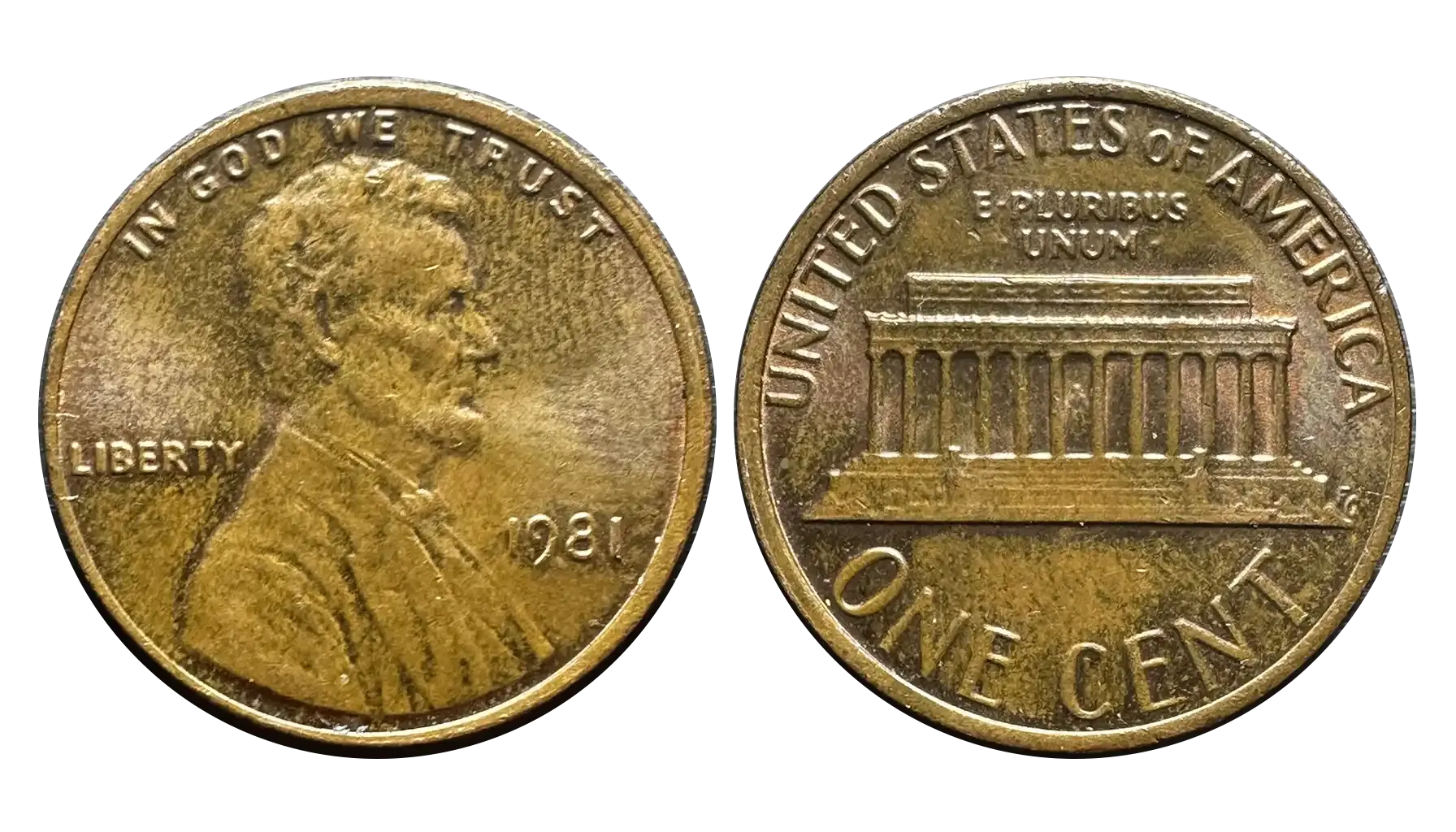
Coins minted in Philadelphia have no mint mark. With a mintage of over 7.4 billion, these are common and hold minimal value unless in pristine condition or featuring an error. A 1981 penny value no mint mark graded MS65 could cost $14, while error ones, such as the 1981 penny no mint mark error, can reach significantly higher prices depending on rarity.
Denver Mint (D)
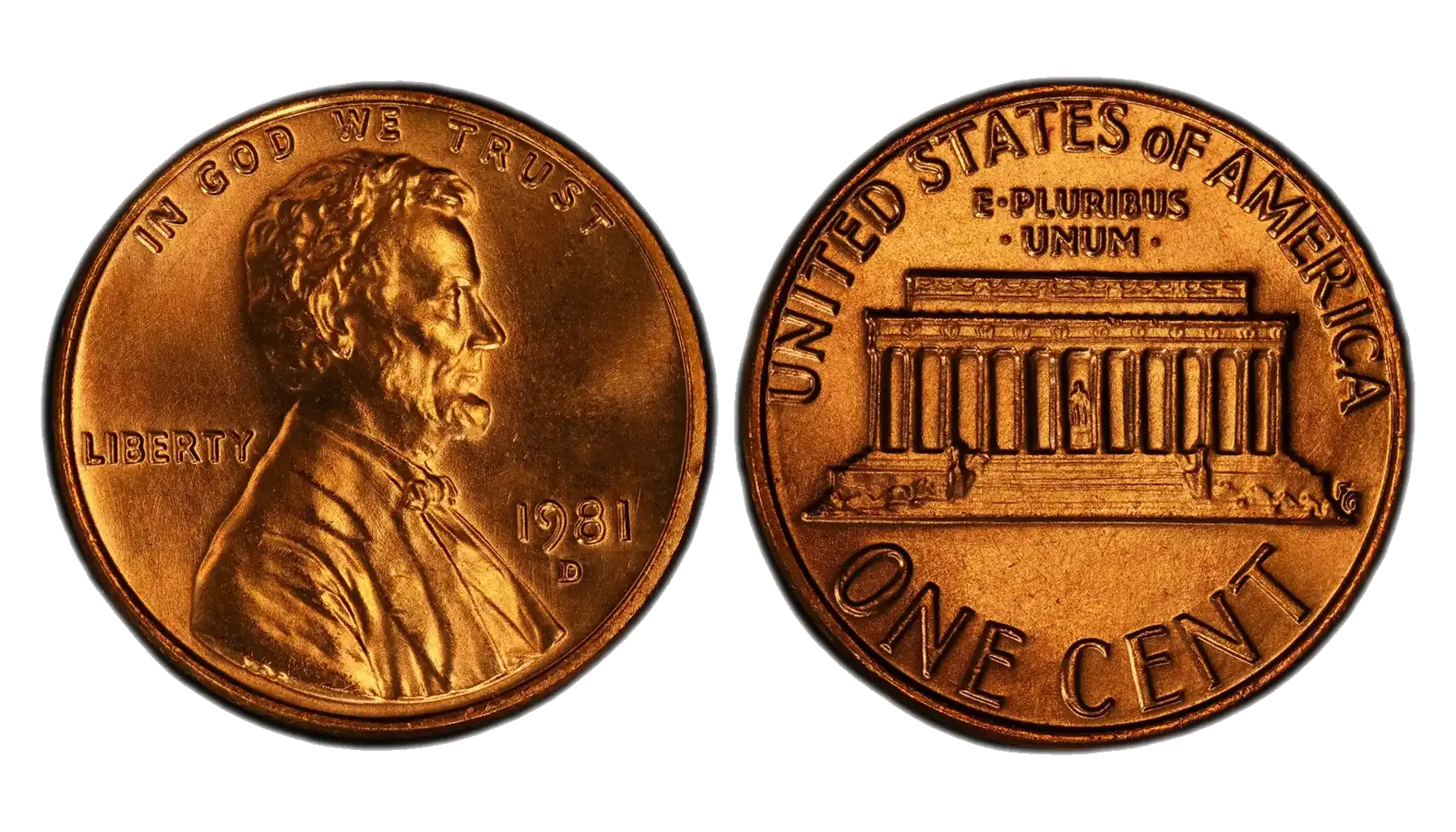
The Denver mint produced over 5.3 billion pennies, marked with a “D” on the obverse. How much is a 1981 D penny worth? Average circulated examples hold little value, but high-grade examples or error ones can command a premium. For instance, a red MS67-graded 1981 D penny value worth $160. Rare errors like the double die 1981 D penny or off-center strikes add considerable value (check the 1981 D penny error list with pictures).
“The 1981-D Memorial Lincoln Cent was produced in the billions making it a very common coin. Only in MS67 or higher are they scarce. Anything grading MS68 or higher is rare and should be sent in to get graded as it would be one of the nicest examples that exist.”
— Jaime Hernandez, numismatist
PCGS
San Francisco (S)
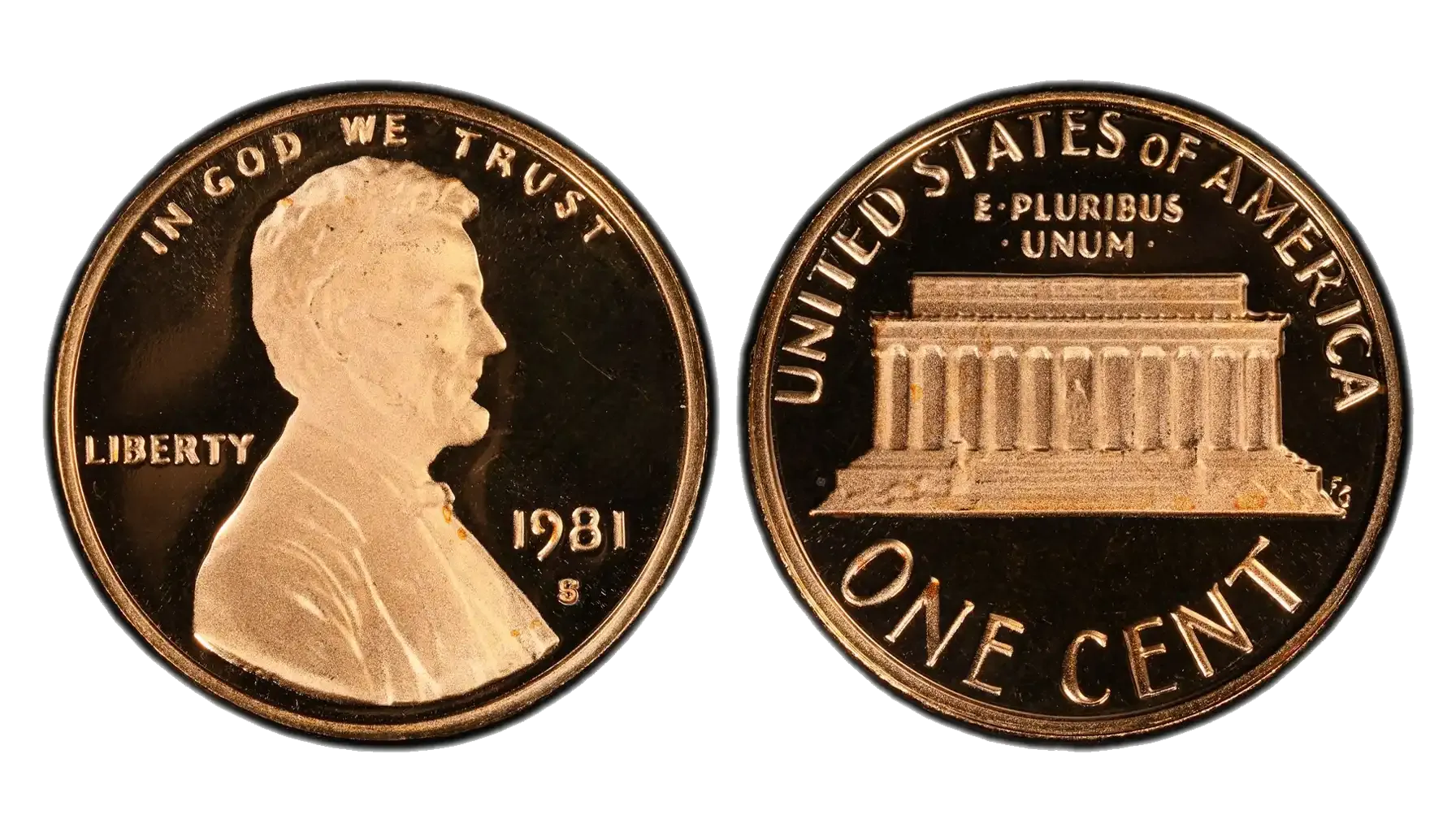
This coin, minted in San Francisco, is marked with a mint mark "S". It was primarily struck as a proof one for collectors, as the San Francisco Mint typically produces proof coins for that year.
These coins, particularly Type 2 (Clear S), command premiums among collectors due to their limited mintage.
Uncirculated (Proof): $2–$5 (depending on condition)
Graded (PR-70 or similar): $15 or higher for the highest-grade proofs
The 1981 S penny value varies based on its condition. As most 1981 S pennies were produced for collectors, they are generally worth a bit more than the standard circulating coins, but still relatively modest unless in high-grade proof condition.
1981 Lincoln Penny: Key Facts and Varieties
This coin is a part of the Lincoln Memorial series, which began in 1959 to commemorate the 150th anniversary of Abraham Lincoln’s birth.
This series replaced the earlier Wheat Penny. Interestingly, 1981 was the last year pennies were primarily composed of copper. In 1982, the composition shifted to zinc because of rising copper prices.
Face Value | $0.01 (One Cent) |
Composition | 95% Copper, 5% Zinc |
Weight | 3.11 grams |
Diameter | 19.05 mm |
Thickness | 1.52 mm |
Edge | Plain |
Mintage | 12,869,048,760 |
Mints | Philadelphia (no mint mark), Denver (D), San Francisco (S) |
On the obverse, Lincoln’s bust dominates, surrounded by inscriptions “IN GOD WE TRUST”, “LIBERTY”, and the year “1981.” The absence or presence of a mint mark indicates the minting location.
The reverse features the Lincoln Memorial, framed by the phrases “UNITED STATES OF AMERICA” and “E PLURIBUS UNUM.” Below lies the denomination, “ONE CENT.” Gasparro’s initials (“FG”) appear near the Memorial’s right base.
Interesting: Top 15 Most Expensive Modern Quarters.
1981 Penny Value Chart
Grade | 1981 penny no mint mark value | 1981 penny value D | 1981-S Type 1 proof | 1981-S Type 2 proof |
Ungraded | $3.45 | $1.79 | $4.34 | $19.97 |
MS63 | $13.00 | $7.22 | — | — |
MS64 | $14.06 | $15.41 | — | — |
MS65 | $15.00 | $15.50 | — | — |
MS66 | $30.10 | $24.00 | — | — |
MS67 | $188.57 | $140.00 | — | — |
MS68 | $226.00 | $168.00 | — | — |
MS69 | $271.00 | $202.00 | — | — |
MS70 | $339.00 | $253.00 | — | — |
PR64 | — | — | $5.00 | $14.00 |
PR66 | — | — | $45.00 | $17.79 |
PR67 | — | — | $50.00 | $39.99 |
PR68 | — | — | $55.00 | $61.53 |
PR70 | — | — | $1,995.95 | $4,733.71 |
Why Some 1981 Pennies Are More Valuable Than Others
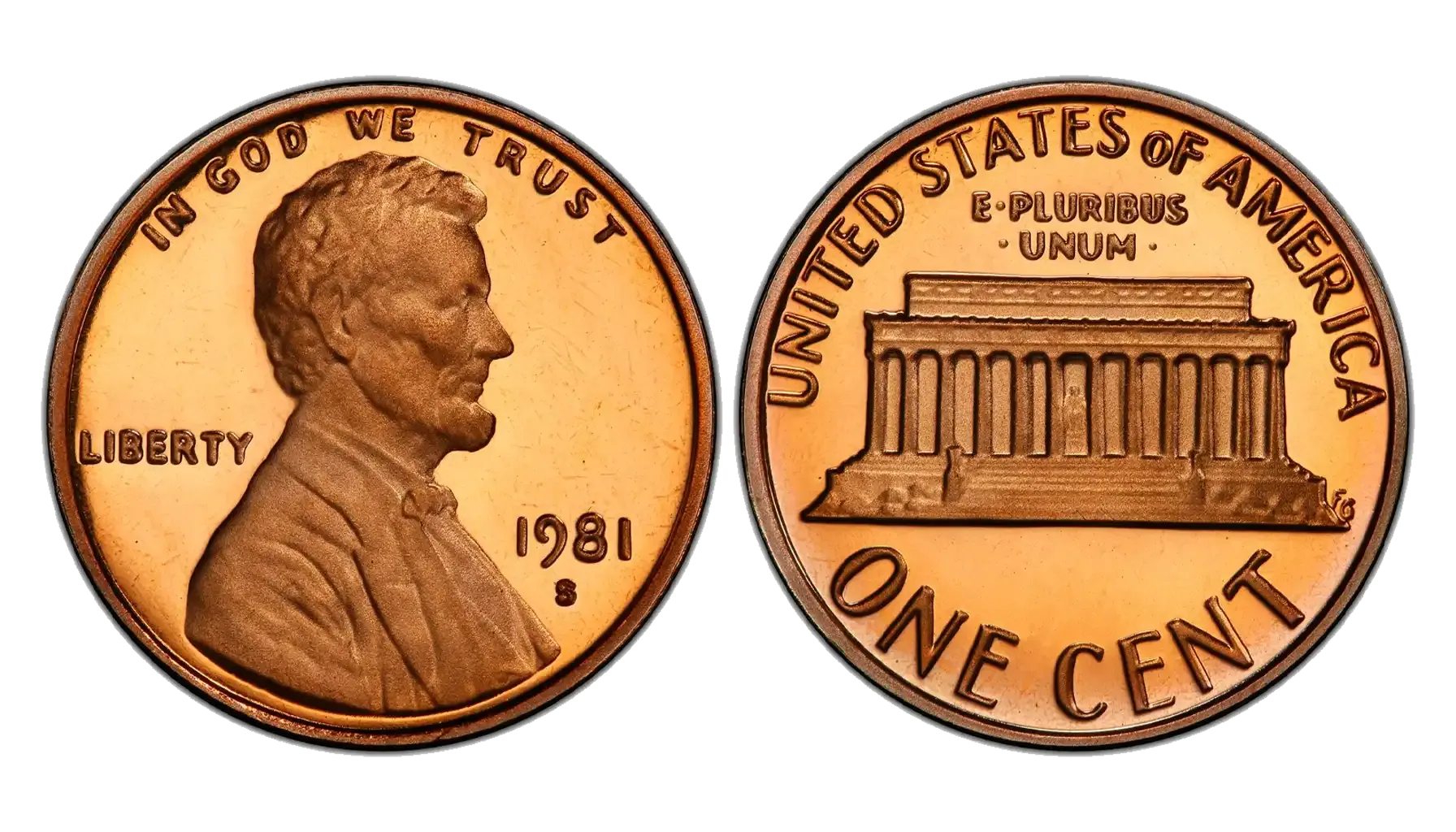
Regular 1981 Philadelphia and 1981-D cents were struck in huge numbers, so most are common. The main exception is the 1981-S Type 2 proof, which is scarcer than the normal Type 1 proof; PCGS and Greysheet note that only about 10% of 1981-S proof cents used the clearer Type 2 “S” mintmark.
On common-date modern cents, the value usually stays low until the coin reaches true gem levels. That is why a normal worn coin is cheap, while a top certified red coin can be worth much more.
For copper cents, RD, RB, and BN matter a lot. RD coins show about 85% to 90% of their original red color, RB coins show at least 15% to 20% red, and coins with less red are BN. Red copper coins bring much stronger premiums than brown ones at the same numeric grade.
A proof cent with stronger contrast is worth more than an ordinary proof. PCGS separates CAM and DCAM proof designations, and the 1981-S Type 2 is especially popular in those higher proof designations because collectors need it for complete set registry runs.
1981 Penny Error List With Values
Errors increase the value of coins. There are doubled dies, die cracks, and off-center strikes. Particularly rare are coins with the 1981 penny no mint mark error, a result of missteps in the minting process.
Doubled Die 1981 Penny Errors: Display partially or fully duplicated images. A double die penny can range from $50 to $150. The total price depends on prominence and condition.
Die Cracks and Breaks: These manifest as raised lines or gaps on the surface. Examples have sold for upwards of $700 in high-grade conditions.
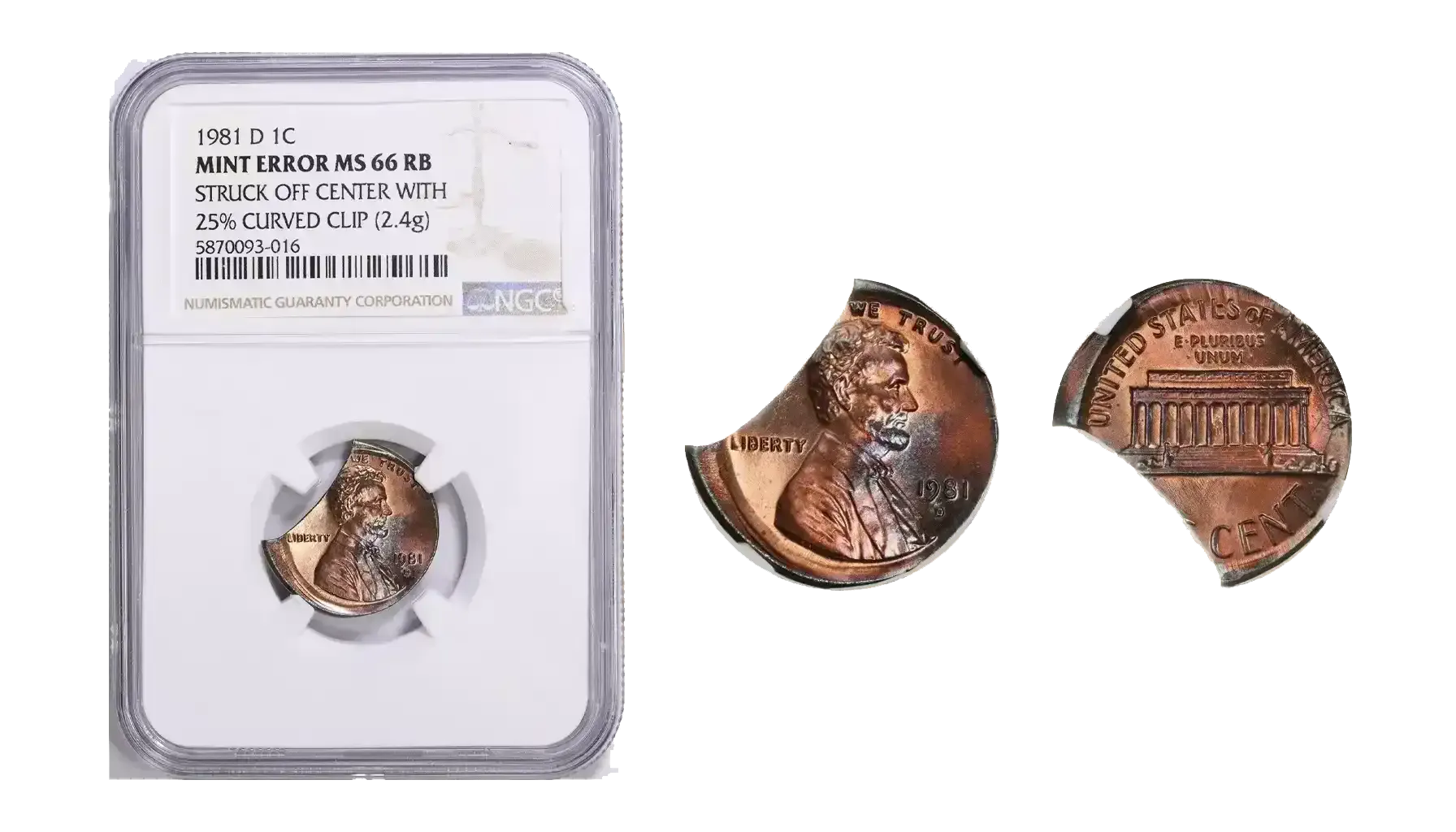
Off-Center Strikes: Misalignment during minting leads to crescent-shaped blanks. Depending on the visibility of the design and date, these can fetch $900 or more.
Repunched Mint Mark: The mint mark appears duplicated due to multiple strikes. These errors are particularly rare and can fetch prices ranging from $200 to $400, depending on clarity and grade. We recommend that you refer to the 1981 penny error list with pictures to estimate your coin.
Is There a 1981 Silver Penny?
Technically, there are no official silver or gold 1981 pennies minted by the U.S. Mint. However, some of them have been plated with silver or a similar material after leaving the Mint. These plated coins are altered for decorative purposes or as part of novelty sets, and they hold no additional numismatic value.
An example exposed to certain chemicals or environments may develop a silvery appearance due to oxidation or other reactions. These are NOT made of silver and typically retain their base value.
Related article: 2023 Jovita Idar Quarter Value.
Most Valuable 1981 Penny Sales
Coin | Date | Auction house | Grade | Price |
1981 (Philadelphia) | 07/01/2022 | eBay | NGC MS68RD | $3,000 |
1981-D | 01/04/2017 | Heritage Auctions | PCGS MS67+RD | $5,170 |
1981-S Type 1 proof | 01/08/2003 | Heritage Auctions | PCGS PR70 | $8,050 |
1981-S Type 2 proof | 01/31/2004 | Heritage Auctions | PCGS PR69 | $863 |
How to Identify a Valuable 1981 Penny
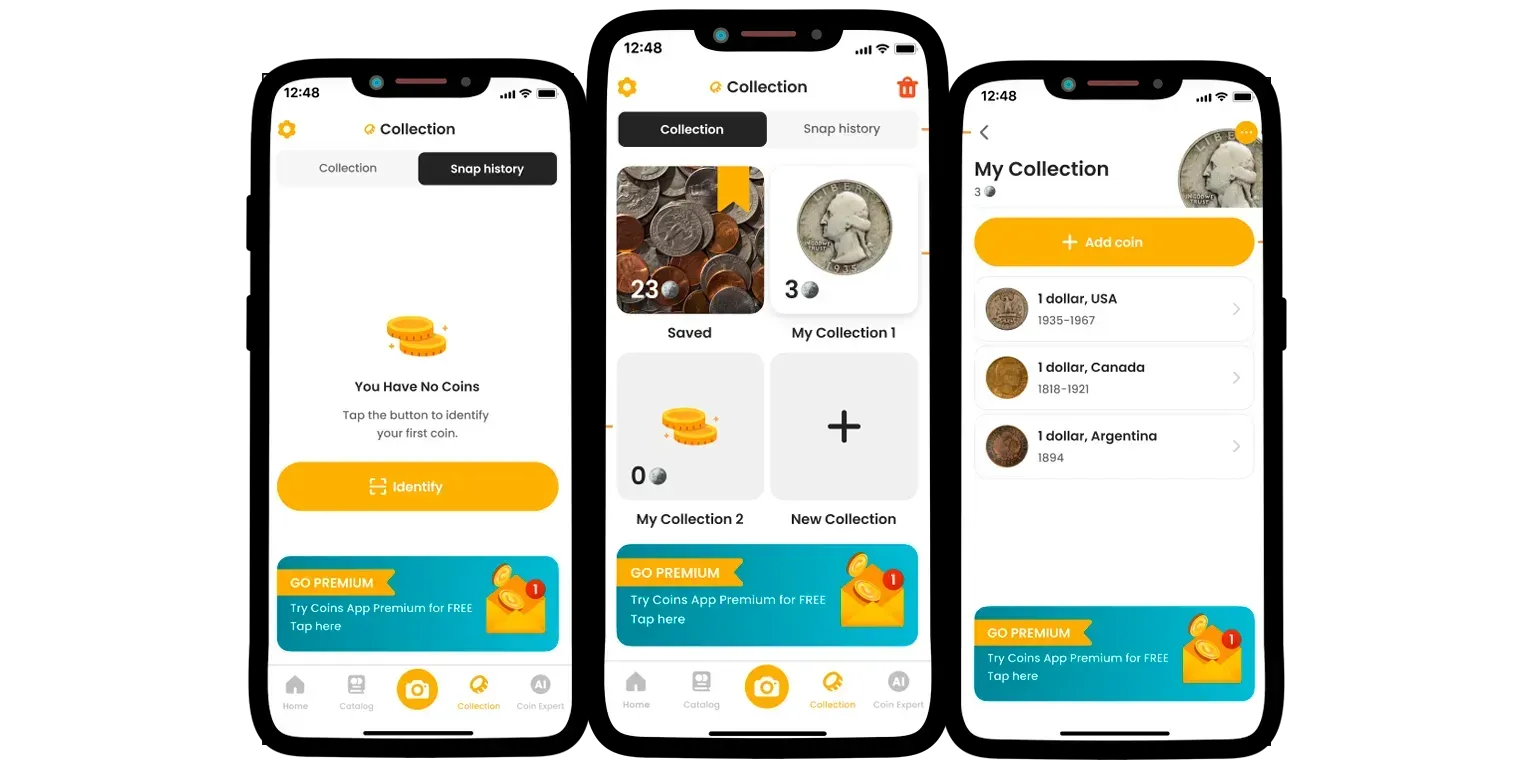
Tools like the Coin ID Scanner app allow collectors to upload photos and instantly identify a coin and determine its value and main specs.
Advantages of using Coin ID Scanner:
Instant Identification: The app allows users to upload a photo of their coin, which is then scanned and compared to a database of images and records.
Accurate Valuation: By referencing real-time market trends, the app provides an estimated value for the penny 1981 coin.
User-Friendly Interface: With a simple and intuitive design, the app is accessible even for those who are new to numismatics.
Collection Management: Users can catalog their collection, track values over time, and organize coins by type, country, or grade.
Global Reach: The app often supports multiple currencies and coin types from various countries.
…and even more!
Is a 1981 Penny Worth Anything Today?
A normal 1981 no mint penny or 1981-D one is a very common Lincoln Memorial cent, and PCGS notes the 1981-D was struck in the billions and becomes scarce only in about MS67 or higher. That means most circulated coins are worth face value, and most ordinary uncirculated pieces are still modest.
The better 1981 coins are the 1981-S Type 2 proof, top-grade red business strikes, and high-end proof coins.
Where to Sell or Appraise Your 1981 Penny
Local coin dealer — best for a common raw coin. Use the PCGS Authorized Dealer Directory or NGC Dealer Locator to find shops that offer appraisals.
Heritage Auctions — better for a stronger coin; Heritage offers a free auction evaluation and outright-purchase options.
GreatCollections — good for certified coins; it accepts PCGS, NGC, CAC, and ANACS certified material for sale.
PNG dealer — a solid option if you want another reputable professional appraisal route.
FAQ: 1981 Penny Worth
1. Which 1981 penny is worth money?
The best one is usually the 1981-S Type 2 proof. In PR67, it brings about $45 versus $6 for the Type 1. Top-grade 1981 no mint mark penny value and 1981-D red business strikes can also be worth strong money.
2. Is a 1981 penny real copper?
Yes. A regular 1981 U.S. cent is 95% copper and 5% zinc.
3. Why is a 1982 penny worth $10,000?
That usually refers to a rare 1982 small-date copper/bronze cent, especially one of the famous 1981 D penny errors - copper small date, or a top-grade 1982 bronze small date. PCGS records a 1982 bronze small date at $9,987.50, and a rare 1982-D copper small date sold for $18,000.
4. How much does a 1981 D penny weigh?
3.11 grams.
5. Are 1981 pennies supposed to have a mint mark?
It depends on the mint. Philadelphia cents have no mint mark, Denver cents have D, and San Francisco proof cents have S.
6. What’s the melt value of a 1981 penny?
Using Coinflation’s March 26, 2026 metal prices, the melt value of a 1981 copper cent is about $0.0361, or about 3.6 cents.
7. What is the difference between 1981 Type 1 and Type 2?
It is the shape of the “S” mint mark on the 1981-S proof. Type 1 is less defined and lacks sharp serifs. Type 2 is clearer, with more distinct, bulbous serifs.
8. How many 1981 pennies were made?
Philadelphia struck 7,491,750,000, Denver struck 5,373,235,677, and the Mint produced 4,063,083 proof sets in 1981. That is about 12.869 billion cents overall before separating Type 1 and Type 2 proof subtypes. PCGS says the exact Type 2 proof count is unknown, but experts estimate it at roughly 10% to 20% of 1981-S proof coinage.
9. What is the 1981 D small date?
There is no standard 1981-D Small Date major variety recognized by PCGS. Why is a 1981 D penny rare then? You are probably thinking of the 1982 small-date cents, which PCGS specifically discusses as a 1982 issue. For 1981-S, the important proof distinction is Type 1 vs. Type 2, not small date.

 Facebook
  X (Twitter)
  Pinterest
  LinkedIn