Contents:
The wheat cent series commenced in 1909, with the introduction of the notorious 1909 VDB penny, and its production continued for decades to come as one of the most recognizable programs in the numismatic history of the United States.
The 1944 wheat penny was born out of copper shortages and wartime ingenuity, and even though it might not be the rarest instance of numismatic art, the auction records demonstrate outstanding results: the 1944 steel variety was sold for $180,000 in 2021, but how to check coin value of more common, regular variations right away?
History of the Wheat Penny 1944
By the time of penny production (1944), a severe copper scarcity had already been one of the many resource problems the US faced as World War II went on. As a result, the Mint, whose reserves had been heavily strained by wartime demand, was to adjust its coinage strategy in order to conserve critical raw metals for military use.
The 1943 steel penny series, thus, was struck from steel coated in zinc, and it was a dramatic difference from the copper alloy that had been used earlier. By 1944, copper was once again used for pennies issued by the US Mint, but there was one nuance. That year, large volumes of the copper used were recycled from wartime items, such as shell casings, etc.
Although copper was brought back into production, some of the 1943-cent blanks continued to be utilized in the minting process, which led to the creation of extremely valuable errors and types.
“…The 1943 issue had been a historic pivot – the first one-cent coin in U.S. history struck without a trace of copper. While those zinc-plated steel "white cents" served their wartime purpose, their tendency to rust <...> made them deeply unpopular. Following December 15, 1943, <...> President Franklin D. Roosevelt signed the authorization to revert to bronze…”
— Charles Morgan, PCGS manager of numismatic research and programs
PCGS CoinFacts
Design Features and Specifications
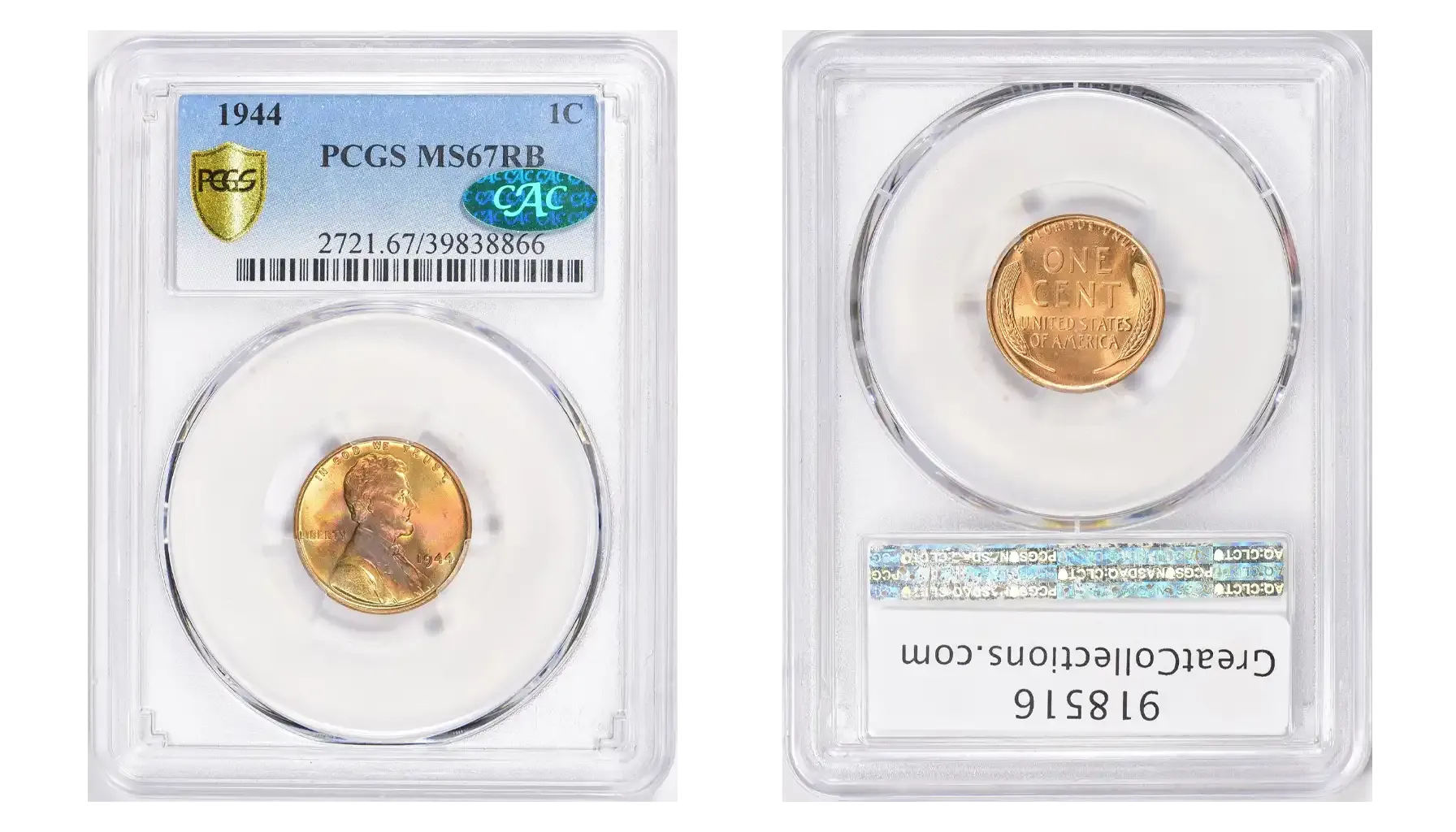
Standard Specifications of the 1944 Cents | |
Series | Lincoln Wheat Cent |
Obverse | The portrait of Abraham Lincoln, "IN GOD WE TRUST", "LIBERTY", "1944", and a mint mark |
Reverse | The denomination "ONE CENT", "UNITED STATES OF AMERICA", "E PLURIBUS UNUM", and two wheat stalks |
Composition | 95% copper, 5% zinc and tin |
Weight | 3.11 grams |
Diameter | 19.00 mm |
Thickness | 1.52 mm |
Edge | Plain |
Shape | Round |
Mint Marks | None for Philadelphia “D” for Denver “S” for San Francisco |
What Determines the Wheat Penny Value 1944
Relevance: The 1944 copper wheat penny value has always been influenced by historical relevance, for coins struck during the latter days of World War II represented the shortages that affected the monetary sector and economy in general, and the return to copper production (after the wartime steel penny fiasco).
Rarity of the Coin: A coin's value increases with its difficulty of being found. Even though the US Mint produced billions of 1944 cents in total, their value might rise since some varieties are far rarer than others.
Condition and Grade: In general, one should differentiate Mint State (MS) coins (i.e., instances with a sharp strike and no obvious wear) and circulated items (i.e., pieces with obvious wear).
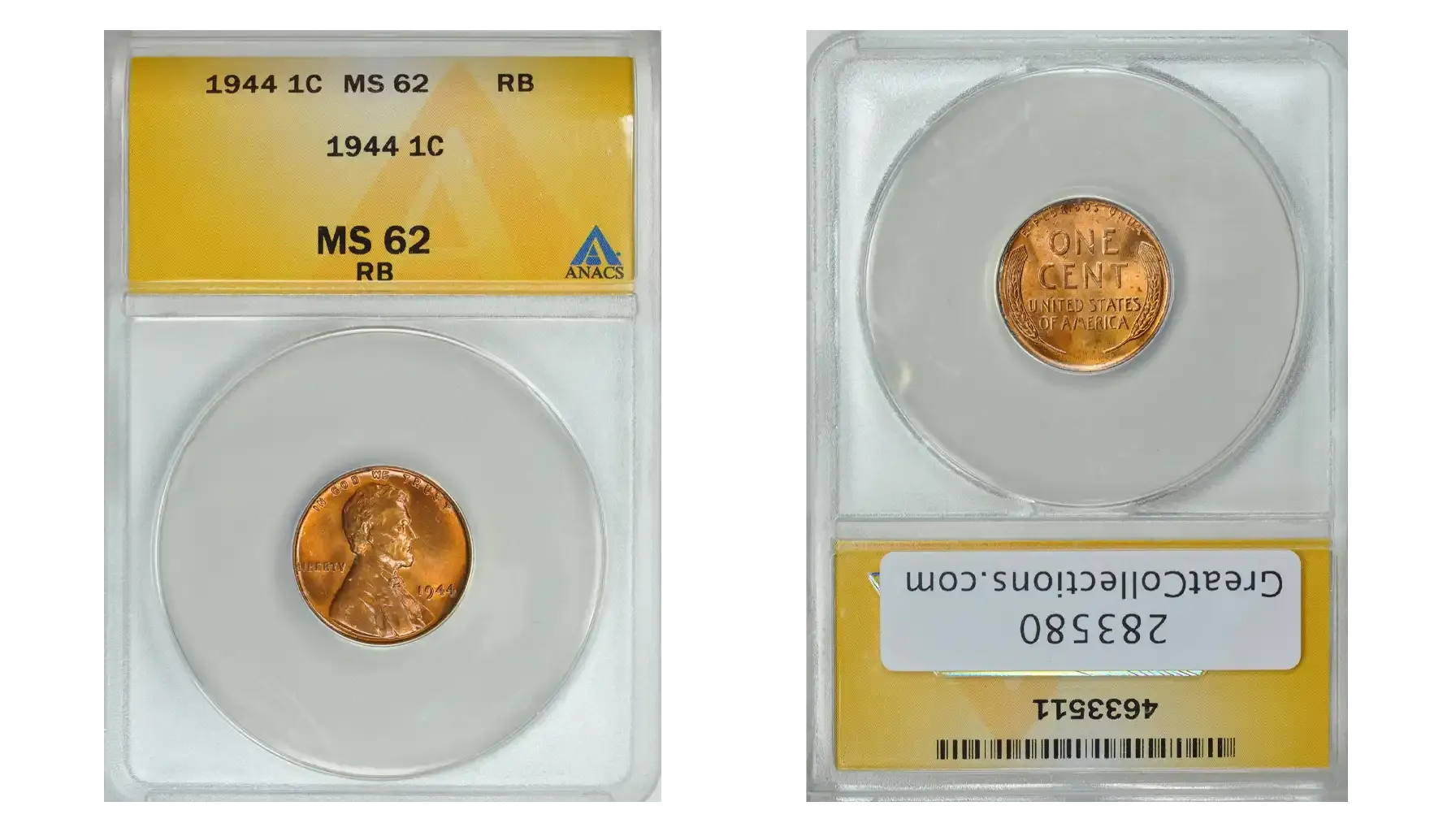
Presence of Errors: Any deviation from the standard design and specifications is considered an error, and its price, because of its unique nature, may be much higher, depending on the type of imperfection, its severity, and the overall appeal.
Provenance and Certification: The provenance of a wheat penny, or its ownership history, can also have an effect on its value. Because of their proven origin and authenticity, coins that have been verified by reputable grading services (e.g., PCGS or NGC) or made through prestigious collections cost more.
1944 Wheat Penny Types and Their Values
1944 Wheat Penny No Mint Mark
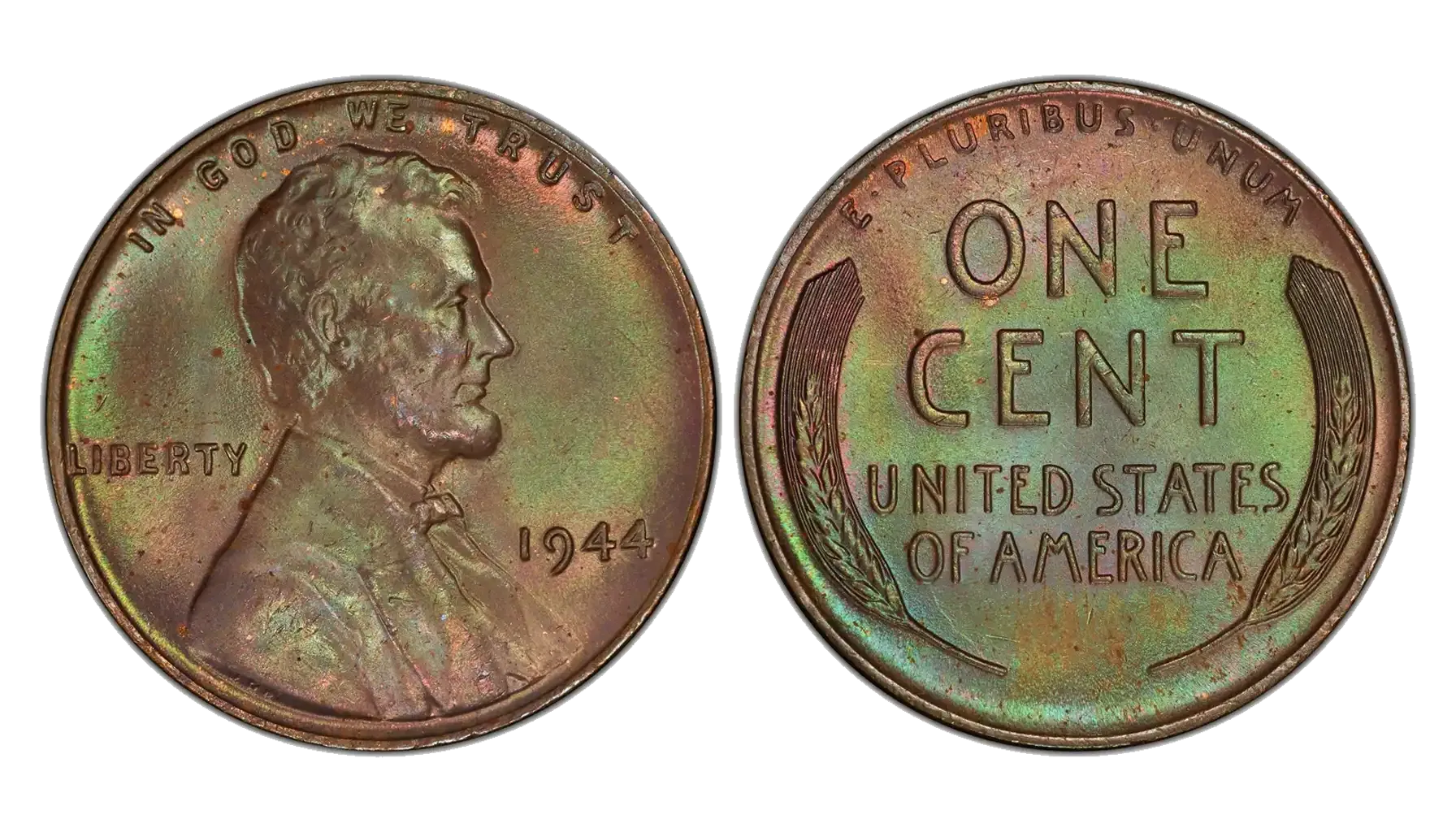
Produced by: Philadelphia Mint
Mintage: 1,435,400,000
Auction record: $25,000
In contrast to the steel pennies of 1943, the primary material came down to copper instead. Three mint locations (San Francisco, Denver, and Philadelphia Mint), i.e., the main hubs of coinage in the US, were responsible for the substantial production of these coins.
The presence of these numismatic creations in circulated condition on the market is impressive, but uncirculated pieces in high Mint State grades can be found in coin rolls and private collections, even though the main part of them has already been recorded and evaluated by PCGS and other grading services.
1944 D Wheat Penny
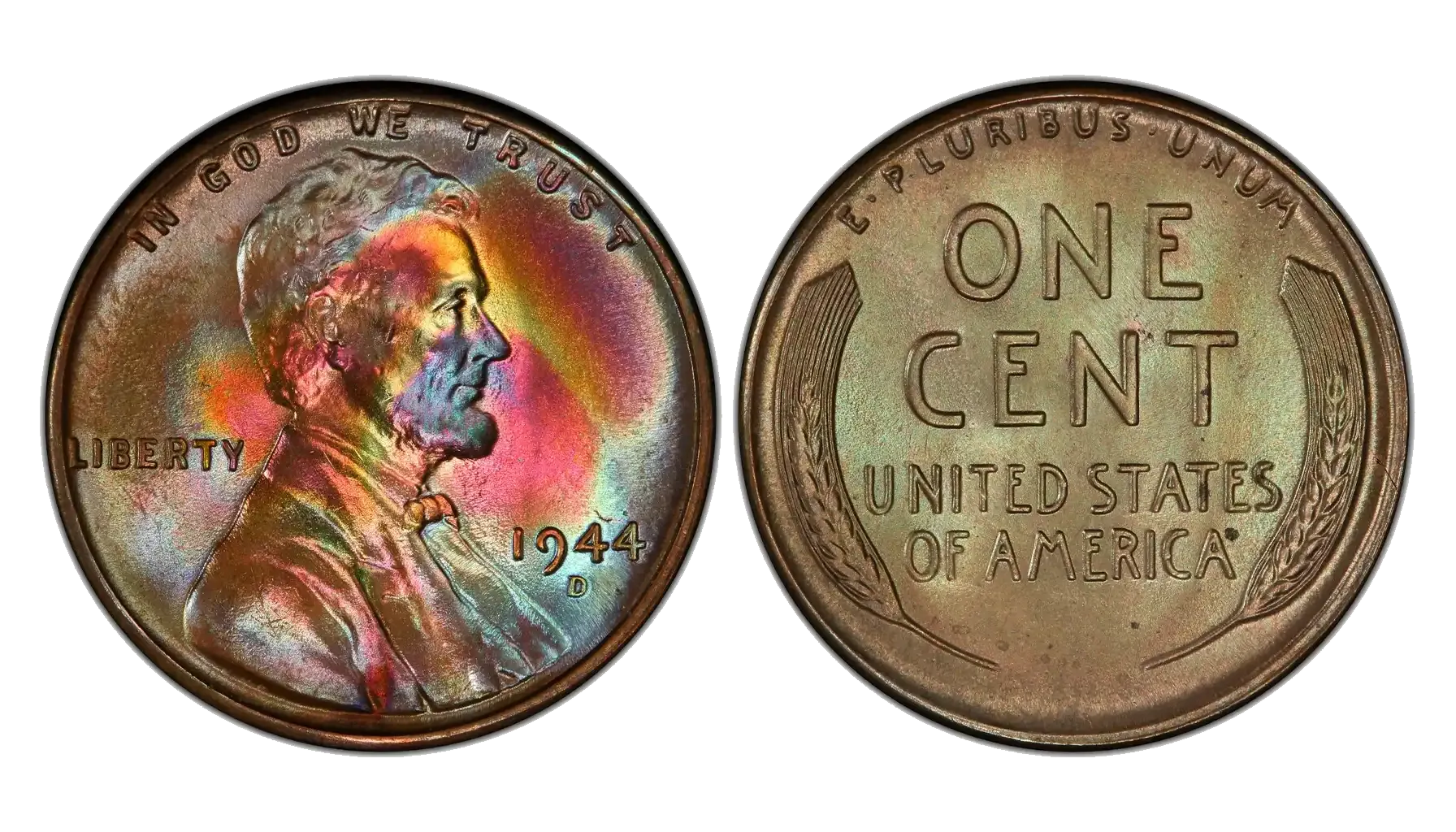
Produced by: Denver Mint
Mintage: 430,578,000
Auction record: $22,425
The Denver Mint produced fewer pennies in 1944 than the one located in Philadelphia, but the average 1944 D wheat penny value is relatively modest because large numbers were struck and many examples survived. These usually came in 3 major color designations, i.e., Brown (BN), Red and Brown (RB), and Red (RD).
1944 S Wheat Penny
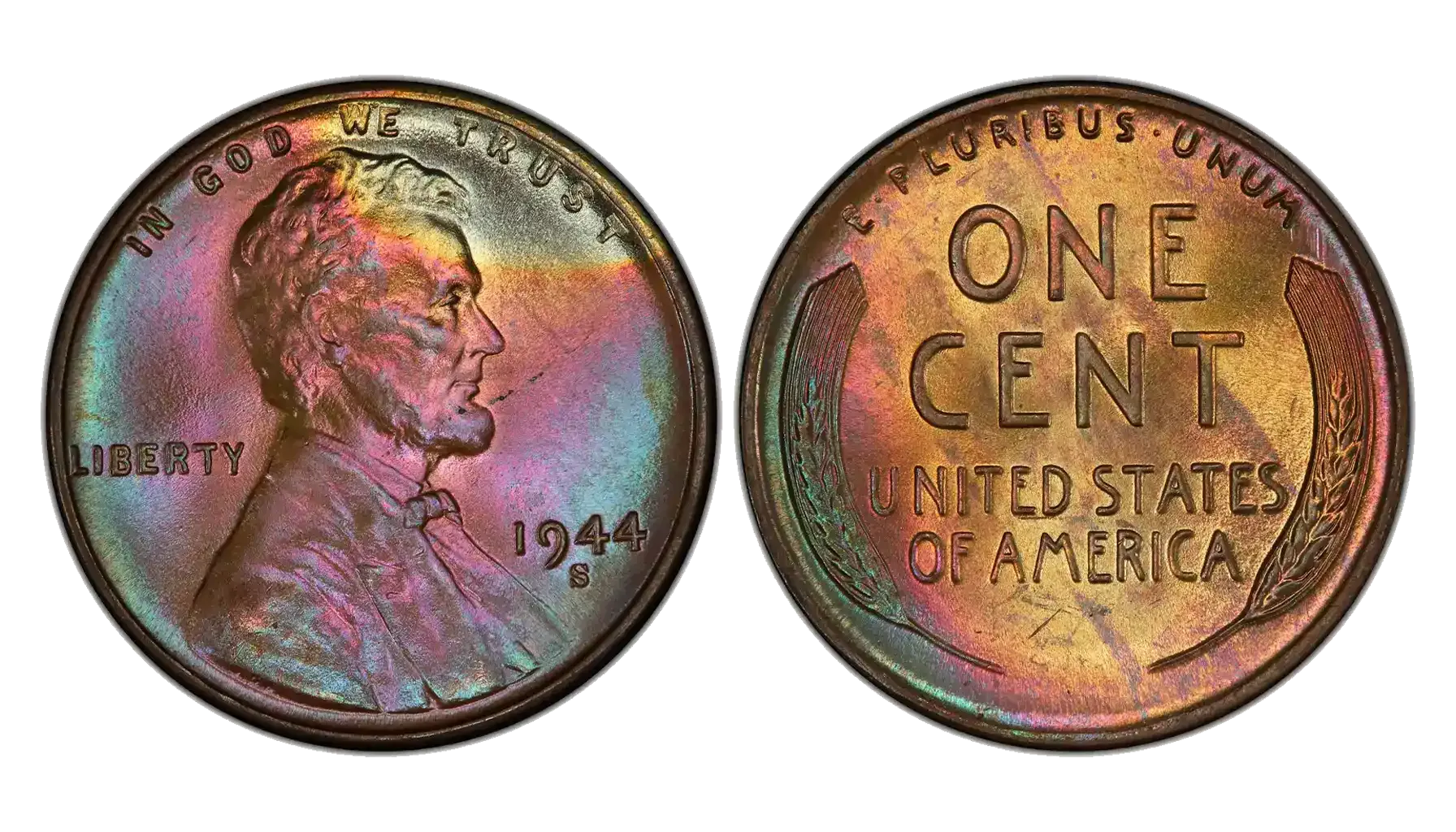
Produced by: San Francisco Mint
Mintage: 282,760,000
Auction record: $3,290
The lowest mintage figure refers to the output from the San Francisco minting facility. Nonetheless, it did not grant the coin a high 1944 S wheat penny value on its own. The best pieces show clean surfaces, bright original mint color, preserved design details, yet even these characteristics cannot guarantee an exceptionally high price (unless the coin is one of a kind, i.e., the error).
Most Valuable 1944 Wheat Penny Errors
Errors represent the finest part of the numismatic sector, and they may boast the most valuable 1944 wheat penny value of all. Apart from commonly found imperfections, such as off-center strikes or doubled dies, there were a few notable varieties that have gained the status of being legendary among all Lincoln cents.
1944 Steel Wheat Penny
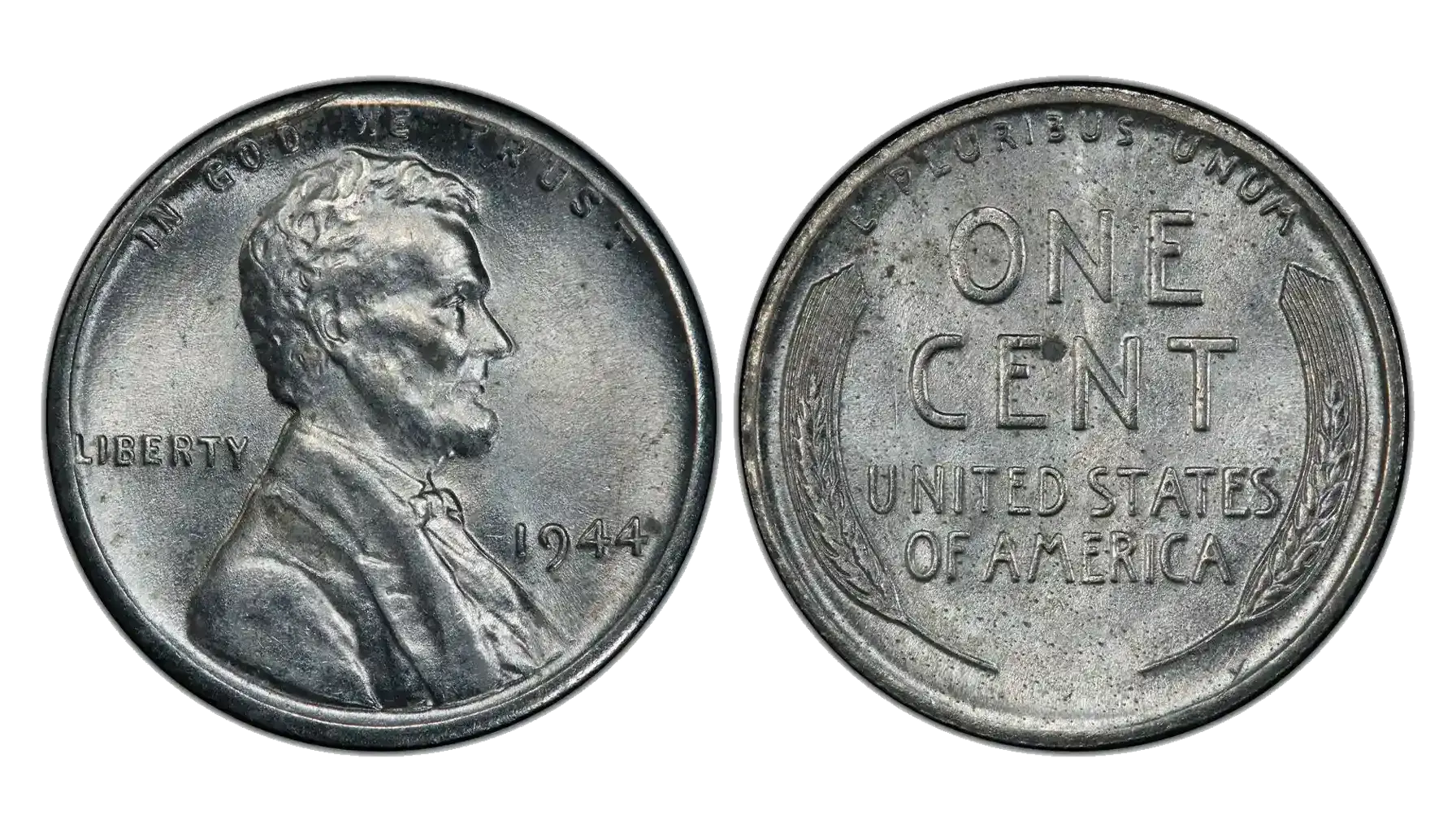
Auction Record: $180,000 for MS64
The 1944 steel penny is one of the most sought-after error coins, accidentally made on leftover steel blanks from 1943, minted that year.
As for their appearance, these are usually lighter than copper pennies; they have a silver-gray look as opposed to copper's reddish-brown and a magnetic potential because of the steel composition. The number of produced and surviving pieces is unknown, but it can be approximately 25-30 or more, as the population data might have been understated because of categorization patterns.
1944-D/S and S/D Mint Mark Errors
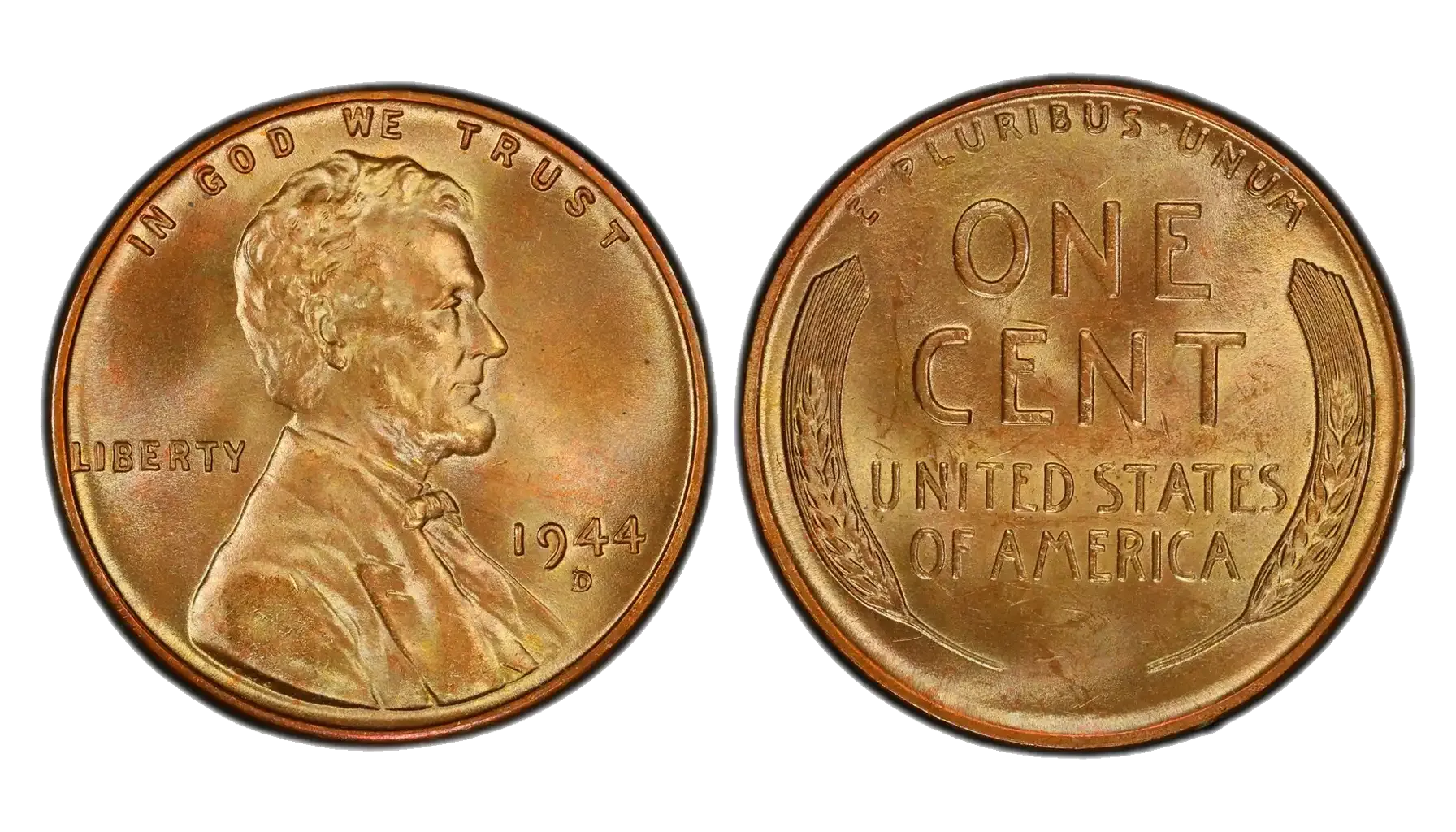
Auction Record: $115,000 for MS63
The "D/S" and "S/D" impressions are classic "repunched mint mark" errors, which means that one symbol of the Mint was punched over another. These varieties are popular and can be sold at exorbitant prices, which tend to exceed the worth of regular-circulation pieces with ease.
Other Common Errors
Off-Center Strikes: Coins struck outside the correct position (part of the design is proportionally missing).
Double Dies: Varieties with a doubled design on the obverse and/or reverse side. One of the most popular but expensive errors on the market.
Clipped Planchets: Coins that, as a result of a manufacturing fault, were improperly cut, which is why the edge is missing part of it.
Error Type | Circulated | Mint State |
Small Off-Center (5–10%) | $25 – $75 | $100 – $200 |
Major Off-Center (25%+) | $150 – $400 | $500 – $1,000+ |
Minor Double Die | $20 – $50 | $75 – $150 |
Major Double Die | $100 – $300 | $500 – $1,000+ |
Minor Clipped Planchet | $15 – $40 | $50 – $100 |
Large Clipped Planchet | $75 – $200 | $250 – $500+ |
How to Identify a 1944 Wheat Penny Worth Collecting?
Inspect the year and mint mark. Look for the mint mark beneath the year (remember that units struck in Philadelphia do not have a mint mark at all).
Evaluate the condition. Check the level of wear of the coin: circulated pieces exhibit obvious signs of use (e.g., faded features). Mint State pieces remain immaculate, pristine.
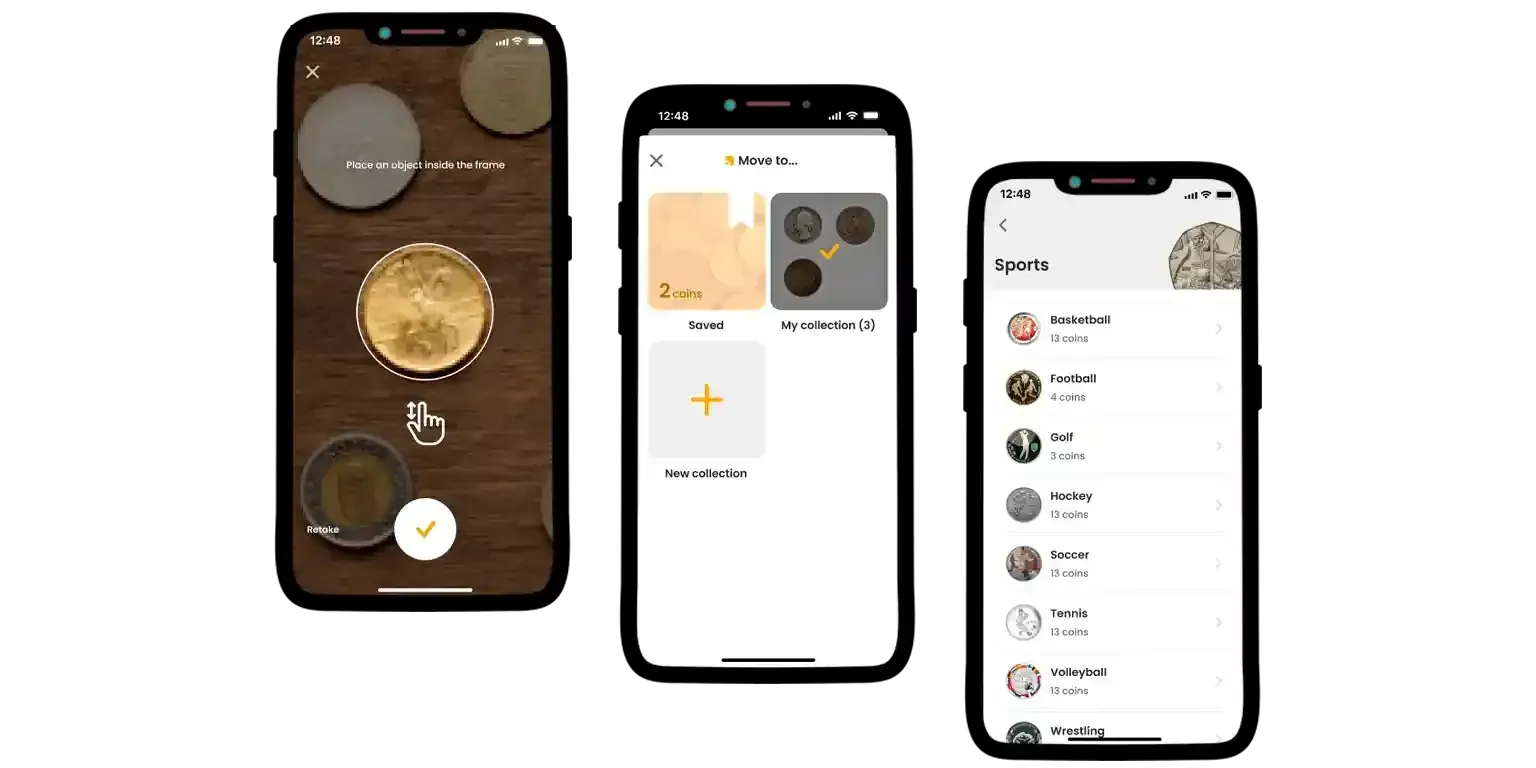
Use coin identification apps. Sometimes, those who wish to know the 1944 steel wheat penny value might get confused because of inconsistent information and controversial resources present on the Internet. Nevertheless, one may use special coin identification apps like Coin ID Scanner to study their coin and study possible value ranges by grade with just a few clicks.
Seek professional help. Should you be concerned that your pennies might be valuable but would like to be sure, think about consulting an expert. Many local dealers are free to evaluate your coin for free or at a low price. As for a more official confirmation, your coin can be authenticated by a professional grading service like NGC or Professional Coin Grading Service, which will add credibility and possibly raise its resale value for good.
No matter which wheat penny you choose, do not forget to confirm the coin's validity and condition before completing any transaction. The value of the coin is always in your hands.
FAQs
How much is a 1944 wheat penny worth?
If a coin is circulated, its price should not be higher than the face value. However, high-grade instances or those with errors may be worth up to a few thousand dollars.
How do I know if my 1944 penny is rare?
Look for the metal, mint marks, condition, color designation, and the presence of possible errors. The combination of these factors may make any coin truly rare.
Should a 1944 penny be steel or copper?
A regular 1944 penny can be copper-based, not steel. The steel variety is an error.
What is the error on the 1944 S wheat penny?
One of the best-known errors associated with the 1944 S cent is a repunched mint mark (S over S or S over D). However, other deviations are also possible.
Is a 1944 penny with no mint mark rare?
No, the absence of a mint mark is an official indicator of the Philadelphia Mint that produced 1,435,400,000 pieces in 1944.
Is a 1944 penny steel?
A normal 1944 cent is not steel – the error variety is.

 Facebook
  X (Twitter)
  Pinterest
  LinkedIn