Contents:
The US quarters worth money could be found across every period of numismatic history related to 25 cents, which began in 1796.
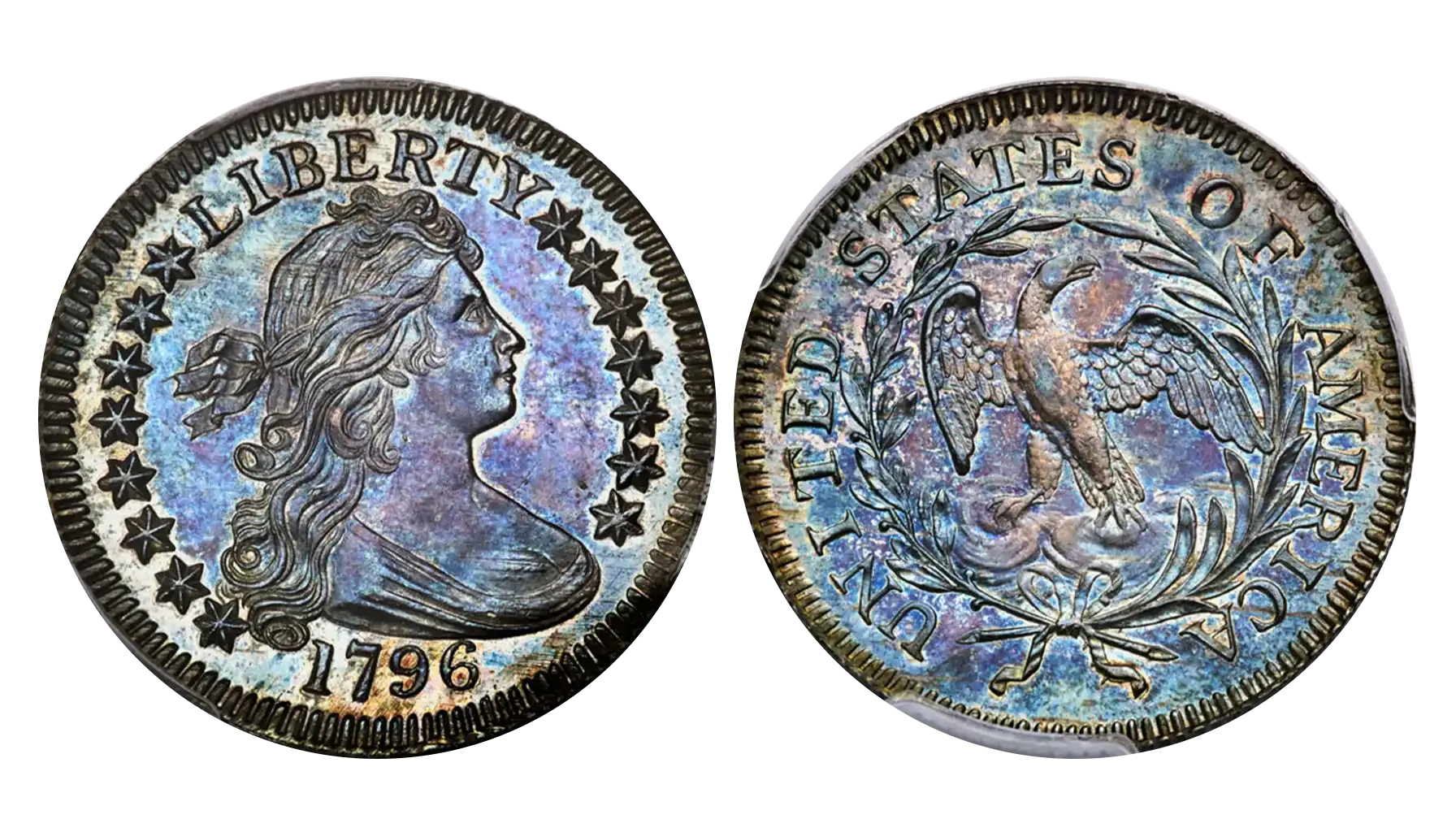
Before the introduction of one of the most diverse Washington series, the U.S. Mint had already issued several notable designs, such as Draped Bust, Capped Bust, Seated Liberty, Barber, and Standing Liberty quarters, with the most valuable item, i.e., the 1796 25C, having been sold at the astonishing price of $1,740,000.
Each 25-cent coin could refer to some unique contexts and appear as fine illustrations with the hidden value of both financial and aesthetic interest simultaneously. But what year quarters are worth money, and how to identify these coins on the spot?
Which Quarters Are Worth Money?
There have been more than 7 design iterations of quarter coins released throughout the minting history, and each period may boast its own quarters worth a lot of money, depending on the year of production and, more importantly, the grade: even recently issued instances may have the potential to turn into collectibles after all. So, here is a quick rare quarters worth money list by period and design:
Draped Bust 25C
Capped Bust 25C
Seated Liberty 25C
Barber 25C
Standing Liberty 25C
Washington 25C
50 State 25C
District of Columbia and U.S. Territories 25C
America the Beautiful 25C
American Women 25C
The State 25C series can be proudly named one of the most popular collectible groups in modern American numismatics, and it is worth exploring its prominent varieties one by one.
Top 10 State Quarters Worth Money
1999-P Delaware Spitting Horse 25С
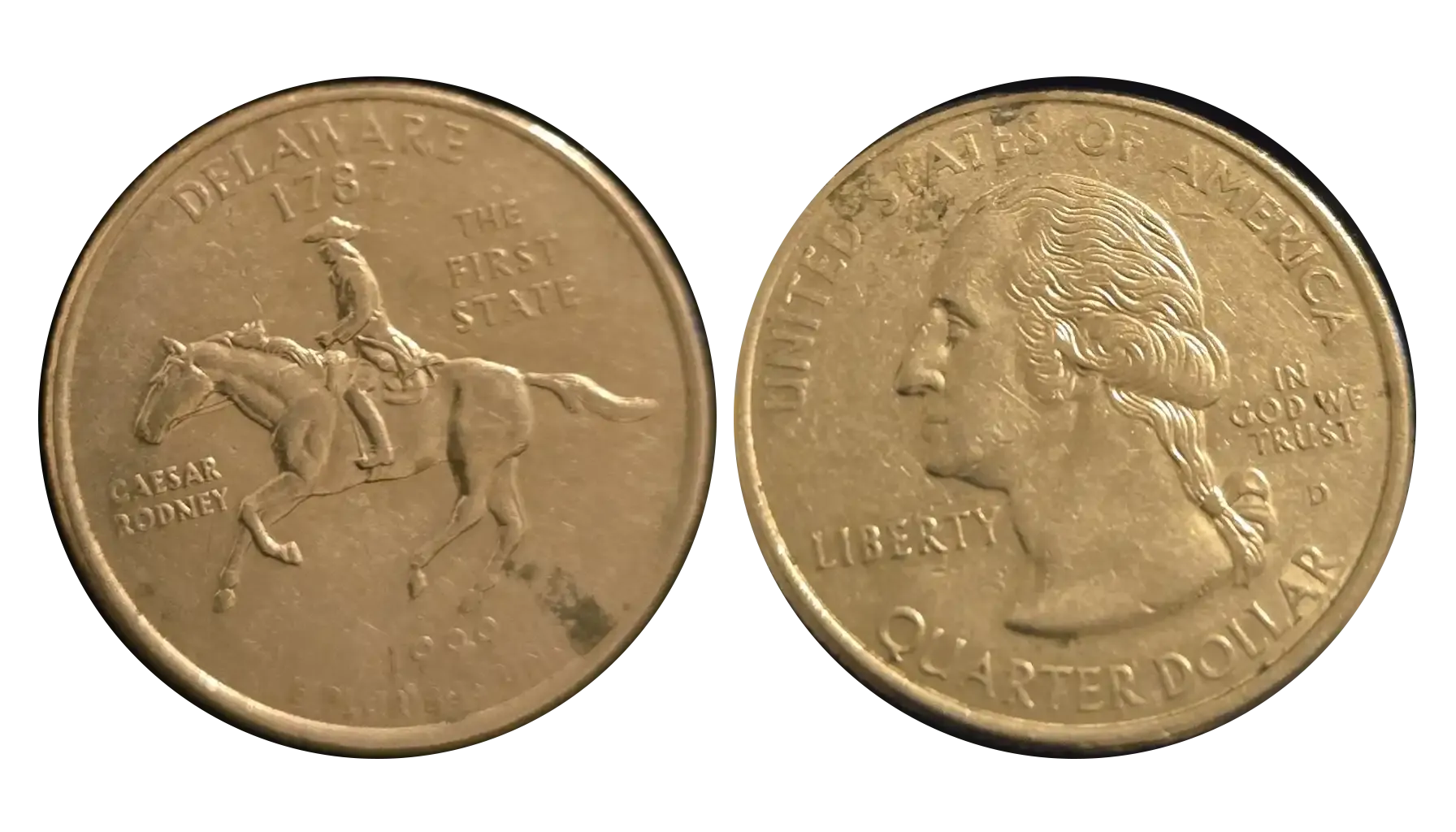
Possible price: Up to $17,250
One of the most notable error quarters worth money is the one devoted to the Delaware quarter, with the die crack on the horse's mouth (the “spitting” defect). In fact, it honors Caesar Rodney's famous ride during the American Revolution while presenting a rare deviation at the same time.
The Philadelphia Mint's "spitting horse" fault was probably caused by wear on the die that struck the coins. This inaccuracy is still comparatively uncommon, even with the 1999 Delaware quarter's high mintage numbers.
1999-P Pennsylvania 25C (Experimental Planchet)
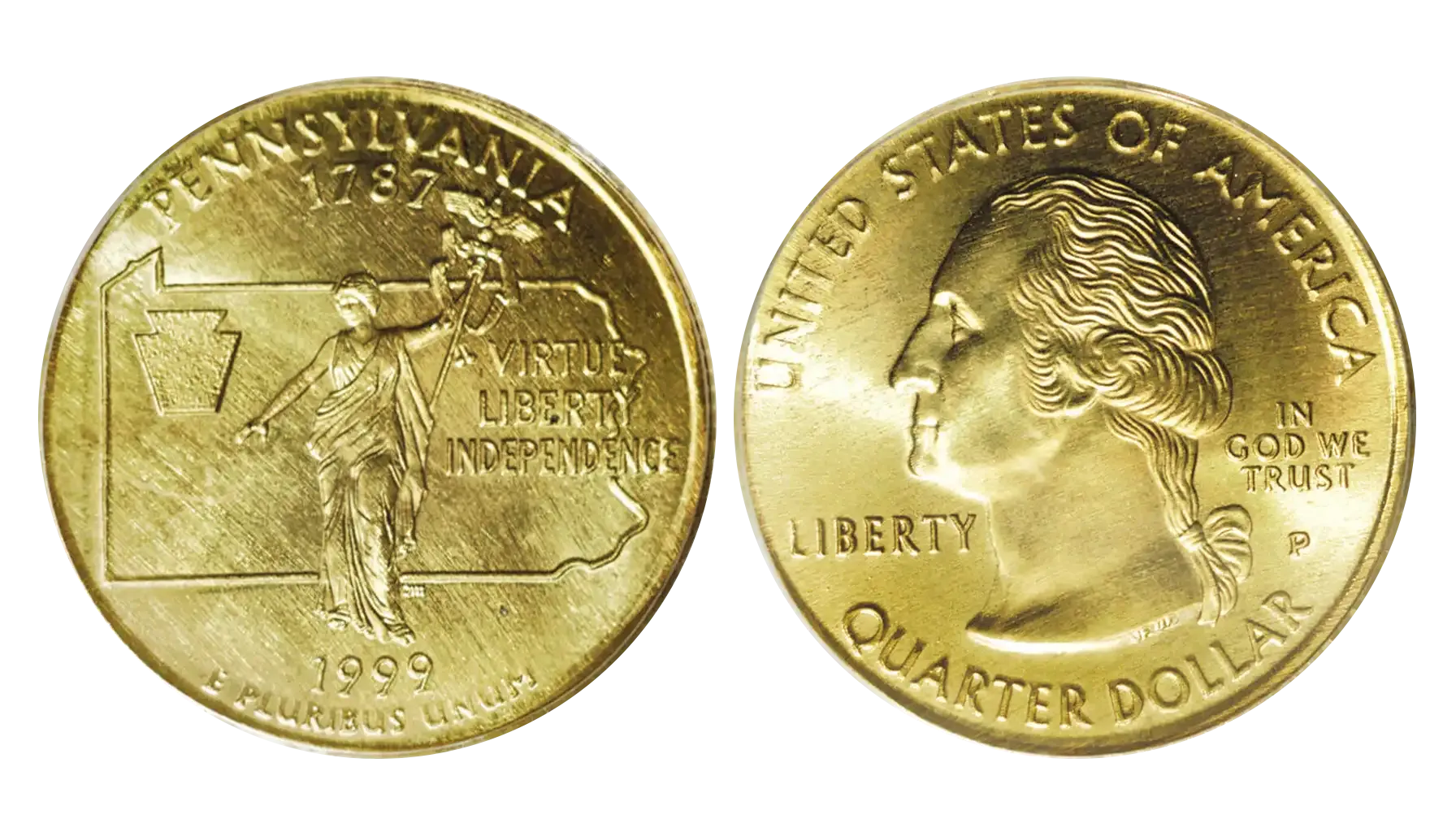
Possible price: $10,200
As soon as the series started in 1999, the first rare state quarters worth money of the line became the most intriguing, for some examples were struck on experimental planchets prepared during the Mint’s alloy research for the future Sacagawea dollar. These test pieces were made from a different metallic mix, which is why they can be characterized by a distinctive yellow-gold or greenish-gold appearance.
The reverse of the coin still carries the familiar Pennsylvania design with the outline of the state, the keystone, the statue of the Commonwealth, and the motto “Virtue, Liberty, Independence”.
2001-P North Carolina 25C
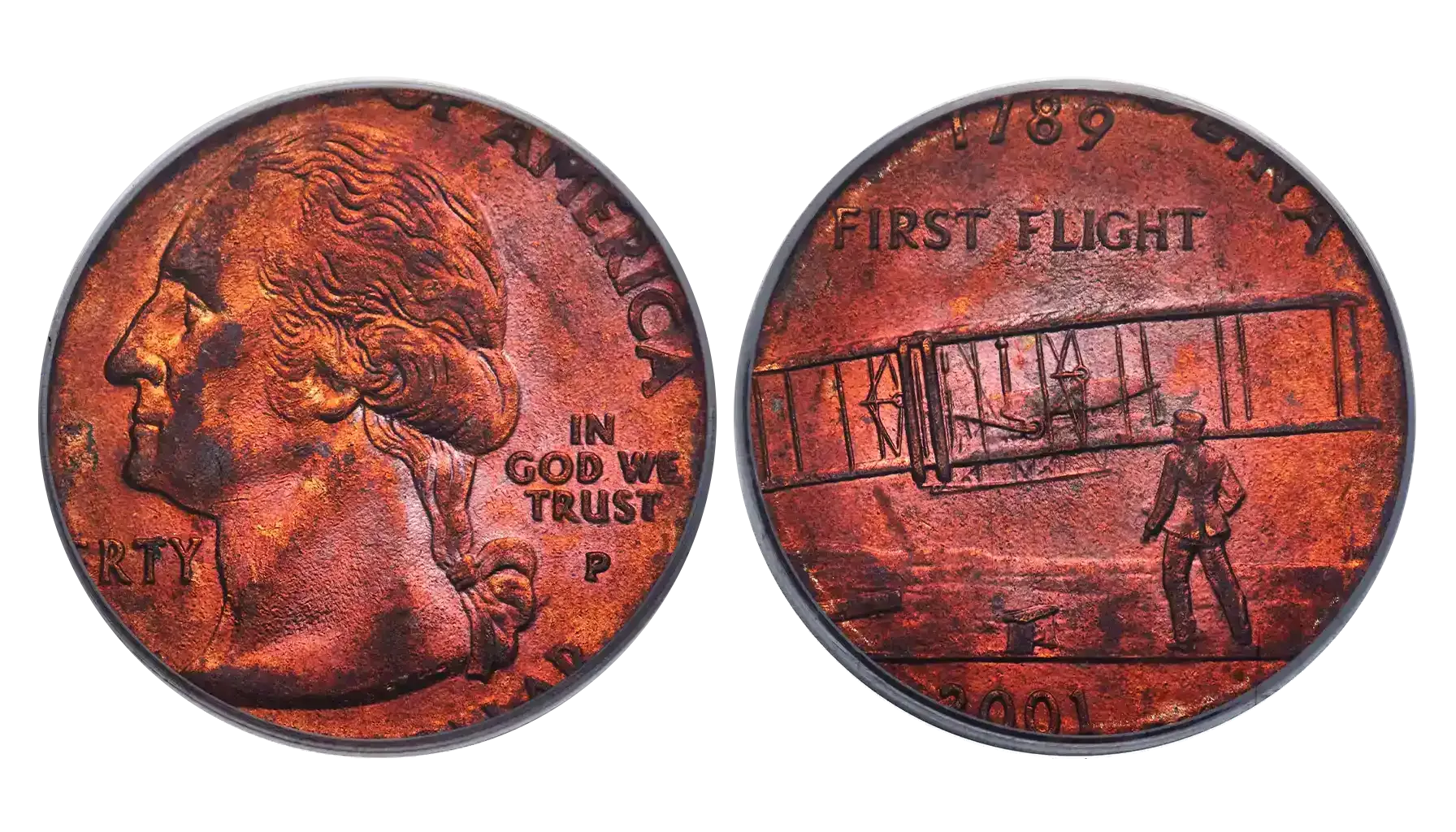
Possible price: $9,000
Apart from the standard North Carolina quarters (the “First Flight" design), the Mint also accidentally produced the wrong-planchet errors. This unique deviation was struck on a cent planchet with a different composition, which left it with a coppery appearance and incomplete quarter details, for the blank was too small for the design.
2002-D Tennessee 25C
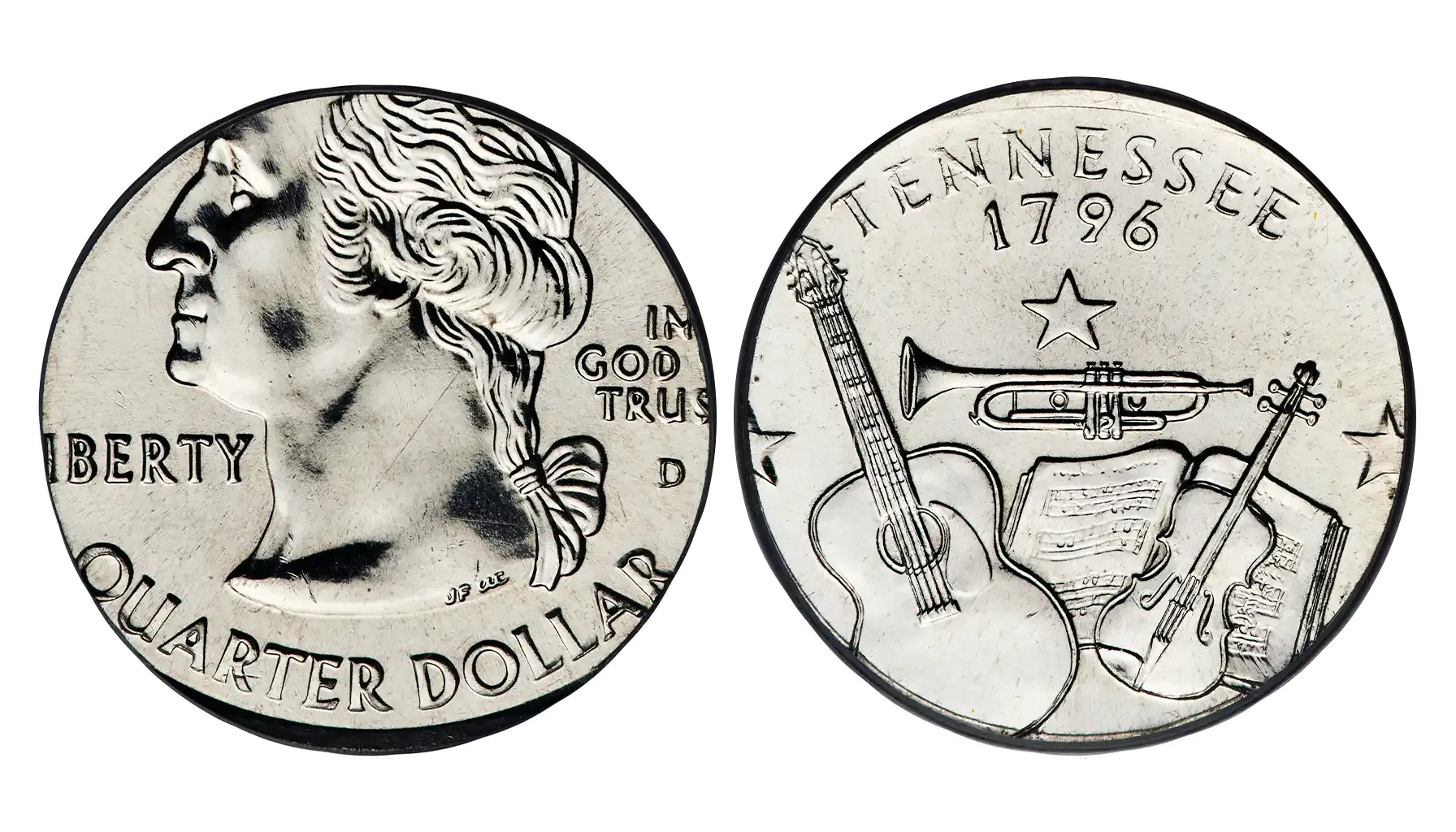
Possible price: $6,600
The musical heritage was also commemorated via the 25-cent coin, which is why its reverse design revolves around three musical instruments: a fiddle, a trumpet, and a guitar (the symbols of bluegrass, blues, and country music, respectively). As for this particular design, it was actually misprinted, i.e., struck on a dime planchet instead of a proper one.
And since a dime blank is smaller than that of a quarter, parts of the design are missing or cut off (but it is still enough to see the details of the coin in full scope).
2003-S Alabama PR 25C
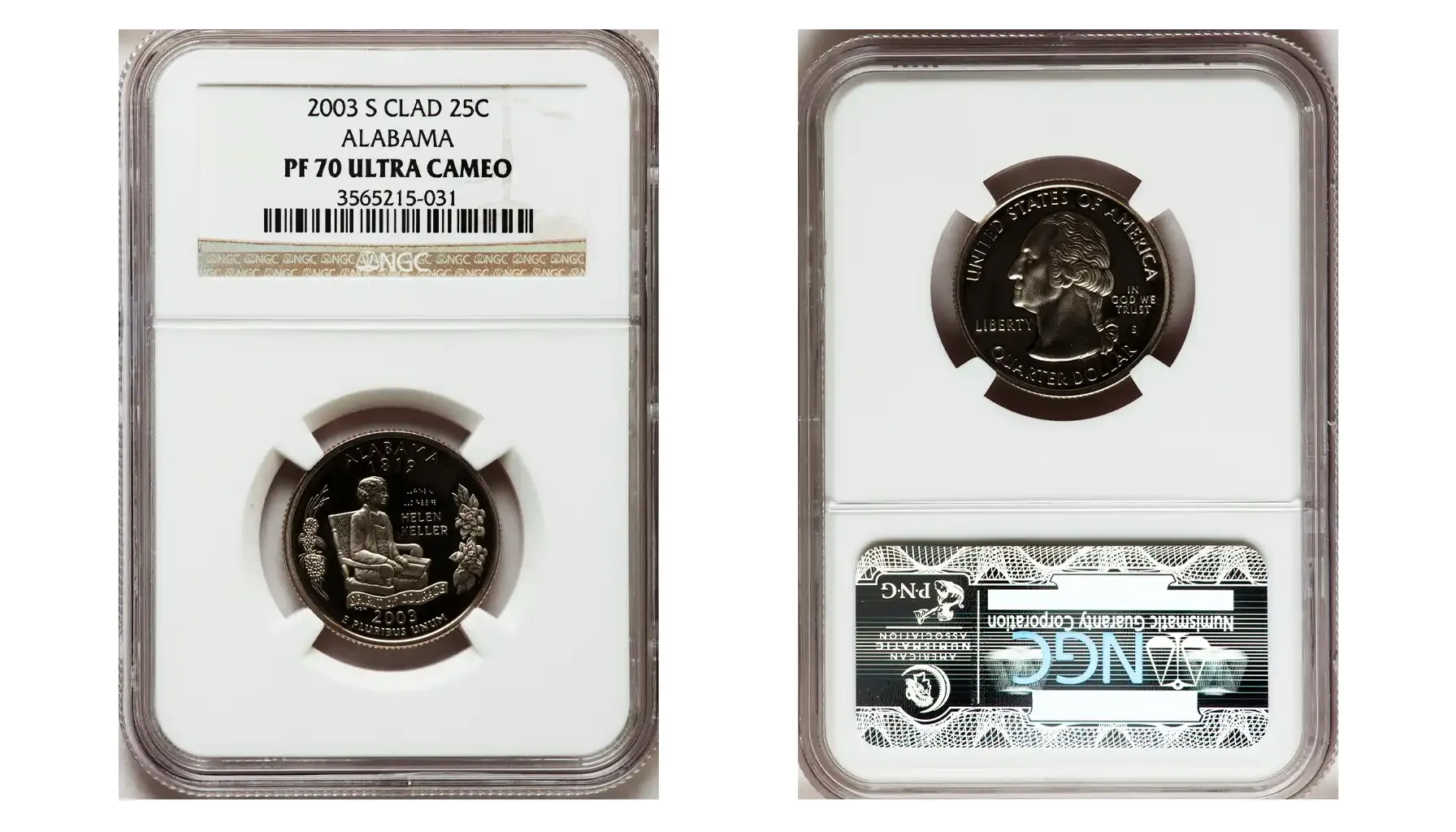
Possible price: $10,999
What quarters are worth a lot of money? A breakthrough came. This was one of the most important coins in the series, as the reverse bears the picture of Helen Keller, and the inscriptions of these numismatic creations were written in Braille (in standard lettering, too). The design shows Keller seated, framed by longleaf pine branches and magnolia blossoms, with the banner “Spirit of Courage” below.
2004-D Wisconsin Extra Leaf (High and Low) 25C
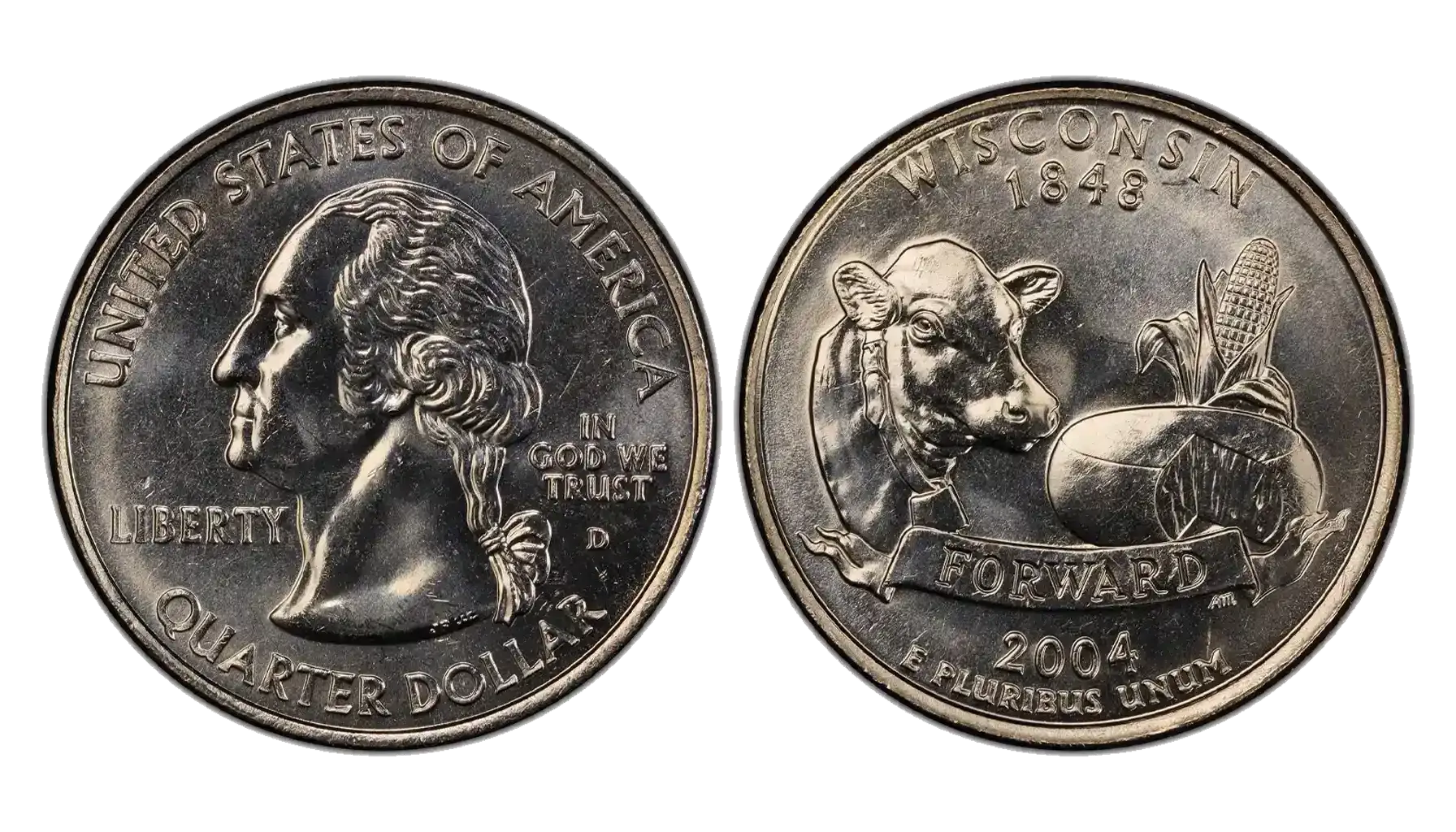
Possible price: $2,530 (for MS66)
Among the valuable state quarters worth money series, there is one more notable error instance, i.e., the 2004-D Wisconsin quarter, the design of which bears an ear of corn, a wheel of cheese, and a cow. In certain areas, one may notice an additional leaf, either high or low. Since these were discovered, collectors have been interested in the two varieties, which are referred to as the "High Leaf" and "Low Leaf" respectively.
2005-P West Virginia 25C (Struck on a 3.1 Gram Copper Planchet)
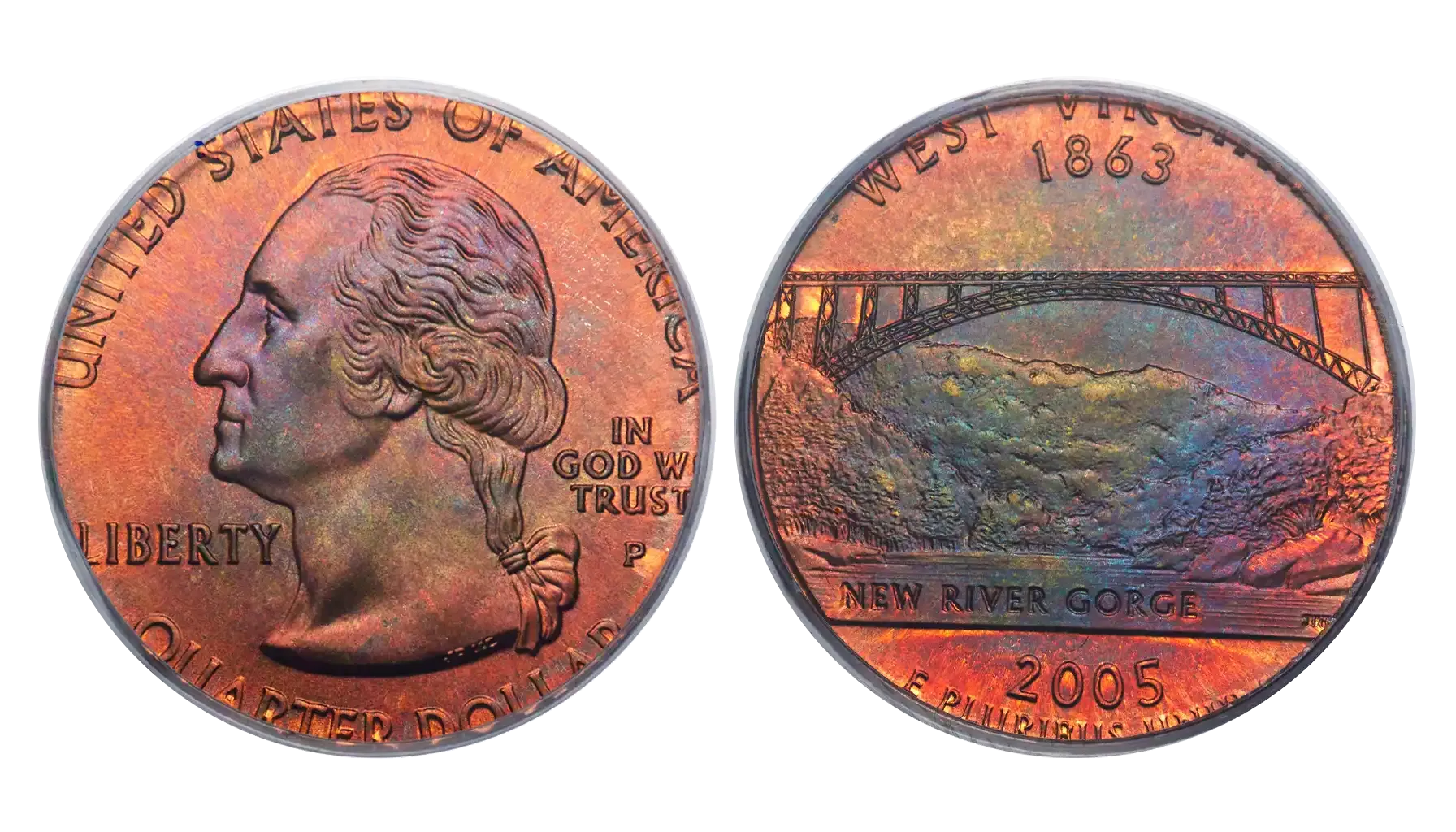
Possible price: $9,000
What state quarters are worth money? By tradition, these are erroneous pieces, struck off wrong planchets (which were quite common). For instance, the 2005-P West Virginia type introduces the New River Gorge Bridge design, but the value is hidden in its imperfection: one iteration was actually struck on a 3.1-gram copper planchet, which was standard before 1982.
2005-P Minnesota Doubled Die 25C
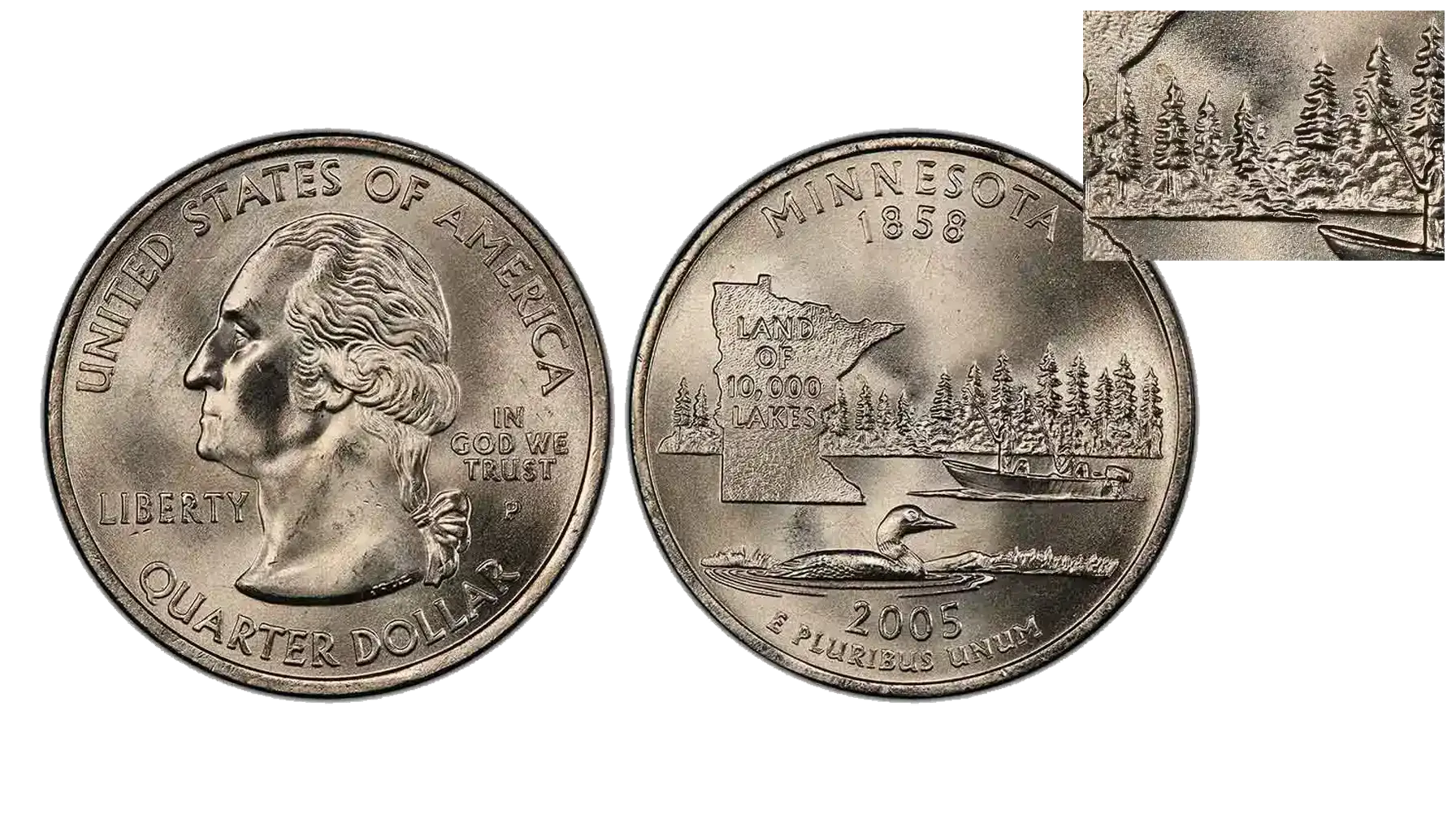
Possible price: $500
The reverse side of the 2005-P Minnesota quarter may boast a doubled die, which is a minor but remarkable inaccuracy for new quarters worth money. The mistake has an impact on how the trees are portrayed, which results in a doubling effect that is visible to the left of the state outline. As a reference to the nickname of the state, the picture displays a lake with a canoeist, encircled by thick woodlands.
2007-D Montana 25C
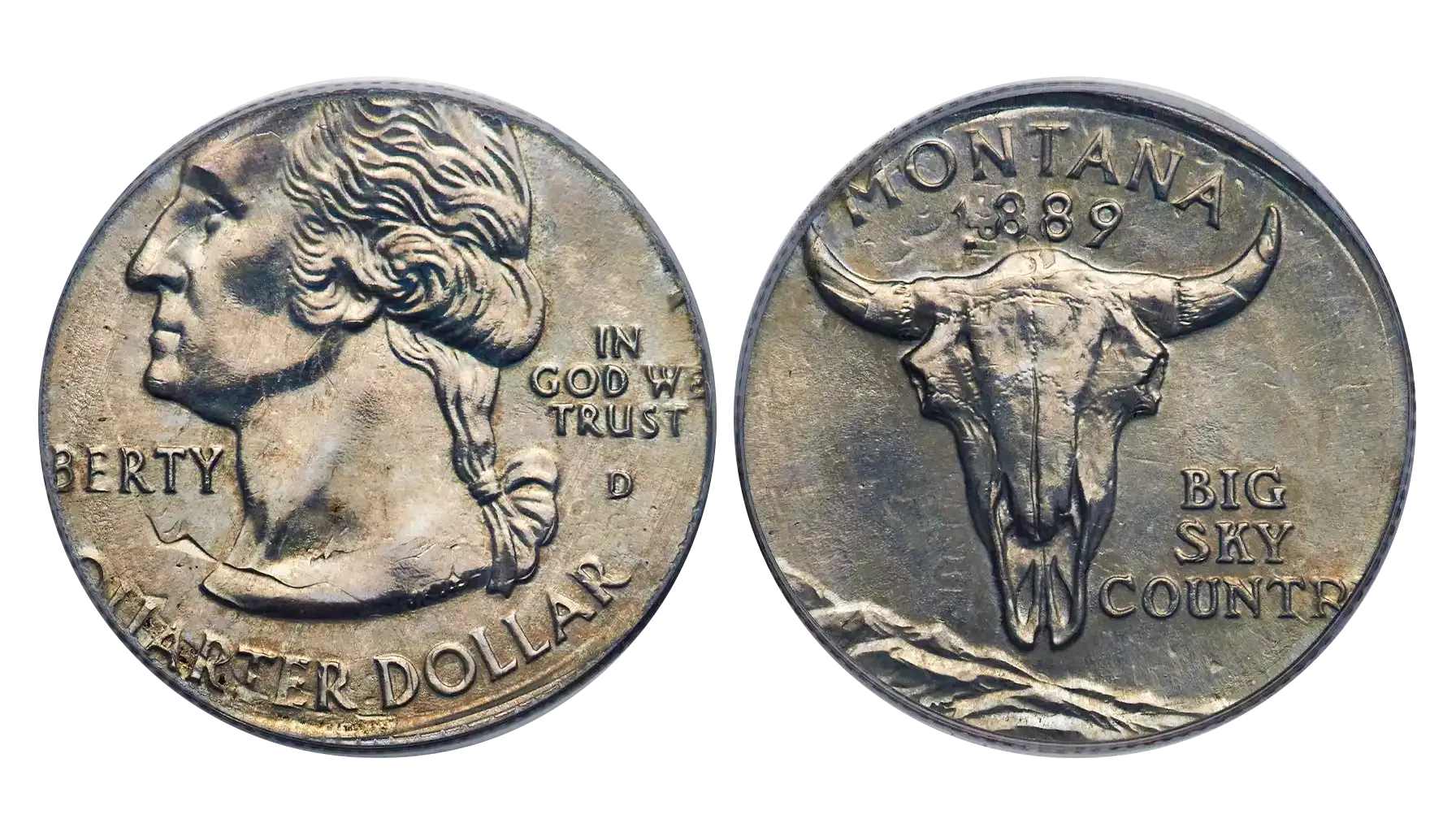
Possible price: $9,600.00
Here is one of the most recognizable designs in the entire series: the reverse features a bison skull on the mountain background, along with the inscriptions “Big Sky Country,” “Montana,” and “1889” (when the state entered the Union). According to Heritage Auctions, the error "double denomination on a struck dime" is probably one of the most interesting to explore, as this means that the quarter design was struck over a dime that had already been minted.
2009-D District of Columbia (Duke Ellington) 25C
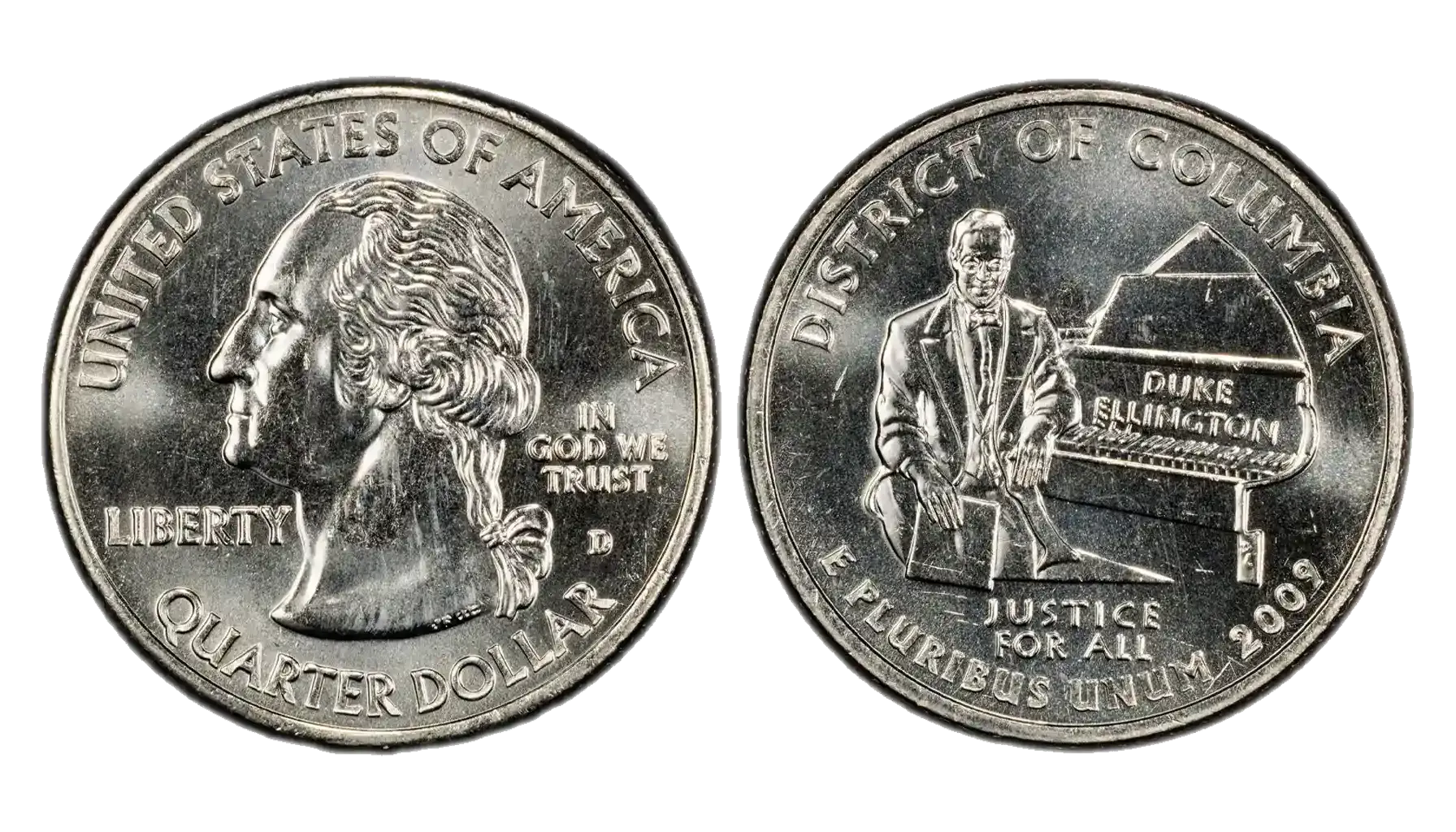
Possible price: $1,763 (for MS68)
The Washington quarters worth money, related to the District of Columbia, are very special numismatic creations. In fact, they extensively perpetuate the legacy of Duke Ellington, as well as his contributions to jazz and American culture as a whole (there were 88,800,000 pieces produced). Coins struck at the Denver site, where production faults occasionally resulted in distinctive variants, are more likely to contain these errors.
This quarter was part of the District of Columbia and United States Territories series, which followed the successful 50 State Quarters program. The reason why most people adore this coin comes down to featuring a well-known historical person and mint faults, not to mention.
“The obverse of the District of Columbia Quarters depicts George Washington's motif. The reverse of the coin features Duke Ellington, who was a very talented composer and musician. The Denver Mint struck more than enough examples to meet the demand <...>. Only in MS67 condition or higher do they appear to be scarce.”
— Jaime Hernandez, numismatist, PCGS price guide editor
PCGS CoinFacts
Old vs. Modern Quarters Worth Money
There is a clear difference between old quarters worth money and the new ones, even though each series can be diverse on its own. Older iterations (e.g., the most expensive 1796 variety and the rest) are valued based on their age, precious composition, lower mintage figures, and historical events that accompanied the production.
Modern options, however, tend to gain value because of mint errors, unusual varieties, special planchets, and the exceptional level of preservation. That said, older quarters can be appreciated by nature, whereas newer ones are required to be extraordinarily exclusive and certified.
Error and Special Quarters Worth Money
Although the range of errors is extensive, when it comes to the entire denomination history (it might include doubled dies, off-center strikes, die cuds, etc), it might be interesting to explore the most recent varieties to know what to look for in circulation.
2010-P Hot Springs 25C Doubled Die
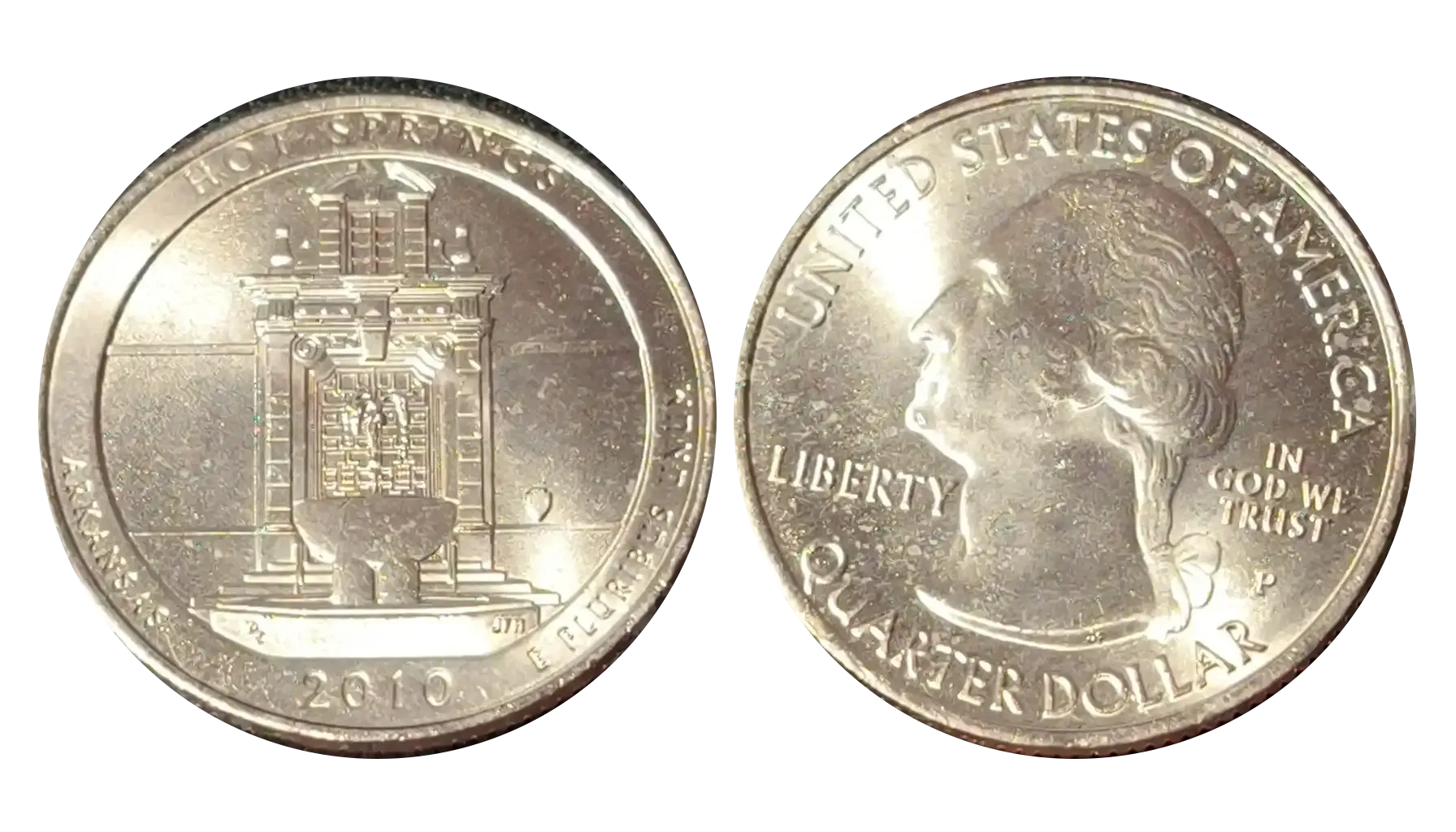
Possible price: up to $200
The 2010 Hot Springs quarter belongs to the America the Beautiful series and depicts Arkansas's Hot Springs National Park. Even though the DD errors can be found on either side, one of the most common is the DDR, i.e., the double die reverse, which is manifested in the doubling effect on the fountain's entrance and the surrounding decorations as well.
2013-P Perry’s Victory 25C with Doubled Die Reverse
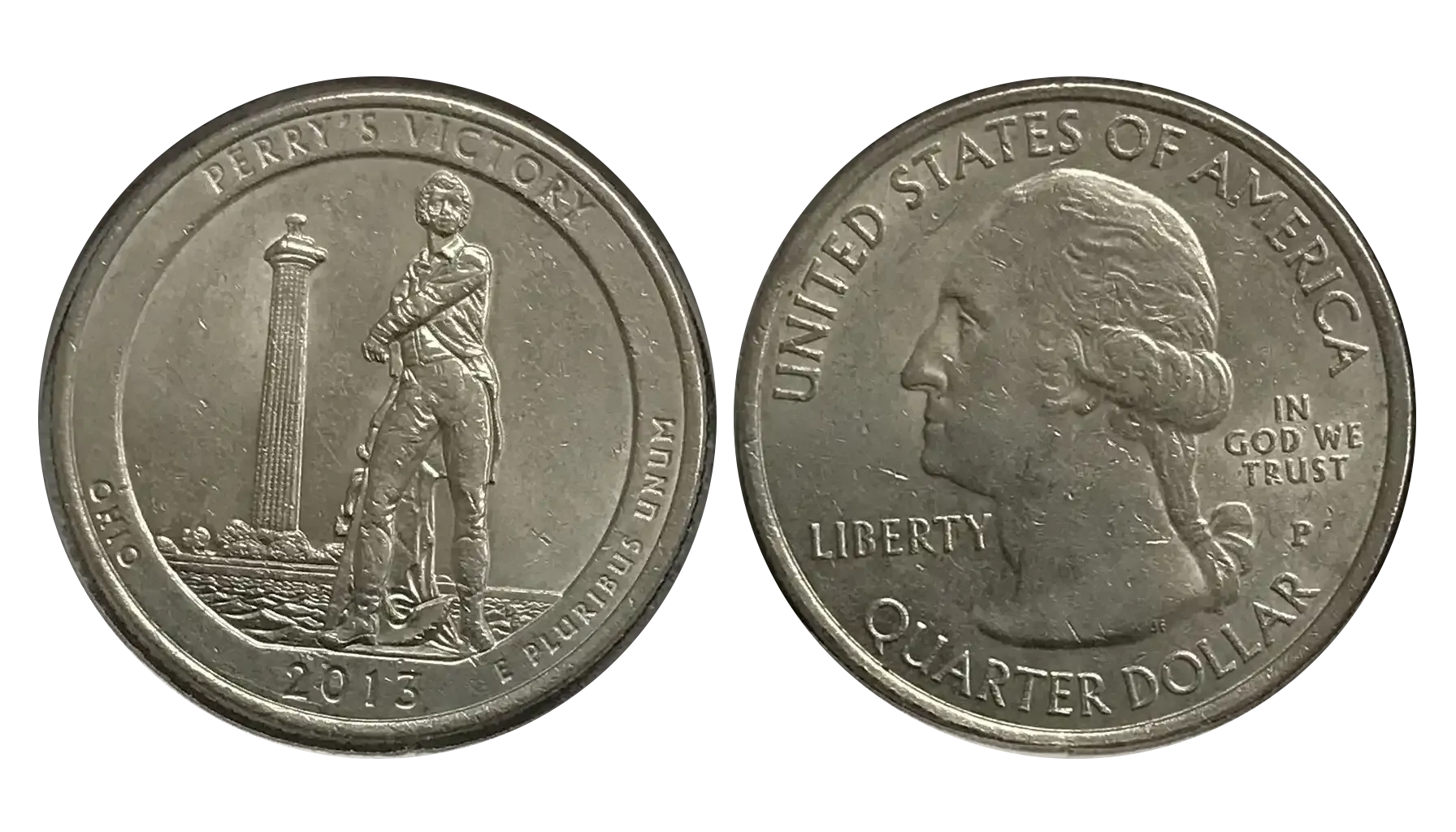
Possible price: up to $300
The 2013-P variety is also known to have been misstruck and, hence, it may bear the double die error, which consists in the obvious doubling, particularly on the monument and surrounding elements. As part of the America the Beautiful series, this quarter is already significant, and the error increases its desirability even more.
2015-P Homestead 25C with Snow-on-the-Roof Error
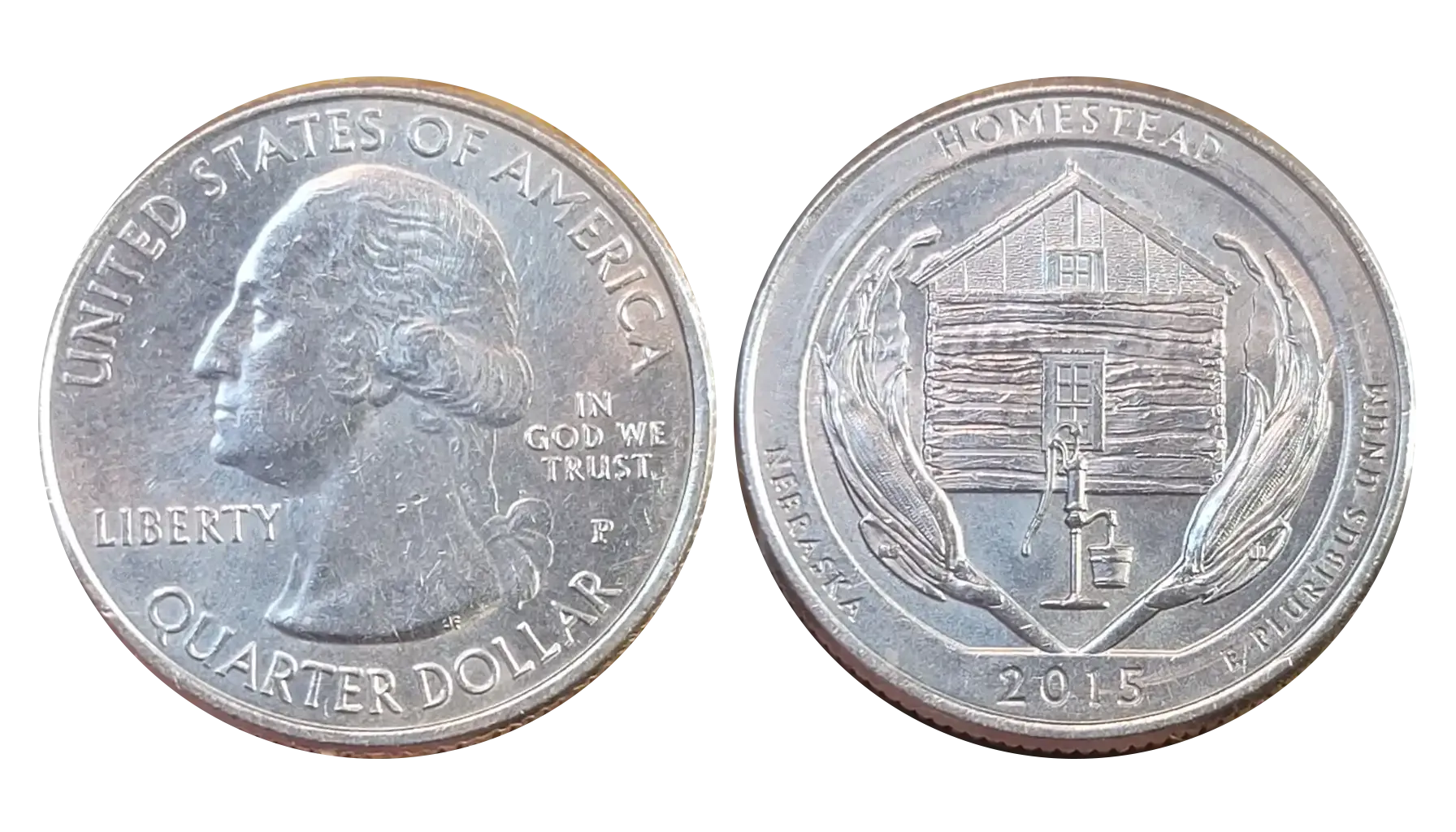
Possible price: up to $200
A die chip on the roof of the building that can be seen in the Homestead National Monument quarter is known as the "Snow-on-the-Roof" error. The design of this numismatic creation celebrates the Homestead Act of 1862 and bears wheat stalks, a log cabin, and a water pump. The deviation gives the coin an odd yet distinctive appearance as if the snow fell on the roof.
Complete List of Quarters Worth Money: Older Types
It is rather difficult to present all possible varieties of the 25-cent designs, but here are some of the most valuable examples that managed to set numismatic records and reach remarkable heights.
Year | Type | Auction record |
1796 | Draped Bust | $1,740,000 |
1805 | Draped Bust | $402,500 |
1807 | Draped Bust | $630,000 |
1818 | Capped Bust | $381,875 |
1827/3 | Capped Bust | $444,000 |
1838 No Drapery | Liberty Seated | $381,875 |
1839 No Drapery | Liberty Seated | $517,500 |
1850 | Liberty Seated | $460,000 |
1871-CC | Liberty Seated | $456,000 |
1873-CC No Arrows | Liberty Seated | $376,000 |
1876-CC | Liberty Seated | $870,000 |
1901-S | Barber quarter | $258,500 |
1918/7-S | Standing Liberty | $336,000 |
1920-D Full Head | Standing Liberty | $372,000 |
1927-S | Standing Liberty | $258,500 |
What Years of Quarters Are Worth Money?
There is no single answer to this question, for valuable pieces may come from almost any period and group. However, the most desirable numismatic creations tend to be found among early issues, key dates, or rare error coins.
So as to analyze and further obtain such items, do not hesitate to use additional tools like Coin ID Scanner: identify, explore, analyze – coins may be more worthy than you think.
FAQs
What years of quarters are worth money?
Valuable quarters may come from different periods and types, but the most important dates are usually early issues, key dates, and rare modern erroneous types.
What quarters are worth money today?
The 25C coins of great value are usually those that may be characterized by silver content, low mintages, rare varieties, major mint errors, or exceptionally high grades (certificates required).
What Bicentennial quarters are worth money?
The most valuable Bicentennial 25Cs, as of today, are probably the 1976-S silver proof type, the 1976-D doubled die obverse, and the top-grade 1976-D clad business strikes.
Which state quarters are worth money?
Although the series is rich in valuable type, the most interesting (=expensive) examples should include the 1999-P Pennsylvania variety (minted on the experimental planchet), the 2001-P North Carolina (on a cent planchet), the 2005-P West Virginia quarter, the 2007-D Montana 25C double denomination, etc.
What new quarters are worth money?
Should the coin belong to the later series, it is to bear errors to be considered valuable. The most interesting types are the 2010-P Hot Springs 5 oz. silver variety, the 2013-P Perry’s Victory doubled die, and the 2015-P Homestead 25C.

 Facebook
  X (Twitter)
  Pinterest
  LinkedIn