Contents:
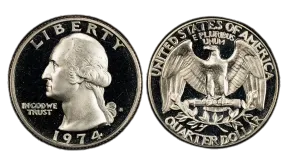
The worth of the regular 1974 Washington quarter rarely exceeds its nominal worth, but auction records demonstrate exceptional performance on the market: $2,115 for the Philadelphia-produced quarter, $1,450 for the coin from Denver, and $10,925 for the product of the San Francisco Mint.
In most cases, the price of 25 cents is seen as the upper limit when the coin is circulated and shows heavy wear. Nevertheless, collectors always seek the most exquisite samples, e.g., ones with deep cameo contrast or bearing rare errors, which are usually worth a lot. Why is it so special, how much is a 1974 quarter worth, and which features may identify this coin as unique?
1974 Quarter Coin Overview
So as to create a long-running, widely accepted regular program, in 1931, the US Mint started the process of developing the new coin line. At first, Congress and the Treasury were considering a commemorative coin for the bicentennial celebration. Nonetheless, the decision was eventually made to place George Washington on the quarter and make the design part of regular circulation.
As a result, in 1932, the monetary sector welcomed the Washington quarter series, having replaced the Standing Liberty quarter, which had been in use since 1916. The 1974 quarter was produced at three mints: Philadelphia, Denver, and San Francisco; it was one more common variety, with a high mintage and no precious-metal content.
The Main Features of the Common and Rare 1974 Quarters | |
Country | United States |
Year | 1974 |
Denomination | 25 cents |
Designer | John Flanagan |
Composition | Copper-nickel clad |
Core | Pure copper |
Outer layers | 75% copper, 25% nickel |
Total metal content | 91.67% copper, 8.33% nickel |
Weight | 5.67 g |
Diameter | 24.30 mm |
Thickness | 1.75 mm |
Edge | Reeded |
Mint marks | None for Philadelphia “D” for Denver “S” for San Francisco |
Strike type | Business strike and proof |
Face value | $0.25 |
By the way, is it a 1974 quarter silver? There is a common misconception that quarters from 1974 were minted in silver. By 1974, the US Mint had already stopped using 90% silver for circulating quarters.
Is a 1974 Quarter Worth Anything Today?
The worth of any coin is a complex figure, as it depends on the metal used in production, the nominal worth attributed by the Mint, and some other numismatic factors, understood by collectors. Nonetheless, as soon as these coins were produced in exorbitant volumes and contained no silver, common varieties may be worth 25 cents or even less.
The main exception is the condition. The pieces that have been well-preserved may be sold for a few dozens of hundreds of dollars, but these are the cases of exceptional characteristics, such as color designations, errors, and grades. So, what is a 1974 quarter worth?
What Makes a 1974 Quarter Valuable?
High grades – little or no wear, strong luster, clean surfaces
Mint marks – no mint mark for Philadelphia, D for Denver, S for San Francisco proofs
Proof quality – especially Cameo and Deep Cameo contrast
Rare errors – off-center strikes, doubled dies, clipped planchets
Eye appeal – sharp details, attractive toning, minimal scratches
Certification – PCGS, NGC, or ANACS coin grading, especially for top-condition coins
1974 Quarter Value by Mint Marks
Grade | 1974-(P) | 1974-D | 1974-S Proof |
G | $0.25 | $0.25 | – |
VG | $0.25 | $0.25 | – |
F | $0.26 | $0.26 | – |
VF | $0.29 | $0.29 | – |
XF | $0.52 | $0.41 | – |
AU | $0.52 | $0.41 | – |
UNC | $0.81 | $0.87 | $1.87 |
Most Valuable 1974 Quarter Values Ever Sold
1974 25C
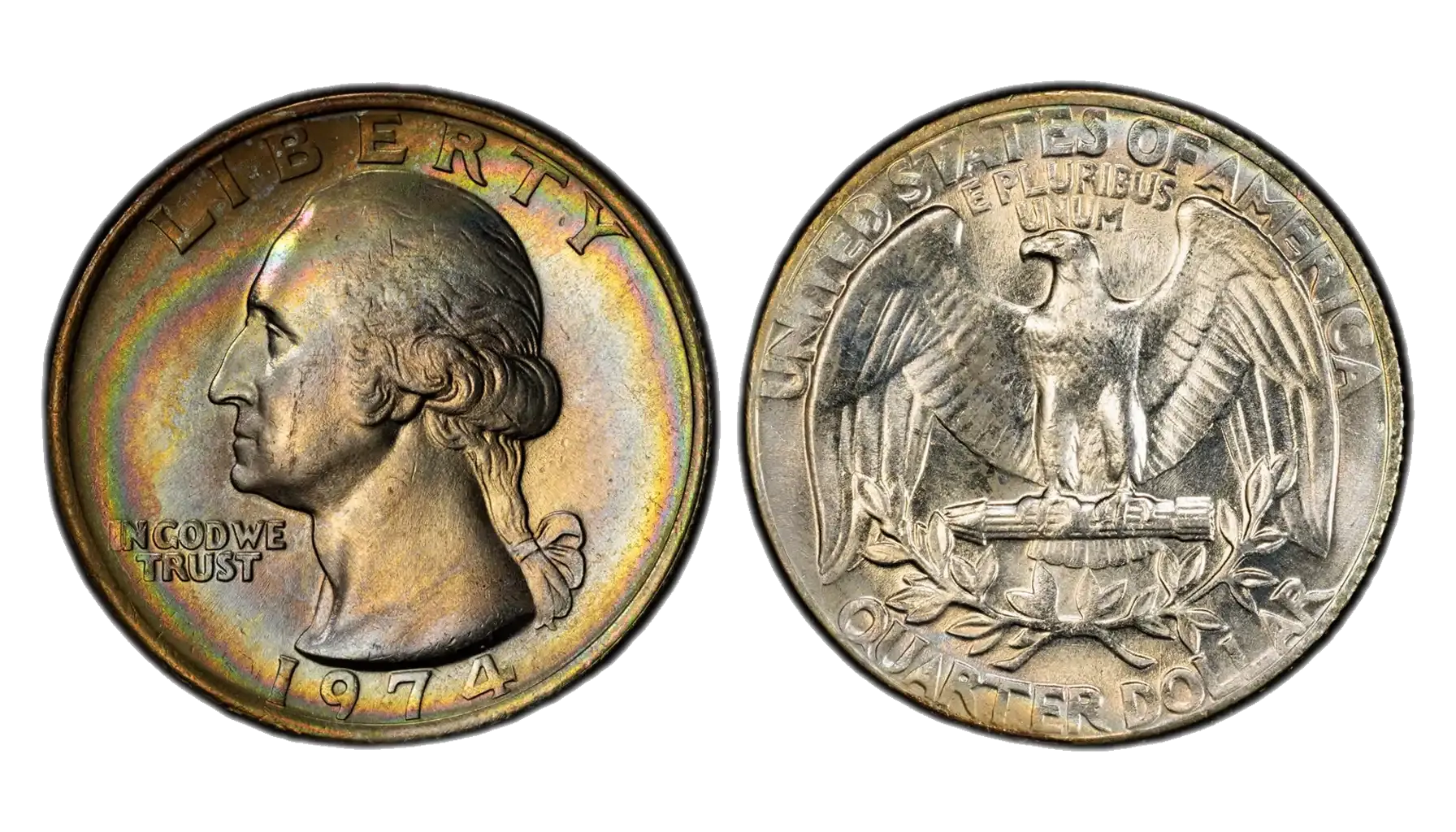
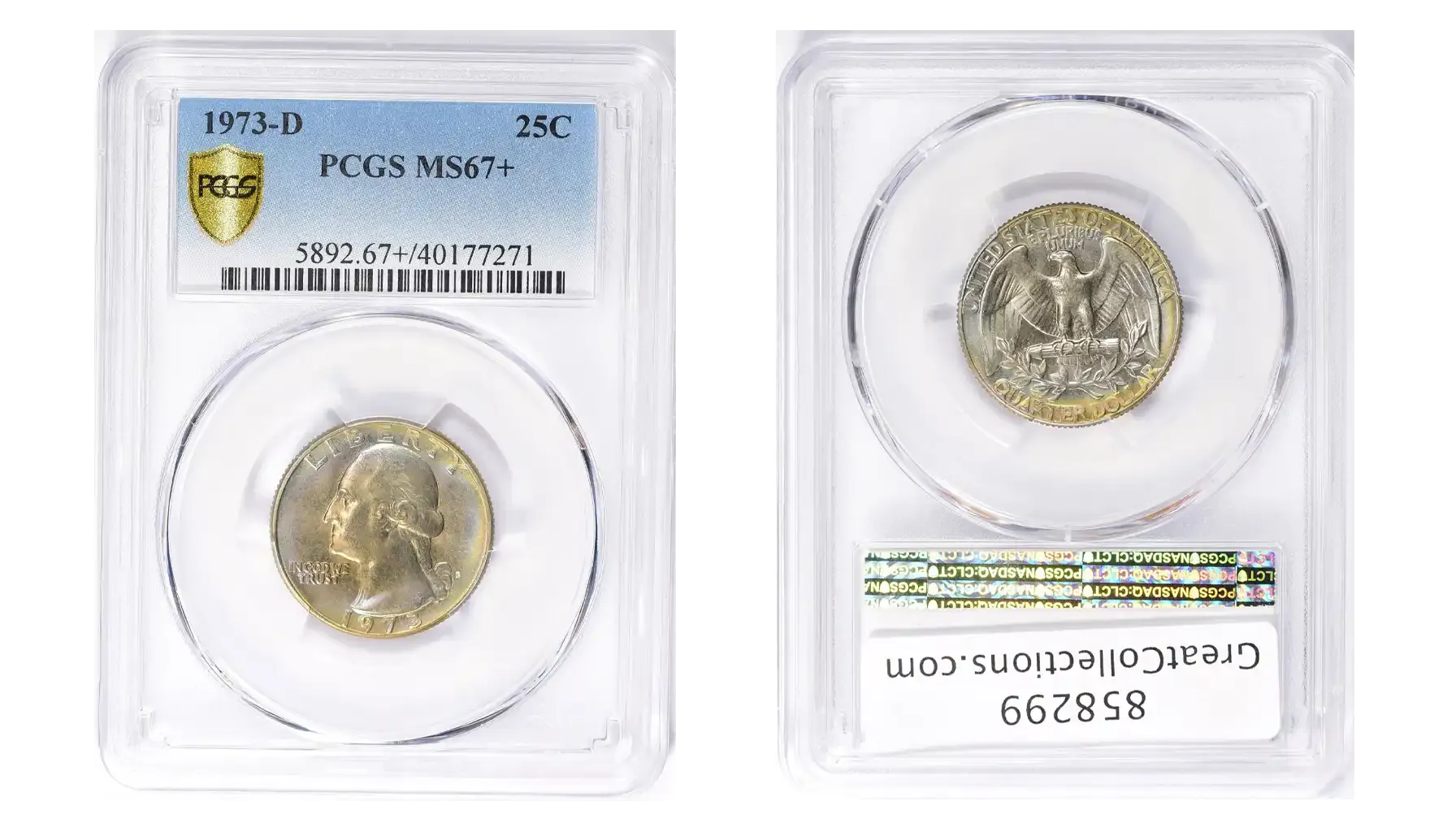
Mintage: 801,456,000
Produced by: Philadelphia Mint
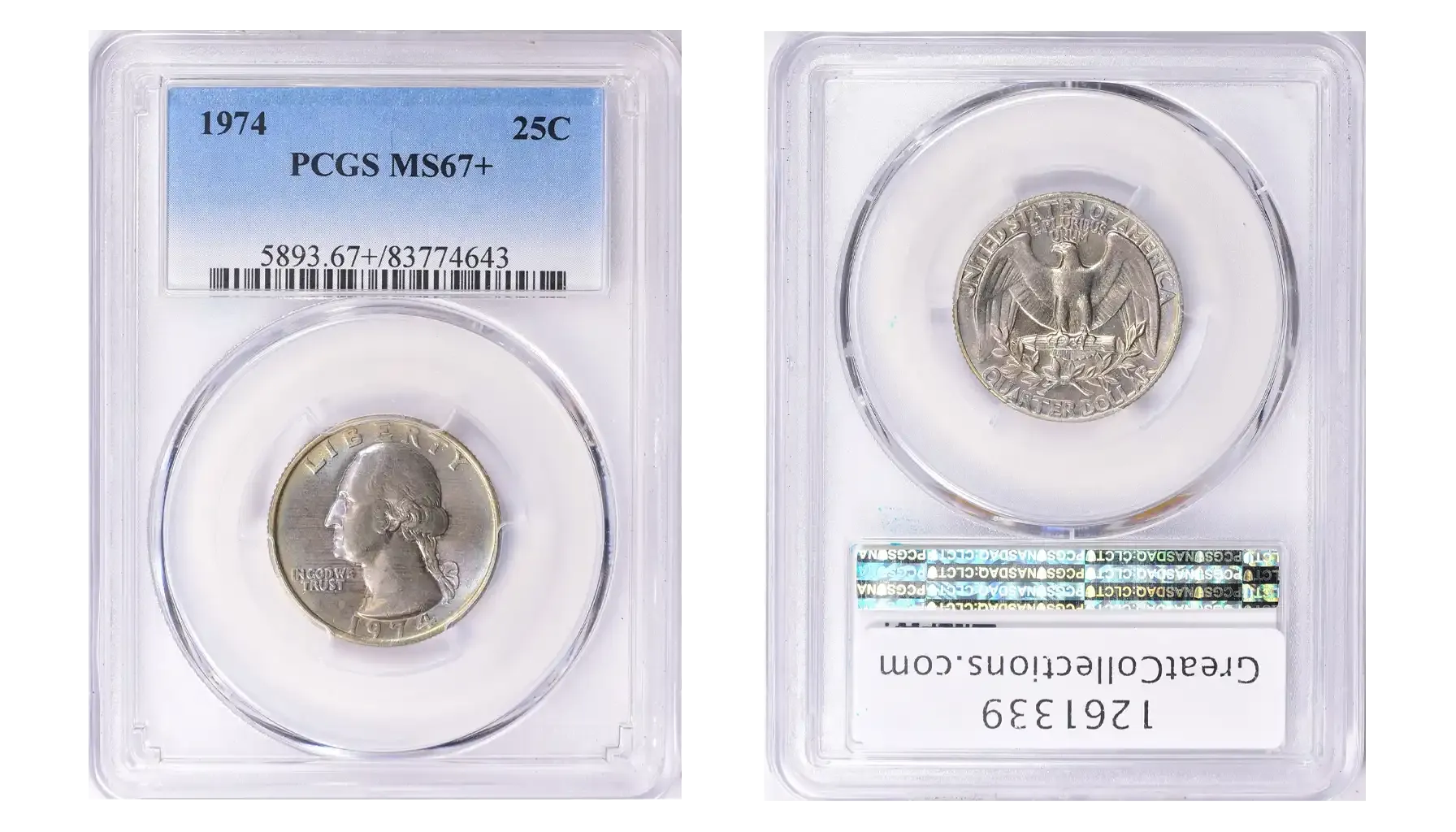
Auction record: $2,115 for MS67+
Even though the production volumes were huge, the Philadelphia issue is quite desirable when in mint-state grades. These are not truly scarce when compared to the rarest issues in the field, but for Washington quartets, it is a genuine condition rarity in the highest certified grades, with a quite impressive 1974 quarter value no mint mark.
“The 1974-P Washington Quarter has a high mintage <...>. Examples up to MS66 condition can be found effortlessly. In MS67, it's a different story, and much more searching is required in order to find one. Anything grading above MS67 is considered very scarce to rare and these are usually left for the most sophisticated collectors only…”
— Jaime Hernandez, PCGS price guide editor
PCGS CoinFacts
1974-D 25C
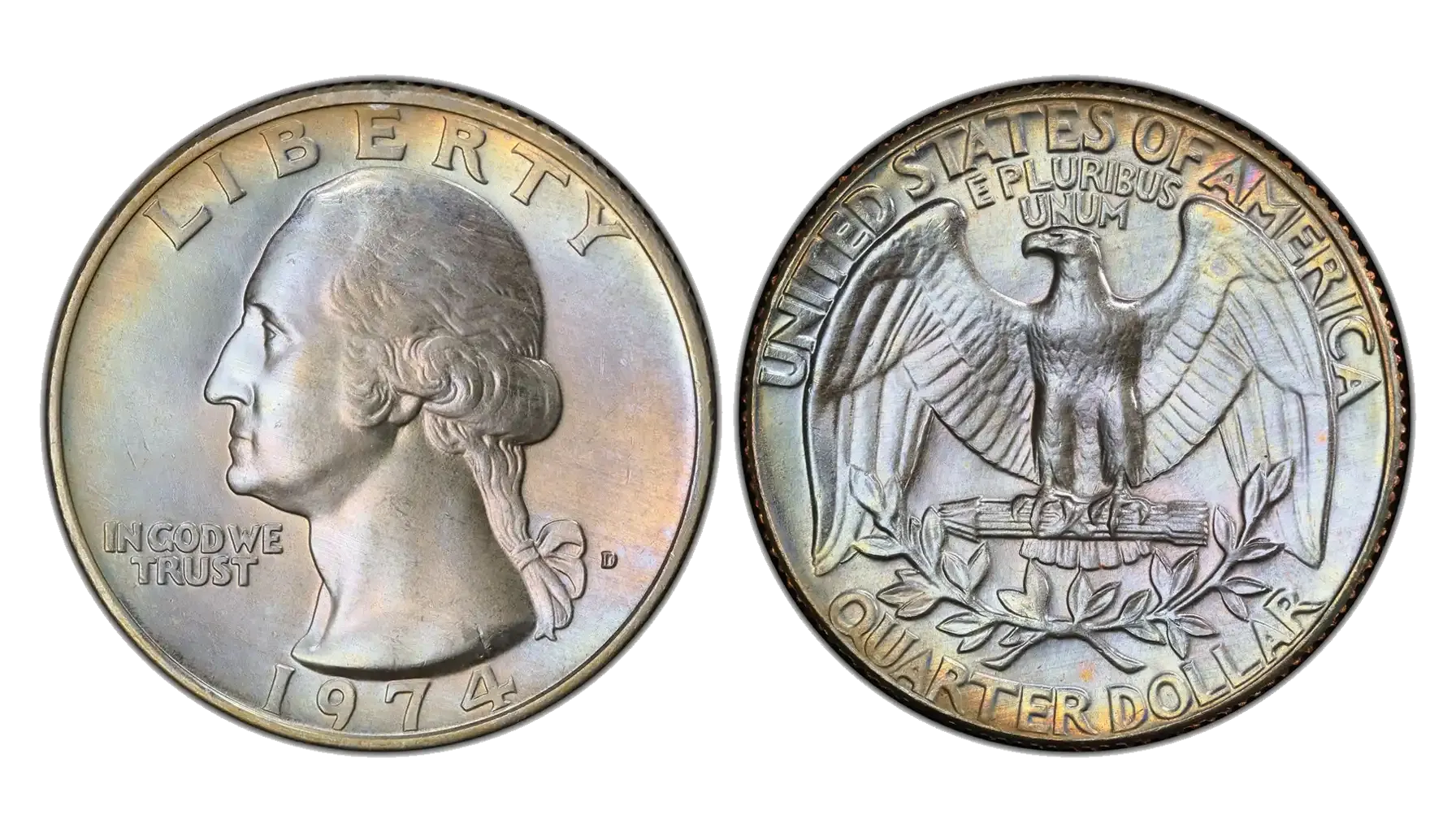
Mintage: 353,160,300
Produced by: Denver Mint
Auction record: $1,450 for MS67+
The 1974 D quarter value is not the highest in the line, but the coin of this type shows stable results on the numismatic market: it is common in lower grades, but uncirculated pieces (unless they are altered or cleaned) are much harder to find.
1974-S 25C
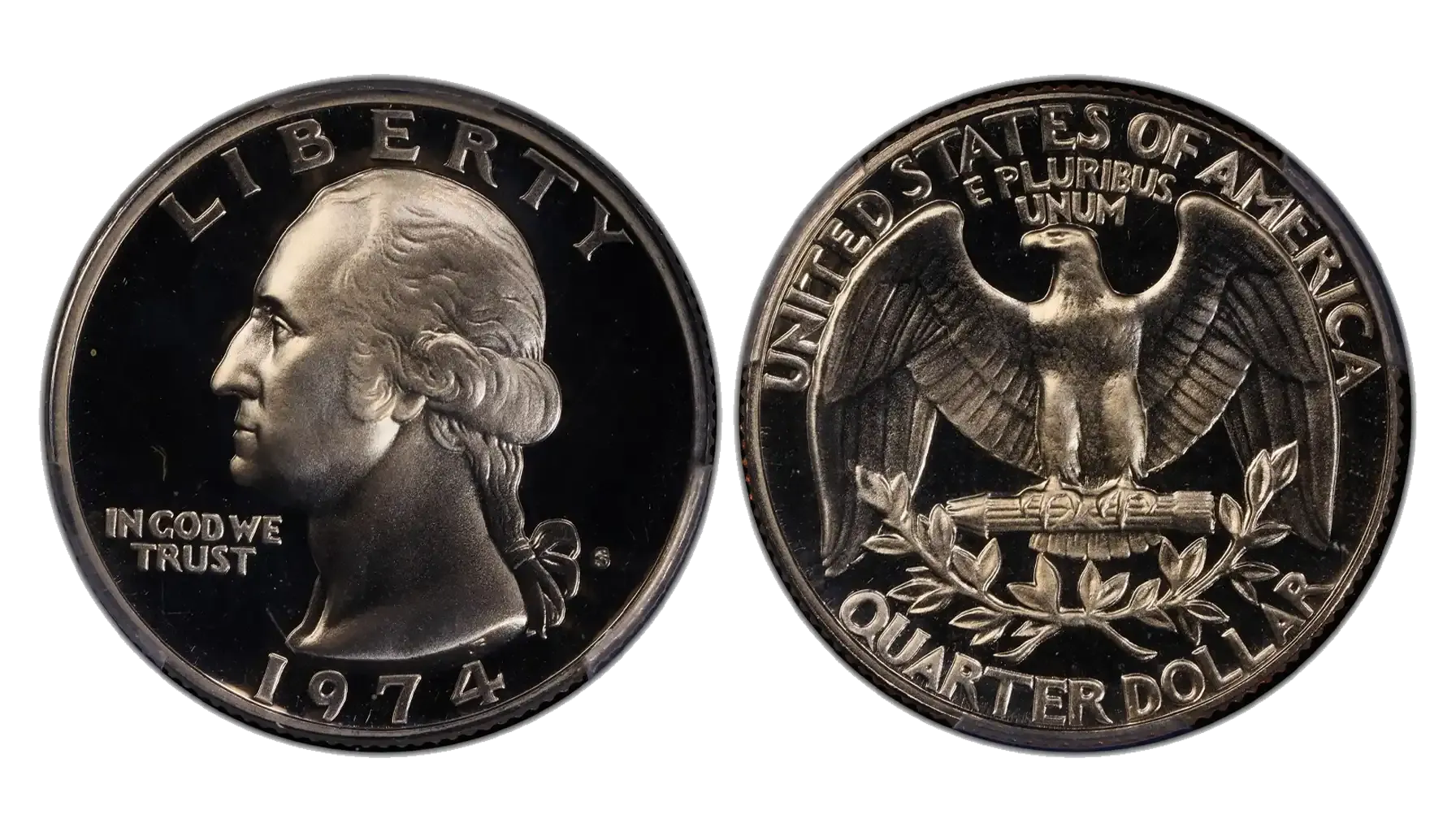
Mintage: 2,612,568
Produced by: San Francisco Mint
Auction record: $10,925 for PR70
Finally, here comes the only proof variety, struck at San Francisco for collecting purposes only. It is truly rare in flawless PR70 condition, as it may boast superior mirrored fields, strong eye appeal, and outstanding preservation after all.
“Most examples range from about PR67-PR69 condition. Cameo and Deep Cameo examples appear to be common in most grades as well. Only in PR70 Deep Cameo are they scarce and command a significant premium.”
— Jaime Hernandez, PCGS price guide editor
PCGS CoinFacts
1974 Quarter Error List with Pictures
Quarter Struck on a Wrong-Year Planchet
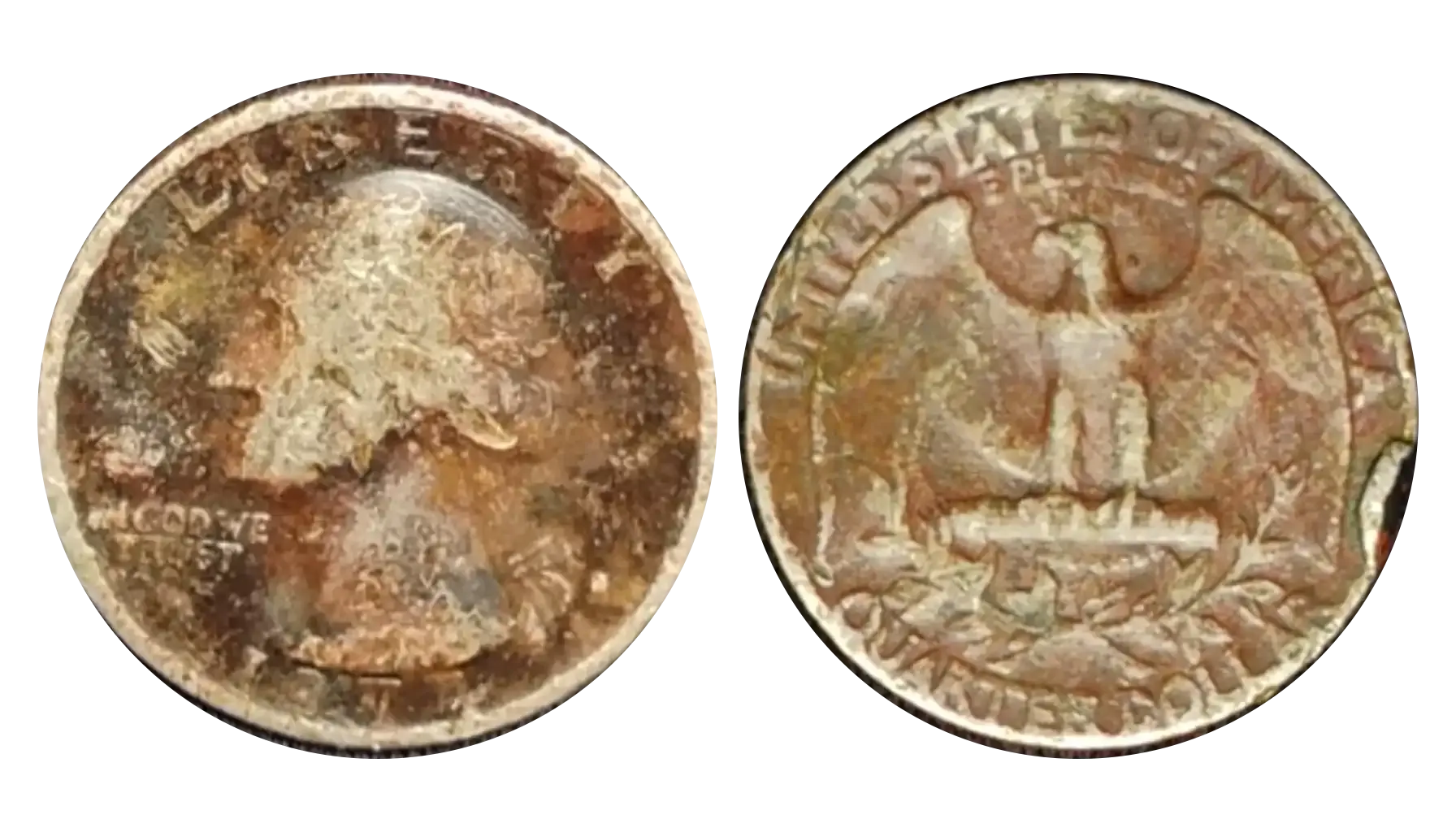
Estimated value: $3,800
Sometimes, coins may be struck on the planchet prepared for a different issue or period. This is the case of many 1974 quarter errors: the coin’s design and date do not properly match the metal blank used for striking, and they are initially unusual, as their presence is not so strong in general. The final value depends on the exact planchet involved (should it be precious or not).
Gold-Toned Eagle Error
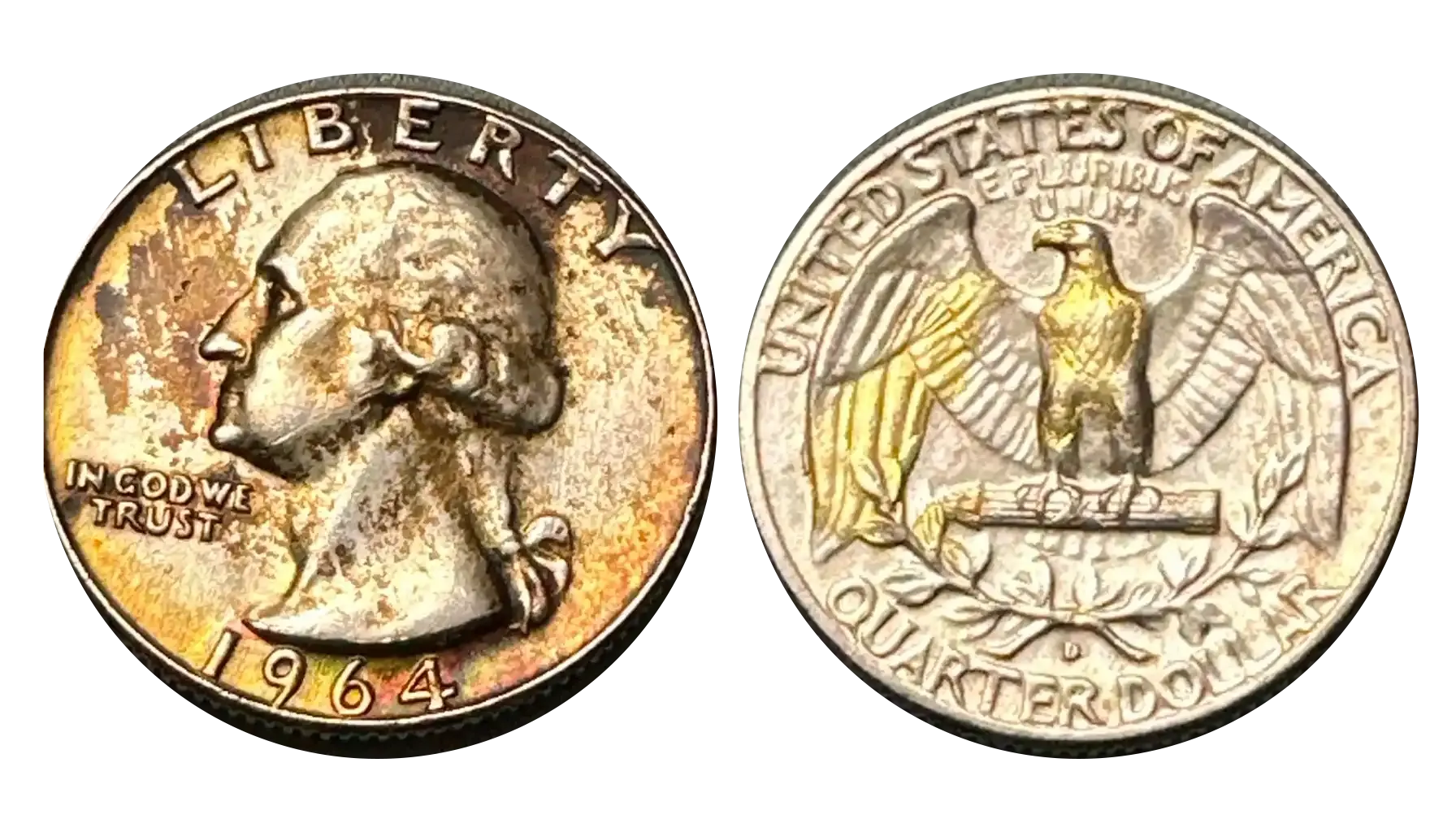
Estimated value: $2,250
Toning variations are also possible, if they are authenticated and graded by professionals (counterfeited pieces are also possible). Chemical reactions, environmental exposure, or unusual surface conditions during the process of striking can sometimes create dramatic coloration. When it is vivid, the 1974 no mint mark quarter value is high; otherwise, it is not usually considered a major premium feature.
Annealing, Cladding, and Rim Error
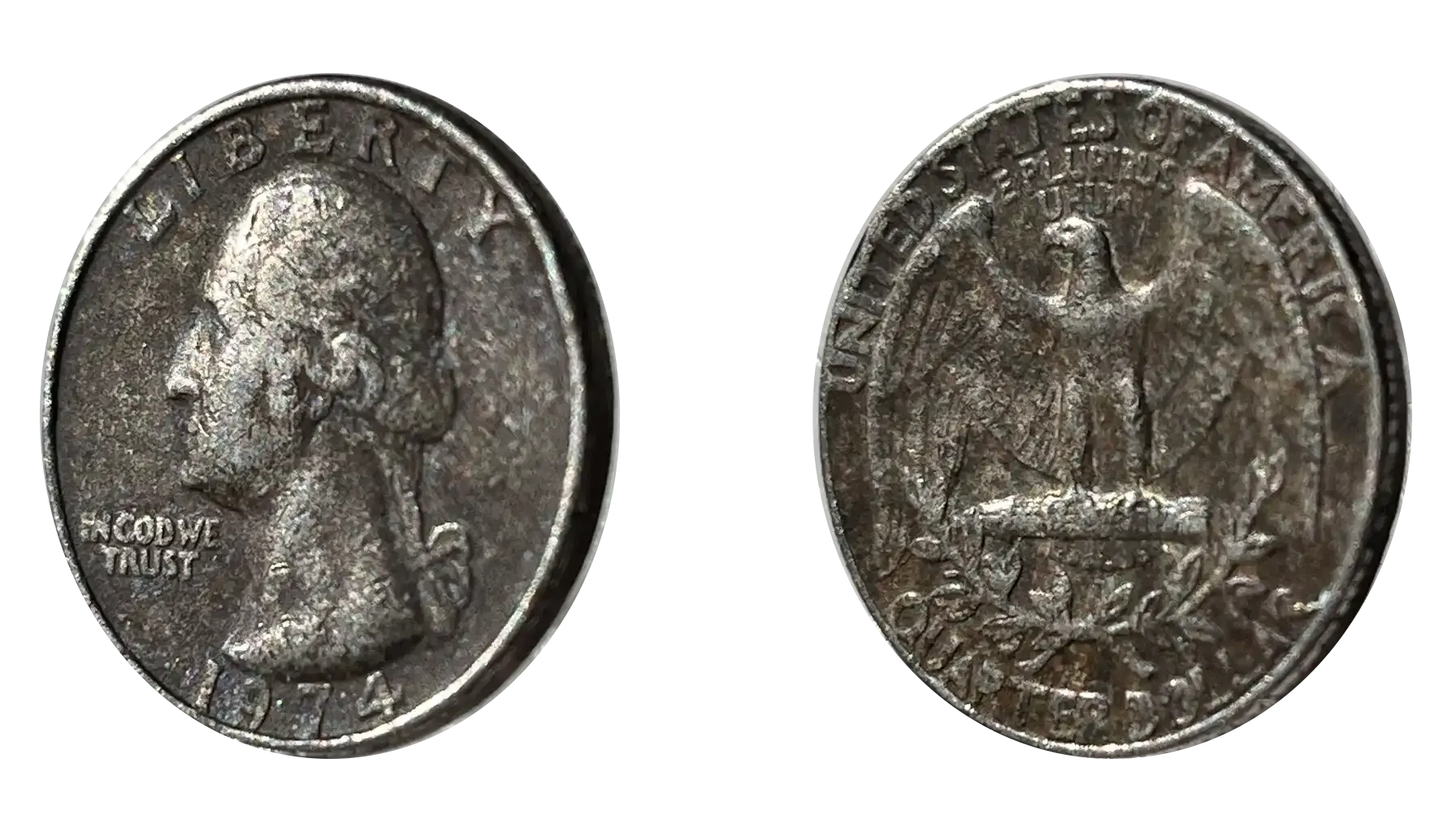
Estimated value: $1,990
The combination of several planchet-related deviations is a major source of numismatic wealth. An annealing error occurs when the metal blank is improperly heated or treated before striking. A cladding error involves the outer copper-nickel layer, which may be missing, incomplete, or abnormal. Rim errors occur when the edge or border of the coin forms incorrectly during production.
Blob Error
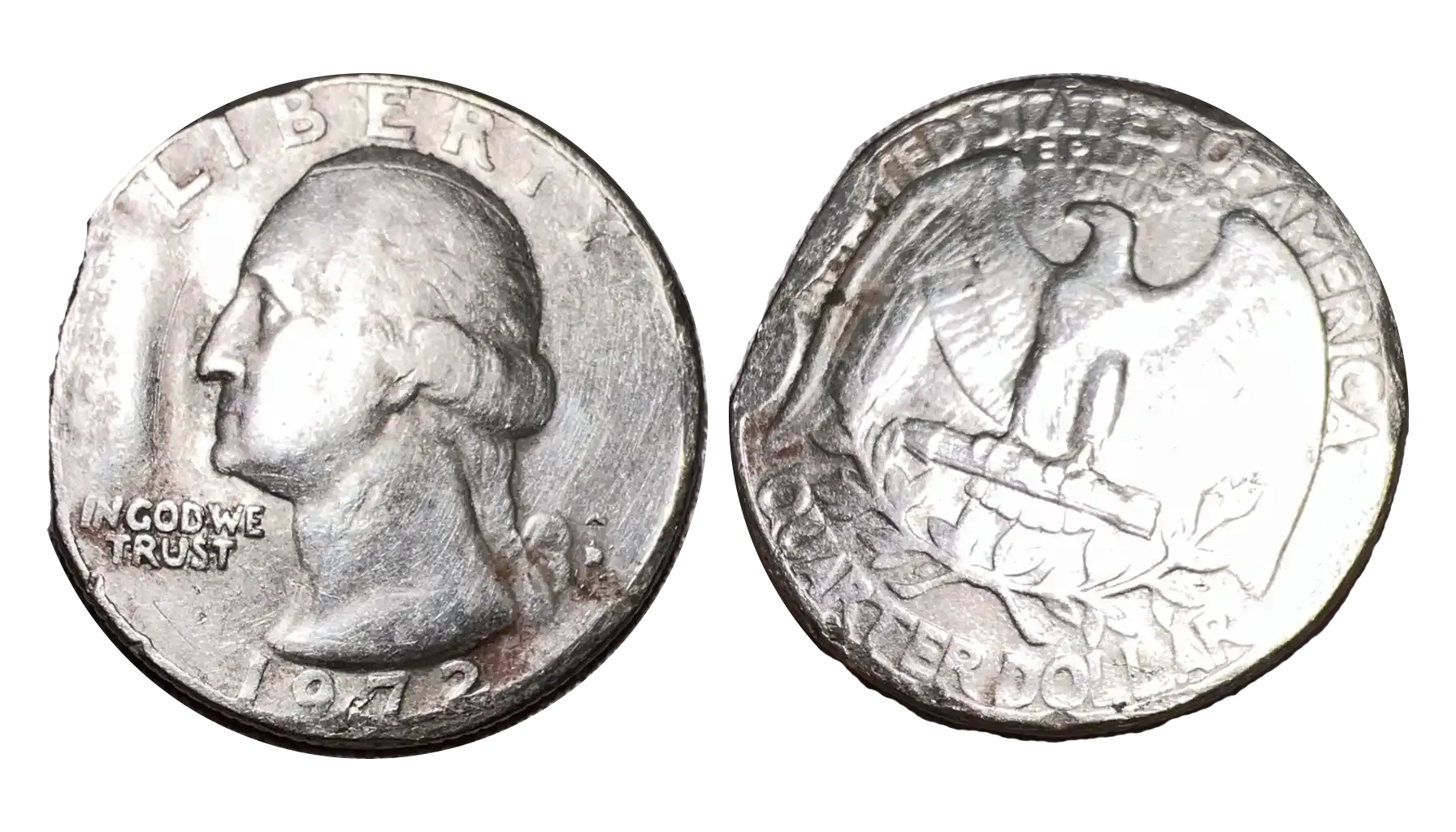
Estimated value: $600
A blob error is not the most popular imperfection, but it is still worth mentioning, as the deviation appears as a raised, irregular lump of metal on the coin’s surface. As a rule, the error may be seen near lettering, the portrait, the eagle, or along the rim.
How to Grade a 1974 Washington Quarter

So as to grade a coin, one should definitely appeal to the numismatic experts who may professionally authenticate, evaluate, and certify its condition according to accepted grading standards. However, the first steps may be taken at home: strive to identify the type of coin and assess the condition step by step:
Identify the mint mark
Check the overall wear (the quality of design details, their sharpness)
Examine Washington’s portrait (check if there are any deviations present)
Inspect the reverse design
Look at the coin’s luster (does it bear the original luster?)
Review marks and scratches
Check proof quality, if applicable (for 1974-S proofs only)
Compare with grading references (use Coin ID Scanner for more precise results and faster analysis)
Embrace the adventure, explore the coins, and let the treasures of the past enter your collection with no pain.
FAQs
What is the error on the 1974 United quarter?
There are various errors found on the 1974 25-cent coins, but the most notable ones involve off-center strikes, clipped planchets, die chips, cladding issues, annealing errors, rim errors, and unusual toning. DDOs and DDRs are also well-known in the context of this coin.
What's so special about the 1974 quarter?
It is a common variety, but in high mint-state grades or with proof designations, the coin becomes more valuable. There is nothing special about it, though.
How much is a 1974 No mint mark worth?
The value of 1974 quarter varies. The base value is 25 cents, but the numismatic potential may lead to $10,925 per piece.
Is a 1974 quarter pure silver?
No 1974 quarter is made of silver. Silver coin production was suspended in 1965.
What is a 1974 quarter made of?
A 1974 quarter is made of copper-nickel clad metal. It has a pure copper core with outer layers of 75% copper and 25% nickel.
Should all 1974 quarters have a mint mark?
The coins from Philadelphia do not normally bear mint marks at all. The Denver- and San-Francisco-minted types show "D" and "S' mint marks, respectively.
Where is the mint mark on a 1974 quarter?
The mint mark is located on the obverse side, to the right of Washington’s hair ribbon.

 Facebook
  X (Twitter)
  Pinterest
  LinkedIn