Contents:
These coins marked the end of World War II in metal. At first, the war still lived in people’s memories. Fifty years later, that changed. It became history—something sorted, described, and preserved by archives, museums, and numismatic specialists.
In cases like this, a foreign coin identifier helps clarify origin and issue type when a set appears outside its familiar national framework, without lengthy manual catalog comparison steps.
What are World War II 50th Anniversary Coins?
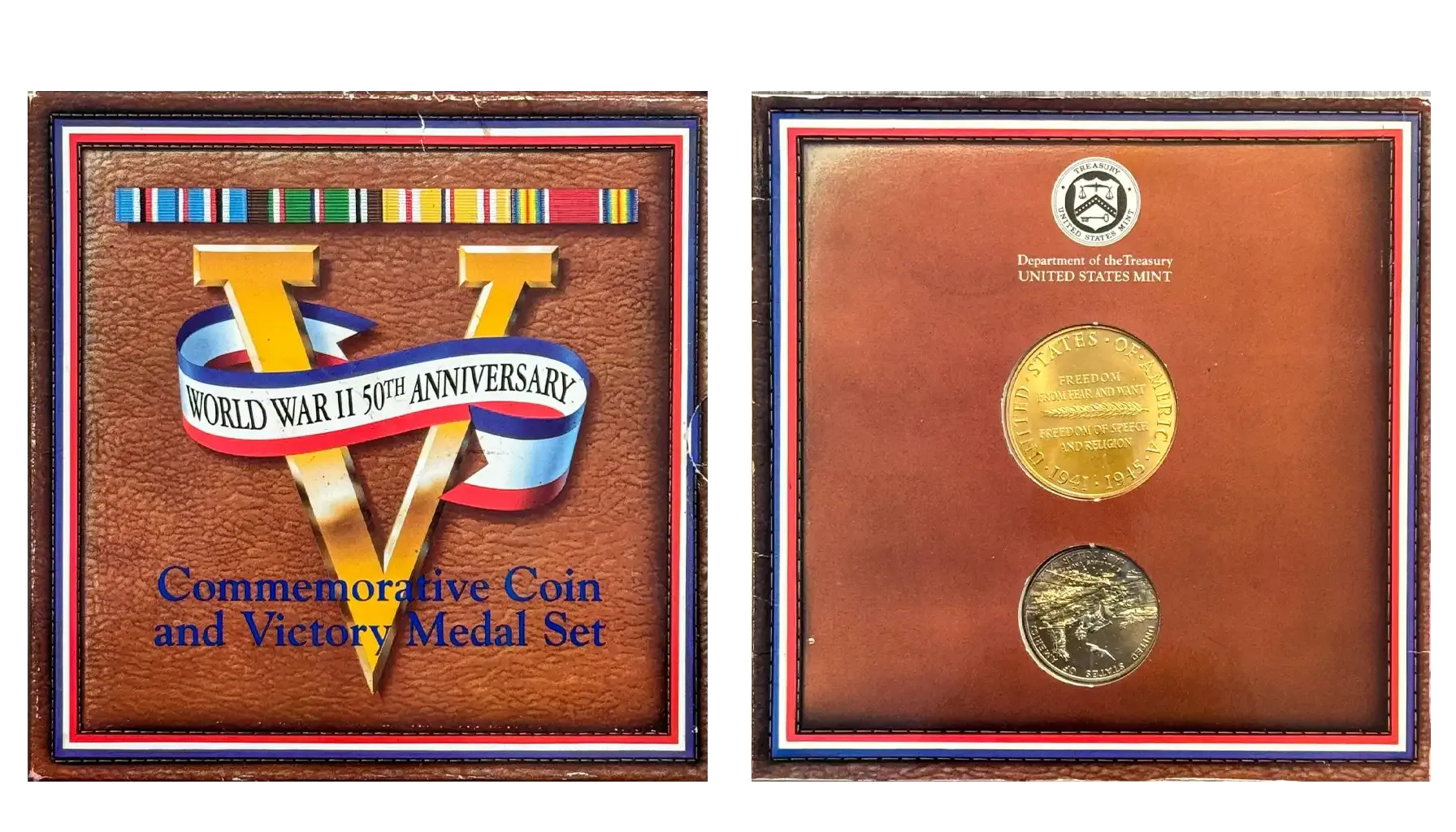
This name pulls together specimens issued by different countries in the mid-1990s, all tied to the fifty-year mark since the war ended. WW2 50th Anniversary coins usually came out in small mintages and weren’t meant for circulation.
Each release followed its own national program. The designs reflect how different countries chose to remember World War 2 and deal with its aftermath.
Common features of these issues include:
A connection to the anniversary years of 1994–1995;
Official status confirmed by state mints;
Limited mintages compared with circulating coinage;
An emphasis on memorial symbolism rather than abstract artistic themes.
“In war, truth is the first casualty.”
— Aeschylus, Ancient Greek playwright
The Guardian website
History Behind the 50th Anniversary Commemorations
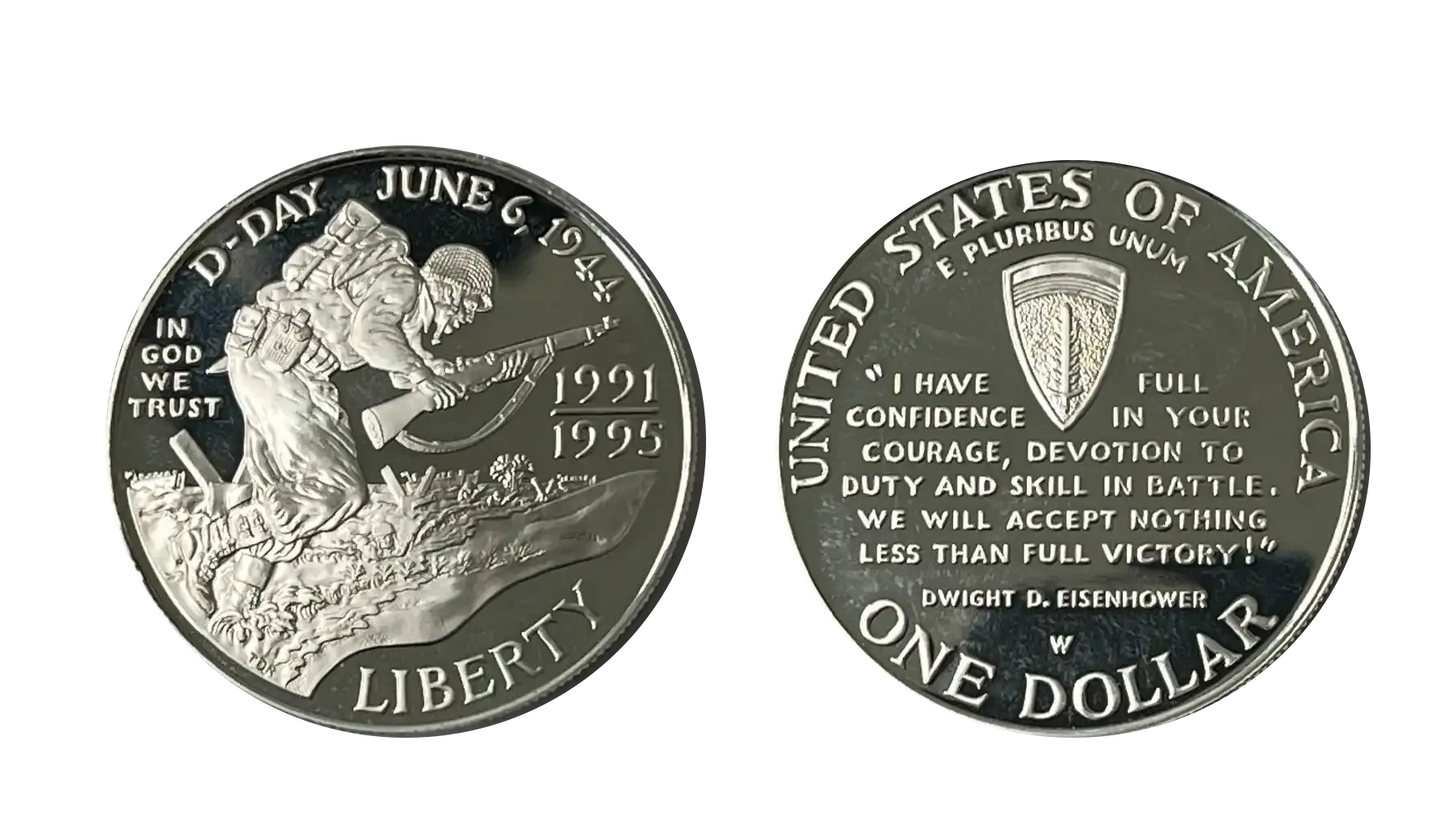
The fiftieth anniversary of World War II, for the first time, forced a reassessment, with the war considered without direct participation from most of those involved original participants.
In the early 1990s, many veterans were still alive, but attention had already shifted from personal memories to institutional memory.
During this period, states started to use commemorative issues as instruments for historical messaging purposes. Here, attention centered on organized work with what is now classified as commemorative coins, where circulation was never intended as the main function.
WWII 50th Anniversary coins serve as indicators of the climate of the 1990s. Themes, participating countries, and wording show how each state returned to and reshaped its wartime role fifty years later.
Types of WWII 50th Anniversary Coin Sets
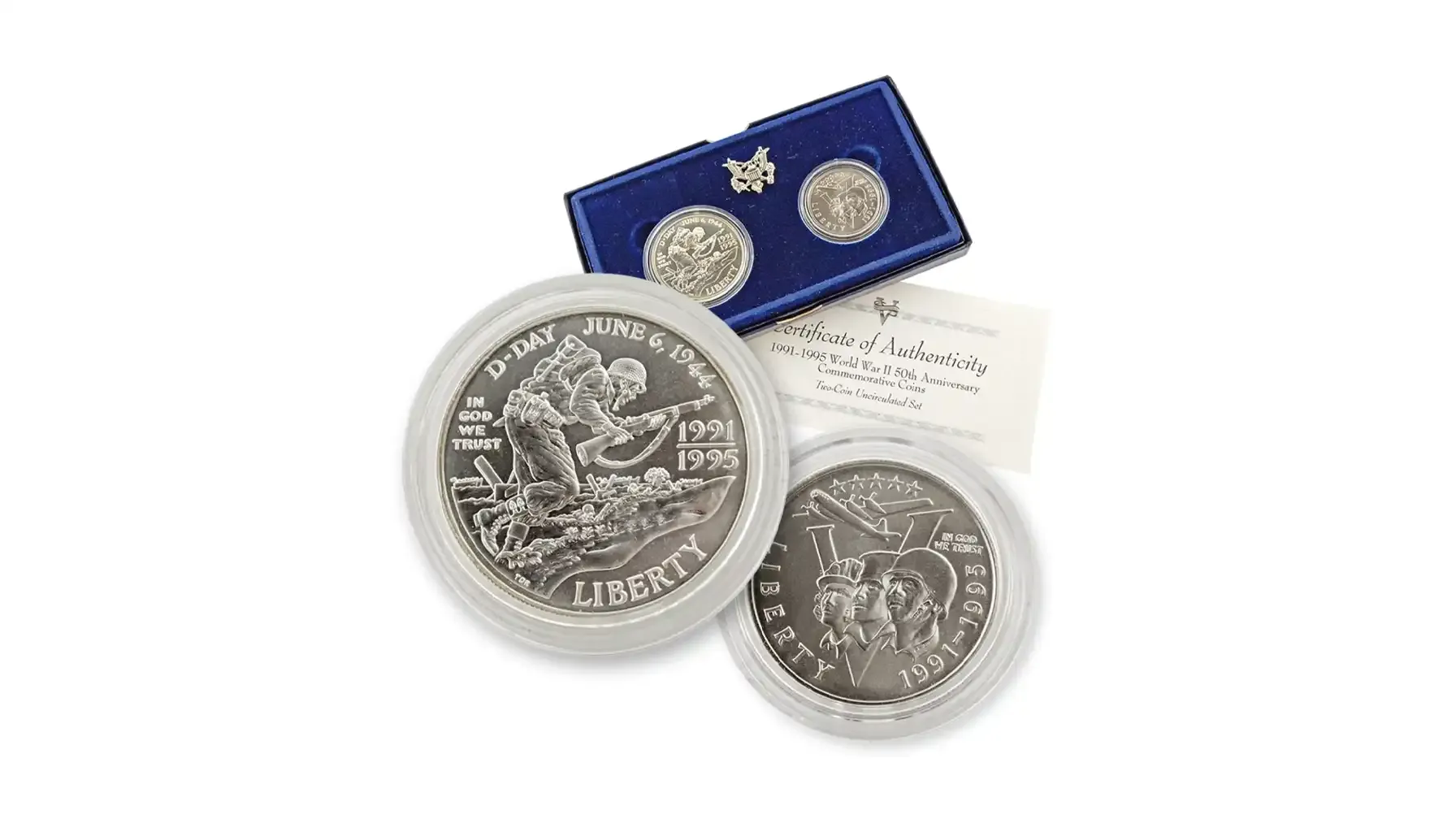
The issue format varied from country to country. The most common form was a World War II 50th Anniversary coin set, which included one or several coins united by a common theme.
Main types of sets:
Single commemorative pieces made from non-precious metals;
Sets of silver denominations;
Mixed sets using different metals;
Presentation versions in capsules or cases.
Some programs focused on specific events and locations. For example, in collections related to the Pacific theater of operations, interest often overlaps with Pearl Harbor specimens.
Are World War II 50th Anniversary Coins Worth Money?
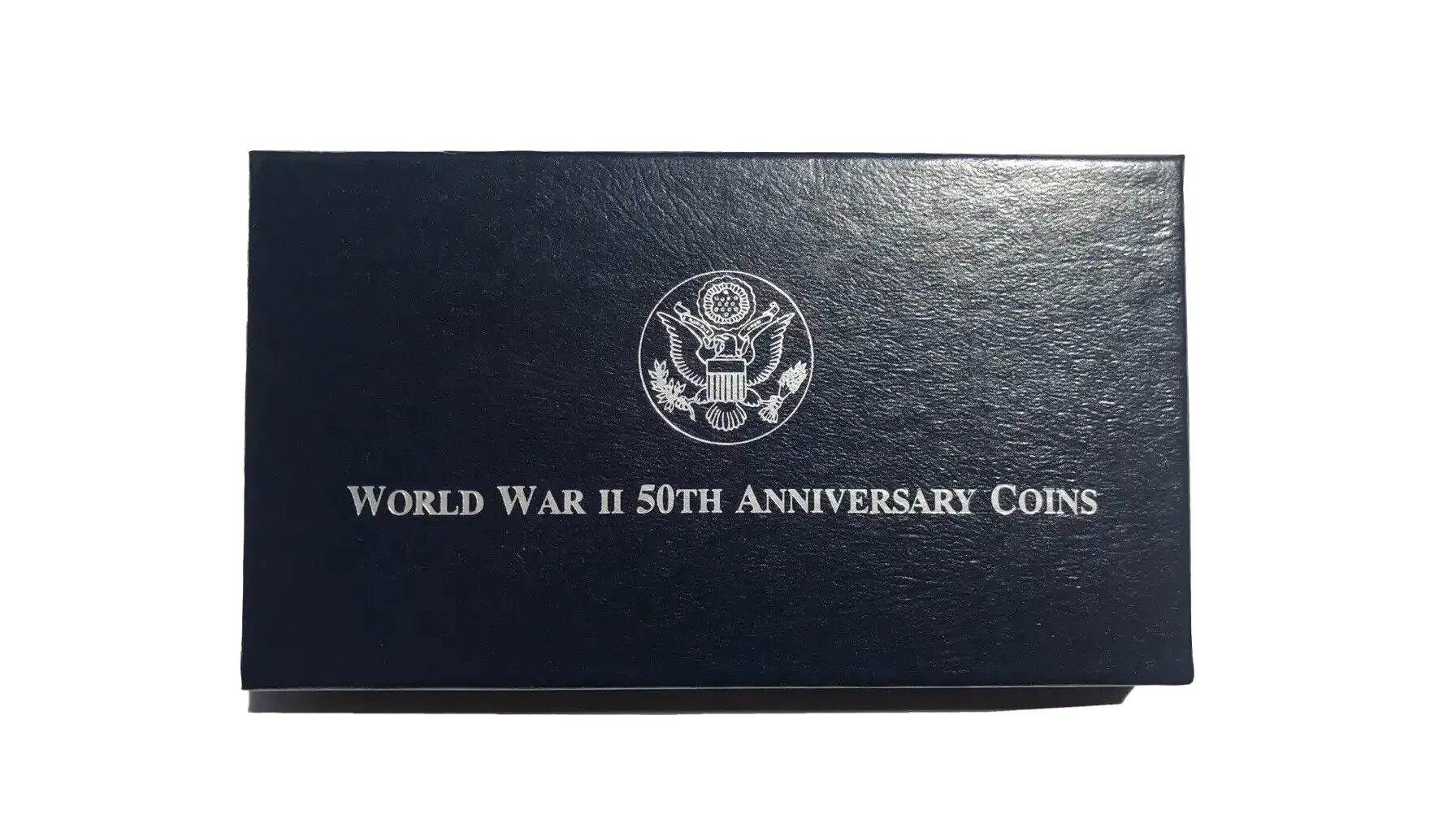
Are World War 2 50th Anniversary coins worth significant sums? The answer is nuanced. Most of these issues are not rare in the classical numismatic sense. Their value is formed by different principles.
On the secondary market, the following factors are most often considered:
The metal and its current market price;
Surface condition;
Preservation of the original packaging;
Demand for a specific national program.
Factors That Affect WWII Anniversary Coin Values
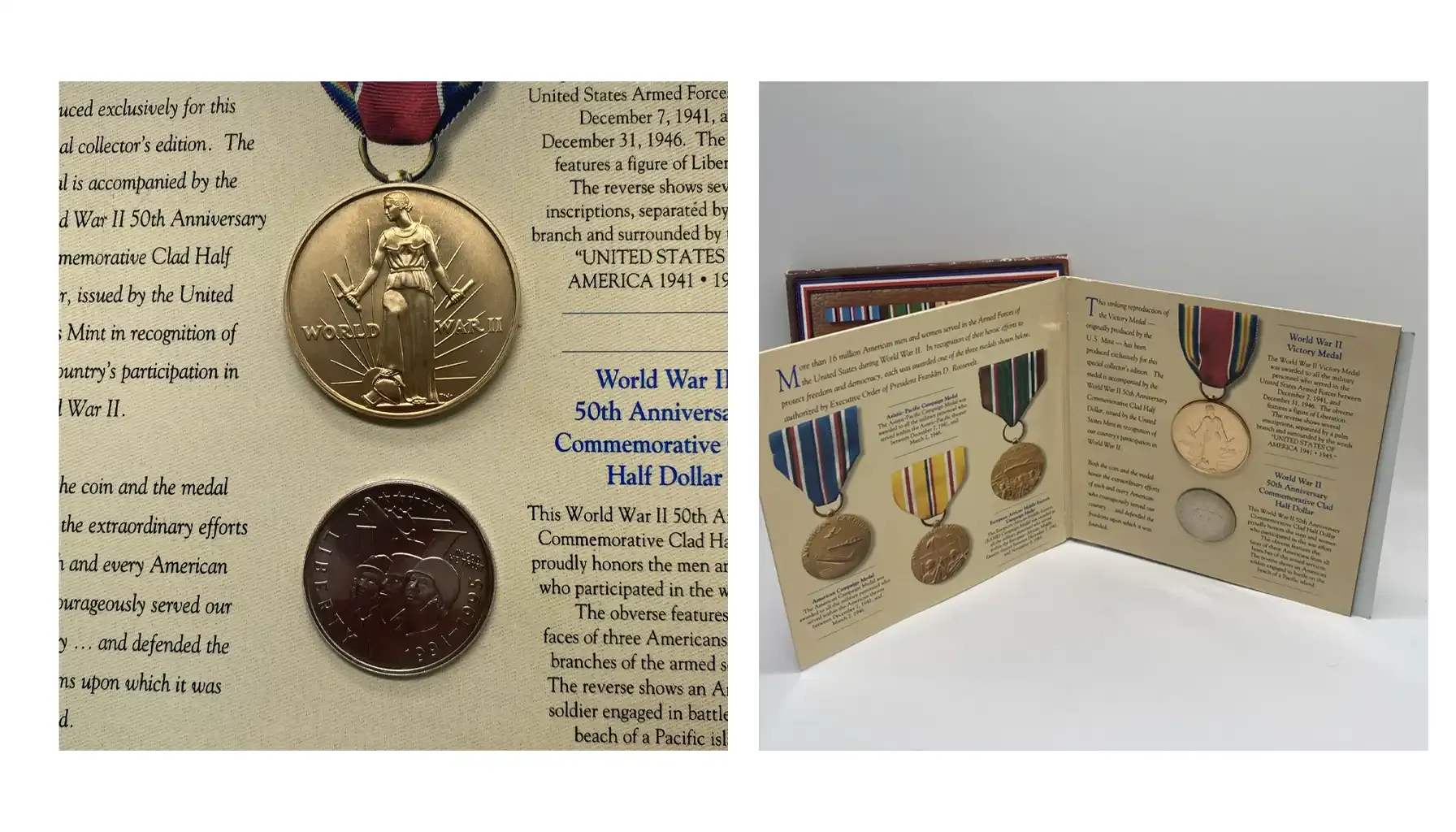
Key valuation parameters:
Official issue status and issuing country;
Set format and completeness;
Documented sales history and auction results;
Interest from international collectors.
Market Behavior and Collector Demand
Demand for this series differs from demand for classical rarities. There are fewer speculative spikes and more steady interest from thematic collectors.
This makes the market more predictable, but less dynamic, which is why collectors often use Coin ID Scanner to quickly check issue details and avoid overpaying on the secondary market.

 Facebook
  X (Twitter)
  Pinterest
  LinkedIn