Contents:
Issued in 2016 to mark 400 years since the playwright’s death, the Royal Mint released three designs:
The crown and sword (Histories)
The jester (Comedies)
The skull with rose (Tragedies)
Each shows one of the main genres of Shakespeare’s plays. Collectors love these coins for their designs and for the stories around them.
There are rumours of William Shakespeare £2 error examples, most famously the skull coin, supposedly struck with the wrong inscription. There’s also steady demand for all three designs in uncirculated condition.
A good opportunity to check any piece you have immediately - identify coins at your home with the help of artificial intelligence.
Why is Shakespeare on £2?
William Shakespeare is the most published playwright in English history. Born in 1564 in Stratford-upon-Avon, he wrote around 39 plays and 150+ sonnets: comedies, tragedies, histories, that are still taught, staged, and quoted 400 years later. Lines like “All the world’s a stage” or “To be, or not to be” are everyday language now.
So why him on a £2? Practical reason: 2016 marked 400 years since his death, and the Royal Mint likes to use anniversaries to push commemoratives. Shakespeare is internationally known (so the coins appeal beyond the UK), and he represents British culture in a way few figures can.
The Mint knew people would actually care enough to keep one if they found it in change. That’s why the William Shakespeare £2 set made sense: three designs, one for each genre, easy to tie back to his legacy without needing to explain a thing.
Looking for epic pieces? Try to read the Best Gold Coins to Buy
The 2016 William Shakespeare £2 Series
Coin (Design) | Genre | Mintage | Edge Inscription | Common Name | Circulated Value | Uncirculated Value | Notes |
Crown & Sword | Histories | 5,655,000 | THE HOLLOW CROWN | “Crown and Dagger” coin | £3-£4 | £6-£10 | Most common of the three. |
Jester | Comedies | 4,355,000 | ALL THE WORLDS A STAGE | “Jester” coin | £3-£5 | £6-£12 | Playful design, popular with collectors. |
Skull & Rose | Tragedies | 4,355,000 | WHAT A PIECE OF WORK IS A MAN | “Skull” coin | £3-£6 | £8-£15 | Most sought-after; subject of error rumours. |
In 2016, the Royal Mint marked the 400th anniversary of Shakespeare’s death with a trio of £2 coins. Each design was meant to represent one of the three great genres of his plays: Histories, Comedies, and Tragedies. It was the first time a UK commemorative coin series had been dedicated entirely to literature, and it immediately caught the attention of collectors and the wider public.
The designer behind the set, John Bergdahl, is known for his work on other Royal Mint releases. He took classic Shakespearean imagery and made simple designs that stand out on the small canvas of a coin. Each also carried a unique edge inscription:
Histories (Crown and Sword): edge inscription “THE HOLLOW CROWN” (from Richard II)
Comedies (Jester): edge inscription “ALL THE WORLDS A STAGE” (from As You Like It)
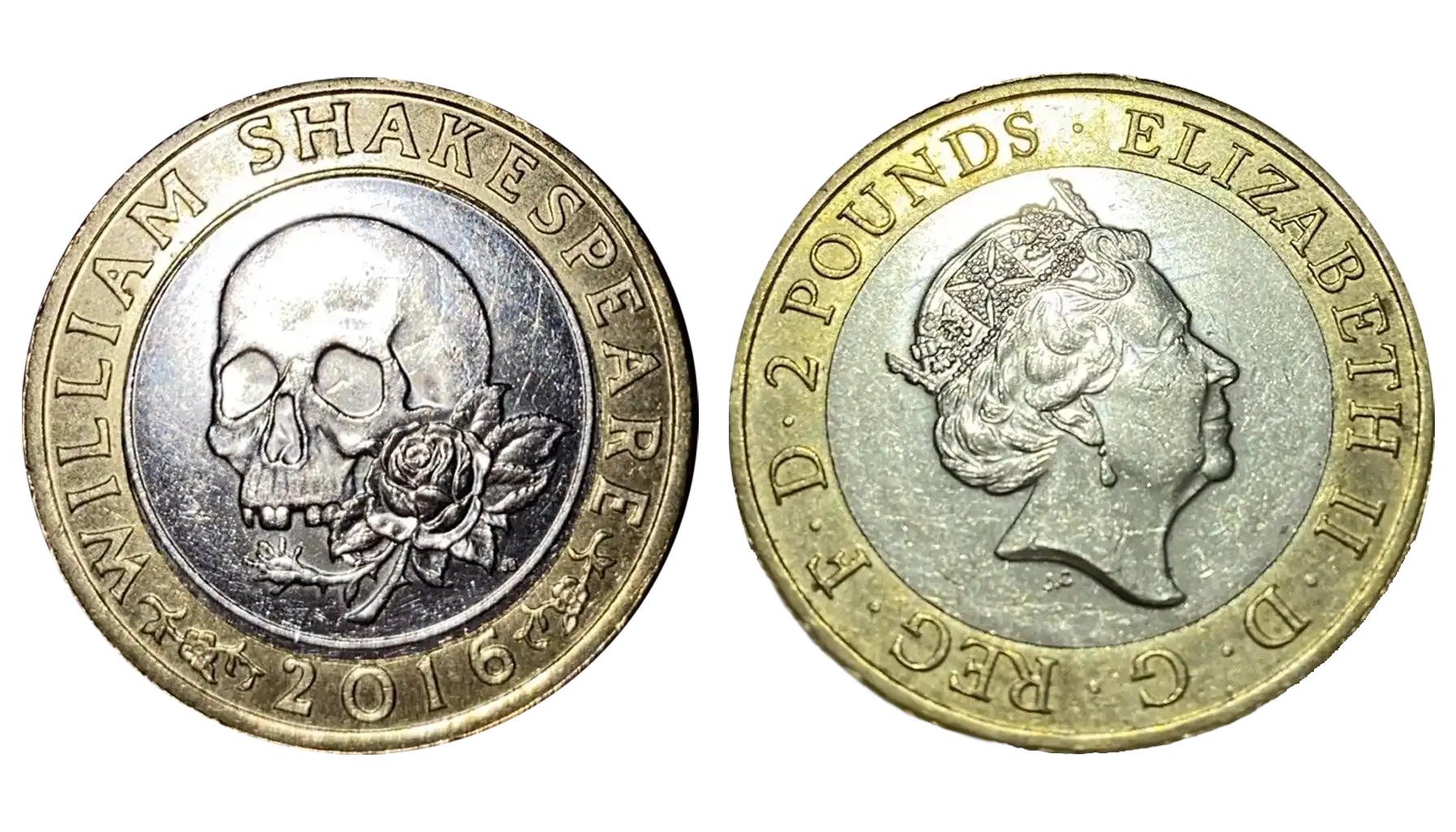
Tragedies (Skull and Rose): edge inscription “WHAT A PIECE OF WORK IS A MAN” (from Hamlet)
The coins were struck in standard bi-metallic format (nickel-brass outer ring, cupronickel inner disc) and entered circulation with mintages in the millions. Though not scarce by strict numbers, they quickly became some of the most collected modern issues.
Whether labelled £2 coin William Shakespeare or simply “the skull coin,” they’re now staples of every rare £2 coins UK checklist.
William Shakespeare £2 Coin Crown and Sword (Histories)
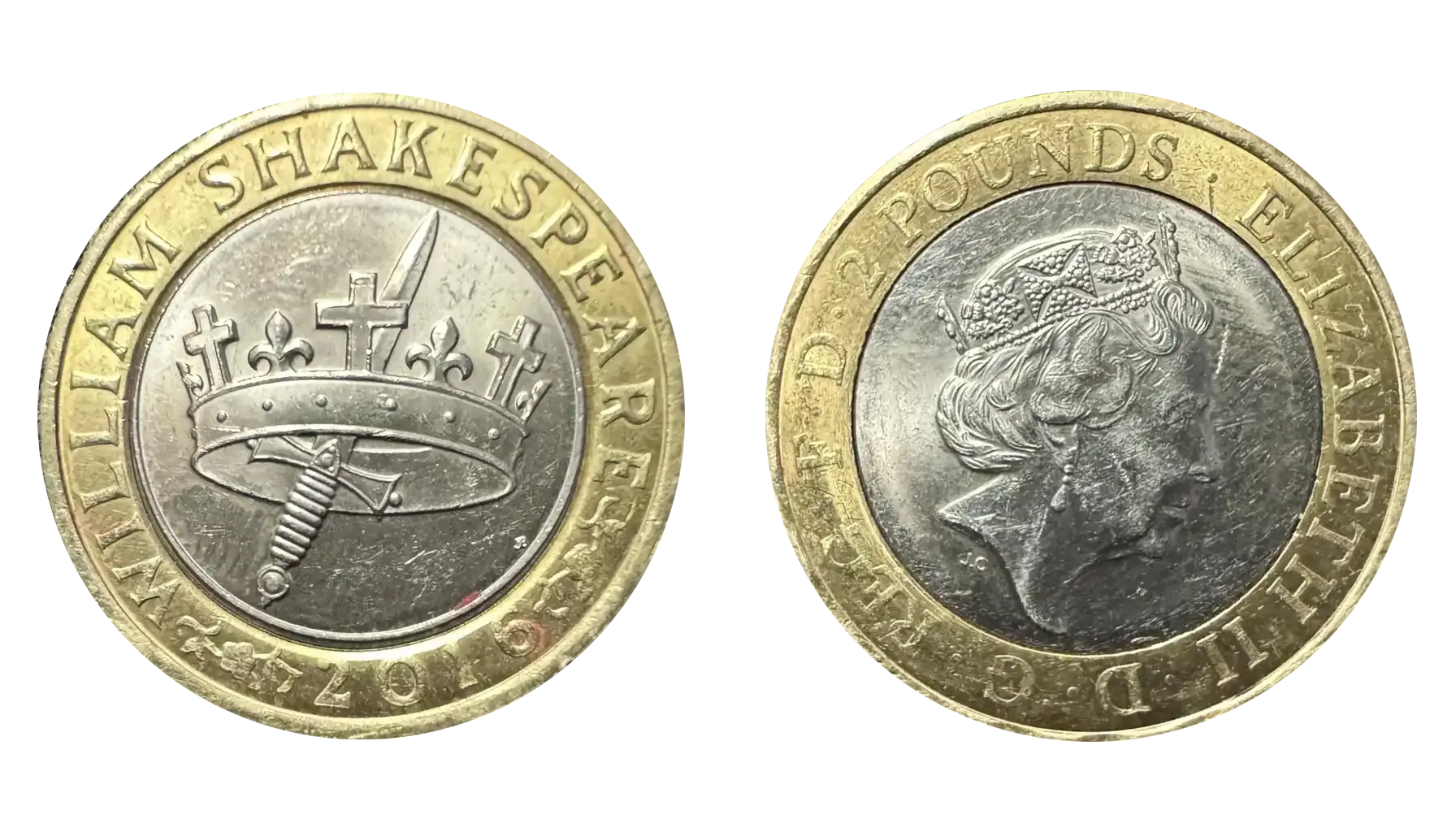
The first of the trio is the William Shakespeare 2 pound coin crown and sword, also known as the Histories coin. Its reverse shows a medieval-style crown stabbed through by a dagger, a reference to the themes of kingship, betrayal, and political turmoil that run through Shakespeare’s history plays. The edge inscription reads “THE HOLLOW CROWN” - a line from Richard II.
The mintage was 5,655,000, which means it’s not classed among the very rare 2 pound coins, but collectors are still interested because of its design. Many people keep it aside when they see one in change, even if its market value isn’t sky-high.
So, what about the William Shakespeare 2 pound coin crown and sword value? In circulated condition, it usually sells for around £3-£4, while uncirculated or mint examples can cost £6-£10. It’s widely available, but sellers try to push prices much higher on platforms like eBay.
It’s the easiest to find, and the crown-and-dagger motif makes it instantly recognisable. While it’s not a fortune-maker, it’s still a part of any modern £2 William Shakespeare coin collection.
William Shakespeare £2 Jester (Comedies)
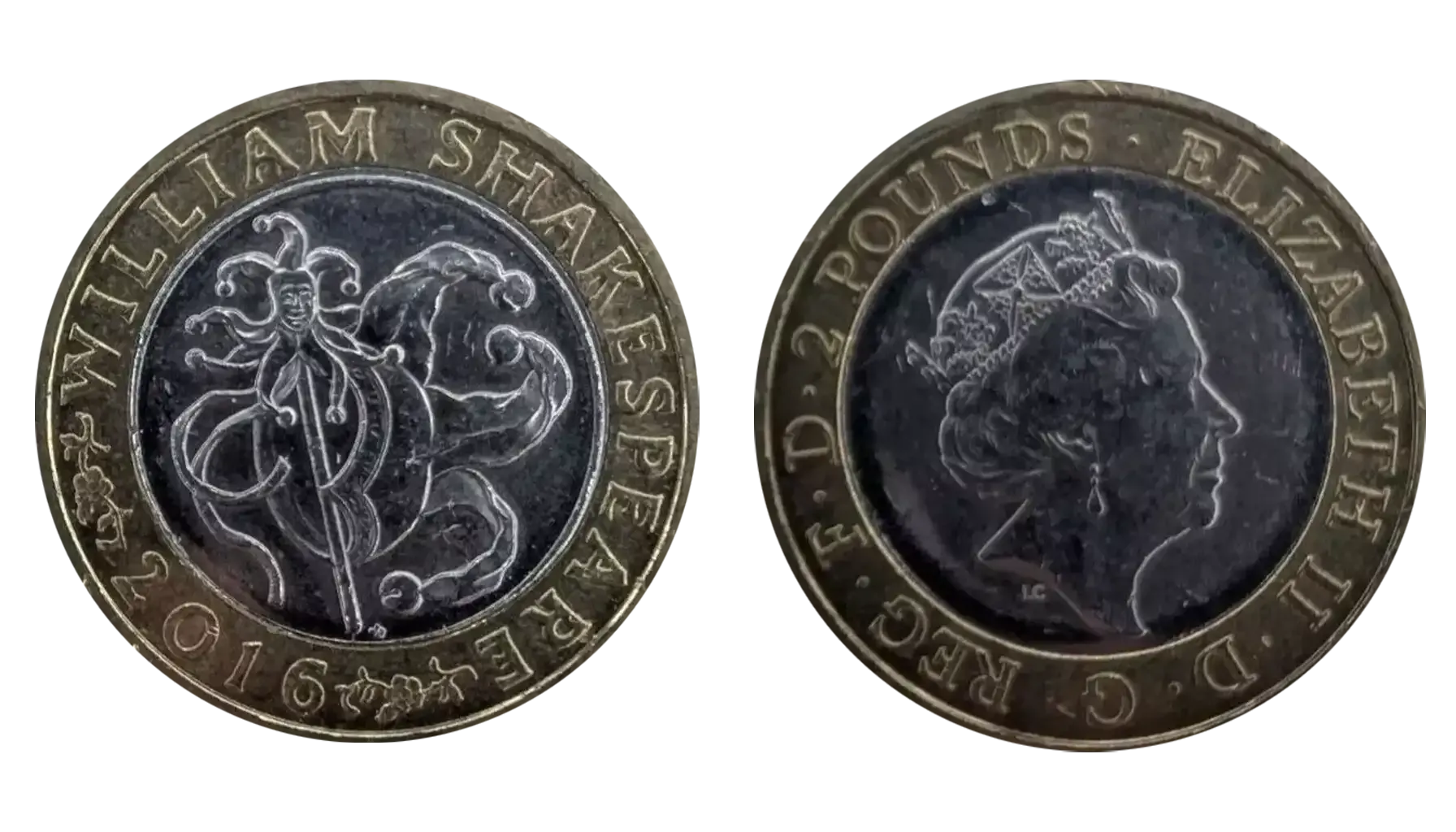
The William Shakespeare £2 coin jester is the comedy issue from the 2016 set. It shows a fool’s cap and marotte (jester’s staff). The imagery refers to the pieces like A Midsummer Night’s Dream and Twelfth Night, where wit, disguise, and absurdity drive the drama. The edge inscription reads “ALL THE WORLDS A STAGE”, taken from As You Like It.
With a mintage of 4,355,000, it’s less common than the crown-and-sword piece, though still plentiful compared to the rarest £2 designs. That said, it has become a favourite among collectors because of the lively, playful artwork.
So what’s the William Shakespeare £2 coin worth when it comes to the jester? Circulated examples tend to sell for £3-£5, while uncirculated or carefully preserved coins usually land in the £6-£12 range. Like its siblings, it’s not genuinely rare, but demand keeps values above face.
William Shakespeare £2 Skull (Tragedies)
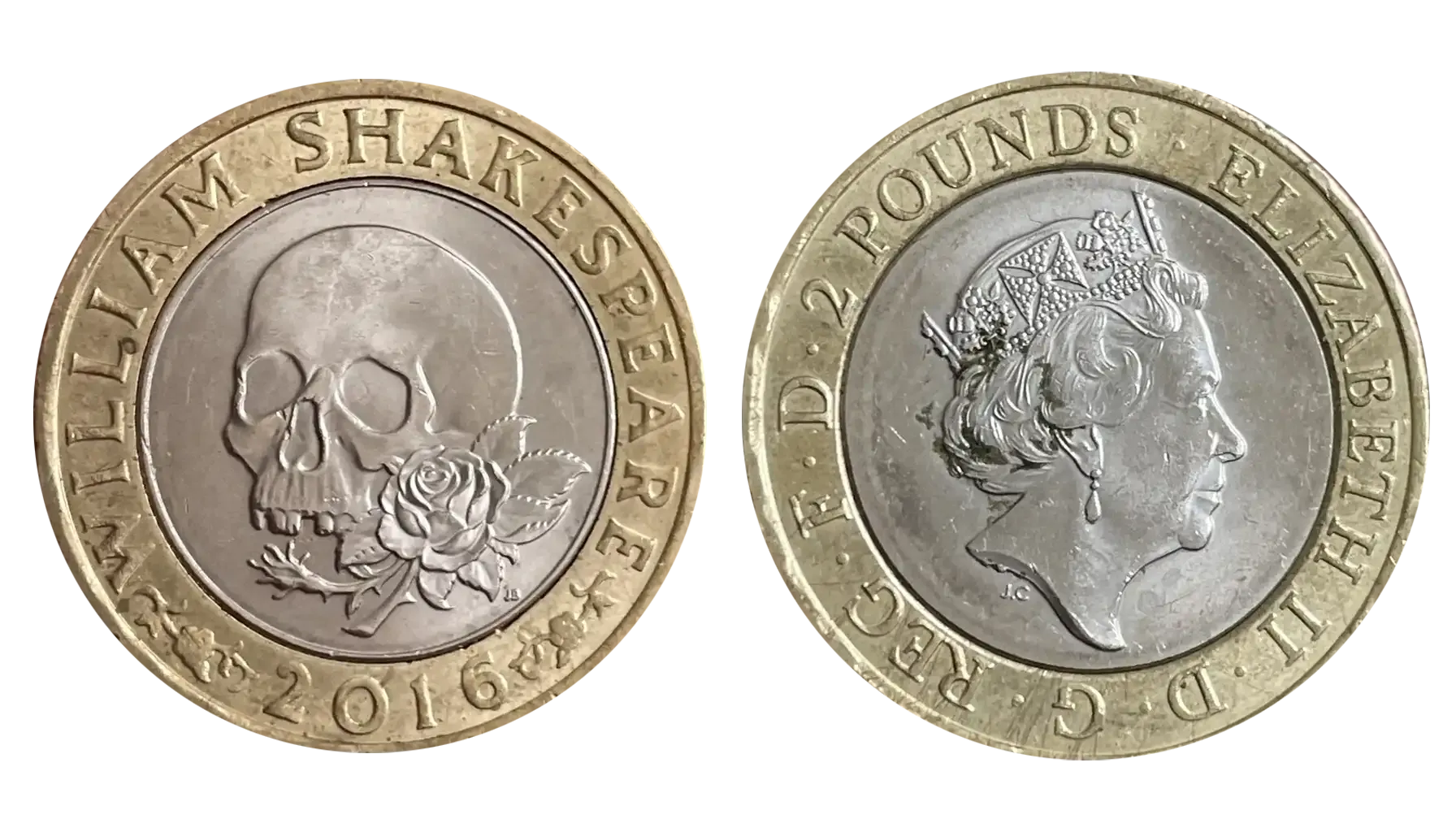
The most talked-about of the set is the William Shakespeare £2 coin skull, representing tragedy. Its reverse shows a skull beside a rose: imagery tied forever to Hamlet and the darker side of Shakespeare’s plays. The edge inscription reads “WHAT A PIECE OF WORK IS A MAN”, also from Hamlet.
The mintage figure is 4,355,000, identical to the jester one. By strict numbers, it isn’t scarce, but demand has been strong since release because of the design and the flood of headlines about possible “errors.”
So what’s the William Shakespeare 2 pound coin skull value? In circulated condition, it generally trades for £3-£6, while uncirculated examples sell for £8-£15. Prices spike occasionally when error rumours circulate, but the base value remains steady in that range.
It’s also the coin most linked to stories of a William Shakespeare skull 2 pound coin minting error. Some collectors reported examples with the wrong edge inscription (from the Histories coin), sparking speculation about mix-ups at the Mint. Genuine confirmed errors are extremely scarce, but the rumours alone fuel extra demand.
If you’re building a 2 pound coin William Shakespeare set, this is the one most people ask about first.
William Shakespeare £2 Coin Errors and Myths
If you’ve heard about a William Shakespeare £2 coin error, chances are it’s tied to the skull design. Soon after release, collectors noticed some coins appeared to have the wrong edge inscription: “The Hollow Crown” from the Histories coin, instead of the proper “What a Piece of Work is a Man.”
Just like with the Queen Elizabeth II Coins, The Royal Mint later confirmed that a small number of mis-struck coins may exist, caused by a mix-up during production. When they do appear, collectors pay far above normal values.
Online marketplaces are filled with listings claiming ordinary pieces are errors. Here are the most common myths:
Scratches or wear: sellers often claim surface marks make a coin unique. They don’t
Normal inscriptions: some claim the correct edge text is an “error.” It isn’t
Fantasy prices: listings asking hundreds for standard ones are misleading.
To keep perspective:
A normal William Shakespeare 2 coin skull is worth £3-£6 circulated, £8-£15 uncirculated
A confirmed edge inscription error could be worth £100+, depending on condition and buyer interest
The crown-and-sword and jester have no confirmed widespread minting errors
That’s why collectors use guides like this or tools like Coin ID Scanner as a kind of £2 coin value checker William Shakespeare - to cut through the noise. The errors are real, but rare, and not every coin with a scratch or quirk is a golden ticket.
How to Keep and Where to Sell Coins
Keeping Your Coins
Handle carefully: always hold them by the edges, not the faces. Fingerprints and skin oils leave marks that can’t be undone
No cleaning: don’t polish or scrub. Even if it looks dull, cleaning lowers its value. Collectors want them untouched
Storage: use flips, capsules, or an album. A simple airtight capsule keeps scratches away and slows down tarnish
Separate circulation finds from mint-condition ones, If you’ve bought a brilliant uncirculated Shakespeare, keep it in its packaging. Don’t mix it with pocket change
Where to Sell Them
Read about and use Top 5 Best Coin Appraisal Websites
Coin dealers: safe and straightforward. They’ll give you a realistic price based on condition and demand
Auction houses: best option if you believe you’ve got an error (like the skull with the wrong inscription). Specialists like Spink handle these regularly
Online (eBay, Facebook groups): quick but risky. Always check sold listings instead of asking prices, because inflated listings can mislead
Fairs and collector events: good for trading directly with other collectors. You’ll often learn more about your coin’s value face-to-face
For standard ones , expect to get £3-£6 each depending on design and wear. For genuine error, a professional valuation is worth it - they can reach over £100 if authenticated.

 Facebook
  X (Twitter)
  Pinterest
  LinkedIn