Contents:
In the Presidential Dollar series, each piece highlights a different president. The James Polk coin ended up getting more attention than most. The relief is unusually sharp, the mintage is tightly controlled, and there are a few rare varieties that collectors still keep an eye on.
Introduction to the James K. Polk Presidential $1 Coin
When people study the series, they usually start by looking at basic facts about the president shown in the piece. It gives the context they need for the design and the years he served.
The James K. Polk dollar coin turns up in circulation fairly often, so most pieces fall into the medium-quality range. Even so, some stand out with brighter luster and unusually clean rims.
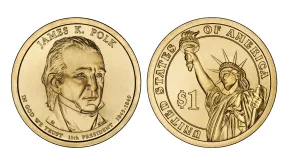
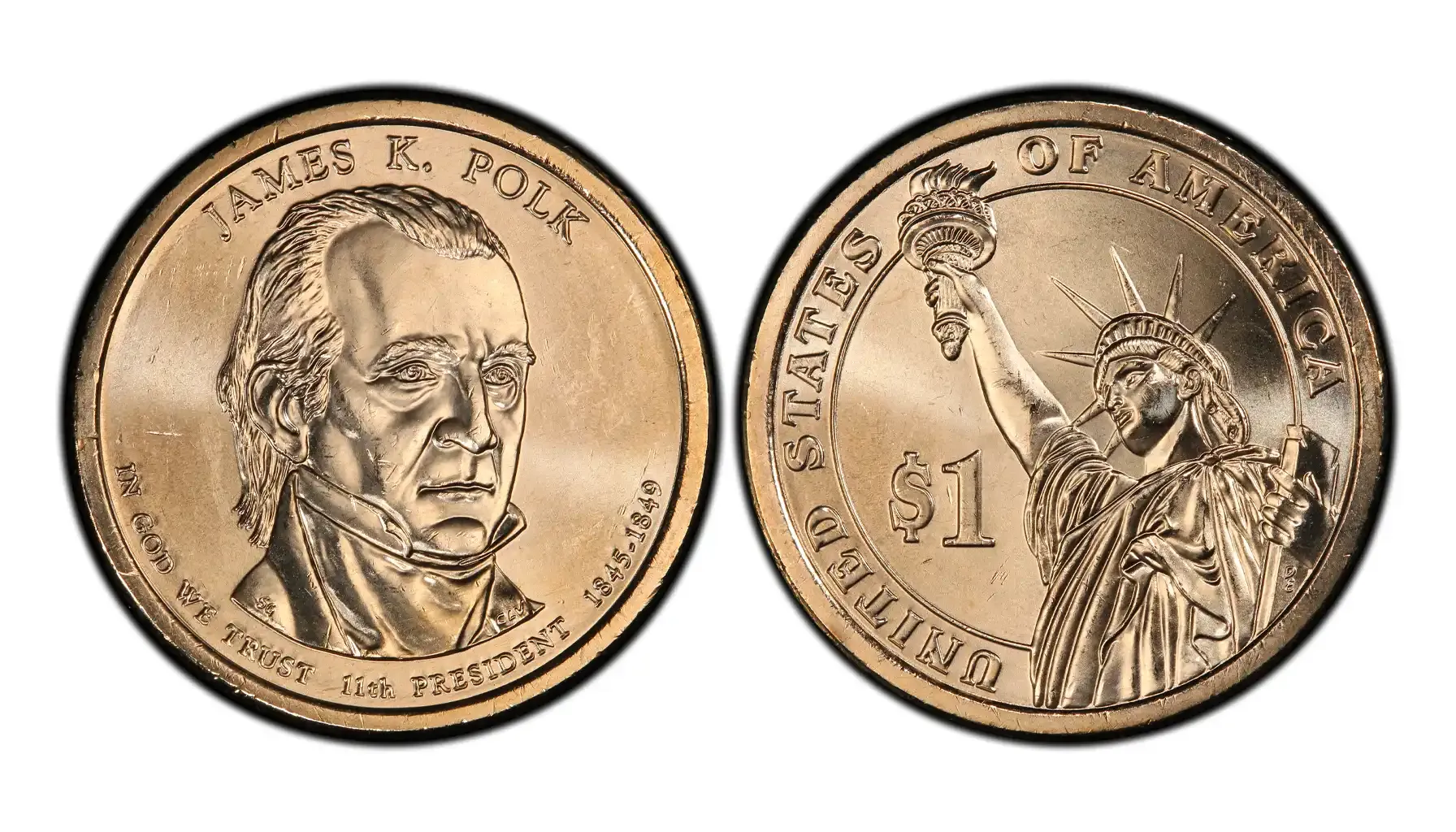
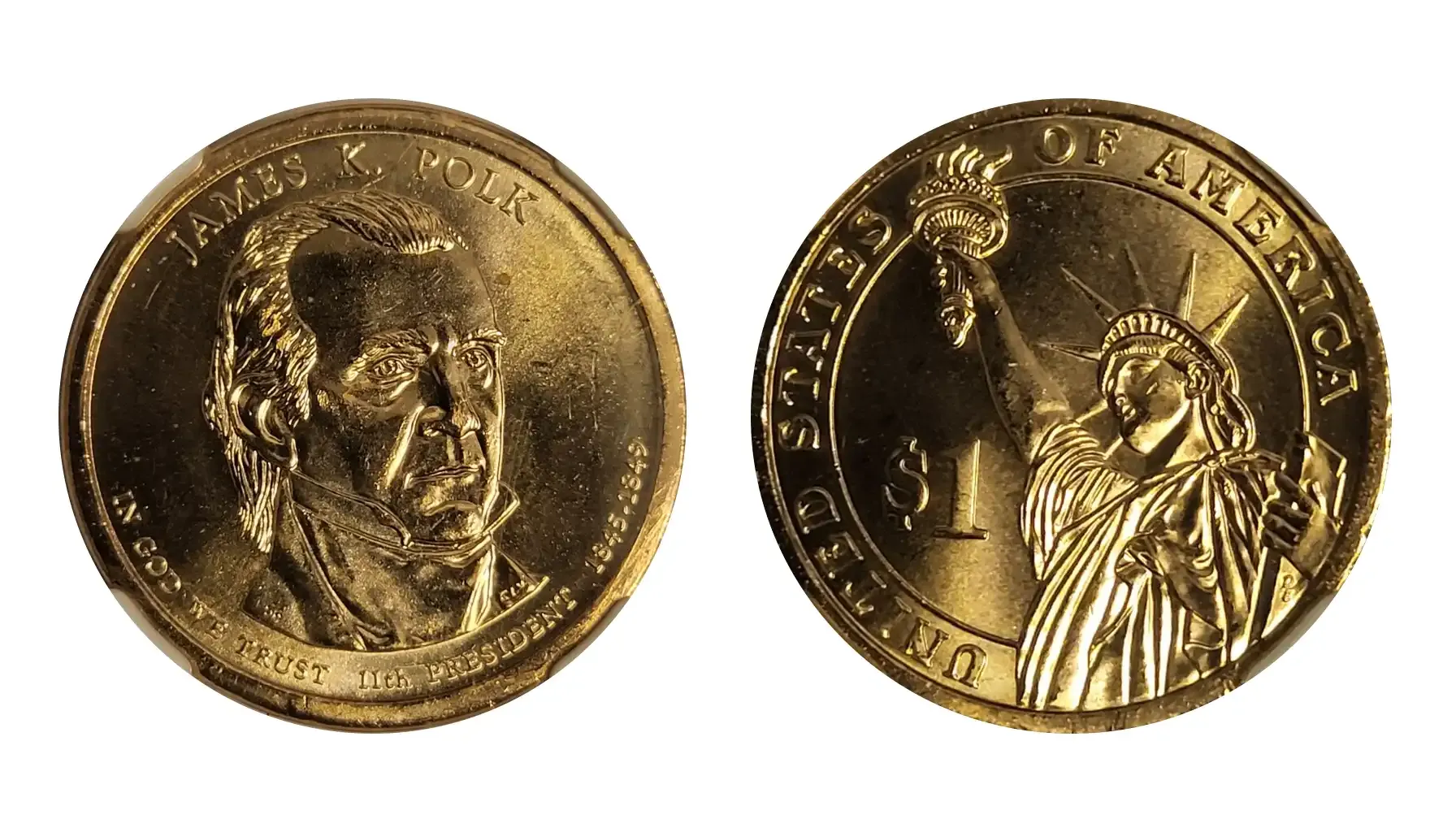
On the obverse, Polk’s portrait follows the usual style of the series. His facial features are crisp, the hair has strong contrast, his name sits at the top, and the years of his presidency appear along the sides.
The uniformity of the die work on the portrait is considered a key indicator of its condition. On weak strikes, the lines around the eyes and chin become almost flat.
The reverse follows the standard Presidential $1 motif featuring the Statue of Liberty, but differences are visible when comparing issues. There are some specimens where the font is slightly shifted up or down, and such small differences make it possible to determine whether the issue comes from the early or late stages of minting.
For those comparing issues within the entire cycle, the specimen is often considered alongside the Franklin Pierce Dollar coins—both presidents belong to the same period in American history, and this connection helps organize the set.
Parameter | Value |
Metal | Manganese–brass alloy |
Weight | 8.1 g |
Diameter | 26.5 mm |
Thickness | 2.0 mm |
Edge | Lettered edge with year, mint mark, and E Pluribus Unum |
Mints | Philadelphia, Denver |
Year of Issue | 2009 |
Market values for James K. Polk Dollar Coins (Circulated and Uncirculated)
Numismatic item prices are determined by several factors:
Condition;
Surface quality;
Strike strength;
Overall demand for the coins in the series.
Estimated value by condition:
Circulated: $1.00–$1.50;
AU: $2–$3;
MS60: $4–$6;
MS63: $7–$12;
MS65: $16–$25;
MS66: $45–$80;
Satin Finish: $15–$22;
Proof-like (rare): priced individually.
For those who collect the series consistently, it quickly became a must-have item alongside adjacent issues—for example, the Millard Fillmore Dollar coins, which are often used to compare die quality.
“Numismatics … offers a unique window into different cultures and eras.”
— Hobby Stack editorial team
Hobbystack website
1845–1849–Design James K. Polk Coin Varieties and Pricing
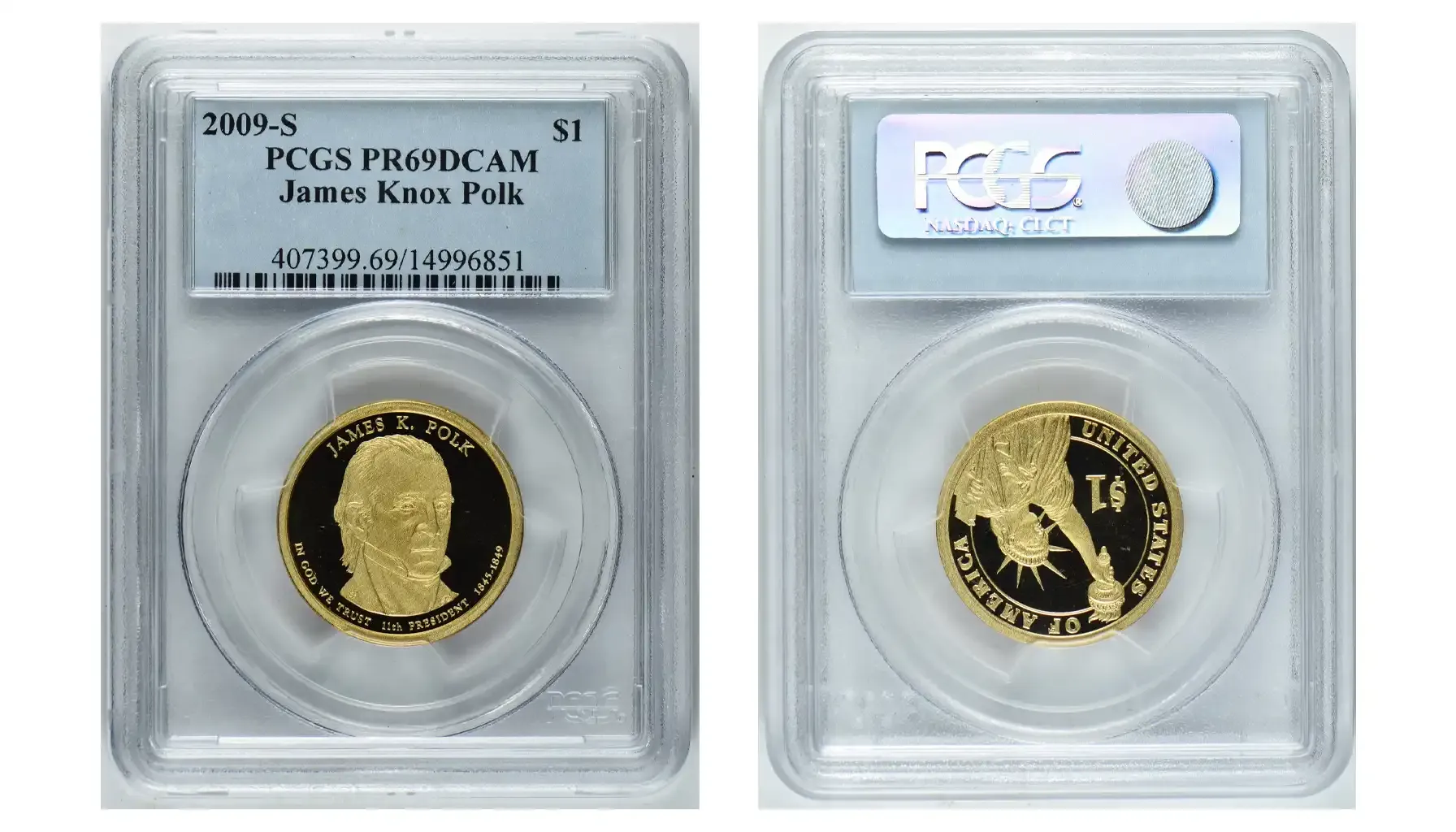
Presidential $1 issues are classified by presidential year, and collectors often use the designation James K. Polk 1 dollar coin 1845-1849 to distinguish coins within a set. This helps separate Polk coins from adjacent issues and properly distribute the specimens in albums and capsules.
The metal unit comes in several variations depending on the mint, so collectors pay attention to:
Mint differences:
Coins from Philadelphia usually show a smoother, more even shine. Denver pieces look a bit different. The relief there tends to be deeper. This contrast becomes noticeable once you look at better-preserved coins, and collectors keep it in mind when they check the James K Polk dollar coin value 1845 to 1849 in the series.
Edge inscription features:
In some lots, the edge inscription may be displaced. This is not considered a rare variation, but can increase the value of a particular piece due to its unusual visual appearance.
Surface differences:
Specimens with polished areas or mirror-like fragments are sometimes considered "almost proof-like." Such finds are evaluated individually and may be of interest to those who collect unusual varieties.
Official catalogs do not record any unique errors specific to this issue. However, collectors still monitor James Polk dollar coin errors, as individual deviations can occur in any modern coin mintage.
Occurring errors:
Weak strike on the hair details;
Die chips in the area of the reverse letters;
Slight cracks in the die along the edge;
Off-center strike;
Small areas of die clogging.
When a coin has a defect, it gets evaluated on its own, and the price shifts depending on how much the flaw changes its look.
And if you need a quick idea of what a coin might be worth, the Coin ID Scanner app makes it simple: you take photos of both sides, it identifies the coin, and then shows a price range.
Varieties' prices:
Those collecting an expanded set look to the James Polk dollar coin value 1845 to 1849 when they want to compare prices for variants with distinct features.
Variety | Average Price |
Misaligned edge lettering | $10–$25 |
Weak strike | $5–$15 |
Die chip | $8–$20 |
Surface die defects | $15–$40 |
Near proof-like | $40–$120 |

 Facebook
  X (Twitter)
  Pinterest
  LinkedIn