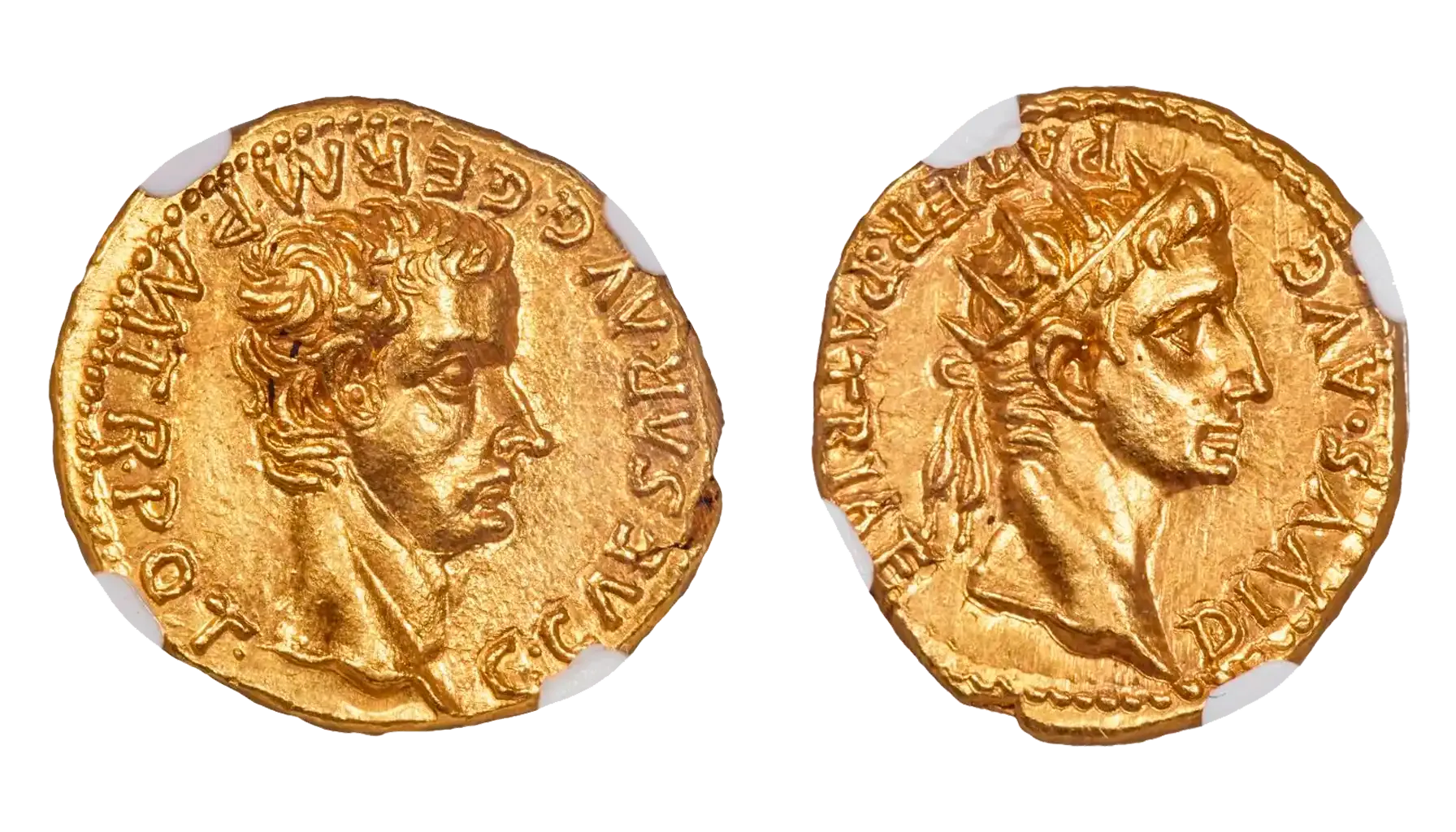
If you strip it down to basics, the denarius meaning is simple: a silver coin worth ten asses when it first appeared. That’s where the name comes from: denī in Latin means ten. Over time, that neat math stopped working, but the name stuck.
What Is a Denarius?
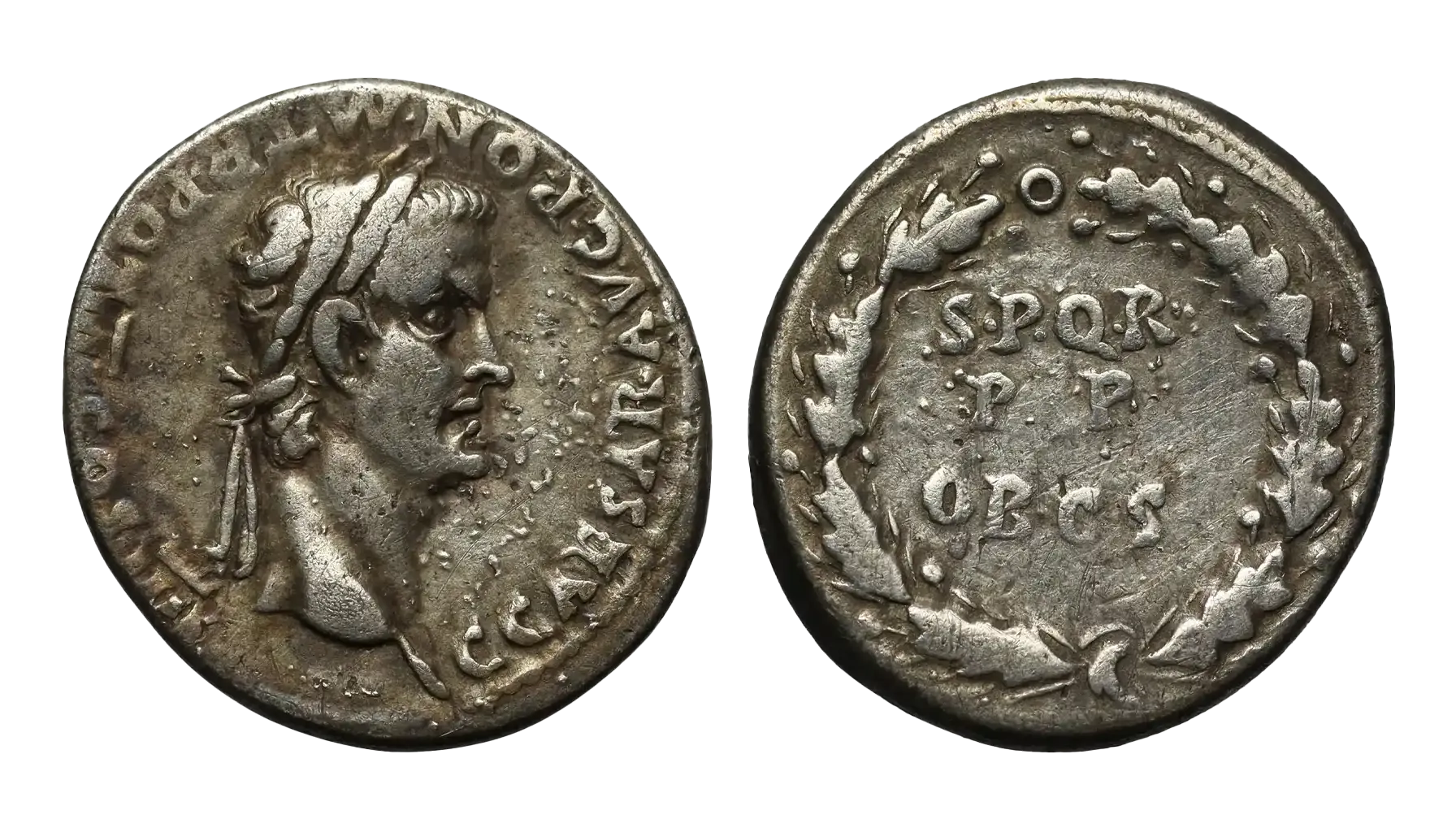
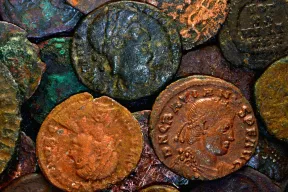
It is a small silver disc with a god, an emperor, or Roma herself staring back at them. The Roman denarius was the everyday coin of soldiers, merchants, tax collectors, and politicians. It paid wages, bought food. and funded wars. It also spread Roman culture across the empire.
And guess what? The ancient Romans and their colonies didn’t have apps to identify coins to check out what kind of emperor was depicted on their coin. You had to ask your neighbors and listen to rumors. But now you have the opportunity to know that and even more!
The denarius definition survived long after Rome itself faded. You can still hear it today in words like dinero, denar, and dinar. This coin shaped even later economies.
History of the Roman Denarius
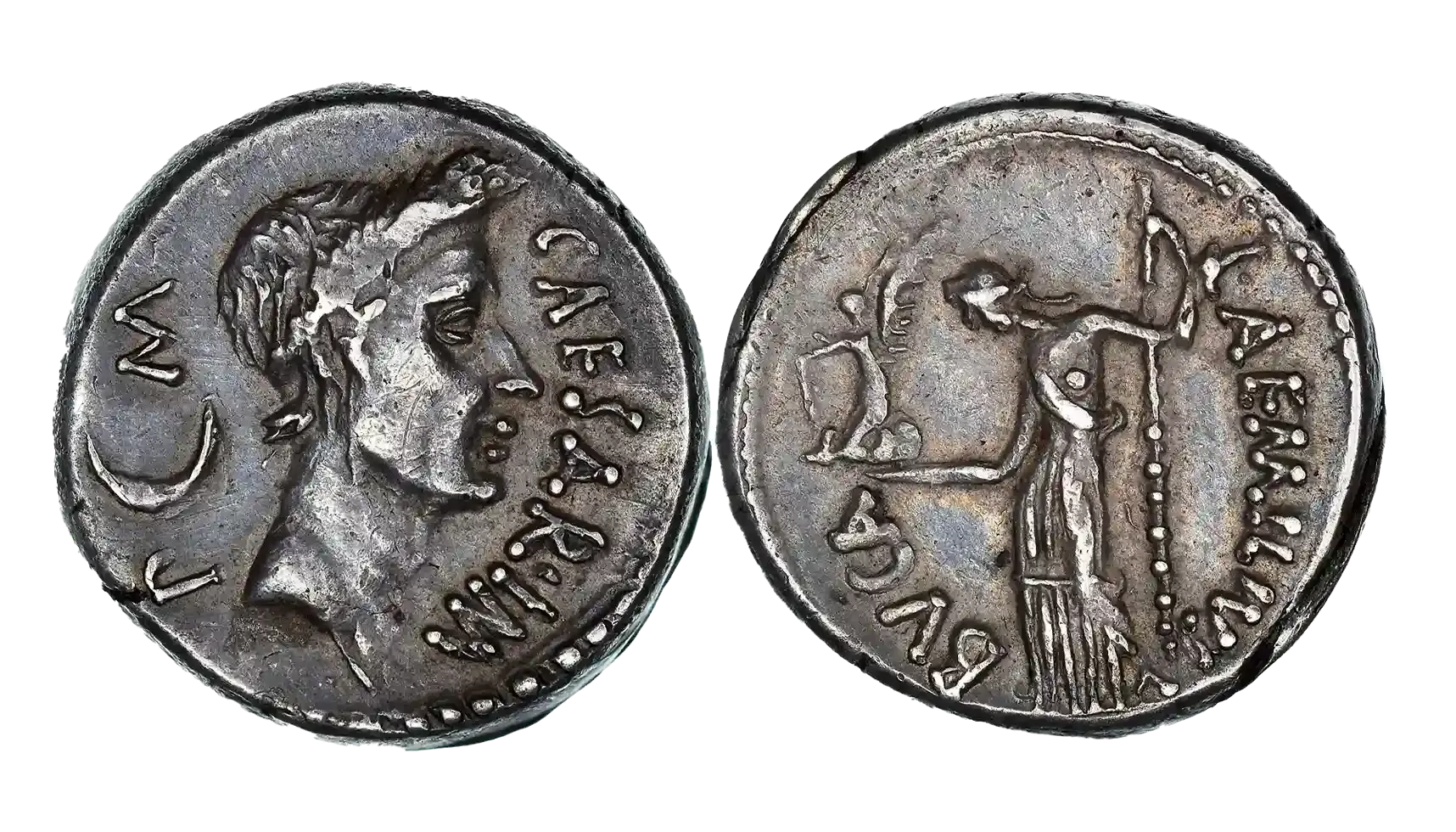
The denarius appeared somewhere around 211 BC, during the Second Punic War. Rome needed a reliable silver coin to pay troops and manage a growing, stressed economy. The answer was the silver denarius, struck at about 4.5 grams and nearly pure silver. At first, it worked beautifully.
Early designs leaned on familiar symbols. Roma in a helmet, victory driving a chariot, and so on. Later, moneyers started adding family names and political hints. Coins became propaganda.
“This predecessor of the denarius was a Greek-styled silver coin of didrachm weight, which was struck in Neapolis and other Greek cities in southern Italy.”
— William E.Metcalf
from the Oxford Handbook of Greek and Roman Coinage. New York: Oxford University Press
Under Augustus, the system stabilized. The coin lost a little weight, but the quality stayed high. Then, during Nero, the silver content dropped, and the weight fell. The piece still looked respectable, but it wasn’t what it used to be.
Successive emperors kept shaving it down, especially during crises. By the third century, the piece was barely silver at all.
Eventually, it was replaced by the antoninianus, a coin that pretended to be worth two denarii but wasn’t even close. The denarius lingered on for ceremonial use, then vanished. But its ghost never really left Europe.
Rare and Valuable Denarius Coins
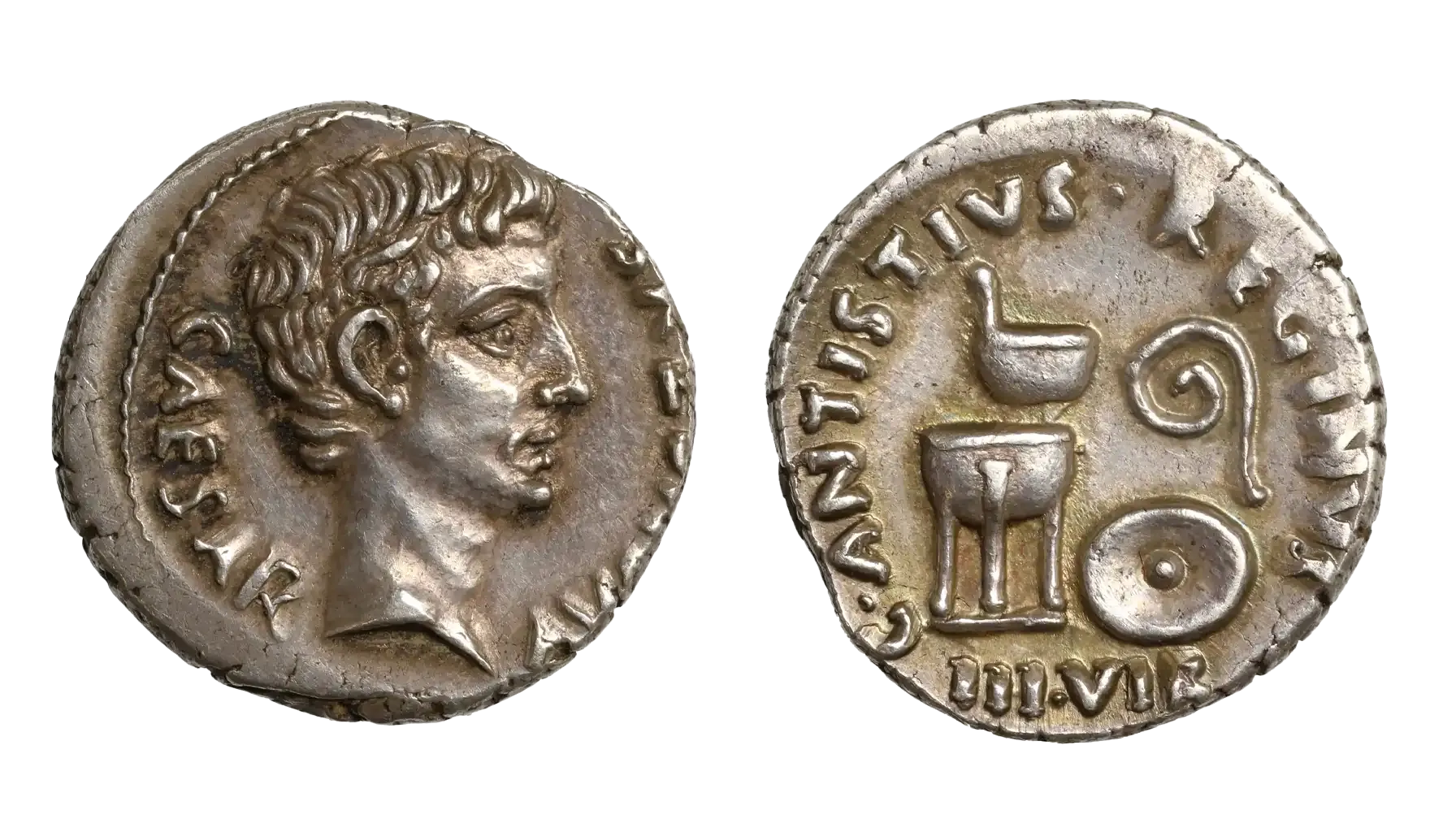
Not all denarii are equal. Most surviving examples trade today in the low hundreds. So, how much is a denarius? Which one?
Roman Republic Denarius Around 211 BC
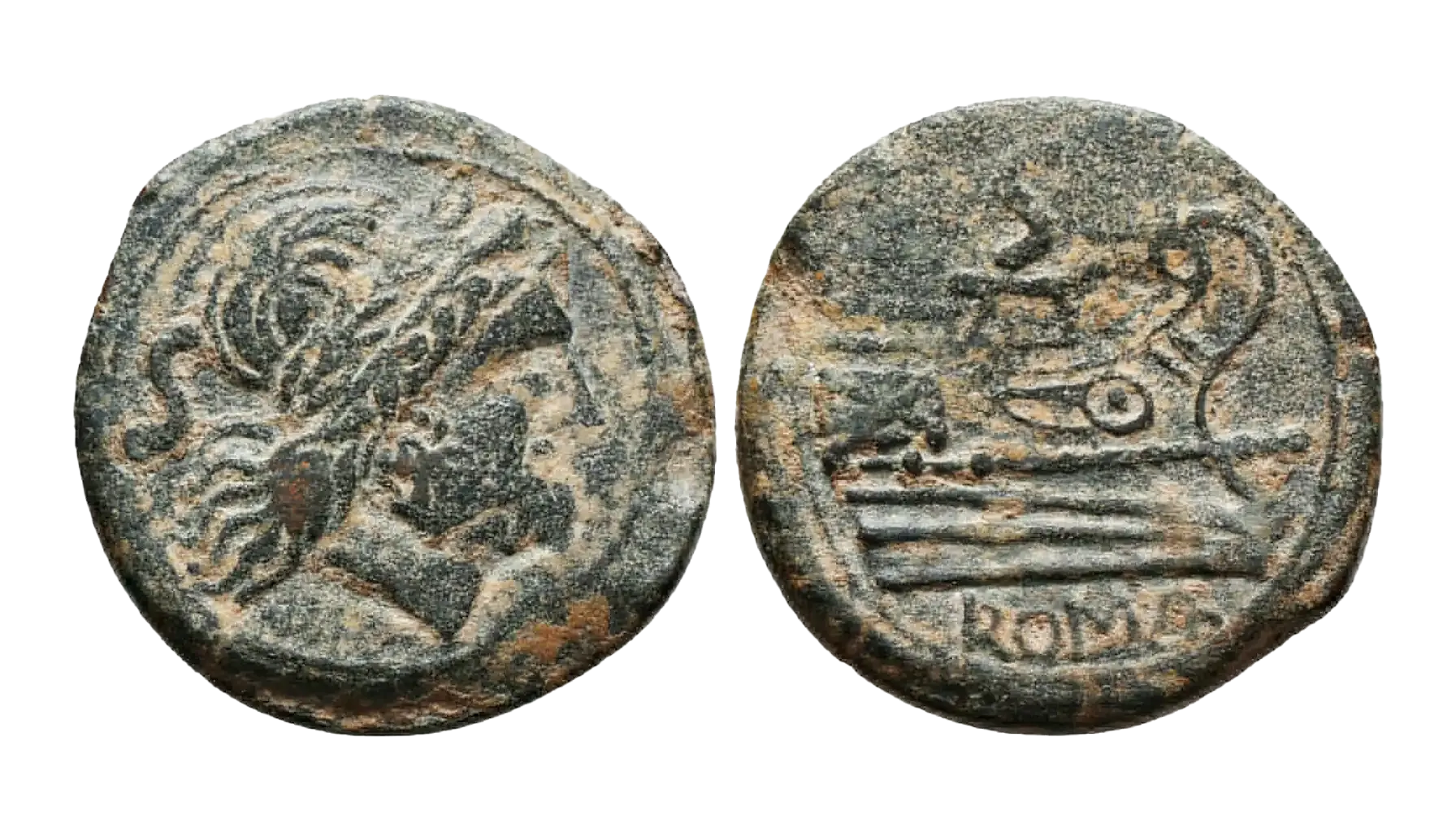
The classic starting point is the early Roman Republic denarius around 211 BC. It was the date Rome switched to a silver payment system that could work for international soldiers and allies. Rome needed silver to pay foreign mercenaries who had no use for heavy Roman bronze.
Denomination | Denarius |
Mint Authority | Roman Republic |
Mint | Rome |
Year of Issue | c. 211 BC |
Weight | 4.45 g |
Diameter | 20.0 mm |
Material | Silver |
The X behind Roma’s head makes the coin a clean historical marker because it ties the silver denarius to the bronze system as “10 asses,” and the Dioscuri (Castor and Pollux) on the reverse with ROMA is one of the most iconic early Republican types.
Denarius serratus from Narbo (118 BC)
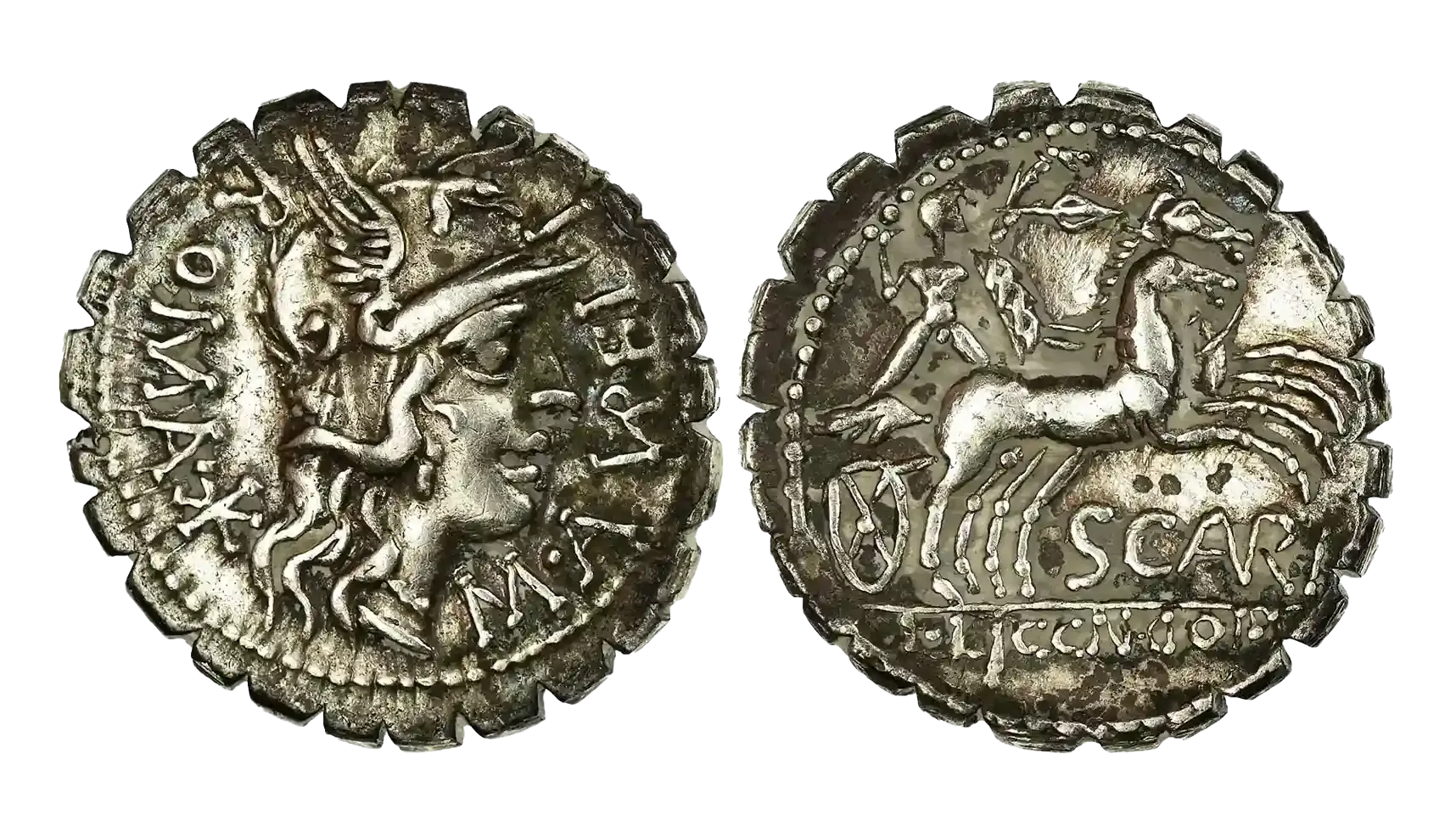
Another kind of “rare”: the serrated edge was cut into the blank before striking, making a saw-tooth rim. On forums, collectors pay attention to serrati because they are instantly recognizable and because they were struck alongside normal denarii for roughly a century.
Denomination | Denarius Serratus |
Mint Authority | Moneyers L. Licinius Crassus and others |
Mint | Narbo (Narbonne) |
Year of Issue | c. 118 BC |
Weight | 3.82 g |
Diameter | 20.0 mm |
Material | Silver |
They are not always “rare” in the sense of low survival, but specific issues and strong, problem-free examples can be tough. It shows a Gaul warrior in a two-horse chariot with a carnyx (that Celtic war trumpet).
L. Hostilius Saserna denarius (48 BC)
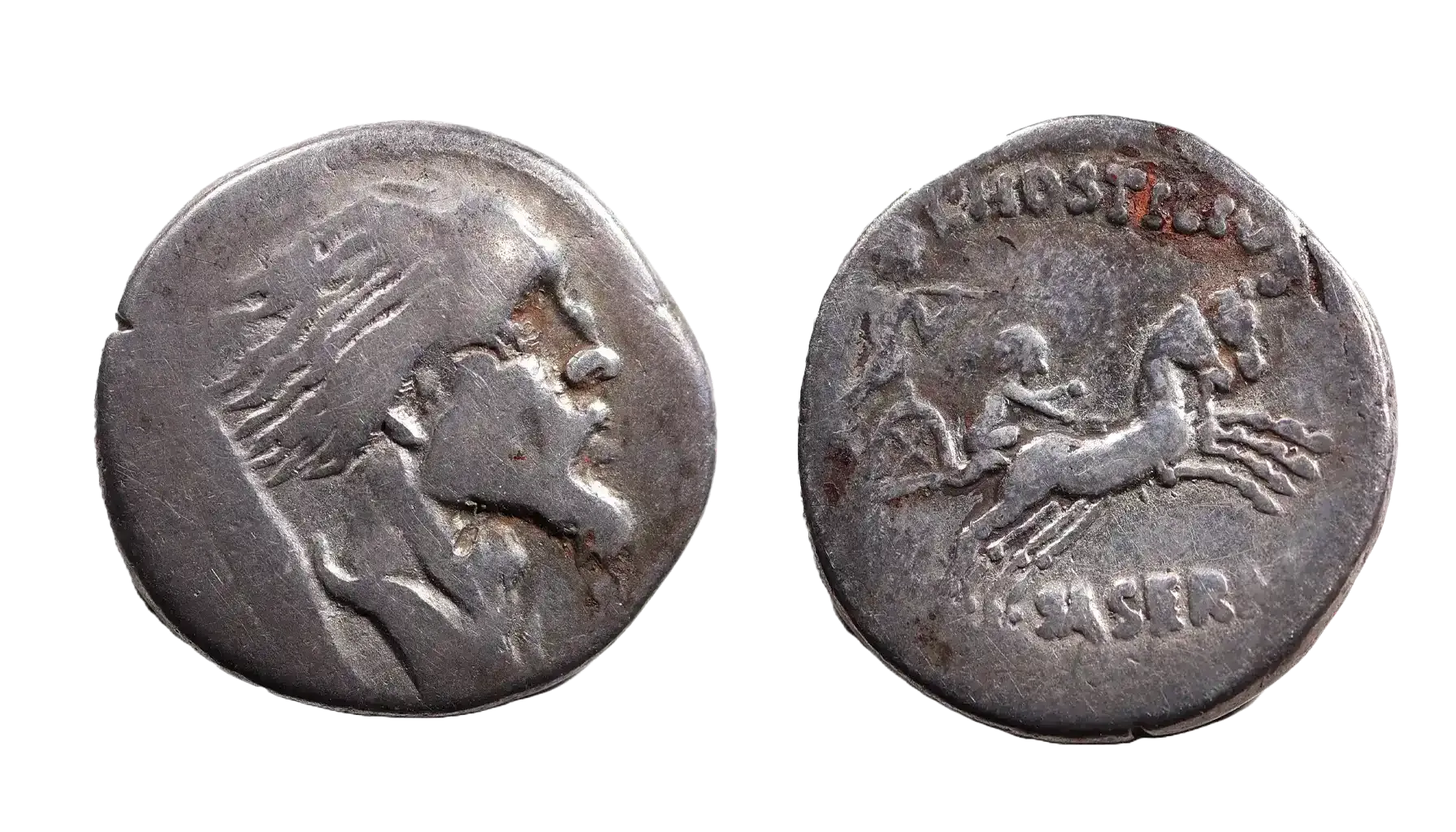
L. Hostilius Saserna piece (48 BC) reads like a victory poster for Caesar’s Gallic campaigns: a captive Gaul with a rope around his neck and a war scene on the reverse.
Denomination | Denarius |
Mint Authority | L. Hostilius Saserna (Moneyer) |
Mint | Rome |
Year of Issue | 48 BC |
Weight | 3.97 g |
Diameter | 20.0 mm |
Material | Silver |
Coins like this can be scarce in high-grade, well-centered strikes because they circulated and because silver of the late Republic was handled constantly.
44 BC Julius Caesar
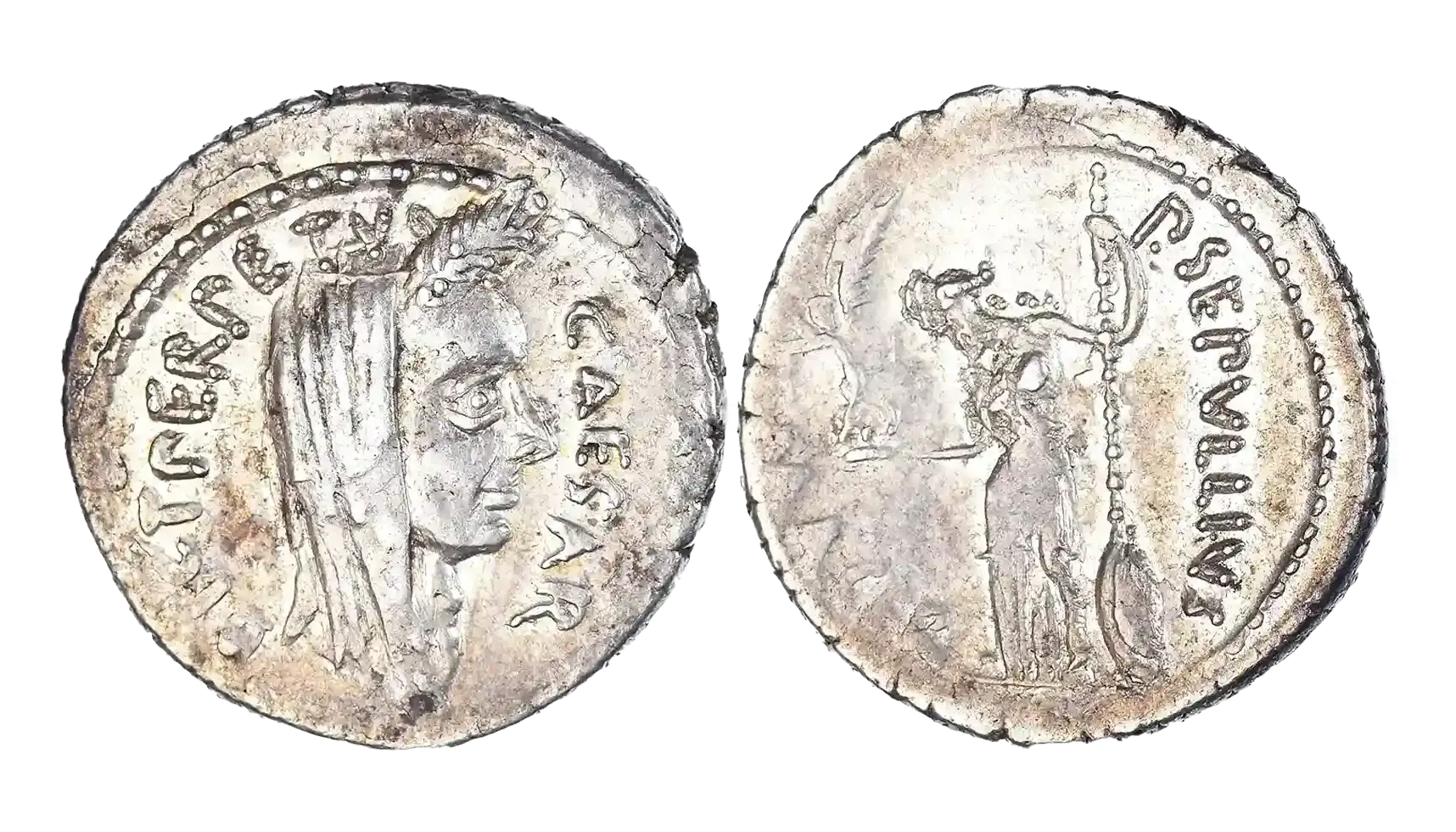
The biggest leap in rarity and demand in your set is the 44 BC Julius Caesar portrait piece struck by P. Sepulius Macer. It was the first time a Roman coin carried the portrait of a living Roman.
Denomination | Denarius |
Mint Authority | C. Julius Caesar (Imperator) and P. Sepulius Macer (Moneyer) |
Mint | Traveling military mint (location undefined) |
Year of Issue | 44 BC |
Weight | 3.97 g |
Diameter | 20.0 mm |
Material | Silver |
The reverse with Venus Genetrix and the star links Caesar to divine ancestry. They are hard to find in attractive condition with good surfaces.
Mark Antony denarius (42 BC)
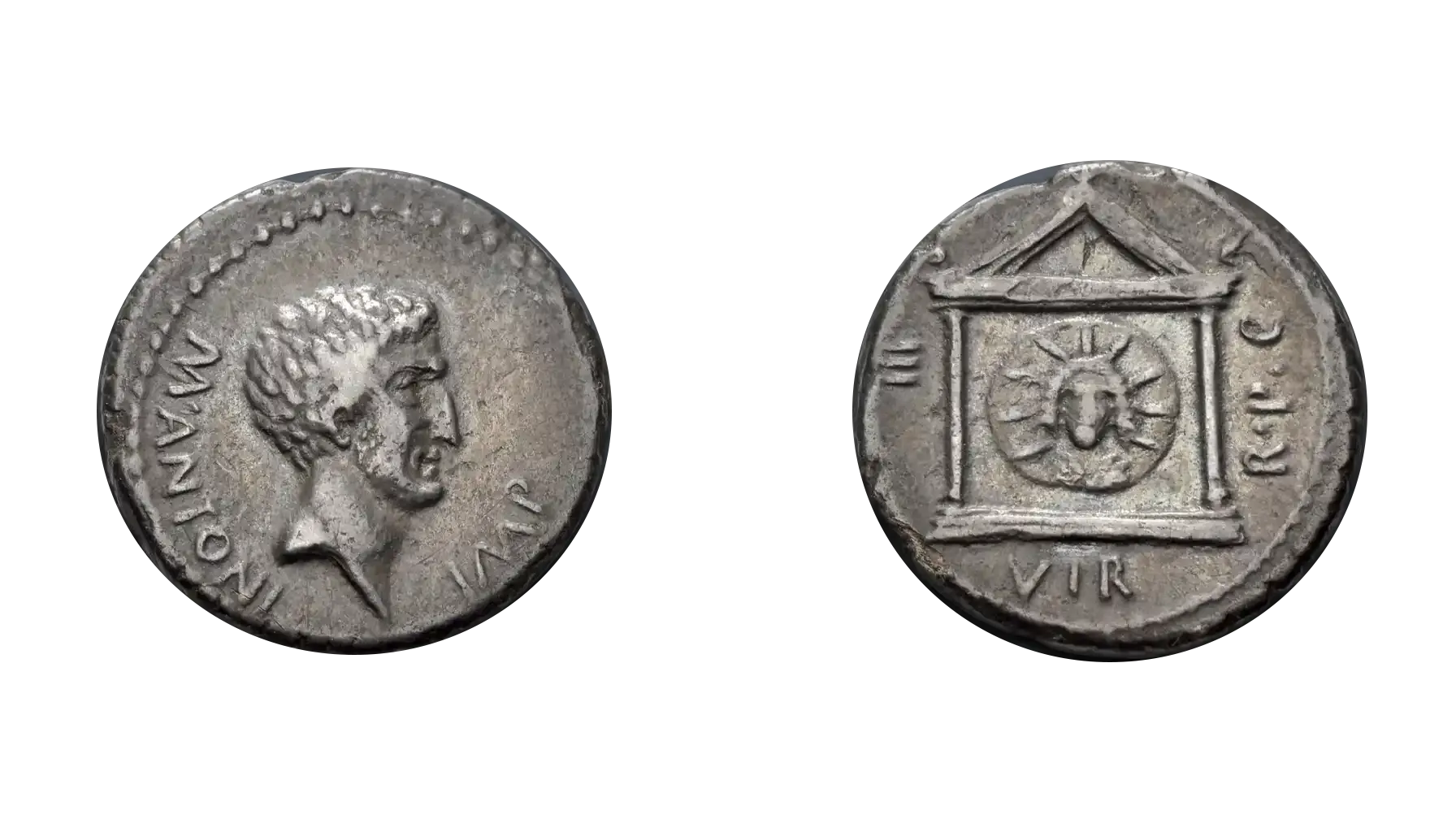
Post-assassination power struggle, imagery meant to signal legitimacy, and a portrait that collectors actively want. The reverse type with Fortuna holding Victory is almost a political mood board.
Denomination | Denarius |
Mint Authority | Imperator Marcus Antonius and Moneyer Vibius Varus |
Mint | Undefined |
Year of Issue | 42 BC |
Weight | 3.97 g |
Diameter | 19.0 mm |
Material | Silver |
Again, the rarity often comes less from the raw count of surviving coins.
Sekobirikes denarius (c. 100 BC)
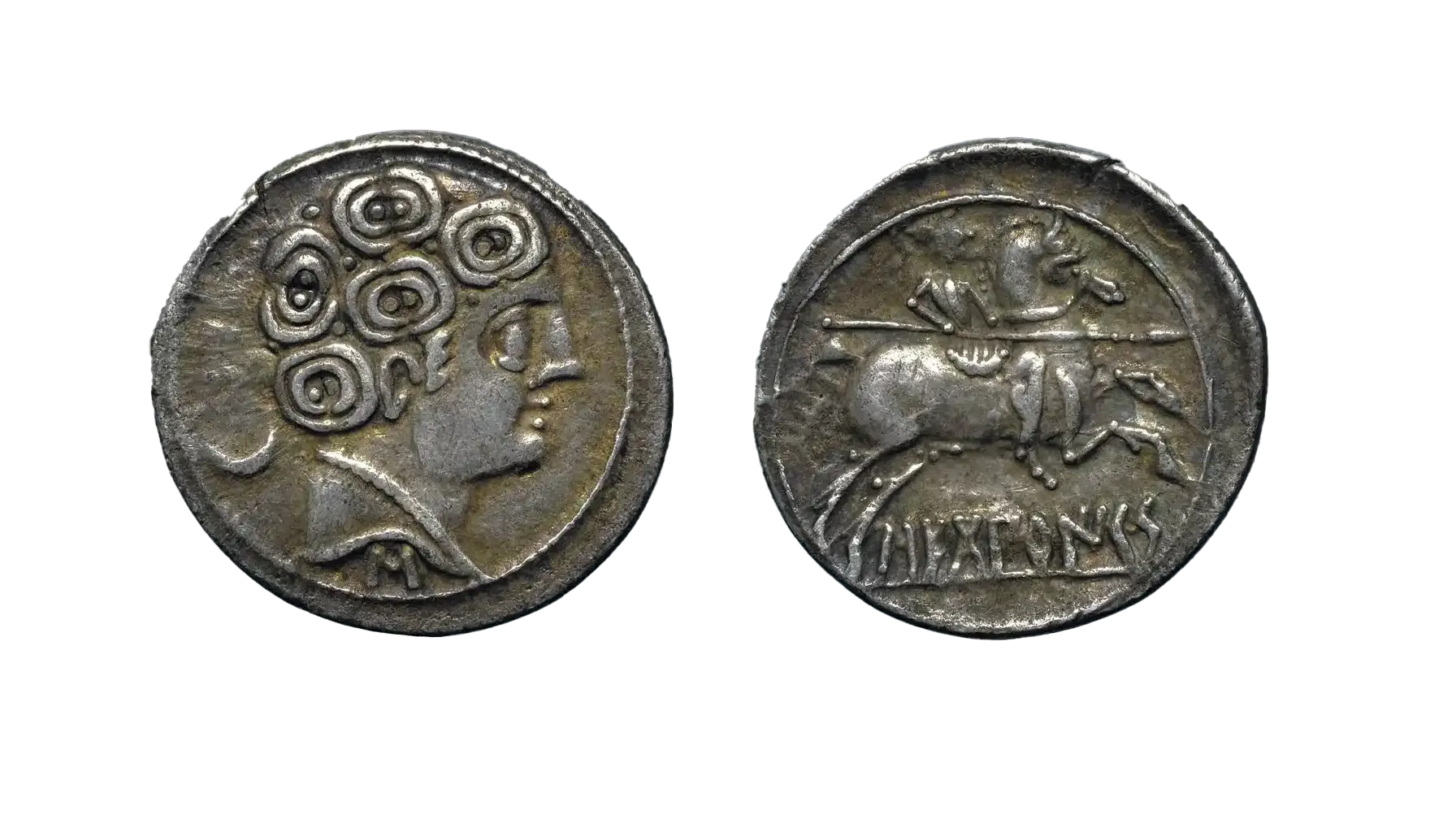
Now for a different category entirely: denarius-like coins that are rare because they are not Roman mint products at all, but they are tied to Roman silver as a standard.
Denomination | Denarius |
Mint Authority | Tribe of the Sekobirikes |
Mint | Undefined |
Year of Issue | c. 100 BC |
Weight | 4.04 g |
Diameter | 19.0 mm |
Material | Silver |
The Sekobirikes denarius (c. 100 BC) shows that Iberian and Celt-Iberian mints could match Roman weight standards while using local imagery, like equestrians with lances. Coins like these can be scarce because survival is patchier.
Eravisci Denarius Imitation
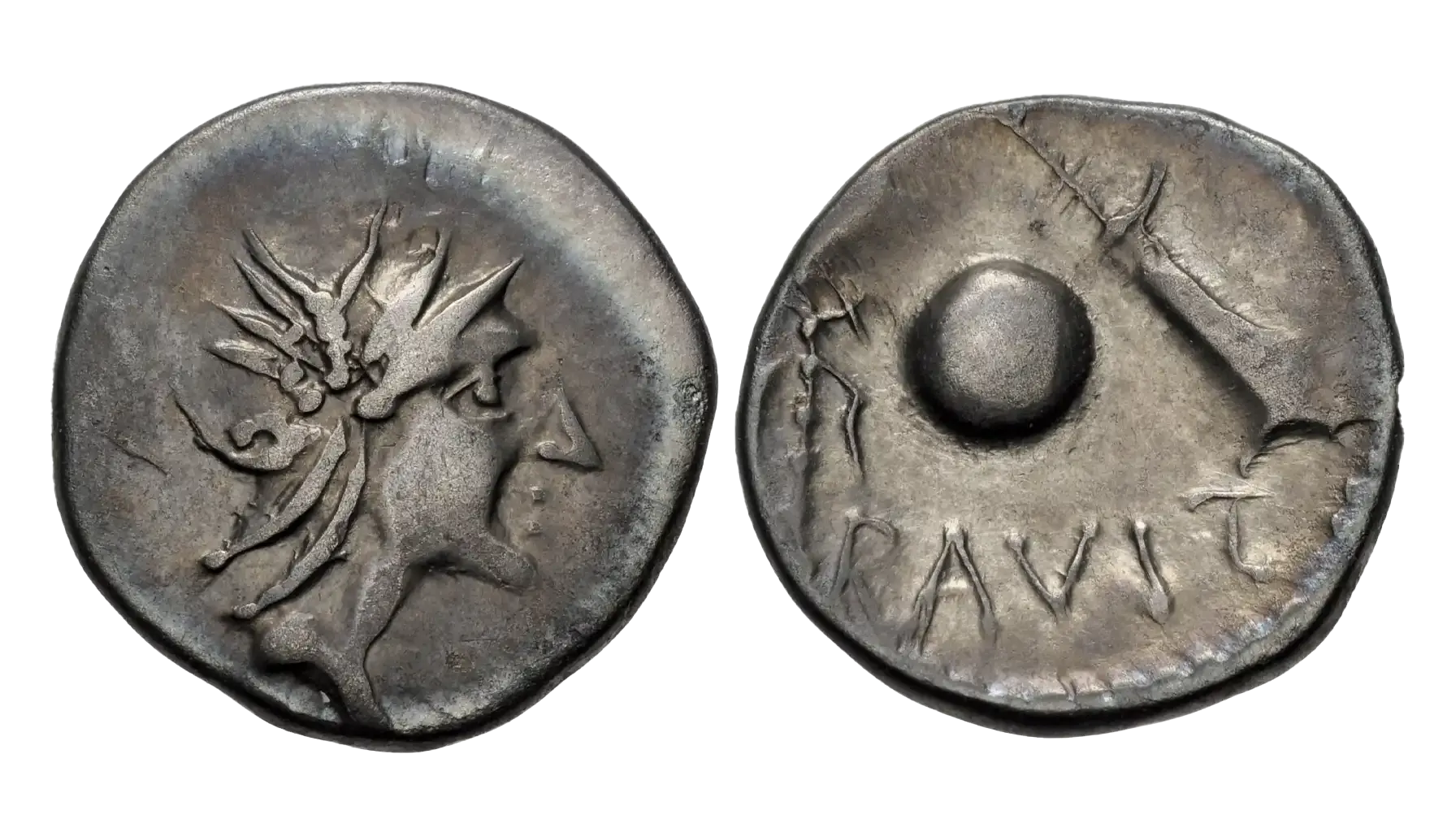
It copies a Roman denarius type but adds the legend RAVIS, pointing to the Eravisci identity. Roman money became so dominant that local groups struck compatible copies, yet stamped them with their own name.
Denomination | Denarius |
Mint Authority | Tribe of the Eravisci |
Mint | Buda (modern-day Budapest) |
Year of Issue | c. 76 BC |
Weight | 3.33 g |
Diameter | 18.0 mm |
Material | Silver |
Imitations can be scarce, and high-grade examples can be tough because these were not prestige issues.
Bar Kokhba Overstruck Denarius
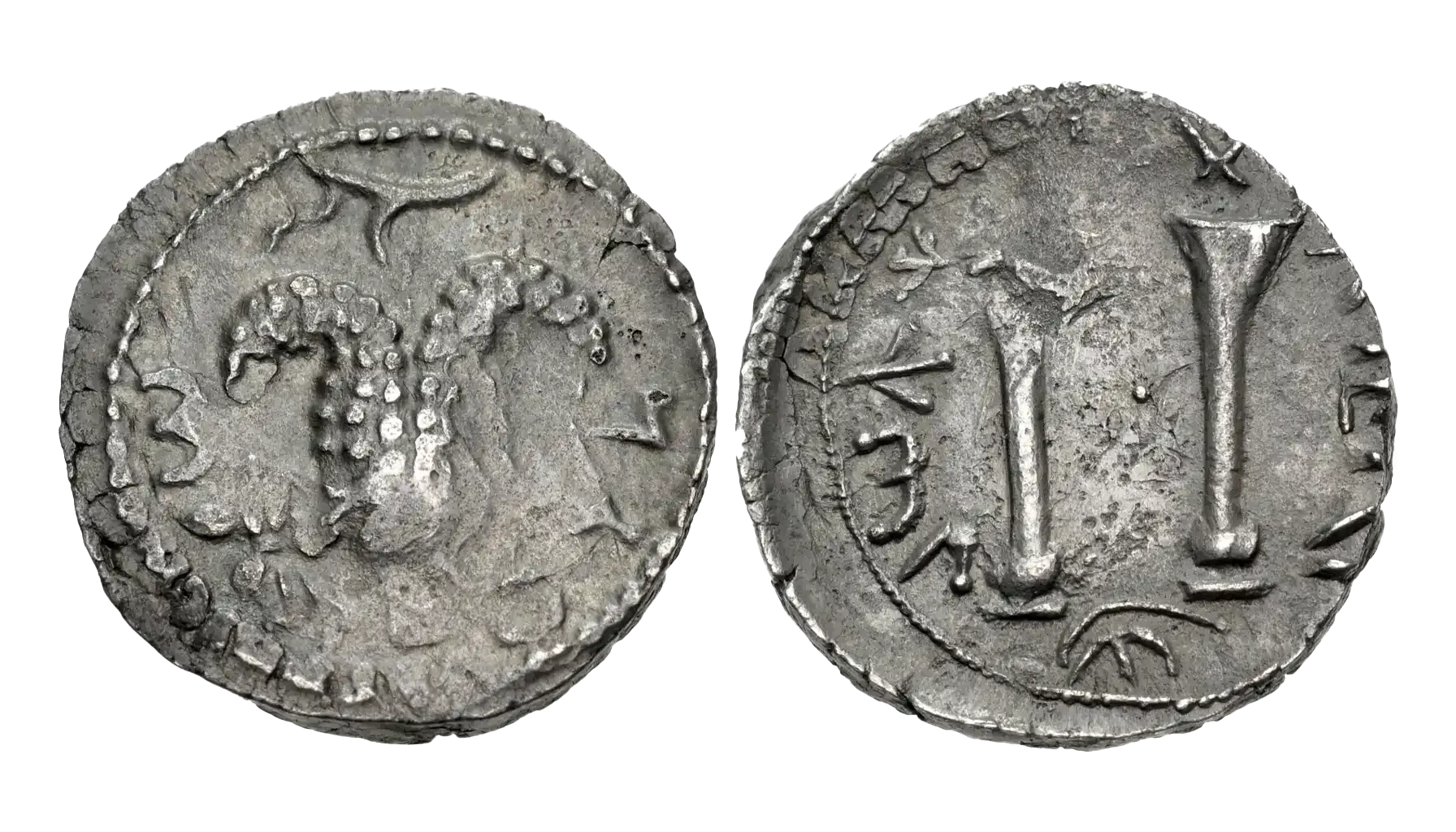
The rebels literally took circulating Roman denarii and overstruck them with “Freedom for Israel” and other paleo-Hebrew legends. These coins can be scarce because you’re relying on two layers of survival: the host coin and the quality of the overstrike.
Denomination | Denarius (Zuz) |
Mint Authority | Rebel leader Simon bar Kokhba |
Mint | Jerusalem |
Year of Issue | 133 AD |
Weight | 2.81 g |
Diameter | 18.0 mm |
Material | Silver |
Strong, readable overstrikes with clear symbols like the ritual pitcher and frond are rare because many pieces are weakly struck or uneven.
Himyarite Reduced Denarius
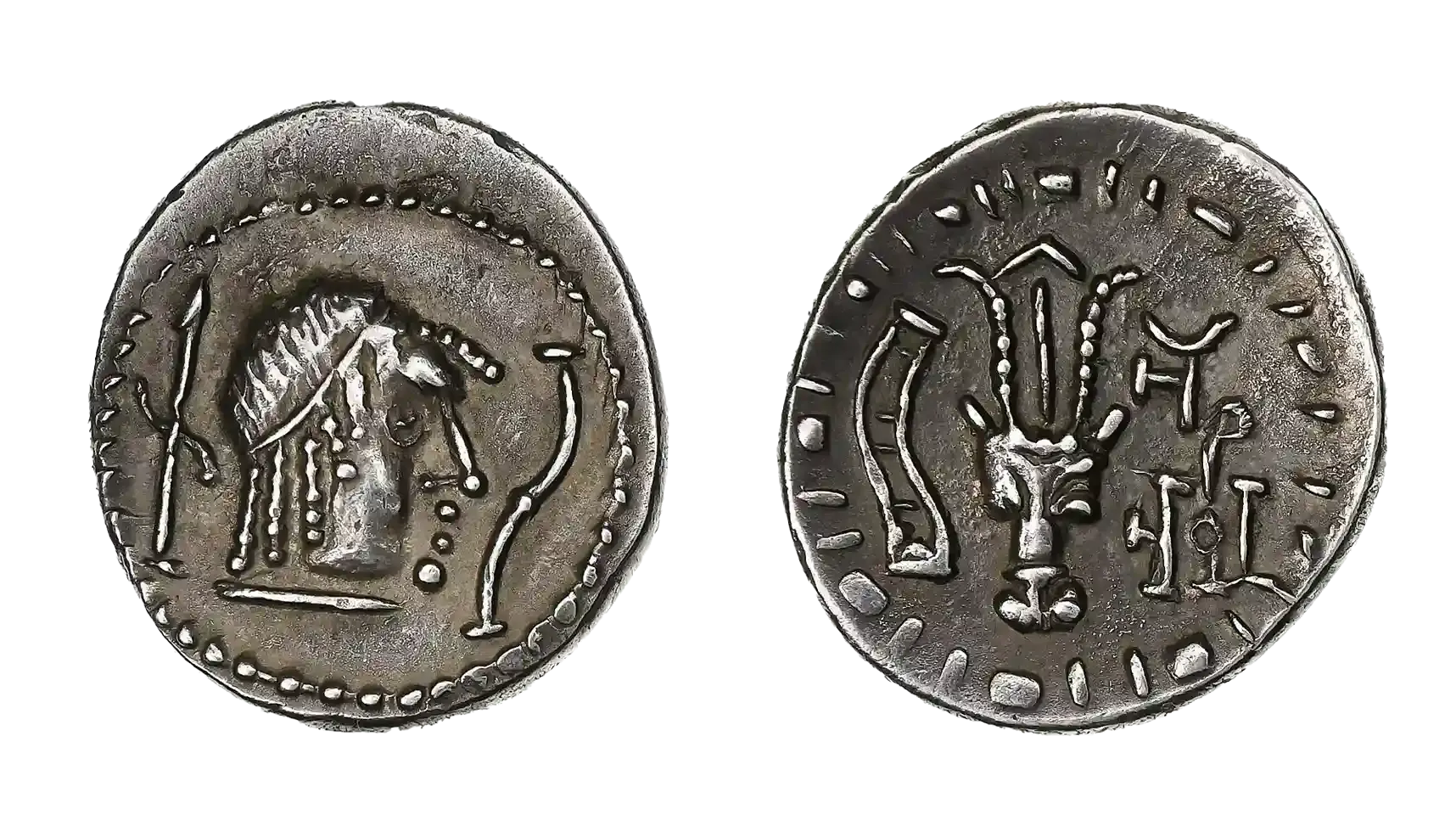
There’s also “rarity by geography and trade.” The Himyarite reduced piece (1st century AD) in the name of Shahar Hilal, showing Augustus on the obverse and an owl type associated with older Attic imagery.
Denomination | Reduced Denarius |
Mint Authority | King Hadhur of Himyar |
Mint | Undefined |
Year of Issue | c. 1st century AD |
Weight | 1.10 g |
Diameter | 15.0 mm |
Material | Silver |
Reduced-weight “denarius” issues like this can be rare simply because fewer survive, and fewer collectors recognize them instantly.
Aurelian “Denarius” in Bronze
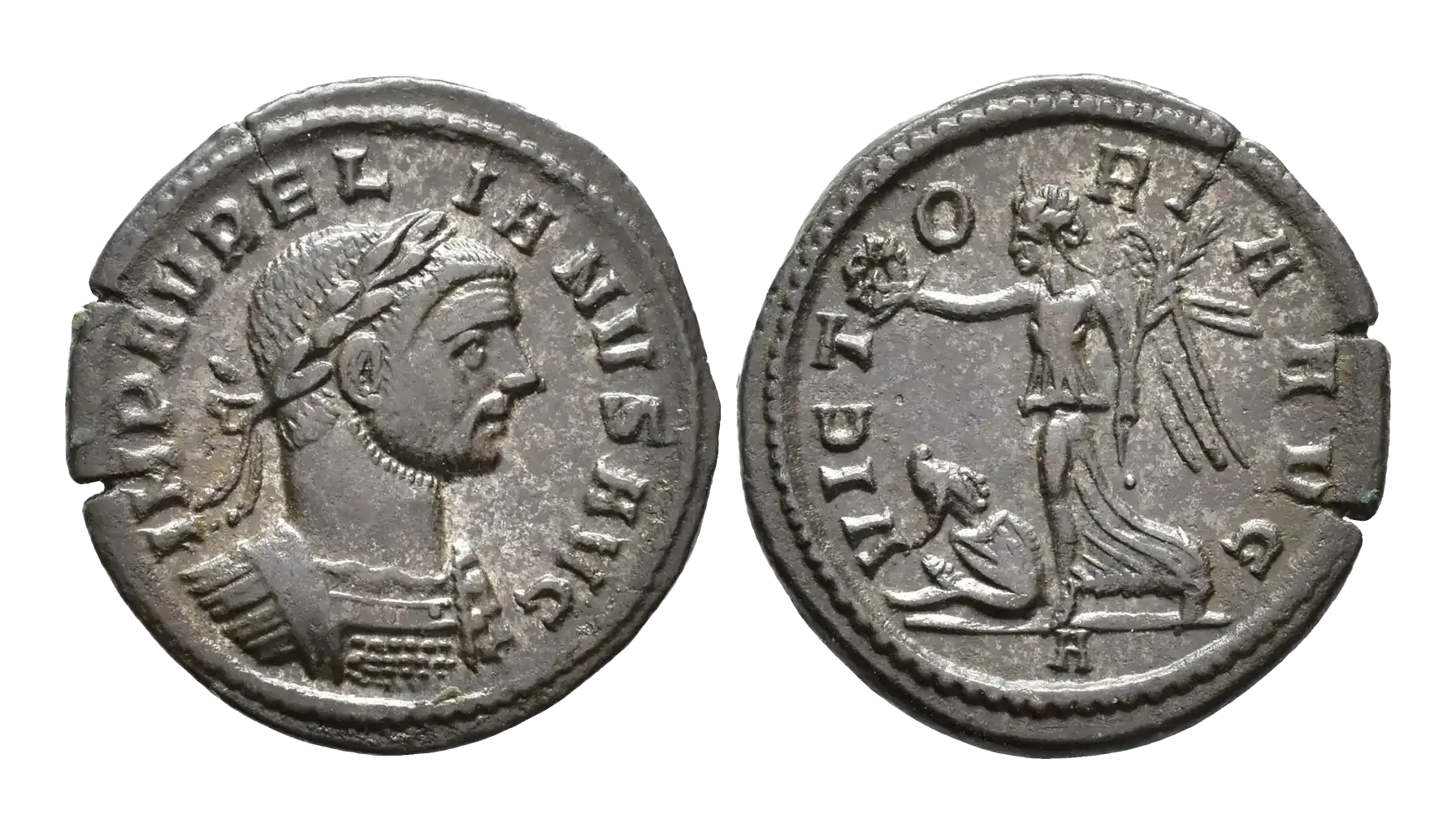
It was made in a time when the name and the tradition lingered while the silver content collapsed. It was first seriously depreciation under Nero, then fineness around 50% under Septimius Severus, then worse by the mid-3rd century.
Denomination | Denarius |
Mint Authority | Emperor Aurelian |
Mint | Rome |
Year of Issue | AD 270 |
Weight | 2.48 g |
Diameter | 20.0 mm |
Material | Bronze |
By Aurelian, you can end up with pieces labeled denarius that are basically no longer silver coins in the old sense. They show the final phase of a system dying in real time, with portrait styles turning harder and more stylized, almost deliberately “state-issued” rather than personal.
Imperial denarii vary wildly. A common Severan piece might cost less than dinner. A sharp Marcus Aurelius denarius coin, especially with a philosophical or military reverse, can be worth thousands. Rarity, demand, and historical weight matter more than silver content.
The denarius value? A single denarius paid for a full day’s labor. Now it can cost like several years of your labor.
Identifying Authentic Denarius Coins
The popularity of the Roman coin denarius means fakes are everywhere. So what to do?
Weight is your first clue. A genuine denarius usually falls between 3 and 4 grams, depending on the era
Style is critical. Portraits should look Roman, not modern caricatures. Lettering should feel uneven, hand-cut, alive. Perfect symmetry is a red flag. So is a coin that looks “too nice” for something that survived two thousand years
If you’re checking denarius coin value seriously, third-party attribution helps. Auction records matter. A coin with a paper trail will always beat a mystery piece, no matter how shiny
As for the denarius coin price, expect a wide range. Common types might sit around $100–$300. Scarcer emperors or exceptional strikes climb fast. Five figures isn’t rare at the high end.

 Facebook
  X (Twitter)
  Pinterest
  LinkedIn