Contents:
The State Quarters Program was reaching its end in 2008, and the Oklahoma 2008 quarter was one of the last. What errors and varieties did this quarter have? Let’s give this quarter a proper overview.
Oklahoma State Quarter Overview
The Oklahoma coin was released in 2008 as part of the popular 50 State Quarters Program. It was the 46th coin in the series, honoring Oklahoma's past and the time it became a state.
Mintage-wise, it was a small piece. Most issues in 2008 were small mintage, but even the New Mexico quarter, the follow-up, had a bigger mintage (almost 500 million).
2008 quarter, Oklahoma had these mintage figures:
Philadelphia Mint: 222,000,000.
Denver Mint: 194,600,000.
San Francisco Mint: 2,078,112 (clad proof), 1,192,908 (silver proof).
Big mintage or not, State quarters were primarily prized for the designs they brought. The Arizona quarter, for example, shows the Grand Canyon. What about Oklahoma?
Oklahoma combines two designs: classical (obverse) and exclusive (reverse).
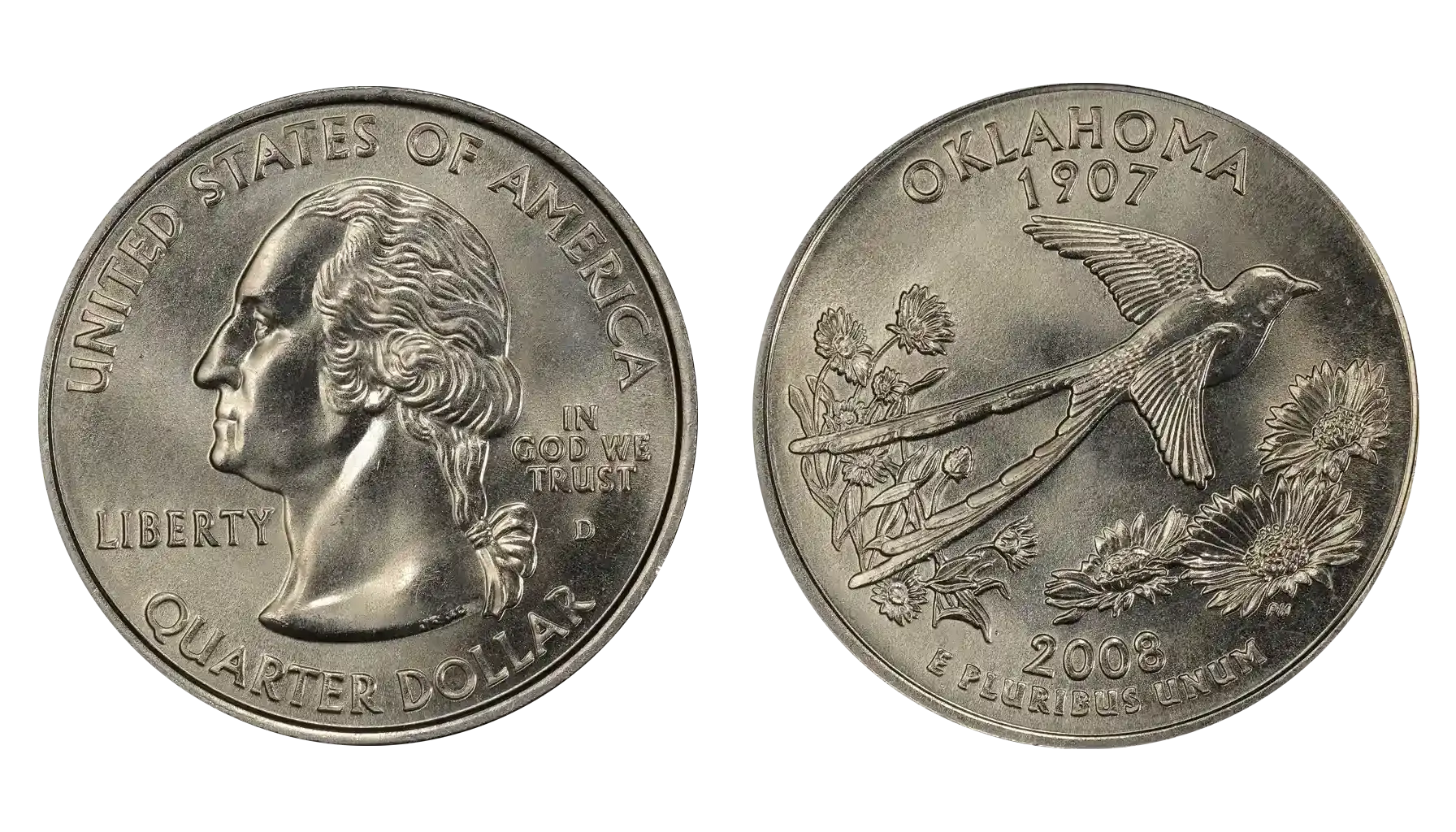
The obverse of the coin shows the portrait of George Washington. This design appears on all State quarters. The same side shows inscriptions for “United States of America,” “Liberty,” and “Quarter Dollar.”
The reverse design features a bird. The scissor-tailed flycatcher, more precisely. The flycatcher is soaring above wildflowers. This side has inscriptions “Oklahoma” and “E pluribus unum”.
"2007 was an exciting year for the Sooner State, celebrating its centennial. Today’s issuance of this beautiful Oklahoma quarter serves as an encore to the state’s centennial, and the coin itself will serve as a lasting, nationwide tribute to Oklahoma, its heritage, and its people."
— Dan Shaver
United States Mint Official Website
Oklahoma Quarter Error Types
Most Oklahoma quarters are considered common. What is not considered common are the 2008 Oklahoma quarter errors. There are a few such errors, and each could be worth at least $20, and in some cases, over $150.
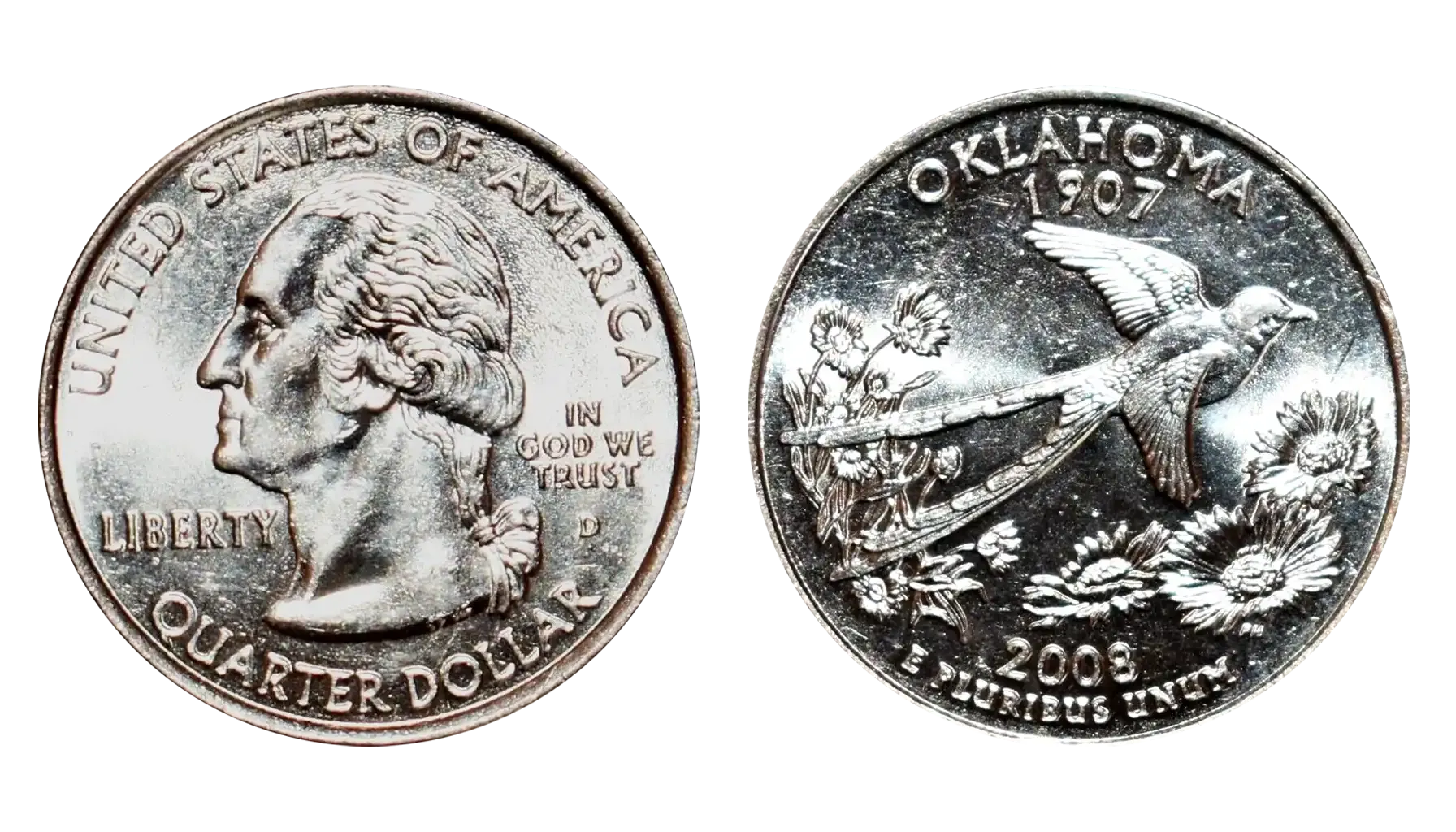
1. Off-Center Strikes
These errors occur when the coin is not properly aligned with the dies. The design comes out shifted.
Off-center errors from 5% to 10% are more common. Strong misalignments above 50% are much rarer and more valuable.
2. Die Cracks and Die Breaks (Cuds)
Aged or damaged dies can produce raised lines or blobs of metal on the coin's surface after a strike.
Die cracks and breaks sometimes appear on the flycatcher’s wings, or observe the design.
3. Clipped Planchets
This error occurs when the metal strip goes into the blanking press misaligned, and a part of the coin gets “cut” out.
The value depends on the size and shape of a clipped part.
4. Struck-Through Errors
Sometimes foreign debris (grease, fibers, or small metal fragments) can interfere with the striking process. In the end, we have a coin that has weird traces of a different material.
Struck-through grease error is the most common kind.
5. Double Die (DDO/DDR) Varieties
Double dies are cases when design elements are doubled.
Double dies are rarely found on State quarters, but they are one of the most valuable error types.
Oklahoma Quarter Value Factors
The value for the Oklahoma Quarter depends on its:
Mint Mark and Mintage: Philadelphia (P) and Denver (D) coins are plentiful in circulation. San Francisco (S) Clad Proof and Silver Proof versions are rarer and more valuable.
Condition and Grade: Grading is one of the biggest drivers of value. Circulated examples are usually worth only $0.25. Uncirculated examples (in Mint State) are often worth at least a few dollars.
Errors: The more dramatic the errors, the higher the value.
Silver Content: Some quarters were made as silver proofs. Their price mostly depends on the current silver value, which is relatively high today.
That is how most Oklahoma quarters are valued:
Type (Variety) | Grade | Typical Value |
2008-P Oklahoma Quarter (Philadelphia) | Circulated | $0.25 |
Uncirculated | $2+ | |
2008-D Oklahoma Quarter (Denver) | Circulated | $0.25 |
Uncirculated | $2+ | |
2008-S Clad Proof | Proof | $6+ |
2008-S Silver Proof (90% silver) | Proof | $21+ |
Identifying Oklahoma Quarter Errors
Collectors are interested in error coins the most. We already know that Oklahoma quarter errors are rare and valuable, but how can one identify them?
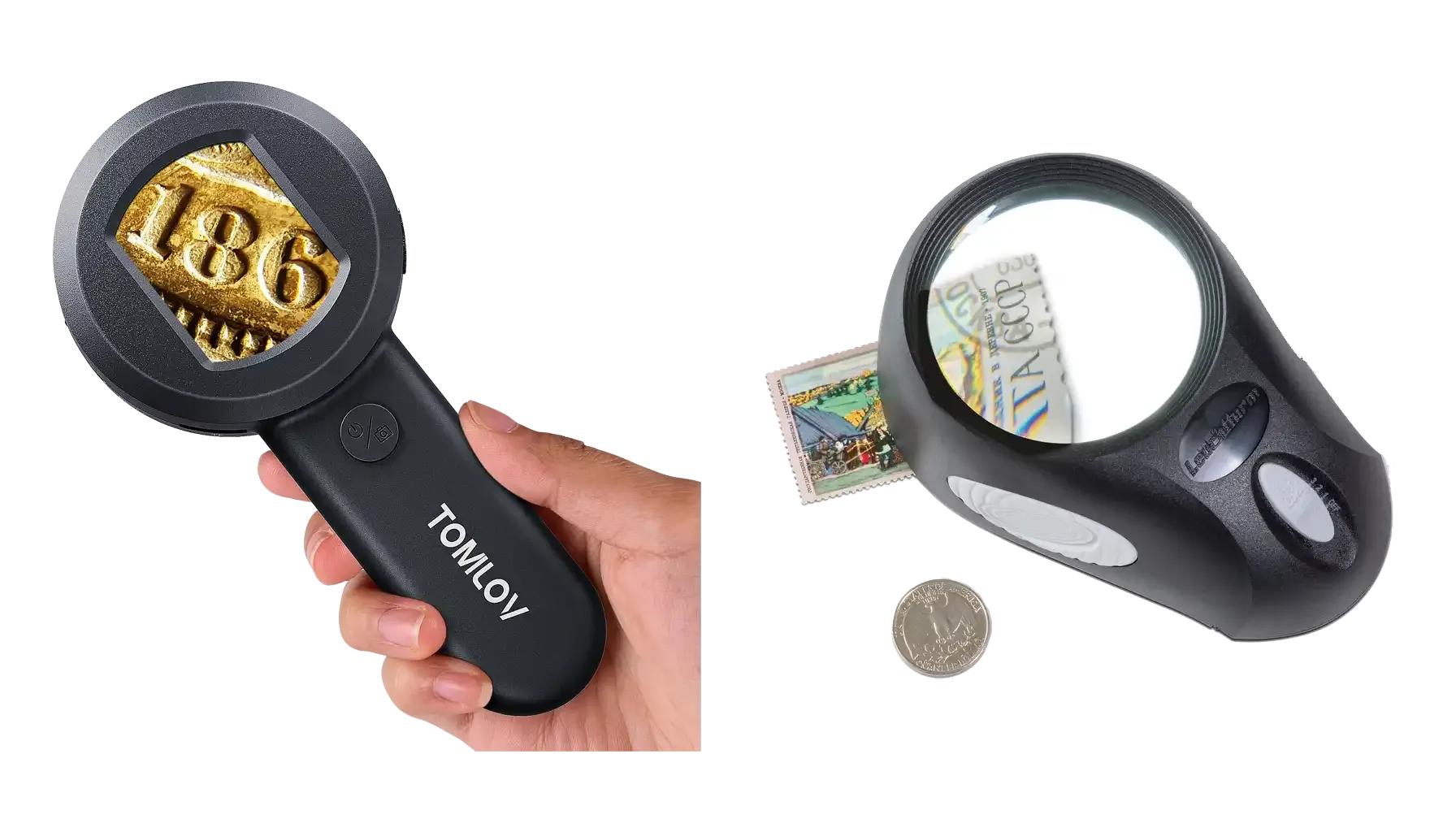
You will need a magnifier or loupe (many use a 5-10x jeweler’s loupe).
Use your magnification instrument to inspect the coin. Most errors happen on intricate details: the flycatcher’s wings and tail, wildflowers and petals, lettering and dates.
Afterwards, you can check the rim and edges. Some cuds and clips could be there.
If you think you’ve found an error, you should confirm it with a professional. Professional grading services by PCGS and NGC can authenticate errors and assign your coin a grade.
Remember, patience is the key. Sometimes there’s only one error in a million mintage. Oklahoma quarters are somewhat valuable by themselves, with or without errors. They feature a beautiful, important state, and reflect its values.

 Facebook
  X (Twitter)
  Pinterest
  LinkedIn