Contents:
The 2008 coin was the United States State Quarters series in its later stages. Upon examination, this coin reveals two notable qualities: a high level of production consistency and a deliberate, well‑articulated symbolic intent. Numismatic analysts systematically assess the issue by examining three fundamental aspects: the metallurgical properties, the formal design elements, and the precision of the striking process.
The item attracts a broad spectrum of interest – from those newly entering the hobby to seasoned specialists engaged in detailed study. Research on the coin often begins with visual balance and surface condition.
Arizona State Quarter Overview
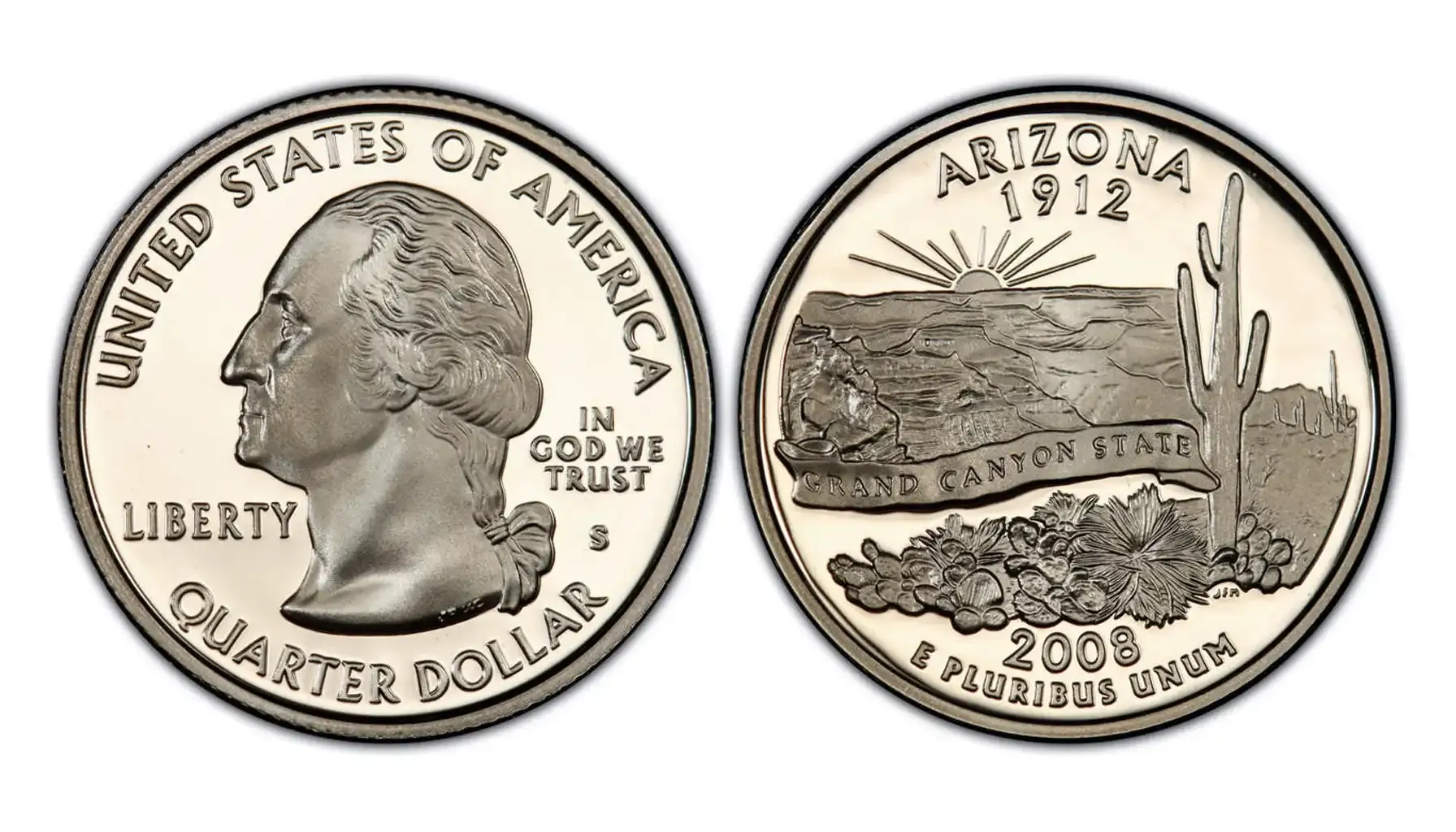
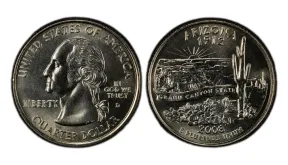
The reverse shows the Grand Canyon with a Saguaro cactus in the foreground. The scene looks deep because the raised parts are layered on top of each other. George Washington remains on the obverse with a classical profile.
“A banner reading "Grand Canyon State" separates the two images. One of the seven natural wonders of the world, the Grand Canyon covers more than 1.2 million acres in northwestern Arizona. The canyon, sculpted by the mighty Colorado River, is 6,000 feet deep at its deepest point and 18 miles at its widest…The Grand Canyon joined the National Park system in 1919 and is visited by more than four million tourists a year.”
– Traveling Quarters
American Numismatic Association
Philadelphia and Denver (P and D) struck circulation coins. San Francisco (S) produced proof versions. The Arizona 2008 Quarter displays consistent rim form and centered devices across most examples.
Diameter | 24.3 mm |
Weight | 5.67 g |
Metal | Copper-Nickel Clad Copper |
Edge | Reeded |
Designer | John Flanagan / Joseph Menna |
Do you want to tell a good strike from a weak one? Look at the details: a sharp strike reveals clear lines in the canyon and fine details on the cactus. But if the strike was weak, the edge area (near the rim) will look flat and smooth – like the design got squished down a bit. It’s an easy way to judge quality at a glance.
2008 Arizona Quarter Value Guide
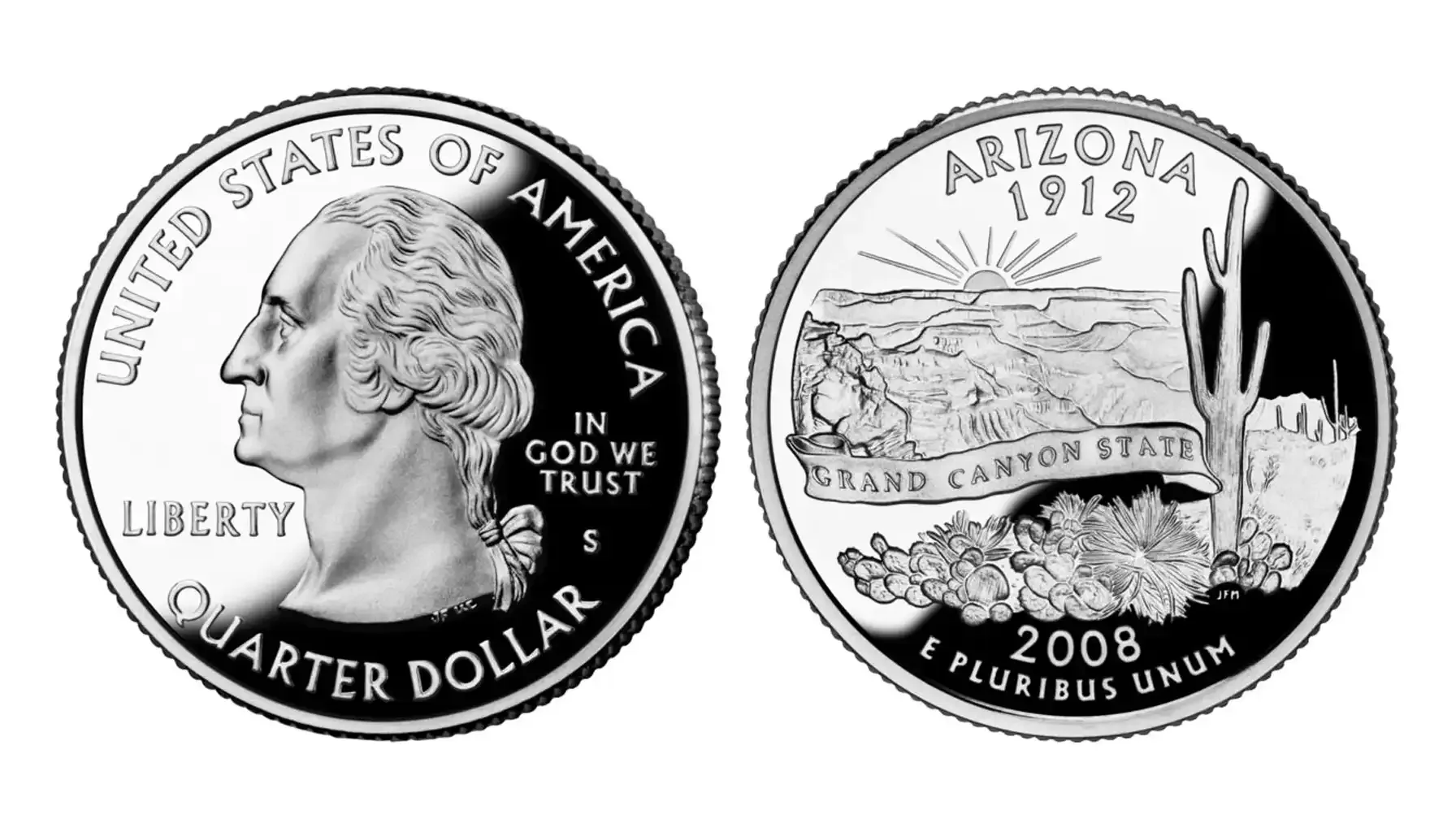
A coin’s price depends mainly on how worn it is and how sharp the details are. Worn coins usually sell for their face value. Coins in mint state are more popular with collectors building sets.
Proof coins draw attention from buyers who care most about fine details. Price studies track auction data and certified population reports. The 2007 coin value is worth more if it looks good overall and has clean rims.
Mint | Mintage | Type | MS-67 | Auction Value |
P | 244,600,000 | Clad (Circulated) | $10–$35 | $1,175 |
D | 265,000,000 | Clad (Circulated) | $15–$40 | $1,450 |
S | 2,078,112 | Clad (Proof) | $10–$20 | N / A |
The total circulating mintage Philadelphia and Denver (P and D) mints is nearly equivalent to that of the 2008 Hawaii coin.
Identifying Arizona Quarter Errors
In numismatic error examination, two primary factors receive systematic attention: the state of the die (including wear patterns) and the precision of alignment during striking.
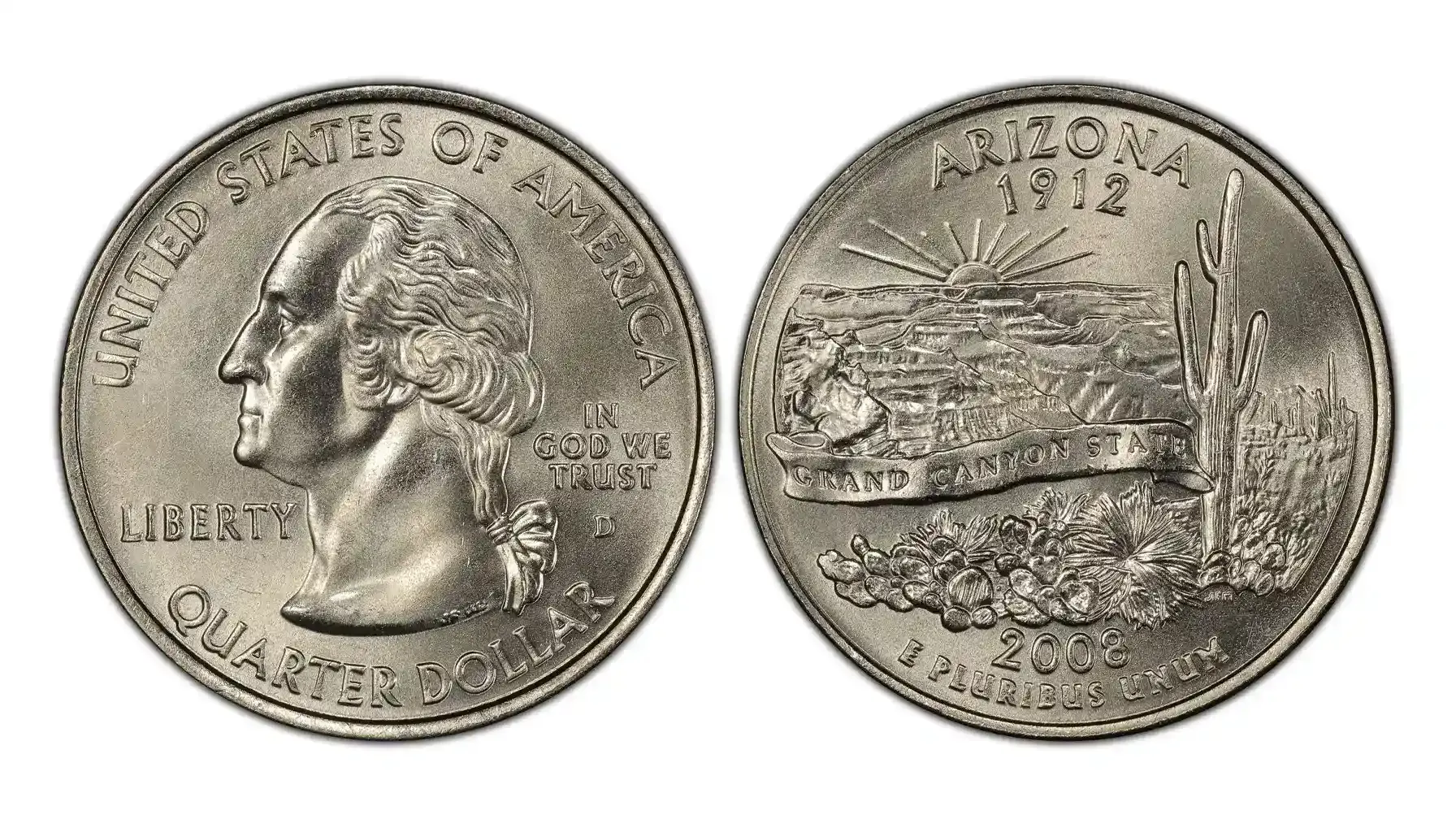
The numismatic community identified production errors on both old‑style coins and the Georgia issue, proving continuity in minting imperfections. Among observed anomalies:
Some coins exhibit minor doubling effects on lettering, typically resulting from die movement.
Others present small metal protrusions in proximity to the cactus design element.
Off‑center strikes manifest as incomplete legends, yet consistently retain full visibility of the date due to the striking mechanics
These traits define the 2008 Arizona Quarter error category. From a grading and pricing perspective, specialists consistently note minor clash marks and areas of incomplete strike. Such findings underscore the necessity of meticulous visual evaluation to ensure reliable attribution and to establish an accurate market value.

 Facebook
  X (Twitter)
  Pinterest
  LinkedIn