Contents:
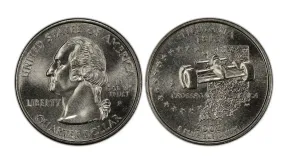
The 2002 Indiana quarter came out during the federal 50 State Quarters program, which ran from 1999 to 2008. Each state had its own idea behind the design, and Indiana’s version shows a race car with the state outline. Collectors see this release as one of the key pieces in the whole series.
2002 Indiana State Quarter Overview
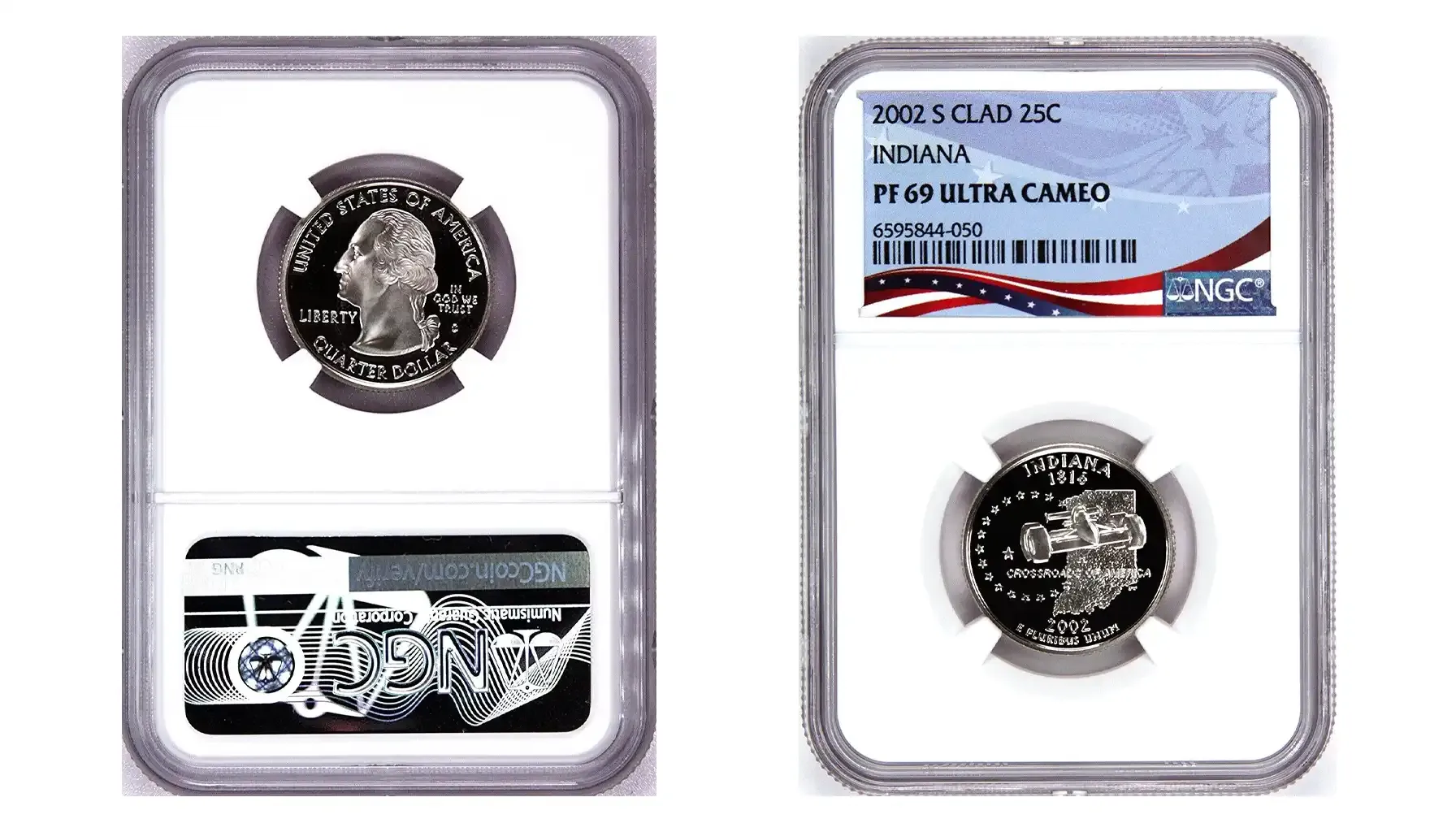
This issue focuses on the state’s long connection to automotive culture, and the reverse shows an Indianapolis 500 race car. In the background sits the outline of Indiana, surrounded by 19 stars. They’re a reminder of the moment the state joined the Union as number nineteen.
Characteristics:
Metal: copper-nickel clad;
Diameter: 24.26 mm;
Weight: 5.67 g;
Edge: reeded;
Mints: Philadelphia, Denver, San Francisco (proof versions);
Program: 50 State Quarters;
Year: 2002.
This issue is sometimes compared to the more subdued 2002 Mississippi quarter design to see the difference in relief depth and die detail in the early 2000s.
2002 Indiana Quarter Value Guide
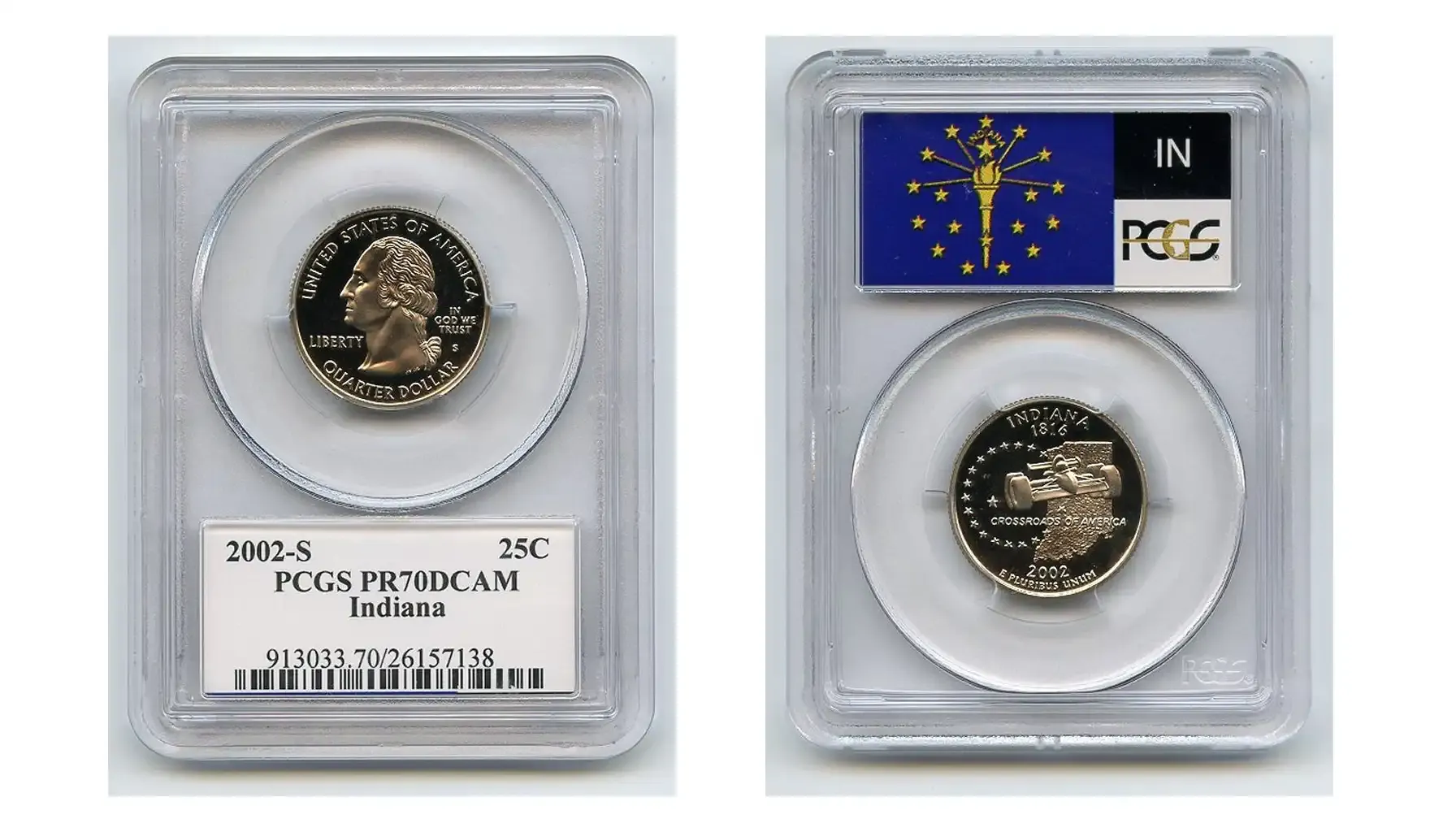
The price depends on:
mint;
condition;
and presence of defects.
Basic specimens rarely exceed their face value, but coins of the highest grades are in significant demand.
Condition | Average price |
Circulated | $0.25–$0.40 |
AU | $0.50–$0.90 |
MS60 | $1–$2 |
MS63 | $3–$5 |
MS65 | $7–$12 |
MS67 | $40–$100 |
Proof (S) | $4–$6 |
Silver Proof | $12–$20 |
Top MS68 grades | rare cases $100+ |
The surface of the fields plays a key role—the presence of contact marks, micro-toning, and the depth of the car’s engraved lines. These areas often lose clarity when handled.
Proof versions are particularly interesting, as earlier examples exhibit a more contrasting division between and mirror-like areas.
“Collectors prize those survivors as beautiful works of art, as rare antiques from yesteryear. As witnesses to America’s past, coins are truly history you can hold in your hand.”
— text by Legacy Coins & Capital, LLC
"About Coin Collecting" article on the Legacy Coins & Capital website
Rare Indiana Quarter Varieties
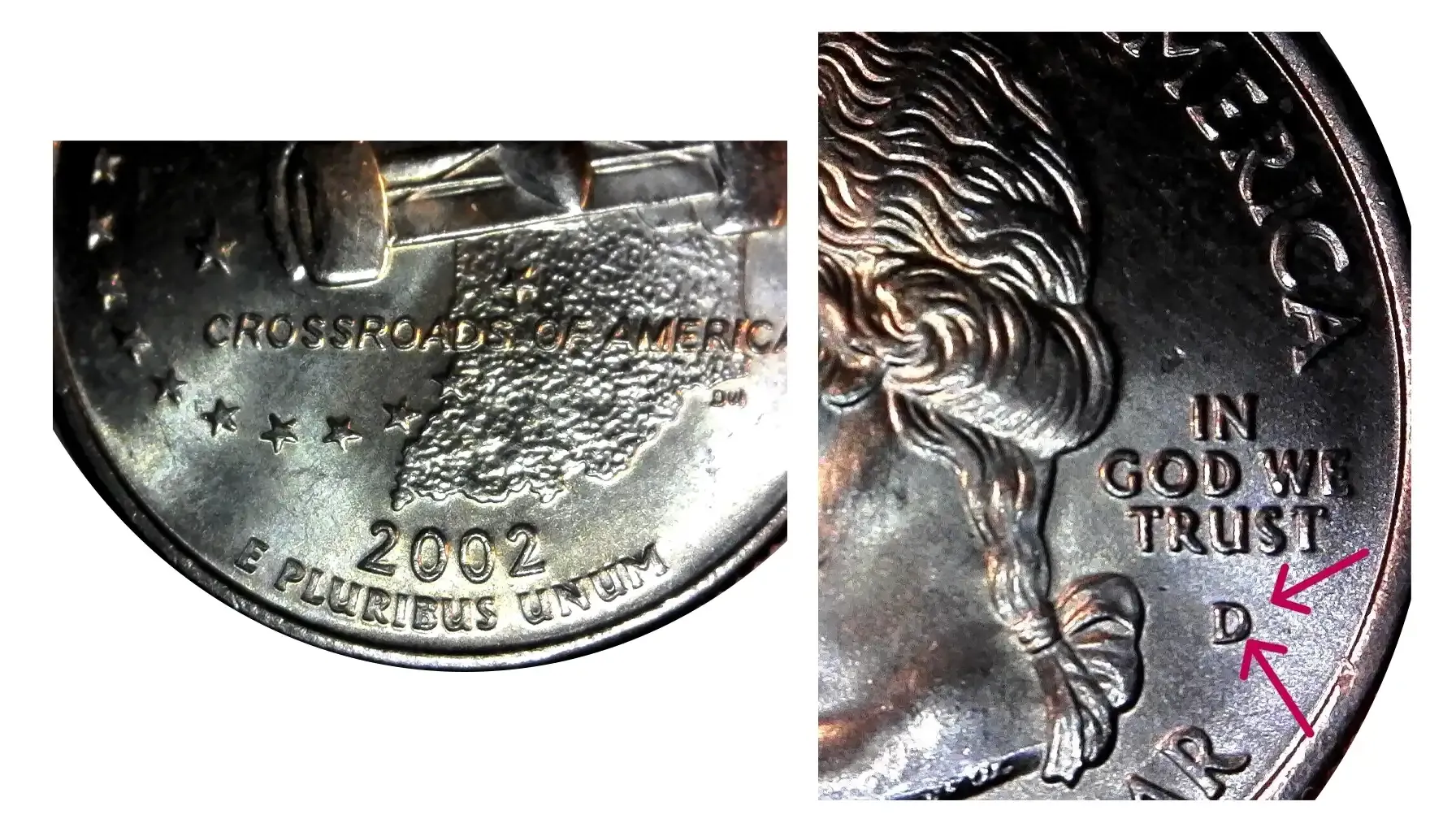
Varieties in the 2002 quarter Indiana are determined primarily by mint and die quality:
Philadelphia "P" – softer relief details, especially state-outline lines.
Denver "D" – crisp strikes are more common, making these coins attractive for high-grade collections.
Proof and Silver Proof "S" – prized for their deep luster, even fields, and lack of inclusions.
Rare variants associated with specific batches are also distinguished:
Early strikes with a smooth map outline and clean fields;
Denver specimens with vividly detailed car bodies;
Silver proof coins in PR69–PR70 condition are the most sought-after examples;
Coins with minimal signs of contact wear on the reverse.
When analyzing the variations, it's helpful to compare the Indiana to the 2003 Illinois quarter design, as the 2003 dies help us see how the relief detailing within the series improved in the early 2000s.
Indiana state quarter errors are the main reason why the price of individual copies can exceed the usual benchmarks:
Off-center strike;
Die crack;
Strikethrough;
Filled die;
Weak strike.
When you don’t have a catalog on hand and need to figure out what coin you’re looking at, the Coin ID Scanner app helps a lot. You take a photo of both sides, and the app identifies the variety, checks recent sales, and gives you a rough value range.
Catalogs featuring extended examples often feature a 2002 Indiana quarter error list with pictures, helping collectors quickly identify rare defects.
The more pronounced error is found primarily on Denver coins, where localized die clogging can be seen. It creates the metal build-ups on otherwise smooth surfaces.

 Facebook
  X (Twitter)
  Pinterest
  LinkedIn