Contents:
If you have a 1994 half dollar, take a close look at its details. They can tell a lot about the coin’s history and condition.
Knowing the traits that shape a coin’s price helps you compare values yourself, and resources on identifying rare coins explain how to spot genuine and rare pieces by eye.
1994 Half Dollar Value by Variety
The 1994 coins were minted at several U.S. mints. Each version has unique characteristics that influence its value and appeal.
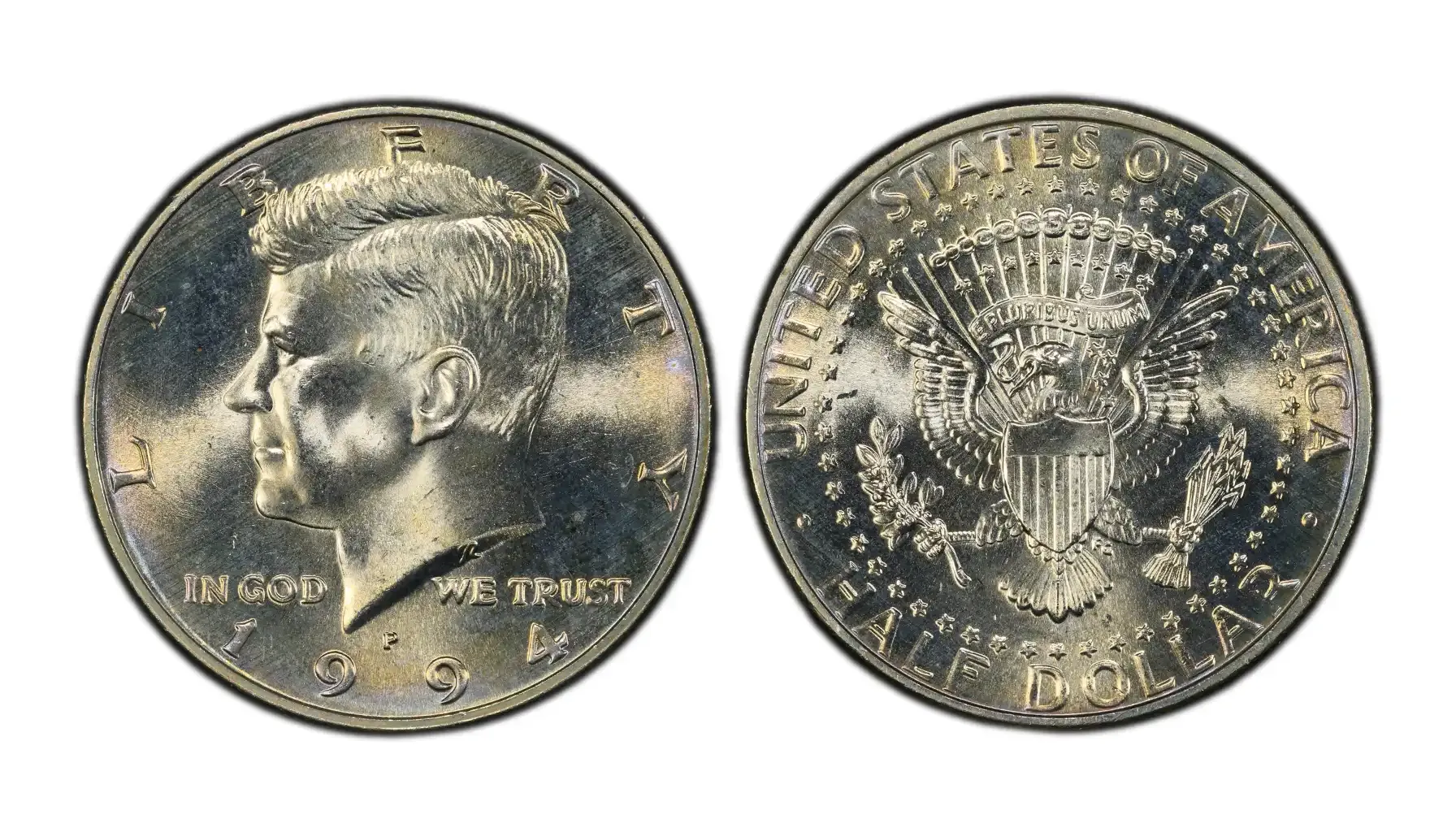
1994-P Kennedy Half Dollar
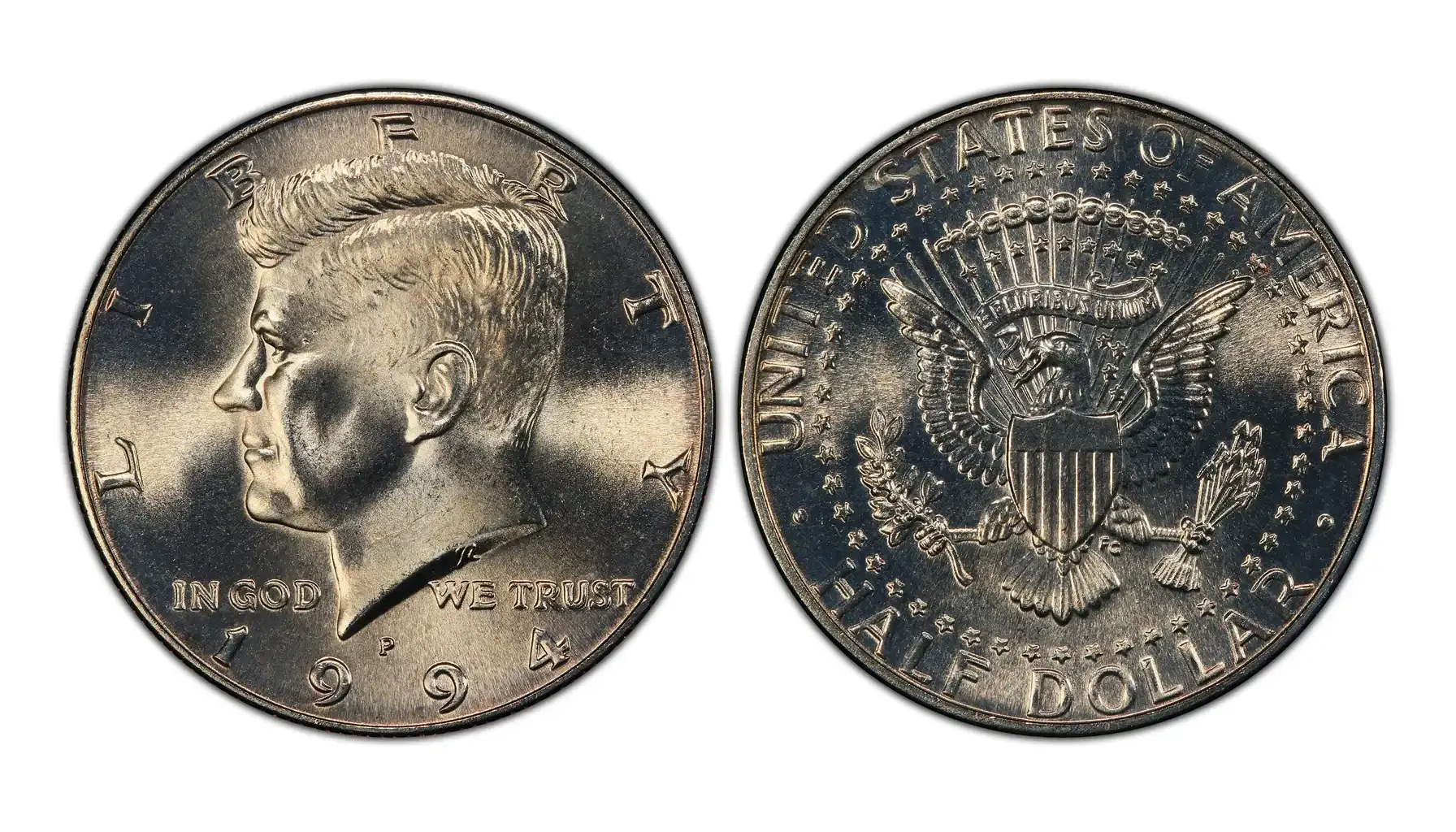
The 1994 half dollar P (Philadelphia) had a mintage of around 23.7 million coins. Circulated pieces usually sell for about a dollar — not much above face value.
In higher grades, though, things change: catalogs list MS65 examples at roughly $20–30, which sets the standard 1994 P half dollar value.
Since there’s no silver in the mix, condition and rarity of grade are what truly matter. From time to time, collectors come across a 1994 P Kennedy half dollar error.
1994-D Kennedy Half Dollar
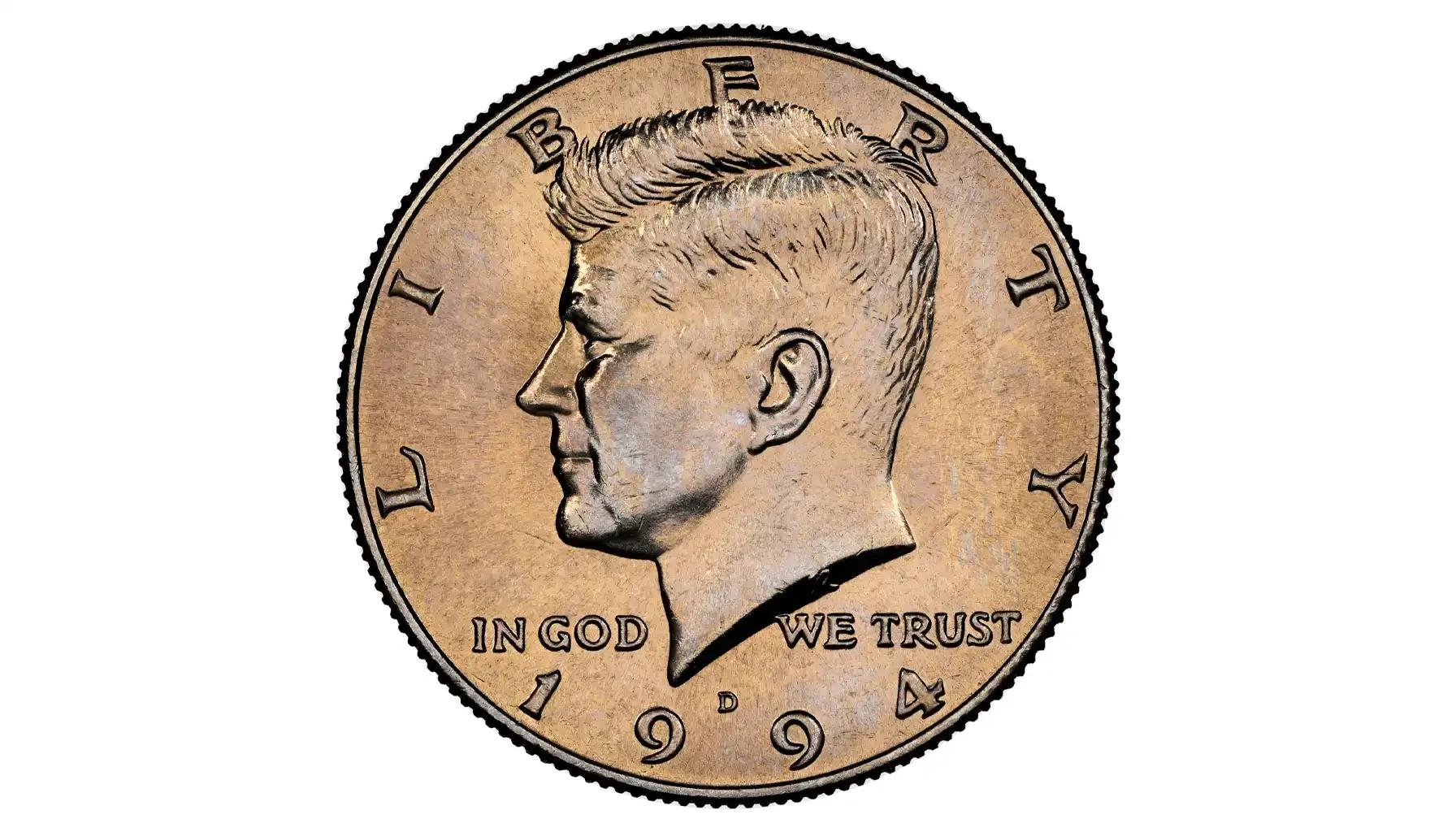
The coins with the D (Denver) mint mark were struck in a mintage of about 23,828,110 pieces. In circulation, they are valued roughly the same as the Philadelphia version, while the approximate 1994 D half dollar value in MS65 condition is around $9.
Although the overall strike quality is consistent, certain 1994 half dollar D specimens with flawless surfaces are especially sought after by collectors.
1994-S Proof Half Dollar
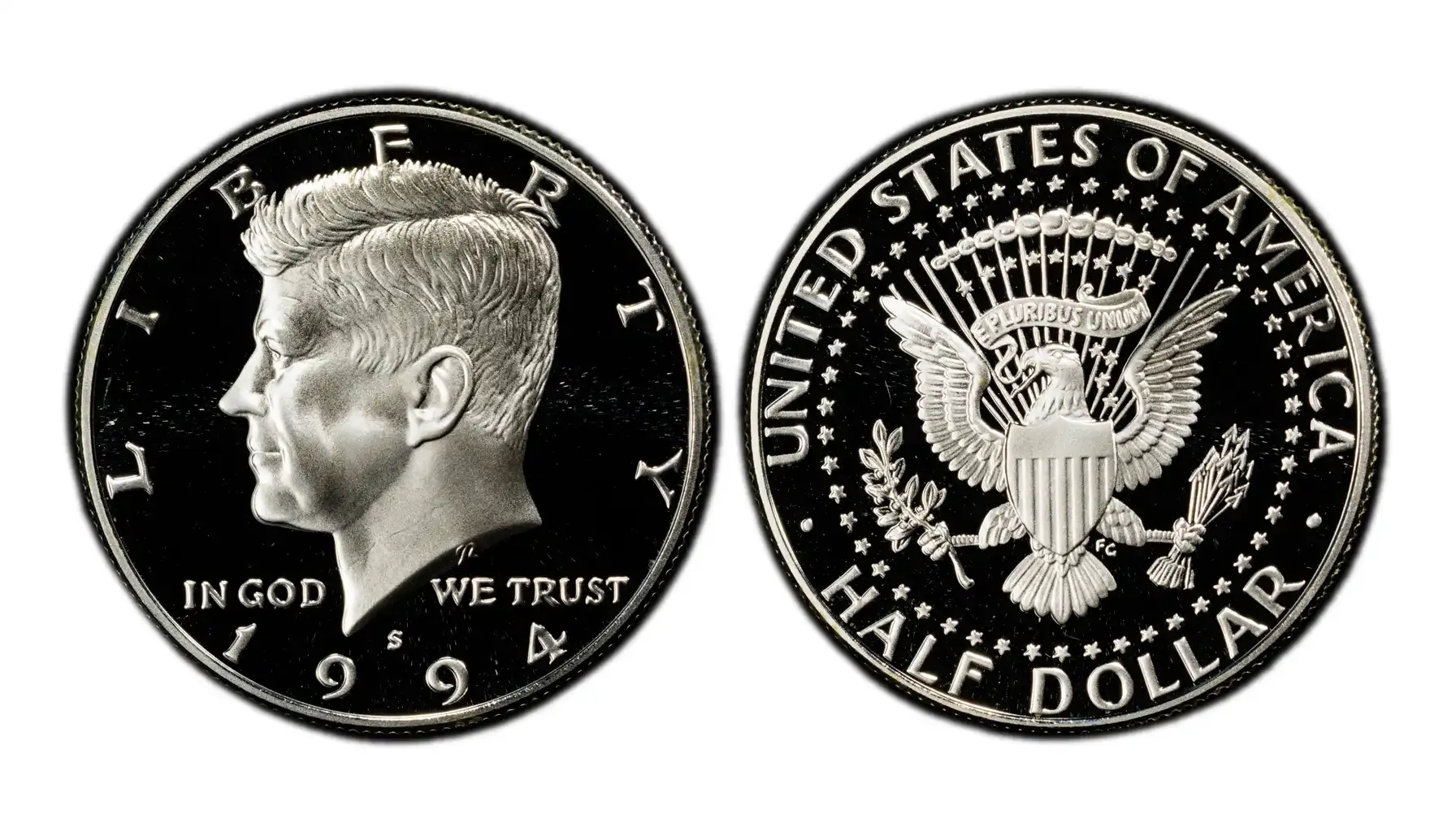
The S (San Francisco) version was minted as a proof coin—approximately 2,484,594 pieces. Proof coins are distinguished by a mirror-like surface and clear relief details. The USA Coin Book catalog values them at approximately $9.91 and up.
1994-S Silver Proof Half Dollar
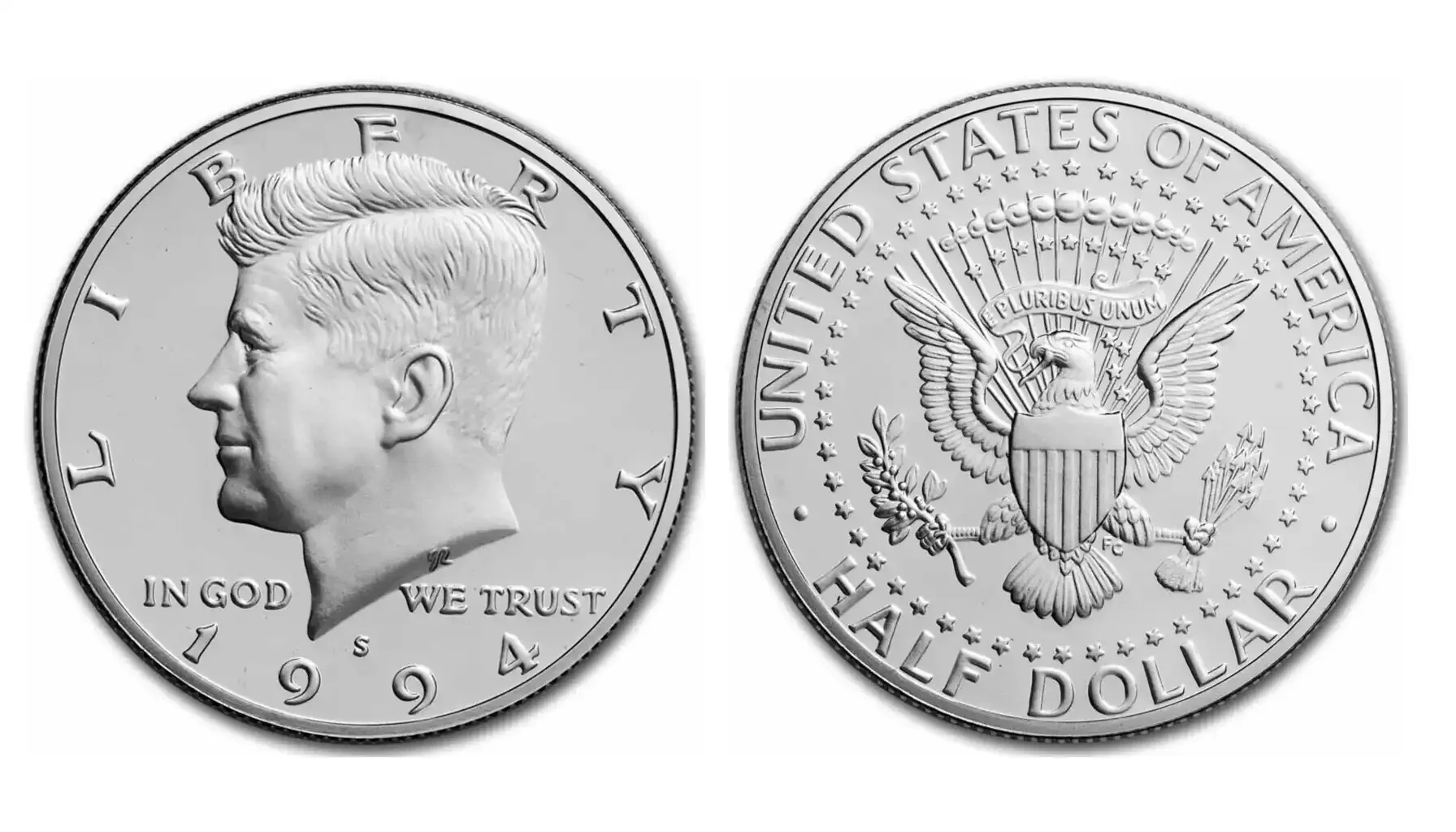
The silver proof version was minted by the same mint, but in a limited edition of approximately 785,329 pieces. The composition is 90% silver and 10% copper. Prices are higher: reference books like CoinCollecting list the range as $35–40.
1994 Half Dollar Value Chart
Most Valuable 1994 Kennedy Half Dollars by Grade
Variety | Condition | Approximate Price |
1994-P | Circulated | ~$1–3 |
1994-P | Uncirculated (MS63–MS65) | ~$10–30 |
1994-D | Circulated | ~$1–5 |
1994-D | MS67+ | ~$100+ |
1994-S Proof clad | Proof | ~$9–20 |
1994-S Silver Proof | Proof | ~$35–40 |
Prices are current at the time of writing.
1994 Half Dollar Auction Record Prices
“When the time comes to sell, you’re not going to be selling to the grading service. A collector will need to like the coin and buy it.”
— Dealer Andy Lustig, on the PCGS chatroom, October 2004
Coin Rarities website
Rare coins in high states of preservation, especially proof and silver proof coins, achieve significantly higher prices at auction.
A half dollar coin 1994 with minting errors or high grades can fetch tens of times the average price. Auction reports often record these highs.
History of the 1994 Kennedy Half Dollar
The Legacy of the Kennedy Design
The design of the series, created in 1964, remains a symbol of national memory. The image of John F. Kennedy establishes the coin as a part of US history.
Carrying that legacy forward, the series kept the spirit of the 1960s alive and linked generations of collectors. One of the notable earlier issues is the 1989 Kennedy Half Dollar.
U.S. Mint Production Changes in the 1990s
In the 1990s, demand for coins in everyday use started to fall, while collector editions became more sought after.
That shift shaped their value — regular pieces stayed in circulation longer, and proof or rare strikes found their way into private collections. The same pattern showed up again with the 1996 Kennedy Half Dollar.
Key Features of the 1994 Kennedy Half Dollar
The Obverse – The Portrait of JFK
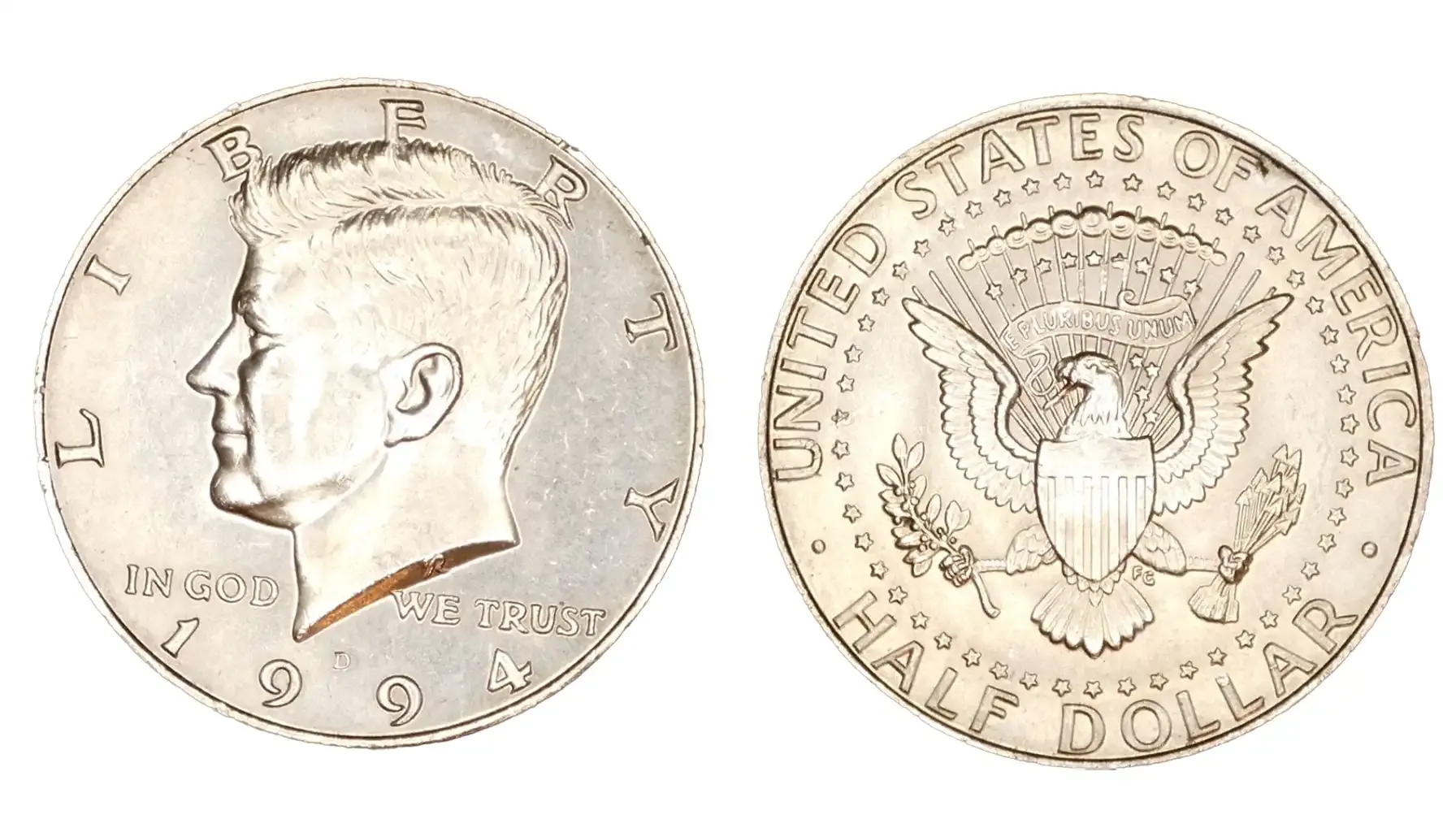
The front features John F. Kennedy's profile, the inscription "LIBERTY," and the date beneath the portrait. Clear lines and fine details are the main indicator of quality. Even slight wear can significantly reduce the half dollar 1994 value.
The Reverse – The Presidential Seal
The reverse shows a heraldic eagle holding a shield, arrows, and an olive branch. Above it, a ring of stars represents the U.S. states. The quality of the strike affects the overall perception of detail.
Other Design Details and Composition Facts
Regular coins were minted from a copper-nickel alloy (clad), weighing 11.34 grams and measuring 30.6 mm in diameter. Silver proof versions contain 90% silver.
Good surface condition and the absence of defects and scratches are the main factors supporting the price of the half dollar 1994.
1994 Half Dollar Mintage and Survival Data
Mintage by Mint Location
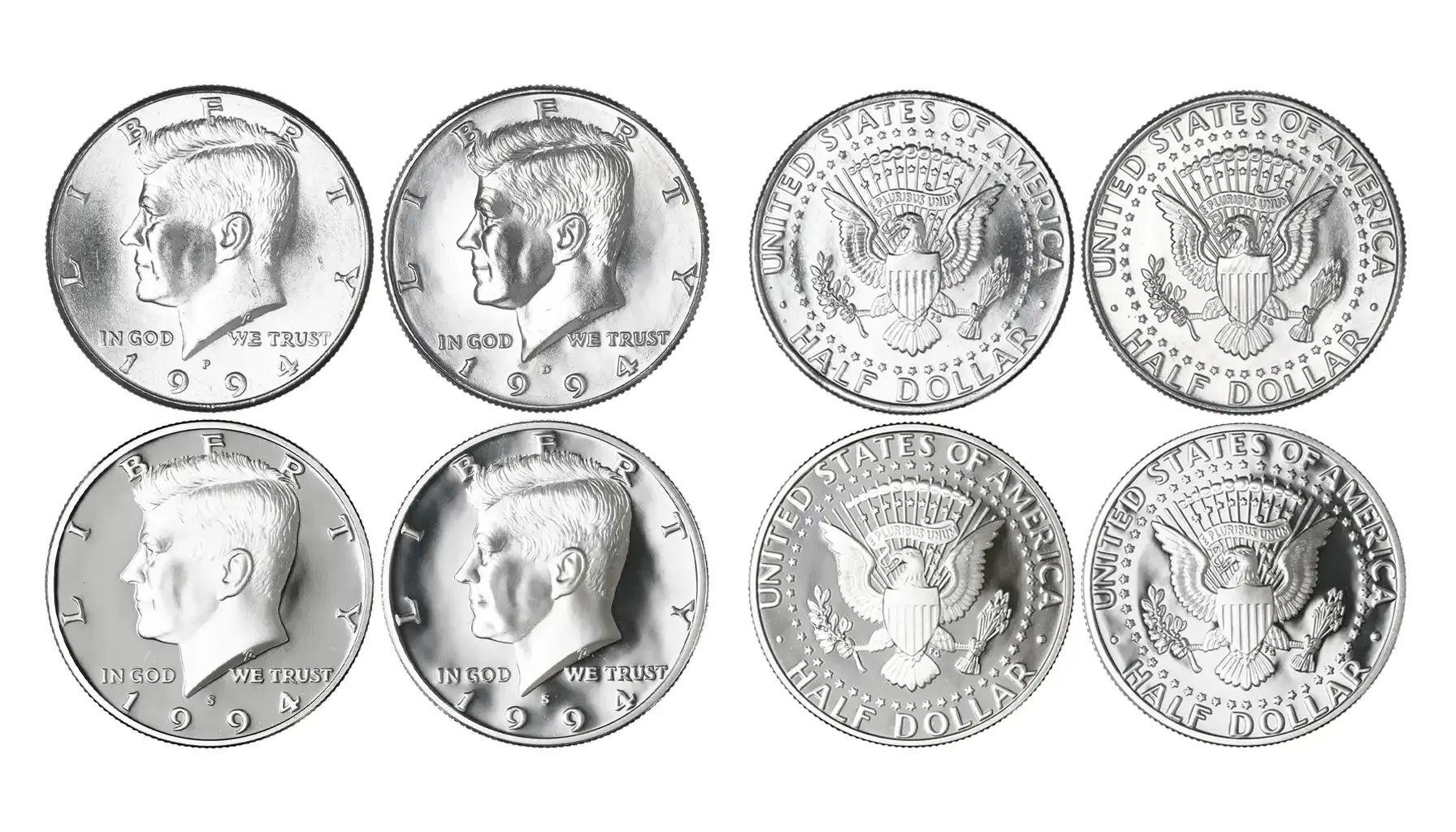
1994-P: ≈ 23,718,000 pcs
1994-D: ≈ 23,828,110 pcs
1994-S (Proof clad): ≈ 2,484,594 pcs
1994-S (Silver proof): ≈ 785,329 pcs
Survival Rates by Grade and Condition
Most specimens are found in worn condition. MS65-graded coins represent only a small portion of the total mintage. It makes them the most sought-after on the market.
By comparison, some earlier issues, such as the 1985 Kennedy Half Dollar, are more common in high-grade condition, highlighting how rarely the 1994 issue was preserved in pristine condition.
Mintage Comparison with Nearby Years (1993–1995)
The 1994 mintage stands between the two nearby issues — 15.5 million for the 1993 P and 26.5 million for the 1995 P. In simple terms, 1994 takes the middle spot between them.
Rare 1994 Half Dollar Error List
Struck Through Grease Error

This occurs when there is residual grease on the die or blank. On the coin, this appears as gaps in the design or blurred areas. Such specimens are of interest to those collecting 1994 50 cent coin value errors.
Doubled Die Obverse (DDO)
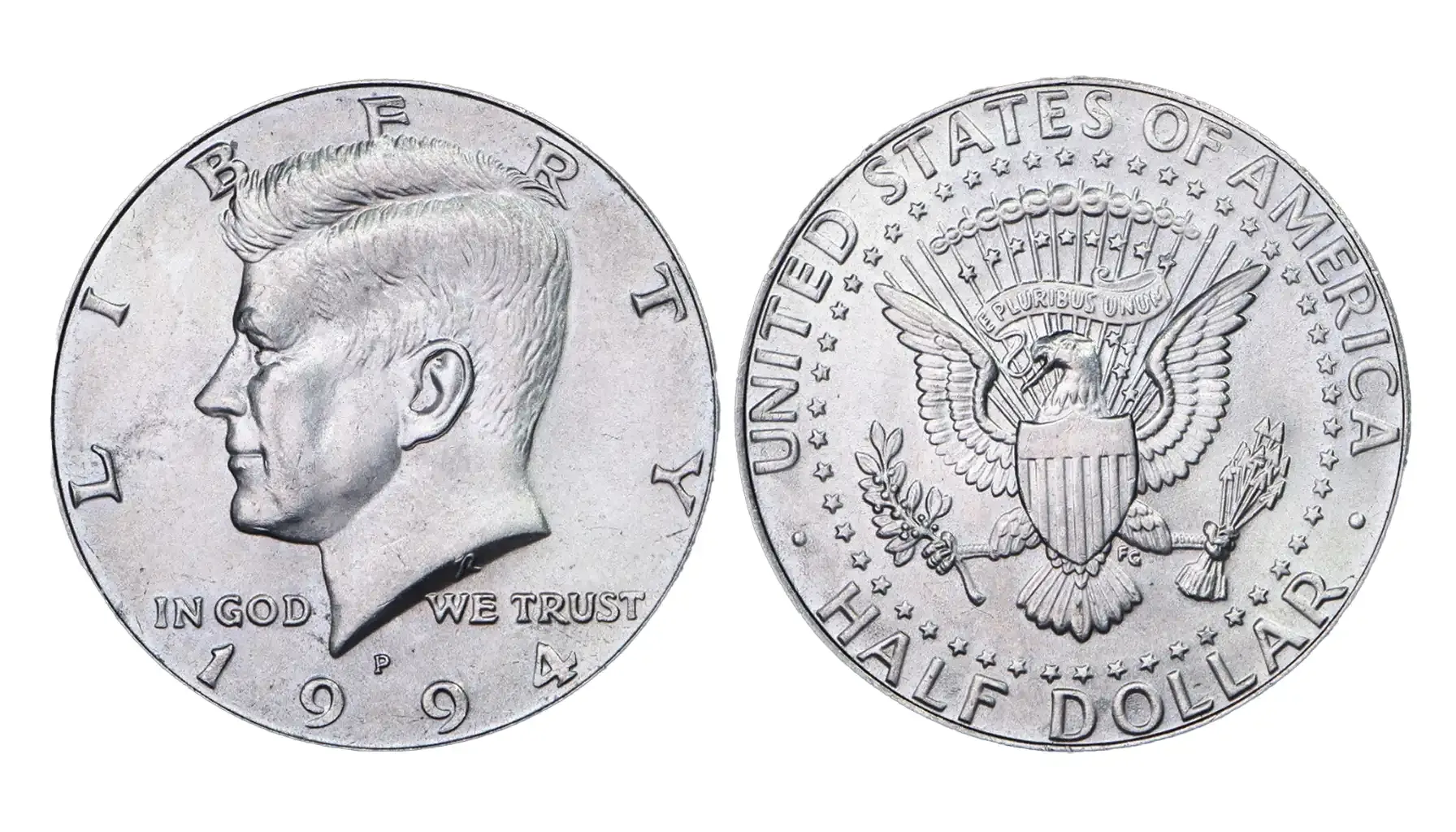
A rare case where, when making a die, the image is applied twice, slightly offset. The outlines of the numbers and letters become "doubled."
Off-Center Strike
If the blank shifts even slightly under the press, the design can stretch past the edge. The bigger the shift, the higher the price.
Missing Clad Layer Error
Sometimes the outer layers of the alloy fail to adhere to the base, and a patch of the inner metal appears on the surface. This is a rare variation, easily recognized by its unusual color.
How Much Is a 1994 Half Dollar Worth Today?
Key Factors Affecting Value (Condition, Mint, Errors)
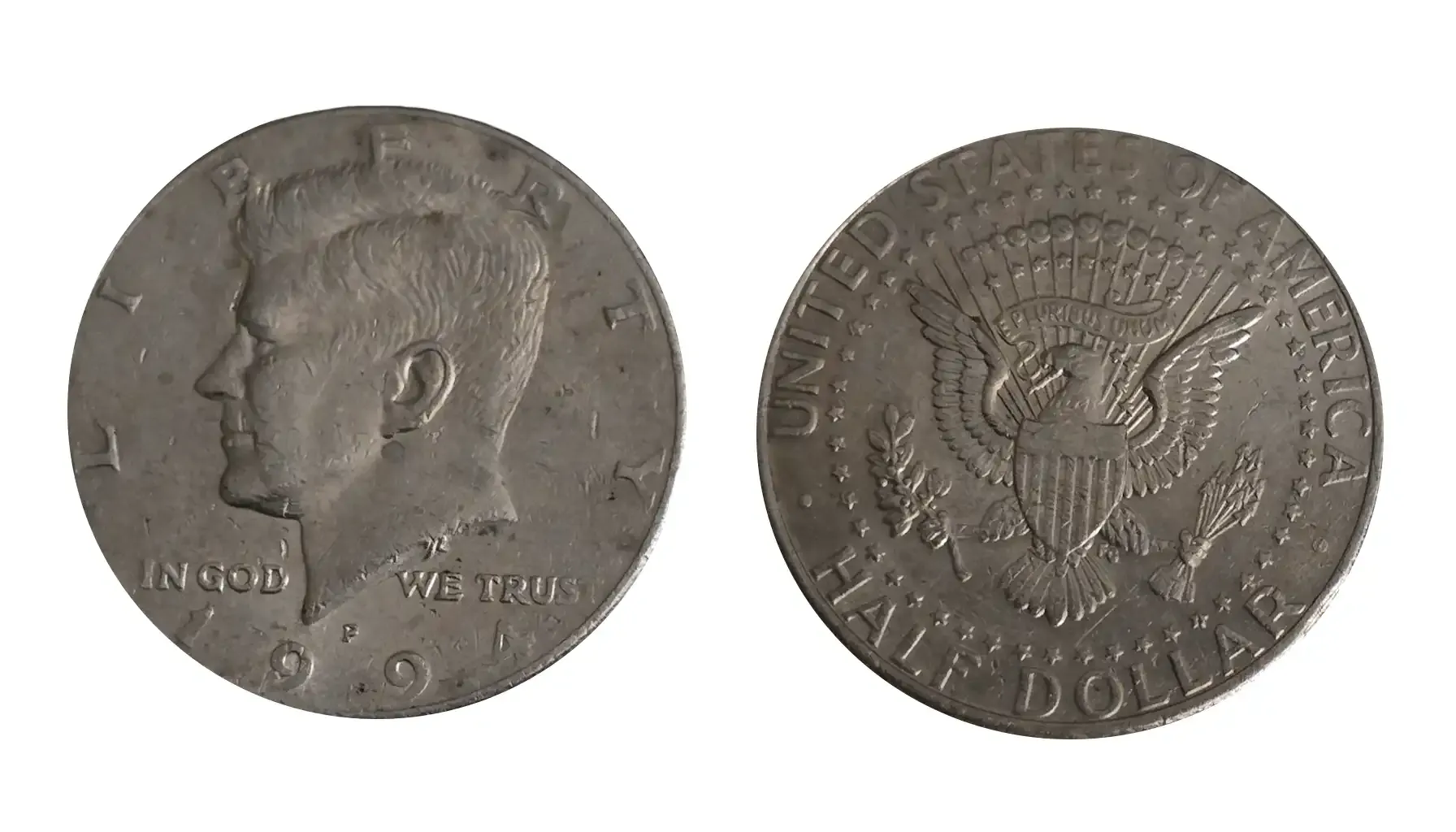
condition and grade;
mint and mintage;
presence of errors or deviations in minting;
market interest.
How to Check if Your 1994 Half Dollar Is Valuable
Find the mint mark—P, D, or S.
Check the margins and portrait for damage.
Compare the data with catalogs.
Use a quick check app, such as Coin ID Scanner, to estimate the approximate value and mintage variant.
FAQ About the 1994 Kennedy Half Dollar
How much is a 1994 P half dollar worth?
1994 half dollar P in MS65 sells for about $20–30, circulated ones go for $1–3.
Are 1994 Kennedy half dollars made of silver?
Only the proof S version has 90% silver; others are copper-nickel clad.
What makes the 1994 D half dollar valuable?
High grades, clean surfaces, and rare mint errors raise its value.
Which 1994 half dollar errors are the rarest?
The rarest are double die obverse and missing clad layer.
How can I tell if my 1994 half dollar is a proof coin?
Proof coins have a mirror-like surface and frosted reliefs. Clear shine means a collector issue.

 Facebook
  X (Twitter)
  Pinterest
  LinkedIn