Contents:
Common coins, scattered coins – Kennedy half dollars have gained the reputation of small treasures which may be worth thousands when well preserved and surrounded by the right market (and time). Each year is a noteworthy chapter in the series, with some being brighter and some being plain. But what can we say about the 1980 half dollar?
Having gone through several compositional changes, Kennedy 50Cs became decently normal, ordinary in a good sense, and approachable for collectors of all levels. Indeed, in 1980, there was nothing special about the numismatic creations, yet there are a few features that may identify these coins as unique. So, what do they look like, and how much is a 1980 Kennedy half dollar worth?
History & Background
There is no need to introduce a long-standing numismatic legend – it reveals its story on its own. The Kennedy half dollar has an extensive, eloquent history, full of grief, respect, and, most importantly, love. Following the tragic passing of the 35th president of the United States, John F. Kennedy, the US Mint proposed a new design aimed at commemorating his contributions to the prosperity of the nation - this is how the first 1964 Kennedy half dollar was born, in fact.
Despite retaining the same iconic design, the coin was meant to overcome modifications in composition due to rising silver prices and changing economic conditions of the past. As such, the original 50-cent coins were struck in 90% silver, but beginning in 1965, they transitioned to a 40% silver clad composition before finally becoming a copper-nickel clad coin in 1971. This makes the 1980 variety one of those fully clad in copper-nickel pieces of lower value but high-level collectibility.
The half dollar coin 1980 was launched during a strange period: this was the time when the half dollar had largely fallen out of circulation for everyday use. Most of them ended up in coin rolls or collectors' sets, but in circulation, they were scarce and almost mythical (i.e., something you would be more likely to hear about than actually receive).
Related article: Silver U.S. Half Dollars Value
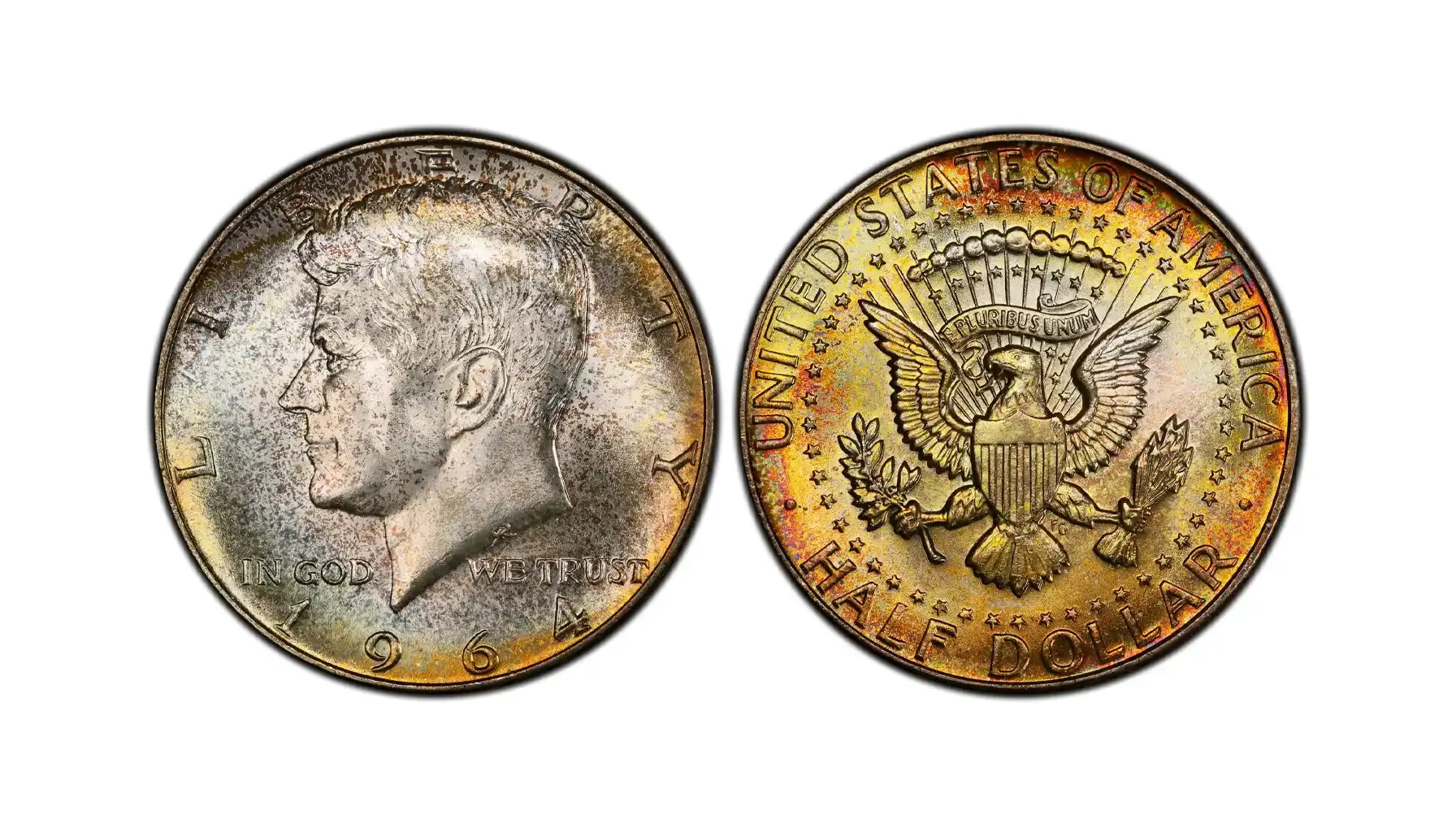
Design Features and the Main Characteristics
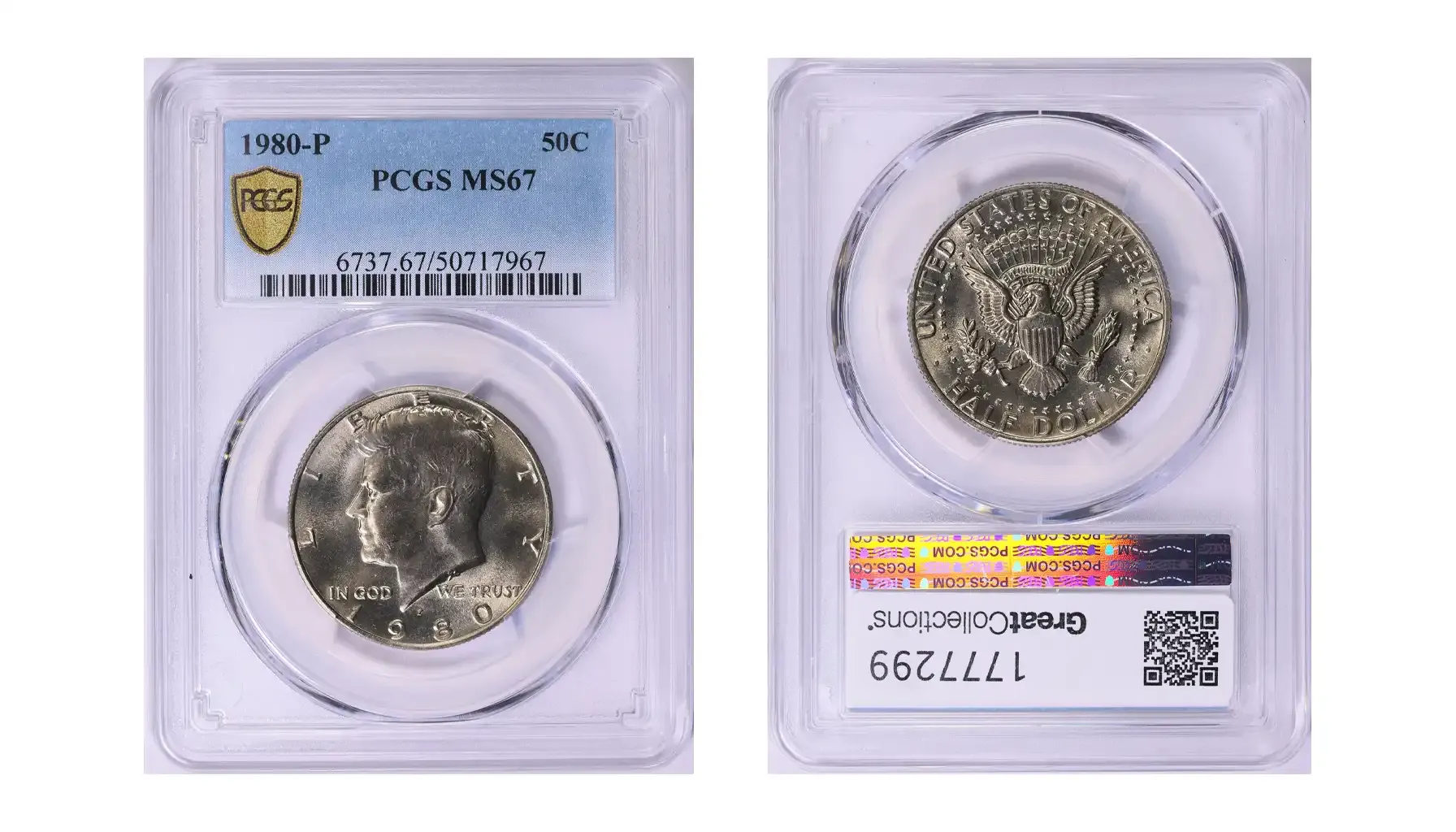
Obverse (by Gilroy Roberts): Introduces a well-known left-facing portrait of President John F. Kennedy, along with the inscriptions “LIBERTY” framing Kennedy’s head, the national motto “IN GOD WE TRUST” split into two parts by his neck, the year of issue “1980” centered at the bottom, and a mint mark just above the date.
Reverse (by Frank Gasparro): Showcases the Presidential Seal of the United States (one of the most intricate depictions of this symbol) with a heraldic eagle spreading its wings, holding an olive branch in its right talon and a bundle of 13 arrows in its left.
The eagle's chest is covered with a shield, and the beak catches a scroll bearing the motto “E PLURIBUS UNUM” (“Out of many, one”). Above the eagle is a ring of 50 stars, while the inscription “UNITED STATES OF AMERICA” and the denomination “HALF DOLLAR” are positioned along the upper and lower rims, respectively.
The Main Characteristics of the Kennedy Half Dollar 1980 | |
Composition | Outer layers of 75% copper, 25% nickel bonded to a pure copper core |
Weight | 11.34 grams |
Diameter | 30.61 mm (1.205 inches) |
Thickness | 2.15 mm |
Edge | Reeded (150 reeds) |
Mint Marks | “P” for Philadelphia “D” for Denver “S” for San Francisco (proof) |
Half Dollar 1980 Types by Mint
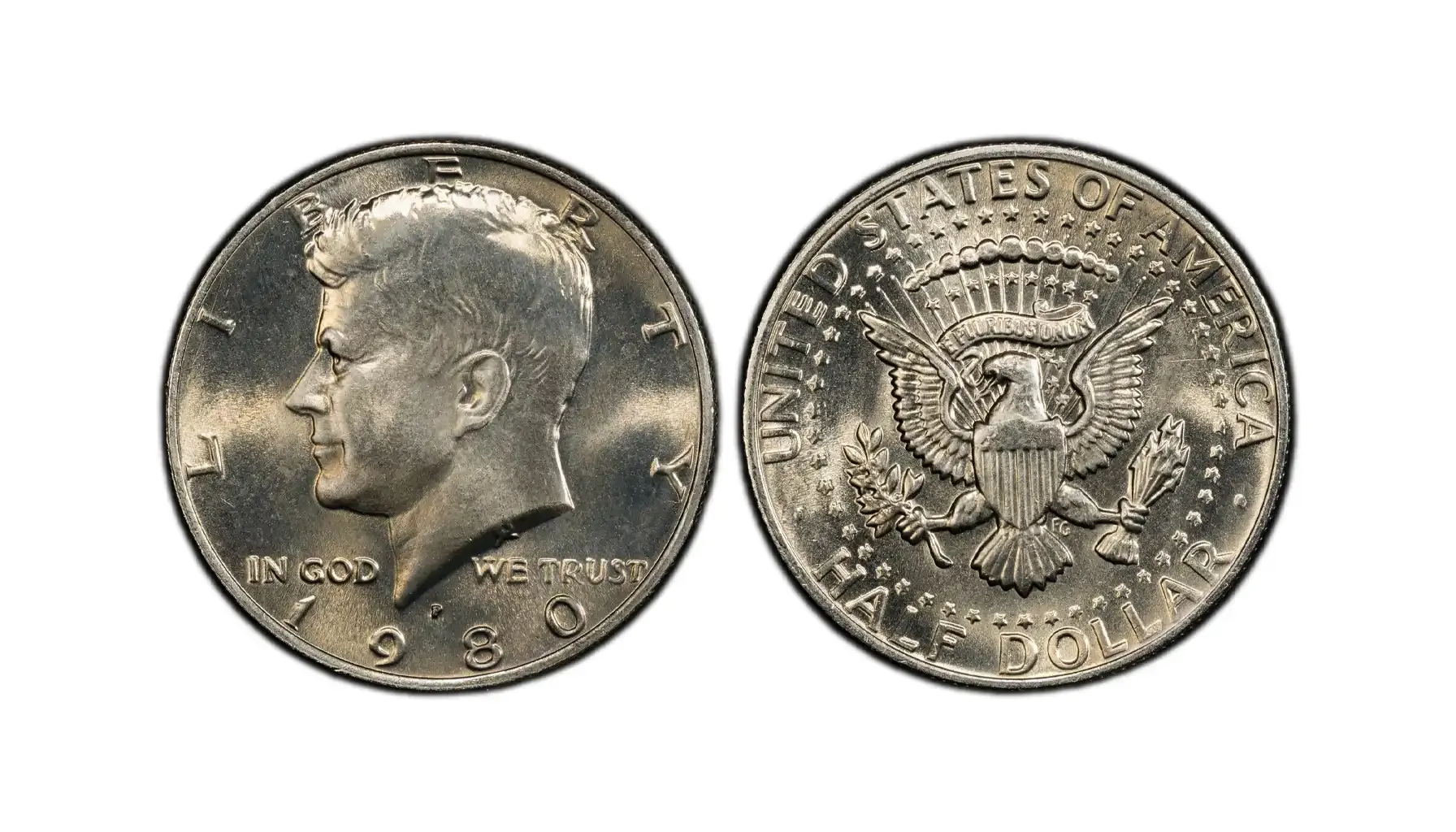
1980-P 50C (Regular Strike)
Produced by: Philadelphia Mint
Mintage: 44,134,000
Auction Record: $3,840 for MS64
During the year of 1980, the Philadelphia Mint was the most productive facility, for it distributed more than 44 million coins. Although it was generally typical for this Mint not to put mint marks on its creations, 1980 was different (the presence of "P" on the obverse is proof of this difference).
As per tradition, these coins were intended for general circulation, but high-grade survivors are scarce due to weak strikes and handling wear. Hence, the 1980 Kennedy half dollar value may be quite impressive for a casual unit of currency from Philadelphia.
1980-D 50C (Regular Strike)
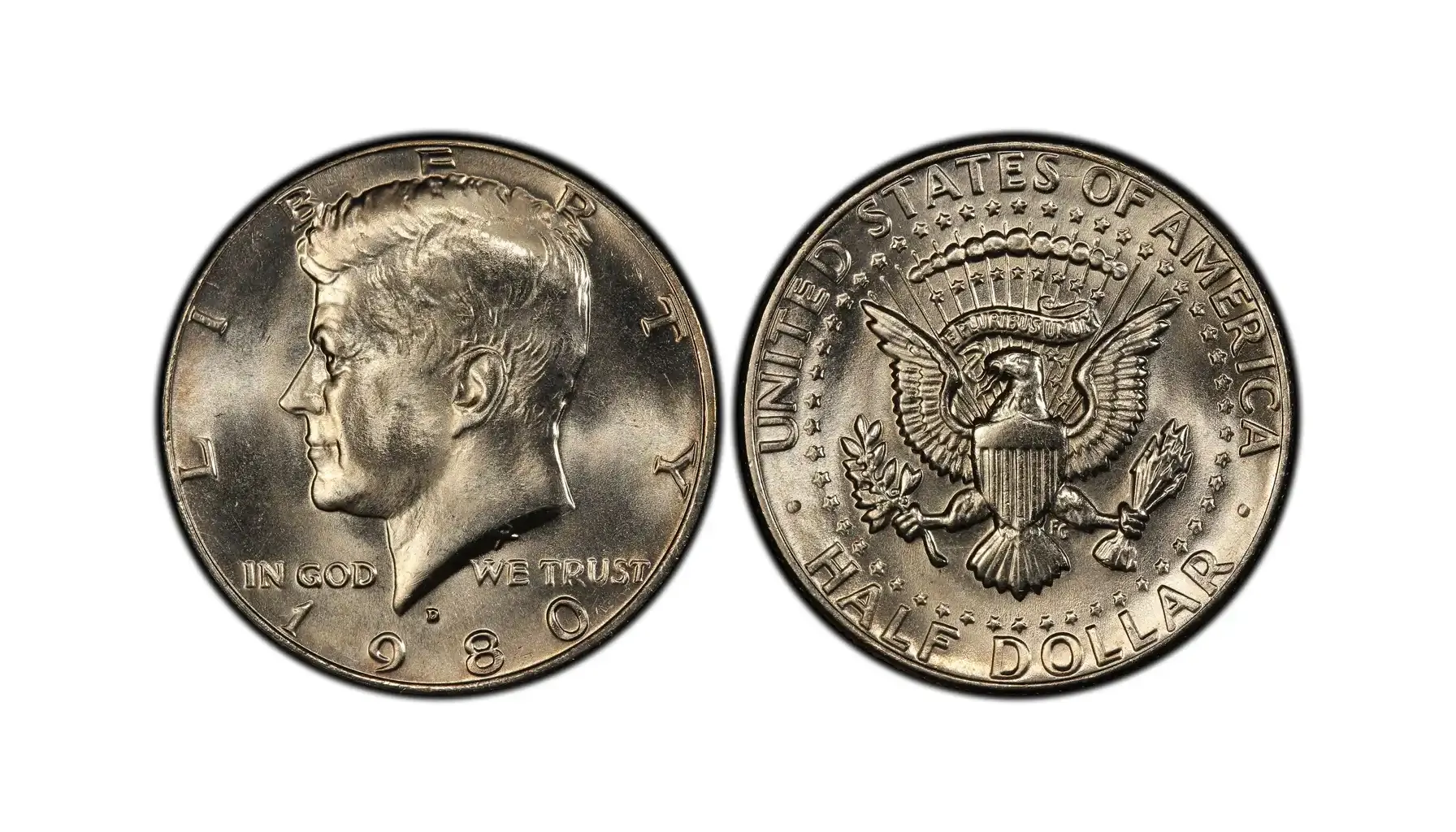
Produced by: Denver Mint
Mintage: 33,456,449
Auction Record: $4,935 for MS68
The 1980 half dollar D was the second commonly minted unit, with millions released into circulation. According to Jaime Hernandez, these may still be found in daily trade, which makes it almost impossible to obtain pieces in MS66 or higher (i.e., coins with little to no wear present). Yet, what if you are the lucky one to find it in your pocket?..
1980-S 50C (Proof)
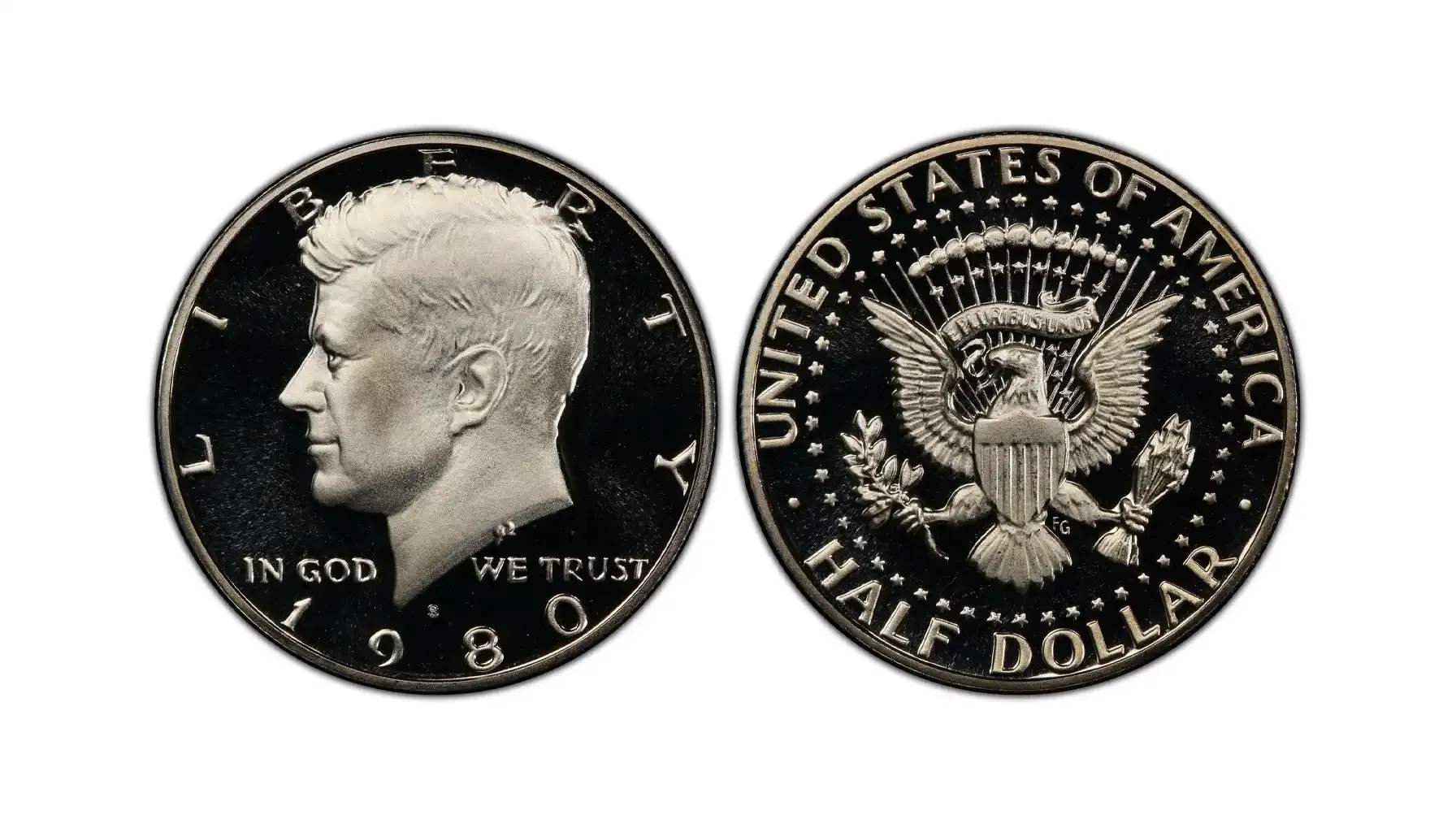
Produced by: San Francisco Mint
Mintage: 3,554,806
Auction Record: $920 for PR70
Proof coins from San Francisco are easily identified by their mirror-like surfaces and sharp strike quality, but the proof half dollar coin 1980 value is not as impressive as that of its common counterparts. This variety was primarily sold in collector proof sets, with a relatively low mintage compared to circulation strikes. Nonetheless, they are still well-preserved, though perfect PR70s are unlikely to exist.
The Rarest 1980 Kennedy Half Dollar Errors & Varieties
Doubled Die Reverse (DDR)
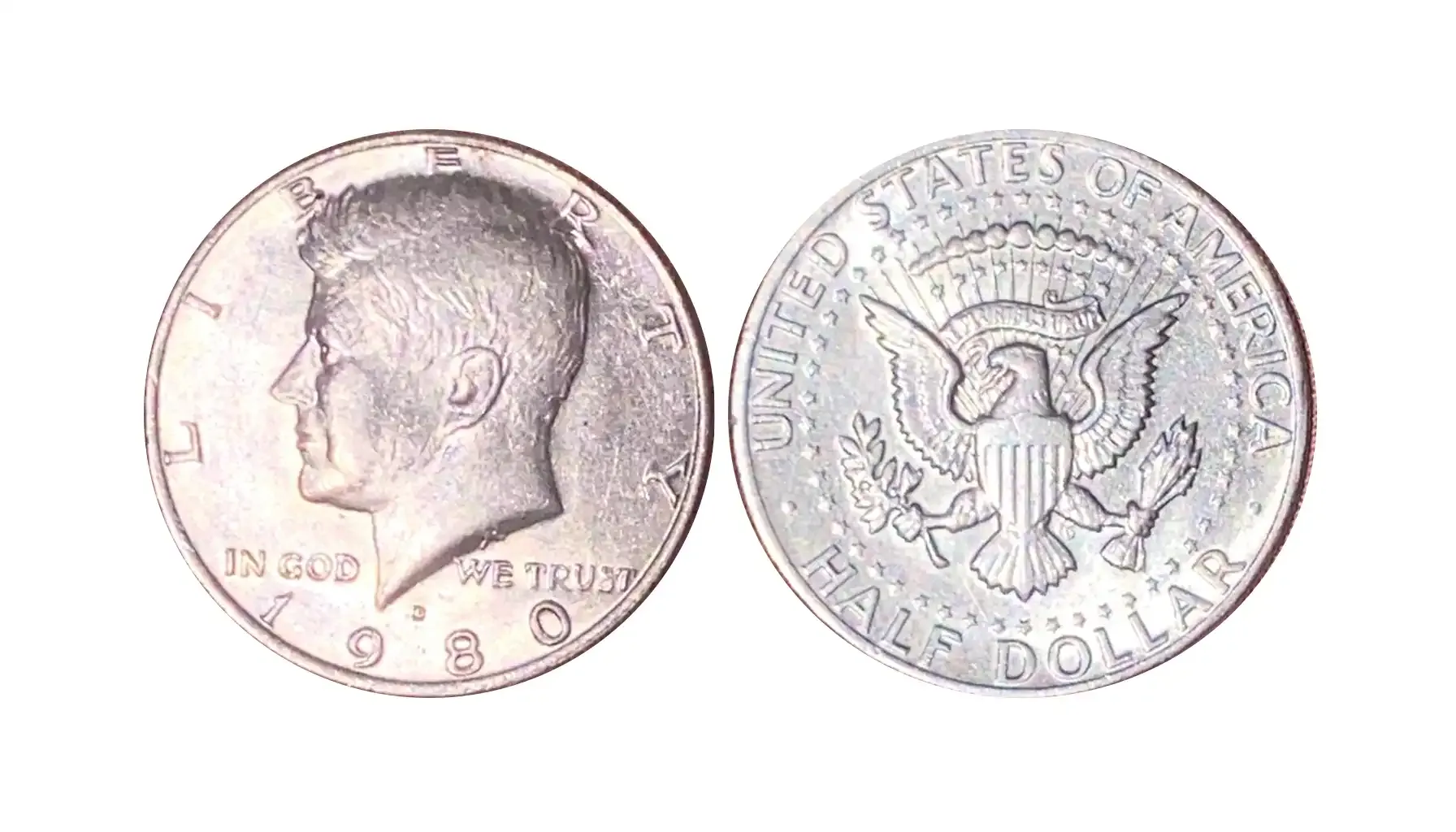
Estimated value: $385
A Doubled Die Reverse (DDR is by far one of the most notable errors associated with Kennedy half dollar coins of 1980. This usually occurs when the working die that struck the coins was impressed (hubbed) more than once with a slight misalignment. The result is a prominent doubling/duplication of design elements on the die itself. True hub-state doubled dies produce sharp, raised secondary images (different from weak “machine doubling,” which sits flat and is generally not collectible).
The market 1980 half dollar coin value in this case depends on how obvious the doubling is and the overall grade: an obvious DDR in higher grades (and certified by a major coin grading service like NGC) will be sold for a premium, while faint or circulation-worn examples are far less expensive.
Filled (or “Blobbed”) Mint Mark – Filled “P”
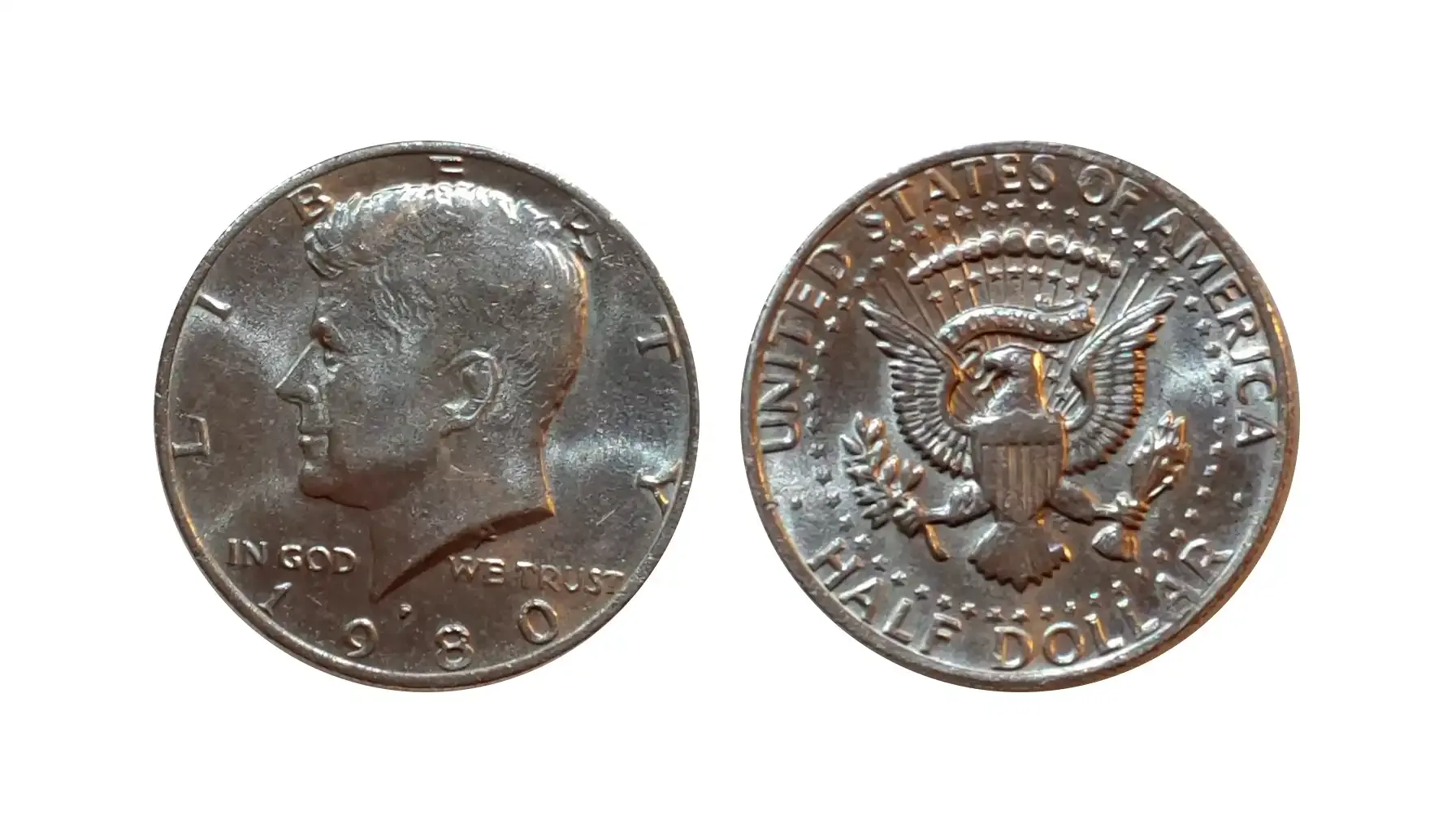
Estimated value: $320
As a rule, a “filled” mint mark means that the mint mark’s recessed die cavity is partially or completely clogged with grease, debris, or die polish residue. As a result, there appears a blunt, blob-like mint mark rather than a crisp “P”. These, however, are generally confused with post-mint wear, environmental fill, or deliberate alteration (beware of counterfeits then).
Key ID tips: check for consistent metal flow, examine under magnification for recessed edges (mint-made fills often show a smooth, recessed perimeter), and compare with known genuine mint marks from the same issue.
Split-Rim Letters (Rim-Split & Letter Separation)
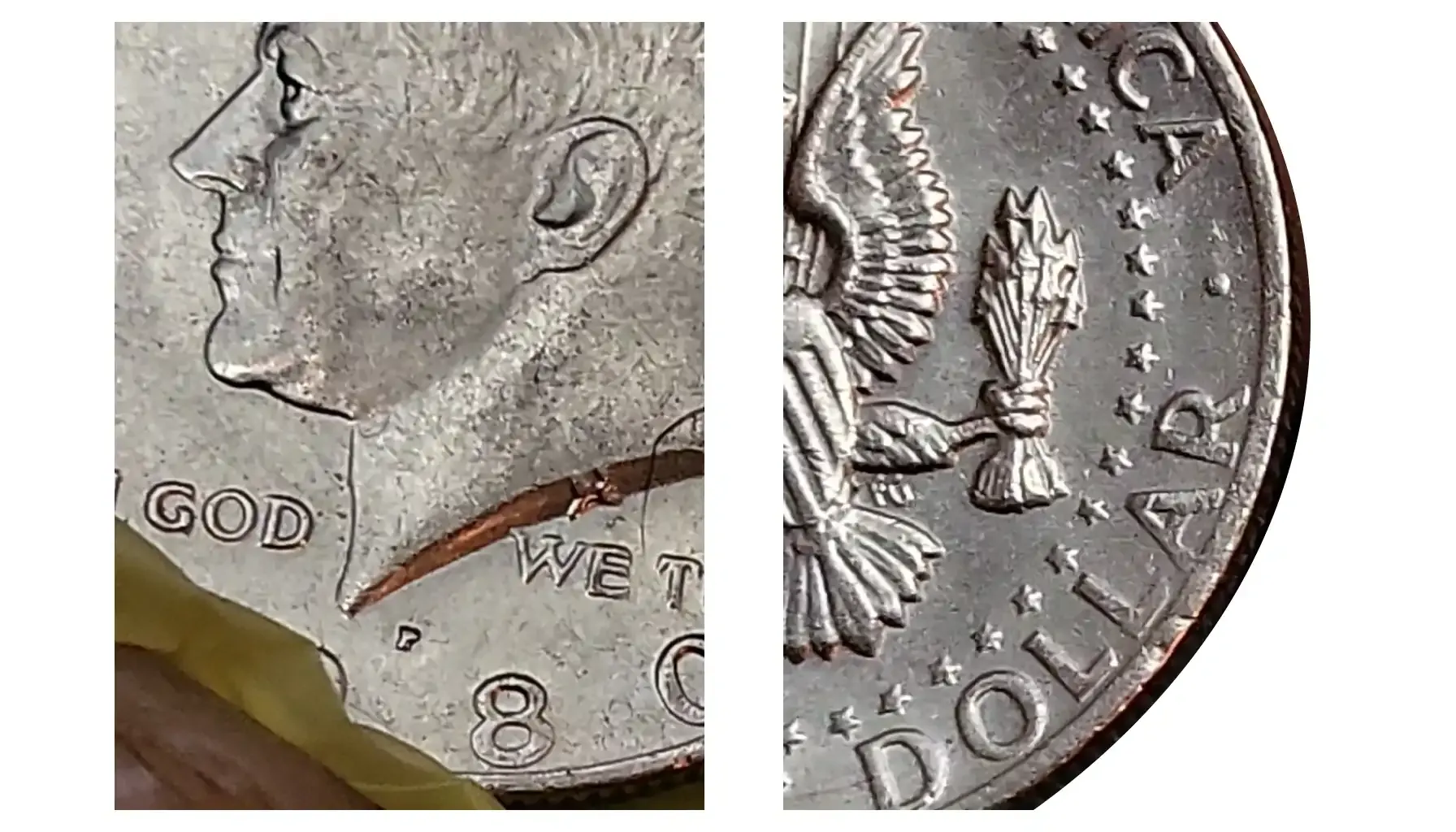
Estimated value: $107
This might be a confusing deviation, but most collectors accept it as a genuine flaw, which may be of high half dollar 1980 value anyway. This presupposes that a rim or collar malfunction (or a die crack/chip that reaches the rim) produces a visible split or separation through the rim and into adjacent lettering. To identify it on the spot, pay attention to an abrupt line or separation that distorts the rim’s continuity.
1980 Half Dollar Value & Pricing Guide
When referring to the 1980 JFK half dollar value, it is vital to acknowledge the factors that affect the numbers and boost them at times. Apart from mint marks and overall rarity, it is the condition that may define how well a coin can feel on the market. The higher the grade, the higher the price.
Notwithstanding the fact that most halves were produced for general circulation and are rarely found in pristine conditions, they may occasionally appear in coin rolls or in private collections, where well-preserved, certified, or notable erroneous instances are kept. Anyway, so as to estimate the worth, one should definitely focus on their own coin rather than general value ranges, prominently displayed below.
Grade | 1980-P 50C | 1980-D 50C | 1980-S 50C |
Circulated (VG–XF) | $0.50–$1.50 | $0.50–$1.50 | N/A |
About Uncirculated (AU–MS63) | $2–$6 | $2–$6 | N/A |
MS65/PR65 | $15–$40 | $20–$45 | $15–$50 |
MS66/PR66 | $50–$120 | $60–$140 | $50–$150 |
Top Grade MS67/PR67+ | $150–$300 | $180–$350 | $200–$400 |
Notes:
Circulated coins are common and are usually sold for their face value only.
AU–MS63 coins have minor wear but retain good detail and modest collector premiums.
High-grade coins (MS65+) can be quite captivating to collect.
Rare error coins (DDR, Filled Mint Mark) can exceed these ranges.
A Pro Tip From Our Team
However, if you want to know exactly how much your coin might be worth, you would rather use additional tools like Coin ID Scanner to identify its type, mint mark, and compare it with other representatives of the line. If it appears to be high-grade, rare, or has a notable error, consider sending it to a professional grading service to receive a certificate and rest assured that your coin is in its prime.
Common does not mean ordinary. Explore what you own and reveal its true value. This is where the most peculiar instances are found.

 Facebook
  X (Twitter)
  Pinterest
  LinkedIn