Contents:
Long-running series, especially those widely cherished and at times idolized, can be a gold mine of remarkable numismatic creations, even when they get overshadowed by other, more prominent issues. The Kennedy half dollar program is indeed full of surprising varieties and intriguing stories, which make, believe it or not, some common issues exciting for collectors who know what to look for.
Though 1977 might be out of sight in coinage numbers, the Kennedy half dollar of that year has indeed the power to bring it back into the spotlight. Peculiar errors, mint marks, and simply the design – everything contributes to its enduring charm and collectible appeal, but what makes a 1977 half dollar rare? Where to check coin value, and why do numismatists start paying attention to this issue in 2025? Let us see.
What Lies Behind the 1977 Half Dollar
The Kennedy 50Cs have a long history. It was first introduced with the release of the 1964 half dollar, which served as a commemoration of President John F. Kennedy after his tragic assassination in 1963. The nation was in grief, and each institution looked for an appropriate way to pay tribute to a leader once dearly loved. The US Mint was not out of this initiative and, hence, instantly replaced the older, valuable Franklin half dollar series with a new, iconic design featuring Kennedy’s profile.
Among numerous superb issues, there was the year of 1977, a quietly remarkable addition to the series full of drama, power, and respect. However, it is not about special editions, serious design modifications, or certain events surrounding the coin, but the peculiar errors and the reputation of the line itself.
And before turning to the 1977 half dollar value, it is vital to emphasize its continued appeal among collectors, built on consistent design and the subtle nuances that make even common coins worth examining.
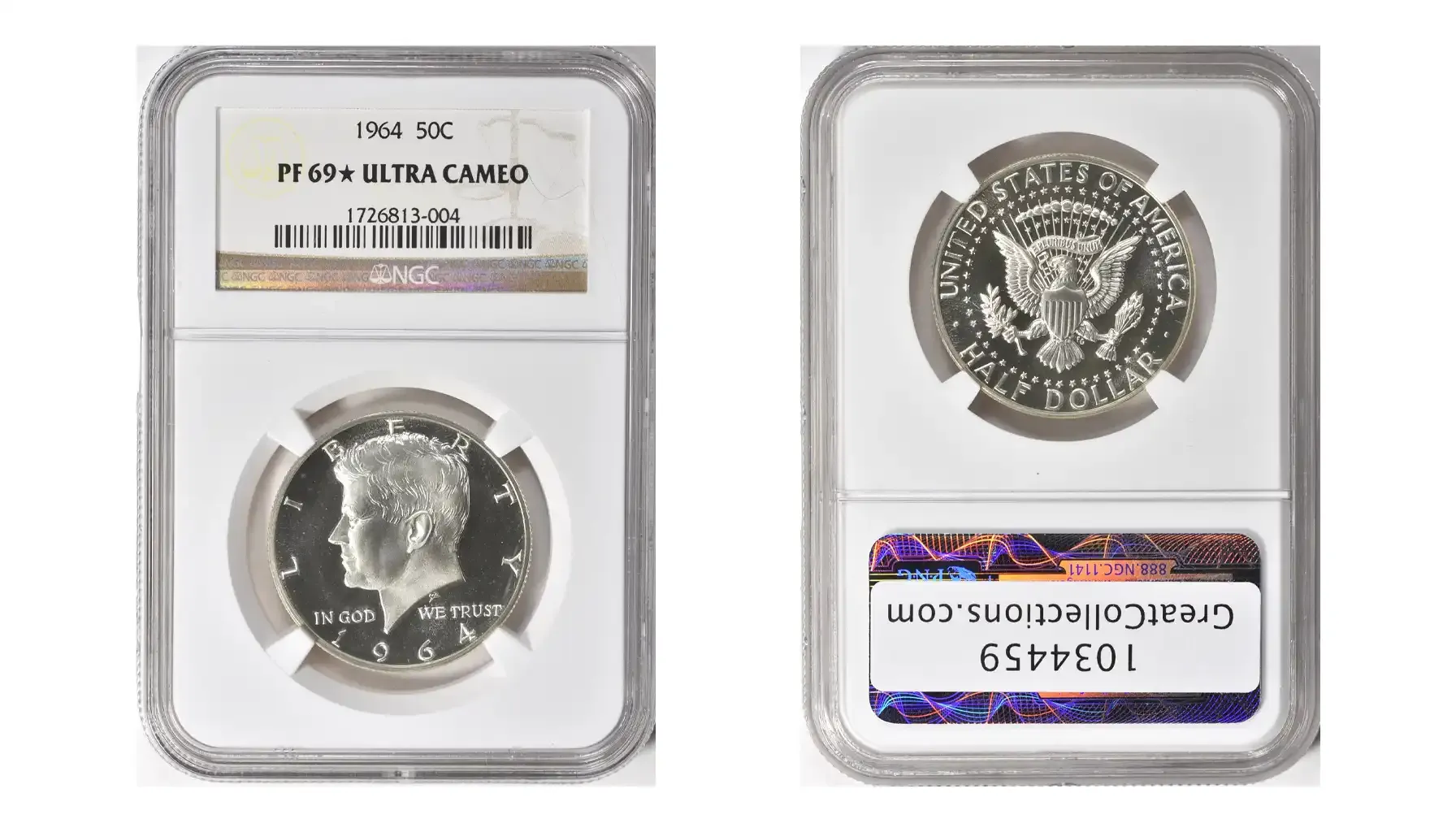
Design Features and the Main Characteristics
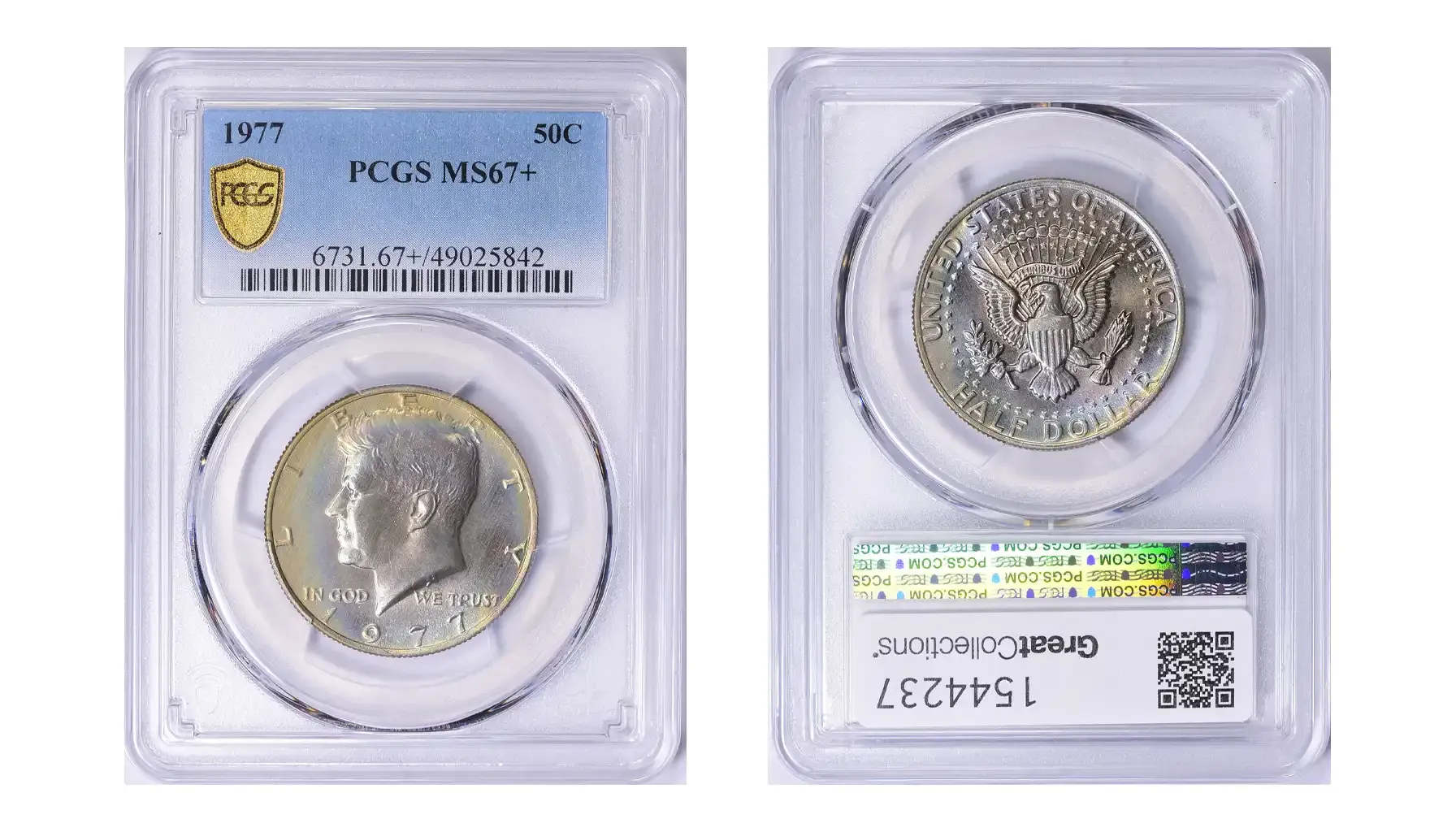
Obverse (Front): Features a left-facing portrait of President John F. Kennedy, designed by Gilroy Roberts, along with the inscriptions “LIBERTY” arching above Kennedy's head, “IN GOD WE TRUST” flanking his profile, a mint mark below the portrait, and the year “1977” along the bottom rim.
Reverse (Back): Demonstrates the Presidential Seal, i.e., a heralding eagle with a shield on its chest, holding an olive branch in the right talon, all surrounded by 50 stars, representing the states. Around the Seal are the inscriptions “UNITED STATES OF AMERICA” at the top edge, the motto “E PLURIBUS UNUM” on a banner held in the eagle’s beak, and the denomination “HALF DOLLAR” below.
The Main Characteristics of Half Dollar 1977 | |
Composition | 75% copper, 25% nickel (clad over pure copper core) |
Weight | 11.34 grams |
Diameter | 30.61 mm |
Thickness | 2.15 mm |
Edge | Reeded |
Mint Marks | None for Philadelphia “D” for Denver “S” for San Francisco (proof) |
Finish | Circulation strike (Uncirculated/Proof for special coins) |
Related article: 1977 Dollar Coins & 50 Cents: Values, Errors, and Rare Finds
1977 Half Dollar Coin Varieties by Mint
1977 50C (Regular Strike)
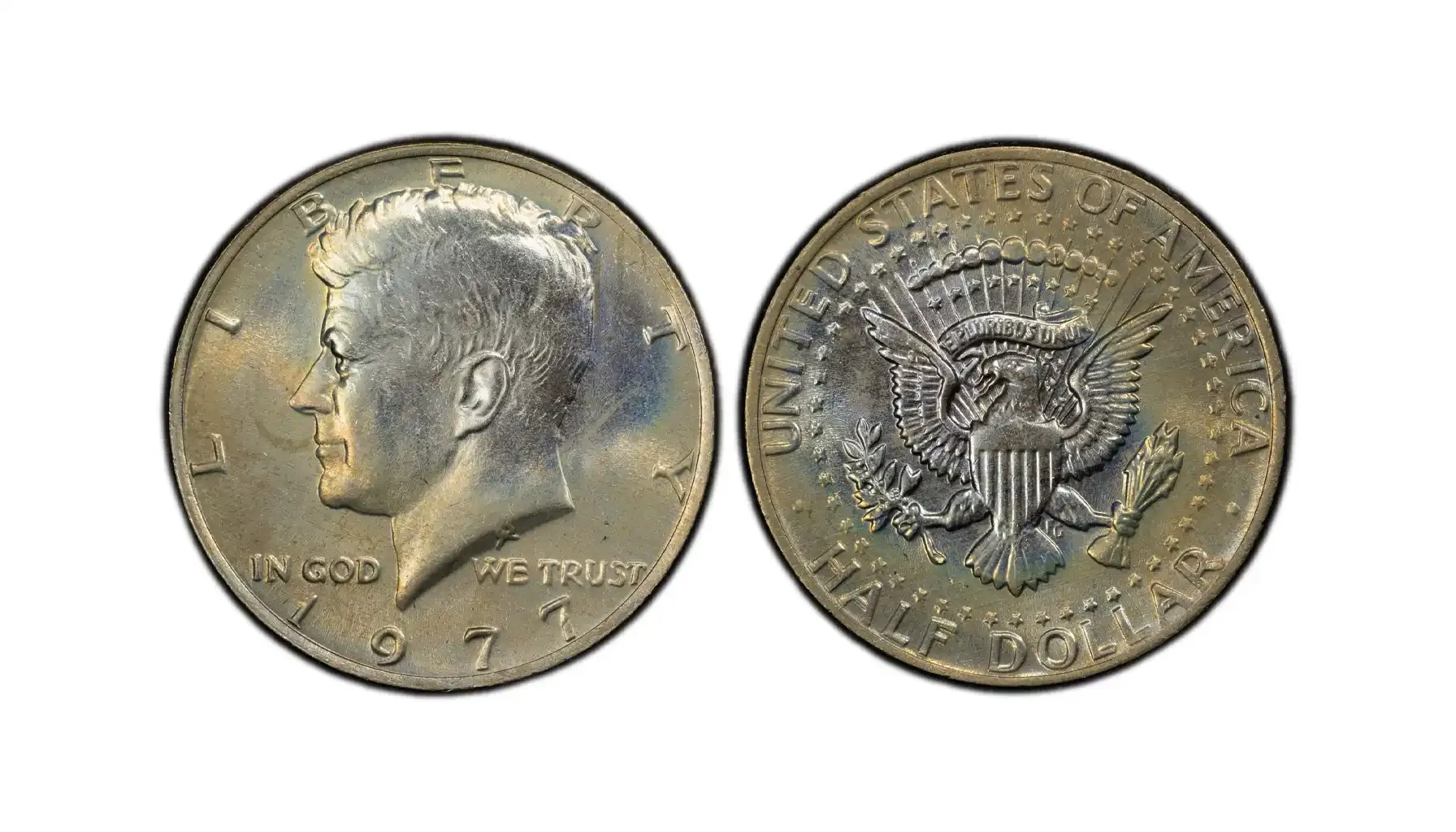
Produced by: Philadelphia Mint
Mintage: 43,598,000
Auction Record: $5,750 for MS68
By monetary conventions, it is the Philadelphia Mint that is responsible for the production of the standard 1977 JFK half dollars for general circulation. These may not be extraordinary in terms of their appearance, but when found in high grades (i.e., uncirculated or almost uncirculated), they may turn into valuable assets with outstanding, well-preserved details and eye appeal.
1977-D 50C (Regular Strike)
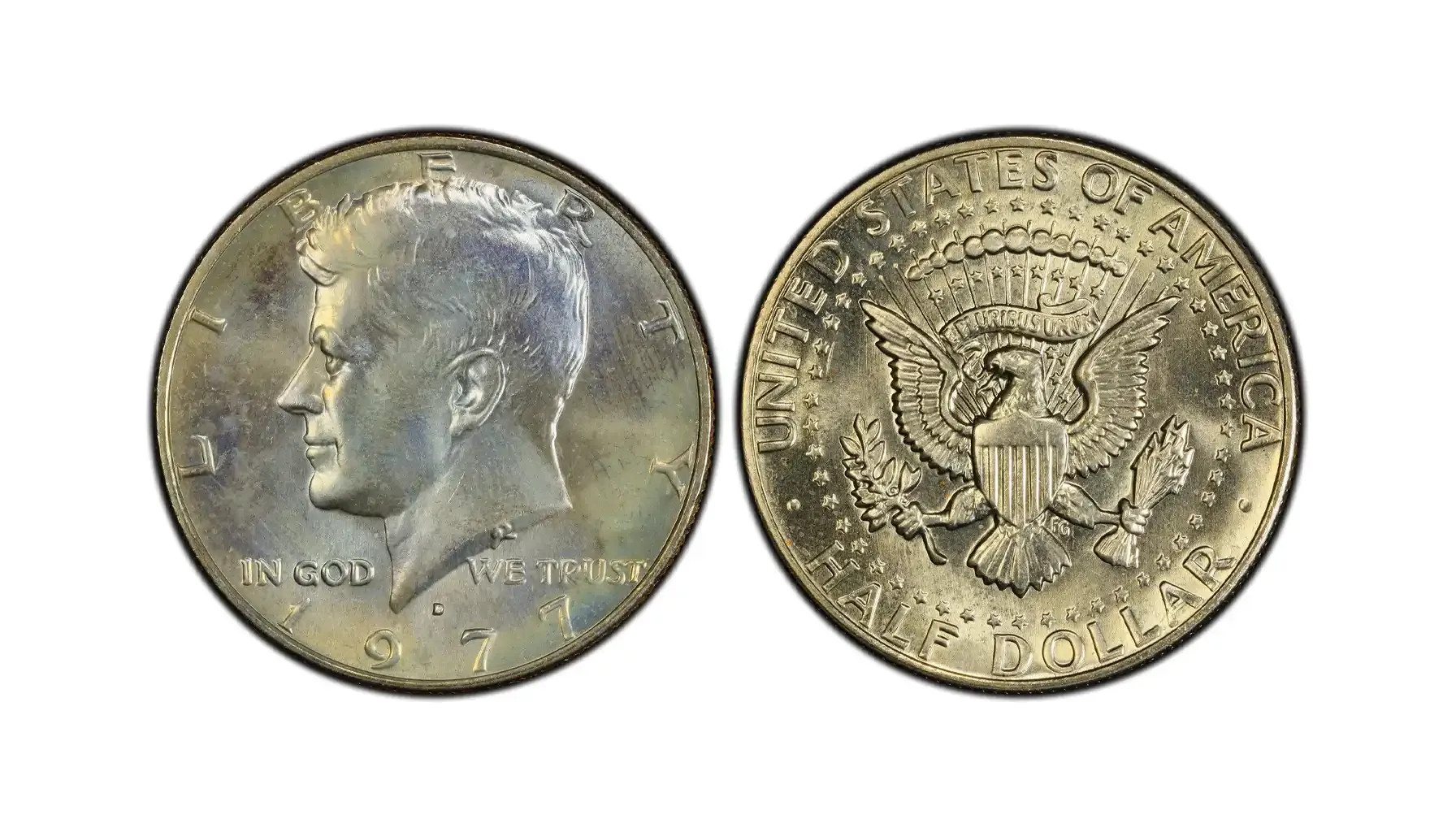
Produced by: Denver Mint
Mintage: 31,449,106
Auction Record: $9,200 for MS64
The 1977 D half dollar value may present the most phenomenal numbers, for these are rarely found in well-preserved condition. According to Jaime Hernandez, samples graded MS66 and above are relatively scarce, with fewer than 200 examples verified by PCGS. Even the single known PCGS MS68 example demonstrates the potential for exceptional collector value and historical significance for the future of your collection.
1977-S 50C, DCAM (Proof)
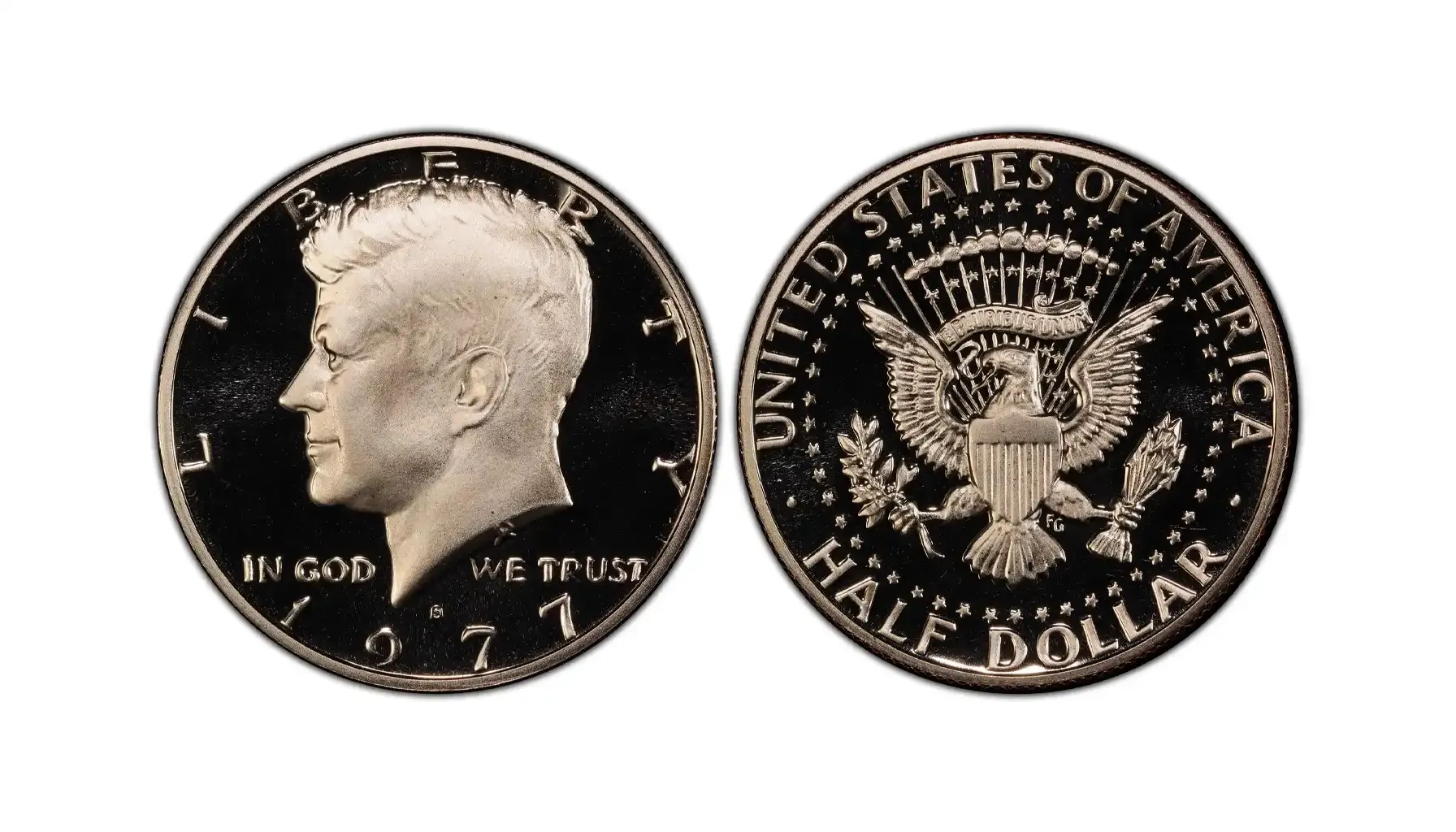
Produced by: San Francisco Mint
Mintage: 3,251,152
Auction Record: $1,323 for PR70
The proof versions are always better crafted, for they have always been intended for collectors, not trade. As for the strange designation DCAM, this generally means that a coin showcases frosted devices against mirror-like fields. This is why they are rarely found in poor condition and, hence, cannot boast an immense 1977 Kennedy half dollar value in the end. The rest is history.
Rare 1977 Kennedy Half Dollar Errors to Seek
Doubled Die Obverse (DDO)
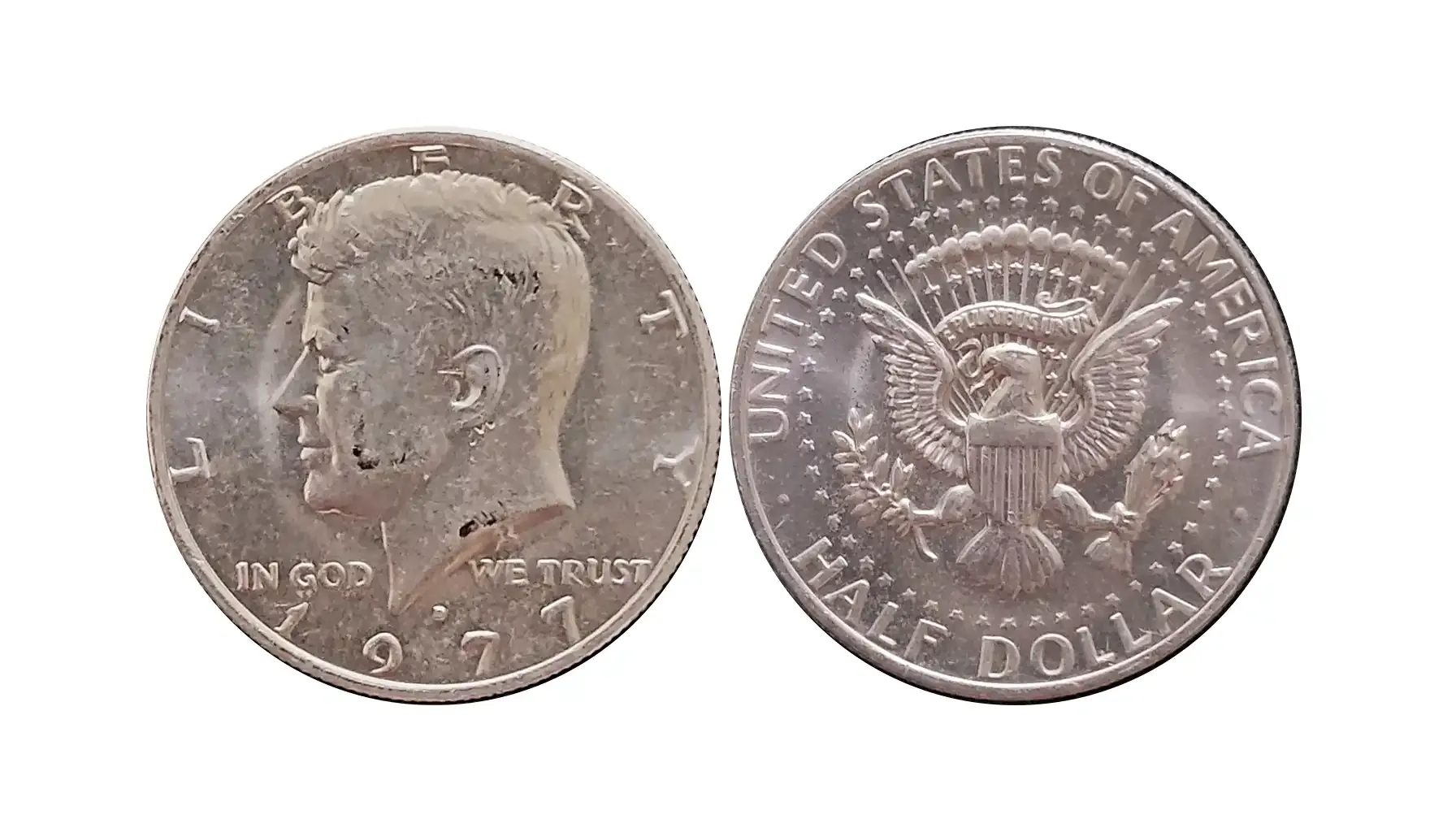
Estimated Value: $2,500
One of the most recognizable 1977 half dollar errors on the market is always the doubled die obverse one. In particular, it demonstrates the doubling of the inscriptions “LIBERTY” or “IN GOD WE TRUST” or the portrait itself. These usually occur during the die hubbing process and are among the most desirable finds even today.
Off-Center Strike with Large Clip
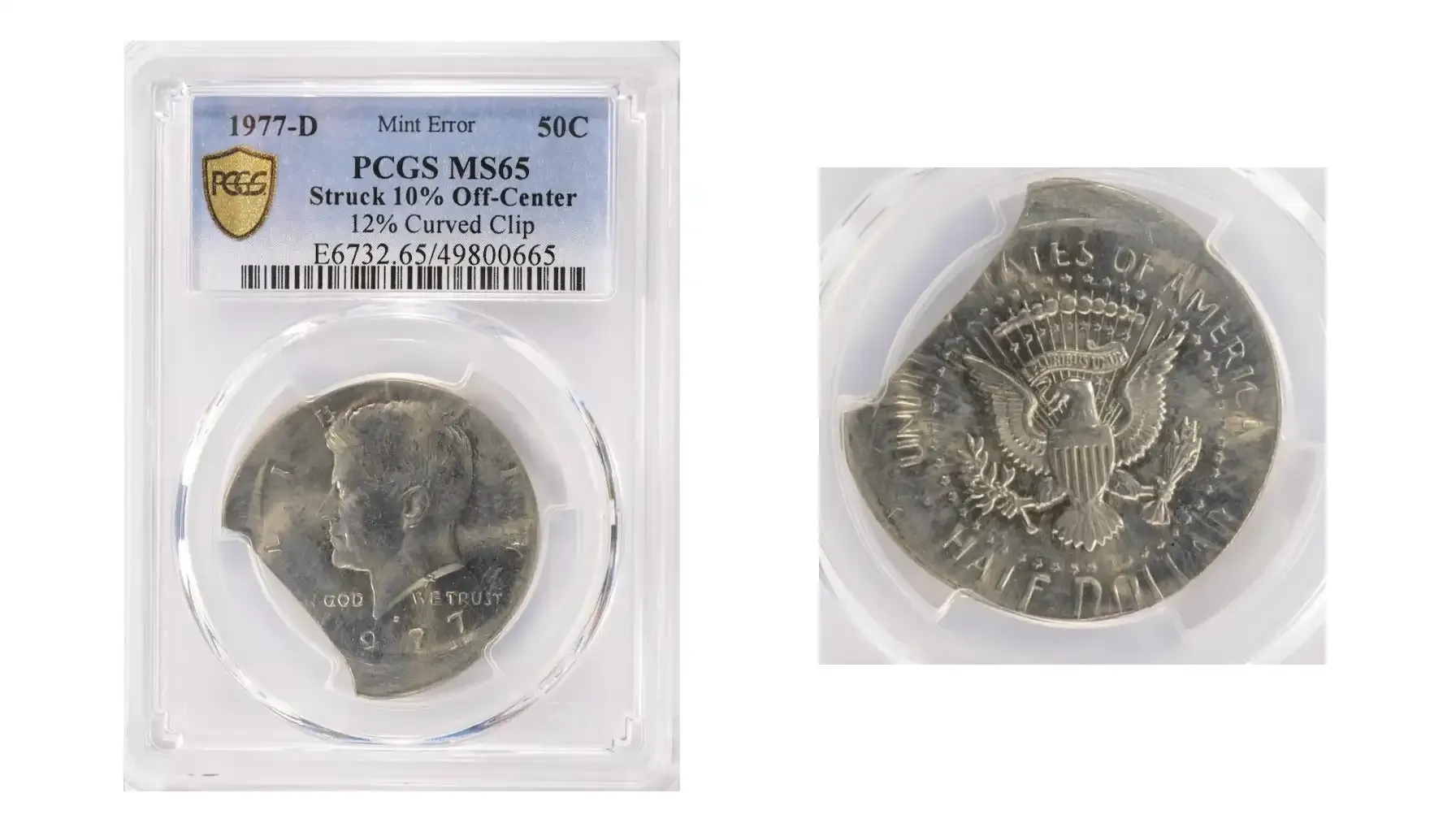
Estimated Value: $1,000
Sometimes, errors may be combined, and this makes an ordinary coin even more valuable and exclusive. This instance, as such, features an off-center strike, where the design is shifted away from its proper position, and a large planchet clip at the same time. The result is a highly unusual coin with some portions of the design missing.
Elliptical Planchet Error
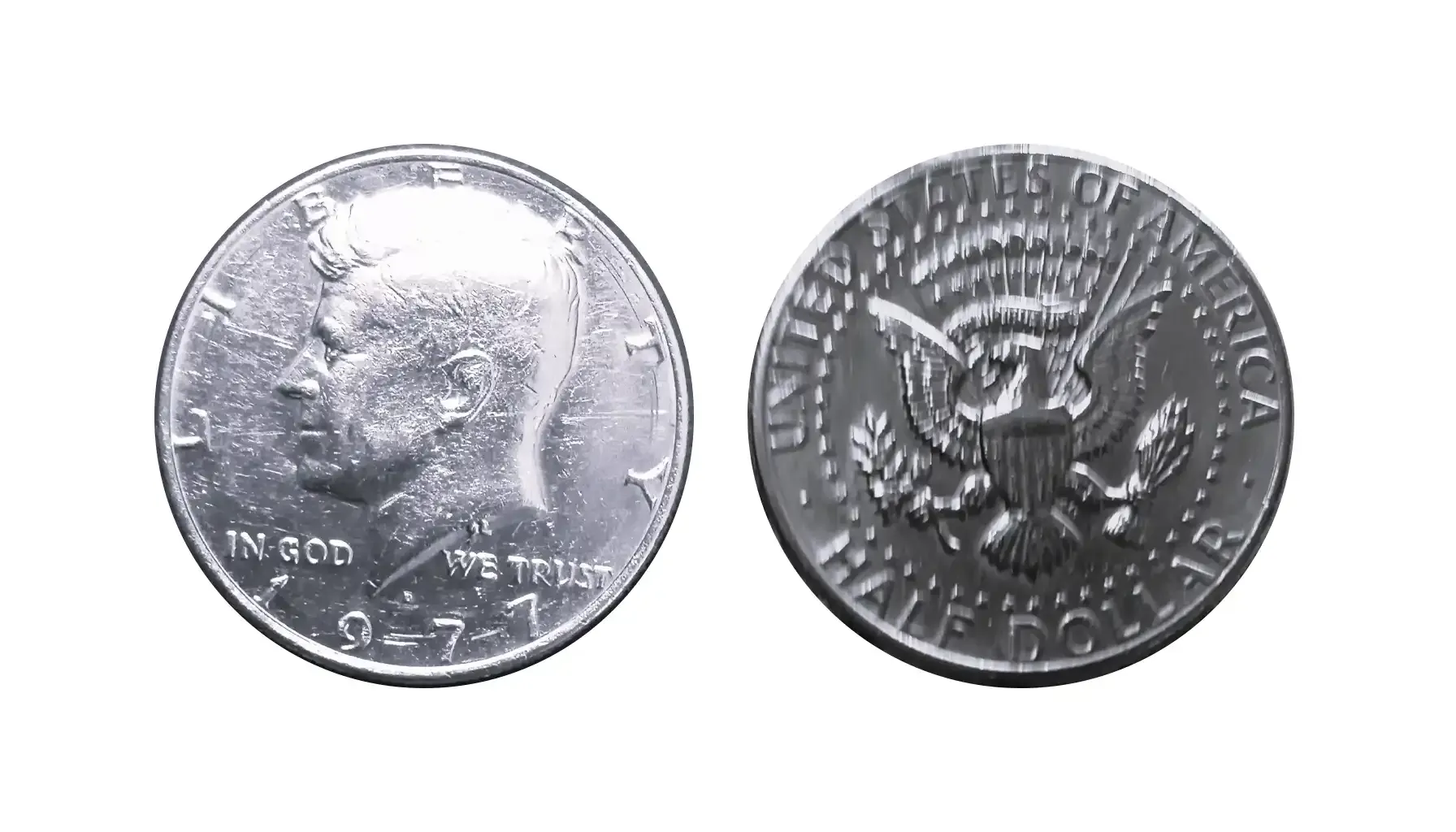
Estimated Value: $500
Here is a peculiar, genuinely unusual numismatic creation of an elliptical, oval-shaped form. As a rule, this comes from a blank planchet having been misfed into the coining press, which produces a visually striking, highly collectible coin with great potential to grow in value over time.
How Much Is a 1977 Half Dollar Worth?
The price should not have the leading role in choosing a coin to collect, yet knowing how much it may cost is indeed interesting and even beneficial. In fact, the value of any instance, including the 1977 50C issue, is usually affected by several factors, i.e.,:
Mintage & Rarity: The number of coins originally produced and how many survive today in collectible condition.
Grade (Condition): Grades, according to the Sheldon scale (from Poor-1 to Mint State-70 – the higher, the better).
Mint Mark: Different mints mean different mintages and qualities.
Errors & Varieties: Alterations that make coins exclusive and unique.
Market Demand: Collector interest, auction records, and current numismatic trends.
But how much are these coins worth?
Grade | 1977 (P) 50C | 1977-D 50C | 1977-S 50C |
Good (G-4) | $0.50 | $0.50 | – |
Fine (F-12) | $0.75 – $1 | $0.75 – $1 | – |
Extremely Fine (XF-40) | $1 – $2 | $1 – $2 | – |
About Uncirculated (AU-50) | $2 – $3 | $2 – $3 | – |
Mint State (MS-60 to MS-63) | $4 – $10 | $4 – $12 | $8 – $15 |
Choice Mint State (up to MS-65/PR-65) | $15 – $40 | $20 – $75 | $15 – $50 |
Gem Mint State (up to MS-67/PR-69) | $100 – $1,000 | $150 – $9,200 | $50 – $300 |
Top Grade (MS-68/PR-70) | $5,750 | $9,200 | $1,323 |
*1977 half dollar coin value ranges are approximate and may fluctuate. For more precise data, please refer to reputable coin grading services like NGC or private appraisers instead.
How to Grade Your Kennedy Half Dollar 1977
Grading is one of the most important steps in determining the half dollar 1977 value. As we have stated above, the coin's grade does reflect its condition, measuring how much wear it has sustained and how well it has retained its original detail and luster. So as to get your coin graded, it is reasonable to appeal to collectors with expertise or professionals, who traditionally rely on the Sheldon Scale. Nevertheless, one can try grading it on their own, too (why not, though).
See also: How Do You Know If a Coin Is Valuable: Your Detailed Guide
Areas to Examine
When grading the Kennedy 50-cent piece, pay close attention to these design elements:
Kennedy’s Hair: The high points above the ear and along the part in his hair wear down first.
Cheek and Jawline: Flatness or loss of detail in Kennedy’s cheekbone and jaw can quickly lower the grade.
Luster: Original mint luster is the main indicator of an uncirculated coin.
Reverse Eagle: Check the details in the eagle’s feathers and the clarity of the shield.
Fields (Backgrounds): Pay attention to marks, scratches, or any other imperfections in the smooth areas, for they greatly affect grade, especially for proof coins.
Grade Levels
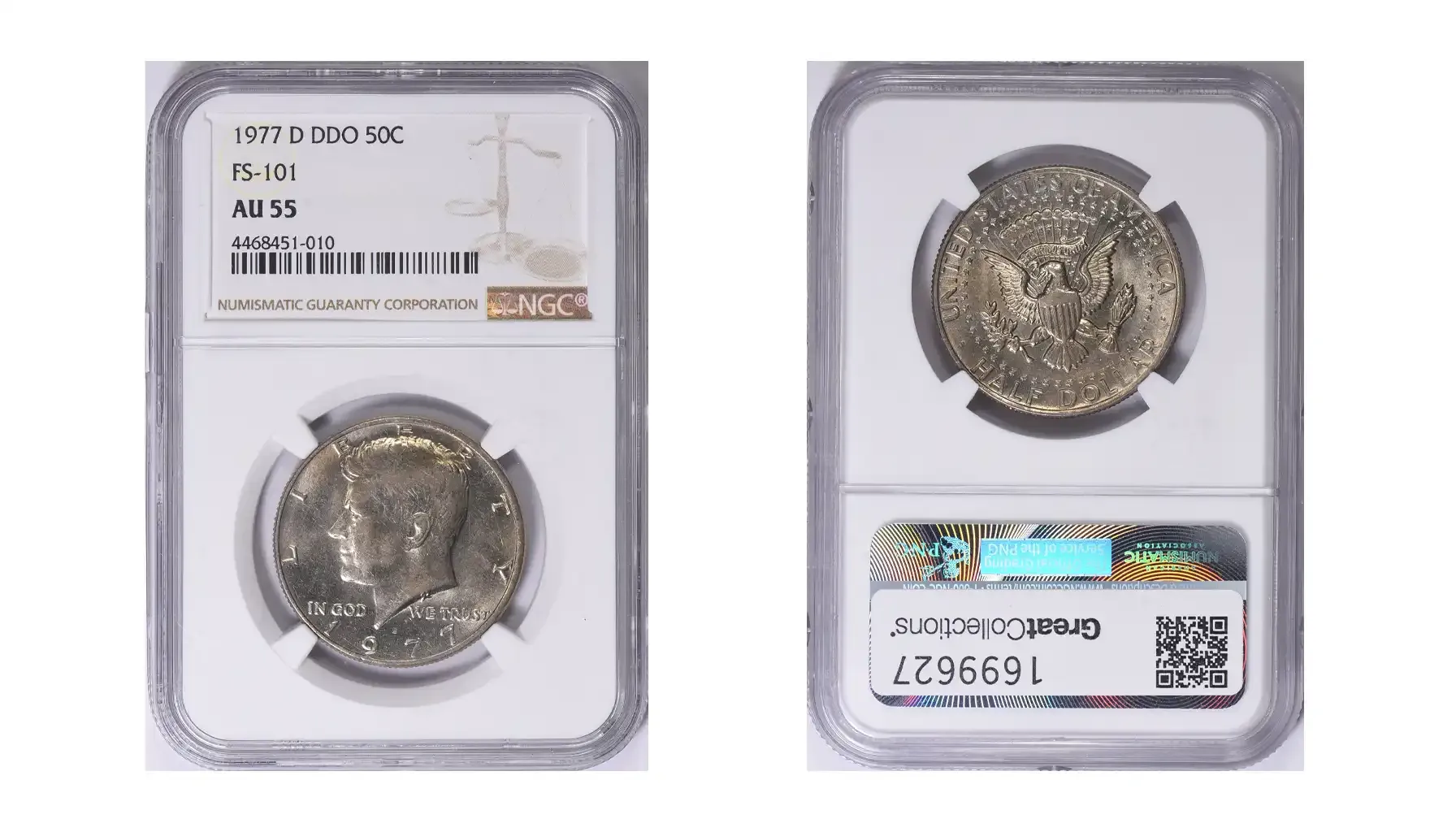
Good to Fine (G–F): Heavy wear with major details, like Kennedy’s hair and face, mostly flattened.
Very Fine (VF): Moderate wear, but Kennedy’s portrait remains clear.
Extremely Fine (XF): Light wear confined to high points; much of the detail is still sharp.
About Uncirculated (AU): Very slight traces of wear on the highest points; retains most of its original mint luster.
Mint State (MS-60 to MS-70): No wear from circulation. Stronger luster, sharper strike, and fewer marks.
Proof (PR-60 to PR-70): Specially struck coins from San Francisco with mirror-like fields and frosted devices.
Supporting Tools
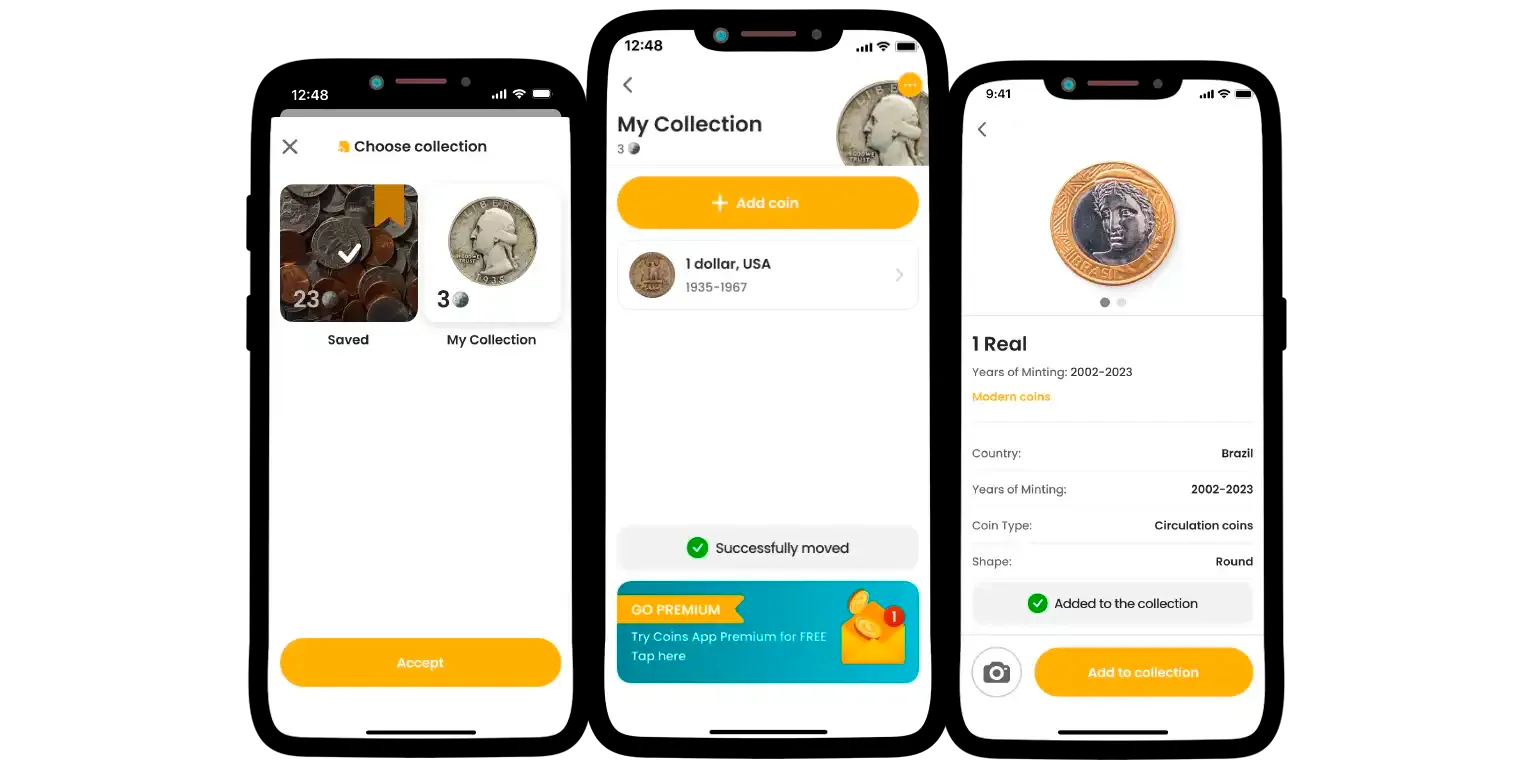
Extra help is never "extra". So as to make your grading experience a bit easier, we should definitely recommend incorporating additional tools like Coin ID Scanner, which allows one to quickly scan coins with just a camera on the phone. Review background information, confirm the coin’s type and mint mark, and explore the suggested value ranges per grade. This is all you need to turn your numismatic journey into something more insightful and less boring after all.
Professional Grading
Though a magnifying lens and persistence can help you determine the quality of the coins you own, only professional grading services like PCGS, NGC, and ANACS may provide certified, market-accepted grading. Submit it, and learn more about your particular numismatic creation with the highest level of precision and proficiency.
Common or rare? Valuable or modest? Coins reveal different meanings to each collector. However, the truth is always the same: collect with passion, not fashion.

 Facebook
  X (Twitter)
  Pinterest
  LinkedIn