Contents:
US coins from the mid-20th century still attract the attention of collectors and investors. The 1956 Roosevelt dime shows how an ordinary piece of change can, over time, turn into something much more valuable. Today, not just numismatists but also people who consider silver a stable way of securing their wealth are increasingly attracted to coins. It’s quoted on the market due to its preservation, rare varieties and minting features.
For beginners, it’s especially useful not only to know the price, but also to be able to correctly identify coins.
History and Background of the 1956 Roosevelt Dime
When Franklin D. Roosevelt passed away in 1945, the nation sought a way to honor the man who had come to embody hope through the Great Depression and World War II. As early as 1946, his profile appeared on the dime, turning an everyday coin into a symbol of national remembrance.
By 1956, the issue had become a part of everyday life, and his image had become easily recognizable. Artist John R. Sinnock depicted Roosevelt’s calm profile on the obverse, and on the reverse, he placed the torch of freedom, framed by an oak branch of strength and an olive branch of peace. Such harmony of symbols reflected the core values on which American democracy was based.
Silver Composition and Melt Value
Metal Content and Intrinsic Worth
The 1956 silver dime was minted to the standard used for most American change until the mid-1960s: 90% silver and 10% copper. Its total weight was 2.5 grams, of which about 2.25 grams was pure silver. At $25 per ounce, the minimum value of the precious metal is about $1.80.
It’s important to note, however, that this melt value is only a baseline. The real market value is higher, since it also includes the collectible component. The situation is further affected by the fact that the price of silver on the world market is constantly fluctuating. For example, during periods of precious price spikes (as in 1979-1980 or in 2011), the melt-value of the 1956 dime silver significantly exceeded the face value of the coin.
In addition, the composition of the alloy itself played a practical role: the addition of copper provided hardness and wear resistance, since pure silver is too soft for constant monetary circulation. Thanks to this, the coins could circulate for a long time, keeping the design sharp. It’s precisely such specimens, which have retained the relief and shine, that are especially highly valued among collectors and investors.
1956 Dime Silver Content
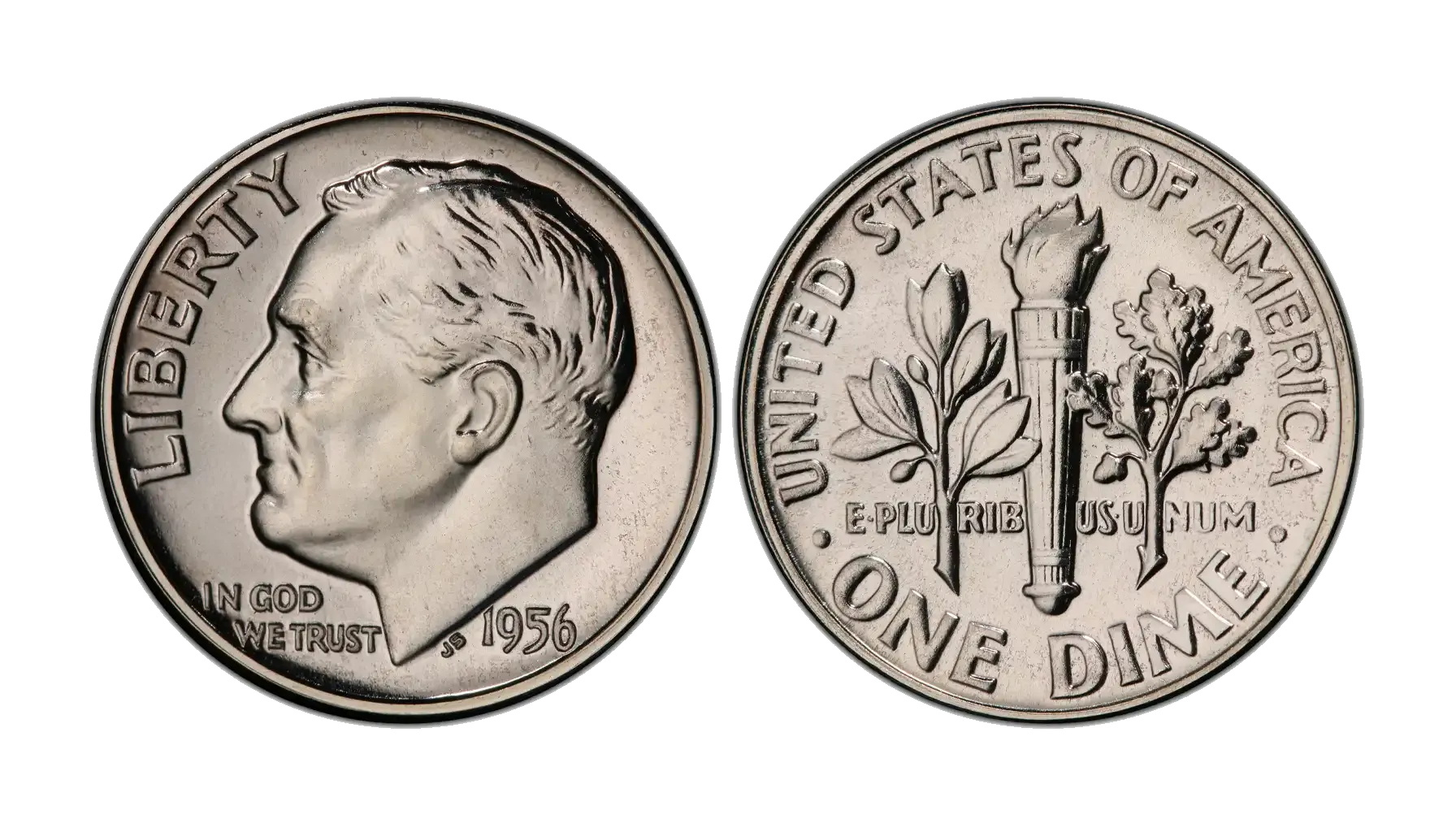
The actual composition is important not only for melt value, but also for preservation. Silver gives the coin strength, but requires proper storage to prevent darkening or discoloration. For collectors, it is the 1956 dime silver content that becomes the basic guarantee of minimum value, even without taking into account numismatic interest.
It’s also worth noting: knowledge of the composition helps to avoid counterfeiting, and practical guides or numismatic tools make this process easier to systematize.
1956 Dime Value and Its Determinants
Key Factors That Influence the Value
1956 dime value depends on three factors:
condition and level of wear;
presence of rare varieties or minting errors;
current market demand.
How Much Is a 1956 Dime Worth?
In practice, the answer to ‘how much is a 1956 dime worth in 2025?’ varies. For common examples, the value is limited to a few dollars. But a coin in MS67 or better condition can fetch $500–$1,000 at major auctions.
Mint Marks and Their Significance
Philadelphia Issue: 1956 Dime No Mint Mark
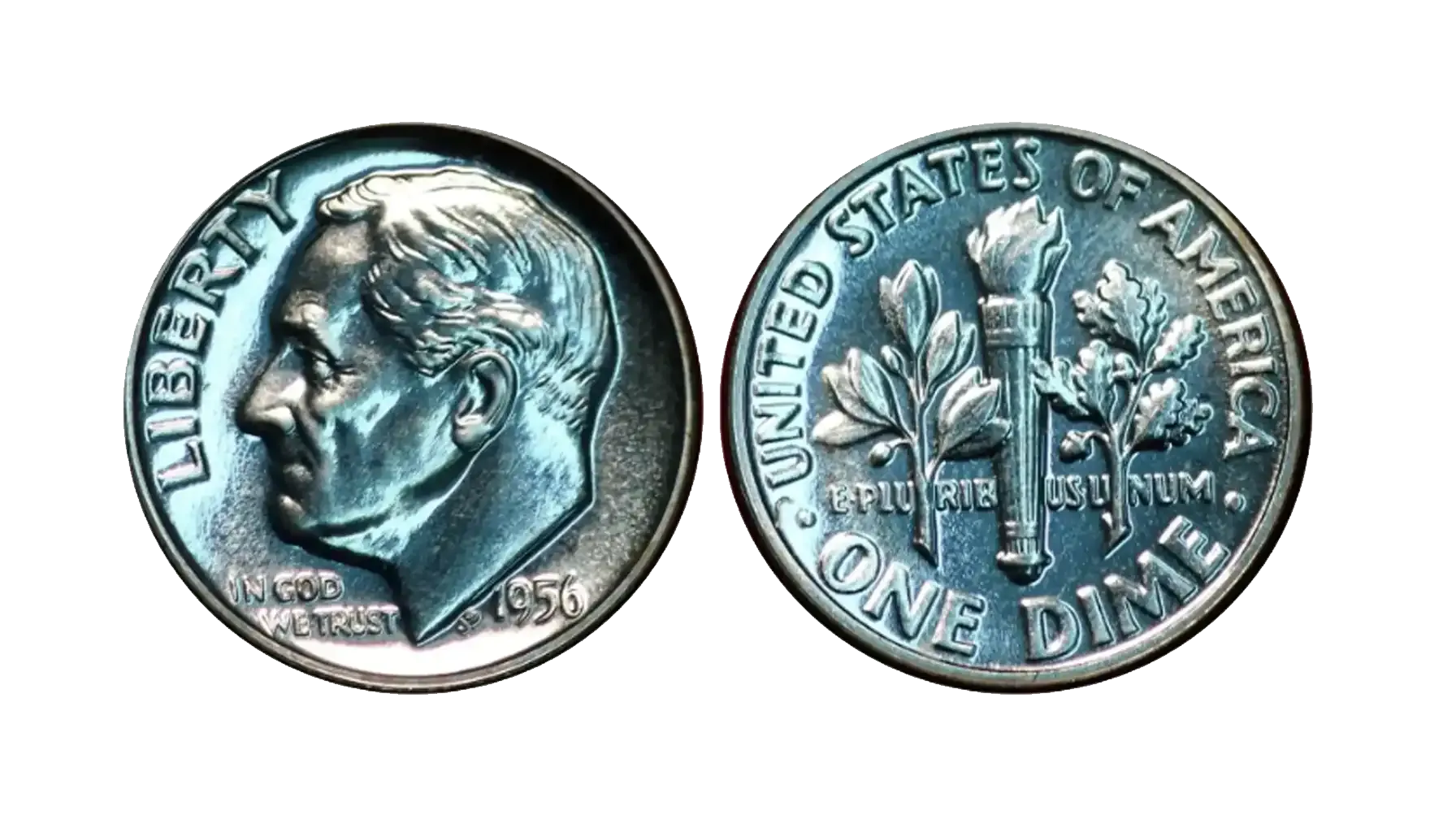
Philadelphia Mint coins are unmarked. The 1956 dime no mint mark is the most common, as it was the place where most of the minting took place. In circulated condition, their value is close to the price of the metal, but already in the MS65 condition they already attract collectors. Specimens in MS67–MS68 are becoming rare, and at auctions such finds can sell for $1,000, especially if the coin has a full shine and clear relief.
Denver Issue: 1956 D Dime
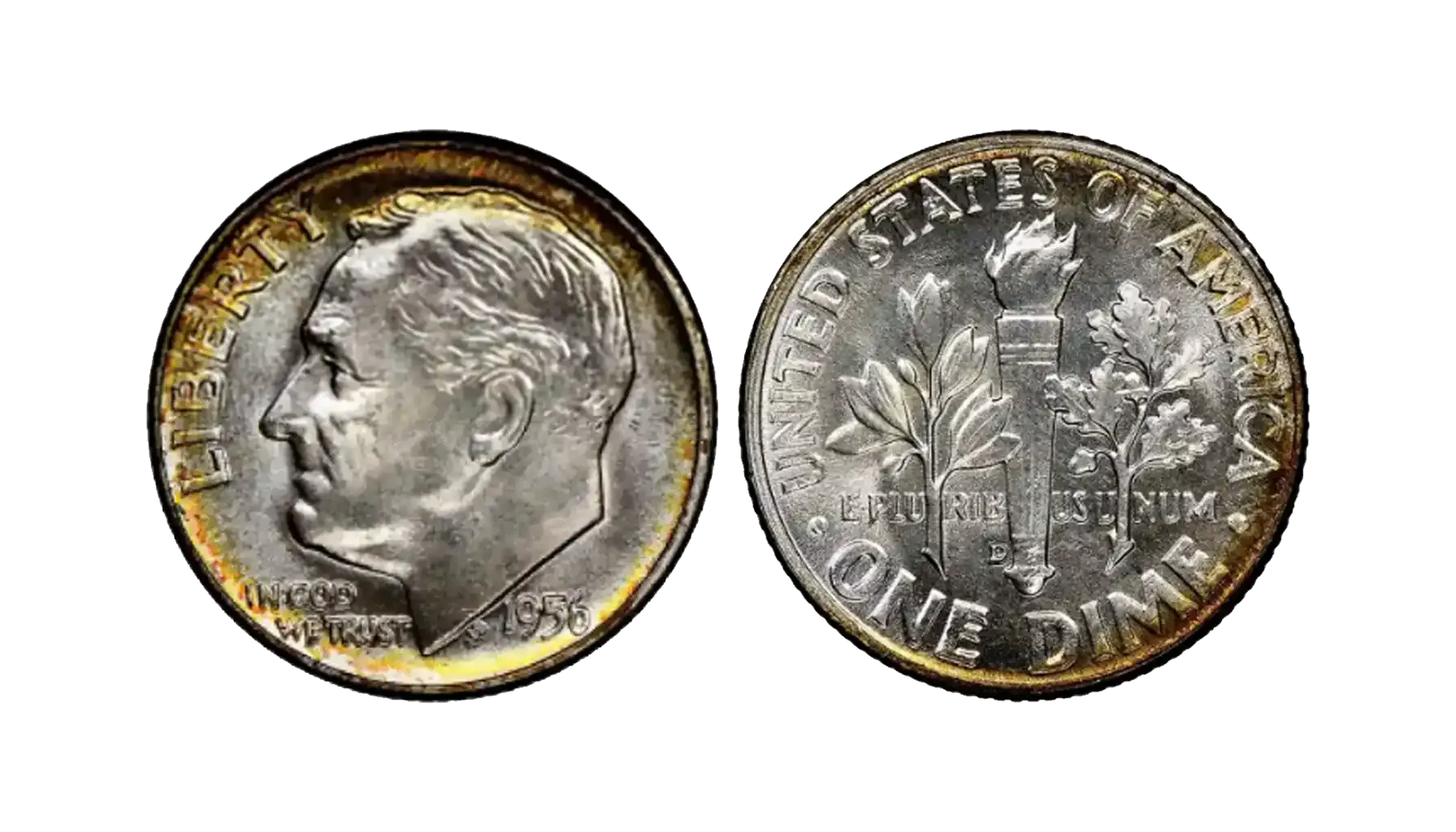
The 1956 d dime was struck in large quantities, numbering in the tens of millions. Thanks to the relatively consistent striking quality, these coins are quite common, but only a small fraction remain in top condition. Collectors prize those with a high luster, full torch lines, and minimal signs of handling. According to CoinStudy, the 1956 d dime in MS66 may bring $200–$250, while the best examples in MS67 can cost $700 or more if certified by PCGS or NGC.
San Francisco Issue: Absence of Production
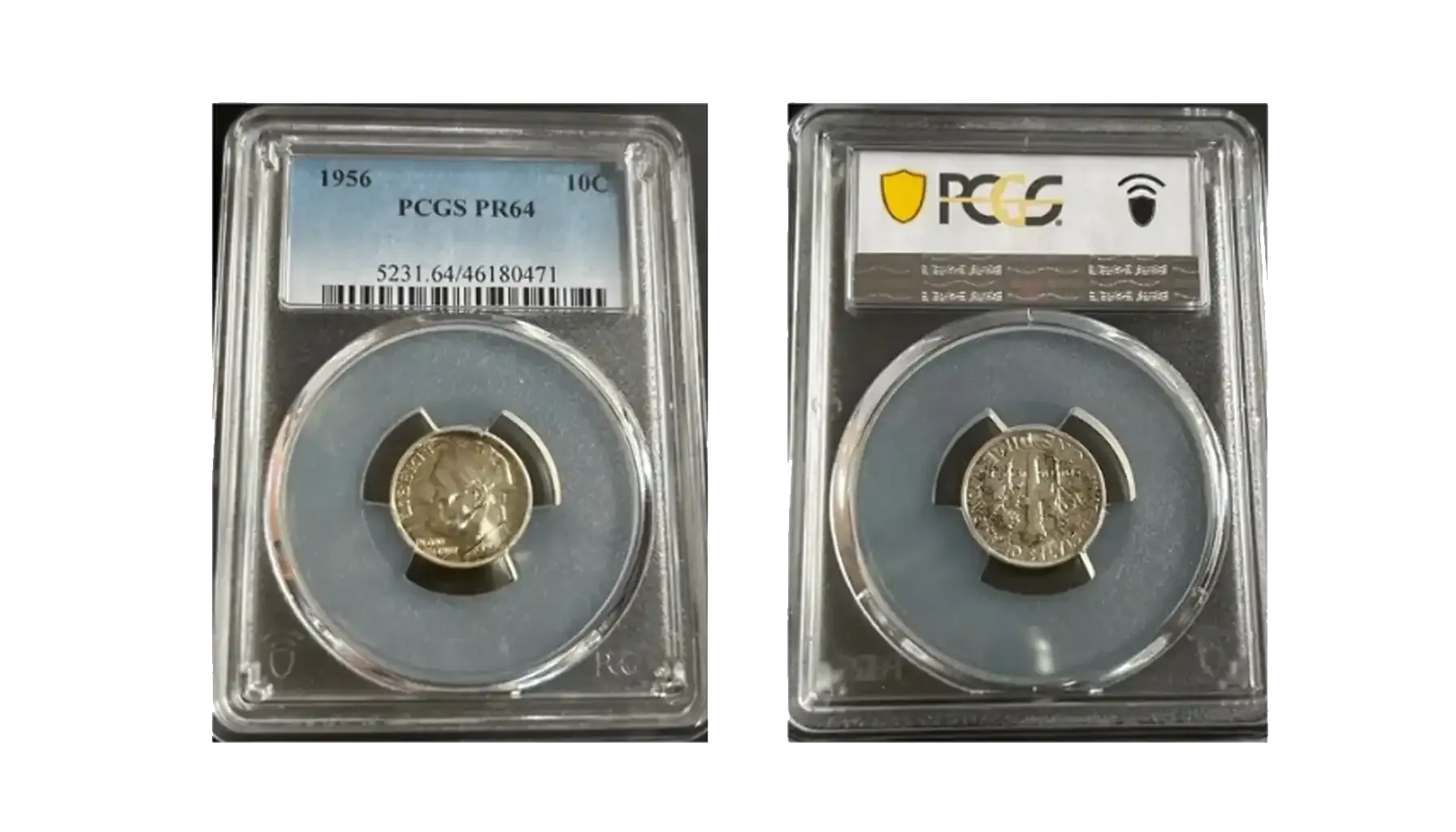
By 1956, the San Francisco Mint had already stopped producing dimes. This means that all the examples of this year are attributed only to Philadelphia and Denver. For collectors, this feature simplifies attribution by mint, but makes the few high-grade pieces from the two remaining mints even more desirable.
Error Varieties and Their Market
1956 Off-Center Strike
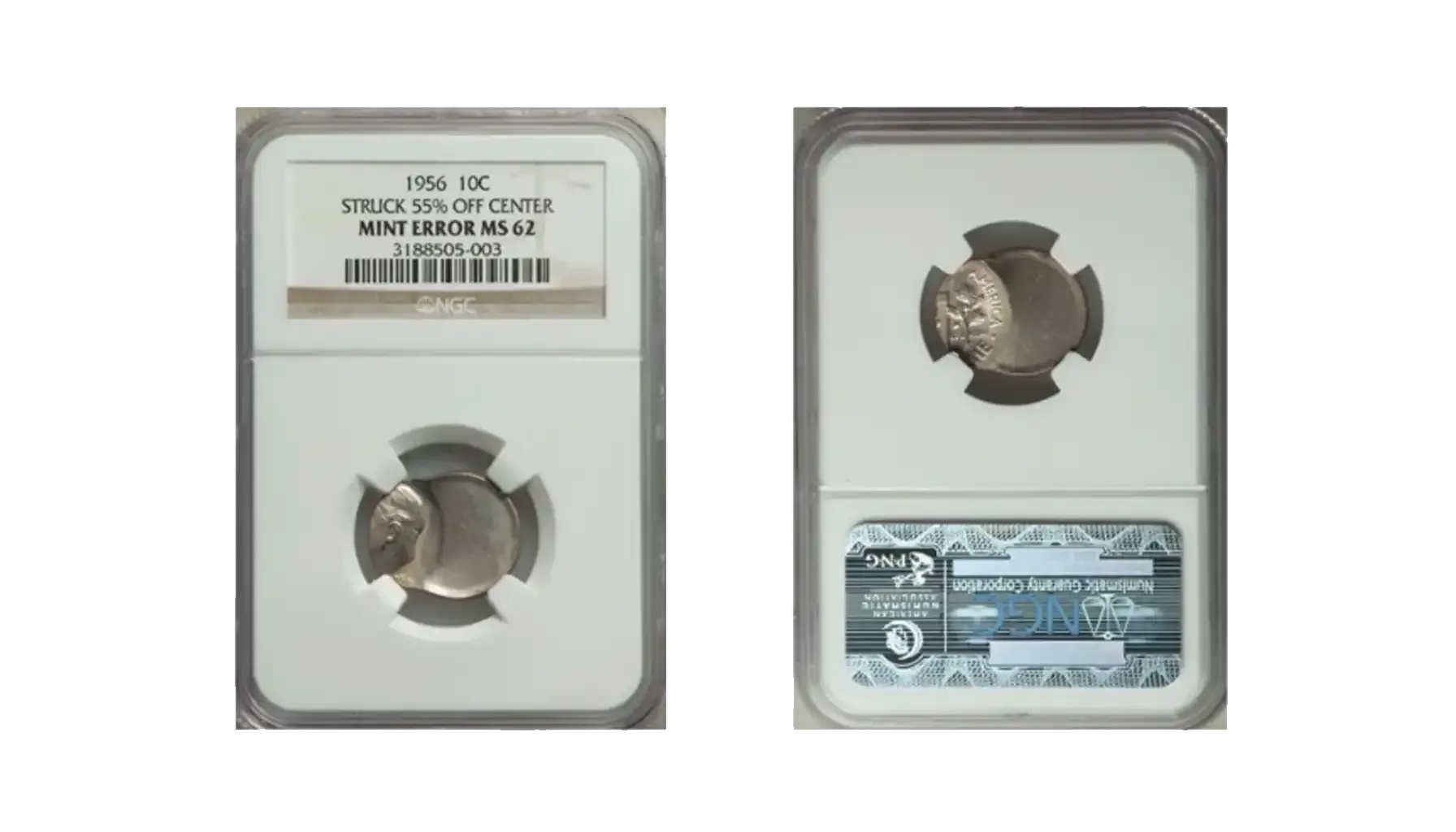
Image shift occurs when the blank is not completely pressed into the minting press. The coin may be missing part of the design, and the remaining design is offset.
Mintage: Unknown
Weight: 2.5 grams
Diameter: 17.91 mm
Composition: 90% silver, 10% copper
Auction Record Note: A specimen with approximately 20% offset center sold for $180 in 2022.
Condition / Market Value
10% Off-Center: $30 – $60
25% Off-Center: $100 – $20
50% Off-Center: $300 – $450+
The greater the offset and the better the coin is preserved, the higher its market value.
1956 Clipped Planchet
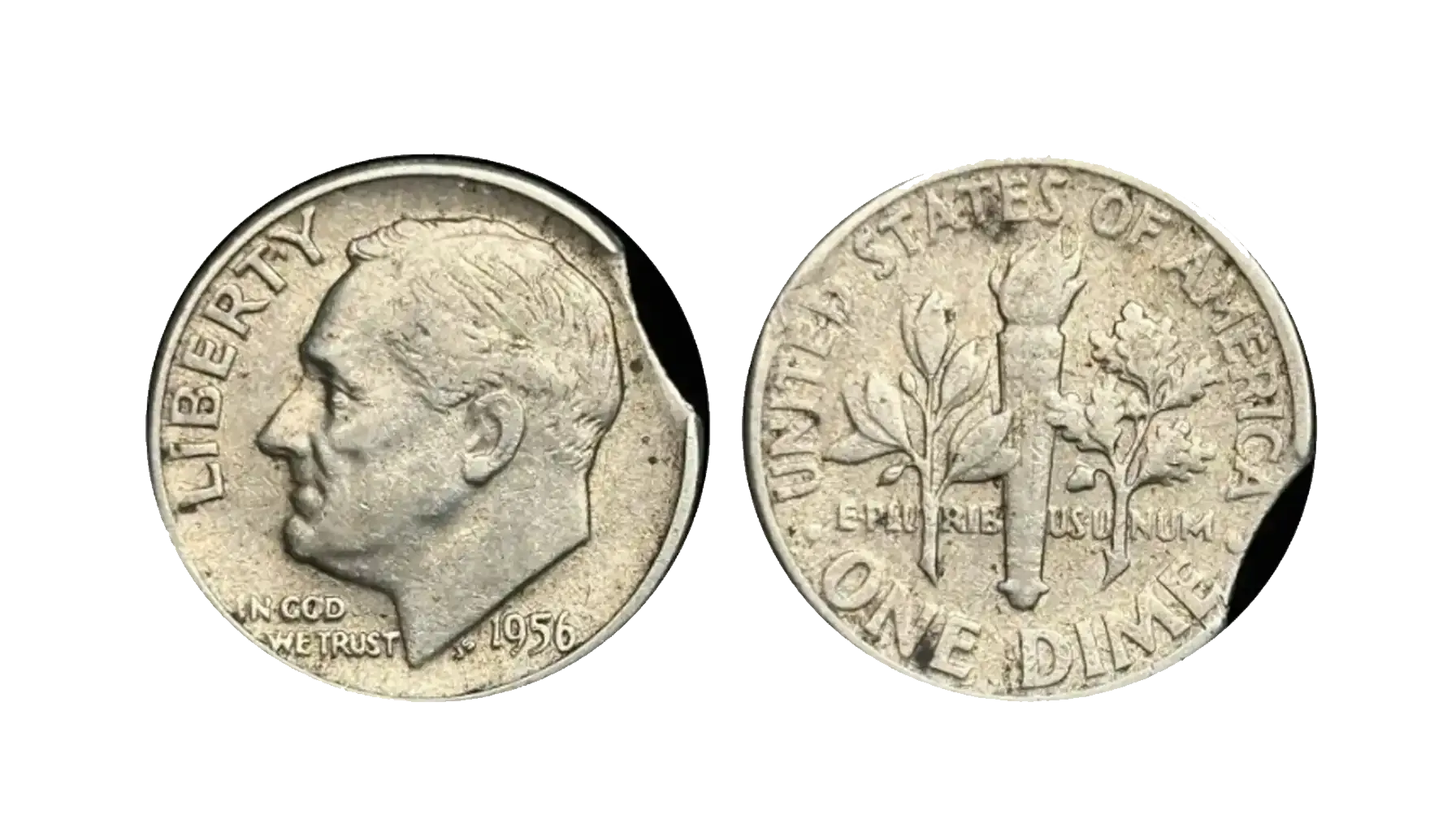
This defect occurs when the coin blank (planchet) was improperly die-cut. As a result, the coin may have a “cut” area along the edge.
Mintage: Low
Weight: Varies (due to defect)
Diameter: Under Standard
Composition: 90% Silver, 10% Copper
Auction Record Note: A coin with a noticeable clip on the rim sold for $240 at a Heritage auction in 2020.
Condition / Market Value
Circulated: $80 – $150
Uncirculated: $250 – $400
These errors are easily visible to the naked eye, making them especially popular with collectors.
Denver Errors: 1956 D Dime Error
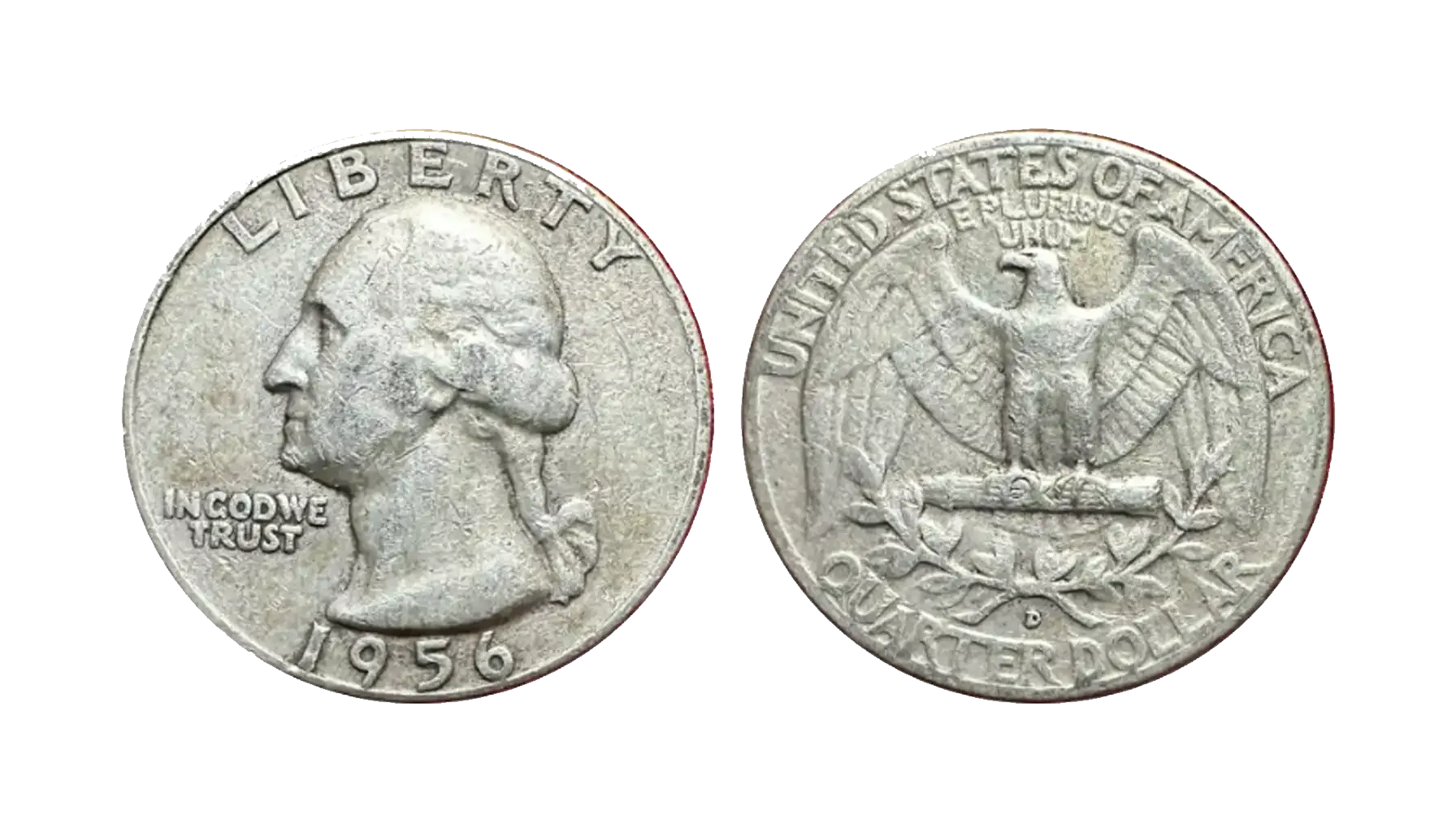
Some collectors especially value the 1956 d dime error. For example, there are known cases of die misalignment, giving the coin an unusual appearance. Such rarities often go at auction for hundreds of dollars. For example, there are known cases of broadstrike, when due to the lack of a retaining collar, the coin expanded in diameter and became thinner than usual. Such specimens stand out for their non-standard appearance and are valued higher than standard ones, especially in high gradation.
Another rare variety is a strike through error - when during the minting process a foreign object got between the die and the blank, leaving an imprint on the surface. Such coins are extremely rare and can be sold for several hundred dollars even with an average level of preservation.
Sometimes lamination errors occur, when a flaw in the metal causes part of the coin’s surface to peel or tear. These pieces are not only scarce but also visually distinctive, which makes them especially appealing to collectors.
The question” is a 1956 dime worth anything?” is logical for beginners. The answer is definitely yes. Even in a very worn condition, the coin is valuable due to its silver. And in collectible states, its value can be tens of times higher than its face value.
Market Prices and Auction Records
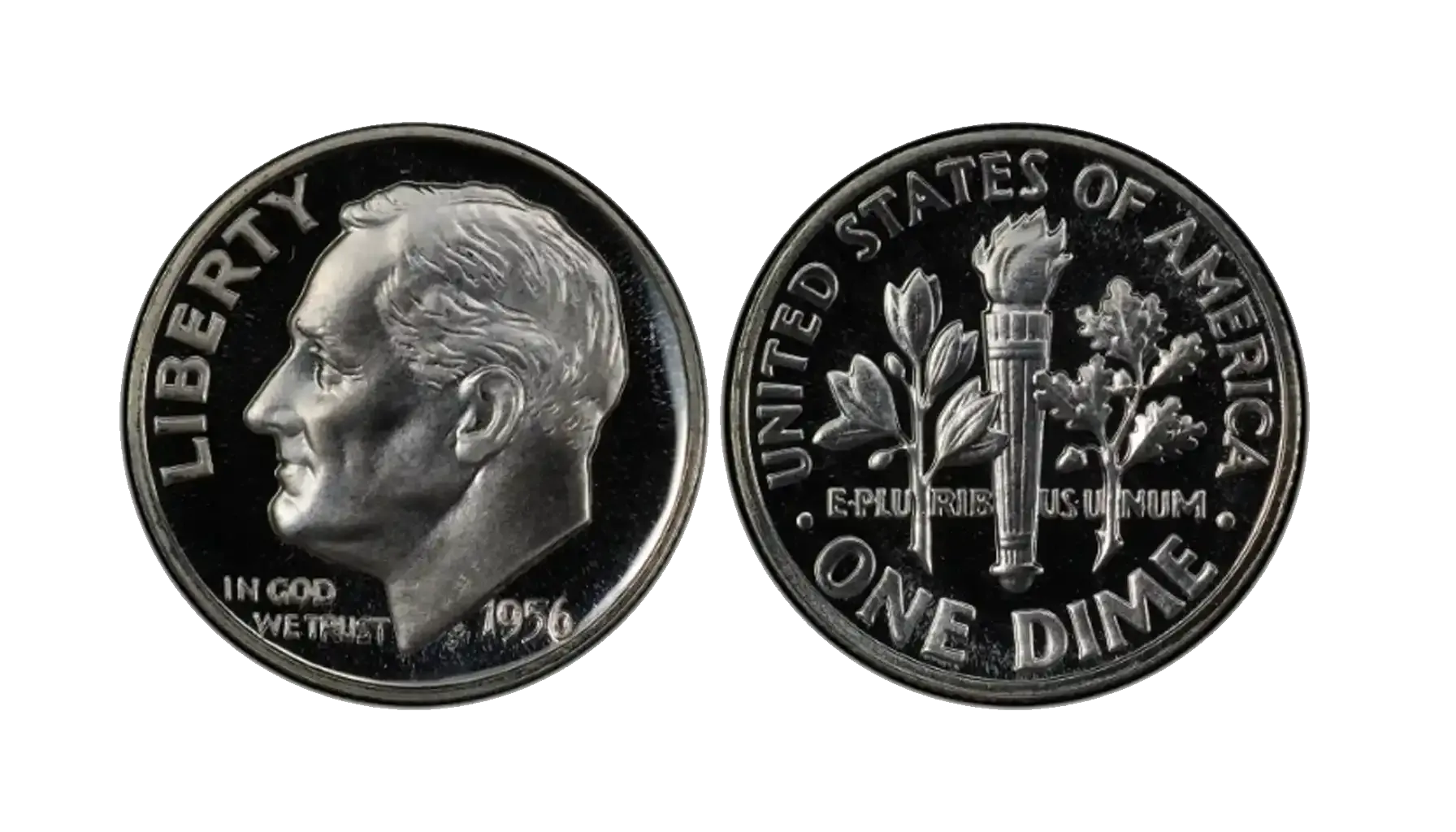
1956 Dime Value Today
By 2025, the market is showing stable interest. Below is a table of average prices:
Grade | Philadelphia | Denver |
G-4 | $2 | $2 |
F-12 | $3 | $3 |
XF-40 | $5 | $6 |
MS-60 | $10 | $12 |
MS-65 | $90 | $150 |
MS-67 | $400 | $700 |
Please note that the prices mentioned are accurate at the time of writing but may change over time.
These data show that the 1956 dime value today depends on both condition and mint.
The auction market is always surprising. For example, in 2022, an MS68 specimen without a mint mark sold for more than $2,800. And in 2023, a rare 1956 Roosevelt dime value from Denver in MS67 reached $1,200.
Collector Insights and Practical Advice
To preserve 1956 dime worth, collectors should:
store coins in capsules, holders or special albums for numismatics, avoiding simple plastic bags or paper;
never touch with bare hands - use cotton or nitrile gloves to avoid leaving grease and acid on the skin;
maintain stable humidity (around 40-50%) and temperature, avoiding sudden changes;
store away from light sources, especially direct sunlight, which can damage the patina;
regularly check catalogs and auction results to know the current value and trends;
Comparisons and Market Trends
The interest in Roosevelt dimes can be compared with the popularity of later releases, such as the 1999 Roosevelt dime, where unusual varieties form a separate market segment.
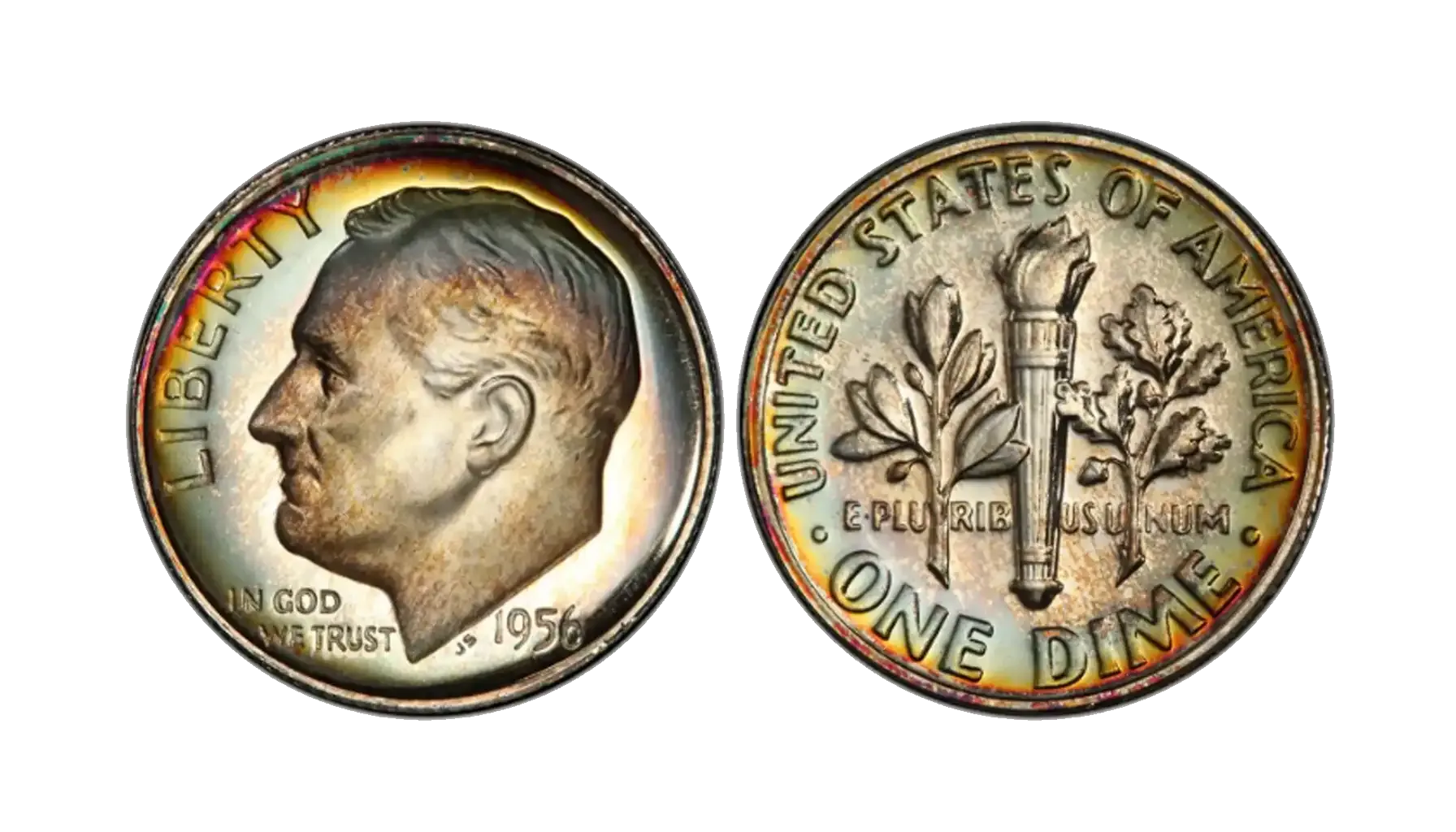
Mid-century Roosevelt dimes have long since moved from the pocket change category to assets comparable to silver bullion. Their continued interest is due to a combination of historical value and limited supply on the market.
Conclusion
Today, the 1956 Roosevelt dime value is influenced by several factors: silver content, rarity of errors, condition, and collector interest. The answer to the question of “what is a 1956 dime worth?” is not universal - for some it is only $2 for a worn specimen, for others - thousands of dollars for the top graduation MS68.
The 1956 dime silver value makes it particularly appealing for investors, and the presence of varieties and errors makes it unique for numismatists. For those who want to delve deeper into the market, it is worth tracking auctions and comparing similar examples, such as the 1965 Lincoln Penny value, to understand the dynamics of demand for different series.

 Facebook
  X (Twitter)
  Pinterest
  LinkedIn