Contents:
US coins from the late 1920s are especially interesting for collectors: they combine historical context, silver content and variety of preservation. The 1929 Mercury dime isn’t just another coin — it’s a piece of Adolph Weinman’s artistry. Because it’s gracefully designed and relatively limited in its mintage, this dime continues to capture collectors’ attention and holds prime appeal in the 2025 market.
A significant number of coins in average condition have survived, but high gradations are rare, which explains the record prices. For collectors, it’s important to know not only the design and composition, but also rare varieties, minting errors and how the 1929 dime value today changes.
All this helps to correctly evaluate the coin and, if necessary, sell or buy it profitably. For novice researchers, it is always useful to be able to correctly identify coins.
Design and Symbolism of the Mercury Dime
Artistic Meaning and Details
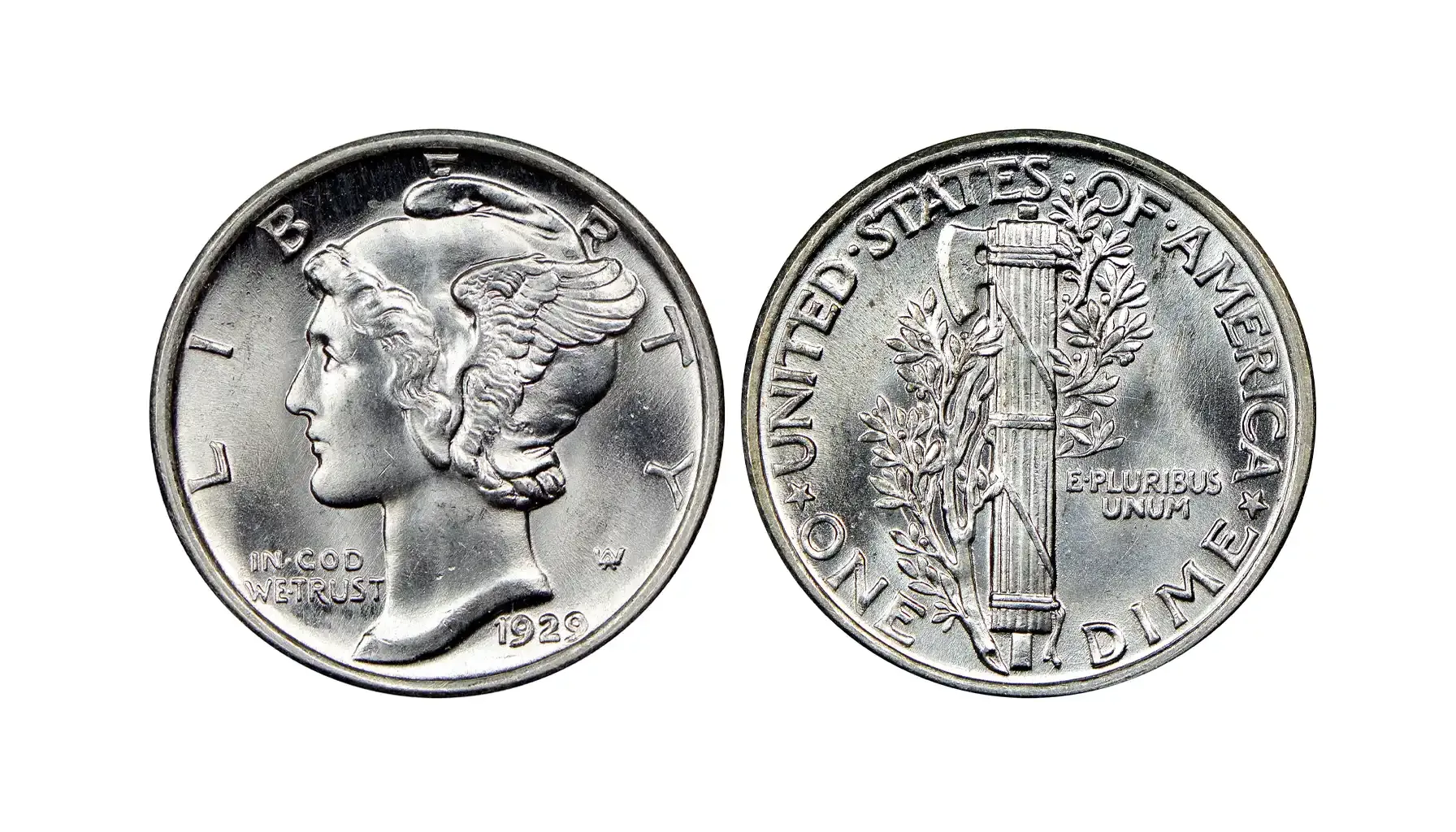
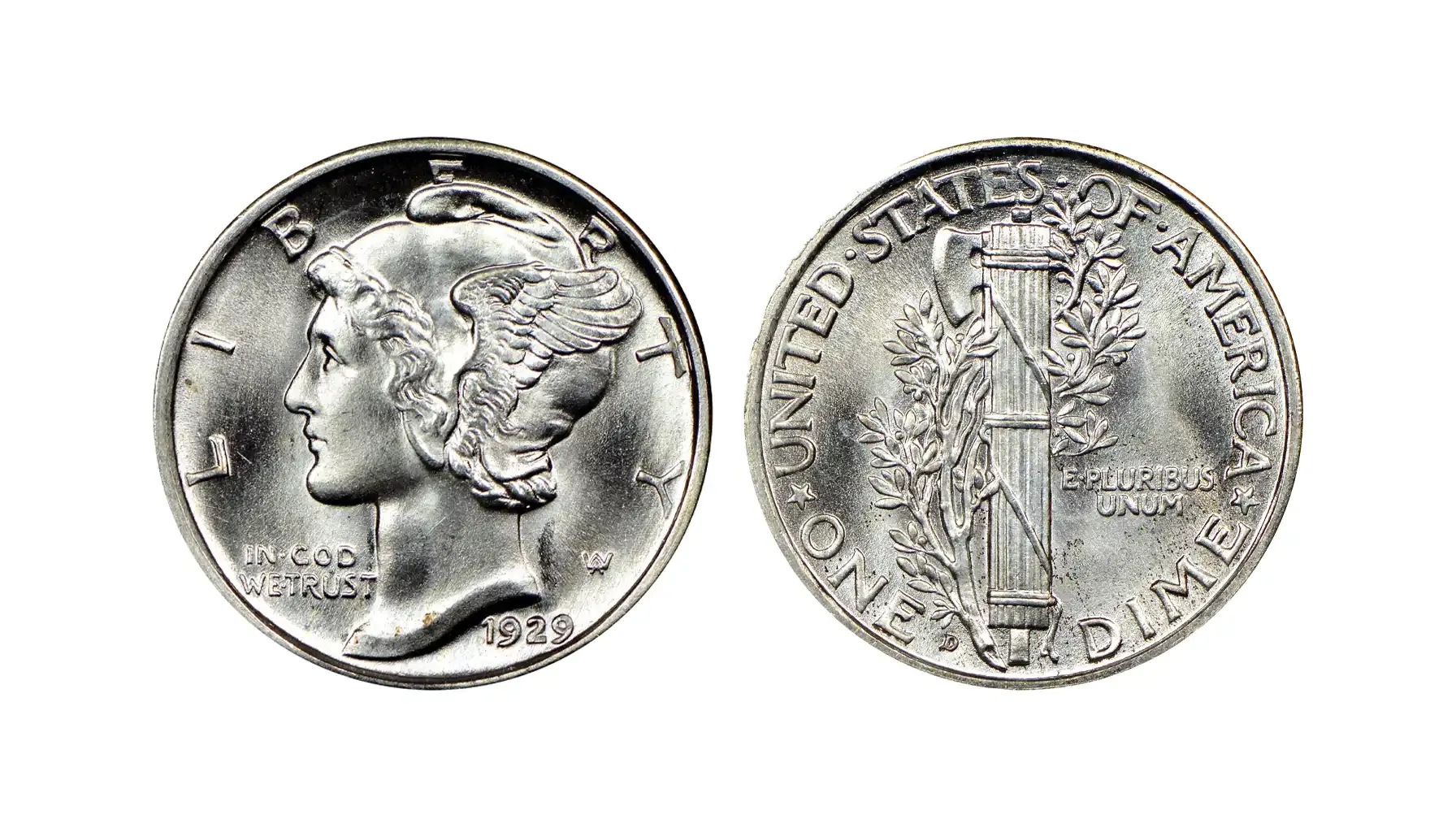
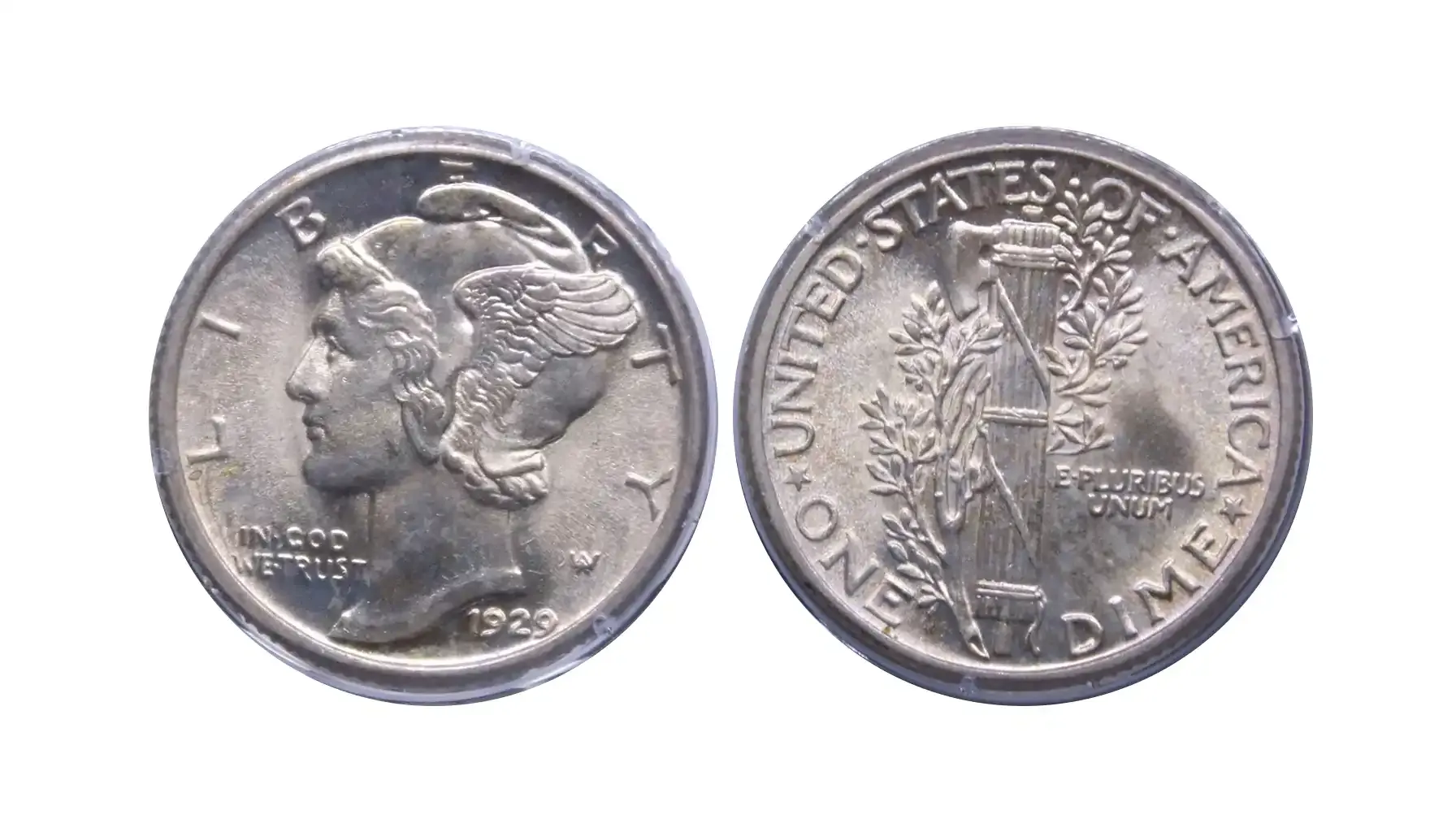
On the obverse of the 1929 coin is the head of Liberty in a winged helmet, which numismatists call "Mercury". Why exactly? Because this helmet is a symbol of quick thought, freedom of movement, and representing progress. At the beginning of the 20th century, America sought to show itself as a land of opportunity. And this image reflected that very identity, full of hopes and ambitions.
And on the reverse is a torch, symbolizing freedom, surrounded by oak and olive branches. The meaning of strength and peace. Oak is not just a tree, it is a symbol of fortitude, endurance, and the olive is a traditional sign of peace and diplomacy. All these elements are not just random details. They create a unified message: America is strong, but its strength is aimed at protection and freedom. The country thus says: "We are here to protect, to be free."
Many experts believe the design was so well-crafted that the series went on to become one of the most iconic and recognizable U.S. coins of the 20th century. Moreover, critics of the time noted that Adolph Weinman's design was closer to classical sculpture than to utilitarian minting. This gave the coin not only monetary but also cultural value.
Collectors pay special attention to specimens with distinct details - full torch lines (Full Bands).
Such coins are hard to find because a weak stamp strike was quite common. The presence of Full Bands indicates a clear relief and high quality of preservation, which is why they form the highest market value and fall into the "premium" category.
Role of Silver in Circulation
The 1929 silver dime was minted from a standard alloy of the time: 90% silver and 10% copper. The mix gave the coin both durability and value, since pure silver alone would have been too soft to handle the wear of everyday use. The coin weighed 2.5 g, and there was about 2.25 g of pure silver in it.
At first glance, this is an insignificant figure, but on the scale of millions of copies, it represented a significant reserve of precious metal in circulation. At a price of $25 per ounce, the intrinsic value of such a coin is approximately $1.80. This value is called melt value and serves as a starting point for valuation.
However, even heavily worn copies rarely drop in price to the pure value of the metal. The reason is that a historical and collector's premium is added to silver. On the market, you can see that even copies in G-4 or VG condition are confidently sold above the melt value.
Moreover, the dynamics show that when silver prices rise, the minimum price floor for all such issues also rises. But the 1929 collector versions are almost independent of this fluctuation - their price is determined primarily by rarity and preservation. That is why well-preserved copies can cost tens of times more than their "metal base".
1929 Dime Value and Factors That Influence Price
Main Determinants of 1929 Dime Value
The price is influenced by:
condition (from G-4 to MS-67 and above);
rarity of issues by mints;
minting errors and rare varieties;
market activity in a particular period.
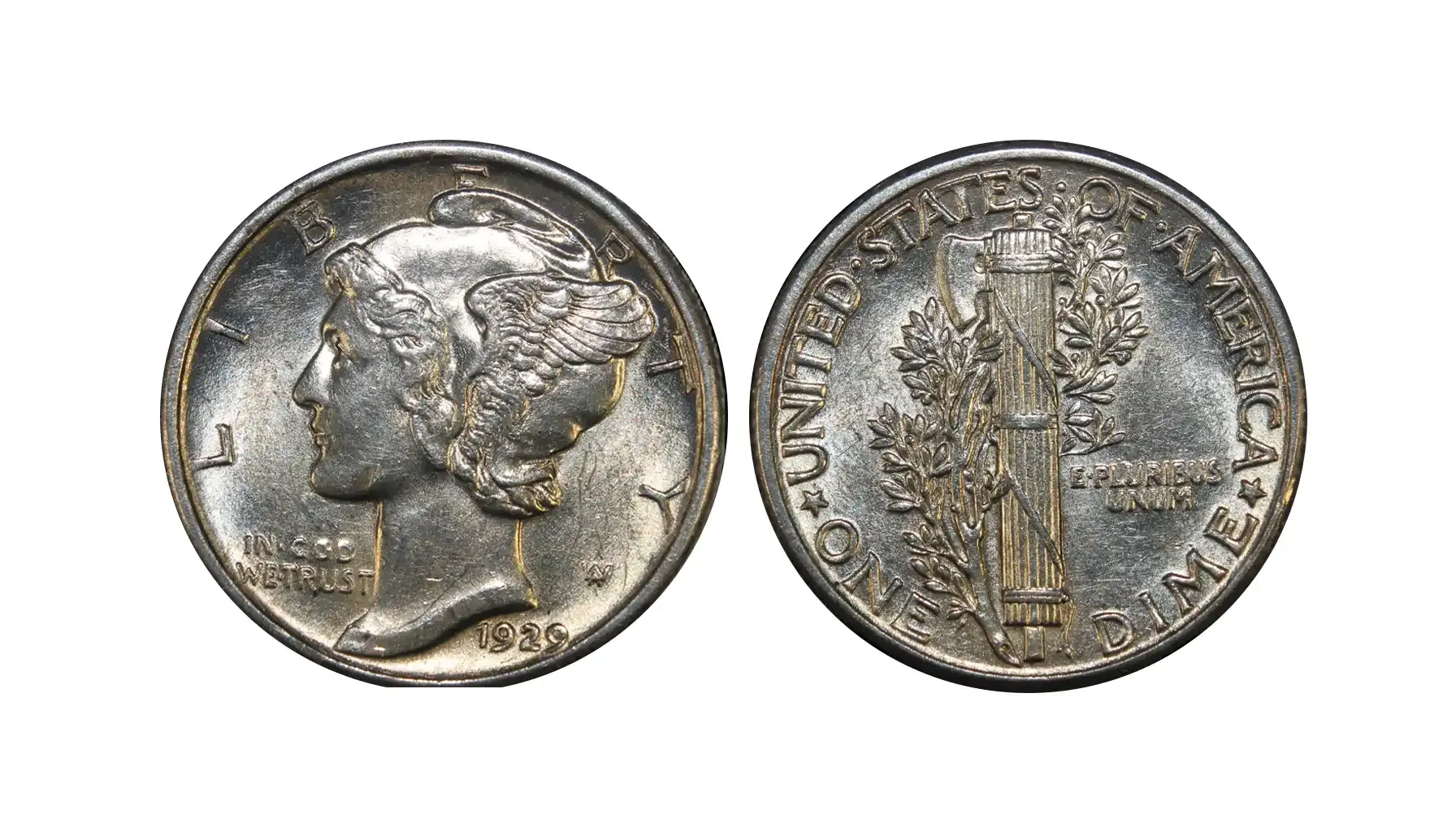
The value of 1929 dime in average condition starts at $2–$4, but MS65 and above easily surpass the $150–$200 mark.
How Grading Impacts 1929 Dime Coin Value
The difference between VF and MS65 grades can be hundreds of dollars. NGC has seen MS67 grades fetch over $1,200. Full Bands remain a key factor in price growth: the presence of distinct bands can increase the value several times.
Mint Marks and Their Influence
Philadelphia Issue: 1929 Mercury Dime No Mint Mark
Philadelphia produced the largest number of coins. The 1929 mercury dime no mint mark is the most common, but in the best grades they are rare. Coins in MS67 are almost unheard of, which is what makes them desirable at auction.
Denver Issue: 1929 D Mercury Dime Value
1929 d mercury dime value in average condition is around $15-$20, but in MS66 the price can exceed $600, and in MS67 it can rise above $3,000. Denver examples often have a sharper strike, which is prized by collectors.
San Francisco Issue: 1929 S Mercury Dime Value
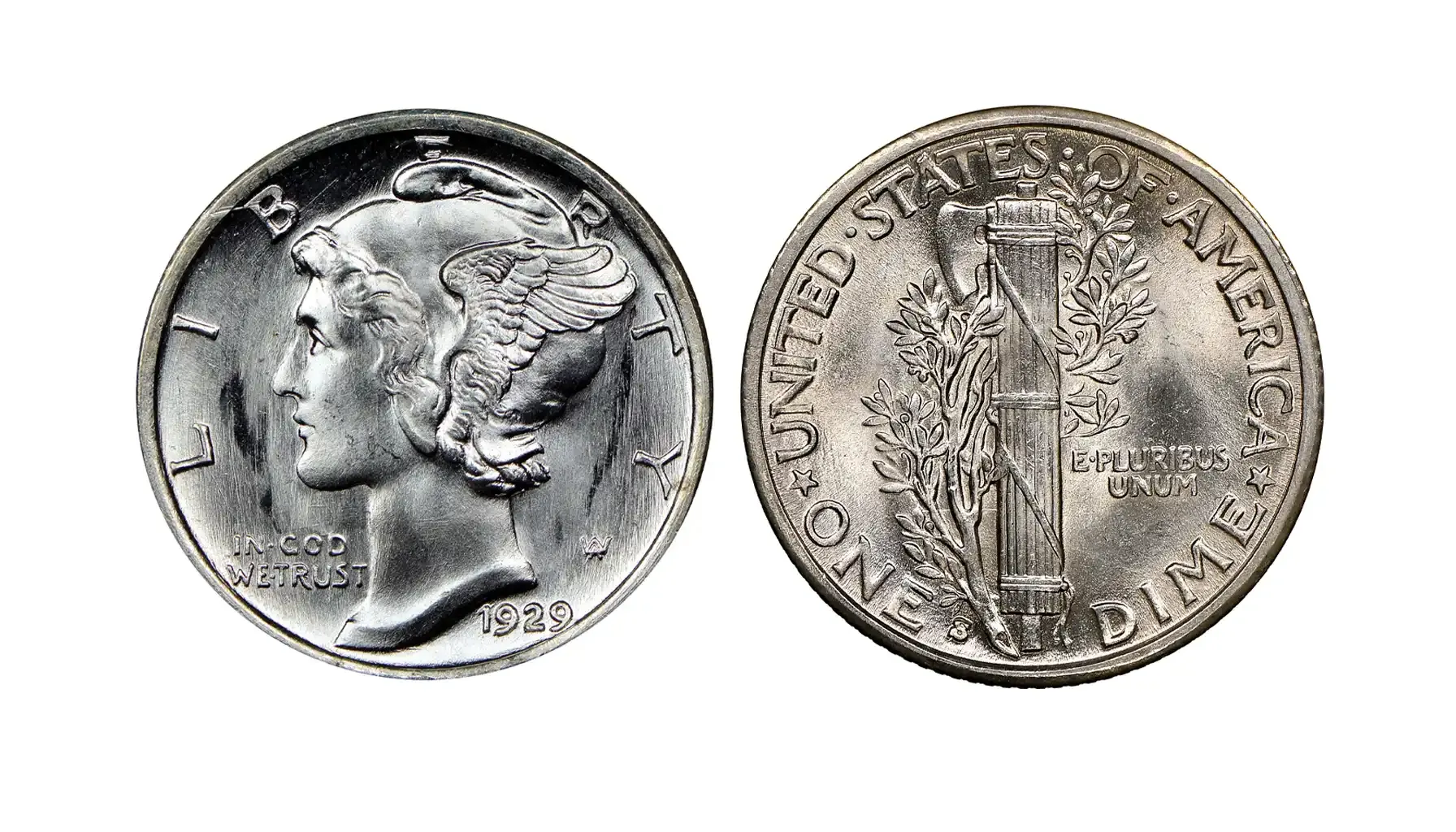
The 1929 s mercury dime was issued in a relatively small mintage of about 4.7 million. According to NGC experts, San Francisco coins are rarely found in high mintage quality. Therefore, the 1929 s mercury dime value in MS67 Full Bands can sell for more than $4,000.
Silver Content and Intrinsic Worth
1929 Dime Silver and Melt Value
The base value is always tied to the metal. The 1929 dime silver content is about 90% of the total weight. At $25/oz silver, the melt value is $1.80. But the collector value is always several times higher.
How Much Is a 1929 Dime Worth?
Even worn examples are traded above the melt value. Well-preserved MS65 coins can be worth $200–$300, and Full Bands - several thousand. Therefore, the answer to the question always depends on rarity and condition.
Errors and Varieties in 1929 Dimes
Popular Error Types
Known errors include:
Doubled Die;
Off-Center Strike;
Clipped Planchet;
Die Breaks.
Each 1929 dime error is valued higher than its regular counterparts. Examples with severe offsets or clearly visible defects are especially valuable.
Special Rarity: 1929 W Mercury Dime Value
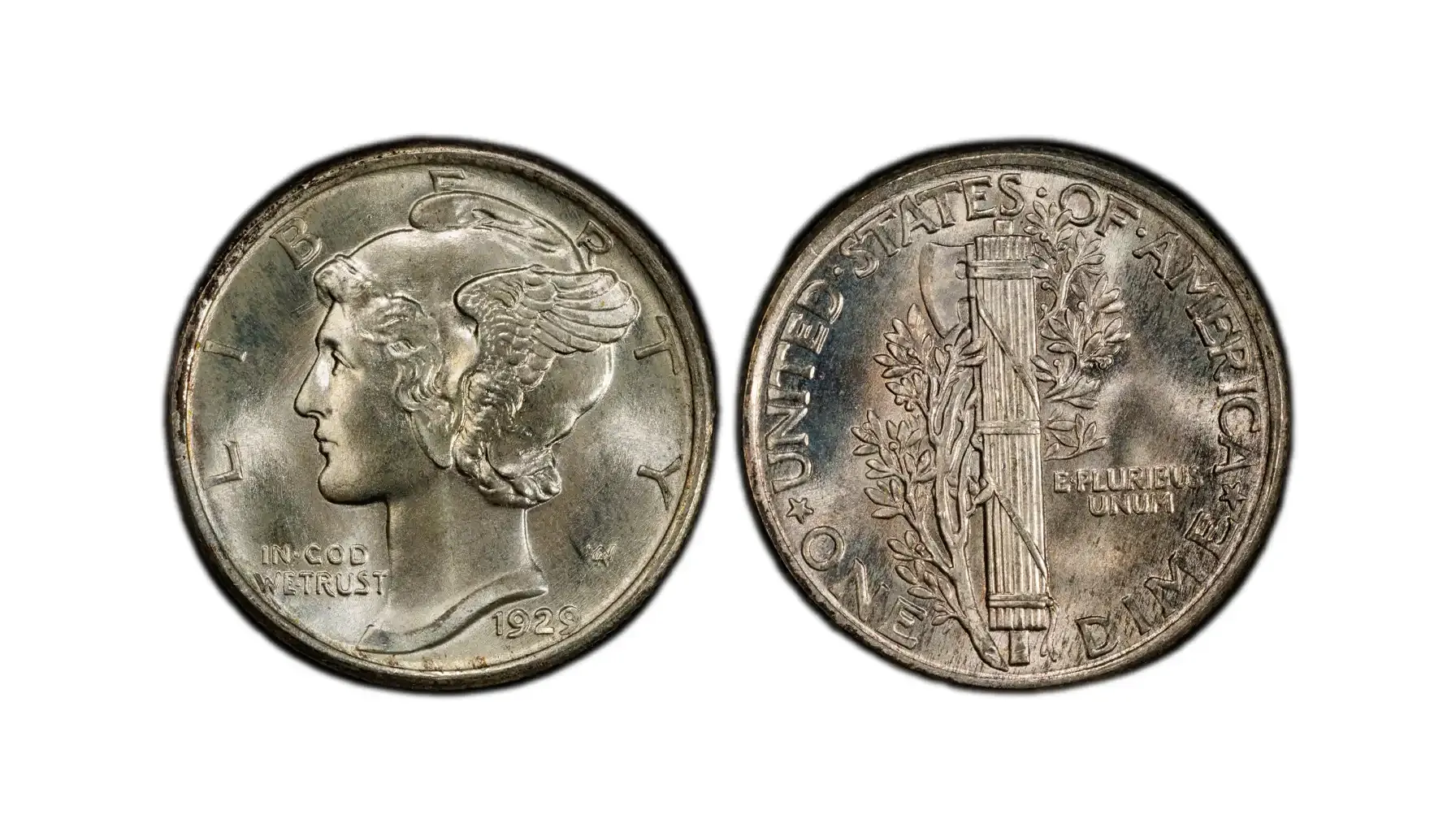
Coins with the rare 1929 w mercury dime value mark are seldom discussed, but this is precisely what gives them special weight in numismatics. Unlike the usual issues, they are often perceived as a mystery for collectors, because the exact data on the circulation and distribution remain incomplete.
It’s easy to see how interest in rare varieties parallels other series. For example, attention to the 1995 Washington Quarter confirms that even relatively new coins can be significant if they bear rare features or unusual minting details. For collectors, it’s a reminder that the real worth isn’t just in the metal itself, but in the unique story and character every coin brings with it.
Market Prices and Auction Trends
1929 Dime Value Today
Grade | Philadelphia | Denver | San Francisco |
G-4 | $2 | $3 | $3 |
F-12 | $4 | $6 | $7 |
XF-40 | $12 | $20 | $25 |
MS-60 | $35 | $80 | $120 |
MS-65 | $200 | $550 | $750 |
MS-67 | $1,200 | $3,200 | $4,500+ |
Please note that the prices mentioned are accurate at the time of writing but may change over time.
Auction Highlights
In 2022, a 1929 Liberty Dime Value in MS68 sold for $15,600. In 2023, a rare 1929 S Dime in MS67 Full Bands reached $19,200. These results come not only from rarity, but also to the growing interest in the 1920s series.
The question “is a 1929 dime worth anything?” has an obvious answer. Even heavily worn examples are valuable due to the silver, and intact ones can be worth thousands.
Collector Practical Tips
To preserve 1929 dime value, collectors should consider not only the basic rules, but also the details that affect the long-term value:
store coins in capsules or hard holders to prevent contact with air and dust;
avoid touching with your hands - even a thin layer of oil from your fingers leaves marks that turn into stains over time;
maintain a stable environment: temperature without sharp fluctuations and low humidity prevent tarnish and corrosion;
check the results of auctions and catalogs to track trends and not overpay when buying;
buy from trusted sellers, paying attention to grading certificates from NGC or PCGS, and check the authenticity with the advice from the article on how to spot fake coins.
keep your own journal with records of the date of purchase, price and characteristics of the specimen;
regularly check the condition of the coin and, if necessary, update the storage conditions, for example, change the holder or capsule;
don't forget about insurance if your collection includes particularly rare or expensive items.
These additional measures not only help preserve the physical condition of the coin, but also enhance its investment potential.
Comparisons and Broader Market Context
Interest in the 1929 us dime can be compared to trends in other series, where the decisive role is played by minting details and preservation. For example, the 1999 Roosevelt dime from the end of the 20th century also gains value if there are rare errors or if it is preserved at the MS69–MS70 level.
Such parallels show that the numismatic market is not limited to older issues. Even relatively “young” examples can reach high prices if they stand out for their quality or unique defects. The same principle applies to the 1929 mercury dime: the higher the grade and the more interesting the variety, the higher the interest of collectors and the price at auctions.

 Facebook
  X (Twitter)
  Pinterest
  LinkedIn