Contents:
For novice numismatists, it may seem difficult and at first almost impossible to discuss the features of each coin from different eras so freely and accurately.
Therefore, unfortunately, some were unlucky enough to fall into the hands of scammers and get their hands on a numismatic piece that doesn't exist, for example, the 1924 Morgan Silver Dollar...
If you are just starting out, don’t forget about coin scanner online, because even if the seller has an excellent rating and many good reviews — the probability of being deceived is never zero.
Historical Context
Despite the possible similar design, some collectors often confuse tokens from the two series, although their production didn’t touch in reality.
Transition from Liberty to Peace Dollar
The Morgan dollar coinage ended in 1921, and in 1924, the Mint continued issuing the Peace Silver 1 Dollar Coin.
The Peace Dollar became the final large silver currency for circulation in the USA.
Coin Specifications
Feature | Value |
Denomination | US One Dollar Coin |
Weight | 26.73 grams |
Diameter | 38.1 mm |
Thickness | 2.9 mm |
Composition | 90% silver, 10% copper |
Silver Content | 24,05 grams |
Edge | Reeded |
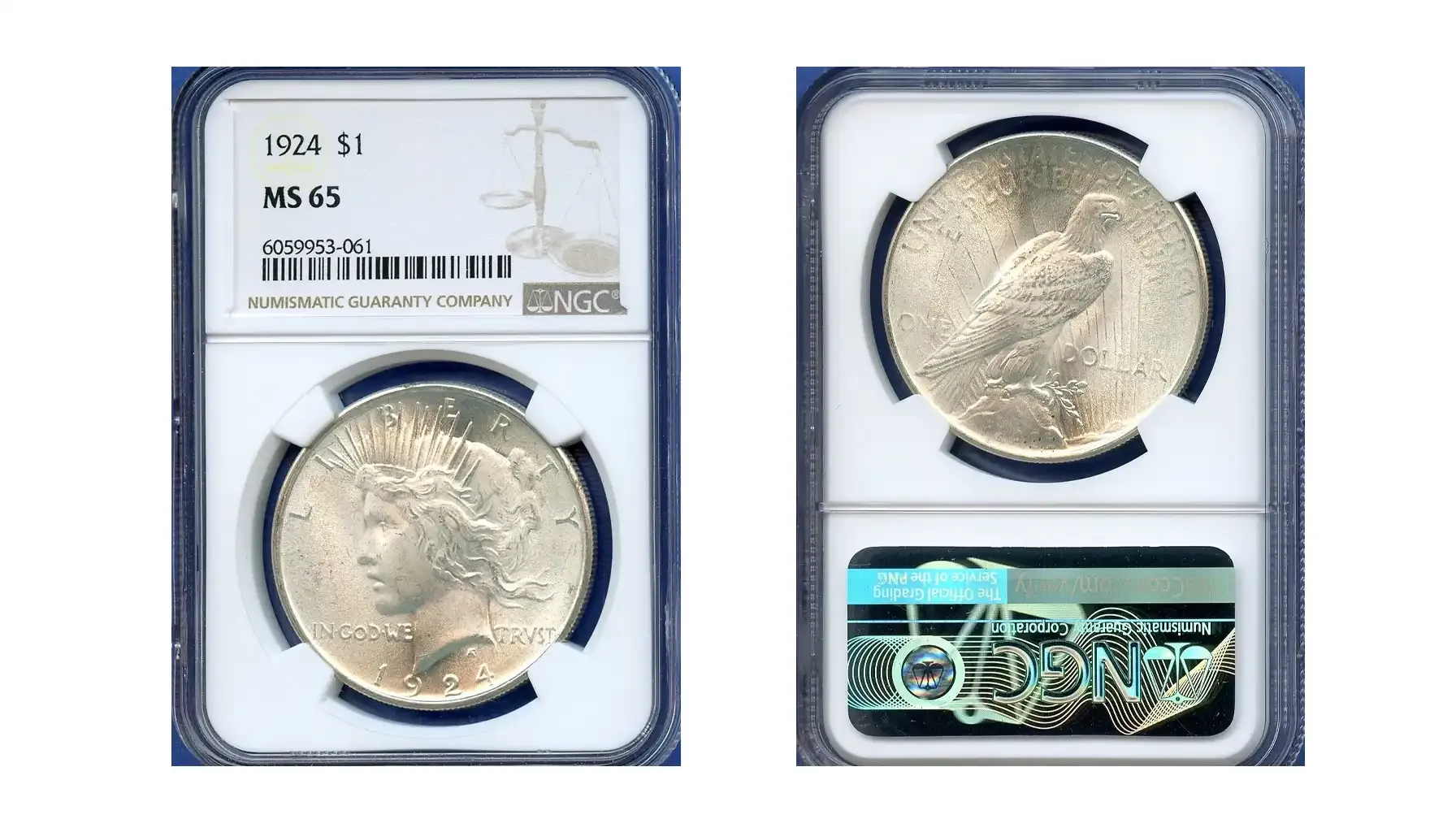
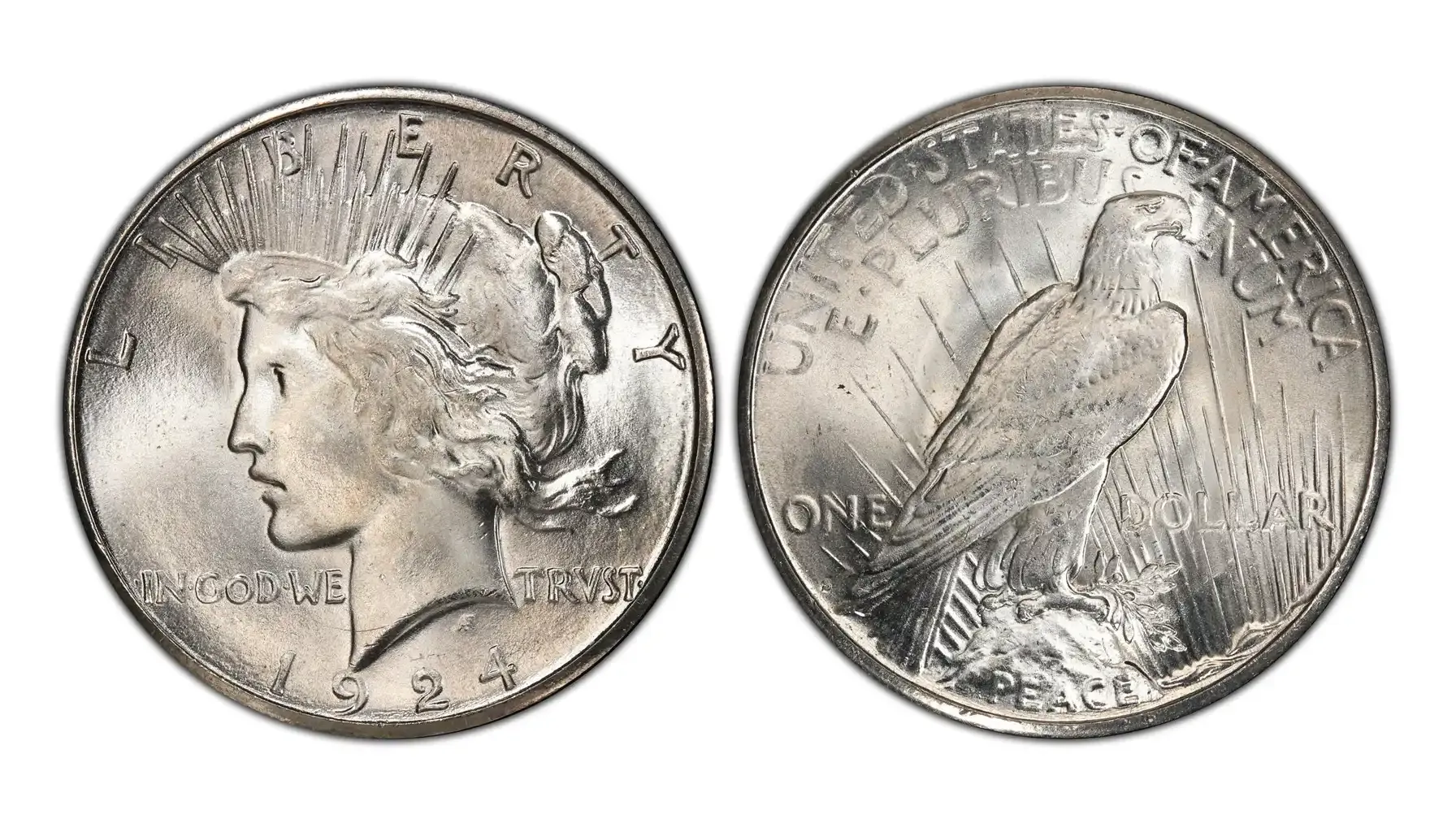
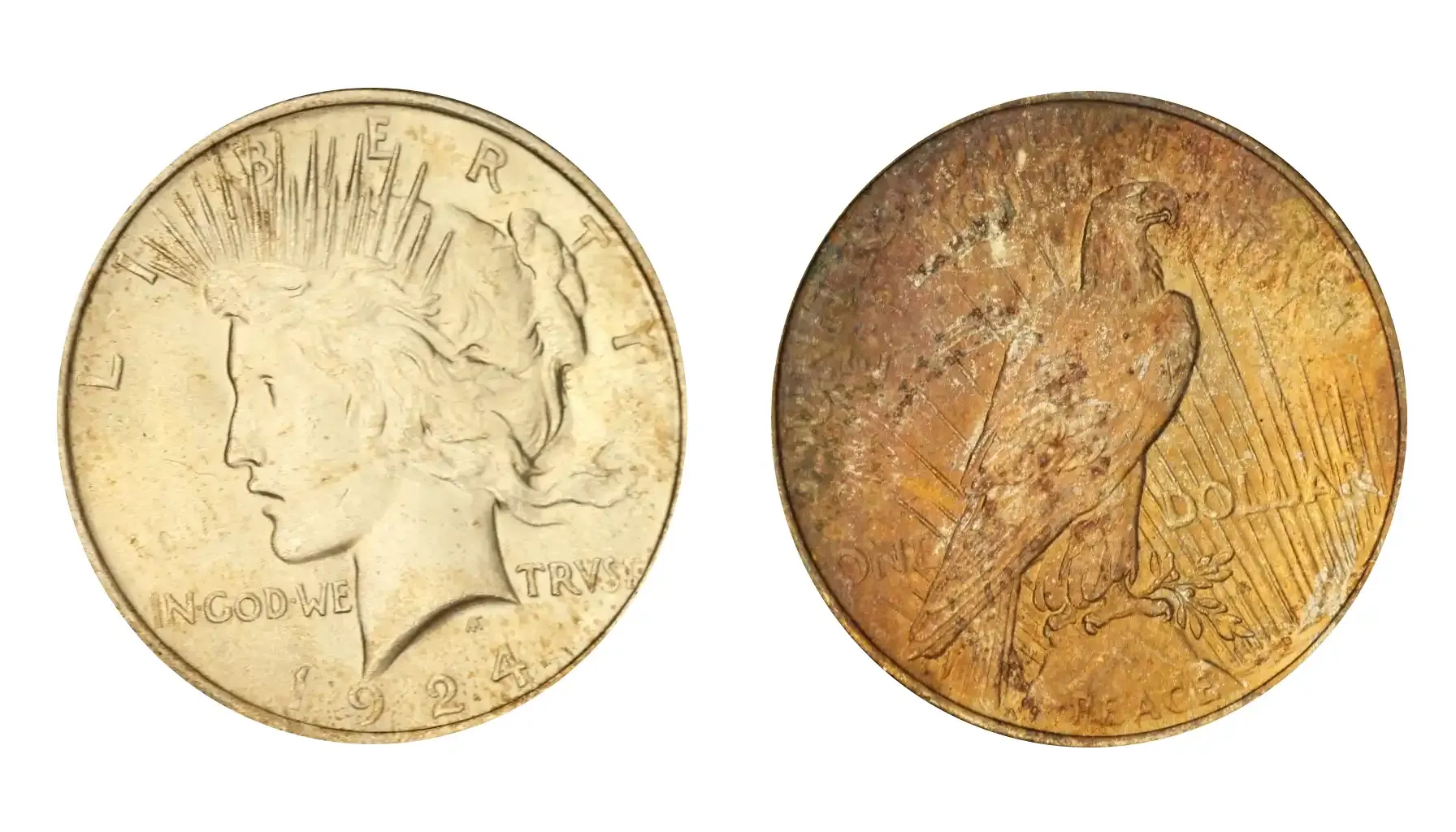
The obverse has…
…a profile of Liberty
…the motto "LIBERTY"
…the inscription "IN GOD WE TRUST"
…the date "1924" at the very bottom
The reverse has…
…an American bald eagle
…the inscription "UNITED STATES OF AMERICA"
…the inscription "E PLURIBUS UNUM"
…the denomination "ONE DOLLAR"
Mint and Production
Mint | Mint Mark | Mintage |
Philadelphia | None | 11,811,000 |
San Francisco | S | 1,728,000 |
Liberty Head in 1924
Despite the fact that the World Dollar was produced separately from the Morgan Dollar, this currency has adopted some traditions.
Liberty Head Obverse
Fact: No Liberty Head Dollar coins were minted for circulation in 1924, so the Morgan design wasn’t in production for that year, having been used from 1878 to 1904 and again in 1921.
1924 Peace Dollar Features
The numbers 1924 feature a standard look.
The 1921 design showed very high relief, creating problems with strike quality and causing fast wear on the dies, leading to a lower relief design being introduced in 1922.
The eagle's feathers on the reverse, particularly those near the sun, have a flatter surface, preventing their fast wear.
Differences in Market Appeal
The main demand is focused on high-quality copies that have not entered circulation, MS-65 and higher stamps, collectors prefer tokens with the highest possible detail and, despite the small circulation, has a reputation for ones with weak coinage.
Mint Marks and How They Affect Value
Where Mint Marks Appear
The mint mark is placed above the eagle's tail, slightly to the left of the olive branch.
1924-P: The mint mark is absent, this lack of a mark showing coinage at the main Philadelphia Mint.
1924-S: The letter "S" is present, this letter showing coinage at the San Francisco Mint.
1924-P, 1924-S
The 1924 token has a lower circulation, which makes it more valuable in average condition compared to the 1924 coin, but the true difference in value is evident in the highest grades.
Samples from the 1924s with a strong impact and full shine are much rarer.
1924 Silver Dollar Value by Type & Condition
“The Peace dollar was something of a rushed project. The Pittman Act of 1918, which saw the melting of more than 270 million silver dollars, had created a problem. Those melted silver dollars had been used as backing for Silver Certificates.
You cannot give what you do not have, of course, and the United States no longer had enough silver dollars to make good on the promise of one for every $1 Silver Certificate. This could have proven problematic, especially if some cult showed up with truckloads of Silver Certificates demanding their silver dollars.”
— Numismatic News Staff
Numismatic New
1924 Peace Dollar Value
Grade | 1924-P | 1924-S |
G-4 | $35-40 | $38-45 |
F-12 | $40-50 | $50-65 |
VF-20 | $50-70 | $70-100 |
AU-50 | $75-150 | $180-350 |
MS-60 | $120-200 | $250-450 |
$500-1,200 | $2,500-6,000 |
The 1924 Liberty Silver Dollar value can change based on market demand, condition, grading, and the specific characteristics of individual tokens.
Auction Records
Coin | Grade | Auction Date | Price (USD) |
1924-P | MS-66 | February 2023 | $5,000 |
1924-P | June 2022 | $16,800 | |
1924-S | MS-65 | August 2023 | $24,000 |
1924-S | MS-66 | January 2024 | $48,000 |
Spot Value vs Numismatic Premium
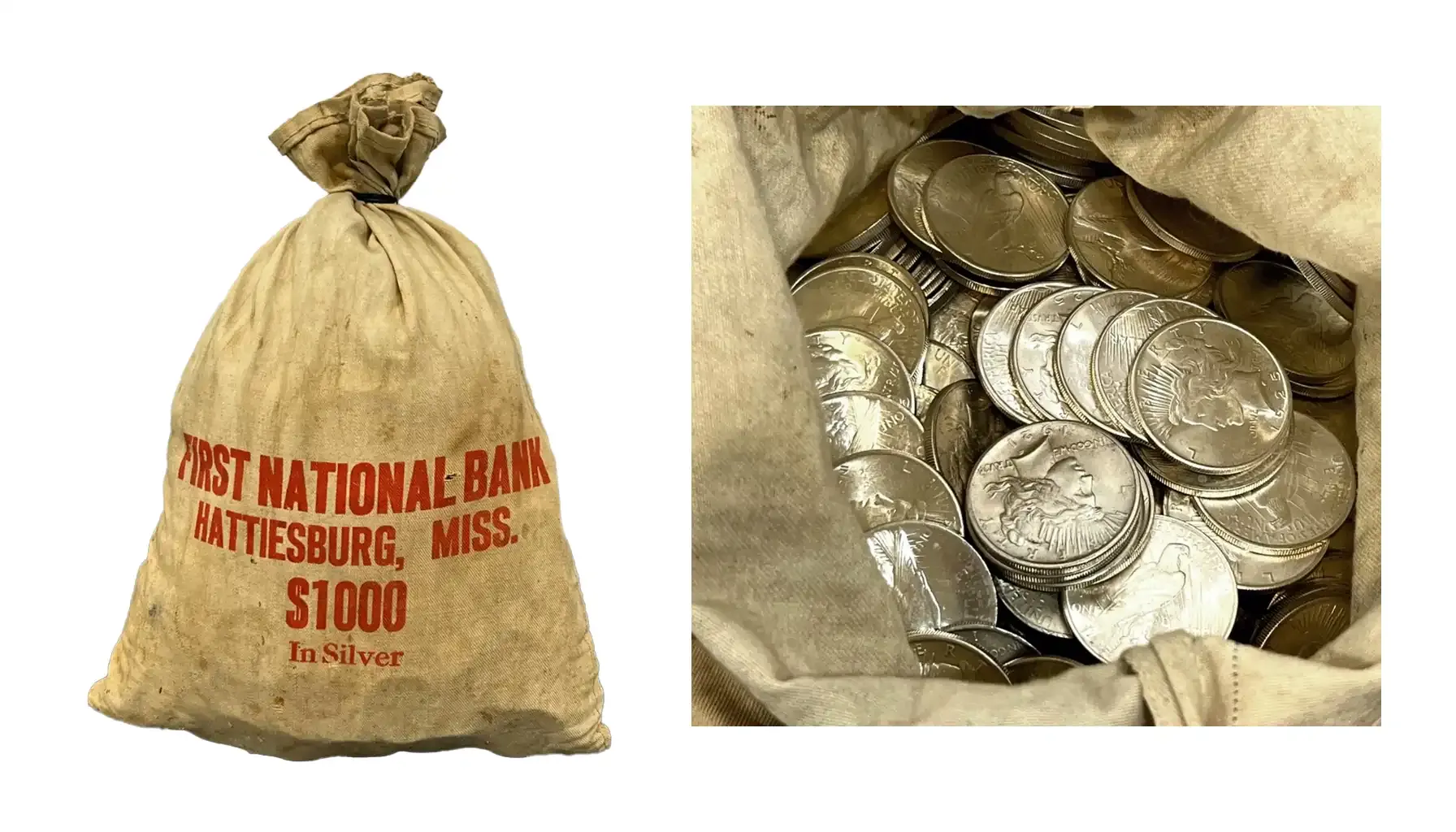
The spot value of silver is the price of the metal in a coin. For example, a 1924 dollar contains 24.06 grams of silver, which at a price of $25 per ounce gives about $19.34.
The numismatic surcharge is an additional payment for rarity and condition: for low-quality coins, it is 1.5-2 times higher than the spot 1924 dollar coin value, for high‑quality pieces, it can exceed it by 25 times or more, for example, a 1924-S one in MS‑65 condition can cost $24,000.
Rare Varieties, Errors & High-Value Specimens
Known Varieties
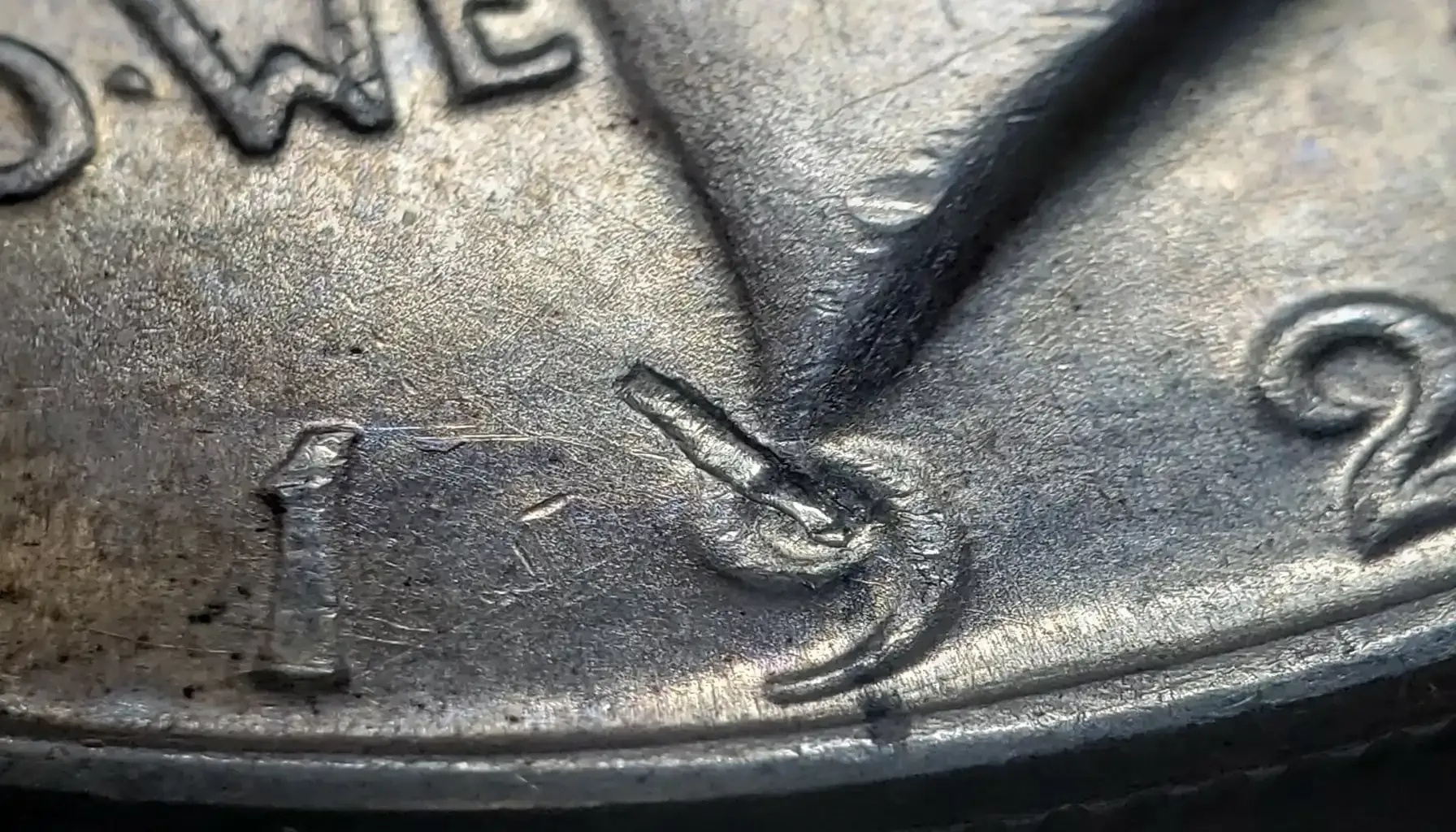
Some specimens may show thin raised lines crossing the coin field or design elements, these lines resulting from cracks in the working die, meaning that while minor cracks don’t add significant value, large breaks can be interesting.
Faint, shallow outlines of the opposite side's design elements may be seen on the coin field, this happening when the dies hit each other without a piece blank between them.
Error Coins
Struck Off-Center: The coin is struck not at the center of the blank, causing part of the design and legend to be missing, leaving a blank area on the coin's edge, and the amount of displacement sets the value.
Lamination Errors: Involving the separation of metal layers on the coin surface, this error is caused by alloy unevenness, taking the form of peeling flakes or large sheets.
Die Cap: Being an extremely rare type of error, a coin sticks to the die and continues to be used as a cap, thereby deforming later blanks.
Notable Case
MS-66 1924-S: The value, reaching 48,000 dollars, was set not by an error, but by the flawless condition, this condition being an anomaly for this coin known for a weak strike.
Authentication & Counterfeit Risks
The 1924 coins are a target for counterfeits due to their high value in the highest grades, meaning checking authenticity requires a systematic approach.
Weight, Dimensions, Metal Content Tests
The exact weight should be 26.73 g, so a weight difference of more than 0.5 grams may indicate forgery.
The diameter should be 38.1 mm.
Silver has no magnetic properties, it shouldn’t react to the effects of a magnet.
Common Fake Patterns
A common method involves changing the date on cheaper 1924 Peace Silver Dollar coins to 1924, this process causing the re-engraved areas to show unnatural tool marks.
Fake ones, made by casting, show specific signs, including blurry, "mushy" lines and low relief, and casting marks such as tiny pores or air bubbles may be present on the surface.
FAQ
How much is a 1924 silver dollar worth today?
In the highest condition it may cost from 500 to 6,000 dollars.
Is a 1924 Peace Dollar more valuable than a Liberty variant?
Liberty Head Dollar coins were not minted in 1924, as the Peace Dollar is the only dollar type issued in this year.
Where is the mint mark on a 1924 dollar coin?
The mint mark is located on the reverse, above the eagle's tail.
What is the silver content of 1924 Peace dollars?
It contains 24,05 grams of pure silver.
Does “Trust Misspelled” affect value for 1924 Liberties?
The variety "Trust Misspelled" doesn’t apply to 1924 pieces.
Should I grade a 1924 silver dollar?
Certification of the token by NGC or PCGS is recommended if the coin is in About Uncirculated condition or better.

 Facebook
  X (Twitter)
  Pinterest
  LinkedIn