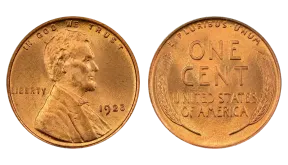
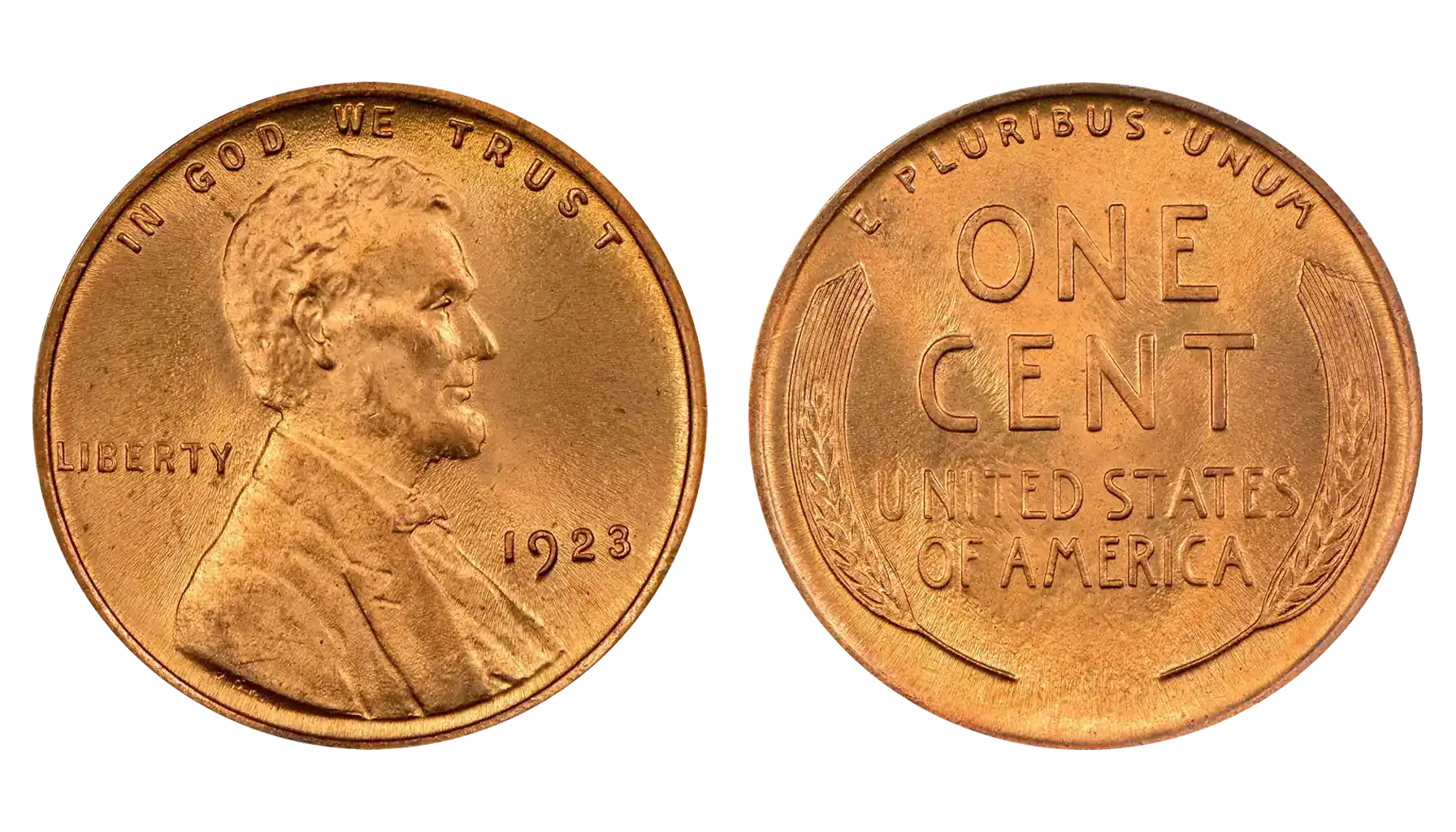
A 1923 penny is an American one-cent coin from the Lincoln Wheat Cent series, which ran from 1909 to 1958. It shows Abraham Lincoln on the front and two wheat stalks on the back. These pennies were made mostly of copper and came from the Philadelphia Mint (1923 penny no mint mark) and the San Francisco Mint (marked “S”).
In general, the Philadelphia issue is common and easy to find, while the San Francisco issue is scarcer and more valuable, especially in better condition. Collectors look for them in higher grades or with original red luster, which can make the coin worth much more.
So, how much is a 1923 Wheat penny worth, and how can you identify the coins?
Specification | Details |
Type | Lincoln Wheat Cent |
Year | 1923 |
Mints | Philadelphia (no mint mark), San Francisco (“S”) |
Designer | Victor David Brenner |
Composition | 95% Copper, 5% Tin and Zinc |
Weight | 3.11 grams |
Diameter | 19 mm |
Edge | Plain |
Mintage | Philadelphia: 74,723,000 — San Francisco: 8,700,000 |
Historical Background
By the early 1920s, the United States was recovering from World War I and the short but sharp recession of 1920–1921. By 1923, the economy had largely stabilized, marking the beginning of what would later be called the “Roaring Twenties” — a decade of rapid industrial growth, urbanization, and cultural change.
The Lincoln Wheat Cent itself was first introduced in 1909 to commemorate the 100th anniversary of Abraham Lincoln’s birth. Designed by Victor David Brenner, it was the first regular U.S. coin to feature a real historical figure rather than symbolic imagery like Liberty.
By 1923, the design had already become familiar to Americans, but it remained distinctive with its simple wheat-ear reverse.
In terms of minting, the Philadelphia Mint produced the bulk of the 1923 no mint mark penny pieces, while the San Francisco Mint struck far fewer. As a result, the 1923 S penny value is higher then.
There is no Denver mint mark on 1923 pennies. In 1923, Lincoln Wheat Cents were only struck at two mints. The Denver Mint did not produce pennies in 1923. That’s why you will never see a genuine 1923 D penny value — if one appears, it’s either altered or misidentified.
But what is a 1923 penny worth if with other mint marks that really exist?
1923 Penny Value Today (Sept, 2025)
Coin | Grade | 1923 Lincoln penny value |
1923 Wheat penny value no mint mark | Good (G) | $0.30 – $0.50 |
Fine (F) | $0.70 – $1.50 | |
Extremely Fine (EF) | $4 – $10 | |
Uncirculated (MS) | $18 – $40+ | |
1923 S Wheat penny value | Good (G) | $4 – $7 |
Fine (F) | $15 – $25 | |
Extremely Fine (EF) | $35 – $70 | |
Uncirculated (MS-60 to MS-63) | $200 – $535 | |
High Uncirculated (MS-64 RD / MS-65 RD) | $900 – $2,600+ |
To fully understand how much is a 1923 penny worth, you should know one thing. Color plays a huge role in the value of copper coins like the penny 1923. Collectors and grading services classify them into three main color designations: Brown (BN), Red-Brown (RB), and Red (RD).
Brown (BN)
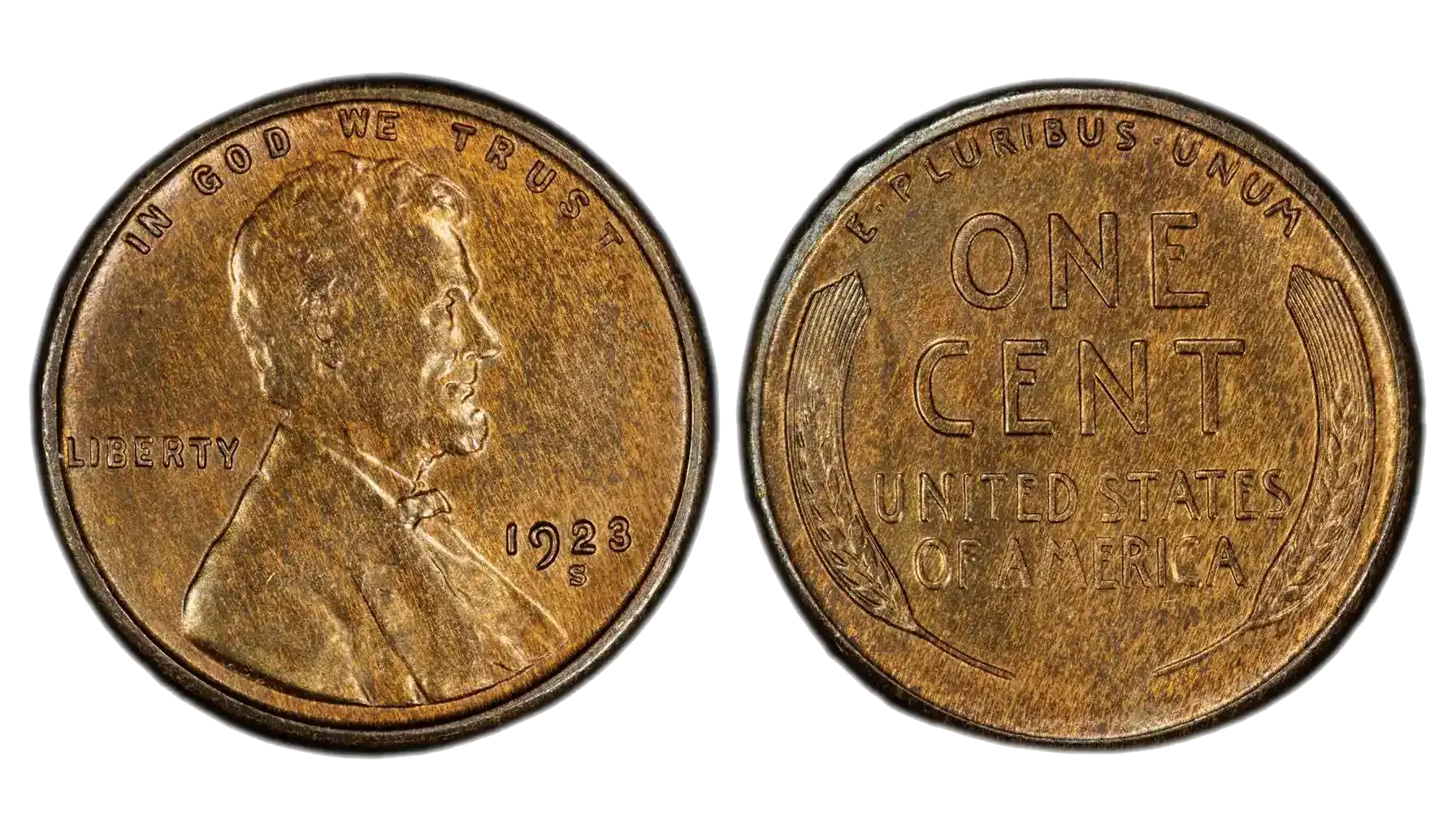
A coin that has toned fully to dark brown due to oxidation of copper.
Most circulated pennies fall into this category.
Least valuable, even in higher grades, because collectors prefer the original red color.
Example: a 1923-S penny value in Mint State but Brown is a few hundred dollars, while a Red example can reach into the thousands.
Red-Brown (RB)
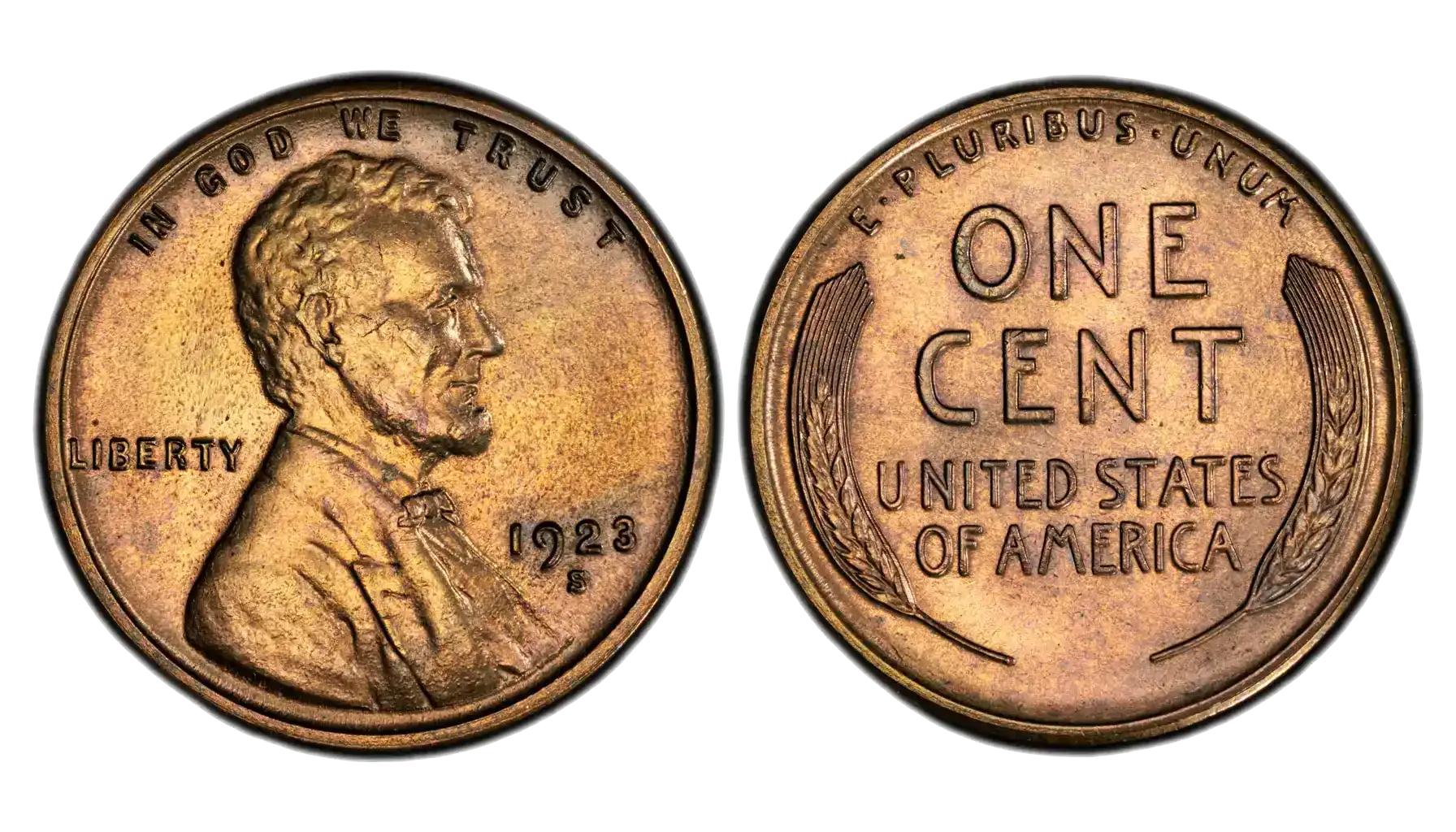
A coin with a mix of original red luster and brown toning.
Considered the middle ground in terms of appeal and value.
Collectors pay a premium compared to Brown, but less than fully Red.
Example: a 1923 Wheat penny no mint mark value in MS63 RB could be worth 1.5–2× the value of the same grade in BN.
Red (RD)
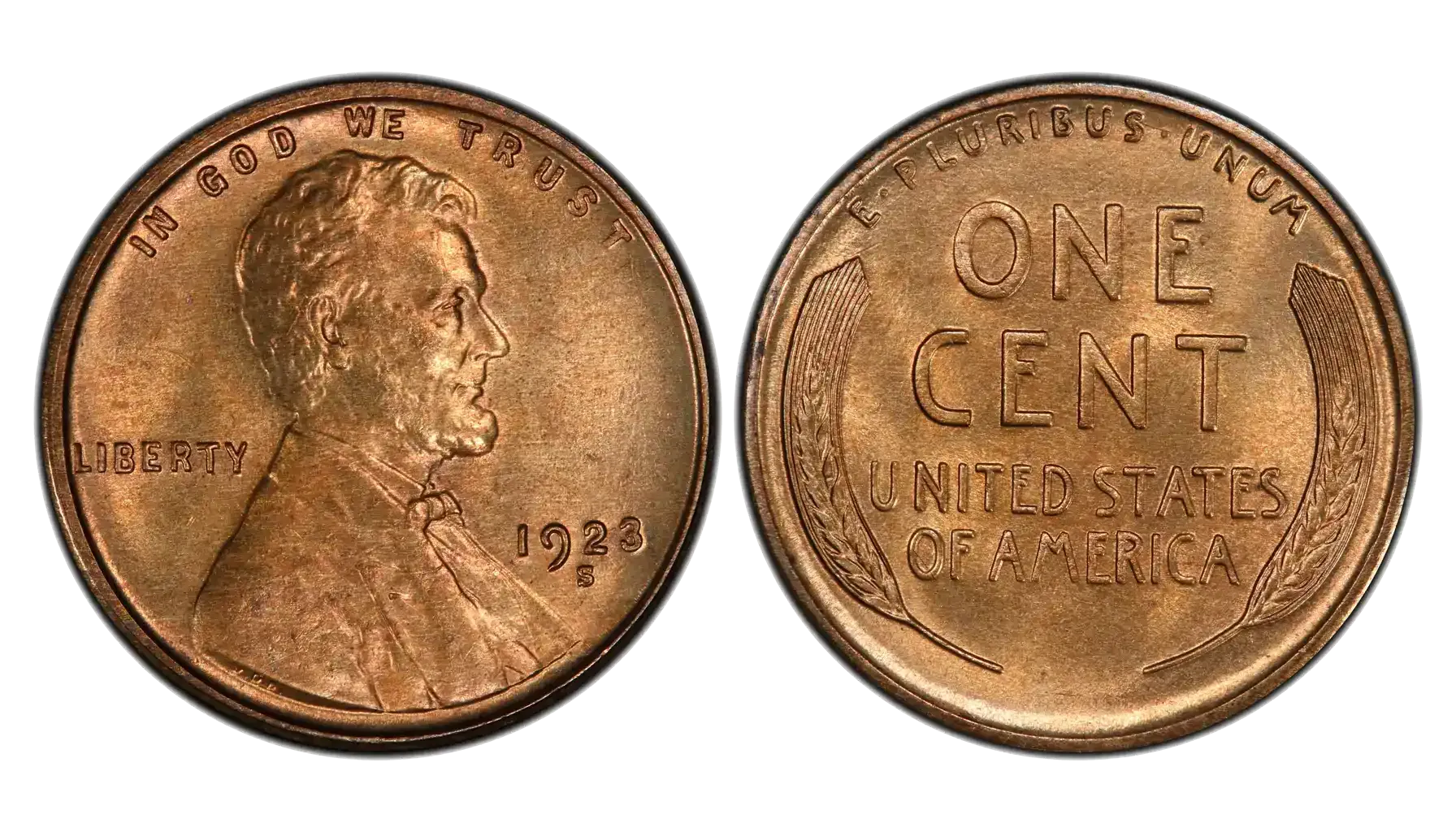
A coin that retains at least 85–90% of its original red mint luster.
Very difficult to find in older pennies, since copper naturally darkens over decades.
Most valuable designation, especially in high Mint State grades.
Example: how much is a penny from 1923 worth? A 1923-S in MS65 RD can sell for over $2,000, compared to just a few hundred in Brown.
1923 Penny Error List
Die Cracks and Cuds
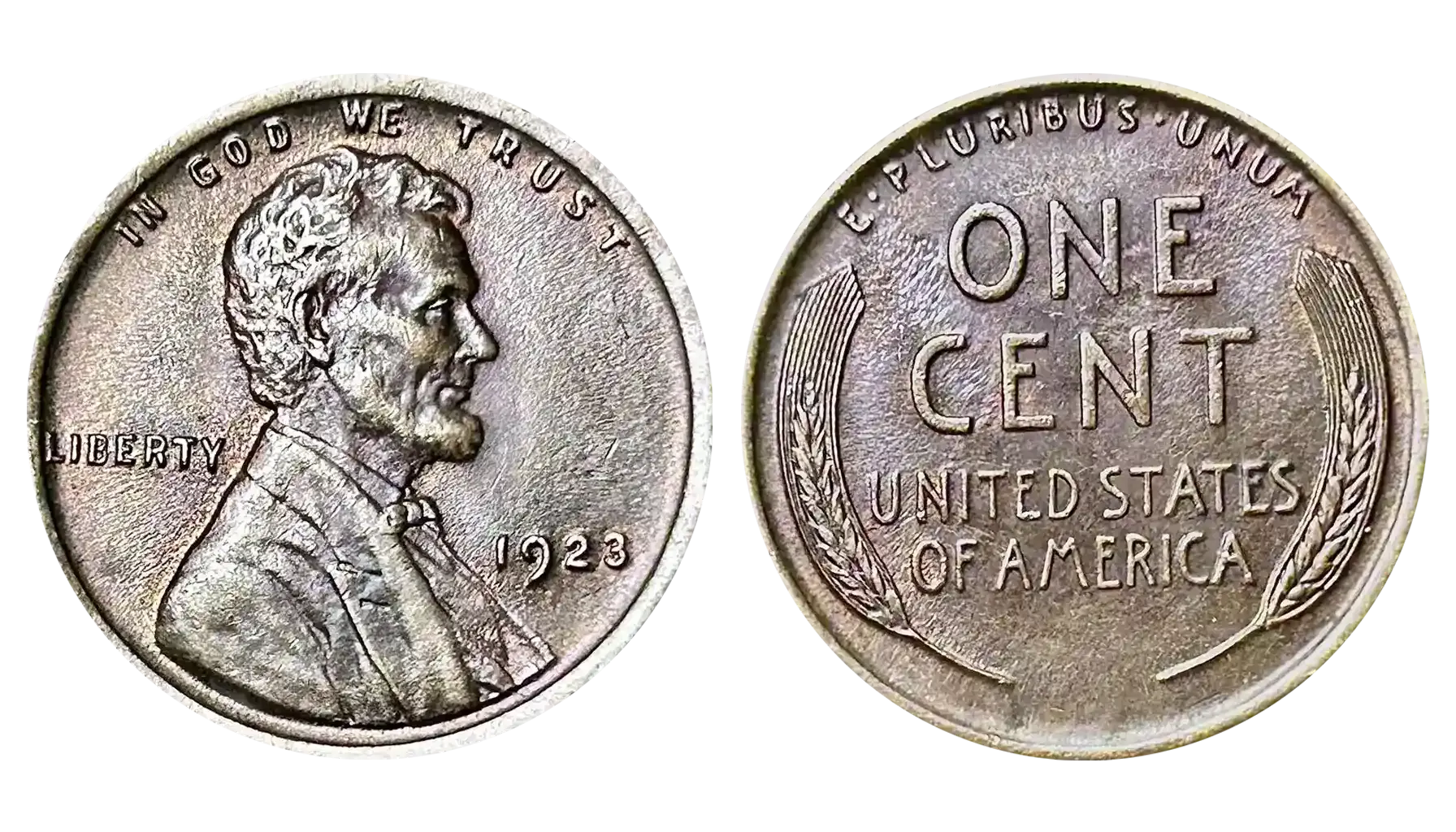
Die cracks occur when the steel die used to strike the coin develops fractures from stress. When these damaged dies are pressed into planchets, the cracks appear as raised lines across Lincoln’s portrait, the lettering, or the wheat stalks on the reverse.
If the break grows large enough, parts of the rim fail to strike properly. This creates what collectors call cuds — raised blobs of metal along the edge of the coin where design details are missing. On 1923 pennies, small die cracks are relatively common, but big cuds are more desirable because they clearly show the minting flaw.
Off-Center Strikes
An off-center strike happens when the blank planchet is not properly seated in the press. Instead of the design being perfectly aligned, part of it is pushed toward the edge, leaving a crescent-shaped blank space.
Today's piece is occasionally found with this error, and the degree of misalignment determines value. Minor shifts are interesting but not especially rare, while coins struck 30% or more off-center — with the date still visible — are highly collectible and have higher error coin 1923 Wheat penny value sums.
Broadstrikes
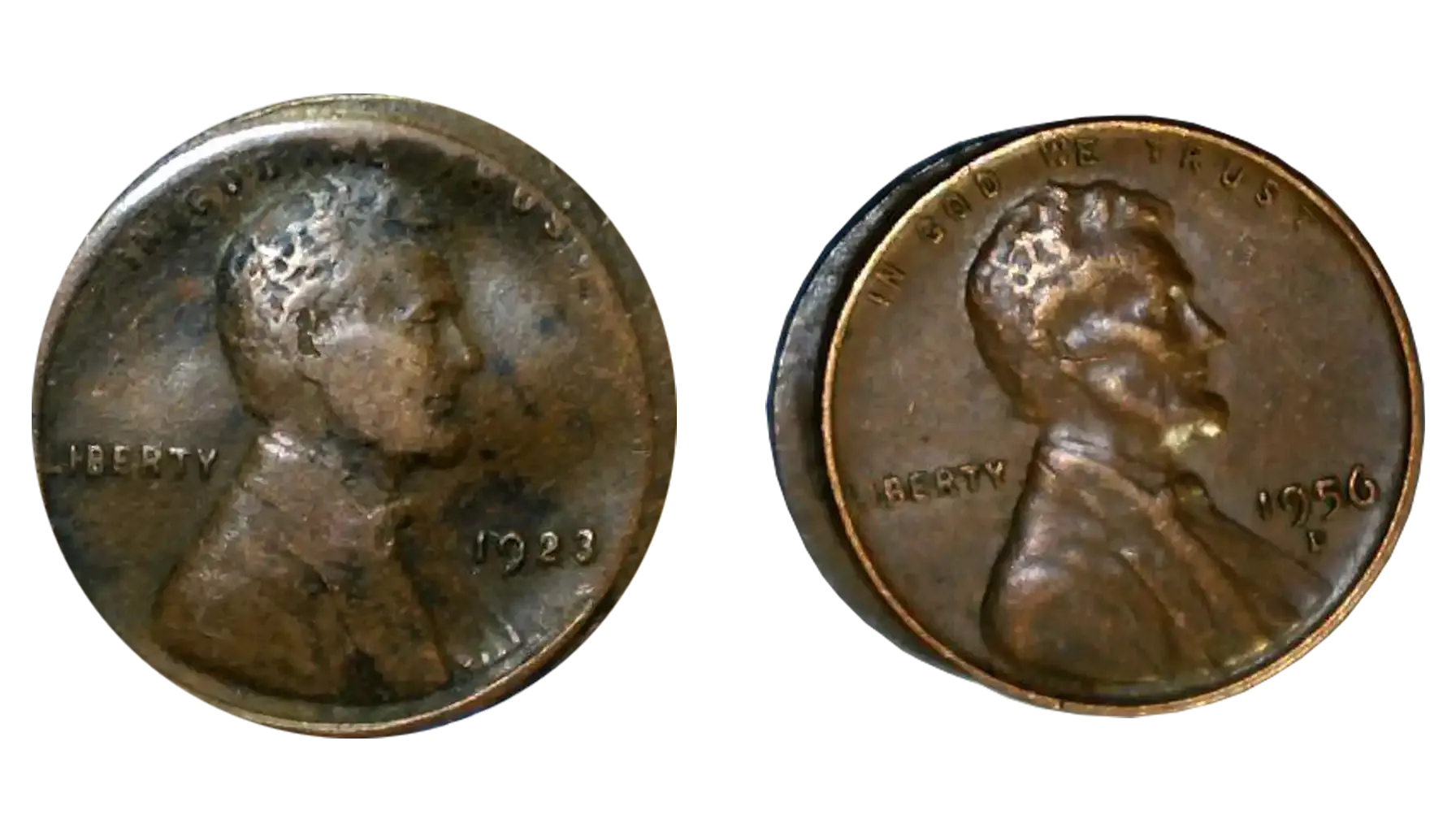
A broadstrike is another striking error, caused when the collar that normally holds the planchet in place fails during minting. Without this restraining ring, the coin spreads outward as pressure is applied. The result is a specimen that looks wider and thinner than usual, often with design details that stretch unnaturally close to the edge.
A 1923 broadstrike is easy to identify once seen side by side with a normal cent, and although less dramatic than an off-center strike, it remains an error that increases the value of 1923 penny.
Wrong Planchet Strikes
One of the rarest and most exciting errors is when it was struck on the wrong planchet. This could happen if a blank intended for another denomination, such as a dime, slipped into the cent press. The resulting coin has unusual dimensions — often lighter, smaller, or a different color than expected.
What is a 1923 wheat penny worth of this kind? These pieces are very scarce and draw attention at auctions.
Copies
The popularity of these coins has led to the appearance of replicas. Many so-called 1923-S Lincoln Penny coins copy 95% coper are produced to resemble the originals. Unlike authentic 1923-S cents, which were struck at the San Francisco Mint in 95% copper and 5% tin and zinc, these copies do not carry collectible value.
For serious numismatists, the distinction between original and copy is a must. Genuine 1923-S coins are scarce and worth grading, storing, and protecting. Is a 1923 penny worth anything if not a genuine one? Copies are best treated as replicas without financial or historical significance.

 Facebook
  X (Twitter)
  Pinterest
  LinkedIn